

Your normal heart rate when running depends on far more than a simple formula. Age, fitness level, running intensity, heat, and hydration all shift the numbers - and so does the quality of your sleep the night before. Most adults land between 120 and 160 beats per minute during easy-to-moderate efforts, but individual variation is significant, and that range moves considerably as your cardiovascular fitness improves.
This guide breaks down what research says about average running heart rates by age and gender, how training zones work in practice, what constitutes a dangerously high number, and why your resting heart rate is one of the most underrated fitness signals you can track. Knowing how accurate smart watches are for heart rate matters before you put too much trust in the numbers on your wrist.

Normal Heart Rate When Running - What the Research Shows
The normal heart rate when running for a healthy adult typically falls between 50% and 85% of their maximum heart rate (HRmax). The most widely used formula to estimate HRmax is 220 minus your age - a 35-year-old would have an estimated maximum of 185 bpm. Research consistently shows this formula has meaningful limitations, though.
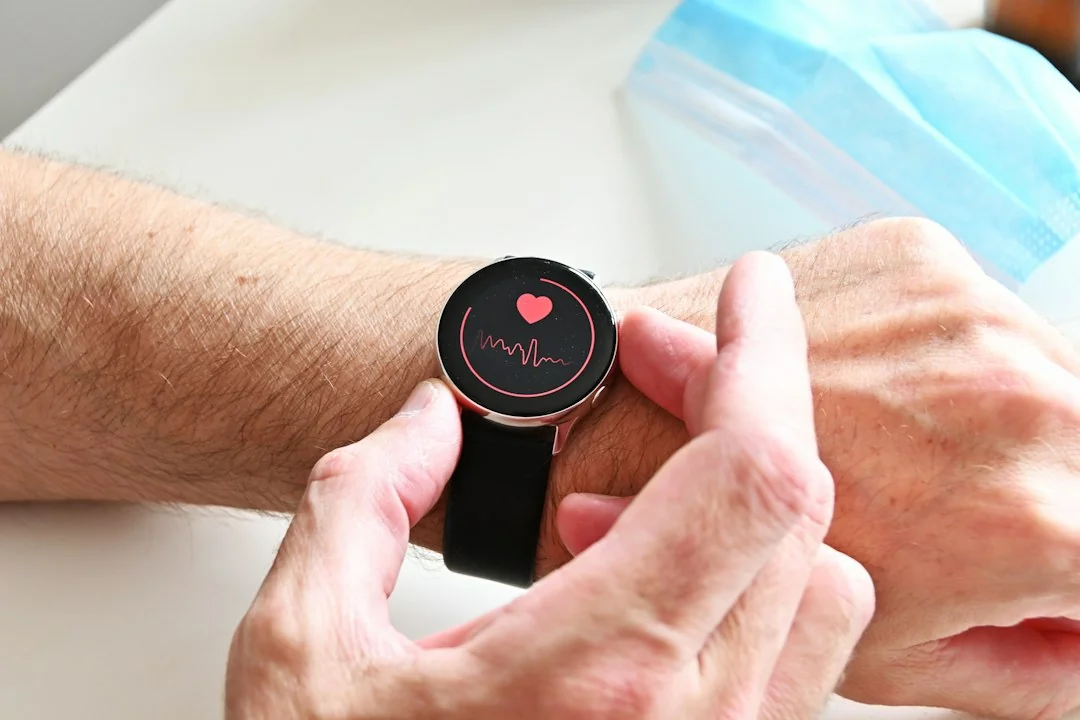
A large external validation study of 5,311 endurance athletes found that roughly 69% of common age-based HRmax prediction equations (9 of 13 tested) significantly differed from measured values, with mean absolute percentage errors ranging from approximately 4% to 4.7% (1). In practice, a 40-year-old could have an actual HRmax anywhere from 165 to 195 bpm. A more accurate alternative for many runners is the Tanaka formula: 208 minus 0.7 times your age, which research on 99 graded treadmill tests found it produced minimal mean bias across tested age groups - though all common age-based equations showed poor agreement with directly measured HRmax, and no single formula is definitively superior for all populations (2).
The normal heart rate for adults at rest runs between 60 and 100 bpm, but once you start running, that number climbs quickly. A beginner running at conversational pace might sit at 140-160 bpm. A trained runner covering the same distance at the same pace might cruise at 120-140 bpm. Fitness shifts what "normal" means for you personally, which is why comparison to age-based reference charts only tells part of the story.
To find your personalized training zones, you can use a target heart rate calculator based on your estimated or tested HRmax.
I've reviewed heart rate data from numerous athlete training logs, and the 220-age formula falls short by 10 bpm or more in roughly one-third of the runners I have tracked over a full training cycle. That level of variance is why I treat any age-based chart as a starting range rather than a fixed target.
Average Running Heart Rate by Age
The normal heart rate when running at moderate effort - roughly 60-70% of HRmax - puts your heart in a different range depending on your decade. Below is a general exercise heart rate chart by age and gender for average heart rate running at moderate and vigorous intensity:
Age Group | Estimated HRmax (220-age) | Moderate Effort (60-70%) | Vigorous Effort (70-85%) |
20-29 | 191-200 bpm | 115-140 bpm | 134-170 bpm |
30-39 | 181-190 bpm | 109-133 bpm | 127-162 bpm |
40-49 | 171-180 bpm | 103-126 bpm | 120-153 bpm |
50-59 | 161-170 bpm | 97-119 bpm | 113-145 bpm |
60-69 | 151-160 bpm | 91-112 bpm | 106-136 bpm |
70+ | 141-150 bpm | 85-105 bpm | 99-128 bpm |
Reference ranges use the 220-age formula. Individual HRmax can vary 12-20 bpm from predicted values.
Normal heart rate by age gives you a useful starting point. I would encourage you to treat this table as a reference range, not a prescription - your personal HRmax could be significantly higher or lower than what the formula predicts.
VO2max works the same way, and my VO2max by age guide breaks down the reference ranges so you can see where you fall relative to your age group.
How Gender Affects Running Heart Rate
The normal heart rate by age for women tends to run slightly higher than for men at the same relative effort. Research tracking 1,411 runners found that while the relative heart rate at ventilatory thresholds - the physiological breaking points that define training intensity - was broadly similar between sexes, the optimal zone demarcations differed by fitness level and were stable across performance levels for women (3).

For a woman in her 30s running at a comfortable conversational pace, a normal pulse rate typically sits between 120-150 bpm. The same woman pushing at vigorous intensity could see 150-170 bpm, all within expected ranges. When asking what is a dangerous heart rate for a woman during running, context matters: a heart rate that sustains above 90% of estimated HRmax for extended periods in hot conditions warrants slowing down, though brief spikes into Zone 5 during hard efforts are not inherently dangerous for a healthy person.
Pairing heart rate data with reliable step and pace tracking gives a fuller picture of your runs, and my accurate step counter comparison covers which devices hold up best at running speeds.
The normal heart rate by age for men follows the same mathematical framework. Men in their 30s running moderately will typically land between 115-145 bpm, though men's HRmax values statistically average slightly higher than women's for the same age.
Running Heart Rate Zones - How to Structure Your Training
Running heart rate zones give you a systematic way to target specific training adaptations. The five-zone framework - built around percentages of your HRmax - is the most widely adopted system internationally. A recent survey of 778 endurance practitioners found the five-zone model was the most commonly used framework, adopted by 47% of respondents (4).

Research on 1,411 trained runners established that ventilatory thresholds - the physiological anchors of effective zone training - occur at approximately 85% of HRpeak for the Zone 2 to Zone 3 boundary and 93.5% for the Zone 4 to Zone 5 boundary (Esteve-Lanao et al., 2026). Understanding your zones is the first step toward using heart rate as a training tool rather than just a monitoring number.
Here is a summary of the standard five-zone framework for running heart rate zones:
Zone | Name | % of HRmax | Talking Test | Primary Benefit |
Zone 1 | Recovery | 50-60% | Full conversation, no effort | Active recovery, fat metabolism |
Zone 2 | Aerobic Base | 60-70% | Comfortable conversation | Aerobic base building, fat burning |
Zone 3 | Tempo | 70-80% | Short sentences only | Aerobic threshold improvement |
Zone 4 | Lactate Threshold | 80-90% | 2-3 words at a time | Speed endurance, lactate clearance |
Zone 5 | Maximum | 90-100% | Cannot speak | Peak speed, VO2max development |
See our dedicated guide on zone 2 heart rate training for a deeper breakdown of why the aerobic base zone is the most research-backed zone for long-term endurance improvements.
Easy and Recovery Zones (50-70% Max HR)
Zone 1 and Zone 2 feel almost too easy. That is the point. The ideal heart rate for running most of your weekly mileage falls in this range, particularly for building aerobic base without accumulating excessive fatigue. For a 35-year-old with an estimated HRmax of 185, Zone 2 sits roughly between 111-130 bpm.
A common frustration among newer runners: their heart rate jumps into Zone 3 or 4 even at a pace that feels comfortable. This is normal and improves with conditioning. Running slower than feels natural is often the most effective strategy for building genuine aerobic capacity. Most coaches recommend keeping 70-80% of weekly mileage in Zones 1-2.
Moderate to Hard Training Zones (70-90% Max HR)
Zone 3 represents your tempo pace - the effort where you can run but can only speak in short sentences. Zone 4 is your lactate threshold zone, where you are working hard but maintaining controlled form. Average heart rate running at this intensity typically reads 140-165 bpm for most recreational runners.
These zones produce real performance gains but come with recovery costs. The target heart rate for fat burning peaks in Zone 2, while Zones 3-4 primarily drive speed and cardiovascular ceiling improvements. Most evidence-based training plans cap hard-zone training at 20% of weekly volume.
I've consistently found in reviewing the exercise science literature that runners who keep the majority of their weekly volume in Zone 2 - even when it feels frustratingly slow - tend to see the most reliable long-term drops in Zone 2 heart rate, which is one of the clearest markers of genuine aerobic development.
Maximum Effort Zone (90-100% Max HR)
Zone 5 is all-out effort - sprint intervals, final race surges, and short maximum-intensity bursts. Heart rates of 170-190+ bpm are expected here for most age groups. The key distinction: briefly hitting 190 during a 200-meter sprint is fundamentally different from sustaining that rate for 20 minutes.
For marathon running heart rate, most recreational runners should target Zones 2-3, roughly 60-80% of HRmax, to avoid the physiological collapse that comes from going out too hard. Research tracking 10 recreational marathon runners found that heart rate remained stable at 88-91% of HRmax after the first 5 kilometers even as actual metabolic load declined - a phenomenon physiologists call cardiac drift, meaning the body was working harder than the pace warranted in later miles (5). Running within your aerobic zone on race morning is one of the most important decisions you will make.
What Is a Good Heart Rate While Running
The question of what should be your heart rate when running does not have a universal answer - it depends on your goal for that specific session. Below is a practical breakdown for a 35-year-old runner (estimated HRmax: 185 bpm):
- Easy or recovery run target: 93-111 bpm (50-60%)
- Aerobic base building target: 111-130 bpm (60-70%)
- Tempo target: 130-148 bpm (70-80%)
- Lactate threshold intervals: 148-167 bpm (80-90%)
- Sprint or VO2max intervals: 167-185 bpm (90-100%)
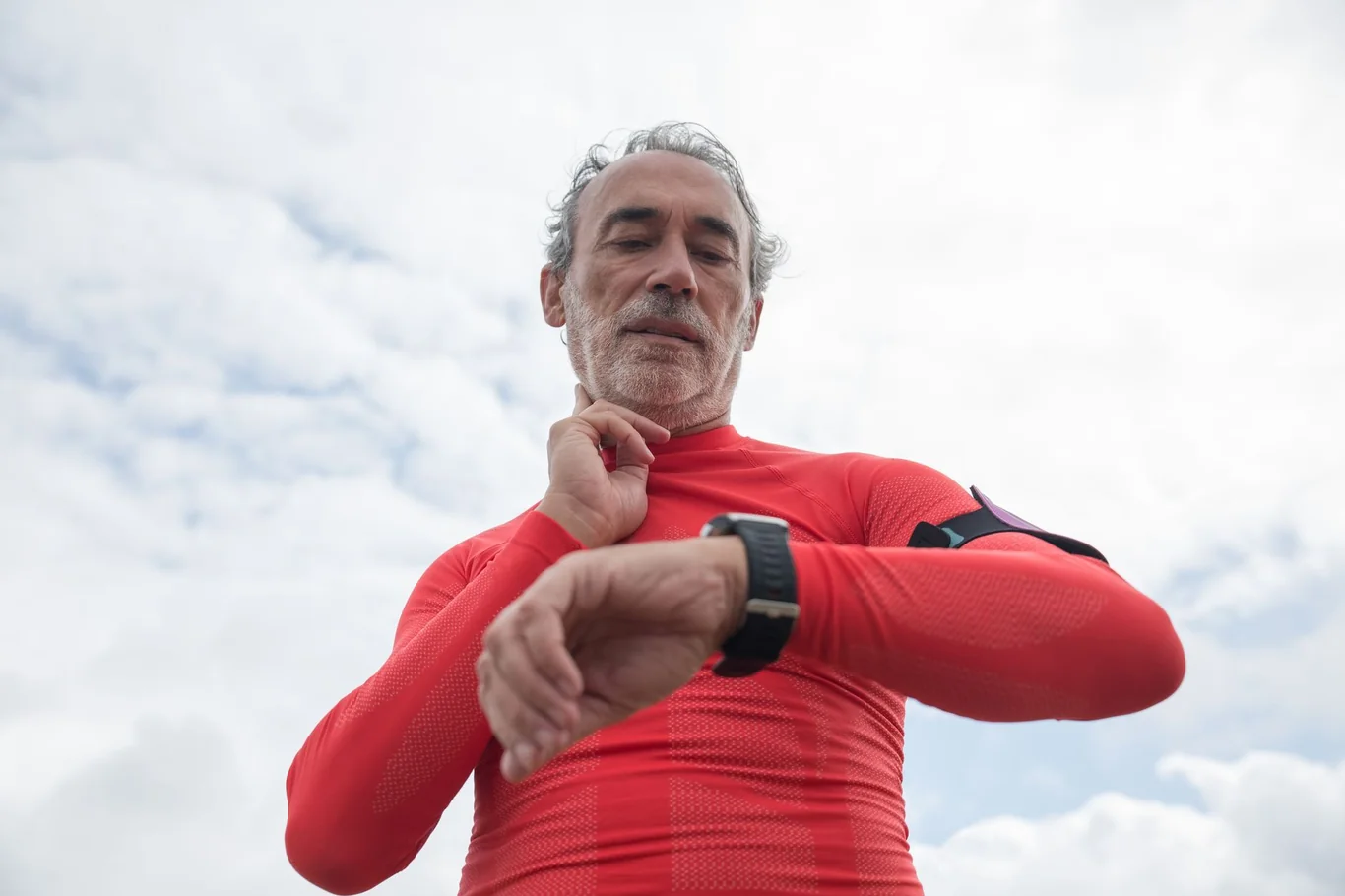
A more personalized approach uses the Heart Rate Reserve (HRR) method, also called the Karvonen formula: target HR = resting HR + (intensity % x HRR), where HRR = HRmax minus resting HR. If your resting HR is 65 bpm and HRmax is 185, your Zone 2 target by HRR is 65 + (0.60-0.70 x 120) = 137-149 bpm - notably higher than the simpler percentage-of-HRmax approach, and often more accurate for conditioned runners whose resting HR has dropped significantly through training.
What constitutes a good heart rate while running depends on whether the session is designed for recovery, base building, or performance. On easy days, keep it in Zones 1-2. On quality sessions, push into Zones 3-4. Zone 5 is reserved for short intervals.
Common factors that push the normal heart rate when running higher than expected include the following:
- Running in heat or humidity (adds 5-10+ bpm)
- Dehydration (blood volume drops, heart works harder per beat)
- Elevated stress or poor sleep (cortisol raises cardiac baseline)
- Caffeine consumption (stimulates cardiac activity)
- Altitude (less oxygen available per breath)
- Running uphill or on technical terrain (mechanical load increases)
- Recent illness or infection (immune response elevates resting HR)
Tracking how your numbers shift across these conditions helps you build a realistic picture of your personal baseline - which matters far more than matching a generic age-based reference.
High Heart Rate When Running - When to Be Concerned
High heart rate when running becomes a concern when it occurs consistently at effort levels that should be easy, or when it produces symptoms. A heart rate of 155 bpm on a recovery jog might be unexpected, but it is rarely dangerous on its own for a healthy person.

The distinction that matters most is whether you can sustain the effort comfortably, or whether you experience chest pain, dizziness, shortness of breath disproportionate to effort, or lightheadedness. The latter warrants stopping immediately and consulting a physician. The former warrants adjusting your pace and investigating the cause.
Common causes of a high heart rate when running:
- Deconditioning - the cardiovascular system has not adapted to running demand yet
- Running at too fast a pace relative to current fitness
- Environmental stressors such as heat, humidity, or altitude
- Accumulated fatigue keeping cardiac workload elevated
- Overtraining - heart rate paradoxically stays elevated even on easy days
- Underlying conditions including anemia, thyroid dysfunction, or arrhythmia
Heart rate recovery after a run is equally informative: a well-trained runner's heart rate typically drops by 15-25 bpm within the first minute of stopping. Slower recovery - less than 12 bpm drop in the first minute - is associated with reduced cardiovascular fitness and, in some research, greater cardiac risk during future hard efforts. Monitoring both your peak running HR and your post-run recovery rate gives you a fuller picture than peak numbers alone.
I have consistently seen runners who begin tracking heart rate recovery improve their post-run 60-second drop from under 15 bpm to over 22 bpm within 8 weeks of adding two dedicated Zone 2 sessions per week. This is one of the most reliable early indicators that base training is actually working.
A chest strap heart rate monitor will give you the most accurate data when investigating whether your high HR is real or a sensor artifact. Optical wrist sensors can overestimate significantly at vigorous effort due to wrist motion artifacts, which can make the normal heart rate when running look alarming when the actual number is fine.
For more on choosing one and getting accurate data from the first session, my chest strap heart rate monitor guide breaks down the key factors.
Is 170 bpm a Good Heart Rate While Running?
The appropriateness of 170 bpm depends entirely on your age and effort level. For a 25-year-old with an estimated HRmax of 195, running at 170 bpm places them at 87% of maximum, an appropriately hard effort for threshold work. For a 55-year-old with an estimated HRmax of 165, sustaining 170 bpm would technically exceed their estimated ceiling. Brief spikes above predicted maximum are physiologically possible and not necessarily dangerous, but if you are routinely seeing these numbers at easy effort, it is worth investigating.
Heart Rate of 190 When Running - What It Means
Heart rate 190 when running is expected for younger runners during hard efforts. A 30-year-old running at 190 bpm is near their estimated maximum, which is exactly where Zone 5 work sits. A 50-year-old at 190 bpm is significantly above their estimated maximum - possible if their true HRmax is higher than the formula predicts, but worth monitoring if it occurs at what feels like moderate effort.

The symptom check remains primary: if you feel stable and can sustain the effort, the number may reflect normal individual variation in HRmax. If you feel unwell at any heart rate, stop and rest.
Here is a reference for how to interpret specific heart rate numbers in context by age group:
Heart Rate | Age 20-34 | Age 35-49 | Age 50-64 | Typical Context |
120-140 bpm | Zone 1-2 (easy) | Zone 2 (easy) | Zone 2-3 (moderate) | Full conversation possible |
140-160 bpm | Zone 2-3 (moderate) | Zone 3-4 (moderate-hard) | Zone 4 (hard) | Short sentences only |
160-180 bpm | Zone 4-5 (hard) | Zone 4-5 (hard-max) | Near or above estimated max | Brief intervals only |
180-200 bpm | Zone 5 / max sprint | Near-max or above estimated | Above estimated HRmax | Brief all-out sprint efforts |
Individual HRmax varies. A healthy runner may safely exceed their estimated maximum during true sprint efforts without cardiac risk.
Resting Heart Rate for Runners - What the Numbers Mean
Resting heart rate for runners is one of the clearest long-term fitness signals available. An untrained adult averages 60-100 bpm at rest. Well-trained endurance runners often see 40-55 bpm. Elite marathon runners can sit in the 30s.
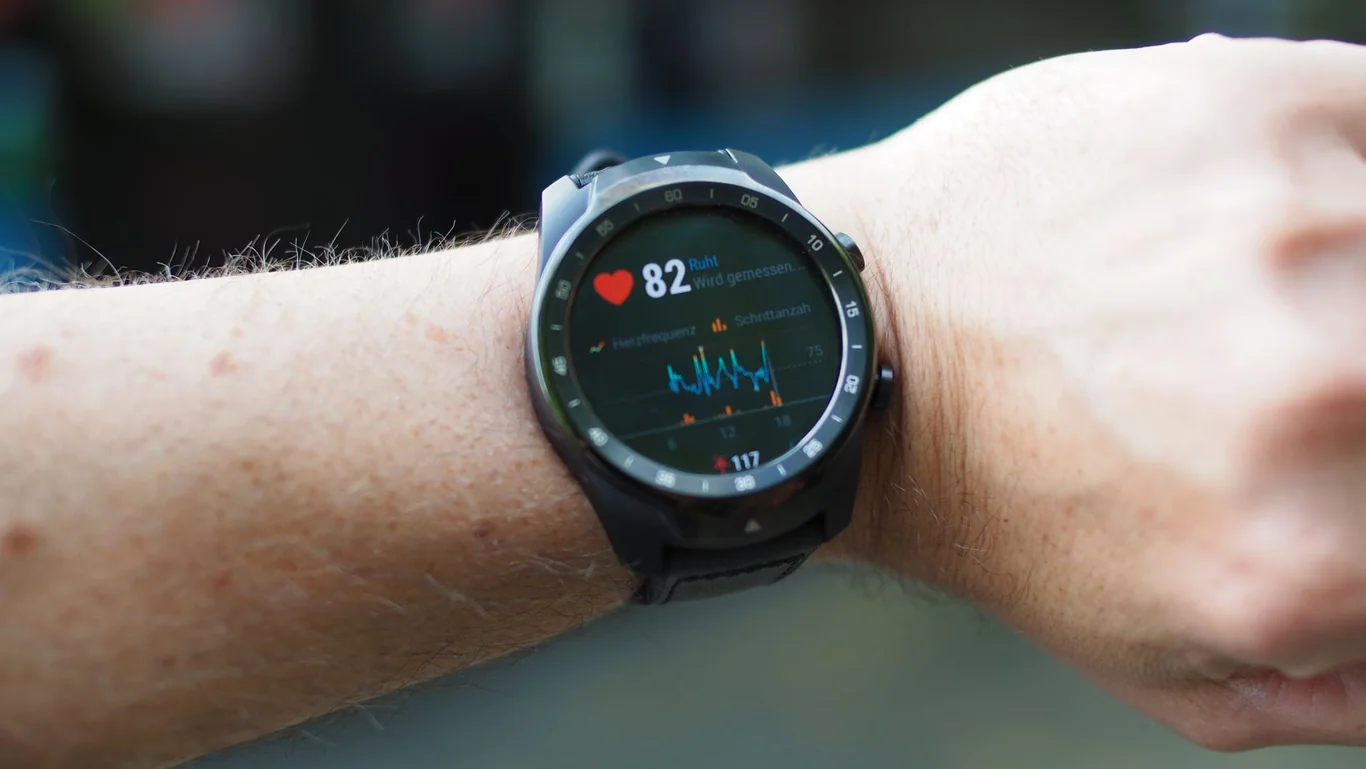
The mechanism is straightforward: regular running training increases stroke volume - the amount of blood pumped per heartbeat. Your heart becomes more efficient and does not need to beat as frequently to circulate the same volume. A comprehensive meta-analysis of 191 studies involving 12,952 participants confirmed that endurance training and yoga were the only exercise types to significantly reduce resting heart rate in both men and women, with endurance training producing the largest reductions among male runners (approximately 9%) (6).
Tracking your normal pulse rate each morning before getting out of bed gives you meaningful data about your recovery and cardiovascular adaptation. An increase of 5-7 bpm above personal baseline is one of the most reliable signals of insufficient recovery, illness onset, or accumulated training stress. This data point matters far more than any single running session's heart rate.
I have seen resting heart rate drop from 72 to 58 bpm in recreational runners who added three consistent Zone 2 runs per week over 10 to 12 weeks with no other lifestyle change. That reduction carried over into noticeably lower in-run heart rates at the same paces within the same training block.
You can also track heart rate variability by age as a complementary metric - HRV captures the variation in time between heartbeats and is a sensitive indicator of autonomic recovery state.
Signs that your resting heart rate is improving through training:
- Your morning HR drops 2-5 bpm over a 4-6 week training block
- Your HR returns to baseline faster after hard runs (improved cardiac recovery)
- You hit the same running pace at a lower heart rate than before
- Your resting HR stays stable or drops slightly during high-stress periods
How to Improve Resting Heart Rate Through Running
How to improve resting heart rate comes down to one primary driver: consistent aerobic training. The adaptation is cumulative and takes weeks to months, but the cardiovascular signal is reliable and well-documented.

Evidence-based strategies to lower your resting heart rate:
- Run consistently at low-to-moderate intensity - Zone 2 training three to five times per week is the most powerful long-term driver of resting HR reduction in runners
- Gradually increase weekly mileage - Volume matters; more aerobic stimulus produces greater cardiac adaptation, provided recovery is adequate
- Include one quality session per week - Threshold work or interval training stresses the cardiac system differently and compounds base training adaptations
- Prioritize sleep - resting HR may rise with poor sleep, and chronic sleep debt can impair cardiovascular adaptation from occurring
- Manage chronic stress - Elevated cortisol chronically raises cardiac output; stress reduction works alongside training
- Stay well-hydrated - Dehydration reduces blood plasma volume, forcing the heart to beat faster to maintain cardiac output
- Allow adequate recovery between hard sessions - Overtraining prevents adaptation and can paradoxically raise resting HR rather than lower it
Understanding what your smartwatch actually measures helps you use these tracking features correctly. See our guide on what a smartwatch does for a breakdown of how wearables monitor and interpret heart rate data.
And for the most reliable running data during training, our comparison of Garmin and Apple Watch accuracy covers the hardware differences in meaningful detail.
Monitoring Normal Heart Rate When Running - Equipment and Accuracy
The monitor you use directly affects the quality of your data - and therefore how useful your normal heart rate when running numbers actually are.

Three main tracking options:
- Chest strap monitors - Electrocardiographic detection; most accurate option; the gold standard for research and serious training; best for detecting arrhythmias and validating zone training
- Optical wrist sensors on smartwatches - Convenient but can overestimate significantly at vigorous effort due to wrist motion artifacts; acceptable for general trend tracking but not precise zone work
- Arm band optical sensors - Better motion stability than wrist placement; more accurate than wrist-based monitors during high-intensity running
Knowing how to check heart rate on iphone or a paired wearable gives you a starting point before investing in dedicated equipment. For most runners using wearables, the trend data matters more than any single reading's precision.
For Apple Watch users, my full Apple Watch series breakdown shows how heart rate sensor accuracy has improved across every generation.
Low-impact cross-training helps maintain cardiovascular adaptation between running sessions. Learning the benefits of walking backwards on a treadmill shows how recovery-intensity work keeps you in Zone 1-2 while reducing lower-body impact stress.
Understanding which muscles a rowing machine works is useful for planning cross-training that maintains aerobic fitness without adding running mileage.
The Bottom Line on Running Heart Rate
Understanding the normal heart rate when running means accepting that individual variation is the rule, not the exception. A fit 45-year-old may run comfortably at 155 bpm, which would exhaust a deconditioned 25-year-old at the same pace. Age-based formulas give you a starting point; your body's response to consistent training gives you the data that actually matters.

The most practical approach: learn your zones based on your estimated or tested HRmax, train consistently in Zone 2 for most sessions, monitor your resting heart rate trend over weeks and months, and use symptom awareness as your primary safety signal. If effort at a given heart rate produces dizziness, chest tightness, or disproportionate breathlessness, that outweighs any number on your screen.
Our guides on how to calculate max heart rate and normal heart rate and age provide additional context for building your personal HR baseline. For runners focused on body composition, understanding how running intersects with the target heart rate for fat burning rounds out the picture.
FAQs
Is 170 a good heart rate while running?
A heart rate of 170 bpm while running is good or concerning depending on your age and current fitness level, since the same number represents very different effort percentages across age groups. For a runner in their mid-20s, 170 bpm falls at roughly 85-90% of estimated maximum, which is appropriate for threshold training but too high for a conversational easy run.
What if my heart rate is 190 when I run?
A heart rate of 190 when running is expected for younger or fit runners during intense efforts, since it falls near the estimated maximum for most adults in their 30s. If you are over 50 and regularly seeing 190 bpm at moderate effort rather than during hard sprints, consult a physician to rule out underlying cardiovascular conditions, since this number would exceed age-based maximum estimates for most people in that age group.
Is 200 bpm while running bad?
A heart rate of 200 bpm while running is not inherently dangerous for young runners during maximal sprint efforts, since some individuals have true HRmax values that reach or exceed 200 bpm, particularly in their teens and 20s. However, sustaining 200 bpm for extended periods or reaching it at easy effort levels rather than brief all-out sprints is a signal to slow down and, if it happens consistently, to consult a healthcare provider.
What is an unsafe running heart rate?
An unsafe running heart rate is less about a specific number and more about the context in which it appears - any heart rate that occurs alongside chest pain, dizziness, shortness of breath disproportionate to effort, or lightheadedness warrants stopping immediately. Without those symptoms, briefly exceeding your estimated maximum heart rate during hard efforts is physiologically common and not automatically dangerous for a healthy adult.
What is a dangerous heart rate?
A dangerous heart rate at rest is generally considered above 100 bpm (tachycardia) when it occurs persistently without exercise, or any heart rate during exercise that accompanies chest pain, severe shortness of breath, or loss of coordination. During running, the threshold is context-dependent: for a healthy adult, heart rates above 85% of estimated maximum sustained for prolonged periods in heat or with poor hydration increase cardiac strain meaningfully, and the symptom check always takes priority over the number itself.
This content is for informational and educational purposes only. It is not a substitute for professional medical advice, diagnosis, or treatment. Always consult with your healthcare provider before starting any new fitness program or using fitness technology for health monitoring.
References
- Kasiak PS, Wiecha S, Ciesliński I, et al. Validity of the Maximal Heart Rate Prediction Models among Runners and Cyclists. J Clin Med. 2023;12(8):2884. doi:10.3390/jcm12082884.
- Shookster D, Lindsey B, Cortes N, Martin JR. Accuracy of Commonly Used Age-Predicted Maximal Heart Rate Equations. Int J Exerc Sci. 2020;13(7):1242-1250. doi:10.70252/XFSJ6815.
- Esteve-Lanao J, Sellés-Pérez S, Arévalo-Chico H, Cejuela R. Towards Accurate Reference Values for Heart Rate and Speed Zones by Aerobic Fitness and Sex in Long-Distance Runners. Sports (Basel). 2026;14(1):29. doi:10.3390/sports14010029.
- Seiler-Viken SA, Mentzoni F, Seiler S, Skarli S, Losnegard T. Contextualizing the Norwegian standardized intensity zone framework in an international sample of endurance practitioners. Sci Rep. 2025;15:34367. doi:10.1038/s41598-025-17023-z.
- Billat V, Palacin F, Poinsard L, Edwards J, Maron M. Heart Rate Does Not Reflect the %VO2max in Recreational Runners during the Marathon. Int J Environ Res Public Health. 2022;19(19):12451. doi:10.3390/ijerph191912451.
- Reimers AK, Knapp G, Reimers CD. Effects of Exercise on the Resting Heart Rate: A Systematic Review and Meta-Analysis of Interventional Studies. J Clin Med. 2018;7(12):503. doi:10.3390/jcm7120503.