
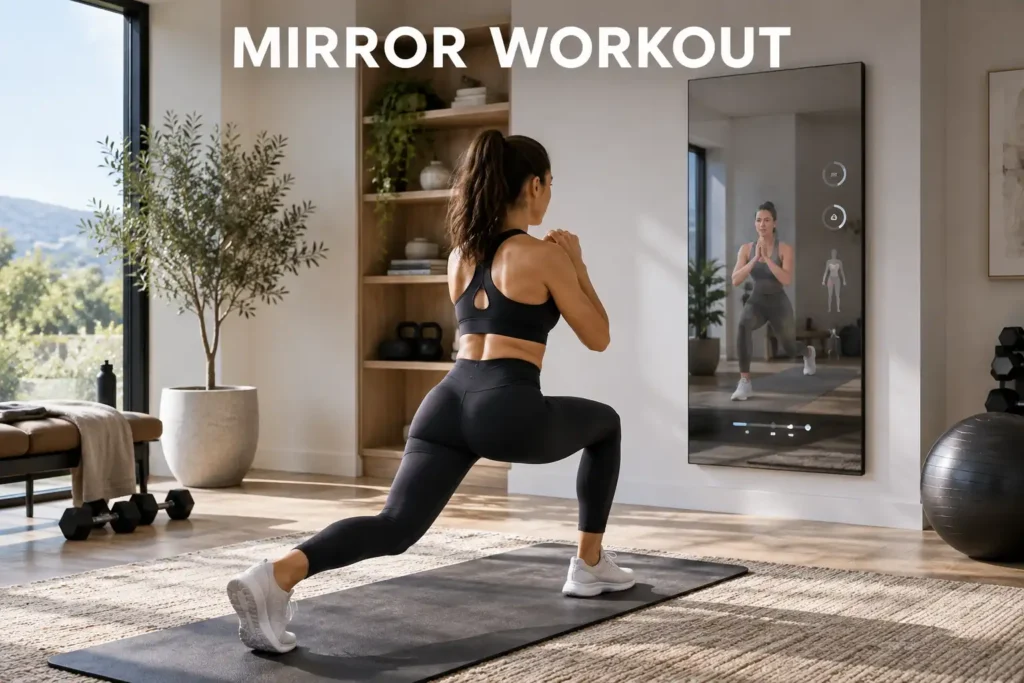
A mirror workout puts an interactive full-length display on your wall and a personal trainer on the screen at the same time. If you've heard the term in home fitness circles, you've probably wondered whether a workout mirror is a clever piece of technology or just expensive furniture. In this guide, I'll break down exactly what a mirror exercise platform is, how the smart mirror workout technology works, what the research says about its effectiveness, and what happened to the Lululemon Mirror that put the category on the map. You'll also get a clear picture of current pricing tiers and the brands worth considering in 2026.

What Is a Mirror Workout - Understanding the Fitness Mirror Category
A mirror workout combines two functions in one device: it reflects your form like a regular gym mirror, and it streams interactive fitness classes directly onto that same glass surface. The instructor appears to float inside the reflection, so you can see both yourself and the trainer at the same time. This dual-view setup is the defining feature of a fitness mirror - and what separates it from a standard wall mirror or a flat-screen TV mounted in a home gym.

I've tracked this category since the original Lululemon Mirror launched in 2018, and the core technology has evolved considerably. Today's smart fitness mirrors use embedded cameras, AI motion-tracking sensors, and high-definition displays to create a guided workout experience that adjusts to your movement in real time. That's a fundamentally different experience from following along with a standard workout video where the instructor has no idea what you're doing.
Workout Mirror vs Smart Home Gym
A smart home gym typically bundles multiple pieces of equipment; a workout mirror takes a different approach - it packs the coaching technology into a single sleek panel that doubles as a mirror when the screen is off. The result is home gym equipment that looks like furniture when idle and functions like a boutique fitness studio when active.
Key components of a workout mirror:
- A full-length reflective display, typically 40 to 67 inches tall
- An integrated front-facing camera for motion tracking and form analysis
- Embedded speakers and microphone for audio coaching and live class interaction
- Built-in or connected sensors for rep counting and movement feedback
- A subscription content platform delivering live and on-demand classes
How a Mirror Workout Works - The Technology Behind the Display
When you start a mirror workout session, the screen transitions from a standard reflection to a semi-transparent display. You see the instructor in front of you while your own reflection stays visible in the background - this is the mirror workout machine's defining advantage over a mounted TV. You can check your form against the trainer's movements without breaking your line of sight, which is the whole point.
How AI Motion Tracking Delivers Feedback
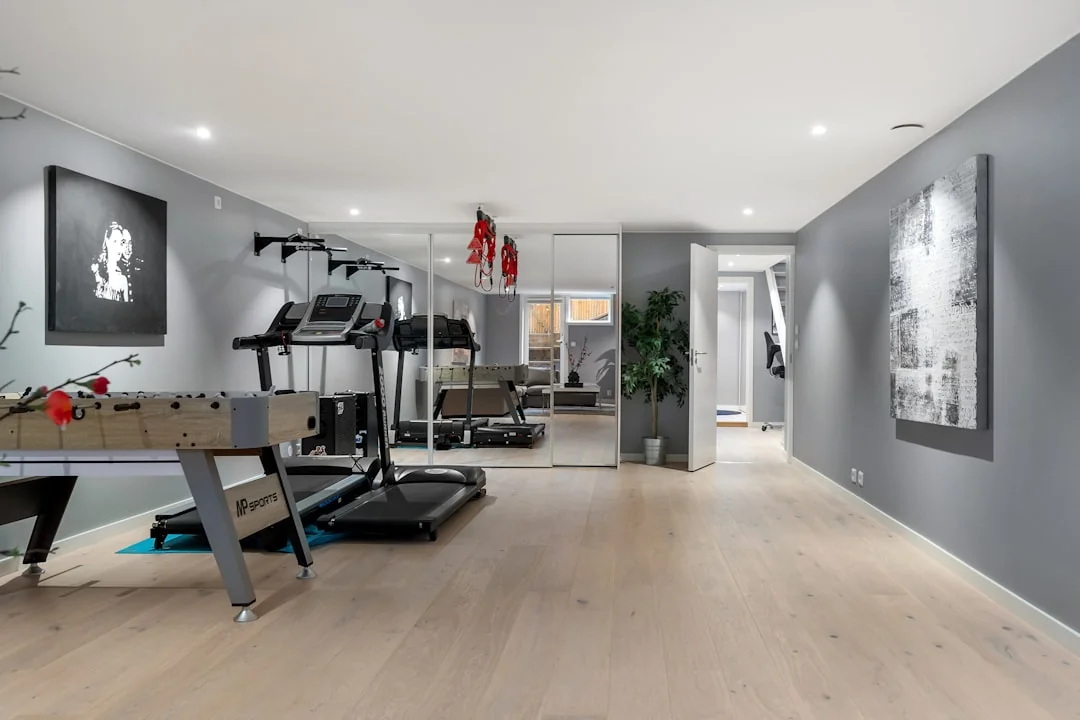
The AI layer is what makes real-time feedback possible. The built-in camera tracks your body position frame by frame. Depending on the platform, it can count your reps, flag when your knees are caving during a squat, or adjust coaching cues based on your movement speed. Research in AI-guided exercise technology supports this approach: a 2024 controlled study found that a virtual exercise coach delivering real-time verbal feedback significantly improved focused attention and perceived usability during workouts - findings from an exoskeleton-assisted coaching context that parallel what mirror-based real-time guidance aims to replicate (1).
Real-time feedback also changes the form-correction loop in a meaningful way. With a standard mirror, you notice a problem and try to fix it on the next rep. With an interactive workout mirror, the system flags the issue as it happens - closer to what a live coach does in a studio setting, but without the studio cost or scheduling constraints.
One practical note worth knowing before you buy: the front-facing camera used for motion tracking raises privacy questions for some users. Reputable brands allow users to disable the camera entirely and still access class content without live tracking - if privacy is a concern, confirm this option is available on any model you're evaluating.
How to Set Up a Workout Mirror
To get started with a mirror workout system, the typical setup process follows these steps:
- Mount or position the mirror on a wall or stand (some models require professional installation with wall anchors)
- Connect the device to your home Wi-Fi network and create your platform account
- Subscribe to the content library for class access
- Complete an onboarding fitness assessment so the AI can calibrate to your current level
- Choose a live or on-demand class from the content menu and begin your first session
For a detailed installation walkthrough, our smart home gym setup guide covers the full process for smart fitness equipment including wall-mounted systems.
What You Get with a Mirror Workout System - Class Types and Content
The content library is what justifies the subscription cost of any mirror workout platform. Most offer hundreds to thousands of on-demand classes across a broad range of disciplines, plus live sessions at scheduled times. A 2026 study found that platform interactivity and content quality directly drive exercise behavior - with real-time communication transforming users from passive observers into active participants, accounting for over 60% of the variance in exercise engagement (2).

In my experience reviewing these platforms, class variety is what separates long-term users from those who cancel after three months. Platforms with fewer than 500 on-demand classes tend to feel repetitive by week eight.
Common workout categories available on smart fitness mirror platforms:
- Strength training and HIIT circuits
- Yoga and Pilates
- Cardio kickboxing and boxing
- Barre and dance fitness
- Cycling (with a compatible stationary bike add-on)
- Stretching and mobility work
- Meditation and breathwork
- Personal training sessions (one-on-one, typically at extra cost)
Class lengths typically range from 5 to 60 minutes, which makes it straightforward to fit a session into any schedule. The instructor-led format keeps sessions structured without requiring you to make programming decisions yourself - a feature that research on home exercise adherence consistently highlights as a major motivational driver (3). User feedback on workout mirrors consistently confirms this: people who stick with the format long-term cite structure and class variety as the primary reasons they keep showing up.
The Smart Fitness Mirror Market - Current Brands Worth Knowing
The category is smaller than it was at its pandemic-era peak, but several brands remain active with refined platforms. The original Lululemon Mirror is no longer sold, but alternatives now fill the gap - and some offer more specialized functionality than the Mirror ever did. The AEKE K1 is the standout for AI form coaching with built-in resistance, and the Echelon Reflect is the most established subscription platform still selling. Mirror workout reviews from long-term users consistently point to content library depth and AI feedback responsiveness as the key factors that separate platforms worth keeping from those worth canceling.
The Fiture Mirror is one of the alternatives worth evaluating; my Fiture Mirror review covers its AI motion tracking, display quality, and how it compares on coaching depth and subscription value.
Brand | Status in 2026 | What It Offers |
AEKE K1 | Available | AI form coaching with built-in cable resistance |
Echelon Reflect | Available | Most established subscription platform, live classes |
Open Android mirrors | Available | Class access without any platform or subscription |
Lululemon Mirror | Hardware discontinued in late 2023 | Existing units stream Peloton classes via lululemon Studio |
FITURE | Closed US operations in 2023 | No longer sold |
NordicTrack Vault and ProForm Vue | No longer sold | Discontinued hardware |
How Workout Mirrors Compare to Tonal and Tempo
If strength is your focus, our full review of whether Tonal is worth it breaks down the value proposition in detail.
For a broader comparison of how these options stack up against other smart home fitness equipment, the best smart home gym guide is the most useful starting point.
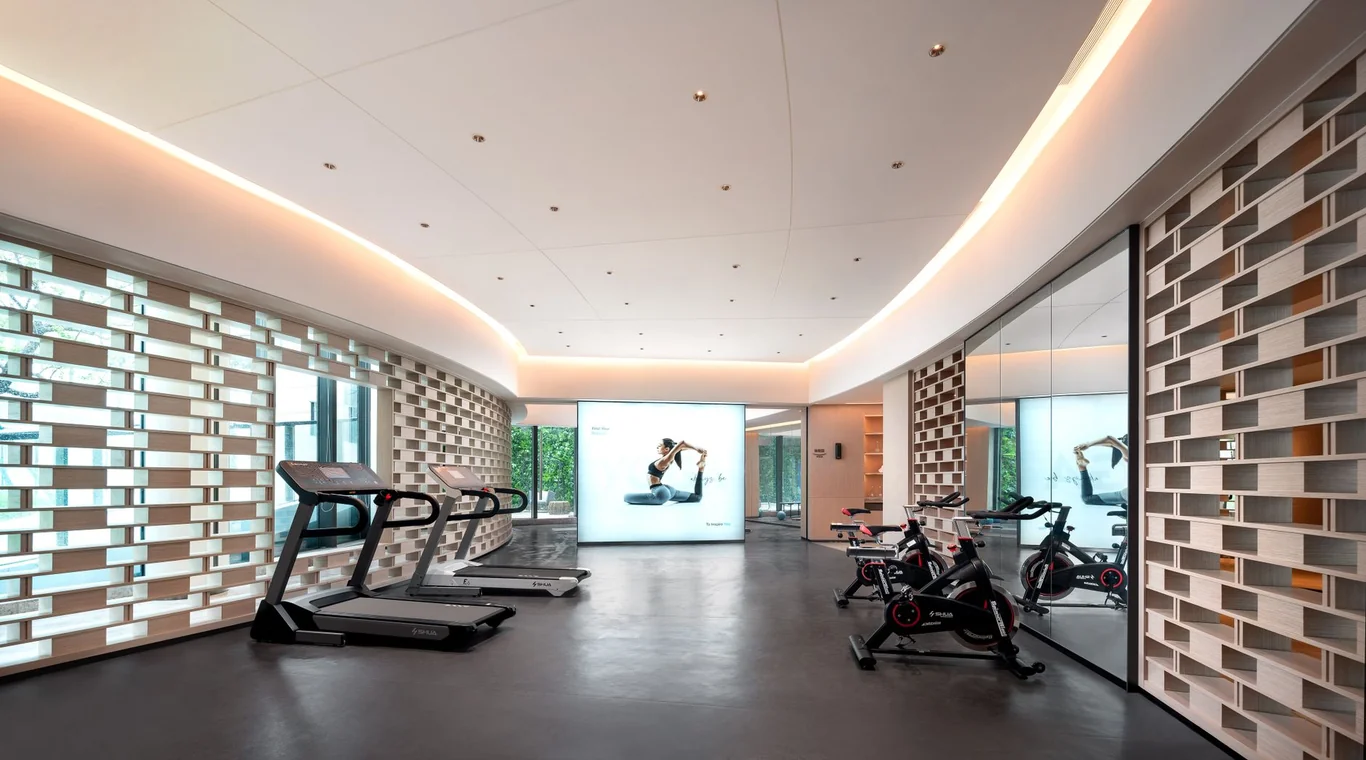
Note: Tonal and Tempo offer a different physical form factor than a traditional mirror but compete for the same budget and fitness use case. The best fitness mirror for your home depends on whether you prioritize aesthetics, resistance training depth, or class variety. If you are comparing the two most prominent options specifically, our breakdown of Tonal vs Mirror covers the key differences and which platform suits which type of user.
For a detailed look at the Tempo Move specifically, my Tempo Move guide covers its camera-based coaching system, hardware specs, and how it fits buyers who want AI strength training without a traditional mirror format.
What Happened to the Lululemon Mirror - Discontinuation and What It Means for Buyers
No discussion of the mirror workout category is complete without addressing the Mirror - the product that first put smart fitness mirrors on the mainstream map. Lululemon acquired Mirror in 2020 for $500 million, riding the wave of pandemic-driven home fitness demand. Within three years, it wrote down the asset's value to $58 million - a nearly 90% reduction - and halted hardware production in fall 2023.

The story of the Lululemon Mirror discontinuation is a cautionary tale about the home fitness market cycle. Pandemic conditions created demand that largely collapsed when gyms reopened. Lululemon stopped selling the hardware at the end of 2023 and handed its content to Peloton through a five-year partnership, so existing owners kept their lululemon Studio membership (now with Peloton classes) but no new devices are made.
What the Mirror Shutdown Means for Buyers
The full context of what happened - and what it means for anyone considering used Mirror hardware today - is covered in our article on the Lululemon Mirror discontinuation. This history matters when evaluating any smart fitness mirror today: checking a brand's financial stability and platform durability is as important as reviewing the hardware specs. A beautiful mirror becomes an expensive picture frame if the company shuts down the content platform.
For context on how other subscription-based fitness brands have navigated these same pressures, our Peloton review addresses the platform durability question directly.
How Much Does a Mirror Workout Cost - Full Pricing Breakdown
Cost is the most common reason people hesitate before buying a mirror workout machine. The price involves two separate expenses: an upfront hardware purchase and a recurring monthly subscription for class access. The subscription, potential installation costs, and long-term commitment add up to a total that surprises many users who focused only on the device price.

The Three Workout Mirror Price Tiers
The workout mirror market currently spans three broad tiers:
Entry-level systems focus primarily on class streaming and basic motion feedback. These mirror exercise platforms carry the most accessible hardware price in the category and appeal to anyone who wants guided classes without a large upfront commitment. Class library size and AI feedback depth are both more limited at this tier than at the options above it.
Mid-range systems add larger displays, live classes, and deeper on-demand libraries. This is where most people who research the category land. The Echelon Reflect is the clearest example at this tier, and the step up from entry-level shows most in class production quality and library depth rather than in form tracking, which subscription mirrors at this tier still do not offer.
Premium smart gym systems - including AI-tracking mirrors like the AEKE K1 and resistance-based platforms like Tonal - carry the highest hardware cost in the category and deliver technology that active gym-goers find most comparable to a staffed fitness studio. At this tier, the subscription commitment and hardware investment are both significant, which makes evaluating platform durability especially important.
The NordicTrack Vault sits in this same premium tier; my NordicTrack Vault review covers its folding wall-mount design, built-in class library, and how it compares to mirror platforms at a similar price point.
Tier | Hardware Cost | What You Get |
Entry-level | Most accessible in the category | Class streaming and basic motion feedback, more limited class library and AI depth |
Mid-range | Step up from entry-level | Larger displays, live classes, deeper on-demand libraries (Echelon Reflect), still no form tracking |
Premium smart gym | Highest in the category | AI-tracking mirrors (AEKE K1) and resistance platforms (Tonal), closest to a staffed fitness studio |
Why the Monthly Subscription Adds Up
Across all tiers, the monthly subscription is the expense most users underestimate. Over two to three years, the cumulative subscription cost often exceeds the original hardware price, which makes the monthly fee the most important number to evaluate before committing.
Some users specifically look for options that reduce the subscription burden over time. Our guide to the best fitness mirror without subscription explores brands that offer more flexibility on content access. For a full breakdown of what affects fitness mirror cost across specific brands and current pricing, our dedicated pricing guide has the most up-to-date figures.
Are Mirror Workouts Effective - What the Research Actually Shows
Home fitness technology is only worth the investment if it produces real results. The evidence base for smart fitness mirrors specifically is still maturing - the category is too new for large, long-term controlled trials. But the broader research on home-based interactive exercise is strong.

What the Research Says About Home Exercise
A 2025 systematic review analyzing 2,304 studies on digital technology in home-based exercise found that intelligent training systems - including AI-guided platforms like workout mirrors - substantially improve exercise accessibility and adherence (3). A separate RCT in breast cancer survivors found that structured home-based exercise programs significantly improved quality of life and cardiorespiratory fitness over a 12-week period (4).
Having personally tested platforms that use live rep-counting and form correction during strength training sessions, I find the corrective feedback most valuable during compound movements - a squat where depth is off or a press where your elbows flare gets flagged in the moment rather than after the set ends, which is where genuine form improvement actually happens.
Form Feedback and Injury Prevention Evidence
Real-time form feedback appears to be particularly valuable for injury prevention. In an as-treated analysis of participants who consistently used real-time wearable feedback, injury rates were approximately 47% lower than in the control group (5) - though the study's primary intention-to-treat analysis found no significant difference, a limitation the authors attributed to inconsistent device setup among participants. That study used wearables rather than a smart mirror, but the corrective-feedback principle applies directly to what an interactive workout mirror provides during training.
A 5-year ecological case study following users of the Tonal smart resistance system found sustained adherence alongside meaningful improvements in body composition, muscular strength, and cardiovascular health (6). Early data from a small cohort, but encouraging for the category overall.
Study | Key Finding | Ref |
2024 controlled study of a virtual exercise coach | Real-time verbal feedback significantly improved focused attention and perceived usability | 1 |
2026 study on online fitness platform features | Interactivity and content quality accounted for over 60% of the variance in exercise engagement | 2 |
2025 systematic review of 2,304 studies | Intelligent training systems substantially improve exercise accessibility and adherence | 3 |
RCT in breast cancer survivors | Home-based exercise improved quality of life and cardiorespiratory fitness over 12 weeks | 4 |
RCT on wearable real-time feedback | Injury rates about 47% lower in the as-treated analysis, no significant difference in the primary analysis | 5 |
5-year ecological case study of Tonal users | Sustained adherence with gains in body composition, strength, and cardiovascular health | 6 |
Evidence-backed benefits of structured home exercise with real-time guidance:
- Improved exercise adherence compared to unstructured home training without instructor structure
- Reduced form-related injury risk through corrective feedback delivered during the movement itself
- Better cardiovascular fitness over sustained periods of structured exercise programming
- Higher motivation from class formats, instructor presence, and visible progress tracking
- Greater scheduling flexibility without the time cost of commuting to a gym or studio
Who Should Get a Workout Mirror - and Who Should Look Elsewhere
A smart mirror workout serves a specific type of home exerciser well, and it is a poor fit for others. Based on user patterns and the research on home fitness adherence, here is how to honestly assess whether it fits your situation before committing to this category of equipment.
A workout mirror is a strong fit if you:
- Already work out at home consistently and want better instruction and variety
- Prefer guided classes over building your own programming from scratch
- Have a dedicated space of at least 6 by 6 feet available for the device
- Value equipment that looks like furniture when the screen is off
- Want a flexible option that works for multiple household members with different fitness levels
A workout mirror is probably not the right choice if you:
- Are new to exercise and still unsure whether you'll maintain the habit past 90 days
- Train primarily for heavy powerlifting, Olympic lifting, or sport-specific strength work
- Have unreliable internet or face regular connectivity issues at home
- Already pay for a gym membership you would not cancel
- Need the flexibility to train outdoors or while traveling regularly
For users who fall somewhere in the middle, our guide to the best smart home gym compares workout mirrors against the full range of smart home fitness alternatives - including cable machines, smart bikes, and rowing systems - so you can evaluate which format fits your goals and budget.
Making Your Fitness Mirror Decision
The mirror workout category has matured past its pandemic hype phase, and that is genuinely good news for anyone shopping in 2026. Prices are more competitive, platforms have refined their content libraries, and the cautionary tale of the Lululemon Mirror has pushed remaining brands toward more durable business models.
For buyers specifically researching the Peloton Mirror, my Peloton Mirror review covers the hardware, class access, and how it compares to current mirror options.
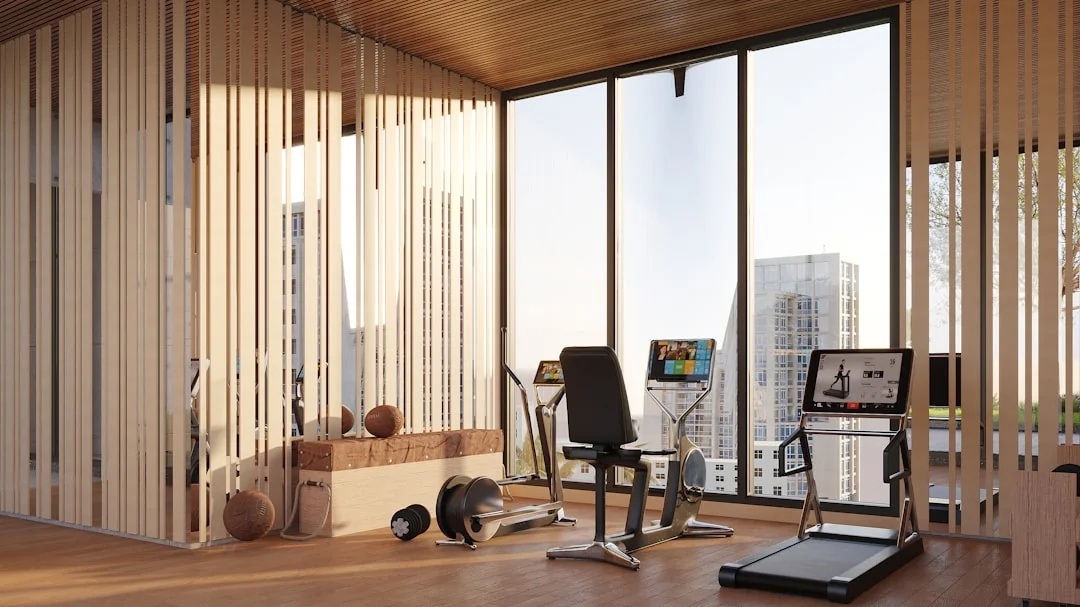
The best fitness mirror is only as good as your commitment to using it. One practical step before you order: measure at least 6 by 6 feet of clear floor space and confirm your wall can support a mounted panel - both are worth doing before the hardware arrives. If guided, structured classes are what you need to stay consistent - and you have the space and budget for it - a workout mirror is actually a legitimate long-term investment in your home training. For a full comparison of current options, our guide to the best workout mirror covers the models worth considering alongside the specs and subscription details that matter most for real buying decisions.
FAQs
Does the mirror workout still work?
Smart fitness mirrors as a category remain fully operational in 2026: the Echelon Reflect still runs its class library and subscription, the AEKE K1 adds AI form coaching, and open Android mirrors from several newer brands work without any platform at all. FITURE closed its US operations in 2023, and the NordicTrack Vault and ProForm Vue are no longer sold. The Lululemon Mirror hardware was discontinued in late 2023, but existing units still work through the lululemon Studio membership, which now streams Peloton classes.
How much does a mirror workout cost?
A mirror workout system involves two separate costs: the upfront hardware purchase and a recurring monthly subscription for class access. Entry-level smart mirror platforms carry the most accessible hardware price in the category; premium AI-integrated and resistance-based systems are significantly more expensive. The monthly subscription is what most users underestimate - over two to three years, it typically exceeds the hardware price. Our separate pricing guide covers current figures for all active brands.
What is the best workout mirror?
The best workout mirror depends on your primary fitness goal. The AEKE K1 is the strongest option for AI form coaching with built-in cable resistance, the Echelon Reflect is the most established choice for live classes, and open Android mirrors are the most accessible entry point for anyone who wants no subscription. Tonal and Tempo compete for the same budget but are screen-based systems rather than mirrors. Our best workout mirror guide covers all current options with full spec and subscription comparisons.
Can you still buy the Lululemon Mirror?
You cannot buy a new Lululemon Mirror - lululemon stopped selling the hardware at the end of 2023 and wrote down its value by nearly 90% before pivoting away from hardware entirely. Used units appear on secondary markets and still work with an active lululemon Studio All-Access membership ($39 per month), but there is no stated end-of-support date, so a used purchase carries real long-term risk.
How does a workout mirror work?
A workout mirror works by combining a semi-transparent display with a front-facing camera and AI motion-tracking software in a single full-length panel. The screen shows an instructor while simultaneously reflecting your own image, which allows real-time form comparison side by side. The camera analyzes your movement to count reps, flag form errors, and adjust coaching cues as you train.
This content is for informational and educational purposes only. It is not a substitute for professional medical advice, diagnosis, or treatment. Always consult with your healthcare provider before starting any new fitness program.
We are always looking for expert inputs to make our content even better and more useful.
References
- Maharjan R, Mendu S, Mariani M, Abdullah S, Hansen JP. Exploring user engagement with real-time verbal feedback from an exoskeleton-based virtual exercise coach. Digital Health. 2024;10:20552076241302652. doi:10.1177/20552076241302652
- Zhang L, Du Y, Li Y. From screen to sweat: how platform features translate into exercise behavior via perceived value in online fitness live streaming. Frontiers in Psychology. 2026;17:1869785. doi:10.3389/fpsyg.2026.1869785
- Zhou T, Zhang S, Liu S, Yu J. Digital technology integration in home-based exercise: a systematic review of research evolution, applications, and impact mechanisms. BMC Public Health. 2025;25:3528. doi:10.1186/s12889-025-24679-9
- Farajivafa V, Khosravi N, Rezaee N, Koosha M, Haghighat S. Effectiveness of home-based exercise in breast cancer survivors: a randomized clinical trial. BMC Sports Science, Medicine and Rehabilitation. 2023;15:96. doi:10.1186/s13102-023-00710-7
- Van Hooren B, Plasqui G, Meijer K. The effect of wearable-based real-time feedback on running injuries and running performance: a randomized controlled trial. American Journal of Sports Medicine. 2024;52(3):750-765. doi:10.1177/03635465231222464
- Nguyen TH, Yamamoto T, Cho D, Nguyen TL, Goldman P, Dolezal BA. Five years later - the impact of the COVID-19 pandemic on physical performance and cardiometabolic health using a smart home gym: an ecological case study. International Journal of Environmental Research and Public Health. 2025;22(5):762. doi:10.3390/ijerph22050762