
How to set up a smart home gym starts with three decisions most guides skip entirely: space, infrastructure, and the subscription model behind your equipment. Buying the hardware first and figuring the rest out later leads to equipment that barely fits the room, a Wi-Fi signal that cuts out mid-class, and monthly fees that outlast your motivation. Getting the foundation right from day one saves thousands in regrettable purchases and creates a setup you will actually use. This guide covers every step in sequence - from assessing your space and setting a realistic budget, to selecting connected equipment and building the habits that keep a smart home gym running for years.

How to Set Up a Smart Home Gym - Start with Space and Your Goals
Before purchasing any equipment, the most important step is assessing the physical space you have and defining what you actually want to achieve. This combination - not equipment brand names or spec sheets - determines which setup will work and which will collect dust by month three.
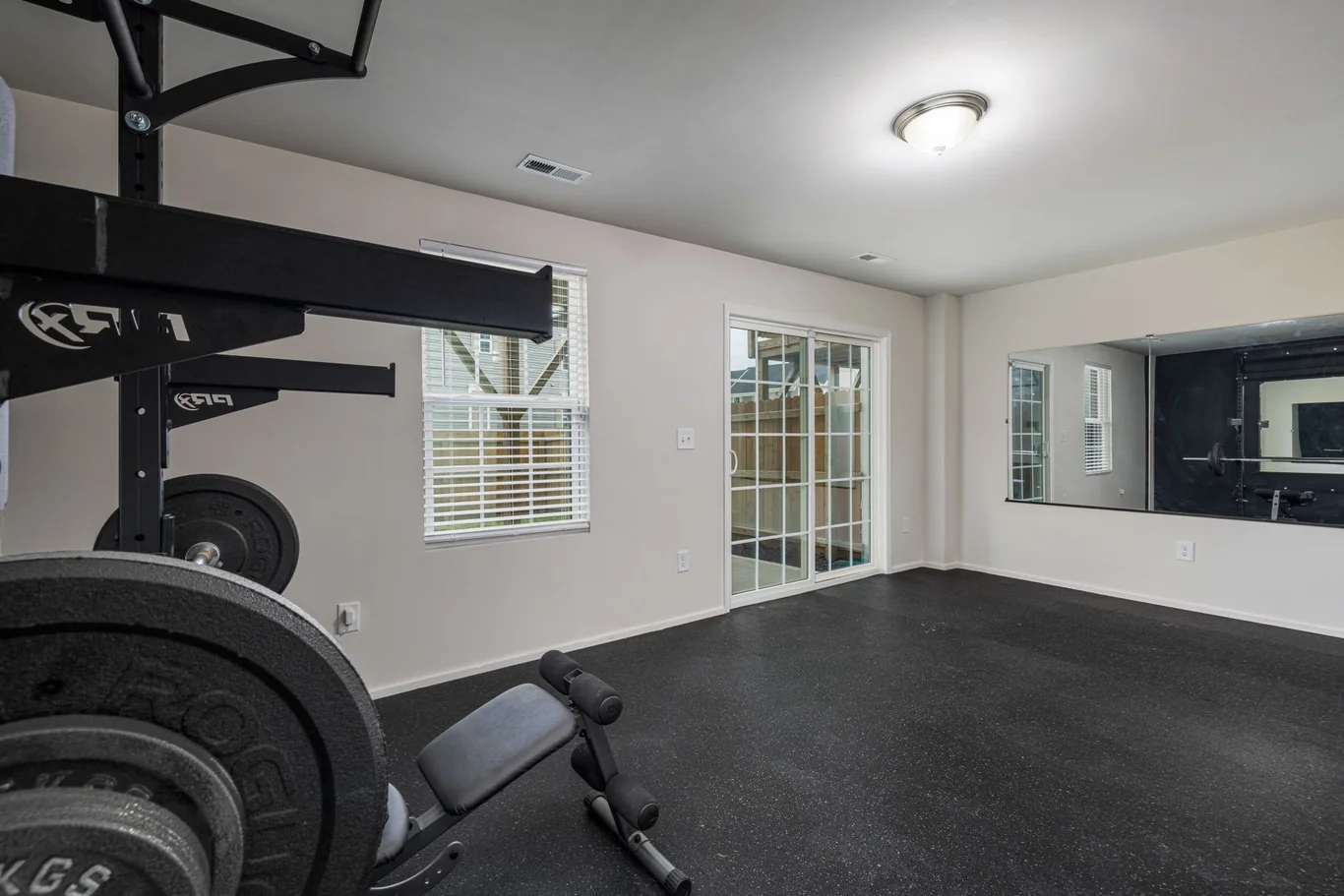
Minimum recommended floor area is around 100 square feet for a functional multi-use setup. Wall-mounted strength systems and quality smart home gym equipment picks like compact cable towers can work in spaces as small as 50 to 60 square feet when equipment is chosen deliberately.
Assessing Your Smart Home Gym Space Requirements
For your space assessment, check these factors before buying anything:
- Ceiling height (minimum 8 feet for any jumping movements or overhead work with a pull-up bar)
- Ventilation and airflow (poor air circulation is one of the most frequently cited reasons people stop using a home gym)
- Flooring type (concrete and hardwood transmit impact and noise; rubber flooring is essential for any motorized cardio equipment)
- Outlet proximity and circuit capacity (most smart cardio equipment requires a dedicated 20-amp circuit to avoid tripping breakers during high-intensity sessions)
- Wi-Fi signal strength (test in the actual corner of the room where equipment will sit, not the adjacent hallway)
Your goal shapes your space requirements as much as your square footage does. Strength-focused setups need less floor clearance than cardio-heavy ones. Mixed-use setups require deliberate equipment placement so machines do not obstruct each other's functional ranges.
Research consistently demonstrates that home-based exercise achieves outcomes comparable to gym-based training when the environment supports sustained adherence (1). The space assessment step is where that adherence foundation is built - or where it gets undermined before a single workout happens. If you have not decided whether a connected setup is right for your situation, our resource that explains what a smart home gym really is also covers the full scope of connected fitness options and what differentiates them from conventional home gyms.
Choosing Equipment for Your Smart Home Gym - A Three-Tier Approach
Equipment selection is where most setups go wrong - through overspending on day one or buying mismatched pieces that work against each other. The most practical framework is a three-tier approach based on budget and current commitment level.

Tier | Budget Range | Core Equipment | Smart Features | Typical Subscription |
Starter | Under $500 | Dumbbells, resistance bands, mat | Wearable only | None required |
Mid-Range | $1,000 - $3,000 | Smart bike, fitness mirror, adjustable dumbbells | Live classes, tracking | $15 - $45/month |
Premium | $5,000+ | All-in-one cable system, connected treadmill | AI coaching, real-time form feedback | $45 - $60/month |
Starter Smart Home Gym Setup (Under $500)
A starter setup does not require smart technology to be effective. Adjustable dumbbells, a resistance band set in three tensions, a yoga mat, and a door-mounted pull-up bar cover beginner to intermediate strength training comprehensively. Apple Watch or any entry-level fitness wearable handles heart rate monitoring and session logging without additional hardware costs. Buyers adding a smartwatch to their home gym setup who are deciding between Apple and Samsung can find a detailed platform comparison in my Apple Watch and Galaxy Watch comparison.
The benefit of starting here is zero subscription overhead and maximum flexibility. You build habits before committing to any platform or ecosystem. The best smart home gym for beginners lays out the most accessible starting points for this tier if you want a curated equipment list without the research overhead.
Mid-Range Smart Home Gym ($1,000 to $3,000)
At this tier, connected equipment becomes the center of the setup. The highest-impact additions include a smart stationary bike or under-desk elliptical, a fitness mirror with coached content, and an app-connected dumbbell system. A single class subscription to Peloton, Apple Fitness+, or iFIT rounds out the experience. If you are deciding whether Peloton is the right subscription for your setup, my Peloton value review covers the full cost structure and who gets the most from the platform.
Mid-range smart setups require a stable download speed of at least 25 Mbps for reliable HD streaming. If your gym space is more than 50 feet from your router or behind concrete walls, a mesh Wi-Fi node installed in the gym resolves most connectivity issues before they become session-ending problems.
Digital technology integrated into home-based exercise has been shown to significantly improve adherence through real-time feedback loops, personalized goal-setting, and AI-driven adaptive programming (2). The connected layer of a mid-range setup delivers these mechanisms in a format that most people sustain better than solo, unguided training.
Premium Smart Home Gym ($5,000+)
Premium setups center around all-in-one smart resistance systems. Tonal 2, Speediance Gym Monster, and similar wall-mounted cable machines provide AI-adjusted resistance, real-time form cues, and adaptive programming in a relatively small footprint.
I gave more weight to wall-mounted all-in-one systems at this tier because they consolidate what would otherwise be four or five separate machines into a single anchor point, which matters enormously in real-world home spaces. My smart home gym comparison guide ranks the top all-in-one systems across AI coaching quality, resistance range, and subscription cost for buyers evaluating the premium tier.
Add a connected treadmill for a complete premium setup. Our best treadmill for home review covers the top models tested across motor reliability, cushioning quality, and long-term durability. This combination covers the full spectrum of training in a unified digital ecosystem.
Planning the Real Cost of a Smart Home Gym Setup
One of the most underestimated aspects of how to set up a smart home gym is the ongoing subscription cost. Almost every smart fitness device requires a platform membership to access coached workouts, performance analytics, and adaptive programming. Readers choosing between the iFIT and Peloton ecosystems specifically can compare subscription costs, hardware quality, and content libraries in my NordicTrack and Peloton platform comparison.

Platform | Monthly Cost | What it Unlocks |
Tonal Coach | $59.95 | AI strength coaching, adaptive resistance, progress analytics |
Peloton All-Access | $44.00 | Unlimited classes across all Peloton equipment and app |
iFIT Family Plan | $33.00 | NordicTrack and ProForm equipment integration, on-demand and live sessions |
Zwift | $19.99 | Virtual cycling and running with structured training plans |
Apple Fitness+ | $9.99 | Guided workouts tied to Apple Watch metrics |
A mid-range setup running one subscription adds $200 to $540 per year on top of equipment costs. Over five years, that compounds to $1,000 to $2,700 in subscription spend - a figure worth including in your total-cost calculation before locking into a specific platform's hardware ecosystem.
Peloton's value depends on your specific goals and workout style, and Tonal's value depends on how often you actually strength train. Answering these questions before purchasing the hardware prevents the expensive trap of owning a device whose platform does not match how you train. The best budget smart home gym resource offers an alternative framework for people who want connected functionality without premium platform costs.
Technology Foundation - Connectivity and Integration
Smart home gym equipment performs at its best when the underlying infrastructure supports it. A premium connected machine on a weak Wi-Fi signal or an under-powered circuit delivers a degraded experience that gradually erodes motivation to use the equipment at all.

Steps for a solid technology foundation (complete these before equipment arrives):
- Test Wi-Fi signal strength in the exact spot where each piece of equipment will sit - not the nearest hallway or adjacent room.
- Upgrade your router setup if signal tests below 50 Mbps or drops frequently. A mesh node installed in the gym adds under $100 and eliminates the most common smart equipment frustration.
- Verify power circuit capacity before motorized cardio equipment arrives. Most smart treadmills and bikes require a dedicated 20-amp circuit to avoid nuisance tripping.
- Choose your primary platform before purchasing hardware. Most smart systems - Tonal, Peloton, iFIT - are closed ecosystems. Switching platforms later typically means replacing the hardware entirely.
- Integrate wearables from day one. Apple Watch, Garmin, and Oura Ring connect to most platforms and unify strength and cardio data in a single tracking view.
High-tech fitness tools have been shown to deliver proven behavior-change mechanisms - real-time performance feedback, goal visualization, and social accountability - that measurably increase both intrinsic motivation and sustained exercise participation (3).
Smart Home Gym Options for Special Populations
Not every equipment setup suits everybody. Two groups frequently overlooked in generic smart home gym guides are people managing osteoporosis and those dealing with sciatic nerve conditions.
For osteoporosis: Weight-bearing resistance training is among the most evidence-backed interventions for improving bone density and reducing fracture risk. Home-based resistance exercise programs have demonstrated significant improvements in physical function and quality of life in populations managing musculoskeletal conditions (4). Focus on smart resistance systems with wide, adjustable load ranges that allow progressive overload at low starting weights without the balance demands of free-standing barbell work. Tonal and Speediance both include guided programs designed for joint-safe loading progressions.
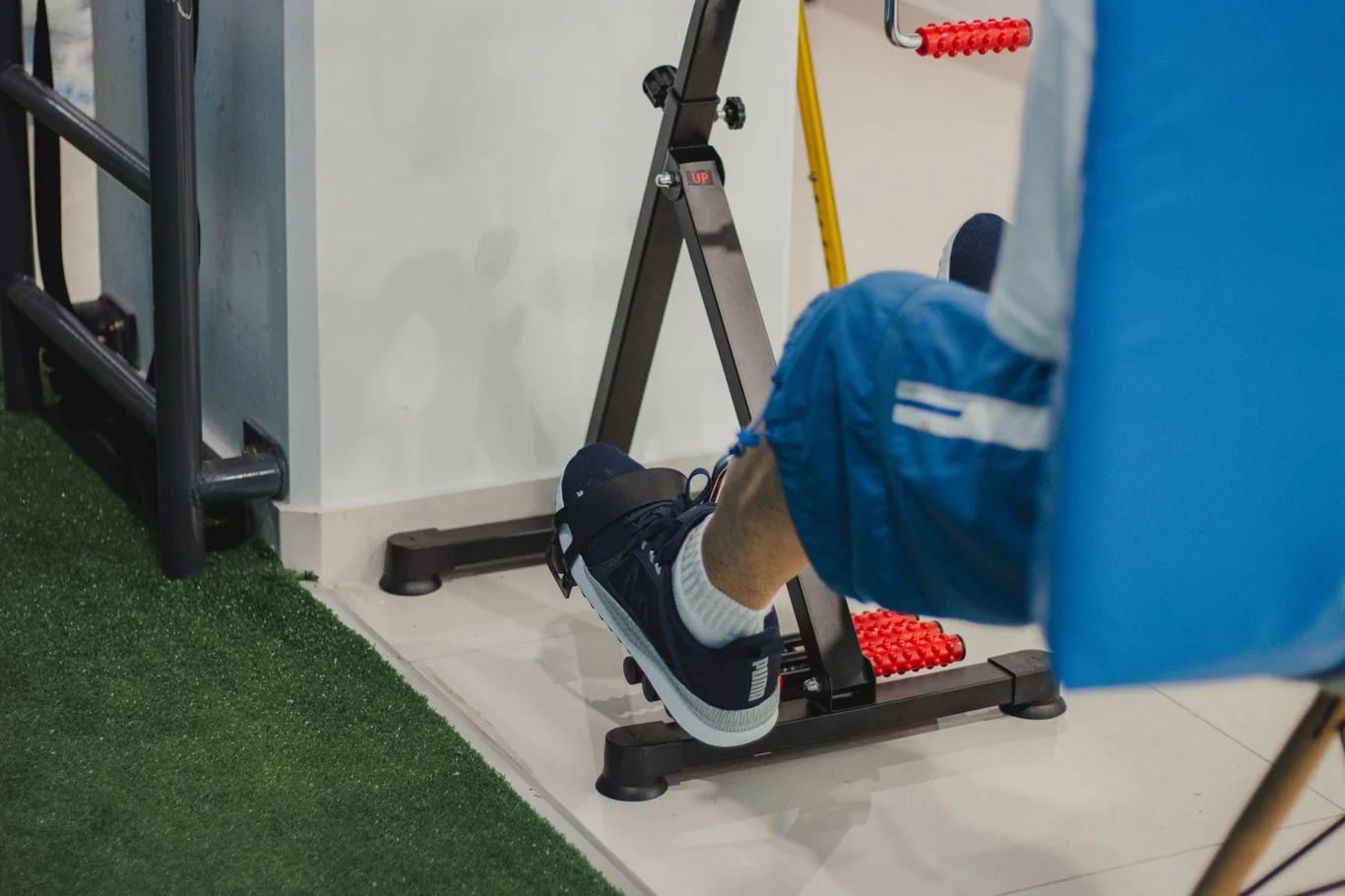
For sciatica: Low-impact cardio options - recumbent bikes, ellipticals, and seated cable machines - form the foundation of a sciatica-friendly smart home gym. Avoid machines that require loaded spinal flexion through a large range of motion, particularly rowing machines during active sciatic episodes. Smart machines with adjustable resistance profiles and real-time form cues are especially useful because they actively reinforce neutral spine positioning during pulling exercises. The best smart home gym for small spaces includes equipment picks optimized for joint-friendly, low-impact use across both strength and cardio categories.
Smartwatch-based exercise tracking has been shown to enhance engagement and sustained exercise intention, particularly for users training toward specific health goals rather than general fitness objectives (5). Both populations benefit from wearable integration for heart rate zone monitoring and session logging.
My fitness tracker recommendations covers the wearables that pair most reliably with smart home gym platforms for continuous heart rate zone monitoring.
Common Mistakes When Setting Up a Smart Home Gym
Most smart home gyms fail for preventable reasons. The most common errors I see consistently across our research into this category:
- Buying the full setup before establishing a habit. Purchasing a complete premium setup before you have a consistent workout habit is a reliable way to create an expensive storage unit. Start with one or two pieces and expand based on what you actually use.
- Skipping rubber flooring. It protects hardwood and tile from impact, reduces joint stress during high-rep cardio, and absorbs machine vibration. No motorized equipment should sit on bare flooring.
- Ignoring the Wi-Fi signal before delivery day. Streaming live classes requires stable, fast connectivity. Dead zones in basements and garages are the single most common smart gym infrastructure problem and one of the easiest to prevent.
- Choosing platform-locked hardware without researching the subscription first. Peloton's fit for how you exercise and Tonal's fit for your strength training frequency are questions to answer before buying, not after.
- Neglecting a maintenance plan. Motorized equipment requires periodic belt lubrication and roller inspection to prevent premature failure. Our guide to how to disassemble a treadmill shows the level of access needed for proper maintenance on motorized cardio machines - understanding this before purchase helps you choose equipment whose maintenance requirements match your willingness to perform them.
Getting the Most from Your Connected Home Gym
A smart home gym is only as effective as your commitment to using it. Setting up the space and equipment is the beginning, not the end. If you are weighing Tonal as your primary resistance system, my Tonal strength system analysis covers who gets the most from this platform and whether the subscription justifies the hardware cost. Research examining adherence among fitness app users found that sustained motivation relies on a blend of external scheduling structure and internal goal clarity - neither alone is sufficient (6).
Three practices that consistently separate active smart home gym users from those who stop after the first month:
- Block workout time in your calendar as a non-negotiable appointment. Equipment that requires you to "find time" rarely gets used; equipment slotted into a fixed weekly schedule almost always does.
- Use platform community features actively. Live leaderboards, friend tracking, and group challenges on Peloton, Zwift, and iFIT add social accountability that solo home training structurally lacks.
- Reduce the friction between deciding to work out and starting. Keep equipment set to your preferred resistance settings, gym shoes by the door, and a pre-built playlist ready. The fewer steps between "I should work out" and "I am working out," the higher your adherence rate becomes.
The treadmill benefits and cardiovascular advantages of consistent home cardio training are well-documented - and a smart home gym that gets used delivers them far more reliably than a commercial gym membership you visit twice a month.
FAQs
What is the 3-3-3 rule for gym?
The 3-3-3 rule for the gym refers to a training structure built around three workouts per week, three exercises per muscle group, and three sets per exercise. This framework gives beginners and intermediate lifters a manageable routine that balances adequate training stimulus with sufficient recovery time between sessions, which makes it a practical starting point for people setting up their first home gym routine.
What gym equipment is good for osteoporosis?
The gym equipment most beneficial for osteoporosis includes weight-bearing resistance systems - cable towers, smart resistance machines, and adjustable dumbbell setups - that allow progressive loading with stable, supported positioning. Low-impact cardio equipment like stationary bikes and ellipticals complements resistance work by improving cardiovascular health without the fall risk associated with free-standing barbell training or high-impact exercise.
How to set up a home gym for beginners?
Setting up a home gym for beginners starts with identifying one or two primary fitness goals, measuring your available floor space, and selecting two or three foundational pieces rather than building out a complete setup immediately. A beginner home gym typically includes adjustable dumbbells or resistance bands, a mat, and either a stationary bike or space for app-guided bodyweight workouts - all achievable for under $500, which is enough to establish consistent habits before investing in smart-connected equipment.
What gym machines are good for sciatica?
The gym machines best suited for sciatica are low-impact options that allow neutral spine positioning: recumbent stationary bikes, ellipticals, and cable machines with adjustable pulley heights. These machines provide meaningful cardiovascular and resistance training benefits while minimizing compressive loading on the lumbar discs and sciatic nerve pathway, making them appropriate choices for people managing active or chronic sciatica.
This content is for informational and educational purposes only. It is not a substitute for professional medical advice, diagnosis, or treatment. Always consult with your healthcare provider before starting any new fitness program or using fitness technology for health monitoring.
References:
- Jansons P, Robins L, O'Brien L, Haines T. Gym-based exercise and home-based exercise with telephone support have similar outcomes when used as maintenance programs in adults with chronic health conditions: a randomised trial. J Physiother. 2017;63(3):154-160. doi:10.1016/j.jphys.2017.05.018
- Zhou T, Zhang S, Liu S, Yu J. Digital technology integration in home-based exercise: a systematic review of research evolution, applications, and impact mechanisms. BMC Public Health. 2025;25(3528). doi:10.1186/s12889-025-24679-9
- Tate DF, Lyons EJ, Valle CG. High-Tech Tools for Exercise Motivation: Use and Role of Technologies Such as the Internet, Mobile Applications, Social Media, and Video Games. Diabetes Spectr. 2015;28(1):45-54. doi:10.2337/diaspect.28.1.45
- Si J, Sun L, Li Z, Zhu W, Yin W, Peng L. Effectiveness of home-based exercise interventions on pain, physical function and quality of life in individuals with knee osteoarthritis: a systematic review and meta-analysis. J Orthop Surg Res. 2023;18(503). doi:10.1186/s13018-023-04004-z
- Oh J, Kim D. Workout with a Smartwatch: A Cross-Sectional Study of the Effects of Smartwatch Attributes on Flow Experience and Exercise Intentions Depending on Exercise Involvement. Healthcare (Basel). 2023;11(23):3074. doi:10.3390/healthcare11233074
- Fuente-Vidal A, Blanco R, Prat R, et al. Analyzing motivation for tele-exercise in adult fitness app users. mHealth. 2025;11(50). doi:10.21037/mhealth-25-11