
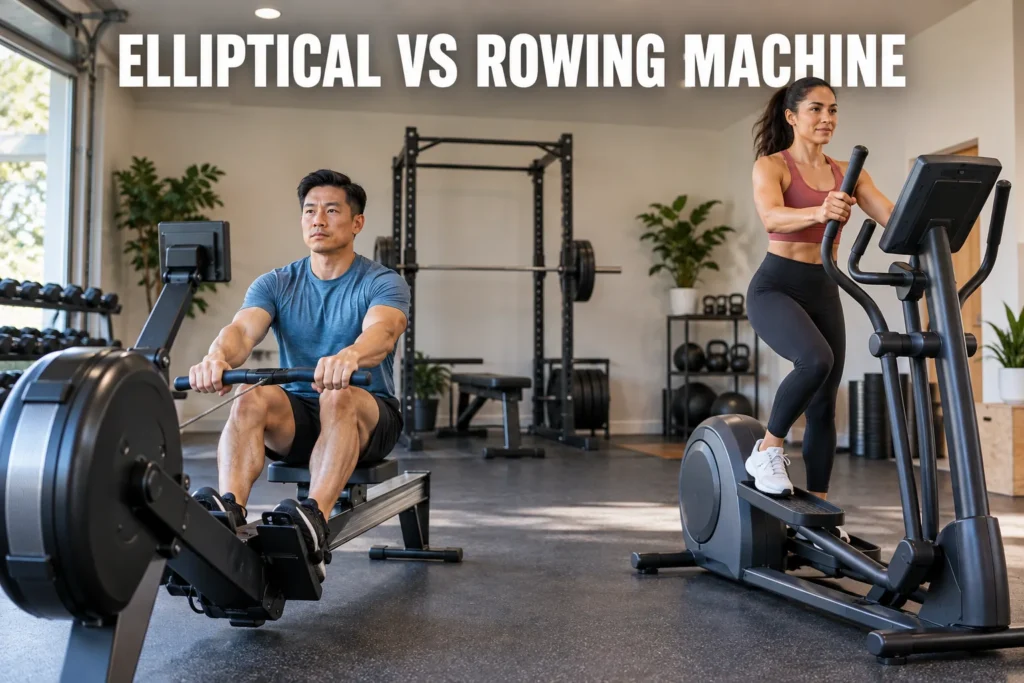
Elliptical vs rowing is a comparison my clients ask me about constantly, and it rarely has a clean winner. I have trained on both machines for years and have put clients of very different ages and fitness levels on each, so this guide combines what I have seen in practice with peer-reviewed research. Both are sold as low-impact, full-body options, but they deliver different results depending on your goals, your body, and your starting fitness. Below I compare them on calorie burn, muscle activation, joint impact, and practical fit, and I point out where the marketing does not match what happens on the machine.

Elliptical vs Rowing: A Side-by-Side Comparison
When you put the elliptical vs rowing machine head-to-head, several core differences stand out. The elliptical machine simulates a walking or running stride in a continuous oval path, engaging arms and legs simultaneously with no vertical heel-strike impact. The rowing machine drives through a full-body push-pull cycle: legs, hips, back, and arms each play a defined role in every stroke. Understanding these mechanics is the foundation for comparing the two fairly.
Feature | Elliptical | Rowing Machine |
Primary motion | Oval stride (standing) | Push-pull cycle (seated) |
Primary muscles | Quads, glutes, hamstrings, upper body | Full body - legs, back, core, arms |
Joint impact | Very low - minimal knee flexion | Low - seated, no weight-bearing impact |
Calorie burn (30 min, moderate) | 260-320 kcal* | 240-300 kcal* |
Learning curve | Very low - intuitive from session one | Moderate - technique-dependent |
Upper body engagement | Moderate - active arm drive | High - active pull required every stroke |
Ideal starting point | Beginners, seniors, joint-sensitive users | Those willing to invest in technique |
Estimates for a 155 lb (70 kg) person at moderate intensity. Actual burn varies by resistance, stroke rate, and individual metabolism.
Calorie Burn: What the Research Shows
Calorie comparisons between cardio machines are frequently oversimplified in popular fitness content. For the elliptical vs rowing comparison specifically, the numbers depend heavily on intensity, body weight, session duration, and individual factors like fitness level and rowing technique proficiency.
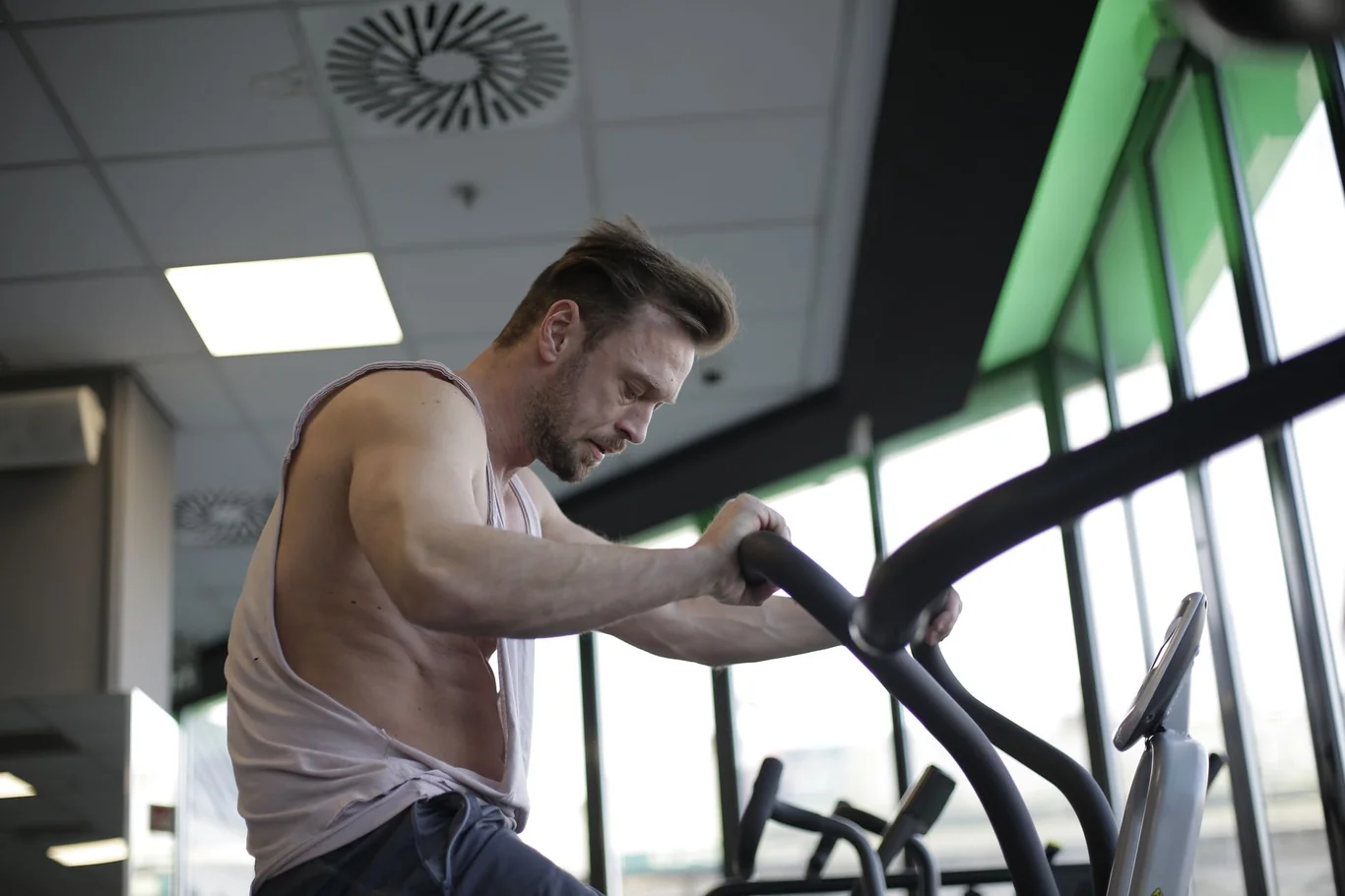
A 2024 peer-reviewed study comparing seven cardio machines across 30 recreationally active males found that the elliptical machine produced approximately 12.82 kcal per minute at high intensity (RPE 17), while the rowing machine produced 11.45 kcal per minute under the same conditions (1). These figures apply to well-conditioned adult males working at near-maximal effort - body weight, resistance settings, and technical proficiency will shift these numbers meaningfully for any individual.
For fat oxidation specifically - the rate at which your body burns fat as fuel - research using incremental exercise testing found both elliptical and rowing machines produced nearly identical results at 0.41 and 0.40 grams of fat per minute respectively, both lower than treadmill running (2). If fat loss is the primary goal, machine choice matters far less than session intensity and total duration.
How Intensity Shapes the Numbers
Rowing rewards high intensity. A skilled rower who can maintain strong technique for 30 minutes at vigorous effort will burn significantly more than someone plodding at low elliptical resistance. The practical challenge is that rowing form breaks down faster under fatigue, which limits how long most people can sustain high-intensity output on the rower. I notice it in my own sessions: after about 20 hard minutes, my legs start finishing the drive early and my arms take over the pull.
The elliptical machine is more forgiving. You can push harder or dial back effort without technical failure, which means most beginners sustain their target heart rate longer on the elliptical than on a rowing machine in the early weeks of training. A HIIT rowing workout built on short, high-effort intervals of 200-500 meters with structured rest can produce impressive calorie burn in less total time, but that approach requires baseline technique first.
I see the same pattern with nearly every new client: sessions on the elliptical get finished more reliably in the first four to six weeks, because the absence of a learning curve keeps people coming back, while on the rower form fatigue tends to cut sessions short.
Several practical factors affect how many calories you actually burn per session:
- Resistance level - higher resistance on either machine increases calorie burn significantly at the same perceived effort
- Stroke or stride rate - faster pace at maintained form burns more; sloppy high-speed rowing undermines the benefit
- Body weight - heavier individuals burn more calories at identical intensity across all cardio equipment
- Session duration - the longer you maintain target heart rate, the greater total burn regardless of machine
- Fitness level - more conditioned individuals burn fewer calories at the same absolute workload
A chest strap or wrist tracker gives you far more accurate real-time data than machine displays, which often overestimate calorie burn by 15-30%. On the rower I prefer a chest strap, because smartwatch heart rate accuracy tends to drop when the wrist flexes hard on every pull.
Duration Estimates by Body Weight
These are estimated calorie ranges at moderate intensity, adapted from available energy expenditure research. Vigorous effort increases these estimates by 30-50%.
Body Weight | Elliptical (30 min) | Rowing (30 min) |
130 lbs (59 kg) | 230-270 kcal | 210-250 kcal |
155 lbs (70 kg) | 260-320 kcal | 240-300 kcal |
185 lbs (84 kg) | 300-370 kcal | 280-345 kcal |
Ranges reflect variation in resistance, stroke rate, and individual metabolic rate.
Muscles Worked: Full Body Breakdown
This is where the elliptical vs rowing comparison becomes most visibly different. Both machines engage multiple muscle groups, but with fundamentally different ratios of upper-body versus lower-body involvement. Understanding the elliptical machine benefits for lower-body conditioning versus the rowing machine's full-chain engagement is key to matching equipment to your goals.
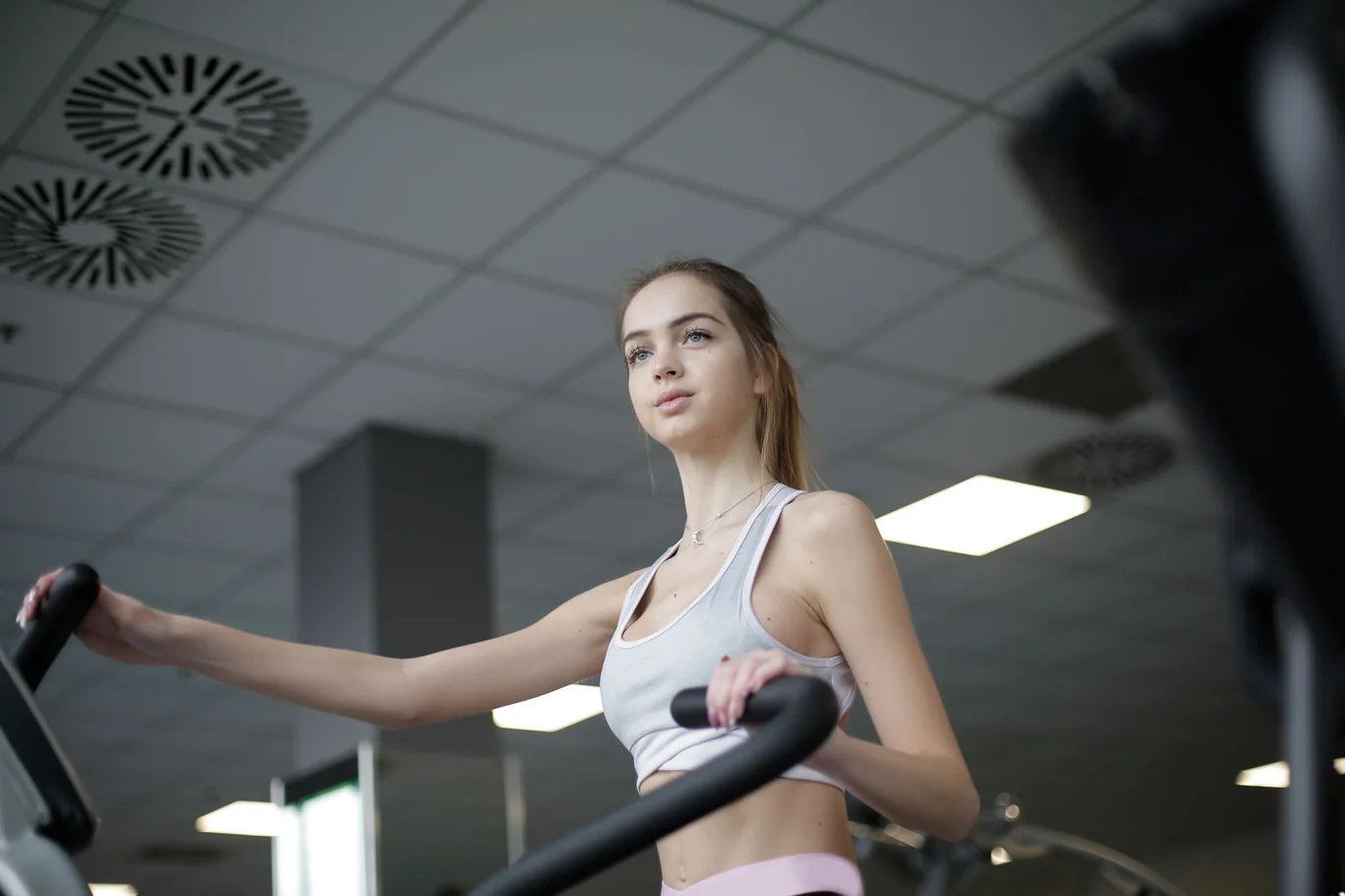
Research using surface electromyography (EMG) analysis found that the elliptical machine produces greater quadriceps activation and quadriceps-to-hamstring coactivation compared to stationary cycling or treadmill walking (3). The continuous oval motion keeps lower-extremity muscles in near-constant tension throughout each stride, which explains why the elliptical feels both sustainable and challenging.
Muscles the Elliptical Machine Targets
The elliptical machine primarily works the following muscle groups in every session:
- Quadriceps - primary movers in the forward push phase of the stride
- Glutes - engaged throughout, amplified further by increasing incline settings
- Hamstrings - active in the pull-back phase of the stride cycle
- Calves - serve as stabilizers throughout the movement
- Core - engaged continuously for balance and upright posture
- Biceps, triceps, and shoulders - activated when you actively drive the handlebars
Upper-body involvement on the elliptical is meaningful only when you actively drive the handles. Gripping them passively while your arms are pulled by momentum delivers far less upper-body stimulus than consciously pushing and pulling through each stride. Most casual users underwork their upper body this way, and active handle drive is one of the first habits I teach when showing someone how to use an elliptical.
Muscles the Rowing Machine Targets
The rowing machine provides one of the most genuinely full-body cardio workouts available, because each stroke follows a fixed sequence: legs drive first, hips hinge back, then the arms pull to complete the stroke. That order is why the muscles a rowing machine works span the whole chain from legs to arms:
- Quadriceps and glutes - generate the primary power in the leg drive phase
- Hamstrings - active in stabilizing and transitioning at the catch position
- Erector spinae and rhomboids - transfer force from hips through the upper back
- Latissimus dorsi - major contributors to the pull-through phase
- Biceps and forearms - complete the arm draw at the finish position
People often ask whether rowing will build muscle in addition to cardiovascular fitness. My honest answer: rowing develops muscular endurance and can contribute to muscle growth at higher intensities, but it is not a substitute for resistance training.
If balanced upper-lower body conditioning through cardio is your goal, rowing has a structural advantage over the elliptical. If primary lower-body conditioning with lighter upper-body demands is the goal, the elliptical machine serves better and more efficiently.
Joint Impact and Injury Considerations
Both machines are described as "low-impact," but that phrase covers a wide range of actual joint loading. Understanding what each machine specifically demands from your joints matters most if you have an existing condition or a history of pain.
Elliptical for Knee and Hip Health
The elliptical machine eliminates heel-strike impact entirely and keeps your feet in continuous contact with the pedals throughout the movement. This substantially reduces peak joint loading compared to running, as the oval stride pattern prevents the high-force ground contact that occurs with each running footfall. The oval stride path also maintains a shallower knee flexion angle than cycling or rowing, which is clinically relevant if deep knee bending causes pain or is mechanically restricted.
In my experience with joint-sensitive clients, the elliptical is usually the more comfortable of the two at matched intensity, particularly for people managing mild knee osteoarthritis or hip mobility restrictions. A 63-year-old client with mild knee osteoarthritis worked up to 25 minutes on the elliptical within 3 weeks, while 10 minutes on the rower left his knee stiff the next morning because of the deep bend at the catch.
People with mild-to-moderate knee osteoarthritis or hip discomfort generally tolerate elliptical training well at moderate intensity. If you have a diagnosed joint condition, consult a healthcare provider before starting any new exercise program to determine appropriate intensity and frequency for your specific situation.
Rowing and Lower Back Considerations
Rowing requires a coordinated hip hinge and a slight forward lean at the catch position. With proper form, rowing is safe for most people, though excessive lumbar rounding or restricted hamstring flexibility under load can increase discomfort and injury risk over time. People with existing lower back diagnoses need to assess whether the movement demands of rowing match their current capabilities.
The core takeaway: technique matters for rowing in a way it simply does not for the elliptical. A session of sloppy elliptical form rarely causes injury. Poor rowing form (early arm pull, lumbar rounding, jerking through the drive) is the usual source of rowing-related back pain, which tends to build up across weeks and months.
Learning Curve: Which Machine Is Easier to Start Using?
The elliptical vs rowing learning curve difference is one of the most practically important factors for new exercisers. Learning to use an elliptical machine takes roughly five minutes: you step on, grip the handles, and start moving, and the oval stride pattern becomes natural within the first session.
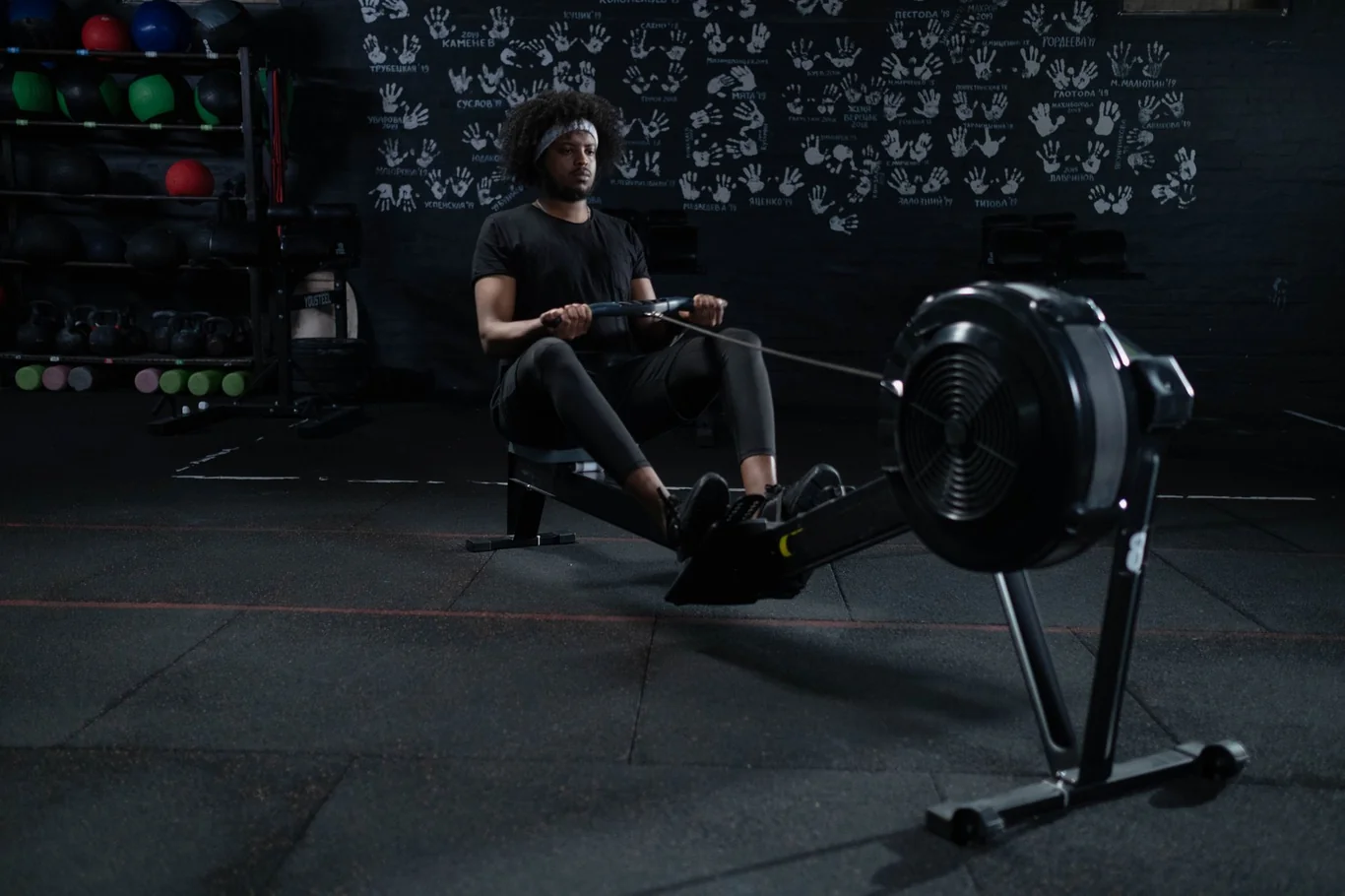
Rowing is structurally more demanding to learn. The four-phase stroke sequence must be memorized and maintained throughout every session:
- The catch - arms extended, shins vertical, body hinged slightly forward at the hips
- The drive - legs push first, hips swing back, then arms draw to the lower chest
- The finish - body slightly reclined, arms at the chest, elbows past the torso
- The recovery - arms extend first, then body hinges forward, then knees bend back to catch
Breaking this sequence - particularly pulling with the arms before the legs have finished driving - reduces power output and increases spinal loading. Most beginners develop basic competent rowing form within a few sessions with good instruction, but reaching proficient, high-output technique takes several weeks of deliberate practice.
I have every new rower spend the first few sessions at low intensity on basic rowing technique before chasing pace or distance. Putting form before intensity pays off in both performance and injury prevention.
Practical takeaway: The elliptical machine wins on day-one accessibility. Rowing wins on skill-based progression and the sense of mastery that develops with it over time.
Who Should Choose Elliptical vs Rowing?
Matching the right machine to the right person is where the elliptical vs rowing comparison becomes most practically valuable. Neither machine is universally superior - the best choice is the one you will use consistently, week after week, for months.
Best for Weight Loss and Calorie Burn
A 2026 scoping review examining 617 aerobic exercise studies found that both moderate-intensity continuous training and high-intensity interval training consistently produced improvements in VO2max across a broad range of study designs (4). Neither the elliptical nor the rowing machine has a decisive physiological edge for fat loss when sessions are matched for duration and effort.
For most beginners, the elliptical machine produces higher total weekly calorie burn simply because sessions stay consistent longer without technical breakdown. The seven-machine study above actually measured a slightly higher calorie rate on the elliptical than on the rower at high intensity, which is why, when weight loss drives the elliptical vs rowing decision, I point most beginners to the elliptical first.
Best for Seniors and Joint-Sensitive Users
For older adults and people with joint sensitivity, the elliptical machine for seniors is generally the safer starting point. Minimal joint flexion, an upright posture, and near-zero learning curve reduce barriers and injury risk for people returning to cardio or starting later in life. When an older client asks me what to buy, I start with ellipticals made for seniors, where a low step-up and stable handles matter more than console extras. An under desk elliptical machine is a separate practical option for this group: these low-profile pedal devices used beneath a desk add movement to sedentary hours without requiring a dedicated workout session.
If you are choosing between a stationary bike and an elliptical for sensitive joints, I usually lean toward the elliptical for its upper-body engagement and fully standing posture. The bike versus elliptical choice can flip, though, when standing for 30 minutes is itself the problem.
Best for Athletes and Cross-Training
For athletes cross-training from running, cycling, or team sports, rowing builds posterior chain strength in the hamstrings, glutes, erector spinae, and rhomboids, which complements most primary training programs without overloading the same movement patterns. The Concept 2 rowing machine is the industry-standard ergometer used in elite programs globally, and its standardized metric system allows precise training load tracking for serious athletes. When an athlete I work with wants one rower for both training and testing, the Concept2 RowErg with PM5 is the one I name first, because its numbers compare directly with the results posted by other rowers. Compared with cycling, rowing adds far more upper-body work, while the bike suits athletes who need seated aerobic volume without spinal load, which is the central trade-off when weighing cycling against rowing.
The best rowing machine for dedicated cross-training use combines air resistance with a precise performance monitor - features found across mid-range and premium-tier ergometers. Premium-tier options deliver consistent resistance curves that serious athletes need for structured training protocols.
Space Requirements and Home Gym Setup
The elliptical machine for home typically requires a footprint of roughly 4 feet wide by 6-7 feet long, plus clearance for arm movement. Most home ellipticals fit comfortably in a spare room or garage gym corner without major rearrangement. The rowing machine demands a longer but narrower footprint - generally 2-3 feet wide and 8-9 feet long when in use, with some models folding vertically for storage.
If available floor space is your main constraint, an elliptical machine for home use often has the advantage because its active footprint is shorter and more upright. Compact rowing machines have narrowed that gap for smaller homes, since many fold or store upright against a wall.
Cost Comparison: Elliptical vs Rowing Machine
Budget-tier and mid-range options exist for both machines, and price does not automatically predict exercise benefit. Entry-level ellipticals and rowing machines both start at accessible price points, scaling to premium tier depending on resistance type, build quality, and connected features. Across the elliptical price tiers and their rowing equivalents, build durability and the level of workout tracking you need drive most of the difference.
The best rowing machine options at mid-range include air resistance and magnetic models that deliver accurate, scalable effort across fitness levels. The practical budget recommendation: choose the mid-range option you will actually use rather than the premium option you will treat as furniture. My tip: before you buy, sit on a rower and an elliptical for 10 minutes each, then compare available rowing machines only if the rowing session still felt like something you would repeat.
Choose the elliptical if | Choose rowing if |
You are new to cardio equipment | You have a base level of conditioning |
You have knee, hip, or shoulder mobility limits | You have a healthy back and good hip mobility |
You want consistent 30-60 minute sessions | You prefer shorter, high-intensity sessions |
You are sharing equipment across fitness levels | You are training for sport or a specific goal |
You want the best elliptical machine for home use with minimal setup | You want the best rowing machine for full-body cross-training results |
Making Your Choice Count
The elliptical vs rowing decision comes down to three practical realities: the elliptical wins for accessibility and joint tolerance; rowing wins for full-body conditioning depth; and neither machine outperforms the other when you stop using it. As Wu et al. (4) found, consistent aerobic training in any mode reliably improves VO2max and cardiorespiratory fitness - the mode is secondary to the habit.
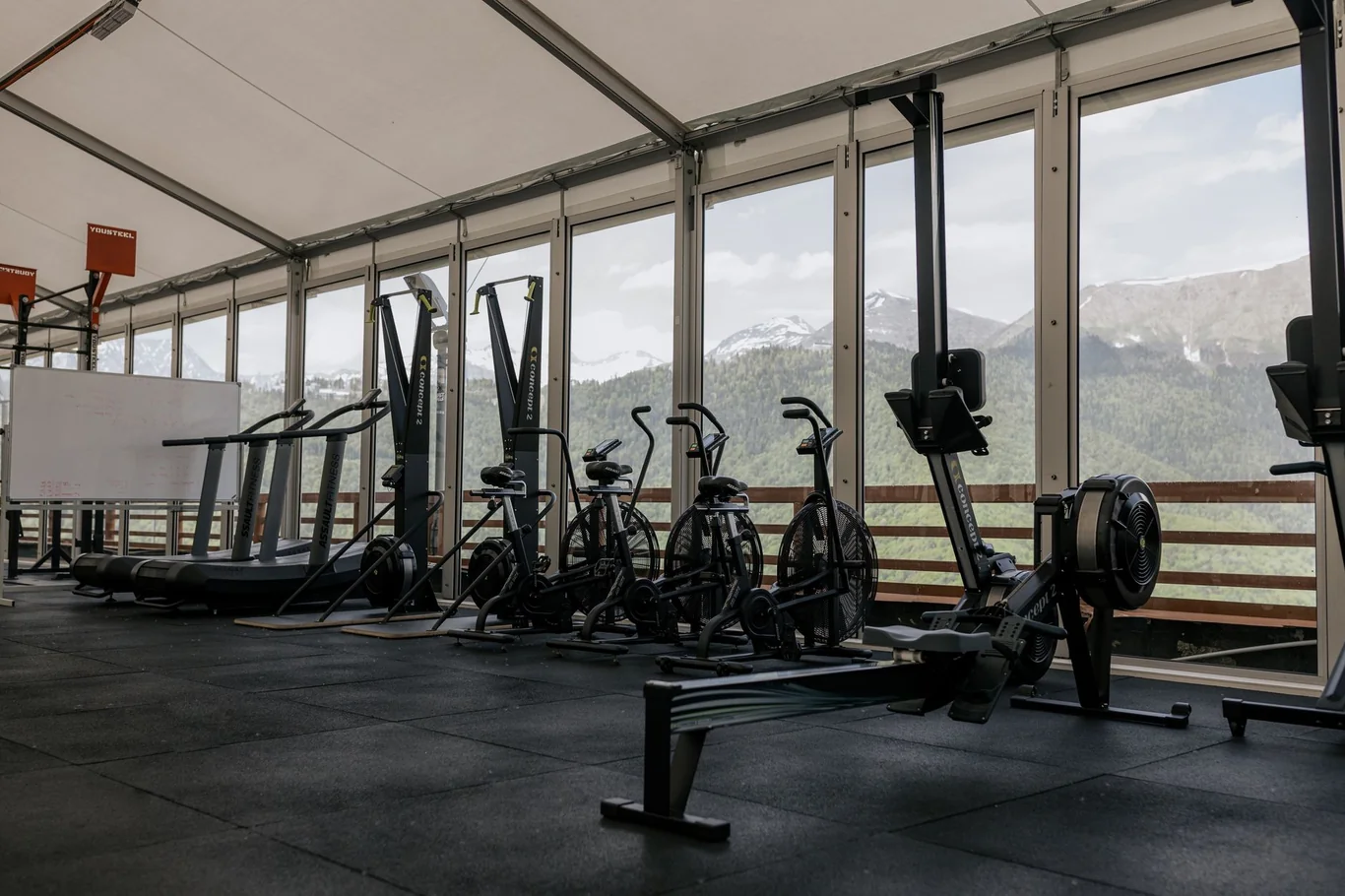
I weigh session adherence more heavily than peak calorie estimates when recommending cardio equipment, because the machine someone skips three times a week delivers zero benefit regardless of its theoretical output. In my experience, the elliptical keeps new and returning exercisers coming back more reliably, while the rower holds on to people who enjoy working on technique.
For most people starting or restarting a cardio routine, begin with the elliptical, since it requires no technical skill to produce real results. If you build a base and want a deeper full-body challenge, rowing is the natural progression. Prices for both machines vary widely, so choose the mid-range option in whichever category matches your goals, and use it consistently. On the elliptical side, I would narrow the choice with these top-rated home ellipticals and treat the rower as a later addition, not a replacement.
FAQs
Is rowing better than elliptical for weight loss?
The reason rowing is not definitively better than the elliptical for weight loss is that total calorie burn at matched effort is similar for both machines. Session frequency, duration, and sustained intensity determine fat loss outcomes far more than machine choice, and most beginners sustain longer sessions on the elliptical, narrowing the gap further.
Is 20 minutes a day on a rowing machine enough?
Twenty minutes of rowing per day is enough to maintain and improve basic cardiovascular fitness when performed at moderate-to-vigorous intensity, particularly when the effort is genuine rather than casual. Current physical activity guidelines credit vigorous activity at a 2-to-1 ratio toward weekly aerobic targets (5), making a focused daily rowing workout a viable protocol for most adults.
How much rowing is equivalent to 10,000 steps?
An exact step equivalent for rowing does not exist, but energy expenditure research suggests that roughly 20-25 minutes of moderate rowing approximates the calorie cost of 10,000 walking steps at average pace for a 155-pound person. In practice, that means a short, steady row can cover a day of walking-level activity in far less time.
Is 30 minutes on the elliptical better than walking?
Thirty minutes on the elliptical machine burns more calories than 30 minutes of flat walking for most people, engages more muscle groups simultaneously, and sustains a higher average heart rate throughout the session. Running vs elliptical comparisons are closer to a true toss-up, but elliptical training clearly outperforms casual walking on every cardiovascular metric of practical relevance.
Does the elliptical work your stomach?
The elliptical machine does engage your core muscles for balance, stability, and posture throughout every stride, but it does not directly target the abdominal muscles the way planks or dedicated core exercises do. Core activation on the elliptical is real but secondary. The elliptical contributes to a leaner midsection primarily through total calorie burn and elevated metabolic demand rather than targeted abdominal muscle contraction.
This content is for informational and educational purposes only. It is not a substitute for professional medical advice, diagnosis, or treatment. Always consult with your healthcare provider before starting any new fitness program or using fitness technology for health monitoring.
We are always looking for expert inputs to make our content even better and more useful.
References
- Prieto-González P, Yagin FH. Energy expenditure, oxygen consumption, and heart rate while exercising on seven different indoor cardio machines at maximum and self-selected submaximal intensity. Front Sports Active Living. 2024;6:1313886. doi:10.3389/fspor.2024.1313886.
- Filipovic M, Munten S, Herzig KH, Gagnon DD. Maximal fat oxidation: comparison between treadmill, elliptical and rowing exercises. J Sports Sci Med. 2021;20:170-178. doi:10.52082/jssm.2021.170.
- Prosser LA, Stanley CJ, Norman TL, Park HS, Damiano DL. Comparison of elliptical training, stationary cycling, treadmill walking and overground walking. Gait Posture. 2011;33(2):244-250. doi:10.1016/j.gaitpost.2010.11.013.
- Wu Z, Preobrazenski N, Renwick JRM, et al. Aerobic exercise training and VO2max: a scoping review of study populations and protocols. J Funct Morphol Kinesiol. 2026;11(1):70. doi:10.3390/jfmk11010070.
- U.S. Department of Health and Human Services. Physical Activity Guidelines for Americans. 2nd ed. Washington, DC: U.S. Department of Health and Human Services; 2018.