
WHOOP is a screenless wristband fitness tracker that collects biometric data around the clock to tell you how hard you worked, how well you slept, and how ready your body is to perform. Unlike a smartwatch, WHOOP has no screen, no step counter, and no notification feed. It exists to monitor recovery, cardiovascular strain, and sleep quality - and it delivers that data through a single smartphone app you check each morning. I have followed recovery-based wearable technology for years as a fitness professional and Faculty of Sport and Physical Education graduate, and few devices give athletes the physiological depth that WHOOP provides. This guide explains what WHOOP is, how it works, what the WHOOP band tracks, and whether the membership cost is justified for your training goals.

What Is WHOOP - The Recovery-First Fitness Wearable Explained
WHOOP is a membership-based health tracker developed by WHOOP, Inc. and first launched in 2015. Now on its fifth generation hardware, the current WHOOP 5.0 and premium WHOOP MG models are worn as continuous biosensors on the wrist or upper arm. WHOOP 5.0 introduced Any-Wear Technology - a WHOOP Pod sensor that clips to clothing or equipment so you can wear the device off the wrist while still capturing continuous biometric data. WHOOP has no buttons and no GPS. Every reading it takes flows automatically into an accompanying app where you see three key scores - Recovery, Strain, and Sleep - updated each morning based on the prior 24 hours. Anyone browsing my top fitness trackers roundup will notice immediately how differently WHOOP approaches the category compared to every mainstream alternative: maximum biological depth, minimum lifestyle convenience.
How the WHOOP Band Differs from a Smartwatch
Most fitness technology surfaces information in real time: messages, maps, calorie estimates, and heart rate numbers during exercise. WHOOP does none of that. There is no display to glance at during a workout because the device is designed to influence the decision you make before the session starts, not the session itself.
That philosophy separates WHOOP from every mainstream smartwatch, while I compare the broader categories in my fitness tracker and smartwatch breakdown. A smartwatch tells you what is happening right now. WHOOP tells you what your nervous system has been doing for the past 24 hours and what it can handle next. I wear my WHOOP alongside a standard watch for exactly this reason - the two tools answer completely different questions, and neither makes the other redundant.
Feature | WHOOP | Typical Smartwatch |
Screen | None | Yes |
GPS | None | Available |
Data timing | Each morning (past 24 hours) | Real time during exercise |
Primary purpose | Recovery and readiness | Activity tracking and notifications |
The Sensors Inside the WHOOP Band
WHOOP 5.0 packs the following hardware into a lightweight, screenless band:
- Optical heart rate sensor - green and infrared LEDs sampling 26 times per second
- 3-axis accelerometer - detects motion, sleep transitions, and exercise intensity
- 3-axis gyroscope - identifies movement type and activity classification
- SpO2 sensor - measures blood oxygen saturation overnight
- Skin thermistor - tracks temperature deviations signaling illness, overtraining, or hormonal shifts
- Respiratory rate sensor - derives breathing rate from the heart rate signal waveform
The premium WHOOP MG adds an FDA-cleared ECG for irregular heart rhythm detection and an experimental blood pressure trend estimation feature. Battery life runs 14+ days per charge on both models, which means you never remove it for nightly charging - a meaningful advantage for sleep tracking accuracy. I have found the skin thermistor to be one of the more surprising features in practice: it flagged an early illness twice in my own data, showing a 0.3-degree overnight temperature deviation two days before symptoms appeared.
How Does WHOOP Work - From Raw Data to Daily Scores
WHOOP converts continuous biometric readings into three scores you review each morning. If you are used to the real-time data display of a smartwatch, WHOOP's morning-review model is a fundamentally different experience. Understanding how does WHOOP work means knowing what drives each score and why WHOOP personalizes those scores to your own physiological baseline rather than a population average. The personalization takes roughly three to four weeks of continuous wear to establish.
Score | Scale | What It Measures |
Recovery | 0 to 100% | Body readiness to train (Green, Yellow, Red zones) |
Strain | 0 to 21 | Total daily cardiovascular load |
Sleep Performance | % | Actual sleep versus your optimal sleep need |
One important limitation: optical heart rate sensors lose accuracy at very high exercise intensities, with some studies documenting under-reads of 20 to 35 BPM during peak-intensity intervals compared to chest strap ECG. WHOOP's recovery and Strain metrics are built on resting and sleep-phase readings, which are significantly more reliable than workout-phase heart rate tracking, so treat real-time exercise heart rate as directional rather than precise. I compare how chest strap heart rate monitors hold up against wrist trackers in my accuracy breakdown.
How WHOOP Calculates Recovery
The Recovery Score appears as a percentage from 0 to 100 and falls into one of three zones:
- Green (67 to 100%) - body is recovered and ready for high-effort training
- Yellow (34 to 66%) - moderate readiness; moderate training intensity makes sense
- Red (0 to 33%) - rest or active recovery is recommended
Heart rate variability is the single heaviest input in this calculation. HRV reflects the variation in milliseconds between consecutive heartbeats, controlled by the autonomic nervous system. A higher RMSSD - the time-domain HRV measure WHOOP uses - indicates the parasympathetic system is dominant and the body has recovered from accumulated stress. Research consistently demonstrates that HRV correlates with aerobic fitness, training adaptation, and readiness across multiple systematic reviews (1, 2).
WHOOP measures HRV during the final stage of slow-wave sleep each night, when autonomic activity is at its most stable. My own tracking reveals that Recovery Scores rarely surprise you after a consistently well-slept and well-fed week - but when the score flags red after a stretch you assumed was normal, the trend almost always traces to a stress accumulation you did not consciously register. During a high-workload period, my average HRV dropped from 58ms to 43ms over 14 days while training load stayed constant - the only variable was elevated work stress, which WHOOP captured through both reduced sleep efficiency and elevated resting heart rate. A 2025 longitudinal validation study across 536 nights found that WHOOP 4.0 showed moderate-to-high agreement with gold-standard ECG chest straps for resting heart rate (MAPE of 3.00%) and RMSSD-based HRV (MAPE of 8.17%) (3).
How the Strain Score Measures Daily Load
The Strain Score runs on a 0 to 21 scale and captures total cardiovascular stress across a full day - not just logged workouts. A stressful meeting, a long travel day, or disrupted sleep all register in Strain because they elevate heart rate and suppress recovery capacity. The algorithm uses heart rate, movement data, and resting metabolic rate to quantify how much load the cardiovascular system absorbed over 24 hours.
Each morning the app suggests a target Strain range based on your current Recovery Score. I find this feedback loop most useful during high-volume training blocks, when the gap between how hard you feel like training and how hard your physiology can actually absorb tends to be widest. During a 4-week strength block where I averaged a Strain score of 16 per day, my Recovery Score dropped below 50 by week three - a signal that preceded the performance wall I hit two sessions later and would not have flagged without the cumulative load data. For keeping a record of the training itself, I explain several methods to track workouts.
How WHOOP Tracks Sleep
WHOOP uses its optical sensor and accelerometer to identify sleep stages throughout the night: light sleep, deep slow-wave sleep, REM sleep, and awake periods. It reports total duration, sleep efficiency, and time in each stage, then delivers a Sleep Performance percentage - actual sleep versus your optimal sleep need based on prior strain and accumulated sleep debt. The Sleep Coach feature goes further, generating a personalized bedtime and wake time recommendation each day based on your accumulated sleep debt and upcoming training load. I compare sleep-focused options in my fitness trackers for sleep roundup.
A 2020 validation study published in the Journal of Clinical Sleep Medicine tested WHOOP Strap 2.0 against polysomnography - the clinical gold standard - in 32 healthy participants. The device showed a 13.8-minute bias error for total sleep duration and strong intraclass correlation for both REM sleep (ICC 0.85) and slow-wave sleep (ICC 0.74) (4). That said, a systematic review of consumer wearable sleep-staging research found that PPG-based devices achieve approximately 65 to 75% overall sleep-stage classification accuracy compared to EEG-based clinical systems, meaning individual stage readings are useful as trend data rather than clinical measurements (5). I always tell clients to treat the stage breakdown as a directional guide rather than a diagnosis.
What Metrics Does WHOOP Track - A Complete Overview
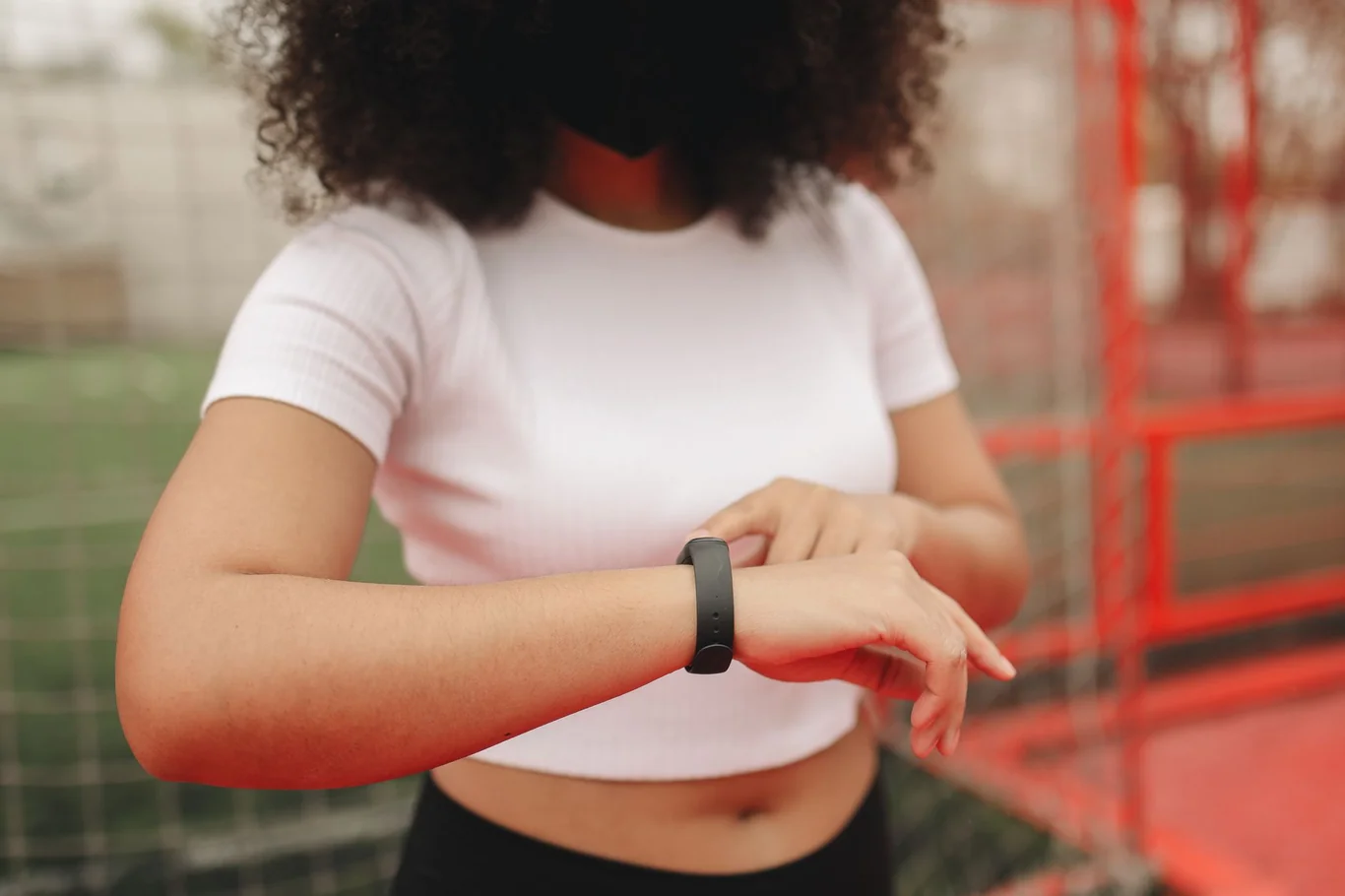
Beyond the three core scores, the WHOOP band surfaces a range of secondary metrics that feed into its algorithm and build a broader picture of your long-term health. Every measurement is derived from the on-wrist sensor array - there is no manual data entry, no GPS dependency, and no reliance on third-party app sync for core functionality.
HRV - The Core of WHOOP Recovery
HRV is what separates WHOOP from most mainstream wearable devices. Resting heart rate tells you your current fitness baseline; HRV tells you how your autonomic nervous system is responding to the combined stress of training, sleep, nutrition, and everyday demands. A consistent upward trend in HRV over four to six weeks is one of the clearest signals that your training program is producing positive adaptation rather than accumulating fatigue.
I find HRV most useful for two-week trend analysis rather than single-day decisions. My baseline RMSSD during a well-managed training block sits around 62ms; when it tracked below 48ms for five consecutive nights during a competition prep period, I reduced weekly volume by 30% and saw full recovery within eight days. A consistent downward trend - even when individual workouts feel fine - is often an early warning that total load has crossed the recovery threshold.
Additional Health Metrics Beyond the Core Three
The WHOOP band also captures these secondary signals, visible inside the app:
- Menstrual cycle tracking - correlates HRV and skin temperature data with cycle phases for female users, flagging hormonally driven recovery dips
- Stress response monitoring - uses respiratory rate coherence and heart rate patterns to estimate non-exercise psychological stress load throughout the day
- Overnight SpO2 tracking - flags persistent blood oxygen drops that may warrant medical attention; a 2023 controlled validation study found that leading consumer smartwatch SpO2 sensors met ISO 80601-2-61 accuracy standards during hypoxemia testing (6)
- WHOOP Coach - an AI assistant powered by OpenAI that answers personalized questions about your biometric data and makes workout, nutrition, and recovery suggestions based on your specific daily scores
How Much Does WHOOP Cost - Subscription Tiers and Pricing
WHOOP runs entirely on a membership model, with hardware bundled into the subscription rather than sold separately. Here is what each tier includes and what to weigh before committing to the annual cost.
WHOOP Subscription Tiers and Annual Pricing
WHOOP operates on a membership model: you subscribe to a tier and receive the hardware included in that plan. There is no one-time purchase option. As of 2026, the three available tiers are structured as follows:
- WHOOP One: includes WHOOP 4.0 hardware, approximately $199 per year
- WHOOP Peak: includes WHOOP 5.0 hardware and Any-Wear Technology, approximately $239 per year
- WHOOP Life: includes the premium WHOOP MG device with FDA-cleared ECG, approximately $359 per year
A month-to-month option is also available, and a 24-month commitment reduces the effective monthly rate further. The subscription covers the hardware itself, full app access, ongoing software updates, the WHOOP Coach AI assistant, and a lifetime device warranty on the hardware. You can see how WHOOP fits into the broader landscape by reviewing a general fitness tracker guide that covers both subscription and one-time-purchase alternatives.
Tier | Hardware Included | Annual Price |
WHOOP One | WHOOP 4.0 | ~$199 |
WHOOP Peak | WHOOP 5.0 with Any-Wear Technology | ~$239 |
WHOOP Life | WHOOP MG with FDA-cleared ECG | ~$359 |
Deciding If WHOOP Is Worth the Annual Cost
The membership structure is the most common reason people hesitate before signing up. For someone who already uses an Apple Watch or Garmin, the question is whether WHOOP adds enough that their current device does not. I consider the annual cost meaningful but justifiable for competitive athletes and serious fitness enthusiasts who will use the daily data. For anyone who checks a fitness app once a week, the value does not hold.
Similar subscription-based platforms like iFIT - the connected training service behind NordicTrack and ProForm equipment - offer workout content tied to specific hardware. Platforms like iFIT, which I cover in my breakdown of what iFIT is, do not replicate WHOOP's physiological feedback: they prescribe training sessions, while WHOOP tells you whether your body is ready to execute them.
Is WHOOP Worth It - Who Benefits Most
Whether WHOOP is worth the cost depends more on your relationship with data than on your fitness level. The device is a feedback system that only delivers value if you engage with what it shows you. If price is the sticking point, I list lower-cost options in my budget fitness tracker picks.

When WHOOP Makes Sense
WHOOP delivers clear value to these types of users:
- Training load managers - runners, cyclists, and strength athletes who want physiological data on whether today should be a hard push or a back-off day, grounded in actual readiness rather than intuition
- People with inconsistent sleep - shift workers, frequent travelers, and parents of young children who need to see how sleep debt accumulates and compounds into reduced performance capacity
- Stress-aware individuals - anyone whose total daily load regularly peaks across work, family, and training, and who wants to see how that aggregate affects recovery
- Biohackers and data-driven athletes - people who want longitudinal HRV, strain, and sleep trends with scientific grounding beyond what a mainstream activity tracker provides
- Screen-averse wearable users - those who find smartwatch notification streams disruptive and want a device that disappears completely into the background
When You Might Not Need WHOOP
WHOOP is a harder sell in these situations:
- You already own a Garmin, Apple Watch, or Oura Ring and actively use its recovery features and find them sufficient for your needs
- You want GPS tracking for outdoor running, cycling, or hiking, since WHOOP has no built-in GPS
- You prefer a one-time hardware purchase over an ongoing subscription commitment
- You do not plan to check the app daily, since the value of WHOOP depends almost entirely on consistent daily engagement with the data
On active recovery days when your WHOOP signals red, low-impact movement delivers gentle cardiovascular work without adding meaningful strain. A session on a walking pad keeps blood flowing at minimal load. Understanding what muscles does the stairmaster work helps you decide whether stair climbing fits your recovery day - it generates moderate cardiovascular demand without high-impact joint stress. If you prefer upper-body involvement, what is a rowing machine makes it a natural full-body option for controlled-intensity active recovery. A workout mirror can guide low-intensity stretching and mobility sessions that complement recovery without adding Strain load.
The 2025 WHOOP Hardware Upgrade Controversy
One controversy worth understanding before buying: in 2025, WHOOP charged existing members an upgrade fee to receive WHOOP 5.0 hardware, contradicting prior communications that implied long-term plan holders would receive upgrades at no cost. After widespread user criticism, WHOOP reversed the policy and offered free WHOOP 5.0 upgrades to members with 12 or more months remaining on their subscriptions.
How WHOOP Compares to Oura Ring
I describe the Oura Ring as a ring-shaped sensor focused on passive sleep and readiness monitoring, while WHOOP explicitly targets athletic performance, strain management, and recovery-based training decisions. Both require subscriptions. Oura is a better fit for non-athletes prioritizing sleep optimization; WHOOP is the stronger choice for people training at moderate-to-high volume who want to manage load systematically.
Making the Call on WHOOP
WHOOP is the most detailed continuous-recovery monitor available in a consumer wearable in 2026. Its HRV algorithm is validated in peer-reviewed research, its Strain Score captures cumulative physiological load that no single workout log can replicate, and its sleep tracking provides a consistent nightly window into how your body is managing accumulated stress. The cost is real, the commitment is ongoing, and the data only matters if you act on it. I rank the broader field of wrist options in my top fitness watch picks roundup.

I recommend WHOOP to athletes, coaches, and fitness-focused individuals who want to move from guessing about recovery to having a data-driven basis for those decisions. If you are new to fitness tracking, I suggest exploring the broader category and learning how to use a fitness tracker well before committing to a subscription. If you already understand HRV and use recovery data regularly, WHOOP is the most refined tool in this category.
FAQs
What does WHOOP actually do?
WHOOP continuously monitors your heart rate, heart rate variability, sleep stages, skin temperature, blood oxygen, and movement to generate three daily scores: a Recovery Score showing how ready your body is to train, a Strain Score measuring your total daily cardiovascular load on a 0 to 21 scale, and a Sleep Performance percentage tracking how much of your needed sleep you fulfilled. All data is analyzed in the WHOOP app, which also provides personalized AI-powered coaching recommendations based on your biometric profile.
What is the WHOOP controversy?
The main WHOOP controversy involved the company's 2025 device upgrade policy, in which existing members were charged a fee to upgrade to the new WHOOP 5.0 hardware, contradicting prior communications that suggested members with long-term plans would receive upgrades at no cost. Following widespread user criticism, WHOOP reversed the policy and began offering free WHOOP 5.0 upgrades to subscribers with 12 or more months remaining on their active plans.
How much does WHOOP cost?
WHOOP requires a subscription with no one-time hardware purchase option, and tiers range from approximately $199 per year for WHOOP One (including WHOOP 4.0 hardware) to $239 per year for WHOOP Peak (with WHOOP 5.0) and $359 per year for WHOOP Life (with the premium WHOOP MG device that includes FDA-cleared ECG). A month-to-month option is available at around $30 per month, and all tiers include hardware, app access, continuous software updates, the WHOOP Coach AI, and a lifetime device warranty.
Is it worth getting a WHOOP?
Getting a WHOOP is worth it for athletes and fitness-focused people who want science-backed, continuous recovery monitoring and who actively engage with daily HRV, Strain, and Sleep data to guide their training decisions. It is less worth the ongoing subscription cost for casual exercisers, anyone who will not check the app daily, or people who already find the recovery features in their current smartwatch sufficient for their goals.
This content is for informational and educational purposes only. It is not a substitute for professional medical advice, diagnosis, or treatment. Always consult with your healthcare provider before starting any new fitness program or using fitness technology for health monitoring.
References
1. Lipka A, Luthardt C, Tognaccioli T, Cairo B, Martins de Abreu R. Heart rate variability and overtraining in soccer players: A systematic review. Physiological Reports. 2025;13(10):e70357. doi:10.14814/phy2.70357.
2. Stephenson MD, Thompson AG, Merrigan JJ, Stone JD, Hagen JA. Applying Heart Rate Variability to Monitor Health and Performance in Tactical Personnel: A Narrative Review. Int J Environ Res Public Health. 2021;18(15):8143. doi:10.3390/ijerph18158143.
3. Dial MB, Hollander ME, Vatne EA, Emerson AM, Edwards NA, Hagen JA. Validation of nocturnal resting heart rate and heart rate variability in consumer wearables. Physiological Reports. 2025;13(16):e70527. doi:10.14814/phy2.70527.
4. Berryhill S, Morton CJ, Dean A, et al. Effect of wearables on sleep in healthy individuals: a randomized crossover trial and validation study. J Clin Sleep Med. 2020;16(5):775-783. doi:10.5664/jcsm.8356.
5. Imtiaz SA. A Systematic Review of Sensing Technologies for Wearable Sleep Staging. Sensors (Basel). 2021;21(5):1562. doi:10.3390/s21051562.
6. Walzel S, Mikus R, Rafl-Huttova V, et al. Evaluation of Leading Smartwatches for the Detection of Hypoxemia: Comparison to Reference Oximeter. Sensors (Basel). 2023;23(22):9164. doi:10.3390/s23229164.