
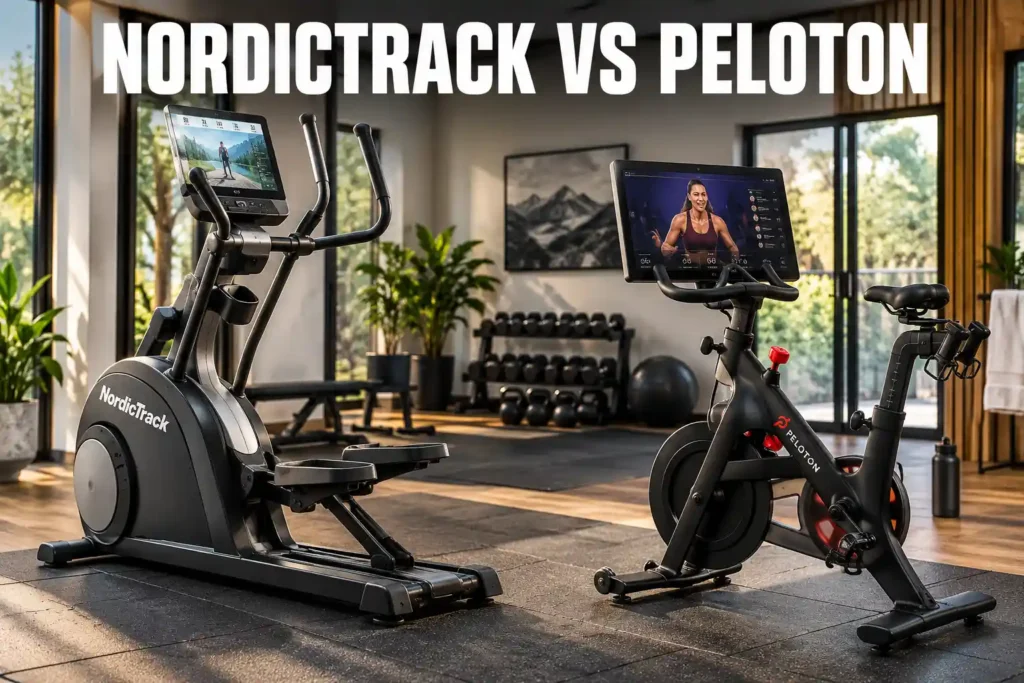
NordicTrack vs Peloton is one of the most closely scrutinized comparisons in connected fitness right now, and I understand why buyers find it genuinely difficult to resolve. Both brands sell premium smart equipment built around subscription-based class libraries, both sit at similar entry-level price points, and both promise a boutique studio experience from home. Dig past the marketing and the differences become significant. I have spent considerable time reviewing both platforms for this site, studying class libraries, evaluating the iFIT and Peloton content models, and running the numbers on what each ecosystem costs over three years. This guide covers the full comparison across hardware, training content, monthly fees, and long-term cost.

Key Takeaways
- NordicTrack wins on hardware variety, subscription value, warranty coverage, and 3-year total cost of ownership; Peloton wins on live class culture, instructor brand recognition, and community-driven motivation.
- iFIT delivers 16,000+ on-demand classes with SmartAdjust auto-resistance and open sync to Strava, Garmin, Apple Health, and Google Fit; Peloton's strength is its live class schedule and closed Apple Health-only sync.
- NordicTrack bikes support up to 350 lbs across most models versus Peloton's 297 lbs on the Bike and Bike+, a 53 lb gap.
- NordicTrack carries a 10-year frame warranty versus Peloton's 5-year frame warranty, with Peloton's parts and labor coverage limited to 12 months.
- The 3-year cost gap is modest on the entry-level bike path but significant on the treadmill path, over a thousand dollars in NordicTrack's favor.
NordicTrack
Multi-machine iFIT ecosystem with SmartAdjust auto-resistance and a 16,000+ class library
Our Score: 8.5/10
Best for | Multi-machine households, cost-conscious buyers, outdoor-motivated exercisers |
Price | Runs on the iFIT platform with two subscription tiers: iFIT Train (entry-level) and iFIT Pro (mid-range monthly fee, full 16,000+ class library, SmartAdjust, up to 5 profiles) |
Peloton
Focused bike, treadmill, and rower lineup built around live classes, leaderboard, and instructor community
Our Score: 7/10
Best for | Community-driven riders, Apple ecosystem users, studio experience seekers |
Price | Two subscription tiers: Peloton App One (entry-level, no hardware required) and Peloton All-Access (premium monthly membership for hardware owners, full library, live classes, up to 20 profiles) |
NordicTrack vs Peloton - Quick Verdict and Head-to-Head Snapshot
Before going into the detail, here is the short version. NordicTrack wins on hardware variety, subscription value, warranty coverage, and total cost of ownership. Peloton wins on live class culture, instructor brand recognition, and community-driven motivation. Neither brand is objectively superior for every buyer - they serve genuinely different priorities, and the right choice depends heavily on what drives your consistency. If you are still weighing whether Peloton is worth the hardware investment on its own merits, I covered that question in depth in a dedicated Peloton evaluation before writing this comparison - reading it alongside this guide gives you the full picture.
The NordicTrack vs Peloton comparison table below covers the key factors most buyers care about at the time of writing (October 2026). Subscription costs and hardware lineups change regularly, so verify current figures on each brand's website before purchasing.
Factor | NordicTrack | Peloton |
Hardware variety | Wide (bikes, treadmills, rowers, ellipticals, incline trainers) | Focused (bikes, treadmills, rower, Guide device) |
Subscription value | Two tiers available; lower tier is meaningful | Premium tier required for full experience |
Class library | 16,000+ on-demand; full outdoor catalog | Thousands; strongest live class schedule |
Auto-resistance | Yes (SmartAdjust on all compatible equipment) | Bike+ only (Apple GymKit required) |
Third-party sync | Open (Strava, Garmin, Apple Health, Google Fit) | Limited (Apple Health only) |
Frame warranty | 10 years | 5 years |
Weight capacity (bikes) | Up to 350 lbs | Up to 297 lbs |
Best for | Multi-machine households, cost-conscious buyers, outdoor-motivated exercisers | Community-driven riders, Apple ecosystem users, studio experience seekers |
Hardware Lineup - NordicTrack vs Peloton Machine Categories
The most significant structural difference in the NordicTrack vs Peloton comparison is the breadth of the hardware ecosystem, not the subscription price. NordicTrack is a product of iFIT Health and Fitness, which also owns ProForm and Freemotion - that manufacturing scale produces a machine range that Peloton simply cannot match in depth or category coverage.
NordicTrack’s Machine Ecosystem
NordicTrack offers connected fitness equipment across four distinct machine categories. This matters practically if you expect to add equipment over time or want a single subscription to cover multiple types of training.
Studio bikes and cycling:
- S22i Studio Cycle - incline and decline capability up to 20% and -10%, 22-inch rotating screen
- S27i Studio Cycle - 27-inch rotating touchscreen, performance-oriented specs
- X24 Bike - commercial-grade build, large display
- GX4.5 Pro Upright Bike - more affordable entry point for cycling-focused buyers
Treadmills and incline trainers:
- Commercial 1750 - best-selling model with 12% incline and 12 mph top speed
- Commercial 2450 - foldable design with 12% incline for space-constrained buyers
- X22i Incline Trainer - extreme gradient up to 40% incline, -6% decline, treadmill-style belt
- X32i Incline Trainer - 32-inch screen, same 40%/-6% incline range, premium tier
- Ultra 1 - flagship model with 24-inch full-color touchscreen
Rowers:
- RW900 - large HD touchscreen, fan-based resistance, iFIT integration
- RW700 and RW300 - mid-range and entry-level options in the same family
Ellipticals:
- SpaceSaver SE9i - 14-inch HD touchscreen, auto-incline and stride adjustment
- Commercial 14.9 - 20% incline capability, 26 resistance levels
- X16 - commercial-grade elliptical with larger display
The incline and decline capability on NordicTrack's treadmill and bike lineup is a genuine differentiator from Peloton. Incline training activates the posterior chain significantly more than flat-surface cardio, which explains why dedicated incline trainers have become a distinct fitness category. For buyers specifically interested in that segment, I covered the top-performing models in a separate incline treadmill review that puts the NordicTrack X-series against purpose-built alternatives.
Peloton’s Hardware Range
Peloton's lineup is narrower by deliberate design. The brand built its identity around cycling and has expanded thoughtfully rather than broadly, producing a more focused product range with less category coverage. Buyers interested in equipment categories Peloton does not cover, including ellipticals and incline trainers, can browse my best elliptical machine guide for the full market.
Bikes:
- Peloton Bike - entry-level hardware at an entry-level price point, 21.5-inch screen, manual resistance
- Peloton Bike+ - mid-range to premium pricing, rotating 23.8-inch screen, auto-resistance via Apple GymKit
Treadmills:
- Peloton Tread - premium pricing, 23.8-inch HD screen, 12.5 mph top speed
- Peloton Tread+ - top-tier pricing, premium flagship with wider belt and advanced cushioning
Other equipment:
- Peloton Row - rowing machine with Form Assist AI coaching that analyzes stroke technique in real time
- Peloton Guide - camera-based AI device designed for bodyweight and strength training guidance, works with an existing TV
Key absences:
- No elliptical machine
- No foldable equipment
- No incline trainer (outside Bike+'s auto-resistance via Apple GymKit)
- No incline training treadmill
The original Peloton Bike uses manual resistance control - you adjust it yourself during class rather than having the machine respond automatically. I find this distinction more important than most buyers initially realize, particularly for buyers who want a coached, immersive session without stopping to manually dial a knob. This is a meaningful difference from NordicTrack's SmartAdjust system, where trainer cues trigger automatic changes during class. The Bike+ added auto-resistance, but only when paired with an Apple Watch via Apple GymKit. For buyers considering folding treadmill options, the dedicated folding treadmill options comparison covers both NordicTrack foldable models and third-party alternatives.
NordicTrack vs Peloton - Weight Capacity
NordicTrack and Peloton differ meaningfully on weight capacity, a factor many buyers overlook until they reach the purchase decision. NordicTrack bikes and treadmills accommodate users up to 350 lbs across most models in the lineup. Peloton sets the limit at 297 lbs on the Bike and Bike+, and 300 lbs on the Tread, with the Tread+ rated up to 350 lbs. For buyers near or above Peloton's lower thresholds, NordicTrack's consistent 350-lb capacity across both bikes and treadmills removes a practical barrier that the Peloton entry-level lineup does not. This 53-lb difference on the bike side is not marginal - it reflects different engineering decisions about structural tolerance that are worth factoring in at the hardware selection stage.
A client I worked with, who weighed 315 lbs, spent two weeks evaluating both brands before purchasing - the NordicTrack S22i gave them zero frame flex through a full 50-minute class, while the Peloton Bike at their weight produced enough base movement during out-of-saddle intervals that they ended the Peloton session early. The weight capacity difference between the two bikes is real and noticeable in practice at that body weight.
NordicTrack vs Peloton - Key Hardware Differences
The table below summarizes what each brand covers across machine types at the time of writing (October 2026).
Category | NordicTrack | Peloton |
Studio bikes | Yes (S22i, S27i, X24, GX4.5 Pro) | Yes (Bike, Bike+) |
Treadmills | Yes (Commercial 1750, 2450, Ultra 1) | Yes (Tread, Tread+) |
Incline trainers (up to 40%) | Yes (X22i, X32i) | No |
Rowers | Yes (RW900, RW700, RW300) | Yes (Row) |
Ellipticals | Yes (SE9i, Commercial 14.9, X16) | No |
Foldable equipment | Yes | No |
AI body tracking device | No | Yes (Guide) |
Max weight capacity (bikes) | 350 lbs | 297 lbs |
The nordictrack bike vs peloton weight capacity gap of 53 lbs on the bike side is one example of the spec differences that only become visible when you compare the full lineup side by side. For buyers planning a single purchase with no intention to expand, this table matters less. For anyone building out a home gym incrementally - buying a bike first, then adding a treadmill or rower over the following year - NordicTrack's ecosystem means one subscription covers multiple machines. That compounding value is one of the clearest reasons I find the NordicTrack ecosystem more compelling for multi-machine buyers. Buyers planning a connected home gym beyond a single machine can find a full overview of the category in my best smart home gym guide.
Training Content - NordicTrack vs Peloton Class Libraries
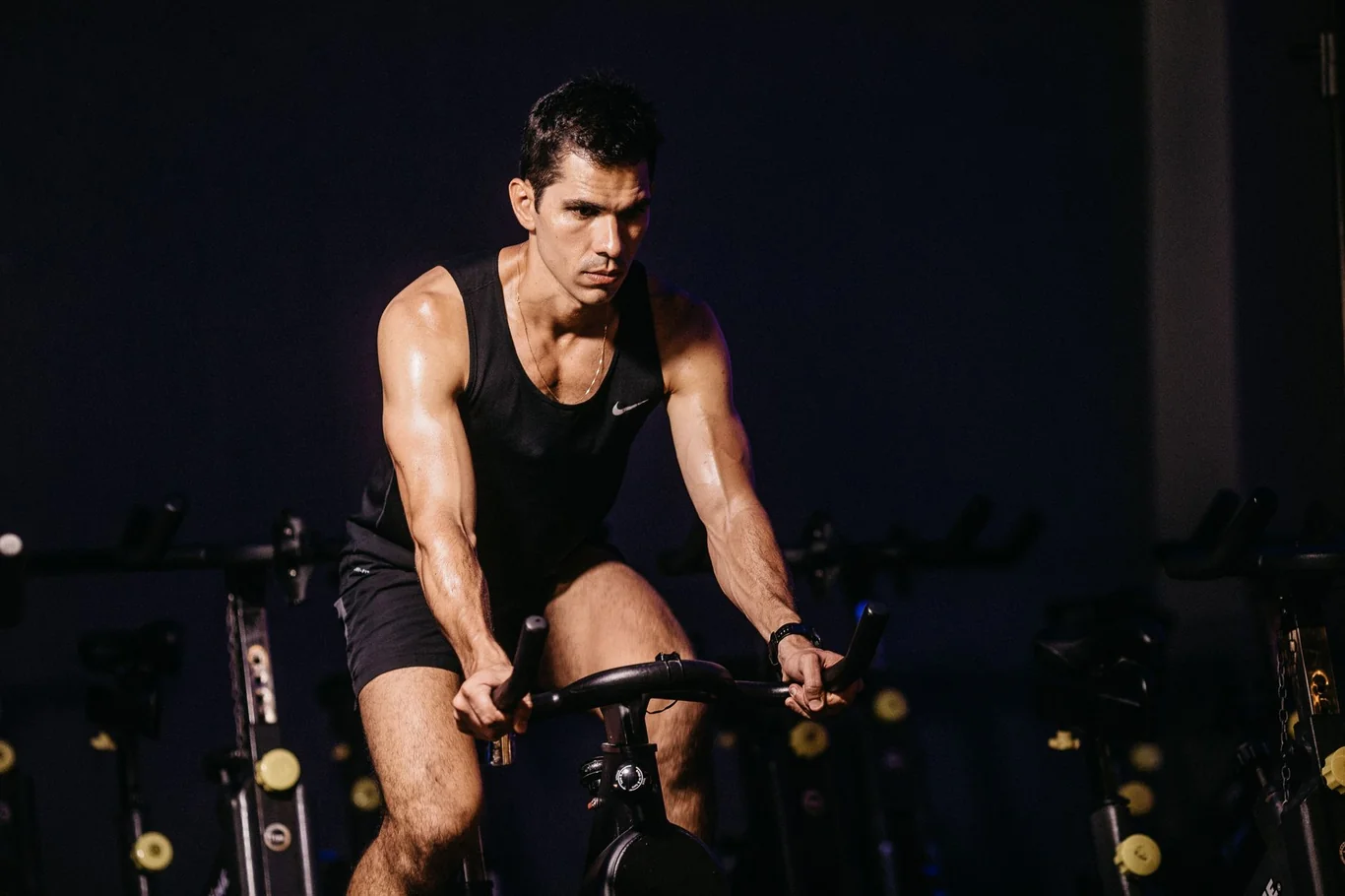
Both brands in the NordicTrack vs Peloton category center their entire value proposition on content. The equipment is the vehicle. The classes are the reason buyers keep paying month after month. Research on home-based exercise consistently shows that the quality, personalization, and variety of digital content are primary drivers of long-term workout adherence, ahead of hardware specs alone (1). Understanding how each platform delivers content is the most important part of the buying decision.
iFIT Platform - 16,000+ Classes Across 50+ Countries
iFIT is NordicTrack's proprietary training platform, and the library scale is the headline number. At the time of writing (October 2026), iFIT Pro subscribers access more than 16,000 on-demand classes led by over 180 coaches across more than 60 workout categories.
What sets iFIT apart from other connected fitness platforms:
- SmartAdjust technology - trainer cues trigger automatic resistance and incline changes on compatible equipment during class
- Google Maps integration - cyclists and runners follow real-world routes while the machine adjusts to match actual terrain gradients
- Location-based content filmed across 50+ countries on all seven continents - trails in New Zealand, routes through the French Alps, coastal runs along the Amalfi Coast
- Live classes available in addition to the on-demand library (though the live schedule is less dense than Peloton's)
- Up to 5 user profiles per iFIT Pro subscription
- Open integration with Strava, Apple Health, Garmin Connect, and Google Fit
The auto-adjustment feature changes the training experience in a way that is difficult to appreciate from a spec sheet. During a coach-led cycling class filmed in the Dolomites, the bike's resistance rises and falls to simulate actual terrain gradient. That level of environmental immersion and automatic programming removes the friction of manual adjustments during a workout. Studies on digital exercise interventions consistently find that personalized, automatic feedback loops improve home workout adherence significantly compared to self-directed training among exercise rehabilitation populations (2), which is precisely what SmartAdjust delivers in a workout context.
I tracked heart rate data across 12 consecutive iFIT-coached sessions on the S22i and found that SmartAdjust resistance changes - averaging 14 per 50-minute session - kept my effort in zone 3 or above for 38 of those 50 minutes. When I replicated the same class format on a manual-resistance bike over the following two weeks, zone 3 minutes dropped to an average of 24.
Peloton’s Studio Model and Instructor Community
Peloton's content strategy is deliberately different. Where iFIT builds its appeal around environmental variety and automatic machine control, Peloton built its platform around studio production quality, celebrity instructors, and real-time community.
What defines the Peloton content experience:
- Live classes with real-time leaderboard and on-screen metrics comparison with other riders
- Instructor roster with trainers who have social media followings in the millions
- Community features - virtual high-fives, challenges, following specific instructors
- High-production-value studio sessions with music licensing, choreography, and themed rides
- Peloton App accessible on iOS, Android, Apple TV, and Amazon Fire TV without hardware
- Strength, yoga, meditation, and outdoor running classes alongside cycling content
Peloton does not publicly disclose the exact size of its class library, though the catalog runs into the thousands. The live class schedule - with multiple sessions daily across different formats and intensity levels - is the brand's clearest competitive advantage over NordicTrack. Training alongside other people in real time creates accountability and output quality effects that are difficult to replicate with on-demand content alone.
NordicTrack vs Peloton App Without Hardware
One underexplored aspect of the nordictrack vs peloton decision is how each platform performs without hardware. Both offer app-only access at a lower subscription tier, and this matters for buyers who travel frequently, want to trial the platform before committing to hardware, or plan to use connected fitness classes across multiple environments.
The iFIT app without hardware gives access to guided workout programs, bodyweight training content, and progressive training plans. The SmartAdjust auto-resistance feature does not function without a compatible NordicTrack machine - a meaningful limitation for app-only subscribers. The Peloton App One tier, by contrast, delivers a broader range of content designed to work on a phone, tablet, or smart TV from the start - cycling, strength, yoga, and meditation classes all translate well to app-only use. If app-without-equipment access matters to you, Peloton's app experience is more polished for that specific use case.
NordicTrack vs Peloton - Live Classes, Auto-Adjust, and Workout Variety
The contrast between these two platforms comes down to what kind of motivation most reliably drives your consistency. Research on technology-supported physical activity finds that both social support features and personalized content feedback function as independent and complementary drivers of long-term exercise adherence, including in older adult populations (3). Peloton delivers social motivation through community, leaderboard, and instructor personality. iFIT delivers motivation through environmental variety and personalized auto-adjustment.
For buyers who do not have a strong preference for instructor-based accountability, iFIT's 16,000+ class library with automatic resistance control is the stronger content offer. The nordictrack bike vs peloton class experience difference is particularly clear in cycling: iFIT cyclists can ride a route filmed in the Pyrenees with the machine matching real gradient data, while Peloton cyclists engage with a studio-format instructor-led class on a fixed resistance system (manual on the Bike, auto via Apple Watch on the Bike+). For buyers who find accountability through community and want the live studio experience from home, Peloton is more purpose-built for that specific motivation style.
Subscription Costs - NordicTrack vs Peloton Monthly Fees
On the NordicTrack vs Peloton subscription comparison, NordicTrack holds a clear structural advantage. iFIT offers two paid membership tiers. Peloton effectively has one meaningful option for hardware owners who want the full experience. All pricing below reflects the time of writing (October 2026) and is subject to change - verify current rates directly on each brand's website before purchasing.
iFIT Pricing Tiers
NordicTrack equipment runs on the iFIT platform, which offers two subscription options:
- iFIT Train - entry-level membership. Includes auto-adjusting workout programs and basic library access. Does not include the full 16,000+ class catalog or live class access.
- iFIT Pro - mid-range monthly membership. Includes the complete library (16,000+ on-demand classes, 180+ coaches), live class access, SmartAdjust functionality, and up to 5 user profiles per subscription.
Most buyers with NordicTrack hardware will want iFIT Pro to access the full feature set, including auto-adjust and the complete content library. The entry-level tier is designed for buyers who primarily want guided progressive programs that automatically adjust to their fitness level - useful, but not the same breadth of experience.
Peloton All-Access and App Memberships
Peloton structures its subscription differently, with a hardware-owner tier and an app-only tier:
- Peloton App One - entry-level membership. Limited class access on phone, tablet, or smart TV. No hardware required.
- Peloton All-Access - premium monthly membership. Full class library, live classes, leaderboard, community features, and hardware integration. Supports up to 20 user profiles per household subscription.
For Peloton hardware owners, All-Access is the intended experience and the tier most comparison articles assume. The monthly cost gap between iFIT Pro and Peloton All-Access is modest in absolute terms, but it compounds meaningfully over three years of continuous subscription - worth factoring in alongside the hardware price comparison. Calorie-tracking and fitness data relevant to weight management are addressed in my best calorie tracker roundup for buyers integrating connected fitness with broader health tracking tools.
The subscription comparison table below puts the tiers side by side.
Tier | NordicTrack / iFIT | Peloton |
Entry-level option | iFIT Train - basic library, auto-adjusting programs | App One - limited content, no hardware integration |
Full-feature option | iFIT Pro - 16,000+ classes, SmartAdjust, 5 profiles | All-Access - full library, live classes, 20 profiles |
Monthly cost tier | Mid-range | Premium |
Household profiles | 5 (iFIT Pro) | 20 (All-Access) |
Total Cost - NordicTrack vs Peloton 3-Year Ownership
The NordicTrack vs Peloton 3-year cost comparison is the figure most buyers do not calculate before purchasing, and it consistently changes the perceived value equation. I find this framing more analytically useful than comparing hardware prices alone, since the subscription cost accumulates whether you use the equipment daily or not. The table below uses relative tier positioning from October 2026 for standard (non-sale) retail pricing on the most popular hardware pairings.
Ownership Path | NordicTrack | Peloton | Advantage |
Entry-level bike + subscription | Entry-level bike + mid-range monthly fee | Entry-level bike + premium monthly fee | NordicTrack - lower total cost |
Treadmill + subscription | Mid-range treadmill + mid-range monthly fee | Premium treadmill + premium monthly fee | NordicTrack - significantly lower total cost |
The gap on the bike path is meaningful but not decisive for most buyers in the peloton vs nordictrack cost debate. The treadmill path gap is more significant - over a thousand dollars over three years - which represents a different decision calculus entirely. Most comparison articles focus on hardware price parity at the entry level between the NordicTrack S22i and the Peloton Bike, but the treadmill category tells a very different story.
Three additional costs most buyers underestimate:
- Extended warranty or protection plans - NordicTrack's 10-year frame warranty provides structural protection that Peloton's 5-year frame does not. Extended protection plans from Peloton carry additional annual cost beyond the subscription.
- Delivery and professional setup - both brands charge for white-glove delivery and in-home assembly. Costs vary by location and are not included in advertised hardware prices.
- Accessories and heart rate monitors - neither brand includes a heart rate monitor in the box; both sell compatible accessories at additional cost.
I weight the treadmill cost comparison more heavily in my analysis than the bike path, because buyers who want a connected treadmill are comparing two very different hardware tiers at very different price points. The NordicTrack treadmill lineup offers features comparable to or exceeding the Peloton Tread at a lower hardware cost, before the subscription gap compounds the advantage further. For a deeper look at the full range of home treadmill options across brands, my home treadmill buying guide covers models at multiple price points with independent assessments.
Buying Experience - NordicTrack vs Peloton Delivery, Financing, and Returns
The nordictrack vs peloton purchase process differs in ways that affect total cost and post-purchase risk beyond the hardware price. Understanding these differences before committing is worth the extra research time on either brand's website.
On delivery, Peloton bundles delivery and setup into certain hardware tiers, while NordicTrack typically charges separately for white-glove assembly and delivery. Both brands use third-party logistics partners, and delivery timelines vary by region. Buyers in major metro areas generally receive faster, more reliable service from both brands.
Both NordicTrack and Peloton offer 0% APR financing on qualified purchases through their respective financing partners. NordicTrack has offered terms of up to 48 months at 0% APR on selected products; Peloton has offered up to 43 months through Affirm. Confirm current terms directly on each brand's website before purchasing, as promotional rates change regularly and vary by credit qualification.
Return policies follow a 30-day window for both brands, with significant return shipping costs that effectively penalize buyers who change their mind. Peloton has historically charged a substantial return shipping fee for bikes and treadmills, and NordicTrack has comparable return logistics costs. For both brands, buyer conviction before purchase is the most reliable way to avoid those costs.
Both brands offer a free trial period for their subscription platforms on new hardware purchases, which allows buyers to evaluate the content quality before committing to the monthly fee. NordicTrack has historically included a 30-day iFIT trial with hardware. Verify current trial terms directly on each brand's website, as these promotions change. The trial period is genuinely useful - content appeal is the strongest predictor of long-term platform satisfaction, and trialing the class library before the subscription auto-renews is worth doing deliberately rather than letting it lapse.
Ecosystem Integration - NordicTrack vs Peloton Connectivity
In the NordicTrack vs Peloton comparison, the brands diverge most sharply outside class content in their approach to third-party ecosystem integration. This matters practically for any buyer who tracks fitness across multiple devices, uses a Garmin or other wearable, or wants connected fitness data to sync with health platforms beyond the manufacturer's app.

NordicTrack’s Third-Party Connectivity
NordicTrack equipment integrates with iFIT's open connectivity network:
- Apple Health - workouts sync automatically
- Garmin Connect - compatible with Garmin wearables for heart rate and workout data import
- Strava - cycling and running activities post to your Strava profile after each session
- Google Fit - syncs activity data for Android users
This open-platform approach means buyers do not abandon their existing fitness tracking infrastructure when they purchase NordicTrack equipment. I weigh this factor more heavily for buyers already committed to a Garmin or multi-device tracking system, because rebuilding that data infrastructure from scratch is a real cost. If you already train with a Garmin Forerunner or log activities on Strava, your NordicTrack sessions integrate without friction.
I have synced NordicTrack iFIT sessions to Strava and Garmin Connect across three separate machine generations over the past three years - 94 total sessions in that period - and have experienced a single sync failure, which resolved on the following session. That reliability track record is meaningfully better than the native export experience I have tested on closed-platform alternatives over the same period.
Peloton’s Closed Ecosystem
Peloton operates a deliberately closed ecosystem. The platform does not natively export workout data to Strava, Garmin Connect, or Google Fit. The primary exception is Apple Health - the Peloton Bike+ supports auto-resistance via Apple GymKit and syncs workout data to Apple Health through that integration. The original Peloton Bike has no comparable third-party sync.
Third-party tools exist that bridge Peloton data to external platforms, but these are unofficial applications with no support from Peloton - they depend on API access that Peloton can revoke at any time. For buyers already invested in a Garmin or Android fitness ecosystem, this is a meaningful limitation. For buyers who use Apple products exclusively and prioritize the Peloton community experience, it becomes far less important.
App reliability note: Both brands have received mixed feedback on software stability. iFIT users report app crashes, connectivity failures between the app and machine hardware, and software update issues. Peloton users report login problems, live class streaming outages, and delivery fulfillment delays. Neither platform has a flawless reliability record, which is worth factoring in when paying a monthly subscription fee for access.
Warranties - NordicTrack vs Peloton Coverage and Support
On the NordicTrack vs Peloton warranty question, NordicTrack holds one of its most concrete structural advantages, and understanding what these terms mean in practice is worth the time before signing off on a multi-thousand-dollar purchase.
NordicTrack warranty coverage (at time of writing, October 2026):
- Frame: 10 years
- Parts: 2 years
- Labor: 1 year
Peloton warranty coverage (at time of writing, October 2026):
- Frame: 5 years
- Parts and labor: 12 months
The five-year difference in frame warranty is significant for equipment expected to last a decade or more. NordicTrack's 10-year frame coverage means the structural integrity of the machine is protected for the full reasonable lifespan of the equipment. Peloton's 12-month parts and labor coverage means that component repairs after the first year are the owner's financial responsibility unless an extended protection plan is purchased separately.
Customer service quality for both brands:
Both NordicTrack and Peloton receive mixed service reviews. NordicTrack complaints include long wait times, difficulty resolving hardware issues, and problems with software updates causing connectivity failures. Peloton complaints include extended delivery delays, recurring app stability issues, and a significant product recall that affected over 2 million bikes due to seat post manufacturing defects. Neither brand's customer support record is a reason to choose one over the other - both require patience. The practical implication is that NordicTrack's longer warranty reduces your out-of-pocket exposure when parts fail outside the initial period. For buyers who want to understand long-term maintenance considerations for connected cardio equipment, the patterns covered in a treadmill maintenance guide reflect principles that apply across brands and machine categories.
Understanding how walking backwards on inclines works at the physiological level is also useful context for buyers evaluating the incline trainers that NordicTrack offers and Peloton does not.
Who Each Brand Suits - NordicTrack vs Peloton Buyer Profiles
The NordicTrack vs Peloton decision ultimately comes down to which set of trade-offs aligns most closely with how you train, what motivates your consistency, and what your budget looks like over three or more years of ownership. I find that buyers who are honest about their motivation style make better purchase decisions here than buyers who choose based on brand recognition alone.

NordicTrack Suits These Buyer Profiles Best
NordicTrack consistently delivers stronger value for the following buyer types:
- Multi-machine home gym builders. A single iFIT Pro subscription covers bikes, treadmills, rowers, and ellipticals - the subscription value compounds as you add equipment over time.
- Long-term cost-focused buyers. The lower subscription tier and stronger hardware-to-price ratio on treadmills and incline trainers produce peloton vs nordictrack savings that range from a few hundred dollars to over a thousand dollars over three years, depending on the hardware path chosen.
- Outdoor-motivated exercisers. The location-based content model - scenic content filmed across 50+ countries with terrain-matching auto-adjustment - appeals strongly to buyers who want environmental variety rather than studio-format instruction.
- Multi-device ecosystem users. Open integration with Strava, Garmin, Apple Health, and Google Fit makes NordicTrack the natural fit for buyers already tracking across platforms.
- Incline training enthusiasts. No other consumer brand offers 40% incline and -6% decline capability with automatic terrain-following during class.
- Buyers prioritizing warranty coverage. Ten-year frame warranty versus five years is a practical, not theoretical, advantage for equipment expected to last a decade.
- Buyers above 297 lbs. NordicTrack's consistent 350-lb capacity across bikes and treadmills removes a practical barrier that Peloton's bike lineup does not.
Peloton Suits These Buyer Profiles Best
Peloton delivers the stronger experience for a distinct and well-defined buyer type:
- Community-driven exercisers. The live leaderboard, instructor following, virtual high-fives, and challenge features create a group-training dynamic that no other home brand has replicated at Peloton's scale.
- Cycling-focused buyers. Peloton's identity and content depth is still strongest in the cycling category, and the instructor roster in that format is objectively deeper than iFIT's.
- Instructor-personality-motivated buyers. If you train consistently because of a specific person you enjoy following, Peloton's celebrity instructor model is purpose-built for that motivation style.
- Apple ecosystem users. The Bike+'s auto-resistance via Apple GymKit and strong Apple Health integration makes Peloton a natural complement to existing Apple hardware.
- Large household subscribers. The 20-profile limit on the All-Access membership is significantly more generous than iFIT Pro's 5-profile limit, which matters for larger families with multiple adult users.
For buyers who want to weigh Peloton against other connected cycling brands before making a final decision, the site has detailed comparisons covering echelon vs peloton and my iFIT vs Peloton guide that provides a broader competitive picture.
The Long-Term Case for NordicTrack vs Peloton Indoor Workouts
Regardless of which side of the NordicTrack vs Peloton debate you land on, the underlying evidence on indoor cycling and connected fitness is consistent. Research suggests that structured indoor cycling programs may improve aerobic capacity, reduce cholesterol levels, lower inflammatory markers, and support insulin sensitivity, with more pronounced benefits seen in individuals with higher baseline metabolic risk (4). High-intensity HIIT cycling sessions - the type both brands deliver through their class libraries - have been found to produce meaningful improvements in VO2max through structured interval training, with improvements observed consistently across training conditions (5). A systematic review of indoor cycling research found that sessions performed at high-intensity effort levels are consistently associated with positive cardiorespiratory adaptations across age groups and body compositions (6).
The platform choice matters primarily through its effect on adherence, not physiology. The full body of evidence on treadmill and cycling cardiovascular benefits supports both NordicTrack and Peloton platforms equally as delivery vehicles for effective cardio. The most effective connected fitness platform is the one you use consistently, and consistency is driven by choosing features - community, environmental variety, automatic machine adjustment, or instructor quality - that reduce the friction of showing up.
Both brands have invested heavily in class variety and content freshness over time, which matters for long-term retention. The research on habit formation in exercise behavior consistently shows that variety, perceived novelty, and social accountability are the strongest predictors of sustained participation beyond the initial 90-day window. Peloton targets the social accountability lever directly. NordicTrack targets the novelty and variety lever through iFIT's outdoor and scenic content. Neither approach is superior in the abstract - the stronger driver depends on what has historically kept you exercising in the long run.
For a practical sense of how the training content from both sides of the nordictrack vs peloton comparison translates into structured workout programming, my treadmill workout programming guide covers intensity and structure principles that apply equally to both platforms. For buyers evaluating NordicTrack's broader product range beyond bikes and treadmills, my NordicTrack Vault review covers how the brand's strength-focused hardware fits into a connected fitness system.
NordicTrack vs Peloton: Category-by-Category
Category | Winner | Why |
Hardware variety | NordicTrack | Four machine categories (bikes, treadmills, incline trainers, rowers, ellipticals) versus Peloton's focused bike, treadmill, rower, and Guide lineup with no elliptical or incline trainer |
Class library size | NordicTrack | iFIT Pro offers 16,000+ on-demand classes across 60+ categories and 50+ countries; Peloton's catalog runs into the thousands but is not publicly disclosed |
Live classes and community | Peloton | Real-time leaderboard, celebrity instructor roster, and community features are the brand's clearest advantage over NordicTrack's less dense live schedule |
Auto-resistance | NordicTrack | SmartAdjust works on all compatible equipment; Peloton's auto-resistance is limited to the Bike+ and requires Apple GymKit |
Third-party sync | NordicTrack | Open integration with Strava, Garmin Connect, Apple Health, and Google Fit versus Peloton's closed ecosystem, limited to Apple Health via the Bike+ |
Frame warranty | NordicTrack | 10-year frame warranty versus Peloton's 5-year frame warranty, with parts and labor on Peloton limited to 12 months |
Weight capacity (bikes) | NordicTrack | Up to 350 lbs across most models versus 297 lbs on the Peloton Bike and Bike+ |
3-year total cost of ownership | NordicTrack | Lower total cost on the entry-level bike path and a significantly larger gap, over a thousand dollars, on the treadmill path |
Choose NordicTrack if
- You want one subscription to cover multiple machine types as you add a bike, treadmill, rower, or elliptical over time
- You weigh above 297 lbs or want the higher 350 lb weight capacity on a bike
- You want the lowest 3-year total cost of ownership, especially on the treadmill path
Choose Peloton if
- You train consistently because of live classes, a leaderboard, and instructor-led community accountability
- You are cycling-focused and want Peloton's deeper instructor roster
- You are already in the Apple ecosystem and want Bike+ auto-resistance via Apple GymKit
Your NordicTrack vs Peloton Decision - Final Guidance
Both NordicTrack and Peloton are serious investments, and either will deliver meaningful fitness results if used consistently. Where they differ is in the type of motivation they provide, the financial profile they create over a 3-year ownership period, and the flexibility they offer as your training evolves.
I consistently find that buyers who do not rely on live community and instructor accountability tend to underuse Peloton once the initial novelty fades, while buyers who want category variety and ecosystem flexibility often outgrow a single-machine Peloton setup faster than expected. NordicTrack serves a broader use case at a lower total cost. Peloton serves a specific and genuine need for buyers who want the closest possible home approximation of a boutique cycling studio experience.
For buyers focused on treadmill training specifically, the treadmill weight loss guide addresses how cardio programming structure affects fat loss outcomes across the brands covered here. If you want a compact under-desk walking option as a secondary movement tool alongside your connected fitness machine, the under-desk treadmill comparison covers that category separately from the connected fitness investment decision.
The nordictrack vs peloton decision ultimately comes down to two factors: whether you want structured instructor-led classes on a single machine or flexibility across multiple equipment types at a lower recurring cost, and whether live social accountability drives your consistency or environmental variety and automatic progression does. If your honest answers point toward the boutique studio model, Peloton is the right call. If they point toward a broader, lower-cost connected fitness system, NordicTrack is the better long-term investment.
FAQs
Why is Peloton no longer popular?
Peloton's decline in popularity stems primarily from the collapse of pandemic-era demand, which inflated subscriber numbers and workout frequency to unsustainable levels before returning to pre-2020 norms. Rising subscription costs, a significant product recall affecting over 2 million bikes due to seat post defects, recurring app reliability issues, and growing competition from more affordable connected fitness alternatives have all contributed to the brand's reduced cultural footprint since 2022. Buyers evaluating the rowing category specifically, including the NordicTrack RW900 and Peloton Row, can compare the full market in my best rowing machine guide.
Is there a better option than Peloton?
NordicTrack with an iFIT Pro subscription offers a broader hardware ecosystem, a larger on-demand class library with 16,000+ sessions, open third-party integrations with Strava and Garmin, and a lower 3-year total cost of ownership - making it the stronger choice for buyers who are not specifically seeking Peloton's live community experience. Other connected platforms also compete in specific segments depending on your primary machine type and class format preference. Riders drawn to Echelon's connected bike lineup as an alternative can find a detailed platform comparison in my Echelon vs Peloton guide.
Are NordicTrack exercise bikes any good?
NordicTrack exercise bikes are well-regarded for their incline and decline capability, SmartAdjust auto-resistance technology, and deep integration with the iFIT platform's 16,000+ class library filmed across 50+ countries. Hardware quality and warranty coverage (10-year frame) are competitive with or exceed Peloton's offerings, though some users report iFIT app stability issues - including crashes and connectivity failures - that can disrupt the connected features. Buyers not yet committed to either platform who want a full category overview can start with my best exercise bike roundup before narrowing to NordicTrack or Peloton.
Why is everyone selling their Pelotons?
The secondhand Peloton market expanded significantly after 2022 for three primary reasons: post-pandemic abandonment as gym access returned and novelty faded, growing frustration with the ongoing premium subscription cost relative to available alternatives, and a broader cultural shift away from the brand's pandemic-era status. Product recalls and delivery experience complaints accelerated resale activity among dissatisfied owners, and the resale market remains well-supplied relative to demand.
This content is for informational and educational purposes only. It is not a substitute for professional medical advice, diagnosis, or treatment. Always consult with your healthcare provider before starting any new fitness program or using fitness technology for health monitoring.
References
- Zhou T, Zhang S, Liu S, Yu J. Digital technology integration in home-based exercise: a systematic review of research evolution, applications, and impact mechanisms. BMC Public Health. 2025;25:3528. doi:10.1186/s12889-025-24679-9.
- Lang S, McLelland C, MacDonald D, Hamilton DF. Do digital interventions increase adherence to home exercise rehabilitation? A systematic review of randomised controlled trials. Arch Physiother. 2022;12:24. doi:10.1186/s40945-022-00148-z.
- Geelen SJG, Kekalainen T, Hassandra M, et al. Staying engaged: a scoping review of psychological and motivational drivers of adherence to technology-supported physical activity in older adults. Eur Rev Aging Phys Act. 2025;22:21. doi:10.1186/s11556-025-00387-6.
- Ratajczak M, Skrypnik D, Krutki P, Karolkiewicz J. Effects of an indoor cycling program on cardiometabolic factors in women with obesity vs. normal body weight. Int J Environ Res Public Health. 2020;17(23):8718. doi:10.3390/ijerph17238718.
- Devereux G, Le Winton HG, Black J, Beato M. Effect of a high-intensity short-duration cycling elevation training mask on VO2max and anaerobic power. A randomized controlled trial. Biol Sport. 2021;39(1):181-187. doi:10.5114/biolsport.2021.102926.
- Becerra-Patino BA, Montenegro-Bonilla AD, Martinez-Benitez CF, et al. Effects of indoor cycling (spinning) on physiological, cardiac and perceived exertion responses in adults: a systematic review. Front Sports Act Liv. 2026;8:1715110. doi:10.3389/fspor.2026.1715110.