
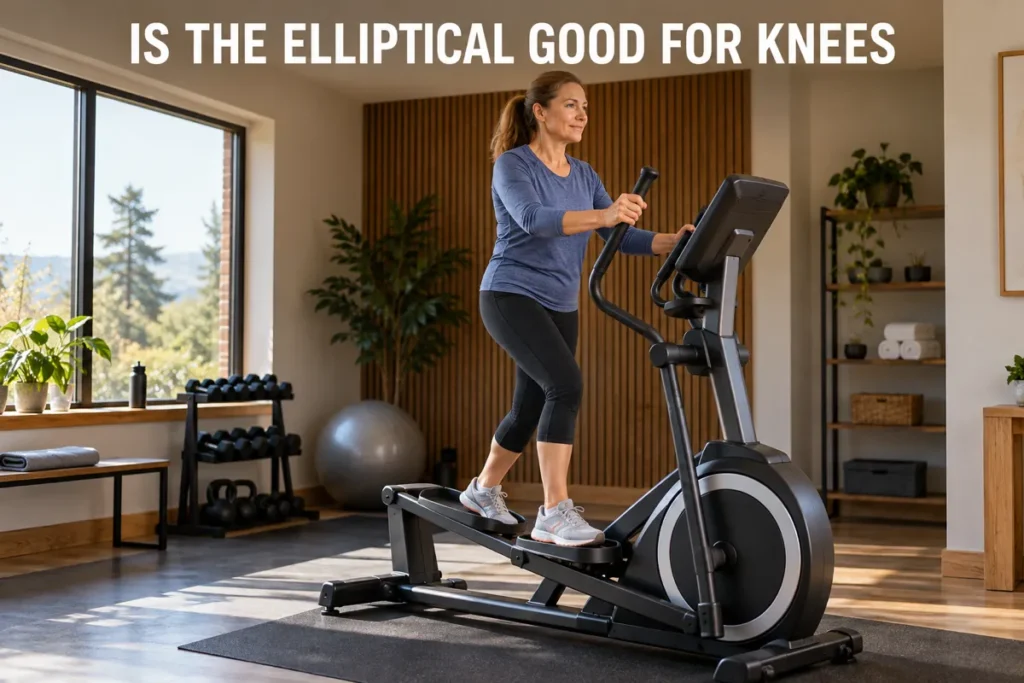
As a sports scientist specializing in biomechanics and joint stress, I've spent years analyzing how different cardio machines load the musculoskeletal system, and the elliptical consistently ranks among the most joint-friendly options available. The mechanics behind that matter - because not every knee condition responds the same way, and poor machine setup can still produce pain on a supposedly low-impact device. This guide covers what peer-reviewed research shows about elliptical training and knee joint forces, how those forces compare to running and cycling, and what the clinical evidence says for knee osteoarthritis and chronic knee pain. I also cover machine setup and form cues to help you train without unnecessary strain.

Is the Elliptical Good for Knees - Understanding Joint Load Research
For most people, the elliptical reduces knee joint loading compared to running and produces measurable clinical benefits for common knee conditions. The biomechanical reasoning is worth understanding before relying on "low-impact" as a blanket guarantee.
Elliptical Impact Forces Compared to Running
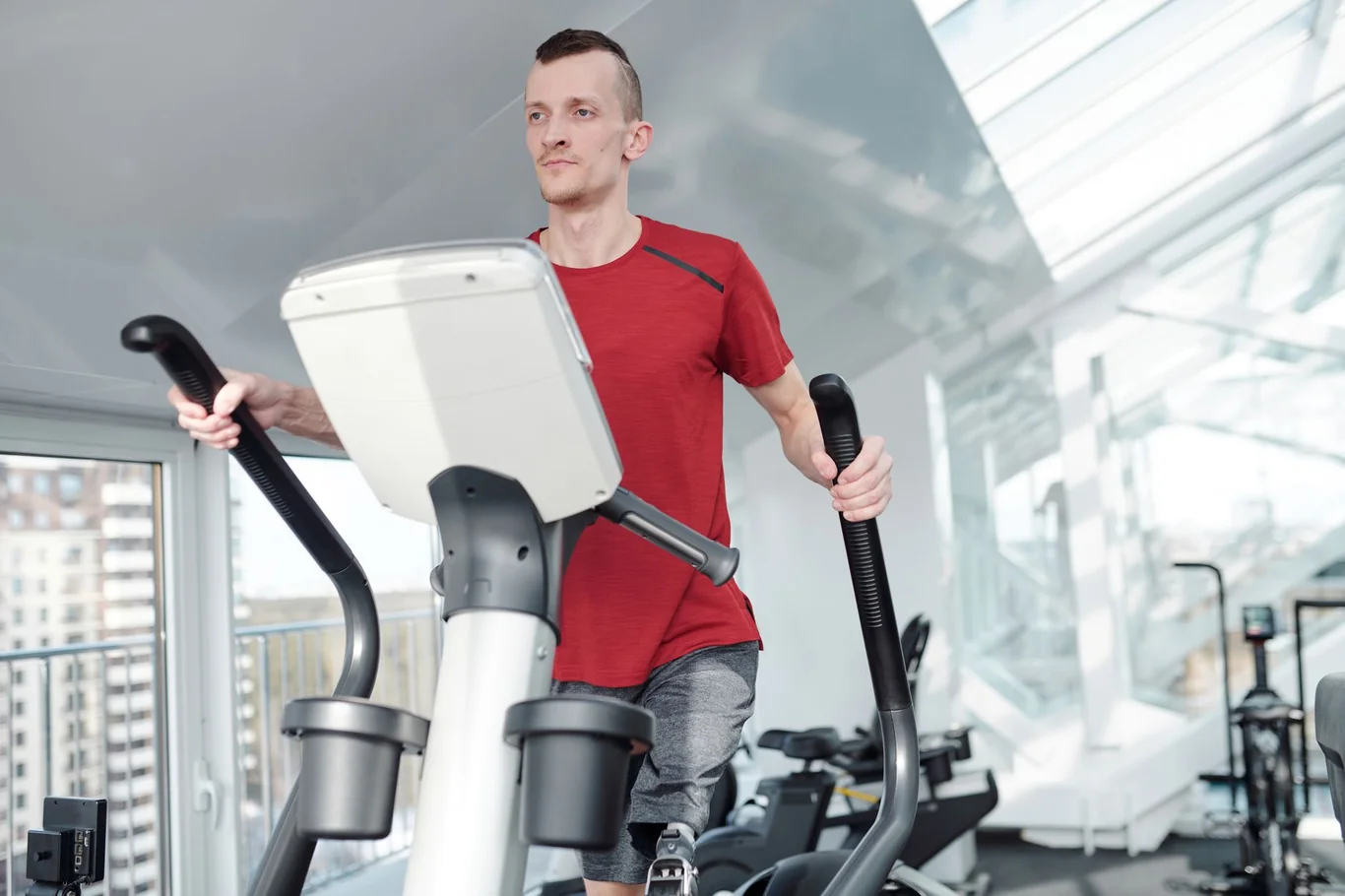
Research on elliptical biomechanics consistently points to substantially lower knee load than running. Chester et al. compared lower limb kinematics across treadmill running, standard elliptical, and lateral elliptical in 16 healthy runners and found impact forces on the elliptical substantially lower than treadmill running values, with loading delayed to a later point in the stride cycle and the peak loading rate reduced at each footfall (1). A 2019 comparative study published in PLoS ONE found that elliptical training places knee compressive forces at a level intermediate between walking and cycling - lower than ground-contact gait but higher than non-weight-bearing cycling (2).
Running at moderate pace generates roughly 2.5 to 3 times body weight in peak knee joint forces. The elliptical at comparable intensity produces an estimated 1.5 to 2 times body weight - a meaningful reduction for a joint absorbing repetitive mechanical load across every session. These are estimates based on published biomechanics literature, and actual values shift with body weight, speed, and resistance level. I compare calorie burn, joint load, and who each suits in my breakdown of running against the elliptical and the StairMaster.
Exercise Mode | Peak Knee Force (× Body Weight) |
Treadmill running (moderate pace) | ~2.5-3× |
Elliptical (moderate intensity) | ~1.5-2× |
Treadmill walking | ~1.0-1.2× |
Several mechanisms explain why the elliptical is easier on the joint: the closed-chain motion eliminates heel-strike loading spikes; no impact transient means force distributes gradually across the full stride arc; quadriceps and hamstrings co-contract simultaneously to add dynamic stability; and the oval pedal path mimics natural gait while removing ground reaction forces. These combine to make the elliptical one of the most structurally protective cardio options available.
For a starting point on home elliptical models designed with smooth motion mechanics, our best under desk elliptical guide covers compact options with adjustable stride settings relevant to knee management.
Stride Length, Foot Placement, and Knee Tracking
Not all elliptical motion loads the knee equally. A biomechanics study using 3D motion capture and electromyography tested multiple foot-position variations on standard and lateral ellipticals in 16 healthy males (3). A wide-step placement on a standard elliptical produced the smallest peak inward knee rotation, reducing medial compartment stress - the type most associated with knee osteoarthritis and meniscal wear. The lateral elliptical produced greater knee range of motion and higher vastus medialis activation, which can support patellar tracking in people with patellofemoral issues.
Stride length carries equal importance. Most sports medicine protocols recommend 18 to 20 inches of stride length for neutral knee mechanics. Shorter strides raise patellofemoral stress; excessively long strides load the posterior joint capsule. When evaluating the best elliptical machine for bad knees, stride length adjustability is the single most important feature specification - fixed short-stride models cause more knee problems than they solve.
Our overview of what the elliptical machine is good for covers the full range of health and fitness benefits beyond joint protection.
Is the Elliptical Good for Bad Knees and Knee Osteoarthritis
For people managing chronic knee conditions, the relevant question is whether regular elliptical training produces measurable clinical improvement. The evidence is encouraging, particularly for knee osteoarthritis, though it carries clinical nuances worth understanding.
Clinical Evidence for Knee Osteoarthritis
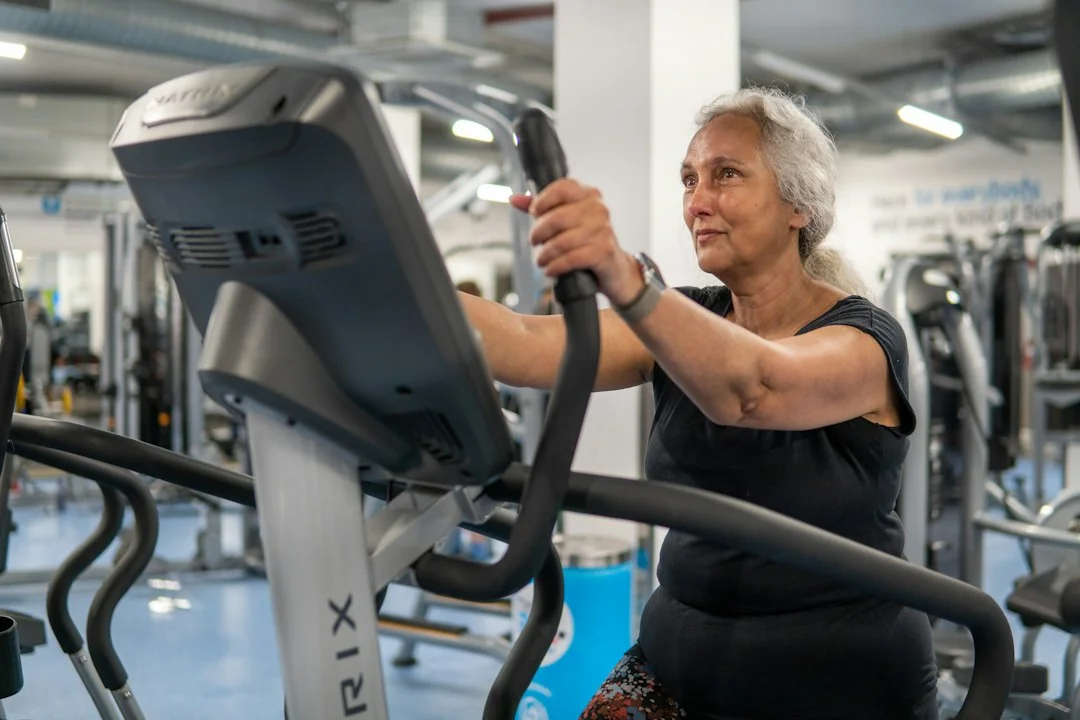
A 2024 randomized controlled trial by Bukhari et al. enrolled 28 knee osteoarthritis patients in a 12-week program comparing low-impact elliptical training combined with conventional therapy against conventional therapy alone (4). The elliptical group showed significant within-group improvements across all KOOS (Knee Injury and Osteoarthritis Outcome Score) domains - pain, symptoms, daily activities, sport and recreation, and quality of life (p ≤ 0.005). Medial knee joint space increased significantly in the elliptical group at 12 weeks (p = 0.007). However, between-group comparisons against conventional therapy alone did not reach statistical significance, meaning the elliptical adds to a rehabilitation program but has not been shown to be independently superior to conventional care in a head-to-head analysis.
A 2024 meta-analysis of 10 studies and 532 knee OA patients found that low-intensity exercise produced significant pain reduction (mean VAS decrease of 1.12 points), improved muscle strength, and better knee joint scores, with a lower adverse event rate than higher-intensity exercise (5).
For people asking whether is elliptical good for knee osteoarthritis, these findings together give a reasonably confident yes - as a component within professional rehabilitation care, not a substitute for it.
A broader comparison of exercise options for bad knees covers how ellipticals, bikes, and rowing machines compare across different severity levels of knee conditions.
Knee Conditions That Benefit - and Those That Require Caution
Not all knee pain responds the same way to elliptical loading. The biomechanical profile aligns well with several chronic conditions and requires more caution with others.
Conditions that generally respond well:
- Knee osteoarthritis (grade 1-2) - low compressive loading and muscle-strengthening effects match the clinical evidence from the Bukhari RCT
- Patellofemoral pain syndrome - closed-chain motion with adjusted stride length reduces shear forces at the patella-femur interface; wide foot placement reduces medial tracking stress
- Post-surgical recovery after clinical clearance - commonly used in return-to-activity protocols following ACL reconstruction due to controlled, progressive joint loading
- Knee pain associated with excess body weight - reduced impact forces lower the mechanical stress that body mass multiplies during impact-based exercise
- Reduced range of motion in older adults - low-resistance elliptical training improves synovial fluid circulation that cartilage depends on for nutrition
Conditions requiring clinician guidance first:
- Acute inflammatory flare-ups with significant swelling, heat, or restricted range of motion
- Grade 3-4 knee osteoarthritis with substantial joint space narrowing confirmed on imaging
- Recent ligament or tendon tears not yet cleared for closed-chain loading
- Patella instability without adequate VMO strength to control patellar tracking
If you experience increased pain, swelling, clicking, or locking during or after sessions, stop and consult a sports medicine physician before continuing. A review of exercise equipment for older adults and limited-mobility users covers alternatives for people whose knee conditions make even the elliptical too demanding.
Is the Elliptical Better for Knees Than a Treadmill
Across most scenarios, the elliptical places lower peak forces on the knee than treadmill jogging - but the gap narrows at walking speed, which is the more relevant comparison for people managing knee conditions.
Elliptical vs Treadmill in Clinical Practice
In my practice, clients switching from treadmill jogging to the elliptical for early-stage knee OA typically extend their session tolerance from 20-25 minutes to 35-40 minutes at the same cardiovascular intensity within two weeks. That extended session duration accumulates more weekly training volume than any marginal difference in peak joint force values between the two machines.
At treadmill walking speed, ground reaction forces drop to roughly 1.0 to 1.2 times body weight - much closer to what the elliptical produces at moderate intensity. Where the elliptical holds a consistent advantage is the ability to increase cardiovascular intensity without proportionally increasing joint load. Raising resistance adds cardiovascular demand without the abrupt force increase that comes from running faster. When comparing an elliptical or treadmill for weight loss, I favor the elliptical for anyone whose knee pain limits treadmill session intensity or duration.
Our in-depth piece on treadmill impact on knees covers how cushioning systems, incline settings, and running speed interact with knee joint loading. For people considering the StairMaster as a treadmill alternative, the StairMaster vs elliptical comparison covers where those joint-loading profiles diverge.
Is the Elliptical or Bike Better for Knees
For people with more advanced knee conditions - grade 3-4 osteoarthritis or those immediately post-surgery - the stationary bike is often more appropriate than the elliptical. Orekhov et al. (2019), in a study of transtibial amputees, found that cycling produces the lowest knee compressive forces of the three modalities studied, with gait highest and elliptical intermediate. A 2024 study by He et al. added further nuance: elliptical machines generate higher knee torque at later joint angles (135 to 180 degrees), while stationary bikes load the knee at 70 to 110 degrees (6). This timing difference means the elliptical stresses the knee at a more extended position - which suits some pain patterns better than others. I explain setup fixes and bike types that can help with exercise bike knee pain.
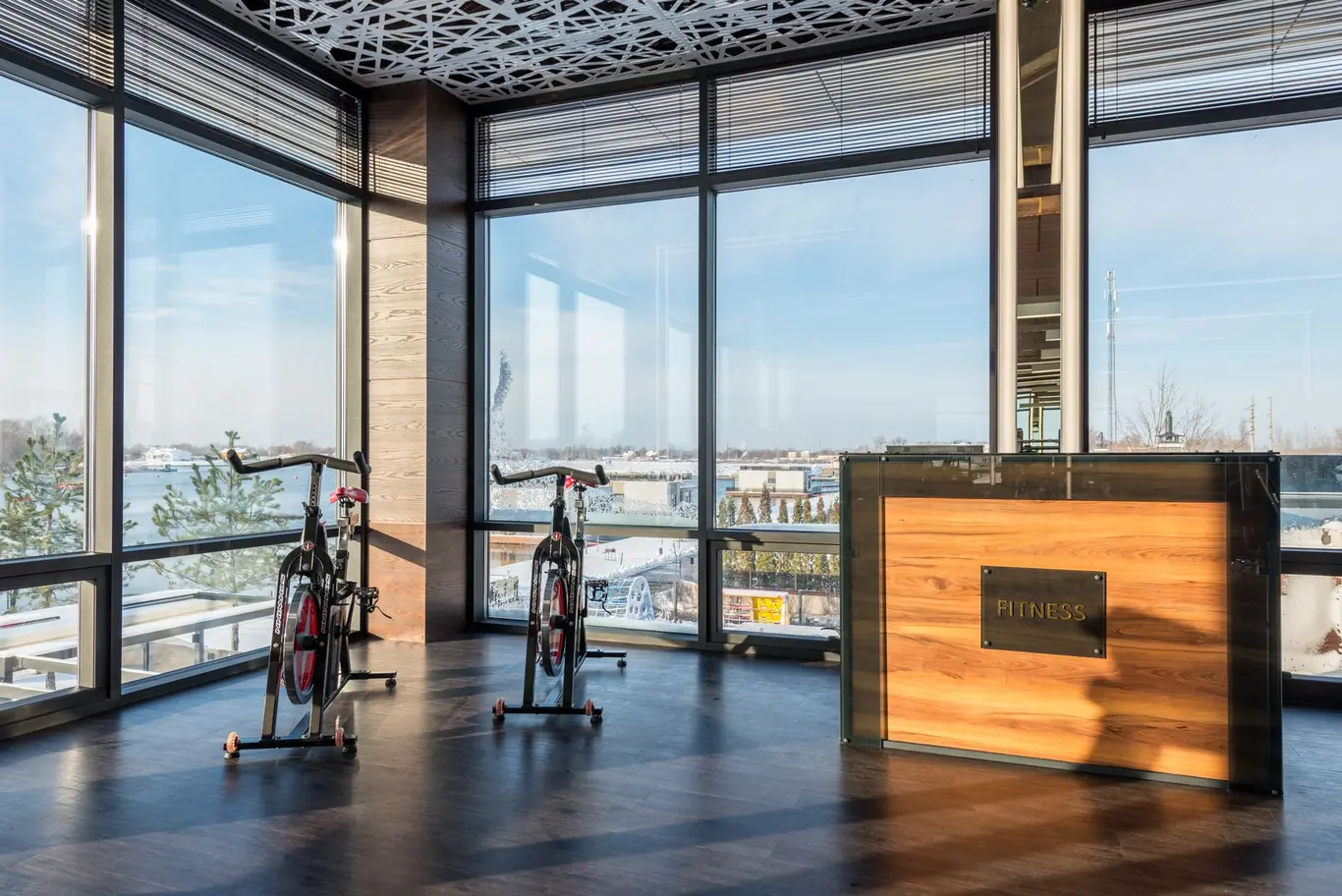
If you can use an elliptical without discomfort at low resistance and proper form, the full-body cardiovascular engagement makes it the better long-term training choice for most people managing knee issues. If it consistently causes pain, a recumbent or upright bike provides comparable output at lower joint loads. Elliptical vs stationary bike for knees ultimately comes down to condition severity and joint angle tolerance. For a detailed comparison, our elliptical vs stationary bike analysis covers exercise selection, calorie burn, and joint load side by side.
Feature | Elliptical | Stationary Bike |
Knee compressive force | Intermediate (above cycling) | Lowest of three modalities |
Joint angle loading | 135-180 degrees | 70-110 degrees |
Weight-bearing | Yes (closed-chain) | No (non-weight-bearing) |
Recommended for grade 3-4 OA | Caution required | Often more appropriate |
How to Protect Knees on the Elliptical
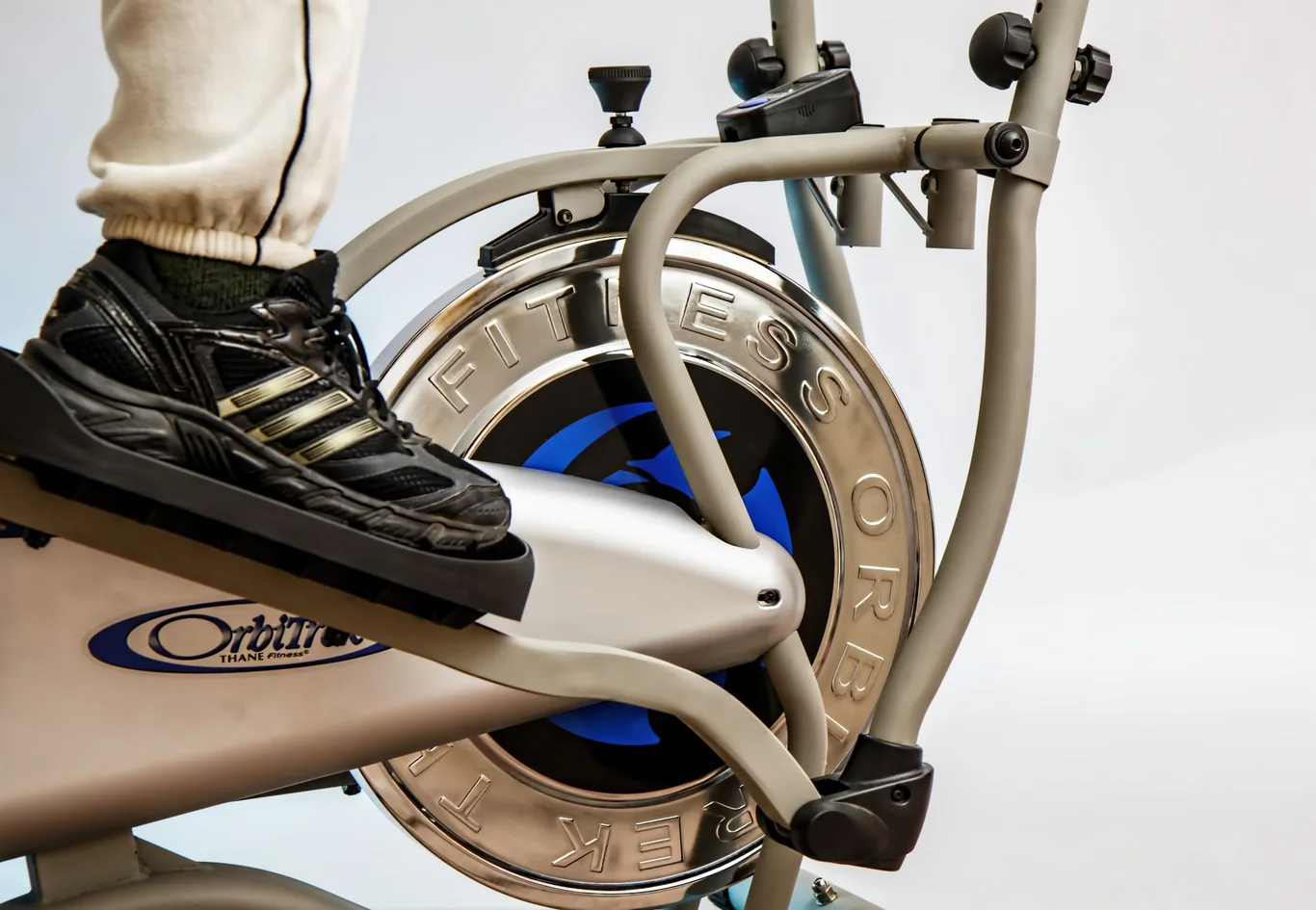
Using the elliptical correctly is as important as choosing the right machine. Poor form and suboptimal setup are the most common reasons people develop elliptical knee pain despite the machine's low-impact reputation. I recommend establishing a safe mechanical baseline through machine settings before you step on to help protect your knees, and my guide explains how to use the elliptical with proper form.
Machine Settings That Reduce Knee Stress
The following setup steps should be done before your first session and revisited whenever you experience discomfort:
- Set stride length to 18-20 inches for most adults. Shorter strides force excessive knee flexion; longer strides risk posterior capsule stress at full extension. Use the adjustment if available.
- Place the full foot flat on the pedal with slight pressure toward the heel. Riding on the balls of the feet significantly increases patellofemoral loading.
- Start at low-to-moderate resistance. High resistance substantially increases shear forces on the knee ligaments - both cardiovascular load and joint stress rise with resistance, but not proportionally.
- Use a slight positive pedal incline (1-3 degrees, if adjustable) to encourage heel engagement and reduce the quad-dominant loading pattern that stresses the patellofemoral joint.
- Hold handlebars lightly and maintain an upright torso - a forward lean increases knee compressive force with every stroke.
- Build session duration gradually: start with 10 to 15 minutes before extending to 30+, giving connective tissue time to adapt.
Key features for the best elliptical machine for bad knees: adjustable stride of 18 inches minimum; magnetic resistance for smooth pedal action; flywheel weight of 15 lbs or more for momentum stability; step-through design for users with limited knee flexion range. These specifications matter most when comparing elliptical models built for joint-sensitive training, and my guide shows how to choose an elliptical for your home.
Form Cues That Prevent Elliptical Knee Pain
Technique matters more on the elliptical than most users expect. These form cues address the most common errors seen in people who develop knee pain despite choosing a low-impact machine.
- Track knees over the second toe: throughout the pedal stroke, your knee should travel in line with your second toe. Inward collapse (valgus drift) concentrates stress on the medial compartment - the most vulnerable zone in osteoarthritis.
- Maintain an upright torso: avoid rounding forward. A forward lean shifts your center of mass anteriorly, increasing patellofemoral compressive force with every stroke.
- Avoid locking the knee at extension: the pedal path ends near full extension. Letting the knee snap into hyperextension loads the posterior capsule repeatedly - maintain a slight soft bend at the bottom of the stroke.
- Distribute pressure across the whole foot: resist riding up on your toes as cadence increases. Toe-loading spikes patellofemoral pressure in the same way short strides do.
- Keep a consistent cadence: abrupt hard pushes on the down stroke create brief force spikes that exceed what smooth, continuous pedaling produces.
- Engage the core before each session: a stable pelvis prevents compensatory knee valgus that develops when the hips fatigue - core activation is the upstream fix for a downstream knee problem.
Warm-Up and Cool-Down for Elliptical Training
Joint preparation before stepping on the elliptical reduces the risk of cold connective tissue taking the initial load spike. A brief warm-up matters more on an elliptical than most users expect, because the machine allows high cadence even at low resistance.
- Leg swings (10-15 per direction): swing the working leg forward and back to mobilize the hip joint and loosen the posterior chain.
- Marching in place for 2-3 minutes at minimal resistance before increasing to training intensity - brings synovial fluid in the knee joint to operating temperature gradually.
- Calf raises (10-15 reps): activates the posterior chain and promotes circulation before load is applied.
- Cool-down: 5 minutes of slow pedaling at minimal resistance, then a standing quadriceps stretch (30 seconds each side) and a seated hamstring stretch to manage the acute rise in synovial pressure that occurs during exercise.
Is the Elliptical Good for Weight Loss and Belly Fat
Yes, is elliptical good for weight loss - the machine is an effective calorie-burning tool across all fitness levels. As a rough estimate, a 155-pound (70 kg) person burns approximately 300 to 400 calories per 30 minutes of moderate-to-vigorous elliptical training, with heavier individuals burning toward the top of that range and lighter individuals toward the bottom, based on published MET values (7). Actual caloric cost depends on your specific intensity and body composition. Detailed projections by weight and resistance level are covered in our elliptical for weight loss guide.
Does the Elliptical Target Belly Fat
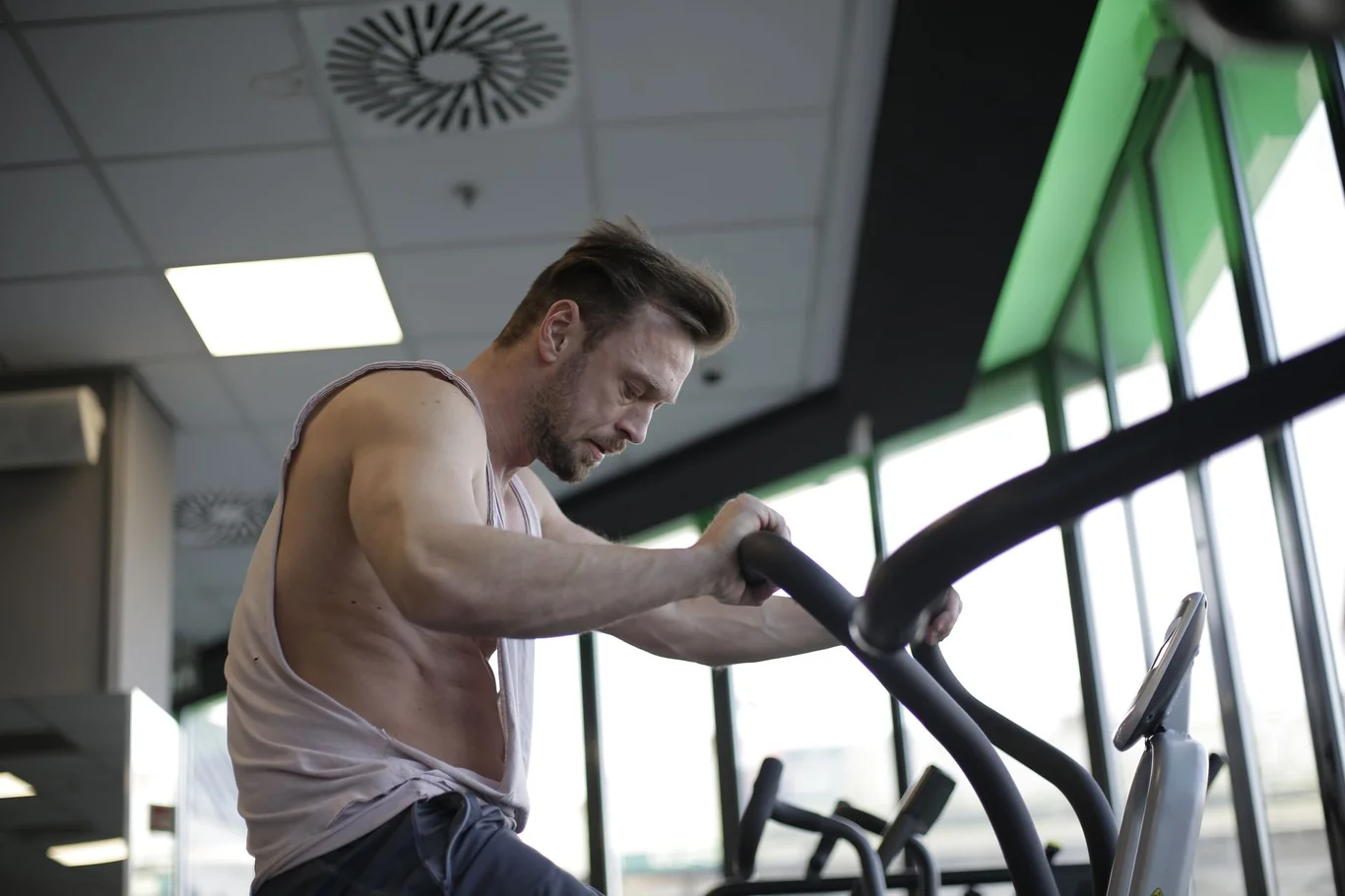
No cardio modality can target fat reduction to a specific body region, but sustained elliptical training creates the caloric deficit needed for total-body fat reduction over time. The practical fat-loss advantage of the elliptical is session duration - lower joint stress allows more people to train longer before pain or fatigue stops them, which accumulates greater total caloric expenditure per week.
Elliptical vs Treadmill for Consistent Fat Loss
The question of whether is elliptical good for weight loss or treadmill comes down to which machine allows you to train consistently at meaningful intensity. Both produce comparable caloric output when intensity is equated, but the elliptical holds a clear advantage for anyone whose knee pain limits treadmill session length. To maximize calorie burn while protecting knees: use arm handles actively (10-15% additional expenditure); vary resistance in intervals; prioritize session length over peak intensity; and train three or more times per week rather than in infrequent long sessions. I break down calories burned on the elliptical by weight, time, and resistance.
Using the Elliptical Smarter - A Joint-Health Summary
Across several years of assessing low-impact cardio equipment in rehabilitation settings, the elliptical is the machine I return to most consistently for clients in early-stage knee recovery - primarily because adjustable resistance lets me keep their heart rate in a productive zone for 35 to 45 minutes without the joint load variability that comes with increasing treadmill speed. I rank the models I tested in my roundup of the best elliptical machines.
Based on the biomechanical and clinical evidence reviewed here, the elliptical is a sound choice for most people, most of the time, with proper setup. Impact forces sit well below running levels, closed-chain motion distributes load more evenly, and peer-reviewed RCT evidence shows measurable improvement in knee OA outcomes after 12 weeks of consistent use. The elliptical ranks among the best low-impact cardiovascular options for people managing knee pain, arthritis, or post-rehab recovery. If you are ready to buy, you can browse elliptical machines in my shop.
The caveats matter. Stride length, foot placement, and resistance level all influence joint load significantly. People with advanced osteoarthritis or acute injuries should consult a clinician before starting. The elliptical is a training tool, not a substitute for medical treatment. When used correctly, it supports joint health rather than compromising it. For most people with knee issues who want a full-body cardiovascular workout at home, the elliptical is the correct starting point. I cover the wider health gains in my guide to the benefits of elliptical machines.
FAQs
Which is better for knees, a treadmill or an elliptical?
The elliptical is generally better for knees than a treadmill for people with joint conditions because it eliminates the heel-strike impact phase entirely, reducing peak knee forces substantially compared to treadmill running according to biomechanics research. The advantage narrows at treadmill walking speeds, but the elliptical still allows you to increase cardiovascular intensity without proportionally increasing joint load - something treadmill walking cannot match.
What are the disadvantages of elliptical?
The main disadvantages of the elliptical include a fixed movement pattern that does not replicate natural ground-contact gait for sports rehabilitation, a learning curve for correct form that many users skip, and joint stress that remains significant if resistance is set too high or stride length is too short. Additionally, the elliptical's closed-chain motion may not transfer well to functional movement for specific gait-related injuries, and low-quality machines with short fixed strides can actually increase patellofemoral stress rather than reduce it.
Is 20 minutes of elliptical a day enough?
Twenty minutes of elliptical training daily is enough to meet the minimum cardiovascular exercise threshold recommended by most sports medicine guidelines and supports joint-health benefits when performed consistently. For people with knee conditions, 20 minutes at low-to-moderate resistance is a practical starting point that allows connective tissue to adapt before extending session duration - most people managing knee pain benefit more from consistent shorter sessions than from infrequent longer ones.
What is the #1 mistake that makes bad knees worse on the elliptical?
The number-one mistake that makes bad knees worse on the elliptical is using excessive resistance too early. High resistance dramatically increases shear forces on the knee ligaments and the patellofemoral joint - forces that exceed what the elliptical's low-impact design is meant to manage. Starting at low resistance, building gradually, and maintaining an upright posture without forward lean protects the joint in ways that the machine's low-impact motion alone cannot guarantee.
Is the elliptical good for weight loss?
The elliptical is good for weight loss because it burns approximately 300 to 400 calories per 30 minutes for a 155-pound person at moderate-to-vigorous intensity, while maintaining low enough joint stress to support consistent training across weeks and months. The real weight-loss advantage is sustainability - people managing knee pain can often train longer per session and more frequently per week on an elliptical than on higher-impact alternatives, which accumulates greater total caloric expenditure over time.
This content is for informational and educational purposes only. It is not a substitute for professional medical advice, diagnosis, or treatment. Always consult with your healthcare provider before starting any new fitness program or using fitness technology for health monitoring.
References
- Chester S, Zucker-Levin A, Melcher D, Peel S, Bloomer R, Paquette M. Lower limb kinematics and metabolic cost during elliptical exercises and treadmill running. J Appl Biomech. 2016;32(2):113-119. doi:10.1123/jab.2015-0110.
- Orekhov G, Robinson AM, Hazelwood SJ, Klisch SM. Knee joint biomechanics in transtibial amputees in gait, cycling, and elliptical training. PLoS ONE. 2019;14(12):e0226060. doi:10.1371/journal.pone.0226060.
- Paquette M, Zucker-Levin A, DeVita P, Hoekstra J, Pearsall D. Lower limb joint angular position and muscle activity during elliptical exercise in healthy young men. J Appl Biomech. 2015;31(1):19-27. doi:10.1123/JAB.2014-0105.
- Bukhari SSUK, Aftab A, Munir S, Ahmad Z, Rauf S. Effects of low impact elliptical training on knee osteoarthritis outcomes and knee joint space. Rehabil J. 2024;8(4):03-06. doi:10.52567/trehabj.v8i04.84.
- Ying S, Chen F, Dai C, Li Y, Shi H. Effect of low-intensity muscle strength training on postoperative rehabilitation and adverse events in patients with knee osteoarthritis over 55 years of age: a meta-analysis. BMC Sports Sci Med Rehabil. 2024;16:228. doi:10.1186/s13102-024-01014-0.
- He MY, Lo HP, Chen WH. Effects of stationary bikes and elliptical machines on knee joint kinematics during exercise. Medicina (Kaunas). 2024;60(3):498. doi:10.3390/medicina60030498.
- Ainsworth BE, Haskell WL, Herrmann SD, Meckes N, Bassett DR Jr, Tudor-Locke C, Greer JL, Vezina J, Whitt-Glover MC, Leon AS. 2011 Compendium of Physical Activities: a second update of codes and MET values. Med Sci Sports Exerc. 2011;43(8 Suppl 1):S1-S56. doi:10.1249/MSS.0b013e31821ece12.