

The studies do not name a winner: at a very hard effort, 30 recreationally active men used 18% more energy a minute on a treadmill than on an elliptical (15.18 against 12.82 kcal), while two other studies found no difference at other effort settings. For knees, measured force on an elliptical was not lower than treadmill walking in three people with knee replacements, so pick by goal and comfort and ask your doctor or physical therapist if a joint hurts.
Running vs elliptical is a three-way trade between calories, joints and goals, and the studies do not name one winner. At a very hard felt effort, recreationally active men used more energy a minute on a treadmill than on an elliptical, while two other studies found no difference at other effort settings.
This guide compares running, the elliptical and a stair machine on energy use, force on the foot and knee, and muscle use. Each result names the people measured, and opinions are labelled. As a strength and conditioning coach, I judge a machine by what it trains and what its numbers mean.
Running vs Elliptical: Key Differences at a Glance
Running, the elliptical and a stair machine differ in three ways that studies have measured: energy use at the same effort, the force under the foot and at the knee, and which muscles work harder. The studies tested different people, so each result below names its group.
Each table row has its own basis and its own group, so read each row alone.
| Measure | Running | Elliptical | Stair machine |
|---|---|---|---|
| Energy use at a very hard effort (RPE 17), kcal a minute (1) | 15.18 | 12.82 | 13.35 (a stepper) |
| Energy use at a moderate effort (RPE 12 to 13) (2) | No difference from the elliptical | Equal to the treadmill in energy use; heart rate higher (164 against 145 beats a minute) | Not tested |
| Peak knee force in three people with knee replacements (3) | Over 4 times body weight (jogging) | 2.24 times body weight | Over 3 times body weight at higher levels (StairMaster 4000 PT) |
| Peak heel pressure in 20 healthy adults, kPa (4) | 188 | 94 | 66 for stair climbing (setup not stated) |
| Leg muscle activity in 17 trained runners (5) | Reference level | Lower in most muscles; quadriceps not different | Also lower than running, quadriceps excepted (a stepper) |
| Who it suits (my judgement) | Preparing for running events | Adding cardio sessions beside running | A third option; no study cited here ranks it for any goal |
The RPE 17 figures come from 30 recreationally active, experienced men aged 35 to 49, and the moderate-effort result from 18 untrained adults.
In my view, nothing measured here shows that one of the three is simply better.
Calorie Burn: Running, Elliptical, and Stair Machine Compared
Calorie burn depends on body weight, how long you work and how hard. Three kinds of figure circulate, and they are not interchangeable, so this section keeps them apart. First come measurements at the same felt effort, then Compendium estimates, then the number on the console.
Same felt effort. In 30 recreationally active, experienced men aged 35 to 49 working at RPE 17, which is "very hard" on the 6 to 20 scale, energy use per minute on one machine of each type was (1):
- Treadmill: 15.18 kcal a minute
- Stepper (one Life Fitness Integrity CLSS): 13.35 kcal a minute
- Elliptical: 12.82 kcal a minute
On these figures the treadmill was 18% above the elliptical (15.18 against 12.82), and the elliptical was 16% below the treadmill. The men had more than 10 years of experience with indoor cardio machines, and each type was one machine in 12-minute bouts, so these rates do not scale into a 30-minute or hourly total.
Two studies found no energy difference between a treadmill and an elliptical. In 18 untrained college-age adults working at the same moderate felt effort (RPE 12 to 13), oxygen use and energy use did not differ, while heart rate was higher on the elliptical (164 against 145 beats a minute) (2). In 18 trained runners working at the same share of each machine's peak workload, oxygen use and heart rate did not differ between a treadmill, an elliptical and a stepper (6).
So the answer depends on how the comparison is set, and none of the three results is a rule.
How Body Weight and Resistance Shift the Numbers
Body weight and time scale every Compendium estimate: energy is the activity's MET value times body weight in kilograms times hours. On an elliptical, higher stride rate and higher resistance each raised oxygen use in 26 adults, but oxygen use at the same settings varied widely from person to person (7). Estimates by weight, time and resistance are on the page about calories burned on the elliptical.
Compendium estimates. The 2024 Adult Compendium lists two elliptical entries: 02048, moderate effort, 5.0 METs, and 02049, vigorous effort, 9.0 METs (8). Running 6 to 6.3 mph (12050, 9.3 METs) sits just above 02049 and is shown beside it. That pairing rests on the MET values alone: the efforts are not matched. The table shows 30 minutes, rounded to the nearest 10 kcal.
| Compendium entry, 30 minutes | 130 lb (59 kg) | 155 lb (70 kg) | 185 lb (84 kg) |
|---|---|---|---|
| Elliptical, moderate effort (02048, 5.0 METs) | 150 kcal | 180 kcal | 210 kcal |
| Elliptical, vigorous effort (02049, 9.0 METs) | 270 kcal | 320 kcal | 380 kcal |
| Running, 6 to 6.3 mph (12050, 9.3 METs) | 270 kcal | 330 kcal | 390 kcal |
Estimates from the 2024 Compendium (8): MET value times body weight times hours, rounded once. Running at 7 mph (12070, 11.0 METs) comes to 390 kcal for 70 kg in 30 minutes and the stair treadmill ergometer entry (02065, 9.3 METs, no effort level given) to 330. These are estimates for paired efforts and do not belong beside the kcal-a-minute figures above.
Neither the table nor the measured rates tell you what your own session burns.
Why Elliptical Calorie Displays Often Overestimate
Console figure. A console estimates calories with the maker's own formula, and the studies that checked found it read higher than the lab measurement. In 34 adults on one Precor EFX 883 with no body weight entered, the display read about 100 calories higher per 30 minutes of moderate exercise (9). In 26 adults, the manufacturer's calculated energy expenditure was overestimated during both tests (7). Other machines were not tested, so only the direction is known, not a percentage. For heart-rate sensors, see the comparison of a chest strap and wrist tracker.
A calorie display also says nothing about fat burning, which is a separate measure. In nine healthy men, the peak rate of fat burning during a test was higher on a treadmill (0.61 g a minute) than on an elliptical (0.41) or a rower (0.40) (10). That is the fuel mix during the test, not body fat lost.
Joint Impact: What the Research Shows
Running and elliptical joint forces have not been measured in the same healthy people in the studies above, so there is no running-versus-elliptical figure for a healthy knee or hip. Running injuries are common, though: a review of 13 studies put running-related injuries at about 17.8 per 1,000 hours in novice runners and 7.7 in recreational runners (11). Those figures describe runners and say nothing about elliptical injury rates.
On an elliptical the feet stay on the pedals. In 15 men, the vertical pedal force and the loading rate around heel strike were smaller than the ground force in walking, but the knee-extensor and hip-flexor moments were larger (12). That comparison was with walking, not running.
Force Under the Foot and at the Knee: What Was Measured
Under the foot, peak heel pressure in 20 healthy adults was 94 kPa on an elliptical against 215 in walking and 188 in running; under the forefoot it was 213 against 253 and 251 (4). That is pressure on the sole, not force in a joint. At the knee, force has been measured directly in three people with instrumented knee replacements. Peak force on an elliptical was 2.24 times body weight: not lower than treadmill walking (2.05), below jogging, which was consistently greater than 4 times body weight, and about twice a stationary bike (1.03) (3). In 10 amputees and 10 controls, calculated knee forces were lowest in cycling and highest in walking, with the elliptical in between (13). Both groups are small and unusual. The page on how the elliptical affects knees goes further.
On a stair machine (StairMaster 4000 PT), the same three people reached over 3 times body weight at the higher levels, above the elliptical's 2.2, and less than that at low levels (3). Knee force on a stair machine in healthy adults was not measured in the studies above.
If joint health drives your choice, talk with your doctor or physical therapist first. MedlinePlus says to stop right away if you feel pain, and to go to the hospital right away or call 911 or the local emergency number if you have chest pain during or after exercise (14).
Bone. NIAMS lists brisk walking, jogging or running, racket sports, climbing stairs and dancing as weight-bearing exercise, which produces a force on bones that makes them work harder. It does not name the elliptical (15). This page makes no claim that either activity builds bone. If you have low bone density or osteoporosis, ask your doctor or physical therapist which exercise suits you.
Elliptical Training After Surgery or With Knee Pain: What Trials Found
Trials of elliptical training in patient groups are small and specific. In 50 people in hospital after a hip replacement (average age 68), those who added elliptical training to standard physiotherapy had stronger knee extensors, faster walking and longer single-leg stance than those given walking practice (16). That is inpatient rehabilitation, not home use, and it does not extend to other conditions. For older readers choosing a machine, see the page on an elliptical machine for seniors.
For knee osteoarthritis, the one small trial found (28 adults with mild disease, 12 weeks) showed that adding elliptical training to physical therapy did not improve pain, function or X-ray joint space more than physical therapy alone (17). No machine is a treatment, and an elliptical is not a replacement for care from your provider.
If knee symptoms are your concern, a stationary bike is the other common option. In 12 healthy young men, calculated knee torque and vertical knee force were higher on an elliptical than on a stationary bike at 50 and 70 revolutions a minute (18). The two machines are compared on stationary bike vs elliptical.
Muscle Engagement: What the Studies Measured
Muscle studies use different comparisons, so the table lists them one by one and does not rank the activities by muscle.
| Measure | People | Compared with | What was found |
|---|---|---|---|
| Leg muscle activity (5) | 17 well-trained runners | Treadmill running | Lower on the elliptical and the stepper in most muscles; quadriceps not different |
| Leg and hip muscle activity (19) | 20 adults without gait impairments, four elliptical models | Walking | Gluteus maximus and vastus lateralis more active; medial hamstring, calf and shin muscles less active |
| Front-thigh muscle activity (20) | 10 healthy adults | Walking, treadmill walking and stationary cycling | Rectus femoris more active on the elliptical; two muscles measured, running not tested |
| Trunk and gluteal activity (21) | 40 healthy young men | Walking | Gluteal muscles more active; lower back bent and twisted more; hand position, speed and stride length changed the result |
| Use of the handles (7) | 26 adults | Legs only | Oxygen use higher with arms and legs at any given intensity; heart rate not higher |
| Leg effort rating (22) | Adults in one study | Treadmill, at the same heart rate | Legs rated harder on the elliptical (12.5 against 11.2) |
| Knee range of motion (23) | 16 healthy runners | Treadmill running | Greater on a standard elliptical; joint angles, not forces |
The handles are the one place an elliptical adds arm work. Using them raised oxygen use at every setting in the study above, but how much arm or shoulder muscle they add was not measured.
In those 17 runners the stepper and the elliptical were broadly alike, and where they differed the stepper showed the higher muscle activity (5).
Whether you push and pull the handles or rest your hands is a choice, and the evidence on what each does is thin. The page on elliptical machine benefits goes through what is established.
Elliptical vs Stair Machine: A Closer Look
Two stair machines sit near the elliptical in a gym: the stepper and the stepmill, a moving staircase. Both are called stair machines here, because StairMaster is one maker's brand name.
Cardiovascular Output: Which Demands More?
At the same very hard felt effort, the stepper used 13.35 kcal a minute against 12.82 on the elliptical in the same 30 men (1). In 18 trained runners at the same share of each machine's peak workload, the two machines and the treadmill did not differ in oxygen use or heart rate (6). The studies set effort differently, so they do not contradict each other.
Real stairs have been studied as a habit, which differs from a machine. In 7,282 Japanese adults followed for a median of 16.6 years, those who reported using stairs 20 to 39% of the time had a lower incidence of cardiovascular disease than those using them under 20% of the time, after adjustment for lifestyle and clinical factors. The higher groups were not significantly lower after adjustment (24). Stair use was self-reported, so this is an association and not a test of a machine.
Lower-Body Strength: What Is Known
No study cited here compared strength gains between a stair machine and an elliptical, so the page makes no claim about which builds more. Gluteus maximus activity was higher on four ellipticals than in walking in 20 adults (19).
In my view, the stair machine and the elliptical are both reasonable options, and the energy studies above give no basis for ranking them for strength or for knees. Choose by comfort and by the movement you will repeat.
Running vs Elliptical for Weight Loss
No trial has tested elliptical training alone for weight loss in healthy adults, so there is no measured weight-loss comparison of running and the elliptical. The American College of Sports Medicine position on physical activity in general, not on ellipticals, is that 150 to 250 minutes a week of moderate activity gives only modest weight loss, and that more than 250 minutes a week has been associated with clinically significant loss (25).
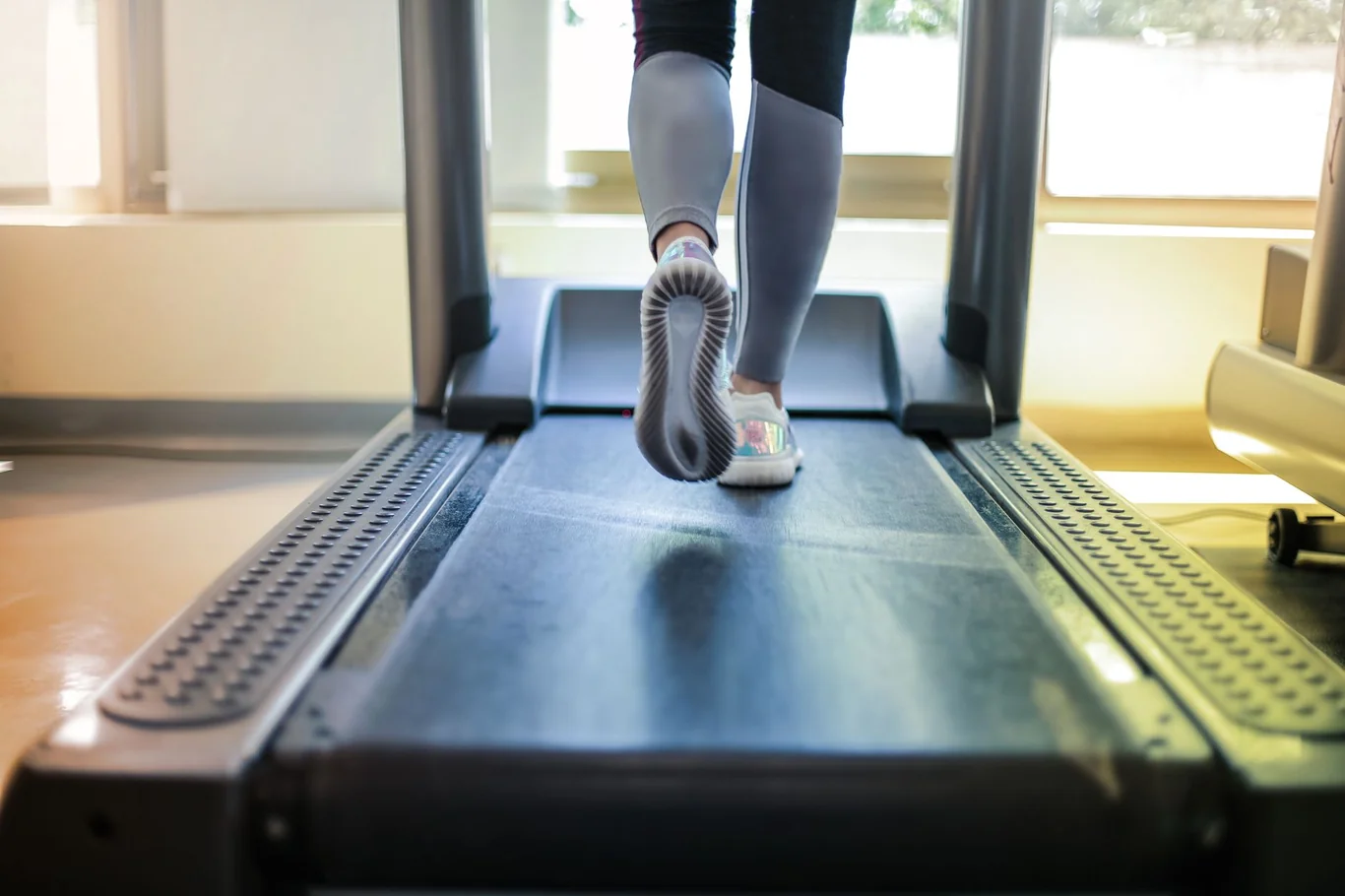
In my view, the practical question is which one you will do week after week. The US guidelines set at least 150 to 300 minutes of moderate-intensity aerobic activity a week for adults (26), and a machine you skip because of pain or boredom delivers none of it.
Elliptical for Running Training: Does Cross-Training Work?
Can an elliptical stand in for runs, for example while a running injury settles? The studies measured trained runners in the lab, not training outcomes. In 18 trained runners, oxygen use, heart rate and fuel use at matched shares of peak workload did not differ between the treadmill and the elliptical. The conclusion drawn from that trial is narrower than a plain yes: the elliptical and stepper are suitable substitutes for running during periods when a reduced running load is required, such as rehabilitation from a running injury (6).
Two other measurements point the other way. In 17 well-trained runners, most leg muscles were less active on the elliptical and stepper than in treadmill running, by up to 60% for some muscles, with the quadriceps the exception (5). That 60% is muscle activity, not impact. In 16 healthy runners, knee range of motion was greater on a standard elliptical than in running (23). These were single-session measurements, not tests of whether fitness or recovery carries over.
Practical points follow. The first two are my judgement, because no study cited here tested a training plan:
- Use the elliptical as an addition to running, not a replacement, unless a clinician has told you to stop running.
- If running is painful, see a doctor or physical therapist before you choose either machine.
- Hand position, speed and stride length changed lumbar motion and muscle activity in 40 healthy young men, so treat your settings as part of the session (21).
- Posture and setup basics are in the guide to how to use an elliptical.
For runners, the open question is specificity, because these studies did not test whether elliptical sessions keep running performance. For a runner equipping a home gym, I would pick the treadmill as the main machine; that is my opinion and not a finding. An elliptical fits when you want a second option, and the treadmill vs elliptical comparison covers the two machines. Stride length is listed per model, so compare each model's figure, such as on the Sunny Silent Long Stride Elliptical, and try the machine if you are tall.
Who Should Choose Each Option
The choice depends on your goal, your injury history and the movement you will repeat. These lists are my judgement from the measurements above, and they are not findings.
- STEP 1Check for pain If a joint hurts, ask your doctor or physical therapist before you choose.
- STEP 2Name your goal A running event points to running; a change from running points to the elliptical.
- STEP 3Match effort by feel Console calories and heart rate can mislead.
- STEP 4Keep what you repeat The machine you use weekly does more than the best one on paper.
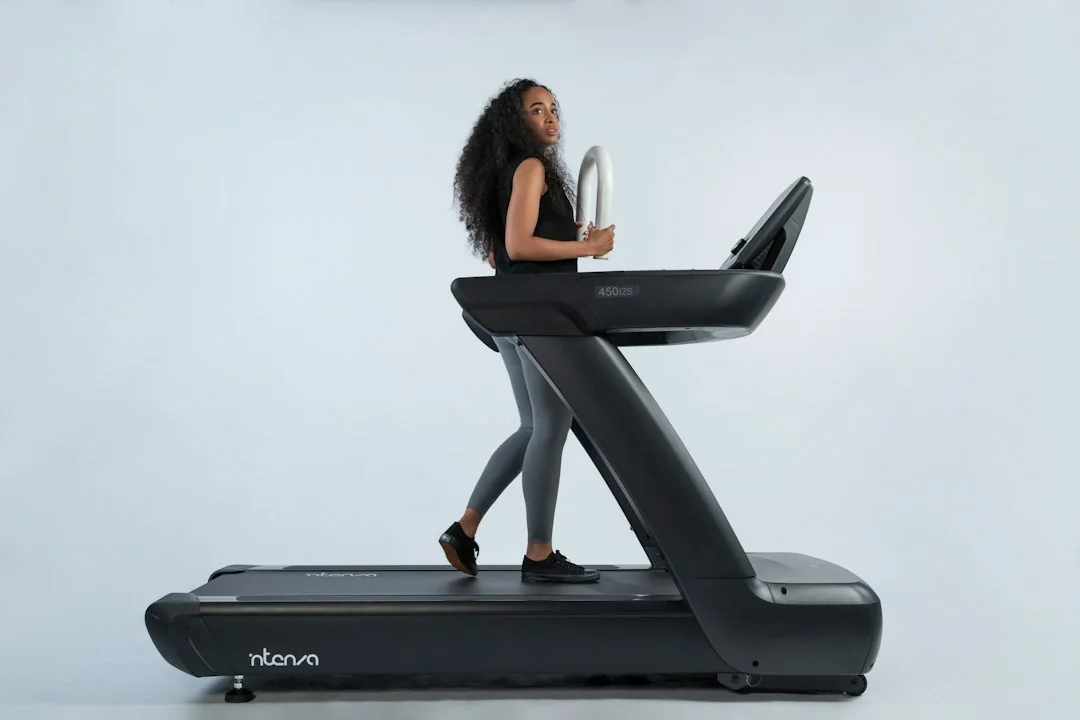
Running is the better choice if you:
- Are training for a running event and want running-specific practice
- Have no pain when you run and no medical reason to avoid it
- Can run comfortably for the length of your planned session
The elliptical works better if you:
- Find that running aggravates a joint and have checked with your doctor or physical therapist
- Are in supervised rehabilitation where your physical therapist has chosen it
- Want cardio sessions beside your runs without adding running volume
A stair machine suits you if you:
- Enjoy the stepping movement and have access to one
- Have no knee pain on stepping, since peak knee force rose above 3 times body weight at higher levels in three people with knee replacements
In my view, the activity you repeat beats the better one you drop; this is judgement, not a measured result.
A mix of running and elliptical sessions is reasonable for a healthy adult who wants variety, set by your pain, your goal and your provider's advice. No trial cited here tested a mixed schedule, so this is judgement.
If you split training between runs and the elliptical, match effort by how hard it feels. Heart rate on the elliptical was higher than on the treadmill in one study (164 against 145 beats a minute at RPE 12 to 13) (2) and did not differ in another at the same overall effort rating (159 against 163) (22). Your normal heart rate when running is a baseline, not a target for the machine.
Making Your Cardio Choice
No measurement here crowns a winner. The right pick is the machine that fits your goal, your pain history and the movement you will repeat.
At a very hard effort recreationally active men used more energy on the treadmill, two studies at other effort settings found no difference, and no trial has tested elliptical training alone for weight loss in healthy adults. My recommendation is to choose by goal and comfort. To pick a machine, start with the top-rated elliptical machines and compare the stride length each model lists.
If joint pain is your main concern, talk with your doctor or physical therapist first. The elliptical is one option and it is not a treatment. If you are buying one for home, set a budget first and compare listed features within it; the page on what drives elliptical cost explains the main factors. Browsing home elliptical trainers side by side shows the range quickly.
A simple way to learn your own mix is to swap one run for an elliptical session of the same length at the same perceived effort and note how your legs feel the next day. This is a suggestion, not a tested method. A structured elliptical workout plan can come after.
Frequently Asked Questions
Can an elliptical be as effective as running?
Studies disagree: recreationally active men at a very hard effort used more energy on a treadmill, while untrained adults at a moderate effort and trained runners at matched workload showed no difference in oxygen use. Choose by goal and comfort, and match effort by how hard the session feels.
Is 3 miles on the elliptical the same as running 3 miles?
No study cited here converts elliptical miles into running miles, and the distance on a console is the maker's own estimate. Compare by minutes at the same felt effort instead.
Is it better to walk for 1 hour or run for 30 minutes?
At 70 kg the Compendium gives about 340 kcal for an hour of brisk walking at 3.5 to 3.9 mph and about 330 kcal for 30 minutes of running at 6 to 6.3 mph, but these are estimates for different efforts. The US guidelines count 150 to 300 minutes of moderate activity a week, so pick the one you can repeat.
How long on an elliptical equals 10,000 steps?
No study cited here converts elliptical time into steps, so any figure for it would be a guess. The US guidelines count activity in minutes: at least 150 to 300 minutes of moderate-intensity aerobic activity a week for adults.
Is the elliptical good for weight loss?
No trial has tested elliptical training alone for weight loss in healthy adults. For physical activity in general, the American College of Sports Medicine position is that 150 to 250 minutes a week of moderate activity gives only modest weight loss, and that more than 250 minutes a week has been associated with clinically significant loss.
 Tech Fitness Lab
Author
Filip Marić
I am a strength and conditioning coach and I work with professional tennis players. I hold three ISSA certifications and worked as a fitness coach at the Tipsarevic Academy. I also write for Fitness Volt. I judge equipment as a coach: what it trains, how far it lets you progress and what its numbers mean.
This content is for informational and educational purposes only. It is not a substitute for professional medical advice, diagnosis, or treatment. Always consult your healthcare provider before starting any new fitness program, especially if you are managing a joint condition or recovering from injury. We are always looking for expert inputs to make our content even better and more useful.
References
- Prieto-Gonzalez P, Yagin FH. Energy expenditure, oxygen consumption, and heart rate while exercising on seven different indoor cardio machines at maximum and self-selected submaximal intensity. Frontiers in Sports and Active Living. 2024;6:1313886. doi: 10.3389/fspor.2024.1313886.
- Brown GA, Cook CM, Krueger RD, Heelan KA. Comparison of energy expenditure on a treadmill vs. an elliptical device at a self-selected exercise intensity. J Strength Cond Res. 2010;24(6):1643-1649. doi: 10.1519/JSC.0b013e3181cb2854.
- D'Lima DD, Steklov N, Patil S, Colwell CW. The Mark Coventry Award: in vivo knee forces during recreation and exercise after knee arthroplasty. Clin Orthop Relat Res. 2008;466(11):2605-2611. doi: 10.1007/s11999-008-0345-x.
- Burnfield JM, Jorde AG, Augustin TR, Augustin TA, Bashford GR. Variations in plantar pressure variables across five cardiovascular exercises. Med Sci Sports Exerc. 2007;39(11):2012-2020. doi: 10.1249/mss.0b013e318148bdfa.
- Eken MM, Withers A, Flanagan K, Burger J, Bosch A, Lamberts RP. Muscular activation patterns during exercise on the treadmill, stepper, and elliptical trainer. J Strength Cond Res. 2022;36(7):1847-1852. doi: 10.1519/JSC.0000000000003743.
- Bosch AN, Flanagan KC, Eken MM, Withers A, Burger J, Lamberts RP. Physiological and metabolic responses to exercise on treadmill, elliptical trainer, and stepper: practical implications for training. Int J Sport Nutr Exerc Metab. 2021;31(2):135-142. doi: 10.1123/ijsnem.2020-0155.
- Mier CM, Feito Y. Metabolic cost of stride rate, resistance, and combined use of arms and legs on the elliptical trainer. Res Q Exerc Sport. 2006;77(4):507-513. doi: 10.1080/02701367.2006.10599385.
- Herrmann SD, Willis EA, Ainsworth BE, et al. 2024 Adult Compendium of Physical Activities: a third update of the energy costs of human activities. J Sport Health Sci. 2024;13(1):6-12. doi: 10.1016/j.jshs.2023.10.010.
- Glave AP, Didier JJ, Oden GL, Wagner MC. Caloric expenditure estimation differences between an elliptical machine and indirect calorimetry. Exerc Med. 2018;2:8. doi: 10.26644/em.2018.008.
- Filipovic M, Munten S, Herzig KH, Gagnon DD. Maximal fat oxidation: comparison between treadmill, elliptical and rowing exercises. Journal of Sports Science & Medicine. 2021;20(1):170-178. doi: 10.52082/jssm.2021.170.
- Videbaek S, Bueno AM, Nielsen RO, Rasmussen S. Incidence of running-related injuries per 1000 h of running in different types of runners: a systematic review and meta-analysis. Sports Med. 2015;45(7):1017-1026. doi: 10.1007/s40279-015-0333-8.
- Lu TW, Chien HL, Chen HL. Joint loading in the lower extremities during elliptical exercise. Med Sci Sports Exerc. 2007;39(9):1651-1658. doi: 10.1249/mss.0b013e3180dc9970.
- Orekhov G, Robinson AM, Hazelwood SJ, Klisch SM. Knee joint biomechanics in transtibial amputees in gait, cycling, and elliptical training. PLoS One. 2019;14(12):e0226060. doi: 10.1371/journal.pone.0226060.
- MedlinePlus. How to avoid exercise injuries. National Library of Medicine. Review date July 15, 2026.
- National Institute of Arthritis and Musculoskeletal and Skin Diseases. Exercise for your bone health. Last reviewed May 2023.
- Hasebe Y, Akasaka K, Otsudo T, Hall T, Yamamoto M. Effects of incorporating elliptical trainer exercise during rehabilitation on physical function and self-reported outcomes after total hip arthroplasty: a randomized controlled trial. Journal of Physical Therapy Science. 2022;34(3):230-235. doi: 10.1589/jpts.34.230.
- Bukhari SSUK, Aftab A, Munir S, Ahmad Z, Anwar K, Rauf S. Effects of low impact elliptical training on knee osteoarthritis outcomes and knee joint space. Rehabil J. 2024;8(4):03-12. doi: 10.52567/trehabj.v8i04.84.
- He MY, Lo HP, Chen WH. Effects of stationary bikes and elliptical machines on knee joint kinematics during exercise. Medicina (Kaunas). 2024;60(3):498. doi: 10.3390/medicina60030498.
- Burnfield JM, Shu Y, Buster T, Taylor A. Similarity of joint kinematics and muscle demands between elliptical training and walking: implications for practice. Phys Ther. 2010;90(2):289-305. doi: 10.2522/ptj.20090033.
- Prosser LA, Stanley CJ, Norman TL, Park HS, Damiano DL. Comparison of elliptical training, stationary cycling, treadmill walking and overground walking. Gait Posture. 2011;33(2):244-250. doi: 10.1016/j.gaitpost.2010.11.013.
- Moreside JM, McGill SM. How do elliptical machines differ from walking: a study of torso motion and muscle activity. Clin Biomech (Bristol). 2012;27(7):738-743. doi: 10.1016/j.clinbiomech.2012.03.009.
- Green JM, Crews TR, Pritchett RC, Mathfield C, Hall L. Heart rate and ratings of perceived exertion during treadmill and elliptical exercise training. Percept Mot Skills. 2004;98(1):340-348. doi: 10.2466/pms.98.1.340-348.
- Chester S, Zucker-Levin A, Melcher DA, Peel SA, Bloomer RJ, Paquette MR. Lower limb kinematics and metabolic cost during elliptical exercises and treadmill running. J Appl Biomech. 2016;32(2):113-119. doi: 10.1123/jab.2015-0110.
- Arafa A, Kashima R, Kokubo Y. Stair climbing and the incidence of atherosclerotic cardiovascular disease: a population-based prospective cohort study. Environmental Health and Preventive Medicine. 2023;28:60. doi: 10.1265/ehpm.23-00166.
- Donnelly JE, Blair SN, Jakicic JM, et al. American College of Sports Medicine position stand: appropriate physical activity intervention strategies for weight loss and prevention of weight regain for adults. Med Sci Sports Exerc. 2009;41(2):459-471. doi: 10.1249/MSS.0b013e3181949333.
- US Department of Health and Human Services. Physical Activity Guidelines for Americans, 2nd edition. 2018.