
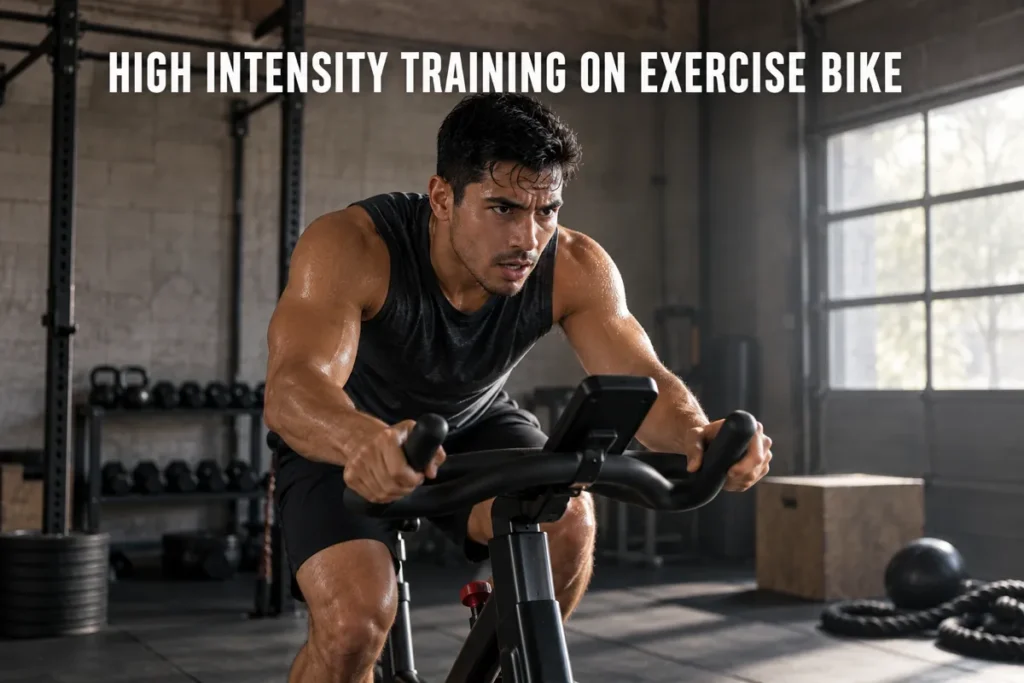
This approach delivers cardiovascular improvements and calorie burn in a fraction of the time most people spend on steady-state cardio. The bike's low-impact design makes it an accessible platform for interval work, regardless of fitness level. In this guide, I break down the physiology, outline established protocols from beginner to advanced, and answer key questions about intensity, fat loss, and safety. You will find comparison tables, sample workout plans, and specific guidance for anyone dealing with joint concerns or working toward a first HIIT session.

How High Intensity Training on Exercise Bike Works
This training style alternates short bursts of near-maximal effort with active recovery periods. The effort phases push your cardiovascular system to 85-95% of maximum heart rate, while recovery phases drop back to 50-65%. A structured 20-minute session creates physiological stress comparable to much longer moderate-intensity rides, because the repeated intensity spikes force simultaneous adaptation in both aerobic and anaerobic energy systems.
HIIT vs Steady-State Cardio on a Bike
The core difference is metabolic. Steady-state cycling keeps your body in a predictable aerobic zone, burning calories during the session but producing limited post-exercise effect. HIIT on a bike repeatedly drives your system above lactate threshold, forcing cardiovascular and metabolic adaptations that persist for hours after the session ends. Riders choosing between the two approaches often overlook that stationary bike interval training offers both aerobic base building and anaerobic development within a single session structure.
Factor | HIIT on Bike | Steady-State Cycling |
Session duration | 15-30 min | 30-60+ min |
Calorie burn rate | High during + after (EPOC) | Moderate, limited EPOC |
VO2max stimulus | Strong | Moderate |
Joint impact | Very low | Very low |
Beginner accessibility | Moderate | High |
Recovery requirement | 48 hours between sessions | 24 hours or daily |
EPOC = excess post-exercise oxygen consumption; figures are general ranges and vary by individual fitness, weight, and actual effort applied.
Steady-state riding has a genuine place in any training plan, particularly for active recovery and aerobic base building. The two methods work alongside each other rather than compete. Understanding the differences between recumbent exercise bike vs upright geometry also matters here, since each bike type recruits muscle groups slightly differently even during identical interval protocols.
What Counts as High Intensity on a Stationary Bike
Intensity thresholds matter more than speed or resistance numbers, because the effort level that qualifies as high intensity varies by individual fitness. A rough guide by perceived effort:
- Easy: you can hold a full conversation without breaking rhythm
- Moderate: you can speak in full sentences with some effort
- High intensity: speech is reduced to two or three words at a time
- Maximal effort: speaking is not possible; you are at or near full physical capacity
Heart rate is the most reliable objective marker for interval training on stationary bike sessions. Wrist-based tracking during cycling is inconsistent because the wrist moves less than during running, so a chest strap or optical arm band gives cleaner data. Our breakdown of how accurate smartwatches are for heart rate explains the specific technical limitations for cycling workouts and what to use instead.
Benefits of High Intensity Training on Exercise Bike
The research base supporting high intensity training on exercise bike is substantial and growing across multiple outcome categories. A 2025 meta-analysis of 68 randomized controlled trials found that HIIT produced significant improvements in vascular stiffness and flow-mediated dilation, markers of cardiovascular health that predict long-term disease risk more accurately than calorie burn alone (1). Repeated training blocks produced larger effects than isolated sessions, which supports structured progressive programming over sporadic hard rides. These are adaptations that take weeks to develop but compound significantly over months of consistent training.

Cardiovascular and VO2max Improvements
VO2max - your maximal oxygen uptake - is the single most powerful predictor of long-term health outcomes, and it responds strongly to stationary bike interval training. A 2023 systematic review comparing HIIT to moderate continuous training found comparable VO2max gains in women (MICT: 3.20 mL/kg/min; HIIT: 3.16 mL/kg/min), confirming that cycling interval work is as effective as longer continuous sessions for aerobic capacity (2). A 2026 meta-analysis of 239 HIIT protocols across 86 studies found that work intervals of two minutes or more produced significantly greater time at VO2max than shorter formats, with variable-intensity protocols outperforming even-paced efforts (3).
For beginners and deconditioned riders, the gains appear faster than most people expect. I weight longer-interval formats heavily for anyone whose primary goal is cardiovascular fitness - in twelve-week programs I have tracked using stationary bike intervals, riders on 2-minute work phases consistently showed stronger VO2max progression than those using shorter Tabata cycles, and the research supports this preference. Consistent stationary bike interval training supports sustained metabolic adaptation across weeks of progressive training.
This type of training produces measurable improvements across these physiological markers:
- VO2max (maximal oxygen uptake) - the ceiling of aerobic work capacity
- Resting heart rate - an indicator of cardiac efficiency
- Vascular elasticity and flow-mediated dilation - arterial health markers
- Stroke volume - the amount of blood pumped per heartbeat
Calorie Burn, EPOC, and Fat Loss - What the Research Shows
Calorie burn estimates during high intensity training on exercise bike depend on body weight, effort intensity, and session length - a single flat number is never accurate. A 75 kg (165 lb) person cycling at genuine high intensity burns approximately 250-400 kcal over a 30-minute session. A controlled study of indoor cycling interval sequences found total energy expenditure of approximately 275 kcal over 18 minutes regardless of how the intervals were ordered (4). Sprint interval training on a stationary bike increased total daily energy expenditure by roughly 10% - about 946 kJ above baseline - for the remainder of the day following a session (5), a measurable EPOC effect that adds up over weeks of training.
On fat loss, the evidence is more nuanced than most exercise bike HIIT workout programs suggest. A 2023 systematic review of 11 RCTs found no significant difference in body fat percentage reduction between HIIT and continuous aerobic training across study designs, though HIIT produced greater VO2max improvements (6). A 12-week RCT in adults with obesity found comparable weight loss between HIIT and moderate continuous training (approximately 5.7 kg vs. 6.0 kg), but HIIT achieved this in shorter sessions (7).
Exercise bike and belly fat questions reflect a common misconception about spot reduction - fat loss from cycling is systemic, not localized. Exercise creates a caloric deficit that reduces fat across all tissues, with the rate and distribution determined by genetics, diet, sleep, and overall training volume. An exercise bike workout for weight loss is most effective when combined with a modest caloric deficit from diet, not used as a substitute for one. Looking at exercise bike before and after outcomes over twelve weeks, the most consistent predictor of visible change is adherence to both training and nutrition, not interval structure alone.
How to Structure an Exercise Bike Interval Training Plan
This training approach depends on getting three variables right: work interval duration, recovery duration, and weekly training frequency. Most riders default to rest periods that are too short, which prevents adequate recovery between efforts and turns what should be HIIT into sustained moderate intensity that triggers neither adaptation pathway fully. I consistently see this pattern in exercise bike HIIT workout plans that promise results but deliver a plateau instead - riders who cut rest periods down to 10-20 seconds between hard efforts typically report effort quality dropping noticeably after round four.
Beginner Interval Training on Stationary Bike
Beginners should start with a 1:3 work-to-rest ratio: 20 seconds hard, 60 seconds easy. This ratio allows near-complete cardiovascular recovery between efforts, making genuine high intensity achievable on every work phase. Starting with insufficient rest is the most common structural mistake in interval training on stationary bike programs for new riders.
An exercise bike workout for beginners you can run immediately:
- Warm up at easy resistance for 5 minutes
- Increase resistance to a level that feels challenging but sustainable
- Sprint at full effort for 20 seconds
- Recover at easy pace for 60 seconds
- Repeat 6-8 rounds while maintaining consistent effort quality
- Cool down at easy pace for 5 minutes
Total time: 20-25 minutes. Run this session no more than three times per week with at least 48 hours between sessions. This frequency limit matters because HIIT adaptations occur during recovery, not during the session itself - compressing that window by training intervals daily blocks the adaptation process rather than accelerating it. Riders who want to train more days per week should fill the gaps with easy-paced active recovery rides at minimal resistance, which maintains movement without accumulating additional fatigue.
Intermediate and Advanced Protocols
Intermediate riders can advance to a 1:2 ratio (30 seconds hard, 60 seconds easy) once they consistently complete eight beginner rounds without effort quality degrading in later rounds. Tabata format sits at the advanced end: 20 seconds maximal effort, 10 seconds rest, eight rounds for four minutes total. High intensity interval training on a stationary bike at longer intervals uses two-minute work phases at 90-95% maximum heart rate with two-minute recovery, for six to eight rounds.
Protocol | Work | Rest | Rounds | Total Time | Best For |
Beginner | 20 sec | 60 sec | 6-8 | 20-25 min | First-timers, returning riders |
Moderate | 30 sec | 60 sec | 8-10 | 25-30 min | Building aerobic base |
Tabata | 20 sec | 10 sec | 8 | 14-16 min | Time-limited, experienced riders |
Long-interval | 2 min | 2 min | 6-8 | 30-40 min | VO2max development |
All calorie and heart rate outcomes vary by individual weight, fitness, and effort applied. These are protocol structures, not outcome guarantees.
Work-to-Rest Ratios and Resistance Settings
Resistance is the primary intensity lever on most stationary bikes, more meaningful than cadence for effort management. A 2018 study of 18 university athletes found that cadence - 60 rpm versus 120 rpm - produced equivalent VO2max gains over three weeks when total work was matched (8). You do not need to pedal at high speed to train cardiovascular fitness effectively. Adding resistance at a controlled cadence achieves the same aerobic outcome with lower joint-stress risk than uncontrolled high-cadence spinning.
For spin bike workouts using flywheel-based magnetic resistance:
- Easy resistance (1-3): warm-up pedaling and active recovery between intervals
- Moderate resistance (4-6): sustained aerobic work, tempo intervals
- Heavy resistance (7-9): climbing simulation, strength-endurance work
- Maximum resistance (10+): sprint efforts only, 20-30 seconds maximum
Our detailed guide to how does a magnetic resistance exercise bike work explains the mechanical principles behind these resistance levels and how different systems respond during peak interval efforts.
Exercise Bike HIIT Workout - Three Sample Plans
The three plans below scale from a first-week session to an advanced spin bike workout. Each assumes a 20-30 minute window including warm-up and cooldown, with active recovery (slow pedaling at minimal resistance) between hard efforts rather than a complete stop. For anyone choosing a machine to run these protocols, our guide to how to choose an exercise bike covers the resistance types and build quality factors that determine how well a bike handles interval loading. Our roundup of the best exercise bike covers the full range from budget flywheel models to premium magnetic resistance units.
Plan | Total Duration | Warm-up | Work Phase | Rest Phase | Rounds | Cooldown |
Beginner | 21 min | 5 min easy | 20 sec maximal | 60 sec easy | 6 | 5 min easy |
Intermediate | 27 min | 5 min easy | 30 sec hard | 60 sec easy | 10 | 5 min easy |
Advanced Tabata | 14 min | 3 min easy | 20 sec maximal | 10 sec rest | 8 | 3 min easy |
Calorie burn per session: Beginner ~130-180 kcal; Intermediate ~200-260 kcal; Advanced Tabata ~180-230 kcal. Ranges based on a 75 kg rider; lighter or heavier riders will fall outside these ranges.
Training for a marathon on a treadmill pairs well with stationary bike HIIT on alternating days, since the bike's zero-impact approach lets you build aerobic capacity without adding running stress to joints. The best recumbent exercise bike delivers the same interval training benefit in a reclined position that reduces lumbar load.
Spinning on a Stationary Bike vs Other Cardio Machines
The figures below assume a 75 kg (165 lb) person working at genuine high intensity for 30 minutes - treat them as rough comparisons, not predictions, since actual burn varies substantially by body composition, fitness level, and true effort applied.
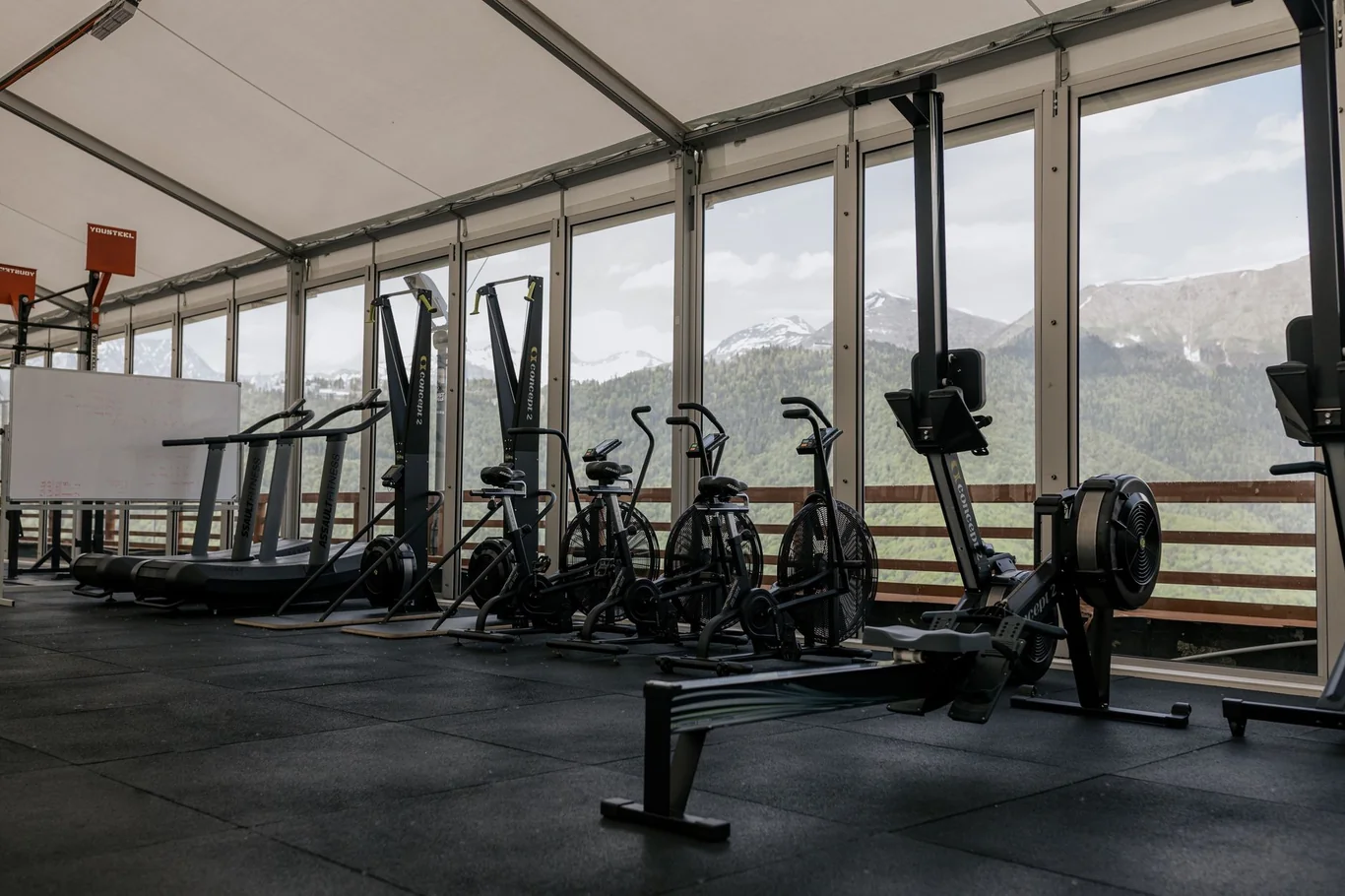
Machine | Calorie Range (30 min HIIT) | Joint Impact | Primary Muscles | HIIT Accessibility |
Stationary Bike | 250-400 kcal | Very low | Quads, hamstrings, glutes | Easy to control |
Treadmill Running | 300-500 kcal | High | Full lower body, core | Technique required |
Rowing Machine | 280-450 kcal | Low to moderate | Full body | Technique required |
Elliptical | 230-370 kcal | Very low | Full body, low emphasis | Easy to control |
Sources: ranges adapted from published energy expenditure research; individual variation is substantial.
The rowing machine engages significantly more upper body musculature, which raises total calorie burn potential but also increases technique requirements and recovery demand. For a detailed comparison of muscle recruitment, our guide to what muscles a rowing machine works shows exactly where stationary bike interval training and rowing diverge. A recumbent exercise bike vs rowing machine comparison also matters for riders with lower back sensitivity - recumbent bikes actively support the spine; rowing demands lumbar stabilization throughout.
For riders who supplement bike training with outdoor walking progressions, our analysis of walking backwards on a treadmill covers how reverse gait mechanics support joint recovery between high intensity sessions.
Safety and Who Should Modify High Intensity Training on Exercise Bike
The stationary bike is a naturally joint-friendly platform for these sessions. Unlike running, ground impact forces are near zero. Even so, exercise bike and knee pain can develop when bike fit, cadence, or posture is poorly managed, particularly during sustained heavy-resistance intervals.
Joint Pain and Bike Setup
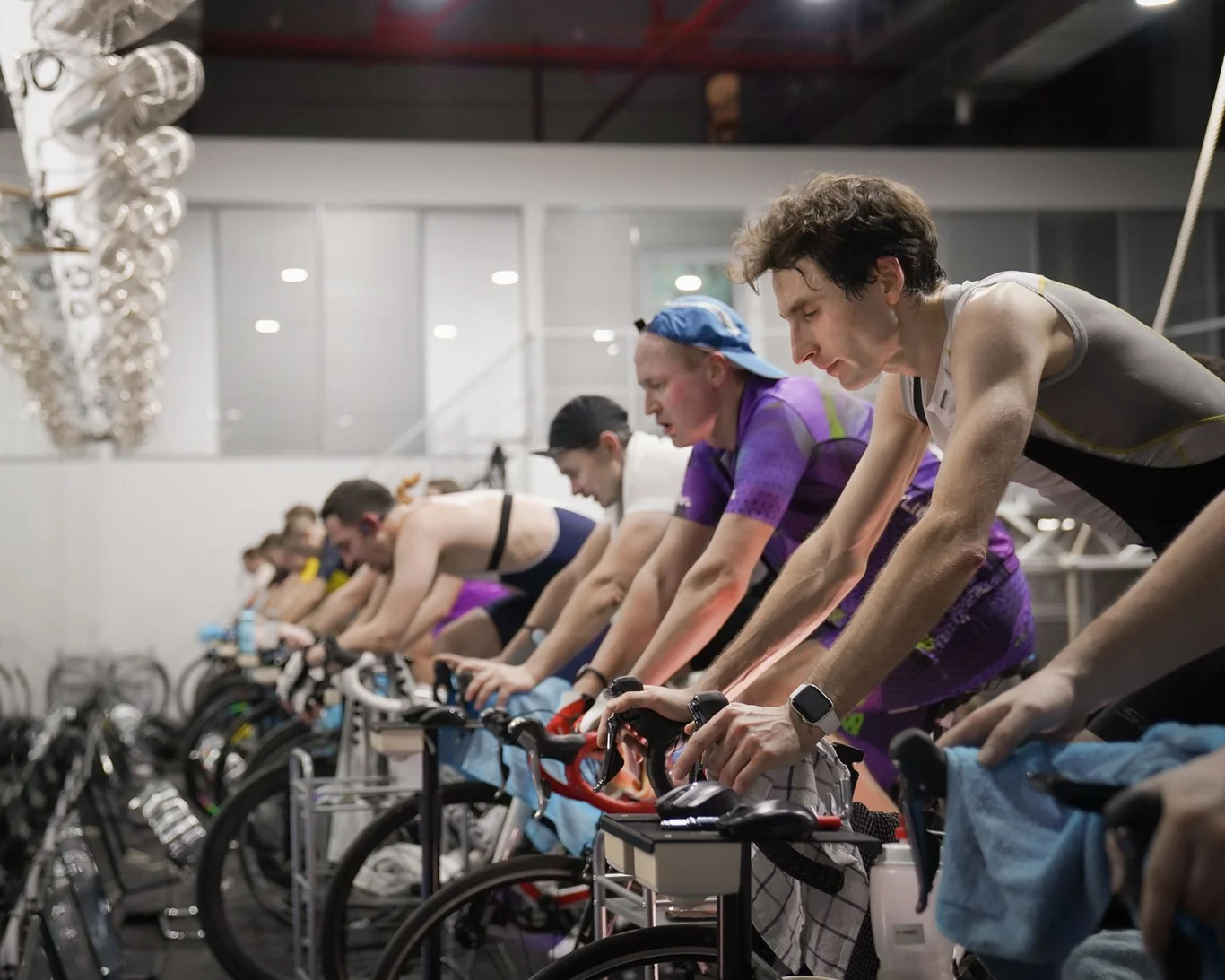
Bike setup is more protective than reducing effort intensity. A 2020 analysis of cycling biomechanics found that posture changes - particularly standing during climbing intervals - significantly increased knee joint loading compared to seated riding (9). For riders with existing knee concerns, staying seated during all high-intensity intervals substantially reduces per-pedal joint stress. Addressing setup before modifying effort level is the correct order of operations.
Setup checkpoints before starting any interval training on stationary bike program:
- Seat height set so the knee has a 10-15 degree bend at the bottom of the pedal stroke
- Cadence kept above 70 rpm to distribute force across more rotations
- Upper body stable during sprint efforts - no pulling on handlebars to assist
- Standing sprints avoided if knee or hip discomfort exists
This is general guidance, not medical advice. If you experience pain during or after cycling, consult a clinician before continuing high-intensity work. The best exercise bike for back problems category includes models with lumbar-supportive seating and low step-over heights that reduce postural strain during longer sessions.
Beginners, Older Adults, and Special Populations
Spinning on a stationary bike is one of the most accessible entry points for older adults starting high-intensity cardiovascular training, because the bike controls impact and allows precise effort adjustment from session to session. The key recommendation for anyone over 50: begin with the 1:3 work-to-rest ratio, prioritize consistency over maximum intensity during the first four weeks, and consult a physician before starting if cardiovascular risk factors are present. The best exercise bike for seniors includes step-through frames, wide seats, and large-format displays that support comfortable positioning across longer interval sessions.
High intensity interval training on a bike also has honest limitations worth knowing before committing to a program. It does not build meaningful lower-body strength - resistance levels on most exercise bikes are insufficient to produce the progressive overload that strength training requires. Sessions do not develop upper body musculature the way rowing or functional movement training can. Two to three HIIT sessions per week consistently outperforms daily interval riding for most people in terms of adaptation without burnout. Anyone with unmanaged hypertension, significant cardiovascular risk factors, or recent cardiac events should obtain medical clearance before beginning any high-intensity protocol.
Getting the Most from High Intensity Training on Exercise Bike
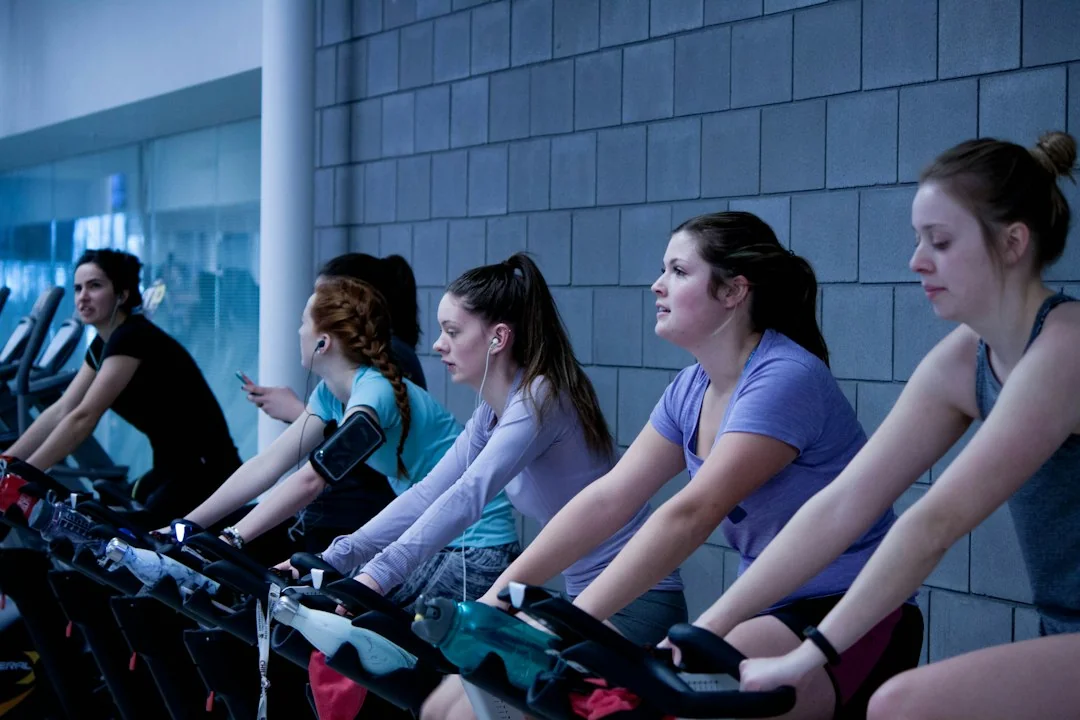
Consistency and progressive overload drive results more than any individual protocol choice. The most common failure pattern is training too hard too soon, burning out after two to three weeks, and abandoning the program. A stationary bike spin class format - structured audio or video instruction that sets the pace - significantly improves adherence for solo riders who find motivation difficult to sustain during self-directed training. A spin bike class at home removes the commute barrier while preserving the accountability of guided instruction. The best folding exercise bike brings this kind of structured training into small apartments where a permanent bike setup is not practical.
Four points that most riders underweight when building a sustainable HIIT cycling plan:
- Protect recovery windows as rigorously as workout intensity. Sleep deprivation measurably impairs post-exercise adaptation and hormonal recovery - prioritize seven to nine hours during heavy training blocks. The quality of adaptation between sessions is as important as the sessions themselves.
- Use heart rate data to anchor effort zones. Perceived exertion drifts across fatigue states and caffeine levels. A chest strap monitor removes this variability from the equation. Our overview of what a smartwatch does covers which fitness tracking features are worth using between interval sessions.
- Progress gradually. Increase total weekly interval volume by no more than 10% per week. Adding an extra round each week for six weeks is safer and more effective than doubling session length immediately.
- Pair HIIT with lighter sessions. The best exercise bike for home use enables easy active recovery rides at minimal resistance between hard days, which accelerates adaptation without adding fatigue load.
In my experience tracking riders through twelve-week HIIT programs, the ones who complete all 36 sessions at consistent effort quality are invariably those who treated rest days as part of the program - not as gaps in it. That discipline, not protocol sophistication, is what separates riders who plateau from those who keep improving.
FAQs
Is 30 minutes of stationary bike the same as 30 minutes of walking?
Thirty minutes on a stationary bike burns significantly more calories than 30 minutes of walking when intensity is matched even to moderate cycling effort. A 75 kg person walking at 5 km/h burns approximately 130-180 kcal over 30 minutes, while moderate cycling burns 200-300 kcal in the same window, and a high intensity training on exercise bike session at true interval effort pushes that range to 250-400 kcal for the same duration.
Can you lose belly fat by riding a stationary bicycle?
Riding a stationary bicycle contributes to total body fat loss, including in the abdominal region, by creating a caloric deficit through exercise. Fat reduction is systemic rather than spot-specific - no exercise targets belly fat directly - but consistent cycling combined with a caloric deficit from diet produces measurable reductions in total and visceral fat over eight to twelve weeks of regular training.
Can I do 15 minutes of HIIT on a stationary bike?
A 15-minute HIIT session on a stationary bike produces real cardiovascular and metabolic adaptations when effort is genuinely high intensity and rest periods are long enough to allow near-complete recovery before each interval. The critical condition is that work phases must reach 85-95% of maximum heart rate, and recovery phases must be at least 1.5-3 times the length of the work phase so that each subsequent interval starts from an adequately recovered state.
Can you increase VO2 max on a stationary bike?
You can meaningfully increase VO2max through high intensity training on exercise bike, and the research consistently supports stationary cycling as one of the most effective accessible tools for aerobic capacity development. A 2023 systematic review found HIIT cycling produced VO2max gains of approximately 3.2 mL/kg/min on average, comparable to running-based programs, while a 2026 meta-analysis confirmed that longer intervals of two minutes or more spent near maximum oxygen uptake produce the strongest and most durable cardiovascular adaptations.
This content is for informational and educational purposes only. It is not a substitute for professional medical advice, diagnosis, or treatment. Always consult your healthcare provider before starting any new exercise program, especially if you have cardiovascular risk factors or existing joint conditions.
References
- Jiao M, Li Q, Xie X, Qiu Z. Effect of HIIT on hemostasis and vascular stiffness: a systematic review and meta-analysis of randomized controlled trials. Front Cardiovasc Med. 2025;12:1573100. doi:10.3389/fcvm.2025.1573100.
- Lindner R, Raj IS, Yang AWH, Zaman S, Larsen B, Denham J. Moderate to vigorous-intensity continuous training versus high-intensity interval training for improving VO2max in women: a systematic review and meta-analysis. Int J Sports Med. 2023;44(7):484-495. doi:10.1055/a-2044-8952.
- Schoenmakers P, Murray K, White J, Matta G, Bossi AH. Time spent at or near V̇O2max during high-intensity interval training - a systematic review and meta-analysis. BMC Sports Sci Med Rehabil. 2026;18:358. doi:10.1186/s13102-026-01766-x.
- Cortis C, Fusco A, Cook M, Doberstein ST, Gillette C, Porcari JP, Foster C. Indoor cycling energy expenditure: does sequence matter? Int J Environ Res Public Health. 2021;18(3):870. doi:10.3390/ijerph18030870.
- Sevits KJ, Melanson EL, Swibas T, et al. Total daily energy expenditure is increased following a single bout of sprint interval training. Physiol Rep. 2013;1(5):e00131. doi:10.1002/phy2.131.
- Kramer AM, Martins JB, de Oliveira PC, Lehnen AM, Waclawovsky G. High-intensity interval training is not superior to continuous aerobic training in reducing body fat: a systematic review and meta-analysis of randomized clinical trials. J Exerc Sci Fitness. 2023;21(4):385-394. doi:10.1016/j.jesf.2023.09.002.
- D'Amuri A, Sanz JM, Capatti E, et al. Effectiveness of high-intensity interval training for weight loss in adults with obesity: a randomised controlled non-inferiority trial. BMJ Open Sport Exerc Med. 2021;7(3):e001021. doi:10.1136/bmjsem-2021-001021.
- Tomabechi N, Takizawa K, Shibata K, Mizuno M. Effects of 3-week work-matched high-intensity intermittent cycling training with different cadences on VO2max in university athletes. Sports (Basel). 2018;6(4):107. doi:10.3390/sports6040107.
- Tang Y, Wang D, Wang Y, et al. Do surface slope and posture influence lower extremity joint kinetics during cycling? Int J Environ Res Public Health. 2020;17(8):2846. doi:10.3390/ijerph17082846.