
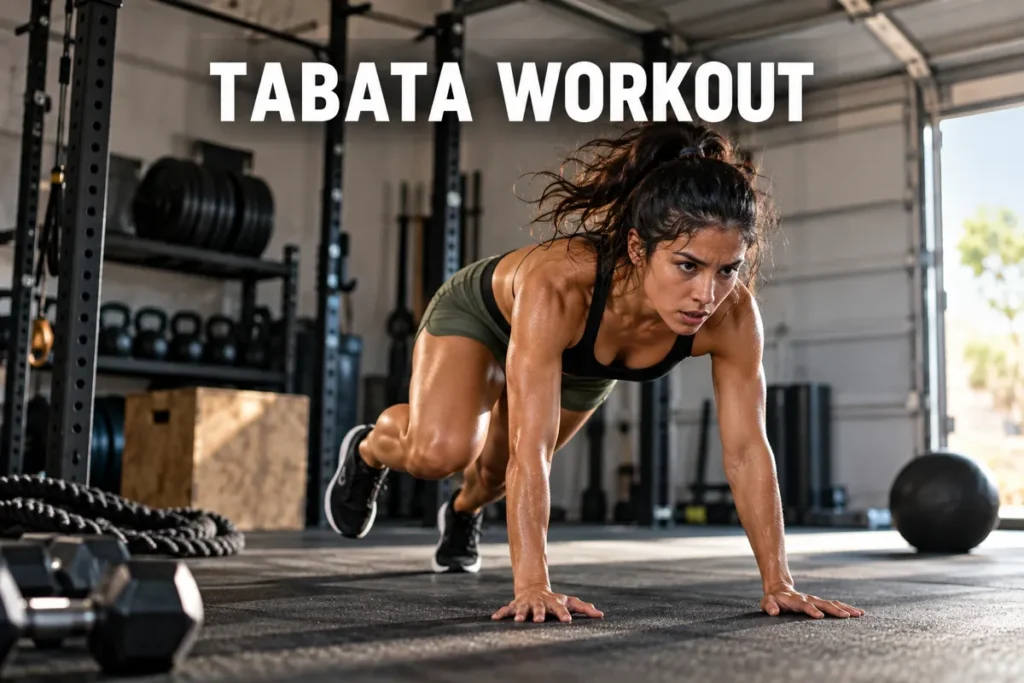
The tabata workout is one of the most rigorously studied short-duration training methods in exercise science, and it earns that reputation through consistently strong research rather than marketing. I'm Filip Marić, ISSA Elite Trainer and Strength and Conditioning Coach with a Master's degree in Physical Education, and I've applied this protocol with competitive athletes, everyday gym-goers, and complete beginners starting from zero. In this guide, I'll walk you through the exact 20-on, 10-off structure that Dr. Izumi Tabata formalized in 1996, explain what the science shows about aerobic and anaerobic benefits, give you sample sessions designed for different fitness levels, and identify the conditions that require a physician's clearance before attempting this level of intensity.

Tabata Workout - What It Is and Where It Came From
The term tabata refers to a specific interval protocol, not a general training category. Unlike flexible HIIT formats, the structure is non-negotiable: 20 seconds of all-out effort followed by 10 seconds of complete rest, repeated for eight consecutive rounds. That fixed architecture matters because the 1996 study that established this protocol was built on athletes working at absolute maximum oxygen uptake - dilute the intensity and you fundamentally change the physiological outcome.
The 1996 Study That Changed Interval Training
Dr. Izumi Tabata conducted his landmark research at Japan's National Institute of Fitness and Sports with physically active male university students. His design ran for six weeks and compared two groups: one performed 60-minute moderate-intensity sessions five days per week, while the other followed the 20/10 protocol four days per week alongside one moderate session. The Tabata group improved aerobic capacity (VO2max) by approximately 14% and anaerobic capacity (maximal accumulated oxygen deficit, or MAOD) by roughly 28%, while the continuous training group improved only aerobic capacity with zero anaerobic gains (1). Tabata confirmed these effects hold across both athletic and general-population settings in a subsequent 2025 review.
How the 20/10 Protocol Works - Step by Step
Understanding the structure of a complete tabata workout prevents the most common beginner errors: starting too fast, misunderstanding the rest window, or skipping the warm-up entirely. I walk every new client through this sequence before their first session.
- Warm up for 5-10 minutes at low intensity to prime your cardiovascular system and joints
- Choose one exercise you can perform at full effort for 20 seconds with sound technique
- Work for 20 seconds at absolute maximum effort - target RPE 9-10, meaning you should be unable to hold a conversation by round 3
- Stop completely for 10 seconds - full rest, no slow active recovery movement
- Repeat rounds 2 through 8 maintaining consistent effort across all rounds
- Rest one to two minutes before beginning a second Tabata block using a different exercise
- Cool down for 5-10 minutes to bring heart rate down gradually
A dedicated tabata timer is essential. Counting 20-second intervals while working at maximal effort is impractical, and free apps on any smartphone handle the work and rest cuing automatically.
Research-Backed Benefits of the Tabata Protocol
A tabata workout produces adaptations in both aerobic and anaerobic systems simultaneously - a combination that steady-state cardio cannot replicate. My experience programming this protocol consistently surfaces benefits that extend well beyond simple cardiovascular fitness, and the current research base strongly supports that observation.
Aerobic Capacity, Blood Pressure, and Cardiovascular Markers
A 12-week randomized controlled trial with 117 sedentary female university students found that Tabata-style HIIT increased VO2max by 12.87%, reduced resting heart rate, lowered systolic blood pressure, and improved total cholesterol levels (2). These are clinically meaningful cardiovascular improvements from a protocol that averages under 30 minutes of actual interval work per week.
An eight-week randomized trial directly comparing Tabata to moderate-intensity training found that Tabata produced superior results on a validated cognitive performance battery - faster reaction times, improved working memory, and stronger attention scores (3). I weigh this cognitive finding heavily when working with clients who train partly for mental energy and focus - the same physiological stress that drives aerobic adaptation also appears to support brain health.
Muscle Retention and Body Composition
Resistance-based Tabata exercises preserve and build lean muscle mass through the hormonal response to high-intensity training. Elevated growth hormone output and reduced cortisol relative to steady-state cardio are consistent findings across HIIT literature. When exercise selection includes compound movements - kettlebell swings, dumbbell thrusters, bodyweight squats - the hypertrophy stimulus adds a body-recomposition benefit that aerobic training alone cannot provide.
Calorie Burn, Fat Oxidation, and Metabolic Rate
The fat-loss effect of a tabata workout operates through two main mechanisms: direct caloric expenditure during the session and elevated post-exercise oxygen consumption (EPOC) in the recovery period that follows. A randomized crossover trial in young healthy women found that performing Tabata in a fasted state produced a fat oxidation rate of approximately 1.05 g/min, compared to 0.61 g/min when performed after breakfast - roughly 72% higher (4).
A 2025 study in young men with overweight and obesity found that two consecutive Tabata cycles - eight total minutes of work - maximized fat oxidation during post-exercise recovery, outperforming single or triple cycles (5). I apply this directly when programming for fat-loss clients: two rounds, not one and not three, appears to be the sweet spot for maximizing the metabolic response. Those pairing Tabata with lower-impact cardio may find an exercise bike workout for weight loss an effective complement on recovery days.
For those focused on body composition, timing matters: fasted Tabata maximizes fat oxidation during recovery, but if training power is the priority, a small carbohydrate snack 30-60 minutes before the session maintains performance. Post-session, a protein and carbohydrate meal within 30-60 minutes supports muscle recovery and glycogen replenishment.
The table below summarizes the main study outcomes relevant to this guide:
Study | Design | Key Outcome |
Tabata et al. 1996 / 2025 review | 6 weeks, 20/10 x 8 rounds, 4+1 days/week | VO2max +14%, MAOD +28% |
Lu YN et al. 2023 (n=117, 12 weeks) | Tabata-style HIIT, sedentary women | VO2max +12.87%, RHR down, SBP down, total cholesterol down |
Xue Y et al. 2026 (8 weeks) | Tabata vs. moderate-intensity | Cognitive: reaction time, working memory, attention all improved |
Wang Y et al. 2026 (crossover) | Tabata fasted vs. fed | Fat oxidation: 1.05 g/min fasted vs. 0.61 g/min fed (72% higher) |
Cheng L et al. 2025 | 1 vs. 2 vs. 3 Tabata cycles | 2 cycles produces maximum post-exercise fat oxidation |
Tabata vs. Standard HIIT - Key Differences
One of the first misconceptions I address when introducing the tabata workout is that Tabata and HIIT are interchangeable terms. They are not. Tabata is a specific, fixed-ratio subset of HIIT with mandatory maximum effort; general HIIT covers dozens of interval formats with varying work-to-rest ratios, durations, and intensity demands.

The table below maps Tabata against two common HIIT variants to show where the key differences lie:
Feature | Tabata | 30:30 HIIT | 4:1 Ratio HIIT |
Work interval | 20 sec | 30 sec | 40 sec |
Rest interval | 10 sec | 30 sec | 10 sec |
Work:rest ratio | 2:1 | 1:1 | 4:1 |
Required intensity | Absolute maximum (RPE 9-10) | Moderate-high | Moderate |
Anaerobic stimulus | High | Moderate | Low-moderate |
Protocol flexibility | None - fixed | Flexible | Flexible |
Session length (1 block) | 4 min | 12-20 min | 8-16 min |
A hiit tabata workout hybrid - using the 20/10 structure but dialing intensity back from true maximum - reduces the anaerobic stimulus while still improving aerobic fitness. This modified approach is appropriate for beginners, for active recovery phases, or for periods when building work capacity before tackling full-intensity Tabata. I suggest a treadmill HIIT workout as a useful bridge before adding ground-based Tabata exercises because it uses similar interval logic on a single machine.
Sample Tabata Workouts and Exercise Selection
Every tabata workout follows the same eight-round, 20/10 framework. The variables are which exercise you select, your current fitness level, and whether the standard work-to-rest ratio fits your baseline. Getting these choices right at the start prevents the form breakdown and burnout that derail most new Tabata trainees.

Tabata Workouts for Beginners - Modified Entry Points
Tabata workouts for beginners require a deliberate modification strategy. The original protocol was tested on physically active athletes - applying the standard 20/10 ratio to untrained individuals produces excessive form breakdown, elevated injury risk, and early dropout. My recommended approach is to reduce intensity through ratio modification before touching work volume.
A four-week beginner progression I use with new clients:
- Weeks 1-2: 15 seconds work, 15 seconds rest, 6 rounds - bodyweight squats or step-ups only
- Weeks 3-4: 18 seconds work, 12 seconds rest, 7 rounds - same exercise set
- Week 5+: Standard 20/10, 8 rounds - advance only when form holds cleanly through round 6
Between Tabata sessions, an exercise bike workout for beginners builds the aerobic base that makes each subsequent round more productive and reduces recovery time between efforts.
The Best Exercises for Tabata Format
The tabata exercises list below covers the highest-protocol-compatibility choices, organized by equipment requirement. I prioritize exercises with a short learning curve and manageable form under fatigue - the best choices are compound, full-body movements that generate genuine maximum effort without requiring complex setup between the 10-second rest windows. Rowing intervals also fit the protocol, and I outline rowing workout plans for cardio and full-body strength.
Bodyweight options - highest protocol compatibility:
- Squat jumps
- Burpees
- Mountain climbers
- Push-ups (full or incline modification for beginners)
- High knees
- Speed skaters
Equipment-based options:
- Kettlebell swings
- Dumbbell thrusters
- Jump rope
- Battle ropes
- Rowing ergometer sprints (the HIIT rowing workout format maps directly onto the Tabata structure)
Exercises to avoid in Tabata format:
- Heavy barbell movements requiring spotters or complex setup
- Olympic lifts with high technical demands under fatigue
- Single-joint isolation exercises (bicep curls, calf raises)
Complete beginner sample workout:
Warm-up (5 min): Light jogging in place, arm circles, hip circles
Block 1 (4 min): Bodyweight squats - 8 rounds x 20 sec work / 10 sec rest
Rest (1 min)
Block 2 (4 min): Mountain climbers - 8 rounds x 20 sec work / 10 sec rest
Cool-down (5 min): Walking, gentle full-body stretching
Tabata Workouts for Seniors - Lower-Impact Modifications
Tabata workouts for seniors are effective when programmed around relative intensity - near-maximal effort for that specific individual, not a replication of a younger athlete's output. The protocol's core mechanism (cardiovascular overload relative to capacity) remains fully accessible with lower-impact exercise choices. An elliptical is another low-impact option, and my elliptical workout plans show how to program it.
Suitable modifications for older adults:
- Fast marching in place (replaces high knees)
- Seated resistance band rows at fast tempo
- Seated box squats to a supportive chair
- Standing resistance band chest press
- Step-ups to a low box
- Light kettlebell deadlifts (10-12 kg maximum)
Older adults with cardiovascular conditions, joint replacements, or medications affecting heart rate should consult a physician before beginning any Tabata variation, regardless of how low-impact the exercise selections appear.
How Often to Train - Scheduling Tabata and Recovery
A sustainable tabata workout schedule requires balancing the protocol's intensity against adequate recovery. The same quality that drives rapid adaptation also means the central nervous and musculoskeletal systems need genuine rest between sessions to absorb the training stress.

Recommended Frequency and Recovery Days
Evidence-based recommendations cluster around two to four Tabata sessions per week for general health, with at least one complete rest day between sessions. I start most non-athlete clients at two sessions per week for the first six weeks, adding a third only when accumulated soreness and fatigue have normalized. To log sessions and spot fatigue trends, I explain several methods to track workouts.
An active recovery workout on off-days - light walking, slow cycling, or a full mobility session - accelerates recovery without adding meaningful metabolic load. A home gym workout plan that integrates Tabata sessions within a structured weekly framework of strength training, aerobic work, and recovery days gives far better long-term results than treating each Tabata session as an isolated event.
A practical intermediate weekly schedule:
Day | Session |
Monday | Tabata (20 min, 2-3 blocks) |
Tuesday | Strength training or aerobic base work |
Wednesday | Tabata (20 min, 2-3 blocks) |
Thursday | Active recovery (walking, mobility) |
Friday | Tabata (20 min, 2-3 blocks) |
Saturday | Strength training or aerobic base work |
Sunday | Full rest |
Timers, Music, and Home Training Setup
A dedicated tabata timer handles the 20/10 cuing so your full attention stays on effort and form, not the clock. Multiple free apps on both iOS and Android provide distinct audio signals for work and rest transitions, and many pair with tabata workout music - playlists designed around the protocol's timing, where an audible cue or beat change signals every interval. For those who prefer group accountability, searching for tabata or workout classes near me can connect you with coach-led sessions that run the same 20/10 structure. For home training where visual guidance and coaching add accountability, a top-rated workout mirror displays a built-in timer, provides guided sessions, and functions as a virtual coach during independent workouts.
Safety - When to Seek Medical Clearance First
A tabata workout places genuine near-maximal cardiovascular demand on the body across eight rounds. For most healthy adults, that stress is safe and productive; for those with specific health conditions, it requires physician input first. I address this directly with every new client before their first Tabata session, regardless of how fit they appear.
Seek medical clearance before beginning a tabata workout program if any of the following apply:
- Diagnosed cardiovascular disease, arrhythmia, or uncontrolled hypertension
- Pregnancy or early postpartum recovery (generally the first 12 weeks post-birth)
- Type 1 or Type 2 diabetes with unstable blood glucose management
- Active musculoskeletal injury in joints loaded by your chosen exercises
- Medications affecting heart rate response, including beta-blockers and certain antiarrhythmics
- No structured exercise history for six or more months
Even without contraindications, my consistent observation is that the first two Tabata sessions feel far harder than people expect. The 10-second rest window is genuinely short under real maximal effort, and form breakdown in rounds five through eight is the most common early-injury source. I use the first two sessions as an orientation phase - learning the timing, testing which exercises hold up under fatigue, and building psychological tolerance before chasing performance metrics.
What to Expect in Your First Six Weeks with Tabata
The appeal of this protocol is its clarity: eight rounds, four minutes per block, maximum effort, and measurable results within weeks. I've used it across the full spectrum of fitness levels - from elite athletes who first demonstrated the protocol's potential to complete beginners who haven't trained in years - and the underlying structure does not change. What changes is the exercise, the starting intensity, and the progression timeline. For a machine-based alternative, I lay out StairMaster workout plans from beginner to advanced.
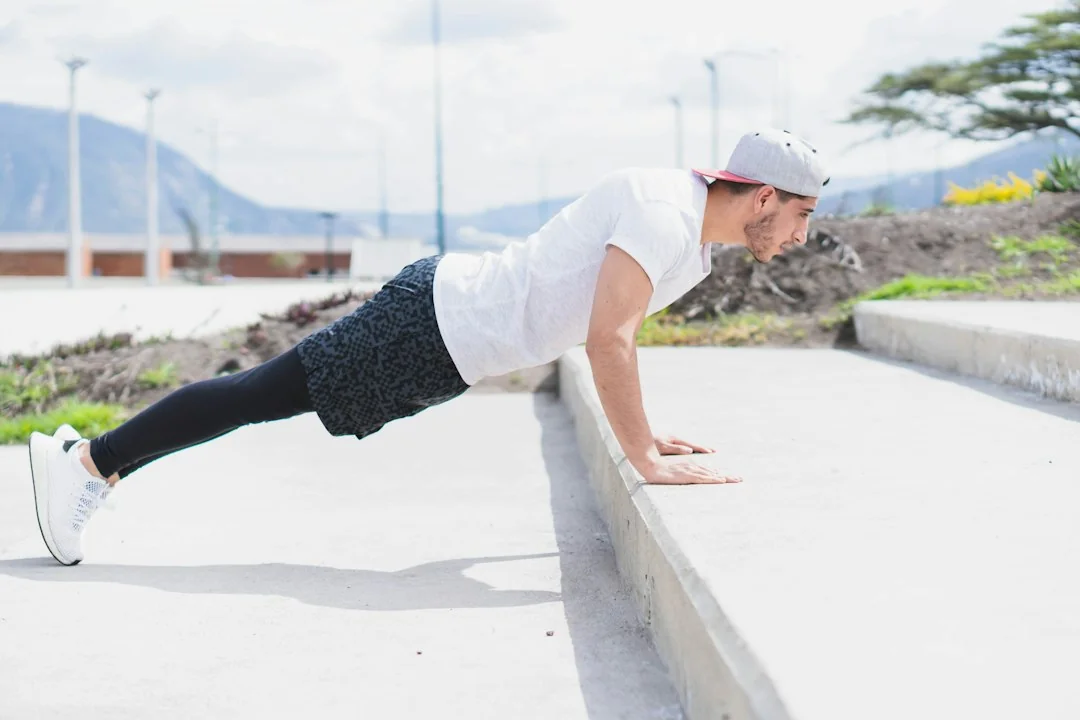
For those building toward full-intensity Tabata from a lower fitness base, complementary cardio formats help develop the aerobic foundation that makes each round more manageable. A 30 minute treadmill workout, a stairmaster workout, or a 12-3-30 workout each build sustained aerobic capacity while demanding less recovery than a full session. For those seeking tabata ultimate fitness results - simultaneous development of aerobic capacity, anaerobic power, and lean body composition - the two-block protocol outlined in this guide delivers adaptations that single-system training cannot match. A best workout mirror with weights adds guided Tabata coaching at home for trainees who prefer structured programming over self-directed timing.
What to expect week by week:
- Weeks 1-2: The 10-second rest feels impossibly short. Focus on learning the timing and choosing the right exercises - not on pushing maximum effort yet
- Weeks 3-4: Recovery between rounds begins to feel manageable. Start pushing intensity in rounds 1 through 5 before fatigue sets in
- Weeks 5-6: True maximum effort becomes sustainable across all 8 rounds consistently
- Week 7+: Consider adding a second Tabata block with a different exercise, or increasing frequency to three sessions per week
Research consistently shows that meaningful aerobic and anaerobic adaptations are measurable within six weeks. My standing advice for trainees focused on body composition: two rounds, performed fasted when practical, two to three times per week, with a gentle active recovery workout between sessions and real nutrition support around training days.
FAQs
What is the Tabata workout?
The tabata workout is a high-intensity interval training protocol structured as 20 seconds of maximum-effort exercise followed by 10 seconds of rest, repeated for eight consecutive rounds over four minutes. The protocol was developed by Japanese exercise scientist Dr. Izumi Tabata in 1996 and is one of the most studied short-duration training methods in sports science.
What is the difference between HIIT and Tabata?
Tabata is a specific subset of HIIT defined by its fixed 20/10 work-to-rest ratio, eight rounds per block, and the requirement for genuine maximum effort during every work interval. Standard HIIT covers a broad category of interval formats with varying work-to-rest ratios and intensity levels, making Tabata its most demanding and precisely structured form.
Is Tabata good to lose weight?
Tabata training supports fat loss through elevated post-exercise oxygen consumption, simultaneous improvement of aerobic and anaerobic metabolism, and - in fasted sessions - significantly higher fat oxidation rates compared to moderate-intensity training. Research confirms meaningful body-composition improvements in sedentary populations, though long-term weight management requires consistent training alongside an appropriate nutritional approach.
Is 20 minutes of Tabata enough?
Twenty minutes of Tabata - equivalent to five four-minute rounds separated by one-minute rest periods - is more than sufficient for a productive training session for most people, and demands more than most can sustain at genuine maximum effort from round one. Each tabata workout 4 minutes block is a complete training unit; even a single four-minute cycle produced significant aerobic and anaerobic adaptations at three to five sessions per week in the original research, confirming that effort quality matters far more than total session length.
This content is for informational and educational purposes only. It is not a substitute for professional medical advice, diagnosis, or treatment. Always consult your healthcare provider before starting any new fitness program or using fitness technology for health monitoring.
References
- Tabata I. Tabata training in perspective. Appl Physiol Nutr Metab. 2025;50:1-10. doi:10.1139/apnm-2023-0506.
- Lu YN, Wiltshire HD, Baker JS, Wang Q, Ying S. The effect of Tabata-style functional high-intensity interval training on cardiometabolic health and physical activity in female university students. Front Physiol. 2023;14:1095315. doi:10.3389/fphys.2023.1095315.
- Xue Y, Xu N, Zhang M. HIIT and Tabata protocols for improving physical and cognitive health in sedentary college students: a randomized trial. Front Psychol. 2026;17:1656208. doi:10.3389/fpsyg.2026.1656208.
- Wang Y, Han Y, Cheng Z, Fan Y, Wang H. Fasting vs. post-breakfast tabata exercise: implications for substrate metabolism and energy expenditure in young normal-weight women. Front Physiol. 2026;16:1721312. doi:10.3389/fphys.2025.1721312.
- Cheng L, et al. Two Tabata cycles in a single training set maximize fat oxidation after exercise in male college students with overweight/obesity. Sci Rep. 2025;15:13526. doi:10.1038/s41598-025-13526-x.