
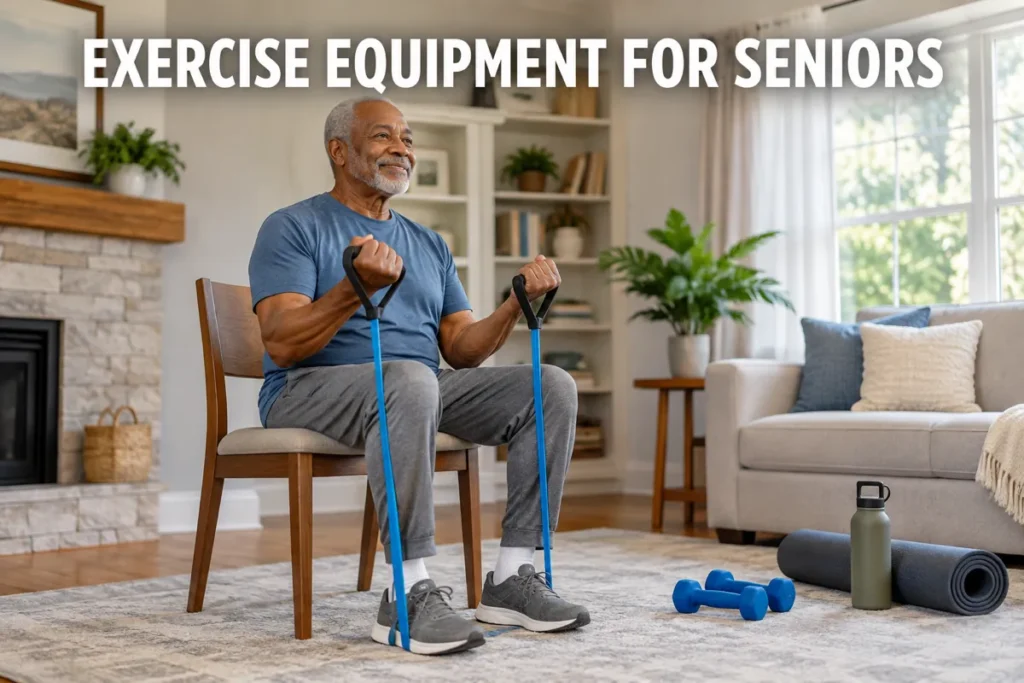
Exercise equipment for seniors covers a far wider range than most people expect, and the wrong choice can do more harm than good. My background is in sports science with a focus on biomechanics, joint stress, and injury risk in aging populations. The question I hear most from older adults is not "how hard should I train?" but "what is actually safe for my joints?" That is the right starting point. This guide covers every major equipment category, explains what changes when you move into your 70s and 80s, and answers the practical questions that most fitness content never addresses, including insurance coverage and free access programs.

Exercise Equipment for Seniors - Best Cardio Options for Healthy Joints
Exercise equipment for seniors in the cardio category divides into machines that reduce joint loading and those that add to it. For most older adults, the primary goal is protecting existing joint health while still achieving the cardiovascular adaptations that reduce heart disease risk and support metabolic function. Research confirms that regular aerobic exercise improves autonomic cardiovascular function and supports long-term heart health in older adults (1). A systematic review of 19 randomized controlled trials found all aerobic exercise types reduce harmful blood lipid levels in aging populations, with swimming and dancing showing the strongest effects on cholesterol and triglycerides (2). Understanding which machine fits your body's specific needs is the essential first step.
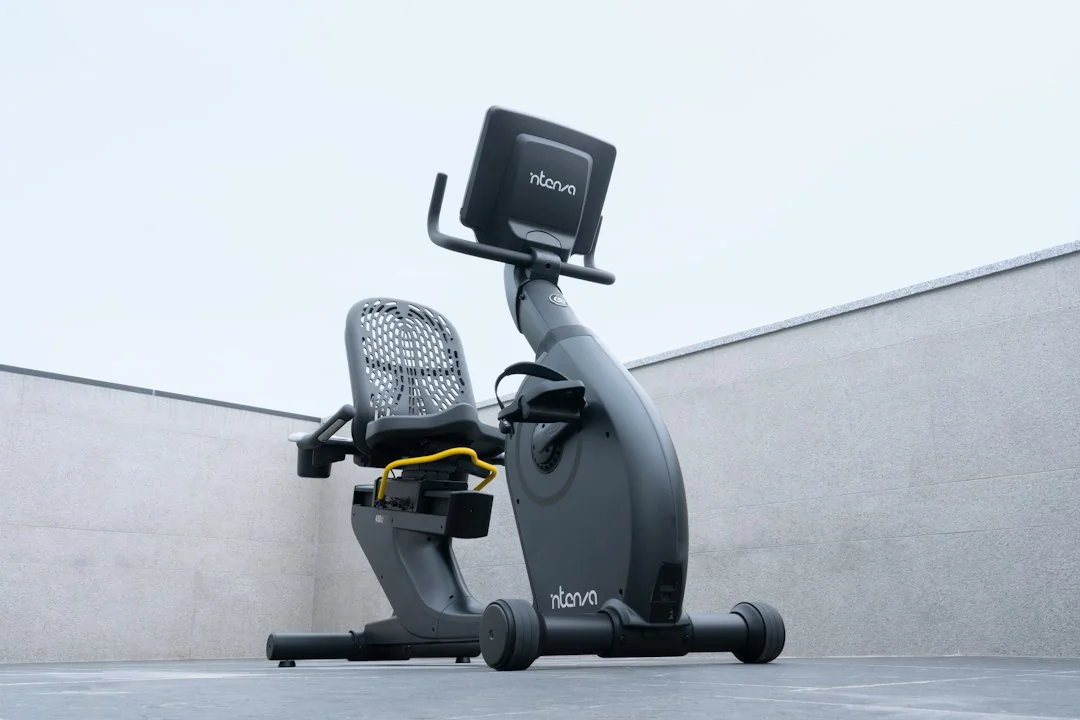
Recumbent Bikes - Comfortable Cardio With Full Back Support
The recumbent bike is the most joint-friendly cardio machine available for older adults, and the reasons are biomechanical. The reclined seat position eliminates the need to balance or bear weight through the upper body, while the lumbar backrest reduces spinal loading that forward-leaning upright seats create. I find this machine works particularly well with clients who have been avoiding cardiovascular exercise because knee or hip discomfort makes every step feel like a risk. Research suggests that cycling-style movements reduce joint loading and may improve pain and functional capacity in older adults with osteoarthritis (3). The step-through frame design on most models means you do not need to swing a leg over a high seat, which matters when balance is uncertain. I cover setup fixes and bike types for knee pain on a bike in a separate guide.
Seniors who benefit most from a recumbent bike include those with:
- Arthritic knees or hips that limit weight-bearing tolerance
- Lower back conditions that flare with upright seating
- Balance impairments that make standing equipment risky
- A history of falls that has created anxiety around upright exercise
My full breakdown of the top models is in our exercise bikes for seniors guide for anyone ready to compare specific options.
Elliptical Trainers - Low-Impact Cardio That Protects the Knees
The elliptical delivers a running-like motion without the heel-strike loading that makes jogging and fast treadmill walking problematic for arthritic or post-surgical joints. The feet remain in contact with the pedals throughout the movement, eliminating the impact force that accumulates over thousands of individual steps. I typically recommend elliptical picks for seniors who want more dynamic, full-body cardiovascular engagement than the recumbent bike provides. Most models include moving arm handles that involve the upper body in the effort and allow load to be distributed across a larger muscle area.
One practical safety point: getting onto an elliptical requires stepping up and placing weight on a moving pedal. For seniors with significant balance issues, this entry moment carries the greatest risk. Look for models with a wide platform base, a low step-on height, and sturdy side rails near the mounting area rather than selecting based on speed settings or built-in programs alone.
Rowing Machines - Full-Body Conditioning for Every Age
A rowing machine engages the majority of the body's major muscle groups in a single, coordinated movement, making it one of the most efficient conditioning tools available for older adults who want comprehensive results without extended time on equipment. The fully seated position means no standing balance is required, and the smooth drive-and-return pattern is gentle on knees and hips when performed with correct posture. I notice that many seniors bypass rowing because the technique appears complex from a distance. In reality, the basic catch-drive-finish-recover sequence can be learned safely in a single coached session and easily modified for anyone with limited shoulder mobility. My comparison of recumbent bike versus rowing machine shows how the two stack up as cardio workouts.
One important caveat: the forward hinge at the catch position can aggravate disc-related lower back conditions or spinal stenosis. Seniors with these diagnoses should consult a physiotherapist before beginning rowing. Those who receive clearance gain access to a remarkably complete conditioning tool with strong cardiovascular and metabolic benefits.
Treadmills - Controlled Walking With Structural Support
Treadmills occupy a distinctive position in the best exercise equipment for seniors category because walking on a flat, consistent surface with accessible support rails removes two key outdoor fall risks: unpredictable terrain and the absence of anything to hold. For seniors whose primary goal is maintaining bone density through weight-bearing activity, a treadmill provides the mechanical loading that recumbent bikes and ellipticals cannot replicate. The handrails allow seniors with balance conditions to exercise at a pace that would otherwise be unsafe outdoors. My cardio machine comparison sets treadmills, ellipticals, bikes, and rowers side by side.
Speed settings between 1.5 and 3.0 miles per hour on a 0-2% incline represent an appropriate starting range for most deconditioned older adults. More active seniors comfortable with regular walking may begin at the higher end of that range. I always emphasize that handrail contact should serve as light guidance rather than full load-bearing use, since gripping tightly shifts your center of mass and disrupts natural gait mechanics over time.
Machine | Joint Impact | Standing Required | Best For |
Recumbent Bike | Lowest | No | Arthritic Joints and Balance Issues |
Elliptical | Low | Yes | Full-Body Cardio Engagement |
Rowing Machine | Low | No | Full-Body Conditioning |
Treadmill | Weight-Bearing | Yes | Bone Density Maintenance |
Strength Equipment for Seniors - Safe Tools for Muscle Preservation
Cardiovascular machines capture most of the attention in senior fitness, but strength training may be more critical for long-term independence. Sarcopenia, the age-related loss of skeletal muscle mass and function, accelerates after age 60 and directly contributes to falls, reduced mobility, slower metabolic rate, and difficulty with everyday tasks. A 2025 scoping review of 36 studies found that resistance training counters sarcopenia through enhanced muscle protein synthesis, reduced systemic inflammation, and improved hormonal regulation (4). A 2026 meta-analysis of 15 randomized controlled trials in 902 participants confirmed that exercise significantly improved skeletal muscle index, knee extension strength, handgrip strength, and Timed Up-and-Go performance in older adults with sarcopenia (5).
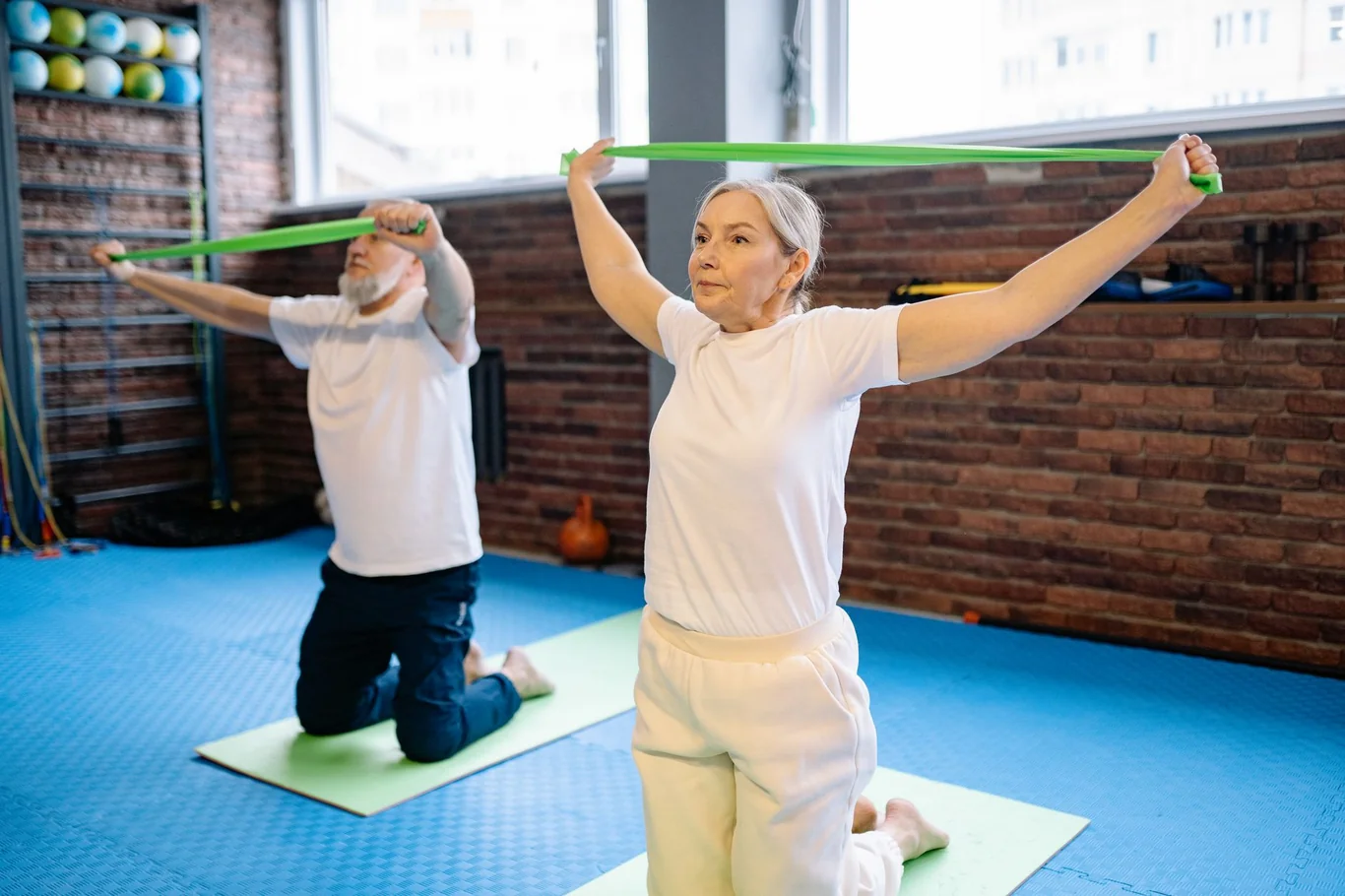
The best fitness equipment for seniors in the strength category does not require expensive machines or heavy loads. What the evidence supports:
- Progressive resistance training of any kind produces measurable muscle and strength gains in adults over 60, regardless of the equipment used
- Training frequency matters more than load intensity - 2 to 3 sessions per week consistently outperforms less frequent, heavier efforts
- Functional movement patterns like sit-to-stand, press, row, and hip hinge transfer directly to daily independence
- Research indicates that light resistance with higher repetitions produces comparable muscle growth to heavier loads in older adults, while carrying lower injury risk
- Low-cost equipment works - resistance training with inexpensive tools improved chair rise speed by 19%, stair climbing by 24%, and preferred gait speed by 9% in community-dwelling seniors over 8 months (6)
Our best smart home gym equipment guide covers technology-integrated options for seniors who want data tracking alongside their strength work.
Resistance Bands - The Most Accessible Strength Tool for Any Age
Resistance bands are consistently the best exercise equipment for seniors at home who want strength training without the expense or space requirements of machines. A complete full-body band program requires minimal floor space, is available at very low cost, and adapts to virtually any mobility level. I use bands with clients recovering from joint replacement surgery, managing severe arthritis, and rebuilding conditioning after extended illness. The progressive overload principle applies exactly as with free weights: as strength improves, you move to a heavier band or increase repetitions.
One practical recommendation: choose bands with padded handles rather than plain loop styles. Seniors with arthritic hands or reduced grip strength often find that loop bands demand so much forearm effort that the target muscle group never reaches a meaningful challenge. Handled designs shift the grip demand away from arthritic joints and onto the intended muscle group.
Light Dumbbells and Adjustable Weight Sets
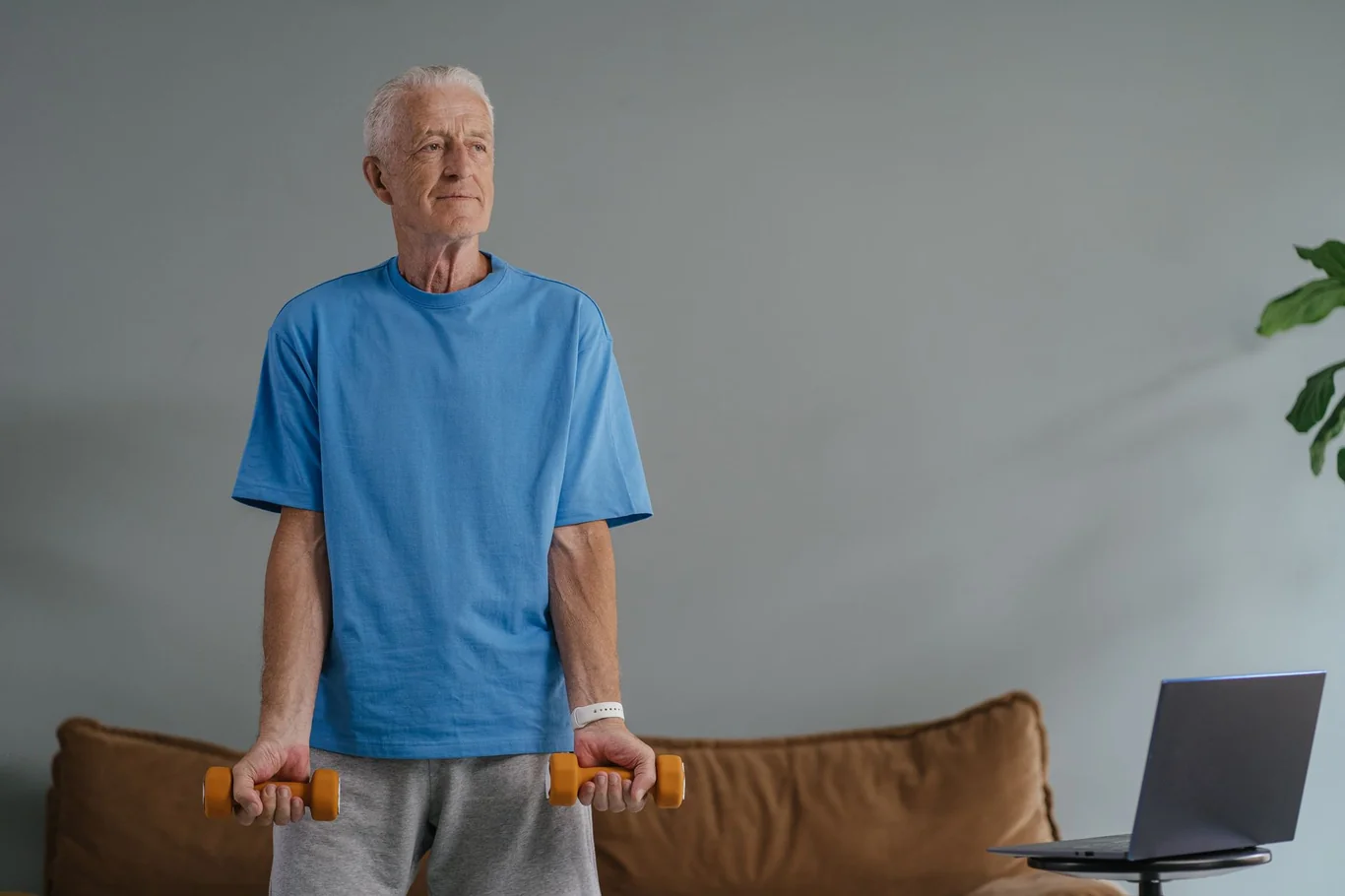
Light dumbbells in the 2-20 lb range add variety that resistance bands cannot fully replicate, particularly for upper-body isolation work. Adjustable dumbbell sets are the best exercise equipment for over 60 adults who want scalable resistance without purchasing an entire rack of individual pairs. The dial-select or twist-lock mechanisms on modern adjustable sets are straightforward enough for most seniors to manage independently, though I recommend practicing the adjustment motion several times before loading during an exercise set.
Stability is the critical safety factor with free weights. Seated dumbbell exercises eliminate the balance demand that makes standing overhead pressing risky for older adults with coordination concerns. Pair dumbbells with a supportive chair or low weight bench rather than attempting movements that require single-leg standing balance in the early stages. I list home gym exercises for the back, chest, and legs in a separate guide.
Cable Machines and Seated Weight Stations
Cable machines and multi-station gym systems offer the most controlled resistance experience available for strength training. The cable's constant tension through the full movement range is easier on joints than free weight exercises at the extreme ends of range, making these systems a strong option for the best exercise machine for arthritic knees for seniors who cannot tolerate the compression of free-weight squatting. Leg press, seated row, chest press, and lat pulldown are all cable or weight-stack exercises with well-established safety profiles for older adults.
The practical limitation is cost and footprint. Full cable stations are expensive and large. I'd prioritize using these during gym sessions through senior fitness programs rather than purchasing for home use, unless both space and budget comfortably allow for it.
Balance and Flexibility Equipment
Balance and flexibility tools complete a well-rounded exercise setup for older adults. Stability balls, yoga blocks, resistance tubing, and foam rollers improve proprioception, support active recovery between sessions, and address the flexibility component of fitness that cardio and strength training alone do not cover. For seniors, balance training carries particular importance: a 2024 randomized controlled trial found that multicomponent programs combining balance training, strength work, and movement skill practice effectively reduced fear of falling and increased physical activity in community-dwelling older adults (7). These tools require minimal floor space and integrate easily alongside any cardio or strength routine.
Exercise Equipment for Seniors Over 70 - Adapting to Changing Needs
Exercise equipment for seniors over 70 spans the same broad categories as equipment for younger retirees, but several biomechanical and physiological shifts change the selection priorities. Balance deterioration, reduced bone density, longer recovery between sessions, and a greater likelihood of concurrent medical conditions all factor into which machines are appropriate. I always emphasize that none of these changes call for exercising less - they call for choosing equipment that accounts for these realities rather than ignoring them. Current physical activity guidelines recommend that older adults aim for at least 150 minutes of moderate-intensity aerobic activity per week alongside muscle-strengthening activities on two or more days. I explain how often to do cardio each week, including session length, in a separate guide.
Best Equipment Choices for Adults in Their Early 70s
For adults in their early 70s, the cardio and strength equipment covered above remains fully appropriate with these adjustments:
- Handrails on all cardio machines are mandatory, not optional extras
- Recumbent bikes over upright designs for anyone reporting knee, hip, or lower back symptoms
- Seated over standing strength exercises when balance or confidence is uncertain
- Lower resistance and higher repetitions to reduce joint torque from heavy loading
Equipment Considerations for Seniors Over 80
Exercise equipment for seniors over 80 warrants specific attention because this population is more likely to have multiple concurrent conditions including osteoporosis, reduced grip strength, and cardiovascular comorbidities. Bone health becomes a central selection factor at this age. Research confirms that progressive resistance training produces 0.7-3.3% gains in bone mineral density at the femoral neck and vertebral sites, directly reducing fracture risk in older adults (8). Additional evidence shows weight-bearing and resistance exercise reduce bone reabsorption markers in older adults, supporting skeletal health across the aging spectrum (9).
Appropriate starting equipment for adults aged 80 and above:
- Seated pedal exercisers for those who cannot safely use full-size cardio machines
- Resistance bands anchored to a door or heavy chair for strength work without standing instability
- Recumbent bikes at very low resistance settings for active but physically fragile individuals
- Chair-based exercise programs as a foundation alongside any equipment use
Anyone in this age group with a history of falls, fractures, or cardiovascular disease should receive clearance from their physician before beginning any new equipment-based exercise program. This is an essential step, not merely a precautionary suggestion.
Area | Adults in Their 70s | Adults Over 80 |
Cardio Equipment | Recumbent bikes preferred for knee, hip, or back symptoms | Seated pedal exercisers or recumbent bikes at low resistance |
Strength Training | Seated exercises with lower resistance and higher reps | Resistance bands anchored to door or chair |
Safety Requirement | Handrails on all cardio machines mandatory | Chair-based programs as exercise foundation |
Best Exercise Equipment for Seniors With Limited Mobility
Exercise equipment for seniors with limited mobility extends beyond standard gym machines into adaptive and passive categories. Seated steppers simulate stair-climbing movement while the user sits, delivering lower-body resistance training without requiring standing. Motorized passive trainers move the limbs through a range of motion with minimal voluntary input from the user, providing an entry point for those who cannot yet generate meaningful active movement.
These are entry points, not permanent destinations. The goal of any limited-mobility exercise program is to build sufficient capacity to eventually progress toward more demanding equipment. A physiotherapist or certified senior fitness specialist can map a realistic progression path from passive assisted movement toward active resistance training over time.
Free Exercise Equipment for Seniors - Programs and Insurance Benefits
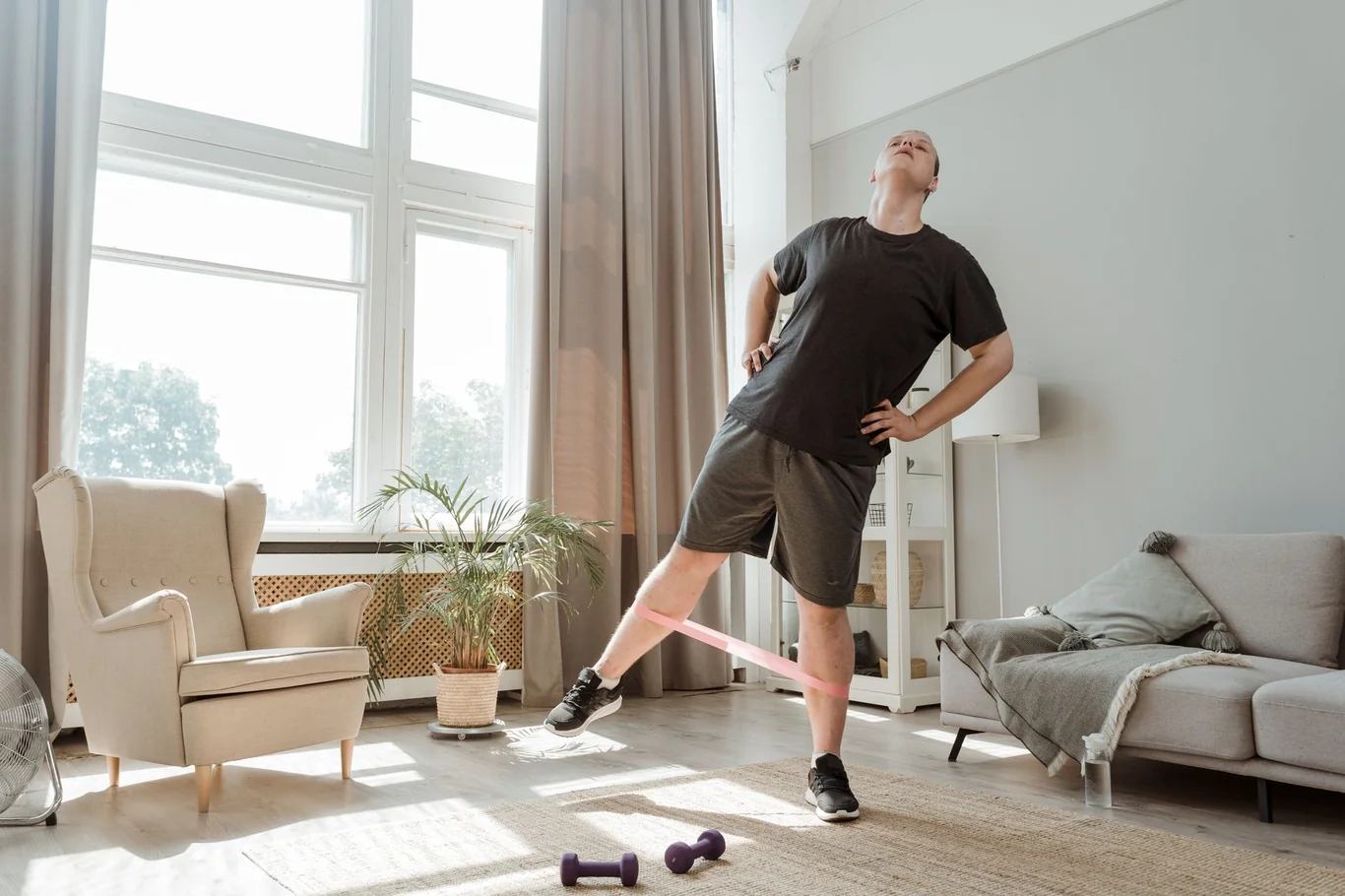
Free exercise equipment for seniors and subsidized fitness access programs are among the most under-discussed topics in senior health content, yet they directly address the cost barrier that prevents many older adults from starting. Several major insurance and community programs provide meaningful support that most seniors are simply not aware of.
Medicare and Insurance Fitness Benefits
Medicare Part B does not cover home exercise equipment purchases directly. Medicare Advantage plans operate differently and frequently include supplemental fitness benefits through programs such as SilverSneakers, Renew Active, and Silver&Fit that standard Medicare does not offer. Coverage varies considerably between plans, and your plan's Evidence of Coverage document lists the physical activity benefits included for your current plan year. Calling member services is the fastest way to confirm what your specific plan covers.
Affordable Home Equipment and Community Resources
For seniors who prefer exercising at home with a limited budget, resistance bands and light dumbbells are often available through senior center lending programs and public library fitness collections in many communities. Searching for amazon exercise equipment for seniors online returns a wide range of affordable resistance bands, light dumbbells, and seated pedal exercisers at various price points and mobility levels. My guide to cycling and belly fat is worth exploring if body composition is part of your fitness goal alongside the free-program question.
How to Choose the Best Exercise Equipment for Seniors at Home
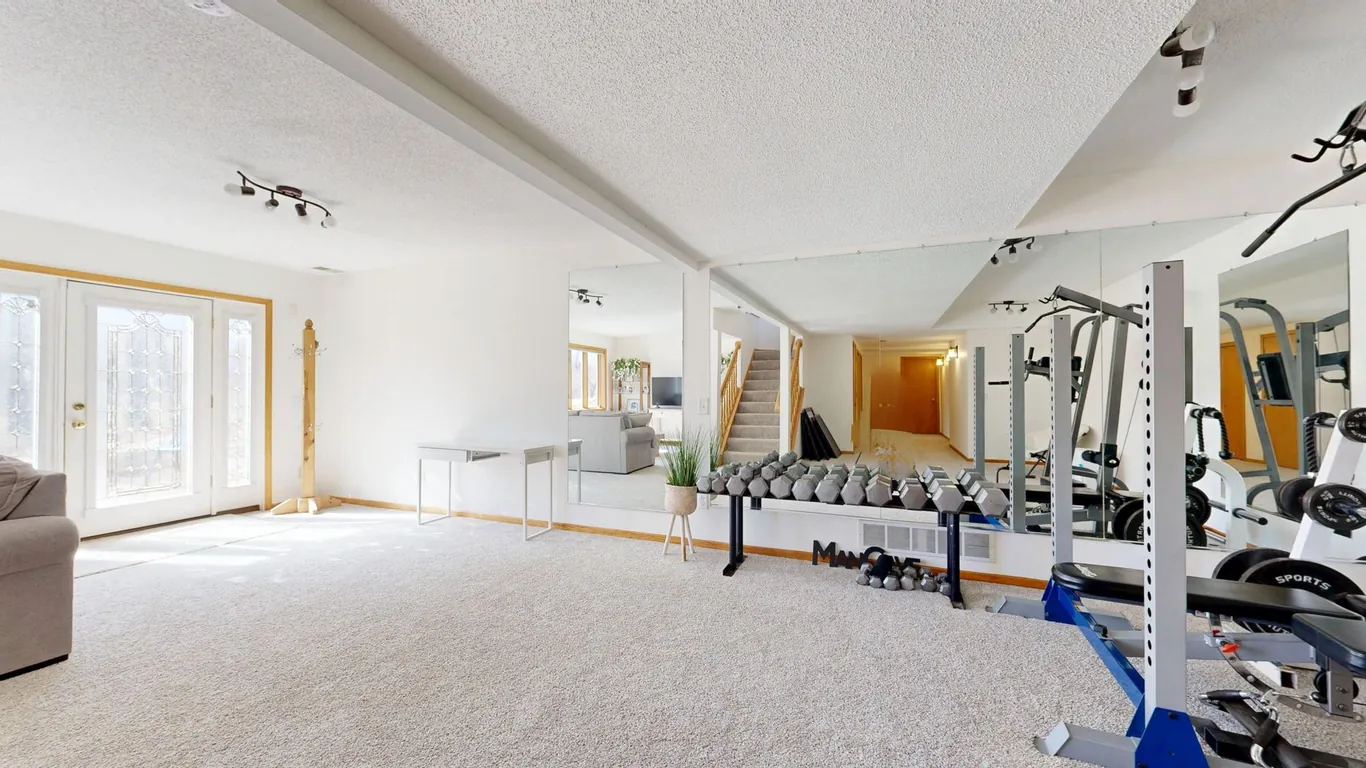
The best exercise equipment for seniors at home depends on four factors that gym equipment never has to navigate: available floor space, ease of independent assembly, storage flexibility, and the ability to use it confidently without ongoing instruction. I walk clients through a structured decision process before any purchase to avoid the common outcome of expensive equipment that sits unused within three months. If you are shopping for a bike, my guide to choosing an exercise bike covers types, features, and budget.
A Step by Step Purchase Checklist
Follow this sequence before any purchase:
- Define the primary goal first - cardiovascular conditioning, strength, mobility, or a combination. Equipment that does one thing well beats a multi-purpose device that does several things poorly.
- Measure the actual floor space with a tape measure, including clearance on all sides. A treadmill requires at minimum 3 feet behind the deck for safe emergency dismount.
- Test the entry and exit motion before committing - visit a showroom or senior fitness facility and practice the mounting movement on the specific machine type you are considering.
- Check weight capacity against actual body weight - equipment rated at or near the user's weight degrades faster. Choose a rating with at least 50 lbs of headroom.
- Prioritize stability over features - a wide base, rubber non-slip feet, and a simplified control interface reduce fall risk and support consistent daily use more than advanced programming.
- Verify residential warranty terms - many commercial warranties exclude home use. A minimum of 1 year on parts and labor under residential conditions is a reasonable standard.
Where to Begin With Home Equipment
For best exercise equipment for over 50 adults entering a structured fitness routine for the first time, start with one equipment type and add a second only after consistent use is established. An exercise bike workout targeted at weight loss combined with twice-weekly resistance band training covers the essential cardiovascular and strength bases at low cost and minimal floor space for most older adults.
Building a Routine That Works for Your Age
In more than a decade working with older adults returning to fitness after injury, illness, or years of inactivity, I have seen modest equipment used consistently outperform expensive home gym setups purchased with good intentions and abandoned within weeks. I rank seven expert-tested recumbent exercise bike picks for home riders in a separate guide.

The best exercise equipment for seniors is ultimately the equipment that gets used consistently, at a level that produces gradual improvement without causing pain. Three sessions per week, consistently performed over months, will outperform sporadic use of sophisticated equipment in every meaningful outcome that matters for healthy aging. Start with what is accessible and comfortable. A recumbent bike, a set of handled resistance bands, and a sturdy chair provide a complete starting kit for most older adults.
Warning Signs to Stop and Seek Medical Attention
Stop and consult a clinician before continuing if any of the following occur during exercise:
- Chest pain, pressure, or unusual shortness of breath
- Dizziness, lightheadedness, or sudden loss of coordination
- Sharp joint pain rather than the usual mild muscle fatigue
- Unusual swelling in any joint after a session
For seniors whose fitness improves and who want to explore higher-intensity programming, high-intensity interval approaches on exercise bikes can be safely adapted for older adults under appropriate guidance.
FAQs
These are the most commonly searched questions about exercise equipment for seniors, drawn from real search data.
What is the best exercise equipment for seniors?
The best exercise equipment for seniors depends on the individual's joint health, fitness goals, and available space, but recumbent bikes and resistance bands consistently rank as the most accessible and broadly appropriate starting points for older adults across a wide range of fitness levels. A recumbent bike delivers low-impact cardiovascular training with full back support, while resistance bands provide scalable strength training that adapts to virtually any mobility level without heavy or expensive equipment.
What is the best exercise machine for 70-year-olds?
The best exercise machine for 70-year-olds is typically a recumbent bike, because the step-through frame, lumbar support, and low joint loading make it accessible across the range of joint conditions and balance abilities common in that age group. Seniors in better physical condition may prefer an elliptical or rowing machine, both of which offer greater full-body engagement at similar or slightly higher intensity without adding meaningful joint impact.
Will Medicare pay for exercise equipment for seniors?
Medicare Part B does not cover home exercise equipment purchases directly, but many Medicare Advantage plans include supplemental fitness benefits through programs like SilverSneakers, Renew Active, and Silver&Fit that provide free gym memberships and in some cases home fitness resources. The most reliable way to find out what your specific plan covers is to call the member services line on the back of your insurance card or review the Evidence of Coverage document for your current plan year.
How do 80 year olds strengthen their legs?
Eighty-year-olds can safely build leg strength using seated resistance band exercises, low-resistance recumbent bike pedaling, and chair-assisted sit-to-stand repetitions, all of which train the quadriceps, hamstrings, and glutes without requiring unassisted standing balance. Seated leg press machines at a gym are also a highly effective option for this age group, providing guided resistance with full back support and no balance requirement.
Medical Disclaimer: This content is for informational and educational purposes only. It is not a substitute for professional medical advice, diagnosis, or treatment. Always consult with your healthcare provider before starting any new fitness program or using fitness technology for health monitoring.
References
- Etayo-Urtasun P, Izquierdo M, Saez de Asteasu ML. Effects of exercise on autonomic cardiovascular function in older adults: A systematic review and meta-analysis. Sports Med. 2025;56(2):507-519. doi:10.1007/s40279-025-02357-5.
- Li Y, Zhai Q, Li G, Peng W. Effects of different aerobic exercises on blood lipid levels in middle-aged and elderly people: A systematic review and Bayesian network meta-analysis based on randomized controlled trials. Healthcare. 2024;12(13):1309. doi:10.3390/healthcare12131309.
- Hunter DJ, Eckstein F. Exercise and osteoarthritis. J Anat. 2009;214(2):197-207. doi:10.1111/j.1469-7580.2008.01013.x.
- Govindasamy K, Rao CR, Chandrasekaran B, Parpa K, Granacher U. Effects of resistance training on sarcopenia risk among healthy older adults: A scoping review of physiological mechanisms. Life (Basel). 2025;15(5):688. doi:10.3390/life15050688.
- Zheng X, Zhang L, Huang Z. Effect of exercise intervention on elderly patients with sarcopenia: a meta-analysis. Am J Transl Res. 2026;18(1):1-12. doi:10.62347/ZDYB7960.
- Bardstu HB, Andersen V, Fimland MS, et al. Effectiveness of a resistance training program on physical function, muscle strength, and body composition in community-dwelling older adults receiving home care: a cluster-randomized controlled trial. Eur Rev Aging Phys Act. 2020;17:11. doi:10.1186/s11556-020-00243-9.
- Arkkukangas M, Stromqvist Baathe K, Hamilton J, Hassan A, Tonkonogi M. FallFitness exercise program provided using the train-the-trainer approach for community-dwelling older adults: a randomized controlled trial. BMC Geriatr. 2024;24:983. doi:10.1186/s12877-024-05575-0.
- McMillan LB, Zengin A, Ebeling PR, Scott D. Prescribing physical activity for the prevention and treatment of osteoporosis in older adults. Healthcare (Basel). 2017;5(4):85. doi:10.3390/healthcare5040085.
- Senderovich H, Kosmopoulos A. An insight into the effect of exercises on the prevention of osteoporosis and associated fractures in high-risk individuals. Rambam Maimonides Med J. 2018;9(1):e0005. doi:10.5041/RMMJ.10325.