
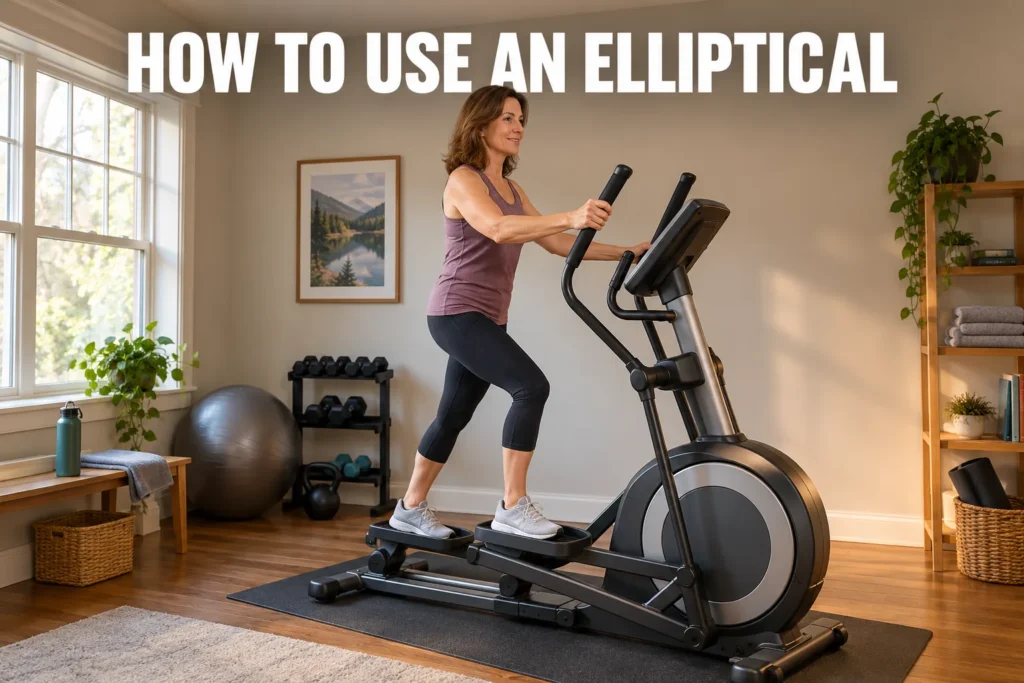
Knowing how to use an elliptical correctly from day one is the difference between steady progress and a session that leaves your knees sore. I have coached beginners, professional tennis players, and other competitive athletes on ellipticals for years, and the same few setup and form mistakes show up with almost every new user. The machine delivers a full-body, low-impact workout that suits nearly every fitness level, but most people step on without knowing the right form, resistance, or session length. Below, I walk through each of those, plus the beginner routines I actually hand out for weight loss, endurance, and long-term consistency.

How to Use an Elliptical: Step-by-Step Setup for Beginners
Setup comes first because it is the step most beginners skip. Getting it right takes under two minutes, and it protects your joints, sets the right intensity, and makes it easier to stay consistent.
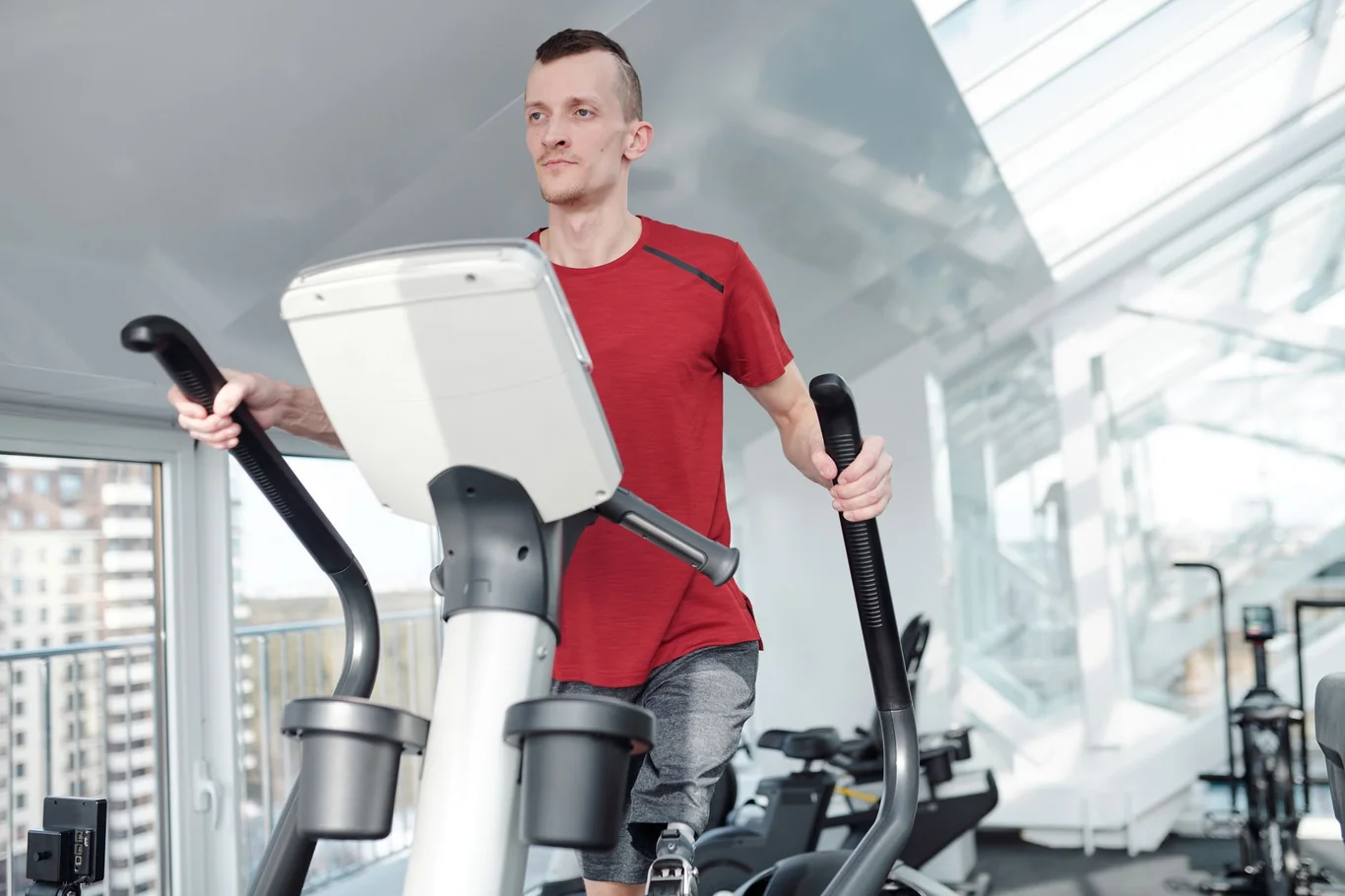
Before starting, take a few seconds to locate the resistance controls, incline adjustment, and program options. Console layouts vary a lot between brands, and in my experience a confusing console is one of the main reasons home users stop at the default program. If you are still shopping, clear controls are worth checking when you choose an elliptical for home use.
Step 1: Getting on the Machine Safely
Start by standing beside the elliptical with both hands on the stationary center handles before stepping on. Place one foot on the lower pedal first, then bring your other foot onto the second pedal while keeping your grip light. Most machines are motion-activated and the console will wake up once you start pedaling. Never try to mount a moving elliptical mid-stride. For older clients, I prefer ellipticals built for seniors with a low step-up and fixed handles, because mounting is where balance problems usually show up.
Step 2: Setting Your Resistance and Incline
Begin at resistance level 1-3 and a flat or low incline (0-3 degrees) for your first two weeks. Resistance controls how hard you push against the pedals, and incline shifts emphasis from your quads to your glutes and hamstrings. Beginners who start too high on resistance shorten their natural stride and put unnecessary strain on the knee joint. My rule with new clients: if your stride gets shorter after you add a level, drop back one level.
Step 3: Choosing a Program vs. Manual Mode
Most gym ellipticals offer preset programs alongside a manual mode. Start in manual mode for your first three to four weeks so you control every intensity change yourself, without unexpected resistance spikes mid-session. Preset programs are useful once you understand how your body responds to varying effort levels.
Proper Form: How to Use an Elliptical Correctly for Beginners
Good form separates a productive elliptical session from one that causes overuse injuries. For beginners, using the machine correctly comes down to posture, foot placement, and breathing rhythm. Proper form also engages more muscle fibers, which means you burn more calories per minute.
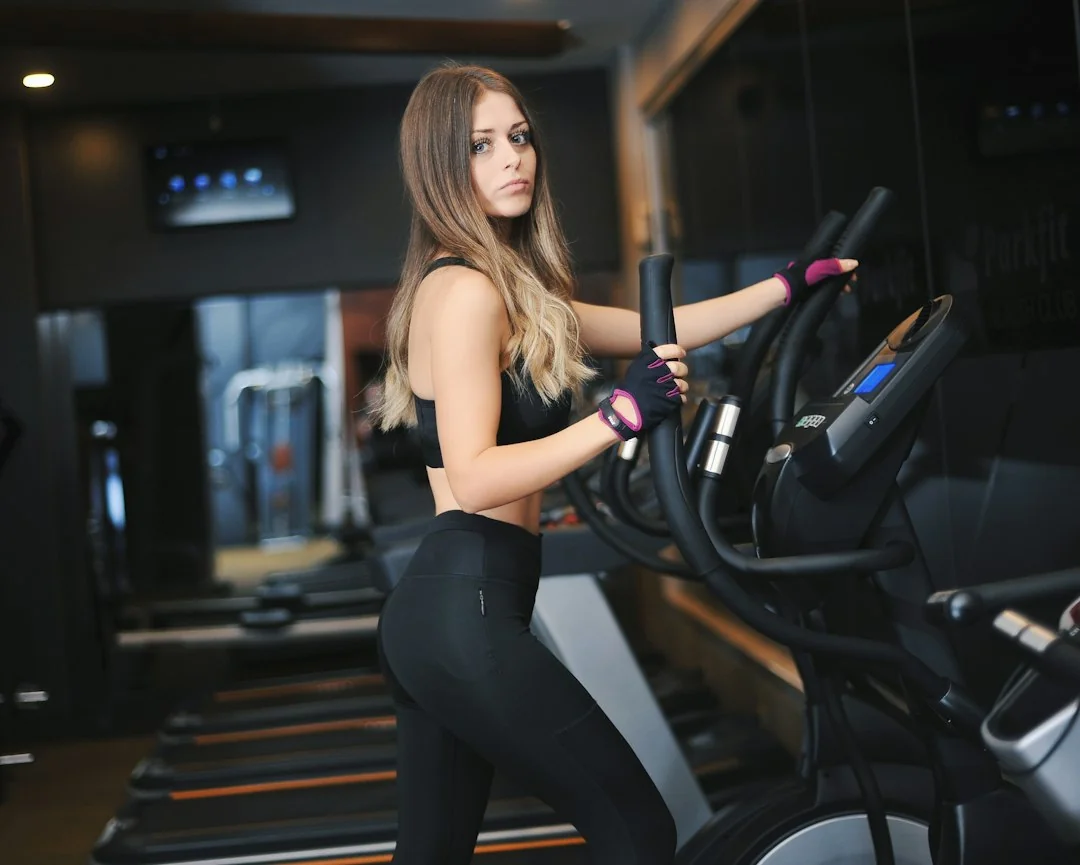
When I watch beginners on the elliptical, three errors come up far more often than any others: leaning forward onto the handlebars, letting the arms go passive, and pressing through the toes. Fixing even one of them usually makes the same resistance feel easier and lets you train longer before fatigue sets in.
Upper Body and Arm Mechanics
Moving handles should be held with a firm but relaxed grip, pushing and pulling in rhythm with your leg motion. Do not lean your body weight forward into the handles or grip so tightly that your shoulders rise toward your ears; both habits reduce total calorie burn. Keep your elbows slightly bent and your torso upright.
Lower Body Positioning and Foot Placement
Your feet should stay flat on the pedals throughout every stroke, so never rise onto your toes or let your heels lift. Driving through your heels activates your glutes and hamstrings more effectively than pushing from the balls of your feet, which over-engages the calf. Heel drive is the cue I repeat most with new users, and a 41-year-old client who came to me with sore knees after 3 weeks of pushing through his toes felt the difference within four sessions of that one change. Maintain a slight bend in your knees at the bottom of every stroke; locking them out puts direct stress on the joint.
Stride length plays into foot placement too. Taller clients, over about 6 feet, often drift onto their toes on short-stride machines, so for them I look at a longer-stride model such as the Niceday Long Stride Elliptical before blaming their technique.
Core Engagement and Breathing
Bracing your core lightly stabilizes your spine and transfers power more efficiently between your upper and lower body. Breathe in through your nose and out through your mouth, finding a rhythm that matches your cadence. If you cannot complete a short sentence during your workout, you are working above a beginner-appropriate intensity and should reduce resistance by one or two levels.
Reverse Pedaling Technique
Most beginners only pedal forward, missing a simple adjustment that meaningfully changes which muscles are worked. Pedaling in reverse shifts the load from your quadriceps to your hamstrings and calves, creating a more balanced training stimulus. Add two to three minutes of reverse pedaling at the end of each session once you are comfortable with forward form - especially valuable for beginners with relatively underdeveloped posterior chain muscles. I use two minutes of reverse pedaling as a finisher with athletes because it loads the hamstrings without adding impact.
Quick-reference form checklist for every session:
- Feet flat on pedals, heels pressing down through the stroke
- Slight bend in the knees at the bottom of every pedal cycle
- Core lightly braced, lower back neutral
- Shoulders relaxed and away from the ears
- Eyes forward, chin level, torso upright
- Light grip on handles - fingers wrapped but not white-knuckling
Elliptical Training for Beginners: Duration, Frequency, and Progression
The most common reason I see beginners give up on the elliptical is doing too much in the first two weeks. Elliptical training for beginners follows the same progressive overload principles as any exercise: the body needs time to adapt before you increase duration or intensity.
How Long Should Beginners Use the Elliptical
Start with 15-20 minutes per session for your first two weeks, focusing on maintaining good form throughout. The goal in weeks one and two is to finish feeling like you could go five more minutes. Add five minutes to your sessions every one to two weeks until you reach 30 minutes. I ask new clients to rate their effort at minute 15, and anything above 6 out of 10 means the resistance is set too high.
If weight loss is your goal, how much time you spend on the elliptical each day matters less than a steady effort level and how many sessions you fit into a week. How long to use the machine depends on your current fitness: a beginner builds up to 30 minutes, while an intermediate trainer can target 45 minutes at higher resistance.
How Often Should Beginners Train
Three sessions per week is the right starting frequency for most beginners, as it provides 48 hours of recovery between each session - the window during which cardiovascular and muscular adaptations actually occur. After four to six weeks, most beginners are ready to add a fourth session per week. Jumping to five or six high-intensity sessions in month one is the surest path to burnout or overuse injury.
Understanding Target Heart Rate Zones
Target heart rate zones are the most reliable way to calibrate your elliptical effort. For beginners, the aerobic zone (65-75% of max heart rate) is the appropriate starting range, and a simple estimate of your max heart rate is 220 minus your age, multiplied by 0.65 to 0.75 for the zone. The grip sensors on most elliptical handles provide a rough real-time reading that helps you stay in the right zone during each session.
Hydration While Using the Elliptical
Drink 6-8 ounces of water every 15-20 minutes during your elliptical session - not just before and after. Dehydration reduces cardiovascular efficiency and makes effort feel harder than it is, which causes beginners to cut sessions short. Keep a water bottle within reach of the console so you can hydrate without interrupting your rhythm.
A 4-Week Beginner Progression Plan
Week | Duration | Sessions per Week | Resistance | Intensity Feel |
1 | 15 min | 3x | Level 1-2 | Easy - full sentences comfortable |
2 | 20 min | 3x | Level 2-3 | Moderate - short sentences OK |
3 | 25 min | 3-4x | Level 3-4 | Moderate-hard - slightly breathless |
4 | 30 min | 4x | Level 4-5 | Challenging - focused breathing needed |
How to Use an Elliptical for Weight Loss
The elliptical is a genuinely effective tool for weight loss when approached with realistic expectations. When clients ask me how to use an elliptical for weight loss, my answer is always the same: intensity, progression, and consistency over weeks matter far more than simply accumulating minutes on the machine.

Four key variables that most affect calorie burn on the elliptical:
- Resistance level - higher resistance burns significantly more calories per minute than low resistance at the same pace
- Session duration - longer moderate-intensity sessions accumulate more total calorie burn than short high-intensity efforts
- Body weight - heavier individuals burn more calories at the same relative effort
- Workout frequency - three to five sessions per week compounds the weekly calorie deficit far more than one or two
Calorie Burn on the Elliptical: What the Research Shows
Research measuring energy expenditure across seven indoor cardio machines found that an elliptical trainer produces approximately 12.8 kcal per minute at self-selected submaximal intensity and 14.7 kcal per minute at maximum effort (1). For a 155-pound person working at steady moderate effort, a 30-minute session typically burns 270-335 calories, though the machine's on-board display typically overestimates by 15-30%.
One lab-based feasibility study tracked compact under-desk elliptical use and found that theoretical daily sessions averaging one hour could produce an estimated 5.2 pounds of annual fat loss attributable to energy expenditure alone, with 86% of participants burning enough extra calories to prevent weight gain versus a sedentary baseline (2). These are projected figures from a short-term laboratory protocol - actual results depend on combining calorie expenditure with a modest dietary deficit over time. If you sit most of the day, I suggest under-desk ellipticals as an add-on to real sessions, never as a replacement.
Body Weight | 20-Min Moderate | 30-Min Moderate | 45-Min Moderate |
125 lbs | ~175 kcal | ~250 kcal | ~360 kcal |
155 lbs | ~215 kcal | ~300 kcal | ~440 kcal |
185 lbs | ~255 kcal | ~360 kcal | ~520 kcal |
215 lbs | ~300 kcal | ~420 kcal | ~600 kcal |
These are estimates based on moderate intensity (65-70% max heart rate). Actual burn varies with resistance, incline, cadence, and individual metabolic rate.
How to Use an Elliptical to Lose Belly Fat
Many people expect the elliptical to target belly fat directly, and that is not how fat loss works. There is no such thing as spot reduction. Your body draws fat from systemic stores based on genetics and total energy balance, not from the muscles you happen to be working. What I recommend instead is consistent elliptical machine workouts that create a modest caloric deficit over weeks, paired with two to three weekly full-body strength sessions. That combination reduces total body fat, including visceral fat around the abdomen.
Elliptical Workouts for Beginners: Sample Routines
Having a structured session removes the guesswork that causes most beginners to either under-train or over-train. I give every new elliptical user a written plan like the two below, because improvising from session to session is usually where consistency falls apart around the four-week mark.

30-Minute Beginner Elliptical Workout: Steady State
- Minutes 1-5: Warm-up at resistance level 1-2, 55-65 RPM, using stationary handles
- Minutes 5-15: Increase to resistance level 3, 65-70 RPM, begin using moving handles
- Minutes 15-22: Maintain resistance level 3-4, focus on posture and heel drive
- Minutes 22-27: Drop to resistance level 2, active recovery pace (60-65 RPM)
- Minutes 27-30: Cool down at resistance level 1, slow pedal, return to stationary handles
30-Minute Interval Workout for Fat Loss
Interval-based training burns more calories per minute and improves cardiovascular fitness faster than steady-state work at the same duration. Research shows that heart rate tracks oxygen uptake on the elliptical in the same way it does on other cardio machines, which makes heart rate a valid way to set interval intensity (3). Heart rate-guided intervals are how I conditioned tennis players at elite academies, including Carlos Alcaraz, and the beginner version below uses the same logic at a far gentler dose.
- Minutes 1-5: Warm-up at resistance 2, 60 RPM (easy, conversational)
- Minutes 5-6: Push hard - resistance 6-7, 75-80 RPM (7/10 perceived exertion)
- Minute 7: Recover - drop to resistance 2-3, easy pedaling
- Repeat push-recover 8 more times (minutes 8-23) - 10 intervals total
- Minutes 24-30: Cool down at resistance 1-2, slow and relaxed pace
Common Mistakes Beginners Make on the Elliptical
Most beginners make the same handful of errors in their first month. These are the ones I correct most often, and fixing them early protects your joints and makes sure you get the workout you think you are getting.
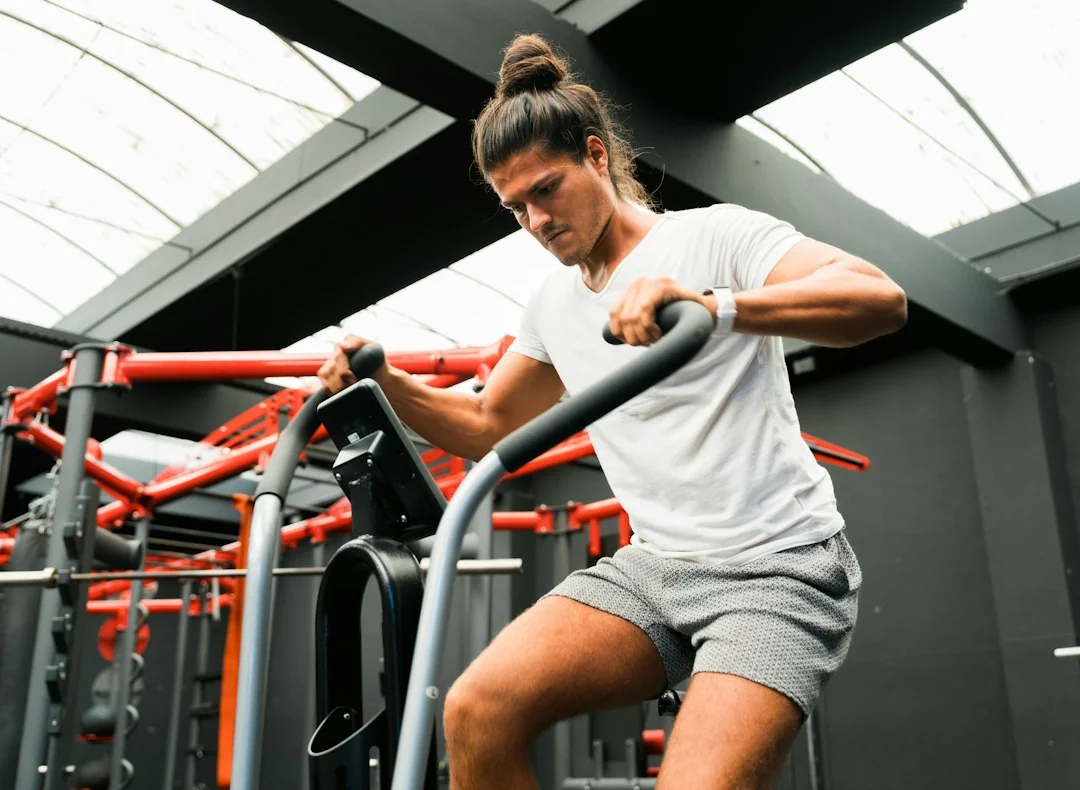
Common mistakes to address immediately:
- Leaning on the handles for support: Shifting your weight onto the handlebars unloads your lower body and reduces calorie burn
- Setting resistance too low and going very fast: High RPM at minimal resistance creates the illusion of hard work but provides little cardiovascular benefit
- Skipping the warm-up: Starting at high intensity without a 3-5 minute warm-up raises injury risk for knees, hips, and lower back
- Looking down at your feet: Dropping your gaze rounds the cervical spine and strains your neck; keep chin level and eyes forward
- Only going forward: Reverse pedaling shifts emphasis to the hamstrings and calves - ignoring it creates muscle imbalances
- Never increasing resistance: Staying at the same resistance level for months produces diminishing returns as the body adapts
Elliptical vs. Other Cardio Machines: How They Compare
Each machine suits a different goal, and I program all four for different reasons. The biggest trade-off is impact: a treadmill burns a little more per half hour, while the elliptical keeps joint loading very low, which is the core of the elliptical vs treadmill decision for most beginners.
Machine | Joint Impact | Est. Calorie Burn (30 min, 155 lbs) | Primary Muscles | Best Use Case |
Elliptical | Very low | 270-335 kcal | Quads, glutes, hamstrings, arms | Low-impact cardio, injury recovery |
Treadmill | Moderate-high | 295-370 kcal | Quads, hamstrings, glutes, calves | Running fitness, bone density |
Stationary Bike | Very low | 210-280 kcal | Quads, glutes, hamstrings | Seated cardio, knee rehabilitation |
Rowing Machine | Low | 255-315 kcal | Back, arms, core, legs | Full-body power, upper body strength |
Biomechanical research found that elliptical training produces over 14 times the quadriceps muscle activation compared to overground walking, with significantly greater hamstring coactivation than either cycling or walking at matched effort levels (4). Rowing shifts much more of the work to the back and arms, so the muscles a rowing machine works overlap only partially with the elliptical's muscle profile, making the two machines strong complements for a cross-training week.
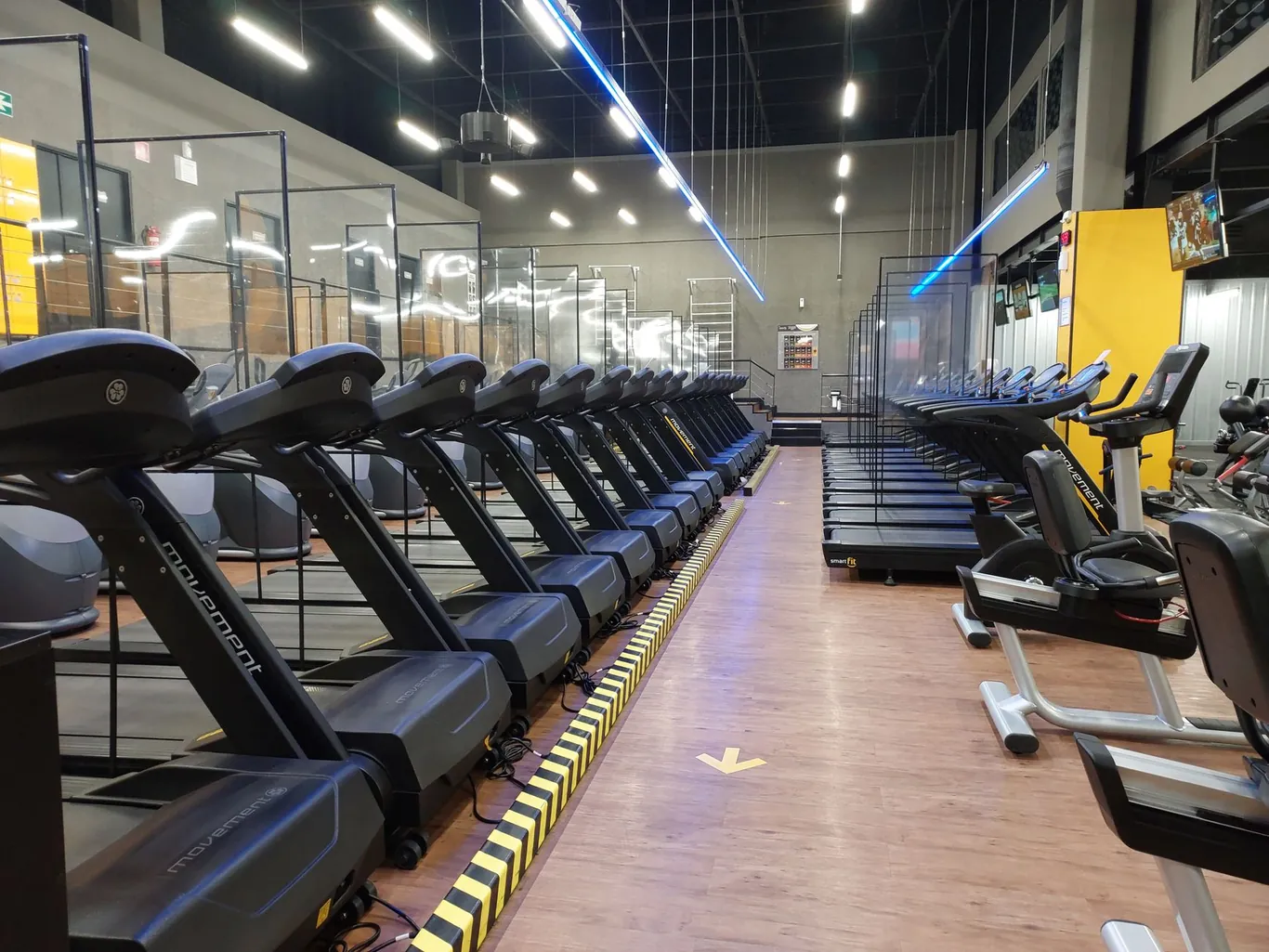
One study comparing maximal fat oxidation across treadmill, elliptical, and rowing found that the treadmill produced higher peak fat burning rates, but the elliptical reached its fat-burning peak at a lower relative intensity, which makes it more sustainable for longer sessions (5). A pilot study on chronic back pain also found that an elliptical exercise program at progressive dosages significantly reduced pain scores and disability over four weeks, though larger controlled trials are needed to confirm these findings (6). That matches what I see with clients who have sore backs: the elliptical is usually the first cardio machine they can use without a flare-up.
What Muscles Does the Elliptical Work
The elliptical is one of the few cardio machines that genuinely engages both upper and lower body when used with the moving handles at proper form. The exact muscles activated depend on your resistance level, incline, direction of pedaling, and handle engagement.
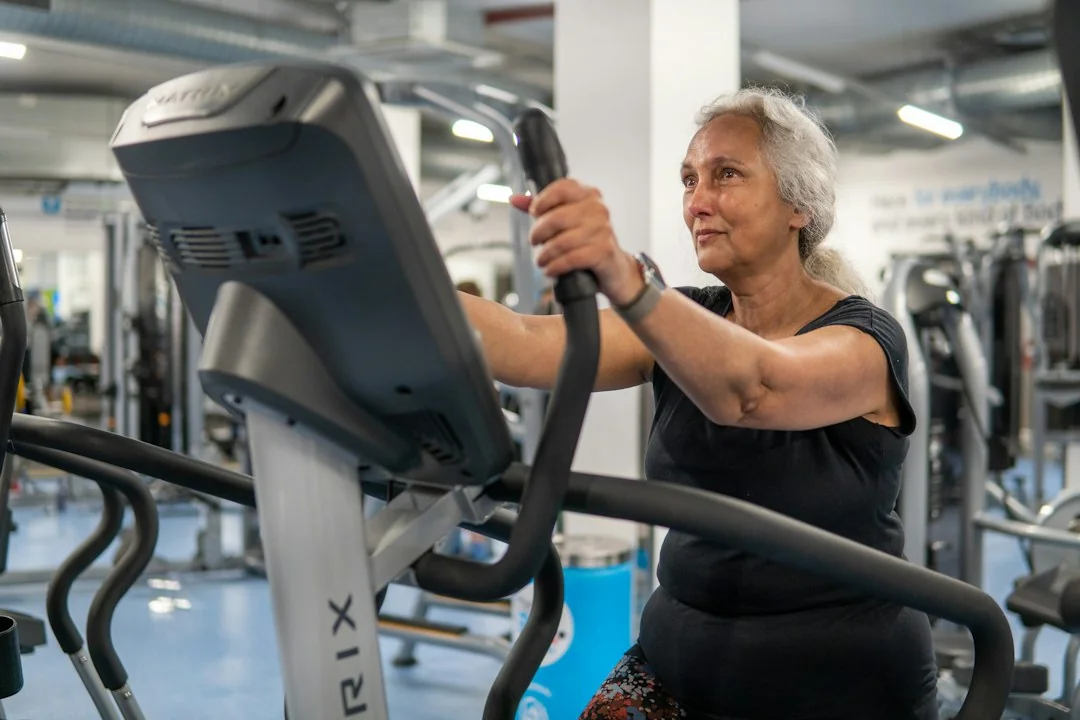
Lower body muscles:
- Quadriceps - primary driver of the forward pedal stroke; activated more at lower incline
- Glutes - more engaged at higher incline settings (5-10 degrees)
- Hamstrings - engaged during the back portion of the stroke; significantly more active during reverse pedaling
- Calves - stabilizing role throughout; activated more when pushing from the forefoot
Upper body muscles (when using moving handles):
- Latissimus dorsi and rear deltoids - engaged during the pull phase
- Chest and front deltoids - engaged during the push phase
- Biceps and triceps - secondary movers contributing to handle rhythm
In my experience, the handles add real work but far less than the legs, so do not expect visible upper-body strength gains from the elliptical alone. If back and arm pulling strength is a priority, a rower covers that gap better, and it is the main trade-off in the elliptical vs rowing choice.
How to Use the Elliptical at Planet Fitness
Planet Fitness ellipticals operate almost identically to standard gym models. Most Planet Fitness locations use Life Fitness, Precor, or Matrix ellipticals depending on when the location was last renovated. All three brands are motion-activated: step onto both pedals and begin pedaling gently, and the console wakes up automatically within a few seconds.
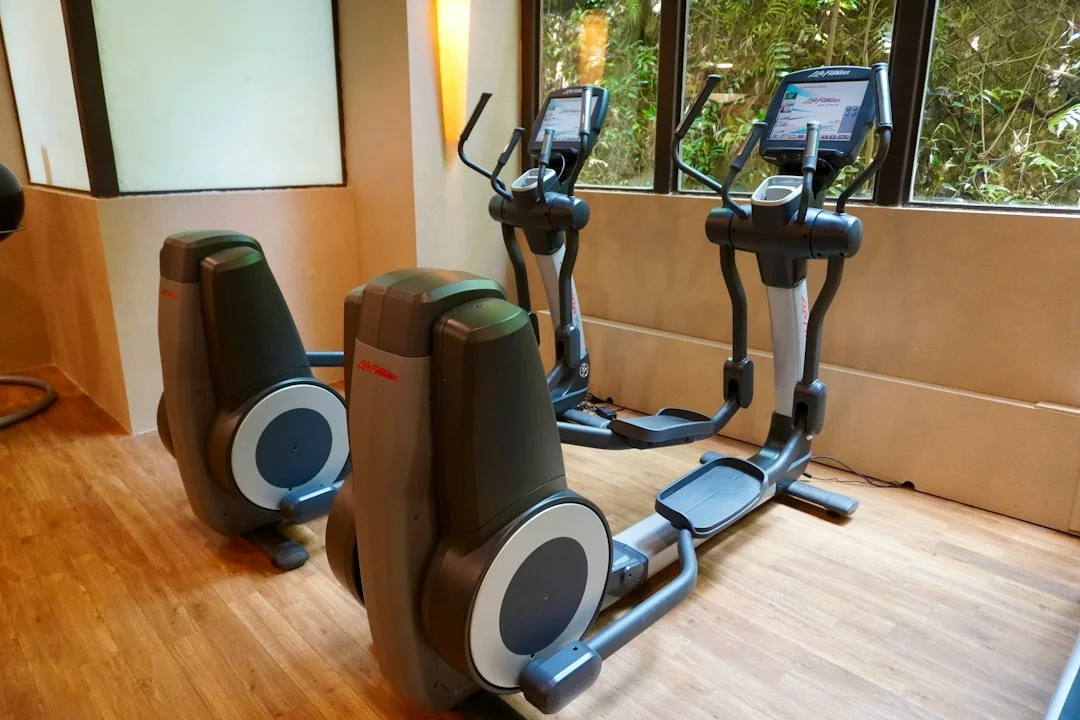
Once the screen is active, press the Manual program button to start a free-form session. Resistance is adjusted with the up/down arrows on the side handles or the center console. If you are new to the elliptical at PF, starting in manual mode at resistance level 1-2 for the first two sessions is the safest approach. Built-in handle heart rate sensors only read while you grip them, so a watch gives a more continuous number, although smartwatch heart rate accuracy drops during hard intervals.
Using the Elliptical Well for the Long Term
Learning how to use an elliptical well comes down to a few habits: set up before you start, keep your feet flat and your posture upright, build from 15 minutes toward 30, and add resistance before you add speed. The tip I give every beginner is to finish each session feeling you could do five more minutes, because that is what gets people to week five. Everything here comes from how I coach new users on the machine, and it applies to any brand. When you are ready to train at home, I would start with these top elliptical picks for every budget and space, then compare home elliptical models by stride length and warranty before you buy.
FAQs
How long should a beginner workout on an elliptical?
The recommended duration for a beginner on an elliptical is 15-20 minutes per session for the first two weeks, progressing by five minutes every one to two weeks until reaching 30 minutes continuously. Starting shorter and building gradually reduces the risk of overuse injuries and keeps motivation high.
Can I lose belly fat by using an elliptical?
Using an elliptical consistently can contribute to total body fat reduction, including belly fat, but only when paired with a calorie deficit from diet - spot reduction of fat from any specific body area is not physiologically possible. Regular elliptical sessions accelerate the caloric deficit needed for fat loss, and over time that reduction in total body fat includes the abdominal region.
Is 30 minutes a day on the elliptical enough?
Thirty minutes of daily elliptical training is sufficient for general cardiovascular health and meets the World Health Organization's guideline of 150 minutes per week of moderate aerobic activity. For significant weight loss or muscle development, combining those 30 minutes with two to three weekly resistance training sessions produces faster and more lasting results.
Is 3 miles on the elliptical the same as running?
Three miles on an elliptical is not equivalent to running three miles because the elliptical provides a guided, low-impact motion that differs biomechanically from running's ground reaction forces. A better comparison uses time: 30 minutes of moderate-intensity elliptical training is roughly comparable in calorie burn and cardiovascular load to 30 minutes of moderate-pace running, though individual effort level is the real determining factor.
How to turn on elliptical at planet fitness?
To turn on the elliptical at Planet Fitness, step onto both pedals and begin pedaling slowly - the console screen activates within a few seconds without any button press or card swipe required. Once the screen is on, press the Manual program button to begin a free workout session and use the resistance arrows to set your preferred intensity level.
This content is for informational and educational purposes only. It is not a substitute for professional medical advice, diagnosis, or treatment. Always consult with your healthcare provider before starting any new fitness program.
We are always looking for expert inputs to make our content even better and more useful.
References
- Prieto-Gonzalez P, Yagin FH. Energy expenditure, oxygen consumption, and heart rate while exercising on seven different indoor cardio machines at maximum and self-selected submaximal intensity. Front Sports Act Living. 2024;6:1313886. doi:10.3389/fspor.2024.1313886.
- Rovniak LS, Denlinger L, Duveneck E, et al. Feasibility of using a compact elliptical device to increase energy expenditure during sedentary activities. J Sci Med Sport. 2013;17(4):376-380. doi:10.1016/j.jsams.2013.07.014.
- Dalleck LC, Kravitz L. Relationship between %heart rate reserve and %VO2 reserve during elliptical crosstrainer exercise. J Sports Sci Med. 2006;5(4):662-671.
- Prosser LA, Stanley CJ, Norman TL, Park HS, Damiano DL. Comparison of elliptical training, stationary cycling, treadmill walking and overground walking. Gait Posture. 2011;33(2):244-250. doi:10.1016/j.gaitpost.2010.11.013.
- Filipovic M, Munten S, Herzig KH, Gagnon DD. Maximal fat oxidation: Comparison between treadmill, elliptical and rowing exercises. J Sports Sci Med. 2021;20(1):170-178. doi:10.52082/jssm.2021.170.
- Dillingham T, Kenia J, Popescu A, Plastaras C, Becker S, Shofer F. Pain outcomes with an elliptical regimen (POWER) study: Identifying the proper dosage of exercise for therapeutic effect in persons with chronic back pain. J Phys Med Rehabil. 2020;2(2):23-28.