
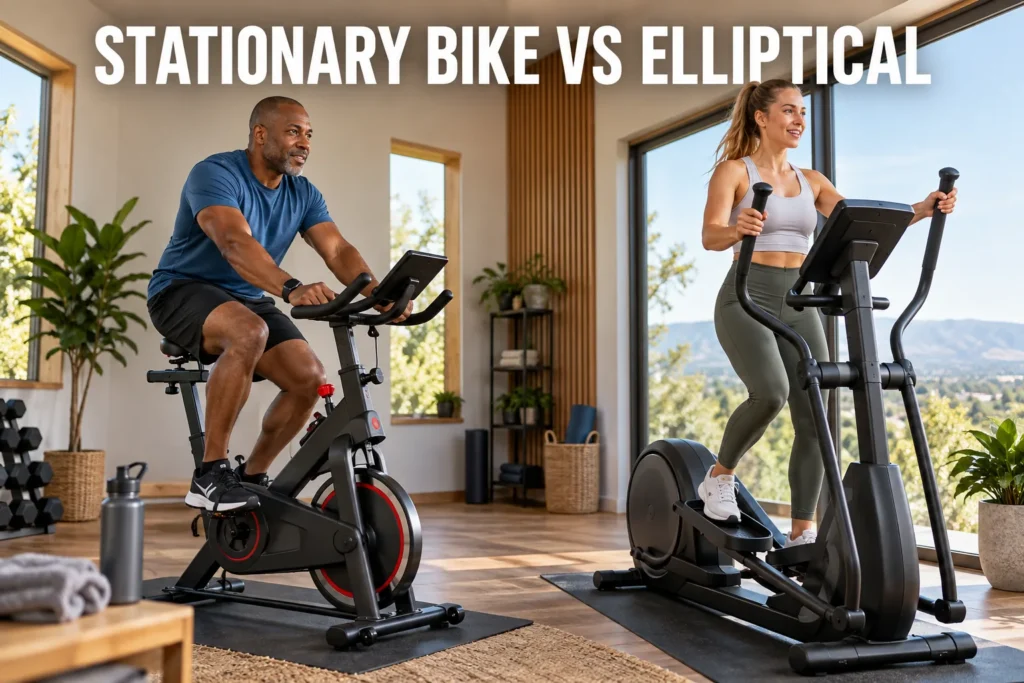
At the same very hard effort, one elliptical used 3% to 16% more energy a minute than three types of bike in 30 recreationally active men with long indoor-machine experience. At the knee, the elliptical put more torque and force through the joint than a bike in the small studies cited here, so if a knee is sore, ask your doctor or physical therapist before you choose.
The stationary bike vs elliptical choice comes down to one trade-off: a seated ride that rests your weight on a saddle, or a standing stride with moving handles that bring your arms into the work. At the same very hard effort, one elliptical used a little more energy a minute than three types of bike. In two small studies, the elliptical put more force and torque through the knee than a bike did. Each figure below is tied to the people who were studied. In my view, the better machine is the one you are still using in month three.
Stationary Bike vs Elliptical: How They Stack Up Side by Side
A stationary bike seats you and turns the pedals through a circle. An elliptical trainer puts you on your feet, on two pedals that follow an oval path, and many models add handles that move with the pedals. The two machines differ in posture, in what moves and in what the studies measured.

The table sets the stationary bike vs elliptical side by side. The study figures are explained and cited in the sections after it. Size and setting examples are single models, not rules for a machine type:
| Measure | Stationary Bike | Elliptical |
|---|---|---|
| Body position | Seated | Standing |
| Where body weight goes | On the saddle | Through the feet on the pedals |
| Upper body involvement | Fixed handlebars on standard bikes | Moving handles on many models |
| Knee torque in 12 healthy men | Lower | Higher |
| Peak knee force in 3 people with knee replacements | 1.03 times body weight | 2.24 times body weight |
| Energy use at a very hard effort in 30 recreationally active, experienced men | 11.07 to 12.45 kcal a minute (three bike types) | 12.82 kcal a minute (one elliptical) |
| Compendium estimate, 70 kg, 30 minutes | 140 to 360 kcal across the 50 to 199 watt codes | 180 kcal (moderate effort) or 320 kcal (vigorous effort) |
| Console calorie figure | Not tested in the studies cited here | Read higher than the lab value on the one machine studied |
| Stride length | Not applicable | Set by the model: one fixed length or adjustable |
| Floor space | Varies by model | Examples are in the choosing section |
The structural difference is where your body weight goes. On a bike the saddle carries it. On an elliptical your feet carry it through the whole stride. The joint section below shows what that does at the knee.
Calorie Burn: Which Machine Works Harder
Calorie use depends on the basis you compare, so this section keeps three bases apart and labels each one. The first is the same felt effort, measured in a lab. The second is Compendium estimates, which are tables of average values. The third is the number on a console.

Energy Expenditure at Moderate vs High Intensity
Basis 1, same felt effort. In 30 recreationally active men aged 35 to 49 with more than ten years of indoor cardio machine training, one elliptical used 12.82 kcal a minute at a very hard effort, which is 17 on the 6 to 20 Borg scale. One spin bike used 12.45, one upright bike 11.94 and one recumbent bike 11.07 kcal a minute (1). Computed from those values, the elliptical used 3% more than the spin bike, 7% more than the upright bike and 16% more than the recumbent bike, so no single percentage describes elliptical against bike. Each type was one machine. The authors suggest the arms working with the legs and the standing position as explanations, which the study did not test.
Putting a lab figure, a Compendium estimate and a console number into one comparison. They use different bases, so compare within one basis only.
Basis 2, Compendium estimates. The 2024 Adult Compendium lists the elliptical at two efforts: code 02048, moderate effort, 5.0 METs, and code 02049, vigorous effort, 9.0 METs. It lists stationary cycling mainly by watts, so no code pairs the two machines at the same effort. The table shows which bike wattage sits next to each elliptical code (2). Calories are METs x body weight in kilograms x hours, shown for a 70 kg (155 lb) person over 30 minutes and rounded to the nearest 10 kcal:
| Pairing (70 kg, 30 minutes) | Stationary Bike | Elliptical |
|---|---|---|
| Elliptical moderate effort (02048) beside bike at 90-100 watts (01220) | 210 kcal | 180 kcal |
| Elliptical vigorous effort (02049) beside bike at 126-150 watts (01228) | 280 kcal | 320 kcal |
| Elliptical vigorous effort (02049) beside bike at 151-199 watts (01232) | 360 kcal | 320 kcal |
These are estimates, not lab measurements, so do not compare them with the per-minute figures above. Two more bike entries at 70 kg for 30 minutes: 50 watts, light effort (code 01214, 4.0 METs) gives 140 kcal, and general stationary cycling (code 01200, 6.8 METs) gives 240 kcal. What changes the estimate:
- Body weight: the formula multiplies by kilograms, so a heavier person gets a higher estimate from the same code. At 84 kg (185 lb) and 30 minutes the elliptical codes give 210 and 380 kcal, and the bike codes above give 250, 340 and 430 kcal.
- Effort: the bike codes rise with watts, from 4.0 METs at 50 watts to 10.3 METs at 151 to 199 watts, so the harder you pedal the higher the estimate.
- Fitness: the men in the lab study were recreationally active with more than 10 years of machine training, so their per-minute values are not a guide for a beginner.
The Compendium does not code ellipticals by resistance level or stride rate, and it has no separate codes for recumbent and upright bikes: stationary cycling is listed mainly by watts.
When the Calorie Gap Closes
The elliptical's edge is small or reverses in two places. Against the spin bike the gap was 0.37 kcal a minute, 12.82 against 12.45, so the two sat close together (1). On the Compendium's bike codes from 90 watts upward, the bike estimate is above the moderate elliptical code, and the codes from 151 watts upward are above the vigorous one.
Basis 3, the console number. A console figure is the maker's estimate. In a 2018 study of 34 adults on one Precor EFX 883 with no body weight entered, the display read higher than the lab measurement over a 30-minute session of mostly moderate exercise (3). It tested one machine, and no study cited here tested a bike console, so no figure or percentage applies to every machine. Treat the console number as a rough guide, not as a target to eat back. Elliptical estimates are covered in more detail on calories burned on the elliptical.
A dedicated calorie tracker can log sessions across weeks, but its calorie figure is also an estimate.
Joint Impact: Low-Impact Does Not Mean Zero Impact
Both machines are sold as low impact, and in the small studies below the load at the knee still differed between them.
Knee Joint Stress: What the Research Actually Shows
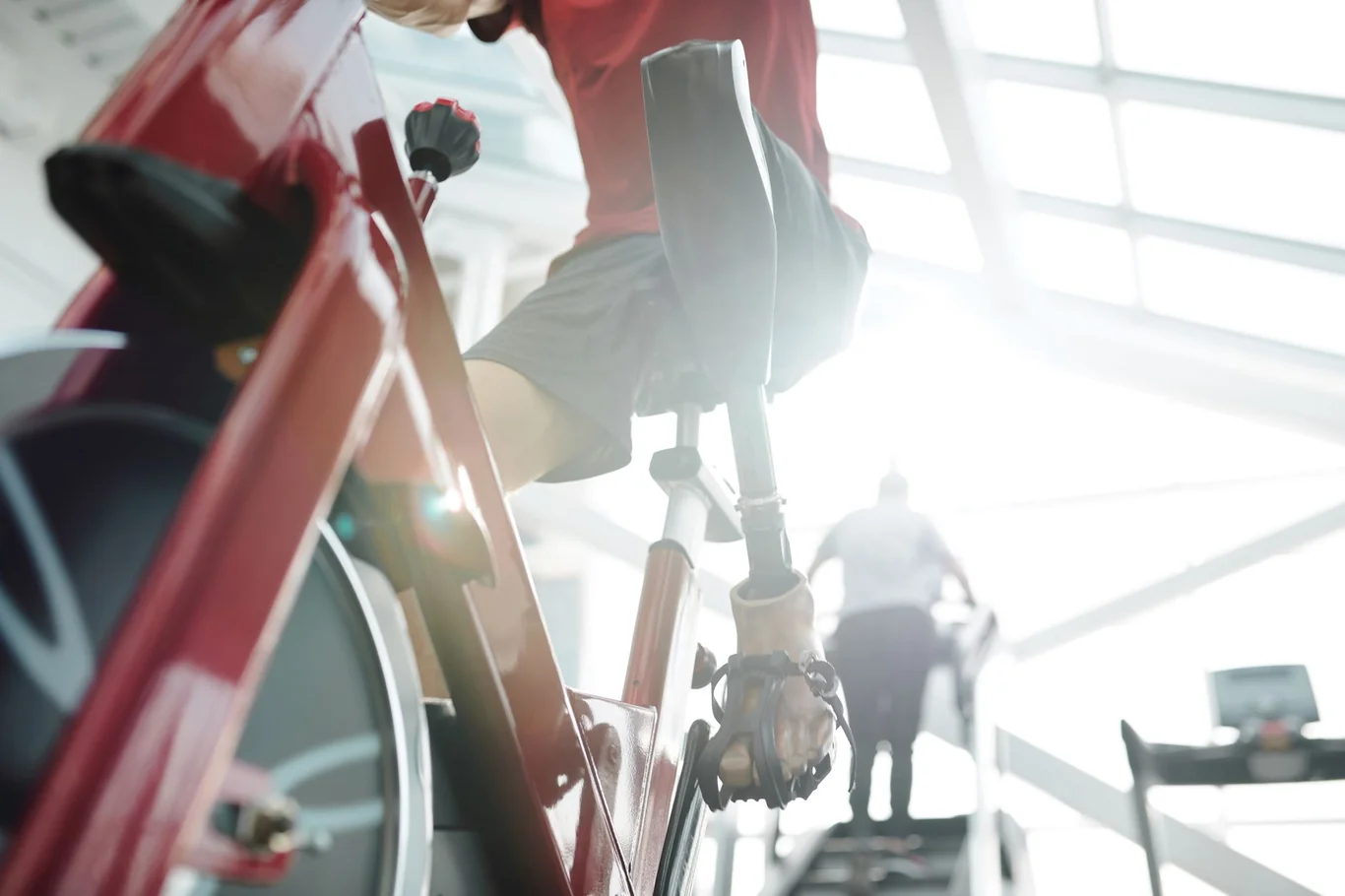
In three people with an instrumented knee replacement (two men aged 83 and 81 and a woman aged 67), the peak force on the knee implant was 2.24 times body weight on an elliptical and 1.03 times body weight on a stationary bike, against 2.05 for treadmill walking (4). On the elliptical the force was lower than in jogging but not lower than in treadmill walking. In 12 healthy young men pedaling at 50 and 70 revolutions a minute, calculated knee torque was lower on a stationary bike than on an elliptical, and faster pedaling raised peak knee torque on both machines (5). Each result comes from a small group and one machine of each type, and no study cited here compared the two machines in people with knee pain. Neither result promises that a machine is safe for your knee. More on the joint-load evidence is in how the elliptical affects knees.
What the cited studies say for a reader with a knee or joint condition:
- Knee osteoarthritis and the bike: a 2021 meta-analysis of 11 trials with 724 people with knee osteoarthritis, 8 of them pooled, found that stationary cycling reduced pain and improved sport function compared with no exercise. Stiffness, daily function and daily living improved by less than patients notice, and symptoms and quality of life did not change significantly (6).
- Knee osteoarthritis and the elliptical: in the one small trial found (28 adults with mild knee osteoarthritis, 12 weeks), adding elliptical training to physical therapy did not improve pain, function or X-ray joint space more than physical therapy alone (7).
- Hip replacement: one trial used an elliptical in inpatient rehabilitation after surgery, described in the cardiovascular section. Follow your surgeon's and physical therapist's plan.
- No current joint problem: the studies above do not rank the machines for you, so choose on the other factors.
This is general information, not medical advice. If a knee or hip hurts, check with your doctor or physical therapist before choosing either machine.
Other Cardio Machines to Know
Rowing machines and steppers are two more machine types. In the same 30-man study the rower used 11.45 kcal a minute at the very hard effort, between the recumbent bike and the upright bike, and the stepper used 13.35, above the elliptical (1). Rowing and the back have their own guide on rowing-related back pain.
Muscle Engagement: What Each Machine Actually Trains
The elliptical machine vs stationary bike difference in muscle use has been measured in small EMG studies. EMG records the electrical activity of a muscle, which shows how active it was and not how much muscle you build. Each study below covers one group of people and a few muscles.

Lower Body Activation: Quads, Hamstrings, and Glutes
In 10 healthy young adults with a mean age of 22.7 years, the rectus femoris, a front-thigh muscle, was more active on an elliptical than in walking, treadmill walking or stationary cycling, and the semitendinosus, a hamstring, showed minimal differences between conditions (8). In 12 recreationally active adults working for two minutes at 40 to 50% of heart-rate reserve, the lateral gastrocnemius, a calf muscle, was most active on an upright bike, and the glutes, a hamstring (biceps femoris) and the trunk muscles worked at similar, low to moderate levels across four devices: an upright bike, a recumbent bike, a treadmill and an ElliptiGO on a stand (9). The ElliptiGO is an outdoor elliptical bicycle, so that study says nothing about elliptical trainers.
Strength: EMG does not measure muscle size or strength, and neither EMG study above measured a gain in either.
Upper Body
Many ellipticals have moving handles. In a study of 26 adults on an elliptical (22 of whom did both tests), using the arm poles raised oxygen use and perceived effort at every setting compared with legs only, and heart rate was not higher (10). The study measured oxygen use, not the activity of arm muscles, so no figure for how much work the arms do is given here. If your model has moving handles, pushing and pulling them is the condition the study tested.
A standard bike has fixed handlebars, so the work sits in the legs, as the guide to the muscles an exercise bike works explains.
Cardiovascular Benefits and Long-Term Fitness Gains
No trial cited here compared the two machines head to head for fitness.
Stationary Bike: Results Across Populations
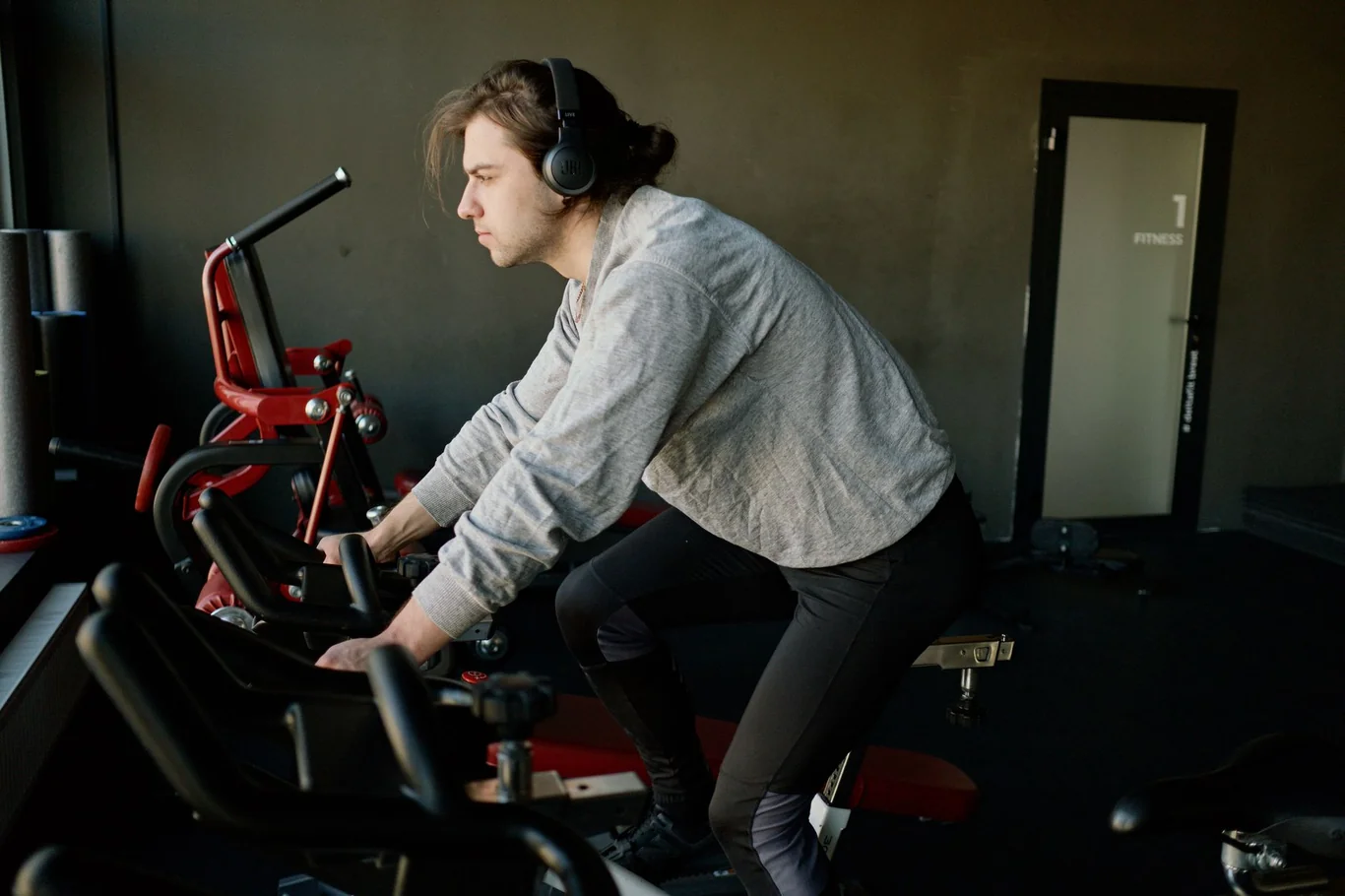
A 2019 systematic review of 13 studies with 372 participants, 306 of them women, found that indoor cycling may improve aerobic capacity, blood pressure, lipid profile and body composition. The authors say the conclusions should be taken with caution because of the lack of randomized controlled trials (11).
In a 12-week study of 18 women aged 40 to 60 with obesity, three 55-minute indoor-cycling classes a week were followed by a lower average body weight, from 95.2 to 93.0 kg, and a smaller waist, from 111.7 to 106.4 cm (12). The women were asked to keep their usual diet and the study had no non-exercising control group, so the changes cannot be assigned to cycling alone.
In a 2017 meta-analysis of 13 trials in adults aged 18 to 45 with overweight or obesity, trained for about 10 weeks at three sessions a week, interval and steady training lowered fat mass about equally, but in the cycling trials fat mass did not drop (13). No trial has tested elliptical training alone for weight loss in healthy adults, and these trials did not test ellipticals.
A 2026 systematic review of 47 studies in adults aged 60 and older found significant improvements after stationary bike programs in outcomes that included aerobic capacity (VO2 max), cycling efficiency, cognition, executive function, quality of life and mobility, and acceptance was moderate (14).
These bike studies had no matching elliptical group, so they do not show that a bike beats an elliptical for fitness.
Elliptical: Hip Replacement Recovery and Fitness Trials
In a randomized trial of 50 people recovering from total hip replacement, adding elliptical exercise to standard physiotherapy led to greater knee extensor strength, single-leg stance time, stride length and walking speed than adding a walking program, at discharge and at 1 and 3 months (15). That was inpatient rehabilitation, not home use, and it does not show the same result for healthy people or after other surgery.
For healthy adults the cycling vs elliptical comparison has little head-to-head data. In a 12-week trial of 22 moderately active women, maximal oxygen uptake rose by a similar amount whether they trained on an elliptical (36.9 to 39.6 ml/kg/min), a treadmill or a stair climber, with no bike group and no non-exercising control (16).
How to Choose: A Practical Stationary Bike vs Elliptical Decision Guide
The stationary bike vs elliptical comparison has no universal winner. The studies above bear on effort, knee load, who was studied and what was measured. Here is how to apply them to your own variables: your joints, your goal and your floor space.
- STEP 1Joints first If a knee or hip problem is the reason you are choosing, ask your doctor or physical therapist which machine suits you.
- STEP 2Handles or seat Decide whether you want moving handles or a seat for the whole session.
- STEP 3Floor space Measure the room and compare the listed dimensions of the exact models.
- STEP 4Start easy Pick an effort you can repeat and keep to it for weeks before you raise it.

When the Stationary Bike Is the Better Choice
A stationary bike is the better fit in these situations:
- Standing for the session hurts a knee, hip or ankle: a bike seats you, and knee torque and force were lower on a bike than on an elliptical in the small studies above. Check with your doctor or physical therapist.
- You are back from surgery and your clinician has cleared seated cardio only
- You are returning to exercise after a long break and want to set the effort by resistance level and pace; ask your doctor first if you have a health condition
- Floor space is tight. The Schwinn 130 upright bike measures 41.3 by 21.4 inches (17), while the 3G Cardio Elite EM X elliptical measures 49.2 by 29.5 inches assembled and 66 by 29.5 inches in use (18). The Schwinn 230 recumbent is longer, at 64 by 27.7 inches (17). These are single models, so compare the listed dimensions of yours.
- Standing for the whole session is tiring because of balance, foot or back problems
If you want back support, a recumbent stationary bike seats you reclined against a backrest. In the 30-man study the recumbent bike used the least energy at the same very hard effort, 11.07 kcal a minute against 11.94 on the upright bike (1). The recumbent vs upright bike comparison covers posture and fit. When I compare recumbent exercise bikes, in my view a step-through frame and firm back support matter more than console features.
The Schwinn 230 recumbent bike is one example: it has 16 magnetic resistance levels, a 300 lb user limit and a 10-year frame warranty (17) (check current terms).
When the Elliptical Is the Better Choice
An elliptical vs bike decision tips toward the elliptical in these situations:
- You want moving handles, which raised oxygen use compared with legs only in the arm-pole study above
- A bike posture bothers your back or hips and your doctor or physical therapist agrees that a standing machine is fine for you
- You want the machine that used more energy a minute than each of the three bikes at the same very hard effort in the 30-man study, knowing the gap to the spin bike was small
- You are comfortable standing for the whole session and find a seated bike dull
- Your surgeon or physical therapist has cleared you for elliptical use after hip or leg surgery
Setup matters on both machines: follow the steps in the owner's manual for your model, and if a joint hurts, stop and check with your doctor or physical therapist. Stride length differs by model. The 3G Cardio Elite EM X has three settings, 18, 20 and 23 inches (18), and some models have one fixed length, so check the figure for the exact model and try it. If knee pain is the deciding factor, the guide to the best exercise machine for bad knees lists options.
When a treadmill joins the shortlist, the elliptical vs treadmill vs bike question uses the same three calorie bases, and the studies disagree. At the same very hard effort the treadmill used the most energy of the seven machines in the 30-man study, 15.18 kcal a minute (1). In 18 untrained college-age adults at the same moderate felt effort, 12 to 13 on the Borg scale, oxygen use and energy use did not differ between a treadmill and an elliptical (19).
Cost varies by model on both machines, so check current listings. The guide to stationary bike prices covers what drives cost for bikes, and browsing home recumbent bikes next to upright models shows the range.
Elliptical Bike and Outdoor Options: A Third Alternative Worth Knowing
An elliptical bike is a different machine from an indoor elliptical trainer: a human-powered stand-up bicycle with an elliptical-style stride, ridden outdoors. The ElliptiGO is an example. It is neither an indoor elliptical nor a stationary bike, so results from outdoor elliptical bikes do not carry over to the machines compared here.
In one muscle-activity study an ElliptiGO on a stand was one of four devices, and the rectus femoris was more active on it than on a recumbent bike in 12 recreationally active adults at 40 to 50% of heart-rate reserve (9). That result describes the ElliptiGO, not the elliptical trainers sold for the home.
Under-desk ellipticals are seated pedal units, a separate category from both machines compared here. Whether under desk ellipticals work has its own guide.
Making the Right Cardio Choice
The stationary bike vs elliptical question has no single correct answer. The cited work covers different groups: bike studies in women with obesity, in adults aged 60 and older and in adults with knee osteoarthritis, and elliptical trials in hip replacement rehabilitation, in young women and in a small knee osteoarthritis trial. No cited trial compared the two machines directly.
No trial cited here followed people who bought each machine, so which one keeps people exercising longer is not known from this evidence.
In my view, regular sessions at an effort you can repeat matter more than the choice of machine.
If a treadmill is also on your list, weigh it the same way: the calorie basis, the load on the knee and what you will keep using. The guide to choosing the best cardio machine compares more machine types.
If the bike comes out ahead, in my view the first checks for the best exercise bikes are a seat that adjusts to your leg length and resistance levels that allow an easy start. If the elliptical wins, check the stride length of the model against your height and how the handles feel, as in the top elliptical machines.
Frequently Asked Questions
Is an elliptical or stationary bike better for weight loss?
No trial has tested elliptical training alone for weight loss in healthy adults, and in a meta-analysis of 13 trials in adults with overweight or obesity the cycling programs did not reduce fat mass. Weight change depends on energy in against energy out over weeks, so the better machine for weight loss is the one you use regularly.
Is 30 minutes on the elliptical better than walking?
At 70 kg for 30 minutes the Compendium rates elliptical moderate effort at about 180 kcal and vigorous effort at about 320, against about 130 for walking at 2.8 to 3.4 mph and about 170 for brisk walking at 3.5 to 3.9 mph. These are estimates, so the gap depends on the effort you hold, and at moderate effort it is small next to brisk walking.
Is 3 miles on the elliptical the same as running?
No source cited here converts elliptical console distance into running miles, so the two are not a measured match. At a very hard effort 30 recreationally active, experienced men used 12.82 kcal a minute on one elliptical against 15.18 on a treadmill, while 18 untrained adults at a moderate effort showed no difference in energy use.
What are the disadvantages of elliptical?
In the small studies cited here the elliptical put more knee torque and force through the joint than a stationary bike. Stride length is set by the model and some models have only one length, so check the figure and try the machine before you buy.
 Tech Fitness Lab
Author
Vanja Vukas
I founded Tech Fitness Lab and hold a master's degree from the Faculty of Sport and Physical Education in Novi Sad. I have competed in sport and coached clients, and my writing has appeared on Fitness Volt and BOXROX. I research products from their manuals, spec sheets and warranty terms, and I flag thin evidence.
This content is for informational and educational purposes only. It is not a substitute for professional medical advice, diagnosis, or treatment. Always consult with your healthcare provider before starting any new exercise program or using fitness equipment, especially if you are managing an injury or recovering from surgery.
We are always looking for expert inputs to make our content even better and more useful.
References
- Prieto-Gonzalez P, Yagin FH. Energy expenditure, oxygen consumption, and heart rate while exercising on seven different indoor cardio machines at maximum and self-selected submaximal intensity. Front Sports Act Living. 2024;6:1313886. doi:10.3389/fspor.2024.1313886.
- Herrmann SD, Willis EA, Ainsworth BE, et al. 2024 Adult Compendium of Physical Activities: a third update of the energy costs of human activities. J Sport Health Sci. 2024;13(1):6-12. doi:10.1016/j.jshs.2023.10.010.
- Glave AP, Didier JJ, Oden GL, Wagner MC. Caloric expenditure estimation differences between an elliptical machine and indirect calorimetry. Exerc Med. 2018;2:8. doi:10.26644/em.2018.008.
- D'Lima DD, Steklov N, Patil S, Colwell CW Jr. The Mark Coventry Award: in vivo knee forces during recreation and exercise after knee arthroplasty. Clin Orthop Relat Res. 2008;466(11):2605-2611. doi:10.1007/s11999-008-0345-x.
- He M-Y, Lo H-P, Chen W-H. Effects of Stationary Bikes and Elliptical Machines on Knee Joint Kinematics during Exercise. Medicina (Kaunas). 2024;60(3):498. doi:10.3390/medicina60030498.
- Luan L, Bousie J, Pranata A, Adams R, Han J. Stationary cycling exercise for knee osteoarthritis: a systematic review and meta-analysis. Clin Rehabil. 2021;35(4):522-533. doi:10.1177/0269215520971795.
- Bukhari SSUK, Aftab A, Munir S, Ahmad Z, Anwar K, Rauf S. Effects of low impact elliptical training on knee osteoarthritis outcomes and knee joint space. Rehabil J. 2024;8(4):03-12. doi:10.52567/trehabj.v8i04.84.
- Prosser LA, Stanley CJ, Norman TL, Park HS, Damiano DL. Comparison of elliptical training, stationary cycling, treadmill walking and overground walking. Gait Posture. 2011;33(2):244-250. doi:10.1016/j.gaitpost.2010.11.013.
- Bouillon L, Baker R, Gibson C, Kearney A, Busemeyer T. Comparison of Trunk and Lower Extremity Muscle Activity Among Four Stationary Equipment Devices: Upright Bike, Recumbent Bike, Treadmill, and ElliptiGO. Int J Sports Phys Ther. 2016;11(2):190-200.
- Mier CM, Feito Y. Metabolic cost of stride rate, resistance, and combined use of arms and legs on the elliptical trainer. Res Q Exerc Sport. 2006;77(4):507-513. doi:10.1080/02701367.2006.10599385.
- Chavarrias M, Carlos-Vivas J, Collado-Mateo D, Perez-Gomez J. Health Benefits of Indoor Cycling: A Systematic Review. Medicina (Kaunas). 2019;55(8):452. doi:10.3390/medicina55080452.
- Ratajczak M, Skrypnik D, Krutki P, Karolkiewicz J. Effects of an Indoor Cycling Program on Cardiometabolic Factors in Women with Obesity vs. Normal Body Weight. Int J Environ Res Public Health. 2020;17(23):8718. doi:10.3390/ijerph17238718.
- Wewege M, van den Berg R, Ward RE, Keech A. The effects of high-intensity interval training vs. moderate-intensity continuous training on body composition in overweight and obese adults: a systematic review and meta-analysis. Obes Rev. 2017;18(6):635-646. doi:10.1111/obr.12532.
- Akter T, Moneruzzaman M, Maduray K, Kader M. Acceptability and effectiveness of stationary bike intervention on health outcomes among older adults: a systematic review of intervention studies. BMC Geriatr. 2026;26:130. doi:10.1186/s12877-025-06757-0.
- Hasebe Y, Akasaka K, Otsudo T, Hall T, Yamamoto M. Effects of incorporating elliptical trainer exercise during rehabilitation on physical function and self-reported outcomes after total hip arthroplasty: a randomized controlled trial. J Phys Ther Sci. 2022;34(3):230-235. doi:10.1589/jpts.34.230.
- Egaña M, Donne B. Physiological changes following a 12 week gym based stair-climbing, elliptical trainer and treadmill running program in females. J Sports Med Phys Fitness. 2004;44(2):141-146.
- Schwinn Fitness. Compare bikes: Schwinn 130 Upright and Schwinn 230 Recumbent specifications. Schwinn Fitness website. Accessed November 21, 2026.
- 3G Cardio. Elite EM X elliptical trainer specifications. 3G Cardio website. Accessed November 21, 2026.
- Brown GA, Cook CM, Krueger RD, Heelan KA. Comparison of energy expenditure on a treadmill vs. an elliptical device at a self-selected exercise intensity. J Strength Cond Res. 2010;24(6):1643-1649. doi:10.1519/JSC.0b013e3181cb2854.