
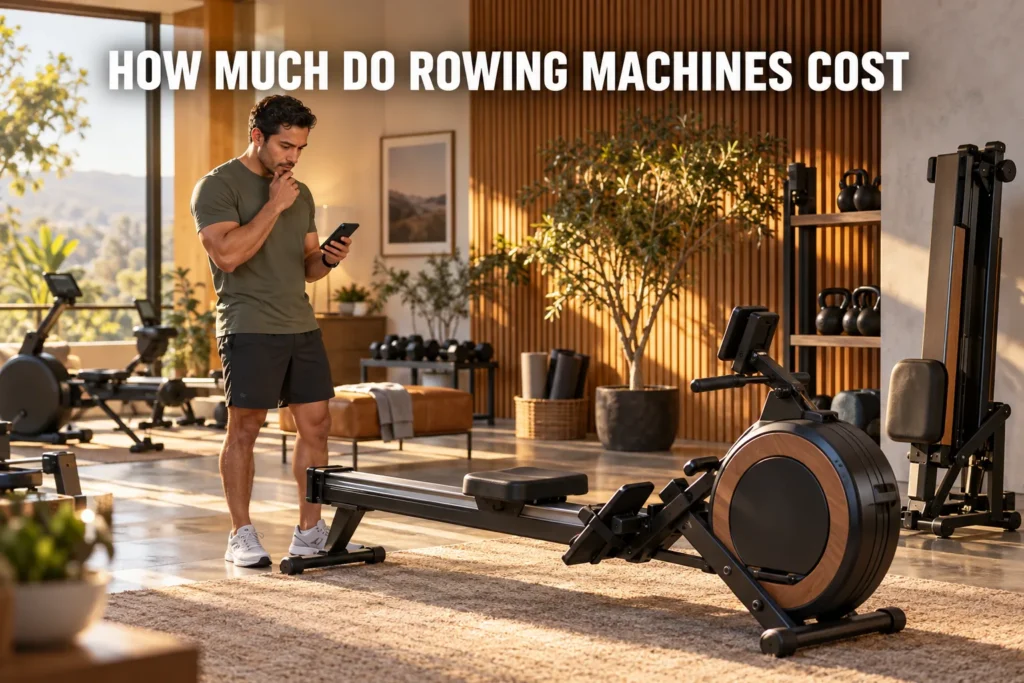
How much do rowing machines cost? Anywhere from under $150 for a basic hydraulic model to more than $3,000 for a premium connected rower with a subscription platform, and the resistance technology inside the machine explains most of that gap. In my 15+ years in the fitness industry, I have coached clients on hydraulic, magnetic, air, and water rowers, and I have watched plenty of people overspend on features they never use or underspend on frames that do not hold up under consistent training. My framing is simple: the right price is the cheapest machine that survives your real training schedule. In this guide, I break down the full price landscape by resistance type, explain why Concept 2 commands a premium over cheaper alternatives, show what drives price differences at each tier, and flag the hidden costs most people only discover after purchase.

How Much Do Rowing Machines Cost: The Complete Price Breakdown by Resistance Type
Rowing machine prices map cleanly onto five distinct resistance technologies, each with its own cost logic, so the first budget decision is really which type of rowing machine fits your space and training. Here is what to expect at each tier, based on current market conditions and what I have seen hold up in my clients' homes.
Hydraulic and Piston Rowers: The Entry-Level Category
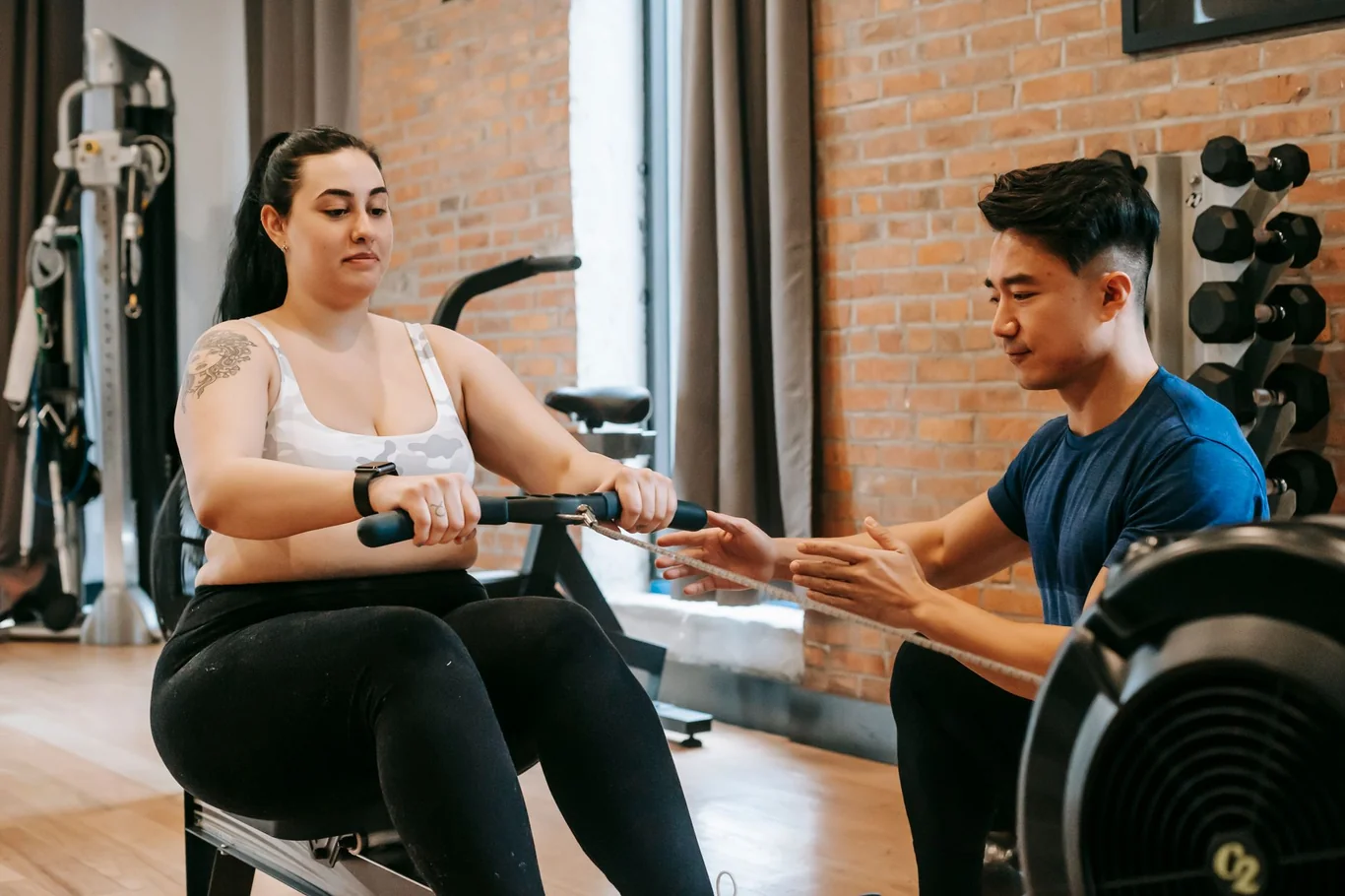
Hydraulic rowing machines sit at the cheapest end of the category, with prices typically ranging from $100 to $300 at the time of writing. The resistance mechanism uses fluid-filled cylinders attached to the handles. Most of these machines are compact and foldable, which suits anyone with minimal space and a tight budget.
The limitations at this price point are significant and worth naming clearly. Each arm moves independently on a piston rower, which does not replicate the bilateral pull of actual rowing. Cylinder seals and piston mechanisms show wear faster than flywheel-based designs, with replacement costs adding up for anyone who trains consistently. Most fitness professionals classify hydraulic rowers as entry tools appropriate for occasional light use rather than structured training programs.
If the goal is testing whether rowing suits you before committing more budget, a hydraulic rower in the budget-tier price point is a low-risk starting point. For consistent multi-weekly training, I steer clients away from this tier, because the cylinders wear and the independent arms never feel like real rowing, so it is rarely the most economical long-term choice. A 52-year-old client of mine bought a piston rower to test the idea, and by week 10 one cylinder was noticeably weaker than the other, which is the exact pattern I expect at this price.
Magnetic Rowing Machines: The Mid-Range Sweet Spot
Magnetic resistance rowers span the widest price range in the category, from approximately $200 on the entry end to $1,500 for premium models. A flywheel rotates next to adjustable magnets, creating smooth, consistent, near-silent resistance. This is the most practical choice for home use in shared living spaces, apartments, or rooms adjacent to bedrooms.
Budget magnetic rowers ($200-$500): Brands like MERACH, Sunny Health and Fitness, and Yosuda populate this tier. MERACH rowing machines in this range typically offer 8 to 16 resistance levels, basic performance monitors, and Bluetooth connectivity in newer models. Build quality supports moderate use with reasonable durability over two to three years.
Mid-range magnetic rowers ($500-$800): This tier offers significantly stronger frames, more resistance levels, better ergonomic seats, and cleaner resistance transitions. It is the bracket I point most of my clients toward regardless of their stated budget, because this is where frame quality finally matches the training demands of a committed home exerciser without the premium for air or water resistance. If you train three to five times per week, this is the best-value bracket in the entire rowing machine market, and it is where most of the quiet magnetic rowing machines I shortlist for apartment clients sit.
Premium magnetic rowers ($800-$1,500): Brands like NordicTrack and Hydrow Lite occupy this space. Electromagnetic resistance that adjusts automatically during programmed intervals becomes standard here, and the build quality approaches commercial-grade standards.
The main practical advantage of magnetic resistance across all price points is silence. If noise is a constraint in your environment, magnetic is my default recommendation at any budget. My tip: do 10 hard strokes on the machine before you buy if you can, because a rail that flexes or a seat that rattles shows up within the first minute.
Air Rowing Machines: Performance-Tier Pricing
Air resistance rowers generate resistance through a spinning flywheel and fan. The harder you pull, the greater the air displacement and the more resistance you encounter, a naturally self-regulating system with no fixed resistance levels.
Air rowers typically start around $500-$600 for entry models and reach $2,000 or more for commercial-grade machines. The defining characteristic is unlimited, self-adjusting resistance; every stroke responds precisely to your effort, which mirrors the physics of actual on-water rowing more accurately than any other home machine type. This is why competitive indoor rowing events are standardized on air resistance ergometers.
The trade-off is noise. The flywheel fan produces a pronounced whooshing sound that carries through walls and floors, and most people in apartments or shared spaces find it disruptive, which is why it is the first thing I ask clients about before recommending an air rower. For anyone with a dedicated home gym or garage setup, the sound is often considered a feature rather than a drawback.
Water Rowing Machines: Premium Feel at Premium Cost
Water rowing machines pull paddles through a water-filled tank to generate drag-based resistance. As paddle speed increases, resistance increases, another self-adjusting system. The sensory experience is the most natural analog to on-water rowing, with a characteristic swooshing sound most users find pleasant and rhythmic rather than annoying.
Water rowing machines typically range from approximately $500 for entry-level models to $2,500 or more for premium solid-wood designs from brands like WaterRower. The mid-tier cluster sits around $800-$1,200. MERACH rowing machines also include water-resistance options in the $400-$700 range that bring the water rowing experience to a more accessible price point.
One factor unique to water rowers is ongoing maintenance. The water tank requires periodic treatment with purification tablets to prevent algae growth, an additional recurring cost most owners do not anticipate. The core maintenance tasks: monthly or bi-monthly purification tablet treatment ($10-$20 per treatment) and annual seal and O-ring checks to prevent leaks. These are manageable but worth factoring into total cost of ownership before choosing water over air.
Smart and Connected Rowing Machines: The High-End Category
Connected or smart rowing machines bundle hardware with subscription-based workout platforms. Models like the Peloton Row, Hydrow, and Echelon Row-S range from approximately $1,300 to $3,200 at the time of writing, with hardware quality that is generally strong.
The pricing model assumes ongoing subscriptions for live and on-demand classes, typically $12 to $45 per month. Without the subscription, these machines lose most of what differentiates them from conventional rowers at lower price points. A connected machine at mid-tier pricing with a $40 monthly subscription costs over $2,000 in the first year of ownership, a calculation many people skip until after purchase. My advice is to add the first year of subscription fees to the sticker price before comparing a connected rower with anything else.
The following table summarizes the full price landscape by resistance type:
Resistance Type | Typical Price Range | Noise Level | Maintenance Level | Best Suited For |
Hydraulic/Piston | $100-$300 | Very quiet | Higher (cylinders) | Budget entry, small spaces |
Magnetic | $200-$1,500 | Near-silent | Low | Home use, apartments |
Air | $500-$2,000+ | Loud | Moderate (chain/belt) | Performance training |
Water | $500-$2,500+ | Moderate | Moderate-High (tank) | Natural feel, premium build |
Smart/Connected | $1,300-$3,200+ | Varies | Low (subscription) | Guided workouts |
What Drives the Price of a Rowing Machine
Understanding the pricing spread requires understanding the factors that create cost differences within and across categories. The sticker price reflects several distinct engineering and design variables:
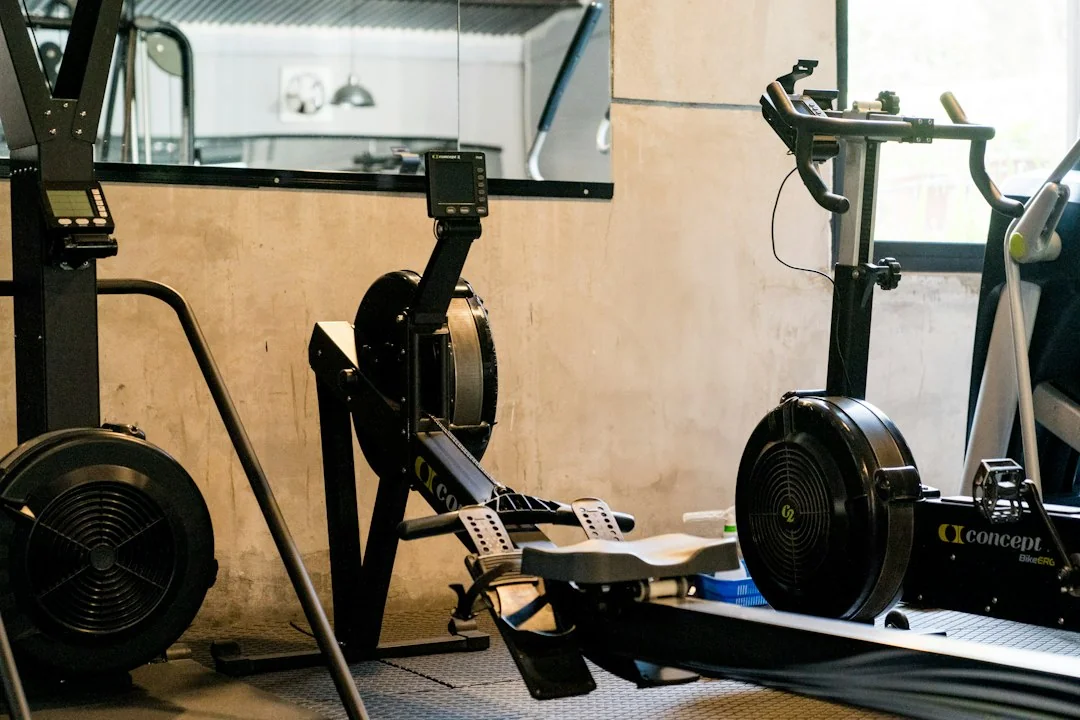
Resistance mechanism quality: Hydraulic cylinders are the cheapest to manufacture. Magnetic flywheel assemblies cost more but benefit from manufacturing scale. Air and water mechanisms require precision engineering of fan or tank systems that raises baseline production costs significantly. Smart electromagnetic resistance systems add electronic control components.
Frame gauge and material: Budget frames use lighter steel or composite materials. Mid-range and premium frames use heavier-gauge steel or commercial-spec welding that adds both weight and longevity.
Monitor and connectivity: A basic stroke counter costs little. A full performance console with wattage tracking, split time measurement, Bluetooth to third-party apps, and ANT+ sensor compatibility adds meaningfully to the price.
Seat and ergonomic components: Molded plastic seats are standard at lower tiers. Contoured cushioned seats with wider rail systems appear at mid-range and above.
Weight capacity: Standard frames handle 250 lbs. Reinforced frames rated for 350-400 lbs require heavier components throughout and cost more.
Warranty: Budget brands offer one-year warranties. Commercial-grade machines offer five-year or lifetime frame warranties, signaling the manufacturer's confidence in long-term durability.
A practical decision framework by training profile:
Buyer Situation | Recommended Tier | Primary Reason |
Testing rowing for the first time | $100-$300 hydraulic | Low financial risk, easy return/resale |
Occasional light use (1-2x weekly) | $200-$500 budget magnetic | Durable enough for moderate frequency |
Consistent 3-5x weekly training | $500-$900 magnetic or air | Build quality matches usage frequency |
Competitive performance or CrossFit | Air rower $900+ | Standardized unlimited resistance |
Premium home gym design | Water rower $800-$1,500 | Best aesthetics and natural feel |
Motivated by guided classes | Smart/connected $1,300+ | Platform is the core product |
Apartment with noise constraint | $300-$700 folding magnetic | Quiet, compact, foldable designs |
How Much Does the Concept 2 Rowing Machine Cost
The Concept 2 is the most discussed rowing machine in any price conversation. At the time of writing, the Concept 2 RowErg (formerly the Model D) is typically priced around $990-$1,000 through the manufacturer's direct channels. The Model E (which features a higher seat for easier entry) is priced slightly higher. The Concept 2 Dynamic, which adds a sliding front foot stretcher to simulate on-water movement, reaches approximately $1,375.
The three main Concept 2 models differ primarily in ergonomics and use case rather than training capability:
Model | Approx. Price (at time of writing) | Seat Height | Best For |
RowErg (formerly Model D) | ~$990-$1,000 | Standard | Most buyers, competition standard |
Model E | ~$1,030-$1,080 | +10 cm higher | Easier entry/exit, joint-friendly setup |
RowErg Dynamic | ~$1,375 | Standard | On-water simulation feel |
The cost of Concept 2 rowing machine models sits notably above comparable air rowers from newer brands. Several concrete factors explain the premium:
- An accurate PM5 performance monitor that tracks watts, split times, stroke rate, and caloric expenditure using validated algorithms, the same monitor used in Olympic and World Championship competition
- A commercial-grade steel frame deployed in elite training facilities, collegiate rowing programs, and CrossFit gyms worldwide
- Long-term resale value nearly unique in home fitness; used Concept 2 machines commonly sell for close to their original price years or even decades after purchase
- Broad platform compatibility including the Concept 2 Online Logbook, Zwift, ErgData, and most major connected fitness platforms
The long-term value case rests primarily on durability: a well-maintained Concept 2 can remain in active service for 15-20 years or more, making the effective annual cost lower than multiple replacement budget machines. Third-party secondary market sellers sometimes list Concept 2 machines at significant markups above direct pricing, so always verify the manufacturer's current price before purchasing through resellers. If you buy one, learning how to use a Concept 2 rowing machine properly starts with correct rowing form, because form errors on air rowers directly affect performance output tracked by the PM5 monitor.
Used and Refurbished Rowing Machines
The secondhand market is the route I suggest most often to clients who want Concept 2 quality on a tighter budget, and most people overlook it. Used machines are widely available and hold resale value exceptionally well. Budget $600-$800 for a well-maintained used RowErg, typically $200-$400 below new pricing. For lower-tier machines, verify cylinder wear and warranty status carefully, and on any used Concept 2 confirm the PM5 monitor displays accurate readings. One client bought a used RowErg with roughly 4 million meters on the monitor, and after I cleaned and oiled the chain it rowed exactly like a new one.
How Much Should You Spend: What the Health Research Shows
Choosing how much to invest in a rowing machine is easier when you understand the physiological value you are purchasing. The research on indoor rowing is consistently strong across several outcome domains.
Calorie expenditure from rowing is significant and highly effort-dependent. A study measuring elite-level rowing found energy expenditure ranging from 15.6 kcal per minute at low intensity to 49.8 kcal per minute at high intensity, based on indirect calorimetry across multiple training zones (1). For recreational rowers, realistic estimates fall in the range of 400-700 calories per hour, varying with body weight, stroke rate, and resistance setting. These are estimates; individual metabolic variation is substantial.
One of rowing's key advantages for body composition goals is the muscle mass engaged per session. Research comparing rowing directly to cycling found fat oxidation rates approximately 45% higher during rowing at equivalent oxygen consumption levels, attributed to the greater proportion of total body muscle mass activated in a rowing stroke (2). The legs drive, the core transfers the force, and the back and arms finish the pull, which is why the muscles a rowing machine works span nearly the whole body.
Rowing is primarily a cardiovascular endurance modality, not a strength-building replacement. Lean mass increases documented in research are modest, averaging 2.18 kg over a 12-week training program in one study of breast cancer survivors (3). Significant hypertrophy requires progressive overload resistance training that rowing alone does not provide.
For weight loss specifically, rowing training produces consistent but moderate results. When I set expectations for clients, the Real-Perez et al. 6-month study is the most honest benchmark I know of: the controlled intervention with 40 non-elite participants (breast cancer survivors training 2 sessions per week, 75 minutes each) produced an average weight reduction of 1.84 kg and waist circumference reduction of 3.24 cm (4). Meaningful fat loss from rowing comes from consistent training frequency combined with appropriate calorie management, rather than machine ownership alone.
How long you need to spend on a rowing machine to lose weight or belly fat has no single honest answer. Most research protocols producing measurable changes use 3-5 sessions per week over 8-12 weeks minimum, and 8-12 weeks of consistent training is also the typical timeline to noticeably reduce abdominal fat. A more expensive machine does not accelerate this process; training effort and nutrition determine outcomes. What I tell clients is to judge the purchase by whether they still want to row in week 8, not by the calorie number on the monitor. The same goes for injury risk: no price tier protects you from poor technique, which is the main cause of rowing-related back pain.
Cardiovascular fitness improvements are among the most robust documented benefits. A study of trained rowers measured VO2max values of 51.2 mL/kg/min in females and 62.1 mL/kg/min in males (5), placing rowing among the most cardiovascularly demanding exercise modalities available. For recreational users, smaller but meaningful gains in aerobic capacity and resting heart rate develop over standard 6-12 week programs. I see no reason those gains should be smaller on a budget magnetic rower than on a premium connected one, as long as the training is consistent.
Rowing Machine Costs Compared to Other Cardio Equipment
Framing the rowing machine price against alternatives gives useful purchasing context. At similar budget points, the tradeoffs are clear and consistent.
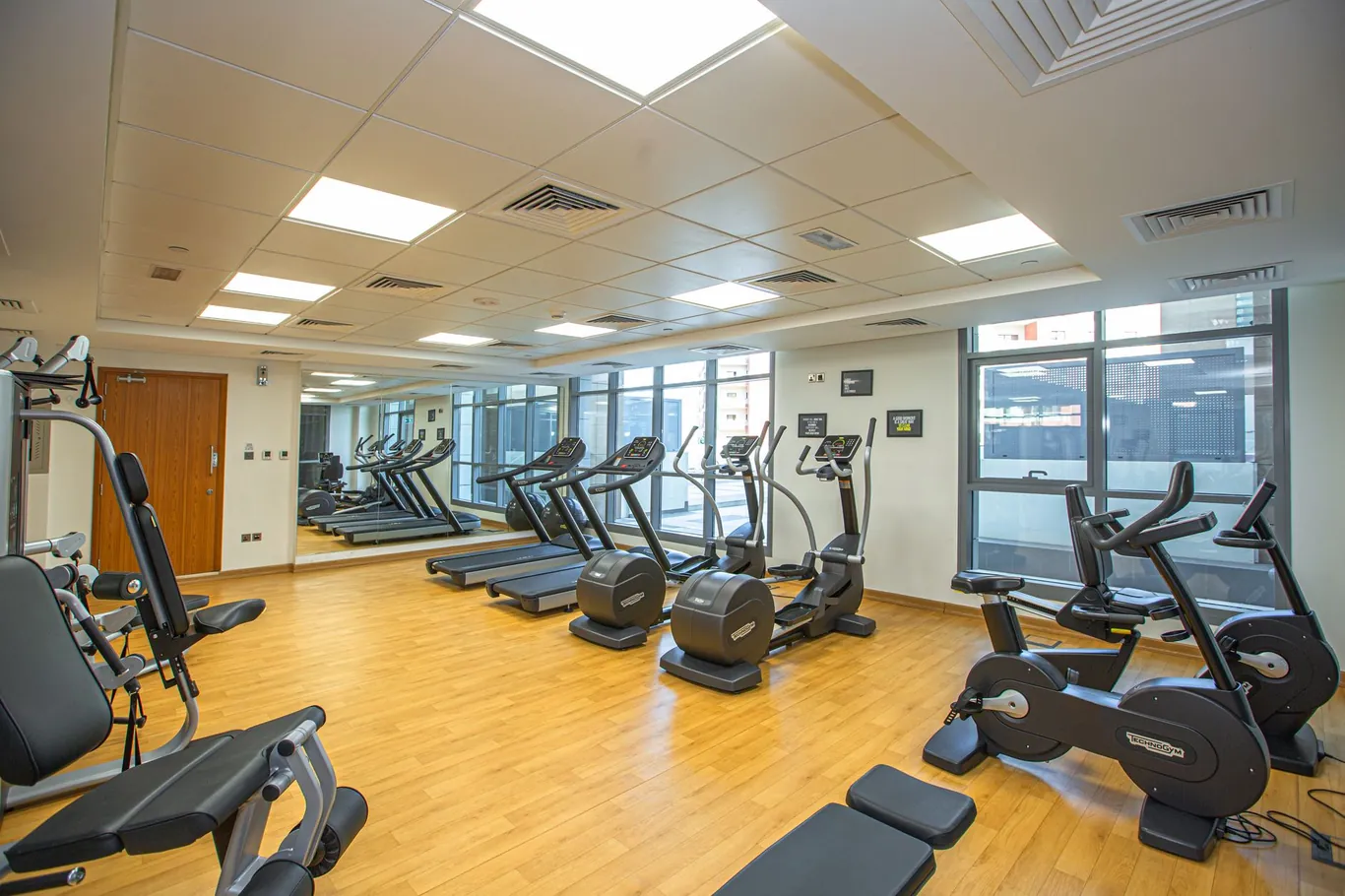
Rowing vs. stationary bikes: A mid-range rowing machine and a comparably priced stationary bike offer similar cardio capacity, but the rower engages significantly more muscle mass per session. Stationary bike prices at equivalent build quality land in a similar $400-$900 sweet spot. Stationary bikes win on space efficiency and accessibility for users with lower body limitations, and for anyone with a noise constraint, magnetic rowing machines and stationary bikes are the two most practical cardio options across all price points.
Rowing vs. treadmills: Treadmill prices depend heavily on motor quality and folding design. At equivalent price points, treadmills offer higher calorie burn for heavier users at vigorous intensity, while rowing distributes load more evenly with significantly less impact stress on knees and hips. Treadmills are also far heavier than most rowers, which adds delivery cost and makes them harder to move or store.
Rowing vs. ellipticals: Elliptical prices follow a similar tier structure, with drive system, stride length, and frame quality accounting for most of the difference. Both machines are low impact, but a rower works the upper back and arms harder, while an elliptical keeps you upright, which some people with back or hip limitations find easier to tolerate.
Hidden Costs to Factor Into Your Rowing Machine Budget
The sticker price is not the total cost of ownership. Several additional expenses consistently catch first-time owners off guard.
Subscription costs for connected machines: Smart rowing platforms charge ongoing monthly fees ranging from $12 to $45. If you want guided workouts without recurring fees, consider brands that offer one-time purchase programming or free app integration; Concept 2 connects to numerous free third-party platforms including Zwift and ErgData.
Resistance-type-specific maintenance costs:
- Water rowers: purification tablets run approximately $10-$20 every one to three months, plus periodic paddle or seal inspection
- Air rowers: chain lubrication is required every 50 hours of use (typically $10-$20), with belt or chain replacement every few years at $20-$60
- Magnetic rowers: maintenance costs are minimal, primarily frame care and monitor battery replacement
- Hydraulic rowers: cylinder replacement is the most significant recurring expense at $30-$80 per cylinder, with frequency increasing as the machine ages
Assembly: Budget machines frequently require 1.5 to 3 hours and professional assembly costs $50-$150. Concept 2 ships partially pre-assembled.
Equipment mat: Rowing machines shift during use and can damage hardwood or tile floors. A durable equipment mat costs $30-$80 and is a near-universal practical addition within the first month of ownership. I skipped the mat once in my own home, and the rear foot of the rower had marked the oak floor within two weeks.
Delivery charges: Heavy commercial-grade machines (90-120+ lbs) often incur substantial delivery charges not always included in base pricing. White-glove delivery services can run $75-$200 depending on machine weight and delivery floor.
Finding the Right Rowing Machine Investment for Your Goals
So how much do rowing machines cost once you match the machine to your real training needs? For most home users the honest answer is $300 to $900, and the price differences at each tier reflect genuinely different engineering and build quality. When clients ask me for specific models, I start with the top home rowing machines across all resistance types and then narrow by noise and space.
I weigh training frequency as the primary factor when recommending a tier, because it is the variable my clients most consistently underestimate when planning a budget. One or two sessions a week is well served by one of the better budget rowing machines in the $300-$500 magnetic range, where MERACH and similar brands offer build quality that holds up to moderate use. If you train three or more times weekly, budget $500-$900 for magnetic quality that matches the volume without needing replacement within two years.
For performance-focused rowers, the air resistance category with its unlimited resistance curve justifies the higher price. Concept 2 specifically offers 15-20 years of durability and competitive platform compatibility that makes the investment reasonable over a full ownership period.
My honest take: if you can stretch to a Concept 2 RowErg as your first quality rower, it is the purchase least likely to leave you shopping for an upgrade, because the PM5 data and the frame durability hold up for years.
Before finalizing any purchase, verify the machine fits your floor space (most rowers need at least 8 feet), factor in delivery charges, and confirm the warranty length covers your expected usage intensity. I also ask clients to tape an 8-foot rectangle on the floor first, then compare home rowing machines side by side against the tier table above.
FAQs
How much does a decent rowing machine cost?
A decent rowing machine for consistent home training costs between $400 and $800, with magnetic resistance models in this range delivering solid build quality, smooth resistance progression, and reliable performance monitors. Spending below $300 places you in the hydraulic piston tier, where frame durability and resistance quality limit the machine to occasional light use rather than structured multi-weekly training.
Are rowing machines worth the money?
Rowing machines are worth the money for buyers seeking a full-body cardiovascular workout from a single piece of equipment, given that a single rowing stroke simultaneously engages the legs, core, and upper body in a low-impact, joint-friendly movement pattern. The value case improves further when long-term durability is factored in; a quality mid-range rower at $500-$900 with proper care can last 10 or more years, making the cost-per-session economics favorable compared to gym memberships over the same period.
What is the average price of a rowing machine?
The average price of a rowing machine across the full consumer market sits around $500-$700, weighted across the entry hydraulic, mid-range magnetic, and performance air and water categories. Budget hydraulic models under $250 pull the average downward, while premium connected and commercial-grade machines above $1,500 pull it upward; the practical range most home buyers evaluate falls between $400 and $900 for the best combination of build quality and value.
Can I lose belly fat by rowing?
You can lose belly fat by rowing, though the process works through whole-body fat reduction driven by calorie deficit rather than targeted abdominal fat removal specifically. Consistent rowing training of 30-45 minutes per session at four to five sessions per week, combined with appropriate calorie management, typically produces measurable body composition changes within 8-12 weeks. The timeline varies with individual body weight, training intensity, and dietary habits; no specific machine price tier accelerates the process.
How to use rowing machine?
To use a rowing machine correctly, start at the catch position with shins vertical, arms extended, and a slight forward lean from the hips, then initiate the drive by pushing through the legs before leaning slightly back and drawing the handle to the lower chest at the finish. Proper stroke sequencing (legs, then back lean, then arms on the drive; arms away, then body forward, then legs on the recovery) prevents the lower back loading that causes most rowing-related discomfort and protects joint health over long training periods.
This content is for informational and educational purposes only. It is not a substitute for professional medical advice, diagnosis, or treatment. Always consult with your healthcare provider before starting any new fitness program or using fitness technology for health monitoring.
We are always looking for expert inputs to make our content even better and more useful.
References
- Winkert K, Steinacker JM, Koehler K, Treff G. High energetic demand of elite rowing - implications for training and nutrition. Front Physiol. 2022;13:829757. doi:10.3389/fphys.2022.829757.
- Egan B, Hetherington-Rauth M, Slattery C, O'Brien J, Moyna NM, Kiely P. Higher rate of fat oxidation during rowing compared with cycling ergometer exercise across a range of exercise intensities. J Sports Sci. 2015;33(15):1585-1593. doi:10.1080/02640414.2015.1012101.
- Gavala-González J, Fernandez-Garcia JC, Lagares-Franco C. Rowing training in breast cancer survivors: a longitudinal study of physical fitness. Int J Environ Res Public Health. 2020;17(15):5391. doi:10.3390/ijerph17155391.
- Real-Perez M, Fernandez-Garcia JC, Gavala-Gonzalez J. Effects of a 6-month rowing training program in breast cancer survivors. PLoS ONE. 2025;20(1):e0317118. doi:10.1371/journal.pone.0317118.
- Penichet-Tomas A, Jimenez-Olmedo JM, Pueo B, Olaya-Cuartero M. Physiological and mechanical responses to a graded exercise test in traditional rowing. Appl Sci. 2023;13(4):2321. doi:10.3390/app13042321.