
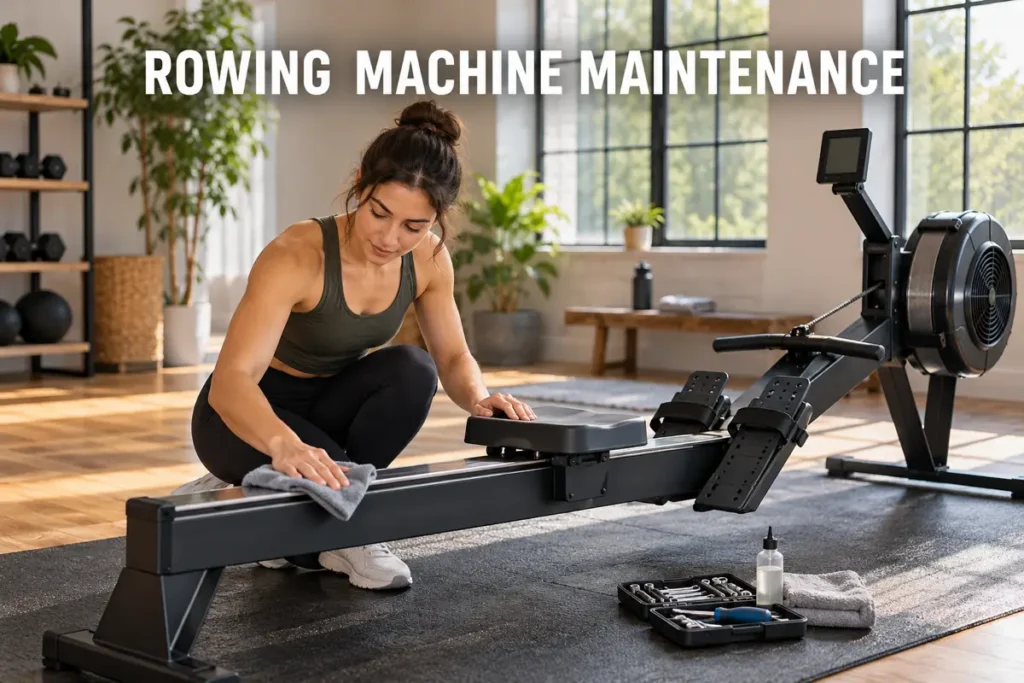
Rowing machine maintenance is the most overlooked factor in how long a home rower actually lasts. I have seen identical machines sitting side by side - one still performing well after a decade, one failing in three years. The difference is almost always maintenance. In this rowing machine maintenance guide I walk through every care task your rower needs, from the two-minute post-session wipe-down to the full annual service inspection, so you can protect both the machine and the training consistency that depends on it. A machine that receives consistent care costs almost nothing to maintain over its life. One that does not eventually costs you either a significant repair or early replacement - outcomes that are almost entirely preventable with a consistent routine.
Before any maintenance step, unplug the machine from the wall outlet and follow your manufacturer's manual for model-specific guidance on lubricant types, cleaning solutions, and service intervals.

Rowing Machine Maintenance by Machine Type
Not every rowing machine needs the same care routine. I group rowing machine maintenance requirements by resistance type because using the wrong approach on the wrong machine causes more damage than doing nothing at all. I start any effective maintenance plan by identifying the type of rowing machine and the resistance mechanism it uses. If you are still in the selection phase, the best budget rowing machines, best compact rowing machines, and best foldable rowing machines each require roughly the same baseline maintenance routine as premium models.
Resistance Type | Chain Lubrication | Tank Service | Primary Wear Points |
Air (chain-driven) | Required - every 50 hours | None | Chain, monorail, seat rollers |
Water (paddle) | Not applicable | Every 3-6 months per manual | Tank, rail, seat, handle cord |
Magnetic | Not applicable | None | Rail, seat rollers, electronics |
Air Rowers - Chain and Flywheel
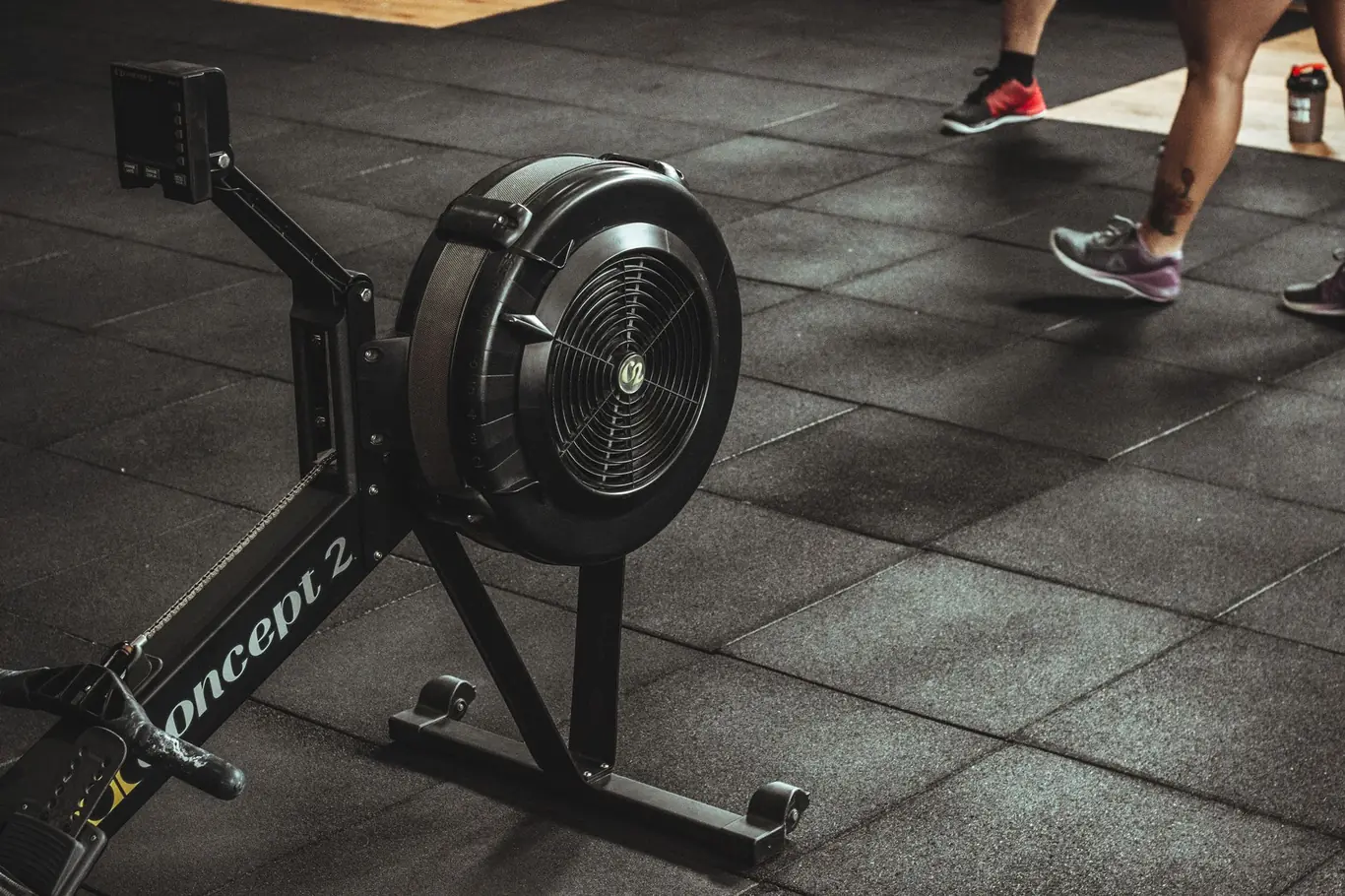
Air rowers like the Concept2 RowErg use a chain-driven flywheel. The chain is the most mechanically critical component, and regular lubrication is not optional. The monorail also sees heavy wear because the seat slides the full length of the rail on every single stroke. Air rowers require the most active care of the three main types.
Water Rowers - Tank and Paddle
Water rowers like the WaterRower Natural do not have a chain. A paddle spins inside a water-filled tank. These machines require periodic tank maintenance - monitoring water levels, treating the water per the manufacturer's protocol to prevent algae or mineral buildup, and cleaning the tank on a scheduled basis. I find that water rower owners consistently neglect the tank because it is not visible during normal use. By the time the water looks cloudy or the stroke resistance feels sluggish, the tank already needs a full clean.
Magnetic Rowers - Lowest Maintenance Load
Magnetic rowers use electromagnetic resistance with no chain and no water tank. They still require regular rail cleaning, seat roller checks, and bolt tightening, but the overall maintenance burden is the lowest of the three types. Some magnetic rowers also use a belt drive rather than a direct-drive system; if your machine has a belt, check it monthly for fraying, cracking, or loss of tension per the manufacturer's guide. The primary failure point on magnetic rowers tends to be the electronics - the resistance unit and the monitor - rather than mechanical wear.
How to Clean a Rowing Machine
Knowing how to clean a rowing machine properly is the foundation of the entire rowing machine maintenance routine. Sweat is mildly acidic, and when left on a metal monorail it corrodes the surface and accelerates roller wear. The answer is straightforward: wipe down the machine after every session, before sweat has a chance to dry and bond to the rail surface or frame.
Cleaning the Seat and Monorail
The monorail is where cleaning matters most. Grit that accumulates in the rail groove tears through seat rollers far faster than normal use would. The correct post-session sequence is:
- Wipe the full length of the monorail on both sides with a clean, lightly damp cloth to remove sweat and debris.
- Run a finger along the rail surface and check for roughness, grooves, or rust discoloration.
- Spin each seat roller by hand - a healthy roller spins freely with no resistance or grinding.
- Apply a thin coat of rail lubricant at the manufacturer's recommended interval if your manual calls for it; skip this step if it does not.
- Slide the seat end-to-end once to confirm smooth, quiet travel before putting the machine away.
Never use abrasive cloths, steel wool, or chemical degreasers on the monorail. These create the rough spots that destroy rollers within weeks.
Cleaning the Frame, Handle, Footrests, and Monitor
The rest of the machine needs a full wipe-down at least once per week, and after every session for anyone using the machine daily:
- Frame and base: damp cloth to remove sweat before corrosion begins
- Footrests and straps: wipe the footbed; check straps for fraying, stiffness, or cracking
- Handle and cord connection: wipe the grip; pull the cord to full extension once and wipe its length; inspect where the cord meets the handle for any early fraying
- Flywheel housing (air rowers): dust collects around the damper vent opening; a soft brush clears it without risking any damage to the flywheel; vacuum the interior housing every six months to clear accumulated dust
- Monitor and display: dry microfiber cloth only; no glass cleaners, no sprays directly on the screen
Two minutes per session keeps the machine clean. Skipping this for even a few weeks creates the kind of buildup that drives much longer correction jobs and accelerates wear across every contact surface.
Rowing Machine Chain Care and Lubrication
For air rowers, the most critical element of rowing machine maintenance is chain lubrication - the task that separates machines that last a decade from ones that wear out in three years. A dry chain on an air rower creates friction at the flywheel sprocket, slows chain speed under load, and produces the rattling or squealing noise that owners often mistake for a structural problem rather than a maintenance issue.
The Right Oil for Your Rowing Machine Chain
Concept2 accepts three lubricants for their chain drives: purified mineral oil, 3-IN-ONE oil, and 20W motor oil. My preference is purified mineral oil - pharmaceutical-grade or food-grade, with no additives - because it is widely available, inexpensive, and carries no risk of introducing harsh additives to the chain drive. Do not use WD-40, cooking oil, heavy motor oils, or general-purpose multi-use sprays. WD-40 is a water displacer, not a chain lubricant - it evaporates quickly, leaves almost no protective film, and attracts grit. I have seen chains that needed full replacement after a season of WD-40 application when a bottle of purified mineral oil for rowing machine chains is inexpensive and lasts for years.
Applying Chain Oil Step by Step
Lubricating the chain on a Concept2-style air rower takes under five minutes:
- Power off the machine.
- Pull the handle through the full drive stroke so the chain is fully extended.
- Apply 3-5 drops of mineral oil directly onto the chain links while slowly pulling the chain through by hand.
- Do not over-saturate - a thin, even coat is the target; excess oil collects dust and becomes an abrasive paste.
- Row at a slow, easy pace for 30 seconds to distribute the oil evenly across all links.
- Wipe any oil that ran onto the rail or frame with a clean dry cloth.
Concept2 rowing machine chain oil - or the equivalent product for any chain-drive air rower - should be applied every 50 hours of use. If you row 30 minutes daily, that interval falls roughly every three to four months. Check the chain visually regardless of hours - a chain that looks dull or dry and produces any noise under load needs oil.
Your Rowing Machine Maintenance Schedule
A structured rowing machine maintenance checklist removes all guesswork. The table below covers every task and its frequency. Heavier use shifts you toward the more frequent end of each range.
Frequency | Task | What to Confirm |
After every session | Wipe seat, rail, handle, frame | Sweat removed; no new visible damage |
After every session | Check footrest straps | No fraying, cracking, or loose fit |
Weekly | Spin seat rollers by hand | Free spin with no wobble or grinding |
Weekly | Inspect pull cord or drive cord | No fraying, kinks, or uneven wear |
Weekly | Check monitor | Correct readings, cable secure |
Monthly | Tighten all accessible bolts | Footrest mounts, seat carriage, frame legs |
Every 50 hours (air rowers) | Lubricate chain | Purified mineral oil only |
Every 3-6 months (water rowers) | Maintain water tank | Per manufacturer protocol |
Every 6 months | Deep clean monorail | Rail-specific cleaner per manufacturer |
Annually | Full inspection or professional service | Bearings, rollers, cords, resistance unit |
Weekly Habits Worth Building
The weekly seat roller check is the highest-value five-minute habit in any rowing machine maintenance guide. Rollers in good condition spin silently - any roughness, grinding, or visible flat spots mean replacement is approaching. Catching roller wear early means an inexpensive part replacement. Missing it often means a scored monorail surface that requires a costly repair, because worn rollers generate enough friction to damage the rail itself.
Weekly cord inspection matters equally. A single frayed strand is a warning signal. By the time multiple strands are visibly frayed, the cord is at meaningful risk of failure mid-session. Replacement cords are inexpensive and most can be installed in 10-15 minutes with basic tools. I'd prioritize the cord inspection above every other weekly check because it is both easy to miss and serious when it fails.
Monthly Checks
Once a month, tighten every accessible bolt on the machine systematically:
- Footrest mount bolts (the repetitive push force of the leg drive loosens these faster than any other hardware)
- Seat carriage bolts if accessible from the outside
- Frame leg hardware, particularly on machines that are moved between sessions
- Handle attachment hardware
I also recommend pulling the handle through a full stroke using proper rowing machine form, feeling for any cord tension irregularities, jerking, or sudden drops in resistance. A healthy cord under load should feel smooth and even through the entire drive.
Annual Service
Once per year, or every 250-300 hours of use, schedule a thorough inspection. Key items:
- Replace seat rollers showing flat spots, discoloration, or any grinding under hand rotation
- Replace the pull cord or drive cord if fraying appears anywhere along its length
- For water rowers: drain the tank, clean per the manufacturer's protocol, refill with fresh water and the recommended treatment product
- Check all rubber feet and floor protectors for compression set or cracking
- Review any service bulletins from your manufacturer for your specific model year
- If the machine is under warranty, verify whether any part replacements need to be performed by an authorized technician to keep warranty coverage in force
Storing Your Rowing Machine
Proper storage protects the maintenance work you have already done. The single most damaging storage condition is high humidity - a damp basement or unventilated garage accelerates rail corrosion and frame oxidation faster than any amount of normal use. Store the machine in a climate-controlled space where possible, or in an area where ambient humidity stays consistently below 60 percent. A dehumidifier near the machine is a practical solution for spaces that cannot be climate-controlled year-round.
Additional storage guidelines:
- Wipe the machine down thoroughly before any extended storage period, not just after individual sessions - sweat left on the rail during storage causes more concentrated corrosion than sweat from active use
- Do not store heavy items on or against the machine; contact pressure deforms rubber feet and can stress frame welds over time
- For machines with a folding frame, fold them before storage to reduce the contact footprint and risk of accidental damage
- Protect the monitor from direct sunlight; sustained UV exposure fades and cracks plastic monitor housings faster than any mechanical wear
- If the machine will be unused for several weeks or more, release tension on any bungee or shock cord per the manufacturer's storage instructions
Troubleshooting Common Rowing Machine Problems
Even consistent rowing machine maintenance does not prevent every issue. The table below maps the most common symptoms to their likely causes and the correct fix. Always unplug the machine before inspecting any mechanical component.
Symptom | Likely Cause | Fix |
Squeaking from seat area | Dirty or dry rail, worn rollers | Clean rail; inspect rollers; replace if worn |
Chain rattling or slapping | Dry chain, stretched chain links | Lubricate chain; inspect link condition |
Grinding during drive stroke | Rail grit, scored roller surfaces | Deep clean rail; replace damaged rollers |
Inconsistent resistance (air rower) | Dust in flywheel housing | Clean damper vent opening with soft brush |
Sluggish stroke feel (water rower) | Low water level, tank buildup | Check fill line; clean tank per manual |
Handle jerks on return stroke | Worn shock cord, fraying drive cord | Replace shock cord or cord |
Monitor not reading correctly | Low battery, loose cable connection | Replace battery; reseat cable |
Machine rocks or wobbles during use | Loose bolts, uneven floor | Tighten all hardware; adjust leveling feet |
Resistance drops unexpectedly (magnetic) | Electronic resistance unit issue | Follow error code section in manual |
Burning or unusual smell during use | Overheating belt or drive component | Stop immediately; inspect belt and housing; contact manufacturer |
How to Diagnose a New Sound
A well-maintained rowing machine should be nearly silent. The moment you hear something new during a session, stop and investigate before the next workout - new sounds almost always signal something that is still a quick fix at that stage.
My diagnostic process: sit on the machine and row at a slow pace to isolate whether the sound originates from the seat area (rollers or rail), the pull area (chain or cord), or the resistance unit (flywheel, magnets, or tank). Then cross-reference against the troubleshooting table above. A sound that does not match any entry, or one that persists after the correct fix has been applied, is a candidate for professional service.
Resistance and Performance Issues
Resistance that feels uneven or noticeably lighter than usual almost always traces to one of three causes. On air rowers, dust accumulation inside the flywheel housing restricts consistent airflow through the damper vent. Cleaning that vent opening with a soft brush restores normal resistance feel quickly.
On water rowers, changes in stroke resistance usually indicate a water level issue or tank buildup creating turbulent flow rather than clean paddle resistance. Follow your manufacturer's tank service instructions for the correct cleaning and refill protocol.
On magnetic rowers, resistance problems are almost always electronic. These machines typically have an error code guide in the manual that identifies the specific fault. Magnetic resistance units on consumer models are not user-serviceable, and most issues require manufacturer support or replacement.
When to Call for Service
DIY maintenance handles the great majority of rowing machine care. The threshold for professional service is when the root cause is unclear, when a replacement part is not available for retail purchase, or when the machine continues to malfunction after the correct fix has been applied twice. Specific situations that warrant a service call or manufacturer contact:
- Persistent grinding or scraping after thorough rail cleaning and roller replacement
- Resistance unit failure on a magnetic rower where error codes do not resolve with the listed fix
- Chain jumping off the sprocket more than once after chain inspection and lubrication
- Any structural creak or movement in the frame joints after all bolts have been fully tightened
- A burning smell that persists after visual inspection finds no obvious cause
If the machine is under warranty, contact the manufacturer before performing any repair that could void coverage. If a repair no longer makes sense, I rank five budget rowing machines in my roundup.
Rowing Machine Maintenance Mistakes That Shorten Machine Life
The rowing machine mistakes I see most often are not about performing the wrong task. They are about consistently skipping the right ones, or reaching for the wrong products when people finally do get around to maintenance:
- Using WD-40 on the chain - a water displacer that evaporates quickly, leaves no lasting protective film, and actively attracts grit into chain links
- Over-lubricating the chain - excess mineral oil collects dust and creates an abrasive paste that wears the links faster than a dry chain would
- Skipping the daily post-session wipe-down - sweat damage compounds silently over months before becoming visible as corrosion
- Tightening bolts at assembly and never checking them again - vibration and load cycling loosen hardware over any machine's lifespan
- Waiting for noise before checking rollers - rollers degrade before they generate audible warning signs; weekly hand-rotation checks catch this early
- Storing in a damp environment without humidity control - high ambient humidity accelerates rail corrosion and frame oxidation faster than any usage pattern
- Skipping annual service because the machine "seems fine" - pre-failure wear is invisible without hands-on inspection; most cord and roller failures I see were preventable with a single annual check
Keeping Your Rower Running for the Long Term
The machines I have seen last well beyond a decade all have one thing in common: their owners noticed them. They wiped them down, they oiled the chain on schedule, they listened for new noises and investigated immediately. My advice is straightforward - treat the maintenance schedule in this guide as your baseline minimum, defer to your manufacturer's manual whenever it specifies something more restrictive, and invest 10-15 minutes per month in the systematic inspection. That monthly investment is what separates a machine that pays off for a long time from one that needs early replacement. When it is time to replace one, my roundup of rowing machines for home gyms covers eleven tested picks.
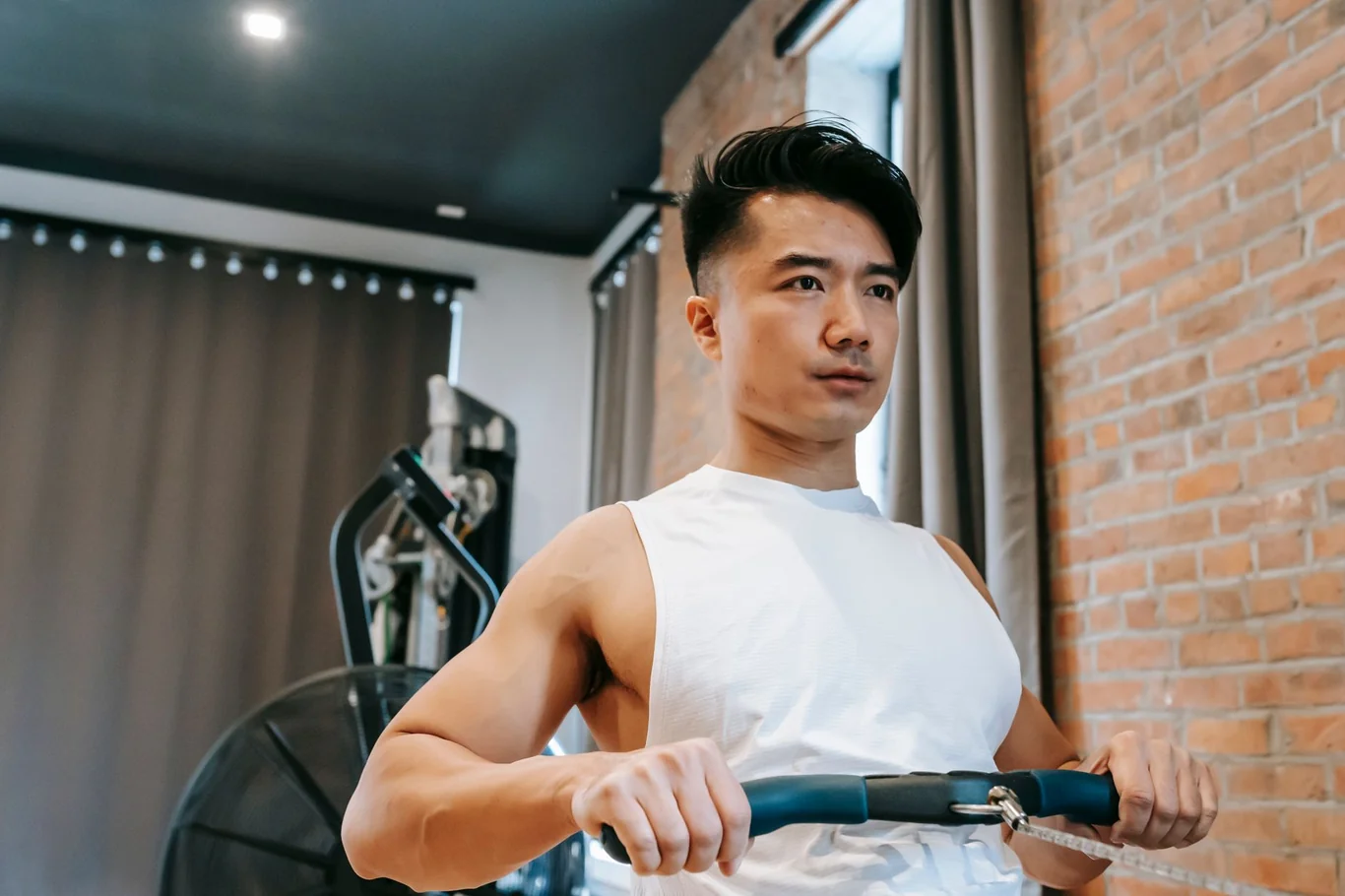
Rowing delivers one of the most complete training stimuli available from a single piece of home equipment, and I cover the benefits of a rowing machine in a separate guide. Research demonstrates significant improvements in cardiorespiratory capacity following structured indoor rowing training (1), and meta-analytic evidence confirms that rowing and similar aerobic exercise produces meaningful cardiorespiratory fitness gains in post-menopausal women (2). Studies in trained rowers confirm that the energy cost of rowing directly correlates with performance output (3). Rowing activates more than 70% of total body muscle mass per stroke through a combination of dynamic and static contractions that few other cardio modalities match (4), and rowing protocols in diverse populations confirm measurable cardiorespiratory improvements even in those with significant physical limitations (5). A machine running on a dry chain and worn rollers does not deliver the resistance curve it was built for - and that directly affects the training stimulus you receive from every session.
If you want to understand what consistent rowing delivers over time, the results from regular rowing sessions are well-documented. You can also explore whether rowing builds muscle. For anyone still in the selection process, understanding what to look for in a rowing machine is the right starting point, because maintenance requirements by resistance type are a real factor in total ownership cost.
FAQs
Here are answers to the most common questions about rowing frequency, machine longevity, and maintenance habits.
Is 20 minutes of rowing a day enough?
Twenty minutes of rowing per day provides meaningful cardiovascular and muscular stimulus for most adults when performed at moderate to high intensity, aligning with general physical activity guidelines for health maintenance. The actual training impact depends on workout intensity, your current fitness base, and how consistently you maintain that effort over weeks and months rather than any single session length.
How long will a rowing machine last?
A properly maintained rowing machine from a quality manufacturer can last well over a decade in a home gym setting; premium machines like the Concept2 RowErg are known to remain in active use for 20 years or more when cared for correctly. Machines that receive only occasional cleaning and no chain lubrication or roller inspection typically show significant wear within several years, and the lifespan gap between maintained and neglected machines from the same brand is substantial.
Can I lose belly fat by rowing?
Fat loss, including in the abdominal area, occurs through a sustained caloric deficit maintained over time. Rowing contributes effectively to that deficit because it recruits the full body simultaneously, elevating caloric expenditure compared to single-limb or lower-body-only cardio. Consistent rowing combined with appropriate nutrition supports total body fat reduction over time. Spot reduction of fat in specific areas is not physiologically achievable.
What are some common mistakes people make when rowing?
The most common rowing machine mistakes on the maintenance side are using WD-40 instead of mineral oil on the chain, skipping daily wipe-downs until corrosion is already visible, and ignoring early warning sounds until a component fails completely. Technique errors like rushing the drive or collapsing the core also place uneven load on the pull cord and seat rollers, which accelerates mechanical wear beyond what correct form would create.
This content is for informational and educational purposes only. It is not a substitute for professional medical advice, diagnosis, or treatment. Always consult with your healthcare provider before starting any new fitness program or using fitness technology for health monitoring.
References
- Araujo RC, Rodrigues GD, Ferreira LF, Soares PPS. The time course of cardiorespiratory adaptations to rowing indoor training in post-menopausal women. Int J Environ Res Public Health. 2023;20(4):3238. doi:10.3390/ijerph20043238.
- Khalafi M, Sakhaei MH, Maleki AH, et al. Influence of exercise type and duration on cardiorespiratory fitness and muscular strength in post-menopausal women: a systematic review and meta-analysis. Front Cardiovasc Med. 2023;10:1190187. doi:10.3389/fcvm.2023.1190187.
- Blervaque L, Bowen M, Chatel B, et al. Is the energy cost of rowing a determinant factor of performance in elite oarsmen? Front Physiol. 2022;13:827932. doi:10.3389/fphys.2022.827932.
- Hastings JL, Krainski F, Snell PG, et al. Effect of rowing ergometry and oral volume loading on cardiovascular structure and function during bed rest. J Appl Physiol. 2012;112(10):1735-1743. doi:10.1152/japplphysiol.00019.2012.
- Hansen RK, Samani A, Laessoe U, et al. Rowing exercise increases cardiorespiratory fitness and brachial artery diameter but not traditional cardiometabolic risk factors in spinal cord-injured humans. Eur J Appl Physiol. 2023;123(6):1241-1255. doi:10.1007/s00421-023-05146-y.