
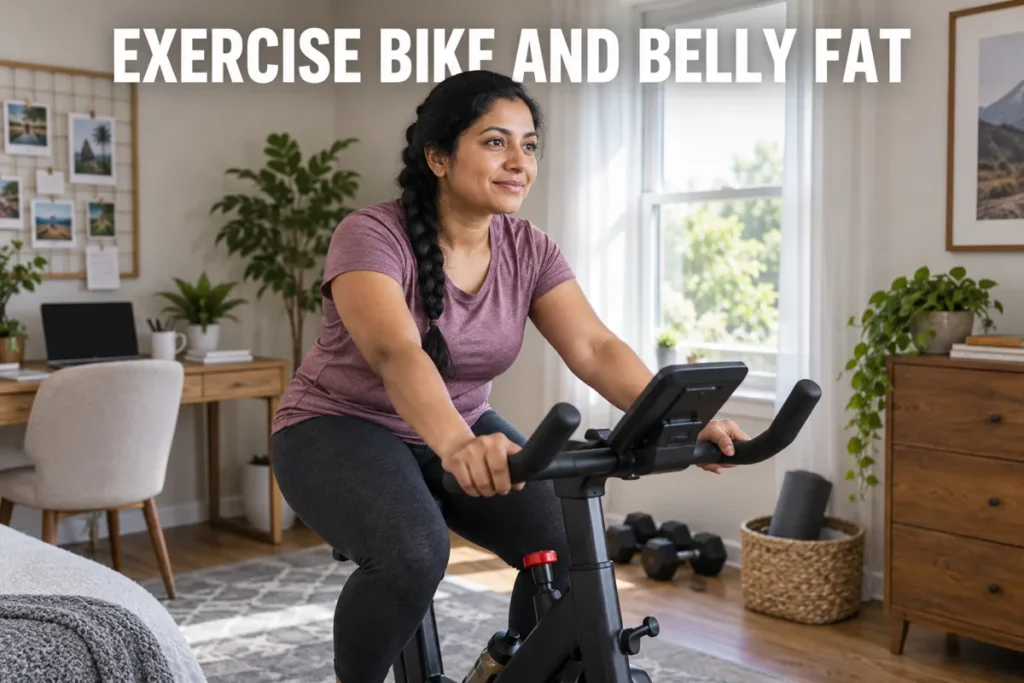
Using an exercise bike to reduce belly fat is a realistic goal, and the research confirms it works - just not through spot reduction. Belly fat, particularly visceral fat, responds well to consistent cardio and a modest calorie deficit maintained over weeks. I analyzed six peer-reviewed studies for this guide, covering what cycling does to visceral fat, how calories burn at different intensities, how bikes compare to treadmills and walking, and the workout structure that produces the fastest results.

Exercise Bike and Belly Fat - What the Research Actually Shows
Before building a cycling routine, one thing is worth understanding clearly: you cannot spot-reduce fat from a single body part. This misconception leads many riders to expect their stomach to shrink faster than other areas, leading to frustration when results don't show up immediately on the scale.
What actually happens when you cycle consistently is that your body draws on fat stores systemically. When you create a sustained calorie deficit through exercise, your body reduces fat across your entire frame, not just the area that feels like it is working hardest. Belly fat - particularly visceral fat, the metabolically active fat that surrounds your organs - does respond well to regular aerobic exercise. A 2022 meta-analysis of 25 randomized controlled trials (n=1,686) found that regular aerobic exercise reduced waist circumference by an average of 3.2 cm, with vigorous-intensity exercise achieving a 4.2 cm reduction compared to 2.5 cm at moderate intensity (1).
For these goals specifically, that means progress is real and measurable, but it takes weeks of consistent effort rather than days.
The Difference Between Visceral and Subcutaneous Belly Fat
Understanding which type of belly fat you are targeting changes how you approach your training. There are two main types:
Visceral fat sits deep inside the abdomen, surrounding organs like the liver and intestines. It is the more metabolically dangerous type, strongly linked to cardiovascular disease, insulin resistance, and type 2 diabetes. It is also the most responsive to aerobic exercise.
Subcutaneous fat sits just beneath the skin - this is what you can physically pinch around your midsection. It is more visible but less dangerous than visceral fat, and it takes longer to respond to cardio alone.
The key finding from research: aerobic training like cycling targets both fat types, but visceral fat tends to respond faster to regular cardio sessions than the more stubborn subcutaneous layer.
A meta-analysis of 43 RCTs (n=3,552) found that aerobic training alone reduced subcutaneous abdominal fat by approximately 13 cm², while combined aerobic and resistance training achieved a 28.8 cm² reduction (2). Pairing your cycling sessions with two strength workouts per week will accelerate visible belly fat reduction compared to cardio alone.
How Cycling Creates the Conditions for Fat Loss
An exercise bike burns calories during every session. A sustained calorie deficit - burning more than you consume consistently over weeks - is the foundation of all fat loss. Cycling also builds lower-body muscle mass over time, which raises your resting metabolic rate, so you burn slightly more calories even when you are not exercising.
A 12-week indoor cycling program in women with obesity produced significant reductions in body weight, waist circumference, hip circumference, and inflammatory markers, alongside improved cholesterol levels - without any imposed dietary restriction (3). This confirms that exercise bike and belly fat reduction is achievable through cycling alone. Adding a modest calorie reduction accelerates the process meaningfully.
I find the stationary bike belly fat evidence particularly compelling because the improvements happened without dietary changes - most studies require both exercise and diet intervention to show significant results, making these cycling-only outcomes more useful for real-world planning.
How Many Calories Does an Exercise Bike Burn?
For exercise bike and belly fat workouts, calorie burn is the primary mechanism connecting your sessions to fat loss outcomes. The numbers below are estimates - individual variation of 10-20% in either direction is normal based on fitness level, pedaling efficiency, and metabolic rate.
Calorie Burn by Body Weight and Intensity
Body Weight | Low Intensity (30 min) | Moderate Intensity (30 min) | High Intensity (30 min) |
125 lb (57 kg) | 120-140 kcal | 210-240 kcal | 310-350 kcal |
155 lb (70 kg) | 145-170 kcal | 260-300 kcal | 385-430 kcal |
185 lb (84 kg) | 175-200 kcal | 310-355 kcal | 460-510 kcal |
215 lb (98 kg) | 205-230 kcal | 360-410 kcal | 535-595 kcal |
Estimates derived from MET values for stationary cycling (METs: low=3.5, moderate=5.5, high=8.5). Actual burn varies with bike type, pedaling cadence, and individual fitness level.
From Calories to Fat Loss - A Worked Example
One pound of fat represents roughly 3,500 calories of stored energy. A 170-lb person burning approximately 305 calories per 30-minute moderate ride, cycling four times per week, totals about 1,220 extra calories burned per week. Over four weeks, that amounts to roughly 4,880 calories - about 1.4 pounds of fat from cycling alone.
Add a modest 200-300 calorie daily dietary reduction, and the same person could realistically lose 2-3 lbs of fat per month. Several factors affect whether your actual results match this math:
- Dietary compensation: Many riders unconsciously eat more after sessions, partially offsetting the calorie deficit they created
- Metabolic adaptation: After 8-12 weeks, your body becomes more efficient at cycling and burns fewer calories per session at the same pace
- Hormonal environment: Cortisol, sleep quality, and thyroid function all influence how quickly fat stores mobilize
A 12-week RCT in middle-aged men with type 2 diabetes involving four weekly 50-minute aerobic cycling sessions demonstrated significant fat mass reductions (38.2% vs 42.0% fat mass in control group) and improved waist-to-hip ratio (4). Three months of consistent, moderate-frequency cycling produces measurable body composition changes in clinical settings. In my review of the exercise bike belly fat research, three months consistently emerges as the realistic minimum for visible results - not because cycling is slow, but because the body needs cumulative deficit weeks to draw down stubborn abdominal stores.
Treadmill or Exercise Bike for Belly Fat - How They Compare
Treadmill and exercise bike are both popular cardio tools for belly fat loss. Both modalities are effective, but they differ in important ways for long-term fat loss sustainability.

Calorie Burn and Fat Loss Potential
Treadmills generally burn slightly more calories per session at the same perceived effort, primarily because running and brisk walking engage more total muscle mass - including core stabilizers and upper body - than cycling. However, the difference is smaller than most people assume and matters less than the question of which tool you will actually use consistently.
Factor | Exercise Bike | Treadmill |
Calorie burn (30 min, moderate, 155 lb) | 260-300 kcal | 280-340 kcal |
Joint impact | Low - no ground impact | Moderate to high when running |
Core engagement | Moderate | Higher during upright walking and running |
Accessibility for joint issues | High - good for exercise bike and knee pain | Lower - impact forces limit use |
Best use case | Daily use, HIIT, beginners | Higher-calorie burn, strong joints |
For treadmill workout variations like walking backwards that maximize calorie burn at low impact, our guide covers practical techniques worth adding to a mixed-modality routine.
Joints, Injury Risk, and Long-Term Consistency
The most overlooked factor in sustained fat loss is consistency over months, not peak session intensity. A higher-calorie workout you cannot sustain long-term loses to a lower-calorie workout you do reliably four times per week. Cycling's biggest practical advantage over the treadmill is zero ground-impact force on knees and hips.
For anyone asking whether a treadmill or exercise bike is better for your knees, the answer consistently favors the bike - the zero ground-impact load is the decisive factor for anyone with existing joint issues. The best exercise bike for arthritic knees eliminates impact stress entirely, and managing exercise bike and knee pain becomes far simpler on a stationary bike than on any ground-impact alternative.
An injury that sidelines you for three weeks erases weeks of accumulated calorie deficit - this is why joint-friendly exercise bikes often outperform treadmills for total fat loss over six to twelve months, even when single sessions burn slightly fewer calories. I weighed this adherence factor heavily when reviewing the stationary bike and belly fat evidence: a lower-calorie workout you actually complete every week beats a higher-calorie workout you skip half the time.
Cycling or Walking for Belly Fat - What the Evidence Says
For cycling or walking for belly fat comparisons, cycling consistently outperforms walking for calorie burn per hour. A 155-lb person burns roughly 175-200 calories walking briskly for 30 minutes versus 260-300 calories at moderate cycling intensity. That 60-100 calorie gap per session adds up to 1,500-2,500 extra calories per month - the equivalent of 0.4-0.7 lbs of additional fat loss.

Cycling also creates higher cardiovascular demand than walking, which translates to faster aerobic fitness gains and a higher weekly energy expenditure if time is limited. For exercise bike and belly fat reduction as a primary fitness goal, cycling delivers more efficient results per hour of training.
Walking does offer a specific advantage for cortisol management. High-intensity cardio temporarily elevates cortisol, a stress hormone associated with visceral fat accumulation around the midsection. Research suggests that long, low-intensity walks may suppress cortisol rather than elevating it. If stress and poor sleep are factors in your fat loss plateau, adding 30-minute walks on cycling rest days can meaningfully support your overall results rather than competing with them.
For those comparing exercise bike before and after outcomes against walking programs, cycling produces faster fat loss when sessions are matched for duration - but both activities produce better results together than either does alone. If you are evaluating other cardio options, understanding which muscles a rowing machine works helps clarify how rowing's resistance profile differs from cycling.
The Most Effective Exercise Bike Workouts for Belly Fat
Not all riding is equally effective for fat loss. How you structure your sessions matters considerably once you have built a basic aerobic base.
Low-Intensity Steady State (LISS)
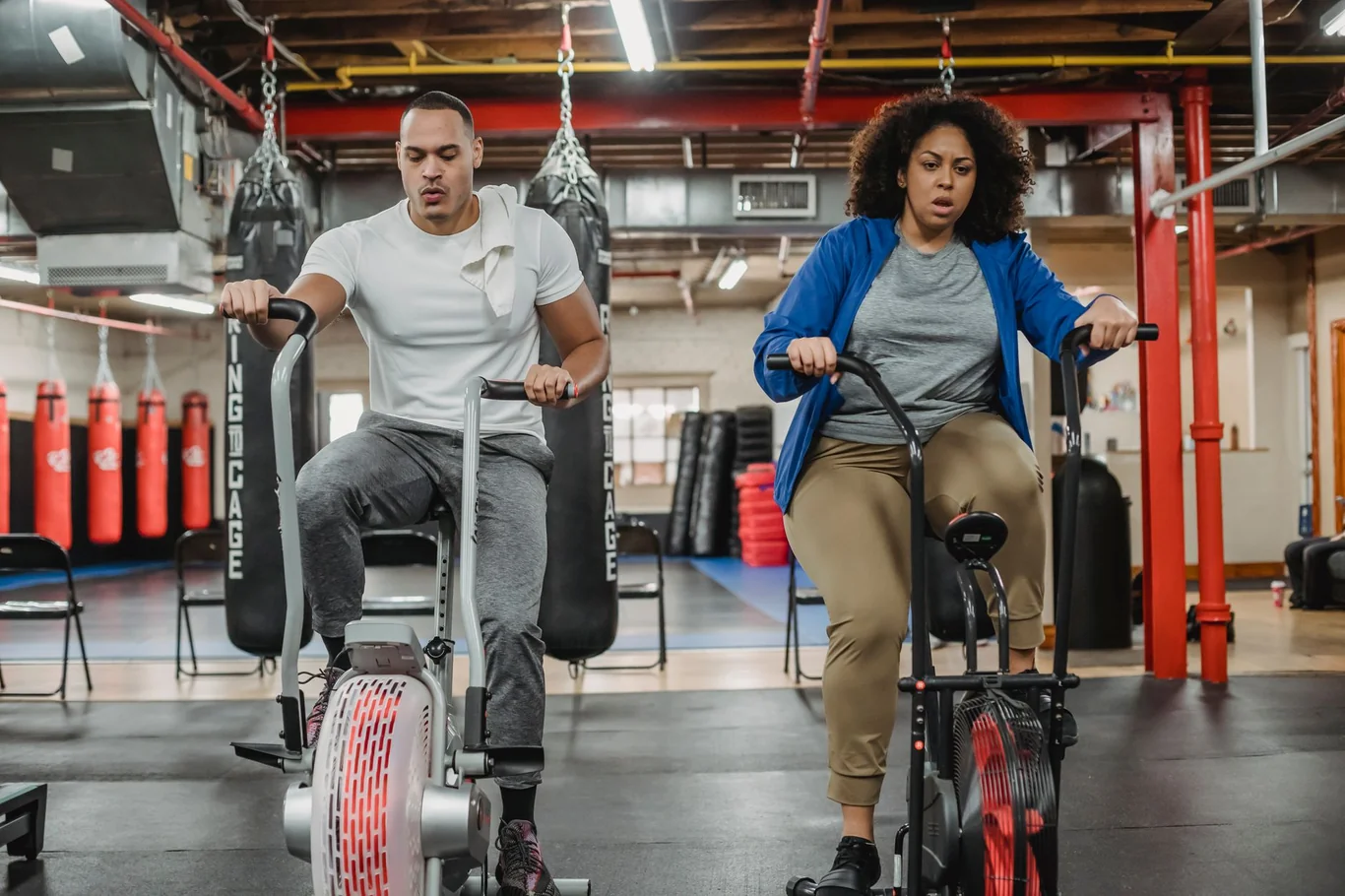
LISS means riding at a consistent, moderate pace - roughly 55-65% of your maximum heart rate - for 30-60 minutes. At this intensity, fat is a primary fuel source alongside carbohydrates, and the lower perceived effort allows longer session durations without excessive fatigue. LISS is the foundation of any exercise bike workout for weight loss program and the right starting point for beginners.
Benefits of LISS cycling for belly fat:
- Accessible for beginners and anyone returning from injury or a long break from training
- Lower perceived effort means longer sessions are sustainable, burning more total calories per ride
- Minimal joint stress makes it appropriate for daily use without recovery concerns
- Builds the aerobic base that makes higher-intensity work safer and more effective over time
- Doubles as active recovery between harder training days
High-Intensity Interval Training (HIIT)
HIIT alternates short bursts of near-maximal effort with recovery periods. It burns more calories per unit of time and creates an afterburn effect - excess post-exercise oxygen consumption (EPOC) - that continues elevating calorie burn for hours after the session ends.
A 2026 network meta-analysis of 60 RCTs (n=3,308) ranked HIIT as the most effective single exercise modality for visceral fat reduction, with a SUCRA score of 72.5% compared to 59% for steady-state aerobic exercise (5). A separate 12-week RCT in 46 obese young women found that HIIT reduced visceral fat by 9.7 cm² from baseline, while requiring substantially less total training time than steady-state cardio would need to achieve comparable calorie burn (6). In my analysis of the research, I'd prioritize HIIT over LISS for anyone whose schedule limits sessions to 20-30 minutes - the time efficiency advantage is too significant to ignore.
For detailed protocols, high intensity training on exercise bike guidance covers work-to-rest ratios, resistance settings, and progression models appropriate for different fitness levels.
Benefits of HIIT for belly fat reduction:
- Superior visceral fat reduction per hour compared to steady-state cardio
- EPOC effect extends calorie burn well beyond the session itself
- Improves VO2max and cardiovascular capacity faster than LISS alone
- Effective in 20-30 minute sessions including warm-up
A Beginner-Friendly 4-Week Plan
This progression is appropriate for someone starting an exercise bike workout beginners program and building toward sustained fat loss over months:
Weeks 1-2: 3-4 sessions per week, 25-35 minutes at low-to-moderate intensity. Focus on building consistency first. Heart rate should feel comfortably challenging but conversational.
Week 3: Add one HIIT session per week (20 minutes: 8 rounds of 30 seconds hard effort followed by 90 seconds easy). Maintain two LISS sessions alongside it.
Week 4: Two HIIT sessions per week combined with two LISS sessions. Total weekly cycling time: 90-120 minutes.
Months 2-3: Gradually extend HIIT duration or add a third interval session. Aim for 150-200 minutes of total weekly cycling across intensities. Track your waist measurement monthly - this is the most reliable visible indicator of visceral fat reduction from cycling.
Tracking your heart rate during workouts ensures you are training in the right zones for your goals. Before relying on wrist-based data, understanding how accurate smart watches are for heart rate monitoring will help you interpret readings correctly - wrist-based sensors can lag significantly at rapid intensity changes during HIIT.
Which Exercise Bike Is Best for Losing Belly Fat?
Choosing the right bike matters less than choosing consistently, but matching the bike type to your goals and body makes it easier to sustain the four-to-five weekly sessions that fat loss requires. The best exercise bike to lose belly fat is the one you will actually use at the frequency results demand - not necessarily the most expensive or feature-rich model on the market.

Bike Type | Best For | Fat Loss Angle |
Upright bike | Most riders; most like outdoor cycling | Higher core engagement; best for HIIT sessions |
Recumbent bike | Back pain, seniors, rehabilitation | Enables longer, more comfortable sessions for sustained calorie burn |
Spin / indoor cycling bike | High-intensity training | Highest calorie burn; resistance-heavy HIIT protocols |
For detailed guidance on selecting a bike that fits your body and space, how to choose an exercise bike covers resistance types, seat ergonomics, and frame quality trade-offs. A recumbent exercise bike vs upright comparison and recumbent exercise bike vs rowing machine guide are useful if you are still deciding between equipment categories.
Practical guidance by rider type:
The best exercise bike for beginners is typically a basic magnetic-resistance upright - lower cost, simple resistance knob, and a stable frame that suits first-time riders. A best exercise bike guide narrows choices by budget and floor footprint.
The best exercise bike for small spaces is typically a folding upright or compact spin bike that stores against a wall between sessions. A best folding exercise bike option stores upright when not in use.
Exercise bikes that work well for seniors typically offer a step-through frame, adjustable seat height, and a clear display. The best exercise bike for seniors category covers models that prioritize accessibility.
Models suited to arthritic knees use a recumbent or low step-over design that eliminates joint strain. A best recumbent exercise bike offers a reclined seat that reduces lower-back strain while still delivering meaningful calorie burn during longer sessions. For those where back comfort is also a factor, best exercise bike for back problems covers recumbent and hybrid designs.
The best exercise bike for a heavy person features a reinforced steel frame with a weight capacity rated above the rider's bodyweight - typically 300-400 lbs for heavier-duty models. Understanding what is a magnetic exercise bike and how does a magnetic resistance exercise bike work helps evaluate quality differences between models.
Cycling Your Way to a Leaner Midsection
The exercise bike and belly fat relationship works exactly as the science describes: consistent cycling creates a calorie deficit that draws on fat stores throughout the body, with visceral fat responding particularly well to sustained aerobic training at moderate-to-vigorous intensities.
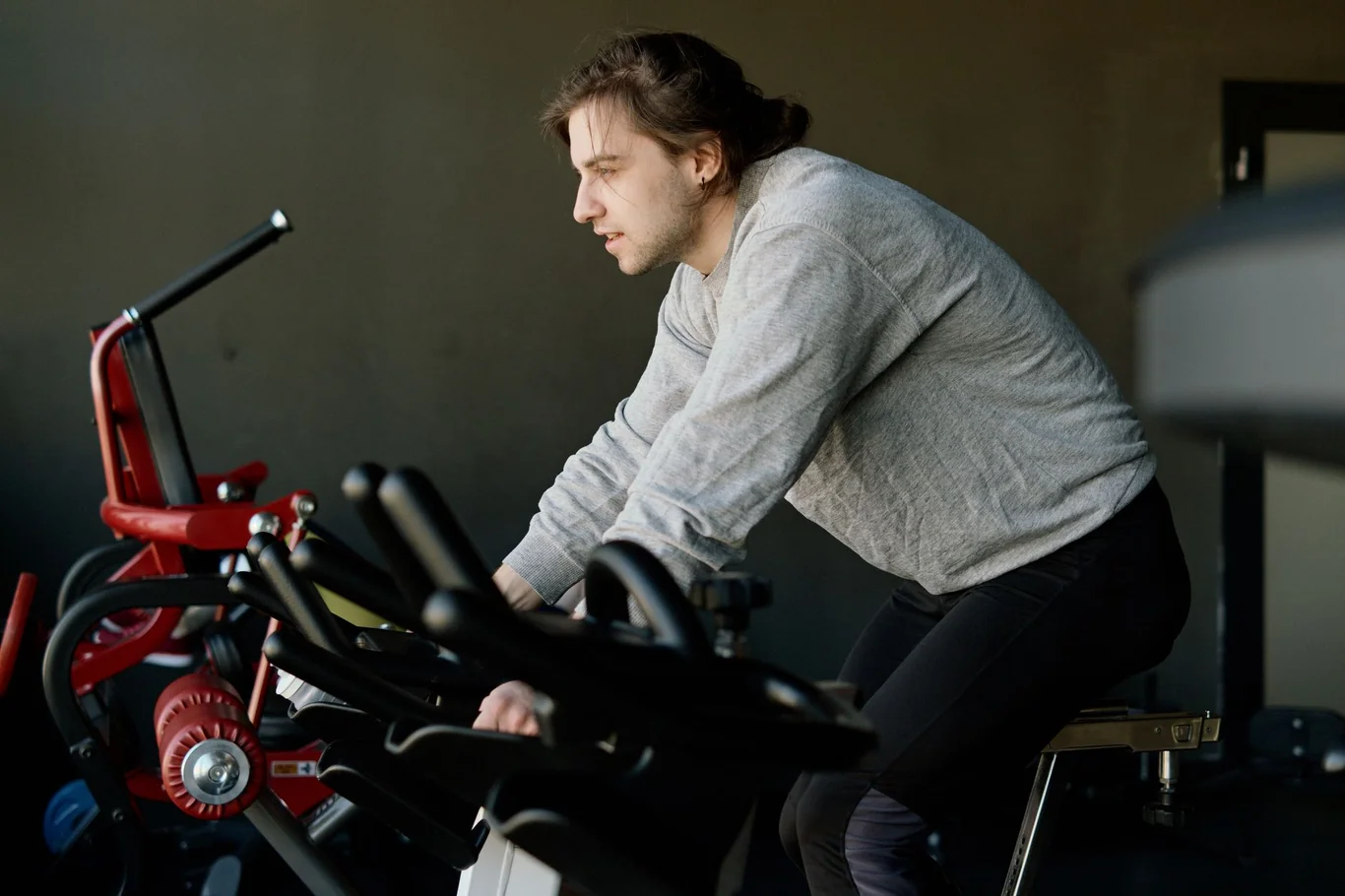
I reviewed six peer-reviewed studies for this guide. The consistent finding across clinical trials and meta-analyses is that 8-12 weeks of regular cycling - combined with a modest dietary adjustment - produces measurable reductions in waist circumference and fat mass. The key variable is not which bike you choose or which specific protocol you follow. An exercise bike and belly fat program only produces results when you are actually on the bike four to five times per week over several months.
Whether you are weighing cycling or walking for belly fat reduction, the answer is the same: the best tool is the one you will genuinely use long-term. For most people, the exercise bike wins on that criterion because it demands nothing from your joints and fits a broader range of fitness starting points. Start with three sessions this week - even 25-minute LISS rides - and build from there before adjusting intensity.
For structured session-by-session guidance, our exercise bike workout for weight loss resource is a practical next step. If you want better heart rate and training data during rides, what a smartwatch does covers the features that matter most for zone-based cycling programs.
FAQs
Which is better for belly fat, walking or cycling?
Cycling is generally more efficient than walking for belly fat reduction because it burns more calories per hour at the same perceived effort level - roughly 260-300 versus 175-200 calories per 30 minutes for a 155-lb person. Both activities reduce belly fat through systemic fat loss driven by a calorie deficit, but cycling's higher calorie burn per session compounds into a meaningfully larger deficit over weeks and months of consistent training.
How long does it take to lose belly fat on a stationary bike?
Visible belly fat reduction from a stationary bike typically requires 8-12 weeks of consistent training combined with a moderate calorie deficit in your diet. Clinical trials show that 12-week cycling programs produce significant reductions in waist circumference and fat mass, though individual results vary based on starting body composition, workout intensity, and whether dietary habits are also adjusted alongside the training.
Which exercise burns the most belly fat?
HIIT-based training burns belly fat most efficiently per unit of time, as confirmed by a 2026 network meta-analysis of 60 randomized controlled trials that ranked HIIT as the top modality for visceral fat reduction. For total reduction in subcutaneous abdominal fat over a training program, combined aerobic and resistance training outperforms cardio alone, producing approximately 2.2 times more abdominal fat reduction than cycling or running without a strength component.
Is 30 minutes on a stationary bike enough for weight loss?
Thirty minutes on a stationary bike is sufficient to support weight loss when performed consistently at moderate-to-vigorous intensity, burning roughly 240-430 calories per session depending on body weight and effort. For faster results, progressively increasing session intensity through HIIT protocols or extending rides to 45-60 minutes will accelerate the calorie deficit and improve body composition outcomes over a 12-week program.
Does cycling reduce belly fat or walking?
Cycling reduces belly fat more efficiently than walking per hour of exercise, burning more calories at comparable effort levels and showing stronger evidence for visceral fat reduction when performed at higher intensities. Walking provides a complementary benefit, particularly low-intensity longer walks, for managing cortisol levels - since chronically elevated cortisol is associated with visceral fat accumulation, combining both activities in a weekly routine can outperform either approach used alone.
This content is for informational and educational purposes only. It is not a substitute for professional medical advice, diagnosis, or treatment. Always consult your healthcare provider before starting any new fitness program, particularly if you have cardiovascular conditions, diabetes, or orthopedic concerns.
References
- Armstrong A, Rodriguez KJ, Sabag A, Mavros Y, Parker HM, Keating SE, Johnson NA. Effect of aerobic exercise on waist circumference in adults with overweight or obesity: A systematic review and meta-analysis. Obes Rev. 2022;23(8):e13446. doi:10.1111/obr.13446.
- Yarizadeh H, Eftekhar R, Anjom-Shoae J, Speakman JR, Djafarian K. The Effect of Aerobic and Resistance Training and Combined Exercise Modalities on Subcutaneous Abdominal Fat: A Systematic Review and Meta-analysis of Randomized Clinical Trials. Adv Nutr. 2020;12(1):179-196. doi:10.1093/advances/nmaa090.
- Ratajczak M, Skrypnik D, Krutki P, Karolkiewicz J. Effects of an Indoor Cycling Program on Cardiometabolic Factors in Women with Obesity vs. Normal Body Weight. Int J Environ Res Public Health. 2020;17(23):8718. doi:10.3390/ijerph17238718.
- Tariq A, Mousavi Zadeh SA, Ehsanianzavieh M, Sabouri A, Adli Khatibi S. Pedalling towards better health: a randomised controlled trial of aerobic cycling to improve glycaemic control and quality of life in middle-aged men with type 2 diabetes. BMJ Nutr Prev Health. 2025;8(1):e001019. doi:10.1136/bmjnph-2024-001019.
- Xu W, Xie X, Liu H. Optimal exercise modality and dose for reducing visceral adipose tissue in overweight or obese adults: a network meta-analysis and dose-response study. BMC Sports Sci Med Rehabil. 2026;18:354. doi:10.1186/s13102-026-01793-8.
- Tong K, Zhang H, Shi H, Liu Y, Ai J, Nie J, Kong Z. Comparing Time Efficiency of Sprint vs. High-Intensity Interval Training in Reducing Abdominal Visceral Fat in Obese Young Women: A Randomized, Controlled Trial. Front Physiol. 2018;9:1048. doi:10.3389/fphys.2018.01048.