
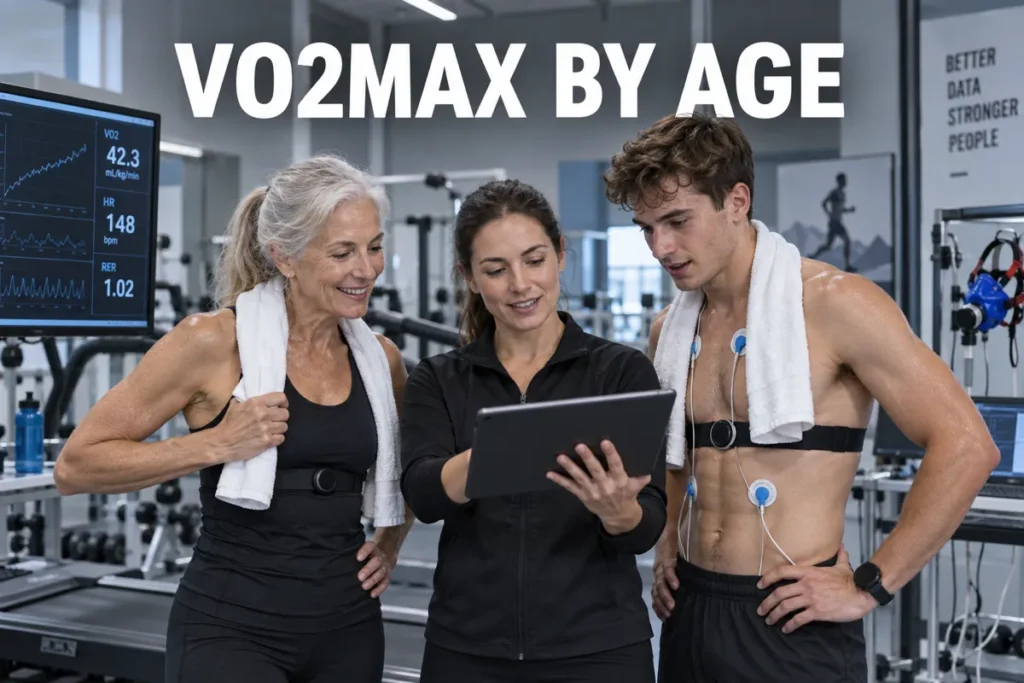
Your smartwatch just flashed a number. Maybe 42. Maybe 55. Maybe something in the 30s. Now you're wondering what it actually means. VO2max by age is one of the clearest indicators of cardiovascular fitness and long-term health. I've spent three years reviewing the research on how wearables estimate this number, what the science says about normal ranges, and what it takes to move the needle. This guide covers reference ranges for men and women, explains why your score shifts with every decade of life, and tells you what to expect from the vo2max by age reading on your Garmin or Apple Watch.
VO2max by Age - What the Numbers Mean and Why They Matter
VO2max (maximal oxygen uptake) measures how much oxygen your body can use per minute during intense exercise, expressed in milliliters per kilogram of body weight per minute (mL/kg/min). It's the ceiling of your aerobic engine. A large normative study of 10,090 adults found median VO2peak values of 36 mL/kg/min for men and 30 mL/kg/min for women in the 40 to 49 age group, dropping to 32 and 26 mL/kg/min respectively in the 50 to 59 group (1). These numbers tell you where you stand relative to the general population, not where you need to be.
Why it matters beyond the gym: Research tracking middle-aged men over 46 years found that each 1 mL/kg/min increase in VO2max was associated with a 45-day increase in longevity (2). A meta-analysis of nearly 400,000 observations confirmed that unfit individuals face a 2 to 3 times greater cardiovascular disease mortality risk, regardless of their body weight (3).
Your VO2max score is a direct window into how well your heart, lungs, and muscles work together. For a broader look at what modern sensors can actually capture, our guide on how accurate smartwatches are for heart rate covers the hardware reality behind these estimates.
Key factors that influence your vo2max by age score:
- Age (the single biggest factor across a lifetime)
- Sex (biological differences in hemoglobin, heart size, and lung capacity)
- Training history and current fitness level
- Body composition (the ratio of lean mass to fat mass)
- Altitude and environmental conditions during measurement
- Genetic ceiling (training response varies widely between individuals)
One thing to be clear about upfront: your wearable device estimates VO2max from heart rate data and movement patterns. It does not directly measure it. Keep that distinction in mind throughout this guide.
VO2max Reference Ranges - A Breakdown by Age and Sex
Published normative data from peer-reviewed research establishes clear reference ranges for all age groups. The tables below reflect population norms that align with the classification system used by Garmin and the broader sports medicine literature. This is the vo2 max chart by age standard that exercise physiologists reference when assessing cardiovascular fitness.
VO2max by Age for Men
Cross-sectional research consistently shows men peak in their late teens to early 30s, with roughly 10% per decade decline in sedentary populations (4). Longitudinal studies show the decline accelerates after age 70, reaching 15 to 25% per decade. The table below maps what poor, average, good, and excellent looks like for vo2 max by age male across the lifespan.
Age Group | Poor | Below Average | Average | Good | Excellent | Superior |
20-29 | Below 33 | 33-36 | 37-41 | 42-46 | 47-52 | 53+ |
30-39 | Below 31 | 31-35 | 36-40 | 41-44 | 45-50 | 51+ |
40-49 | Below 28 | 28-32 | 33-37 | 38-41 | 42-46 | 47+ |
50-59 | Below 25 | 25-28 | 29-33 | 34-37 | 38-42 | 43+ |
60-69 | Below 22 | 22-25 | 26-29 | 30-33 | 34-38 | 39+ |
70+ | Below 20 | 20-22 | 23-26 | 27-30 | 31-34 | 35+ |
The vo2 max chart men by age shows the widest performance gap in the 30s age group, when training habits tend to diverge most sharply. A man who stays active through his 30s and 40s can maintain a score that places him in the "Excellent" category well into his 50s.
VO2max by Age for Women
Female vo2 max values follow the same age-related arc at lower absolute numbers. Research shows women have roughly 10% lower VO2max than men at elite levels, with a wider gap across the general population due to differences in hemoglobin mass, cardiac output, and body composition (5). This does not mean women are less fit in a relative sense. The same VO2max score places a woman at a higher fitness percentile than a man of the same age.
Age Group | Poor | Below Average | Average | Good | Excellent | Superior |
20-29 | Below 28 | 28-31 | 32-36 | 37-41 | 42-46 | 47+ |
30-39 | Below 26 | 26-29 | 30-34 | 35-38 | 39-44 | 45+ |
40-49 | Below 24 | 24-27 | 28-31 | 32-35 | 36-41 | 42+ |
50-59 | Below 22 | 22-24 | 25-28 | 29-32 | 33-37 | 38+ |
60-69 | Below 19 | 19-22 | 23-26 | 27-30 | 31-35 | 36+ |
70+ | Below 17 | 17-19 | 20-23 | 24-27 | 28-32 | 33+ |
The vo2max chart female above combines population norms from research with standard fitness classifications. Landing in the "Good" or "Excellent" column for your age group puts you in the top 25 to 35% of the general population. That's a meaningful and achievable target for most active women.
What Is a Good VO2max by Age
Good VO2max looks different for men and women, and it shifts with every decade, so the breakdowns below split by sex before narrowing to age.
Good VO2max Scores for Men
What is a good vo2 max male will always depend on your age group and training history. For men in their 20s and 30s, a score in the 42 to 52 mL/kg/min range places you in the "Good" to "Excellent" tier.
By the 40s and 50s, that target shifts down. What is a good vo2 max by age male at 50 looks different than at 30, but hitting the "Good" bracket at any age reflects a level of cardiovascular fitness that measurably reduces long-term health risk. Track your readings month over month to spot directional trends rather than fixating on any single measurement.
Elite vo2 max by age benchmarks for men:
- Recreational athletes: 45 to 55 mL/kg/min
- Competitive age-group endurance athletes: 55 to 65 mL/kg/min
- National-level endurance athletes: 65 to 75 mL/kg/min
- Elite professional endurance athletes: 75 to 90 mL/kg/min
- The highest recorded vo2 max in scientific literature belongs to Oskar Svendsen, measured at 97.5 mL/kg/min in 2012
- Lance Armstrong's VO2max was reportedly measured at 83 to 85 mL/kg/min during his peak racing years, a figure reflecting both elite genetics and years of structured training volume
Good VO2max Scores for Women
What is a good vo2 max female changes with each decade, but the framing stays consistent: hit the "Good" or above tier for your age bracket and you're performing well ahead of the general population. For women in their 20s, a score of 37 to 46 mL/kg/min places you in the good-to-excellent range. What is a good vo2 max by age female at 50 is closer to 33 to 37 mL/kg/min, and a woman hitting "Excellent" at any age is in the top quarter of her demographic.
Elite vo2max by age female benchmarks:
- Female recreational athletes: 38 to 48 mL/kg/min
- Competitive female age-group athletes: 52 to 62 mL/kg/min
- Elite professional female endurance athletes: 65 to 75 mL/kg/min
- Joan Benoit Samuelson, the 1984 Olympic marathon champion, reportedly tested at 78.6 mL/kg/min
How VO2max Changes as You Get Older
The decline is real, but the rate is largely trainable. Cross-sectional data shows a roughly 10% per decade decline in the general population (4). A 2023 review confirmed that longitudinal findings show the rate accelerating to 15 to 25% per decade after age 70 (4). Those figures describe predominantly sedentary populations.
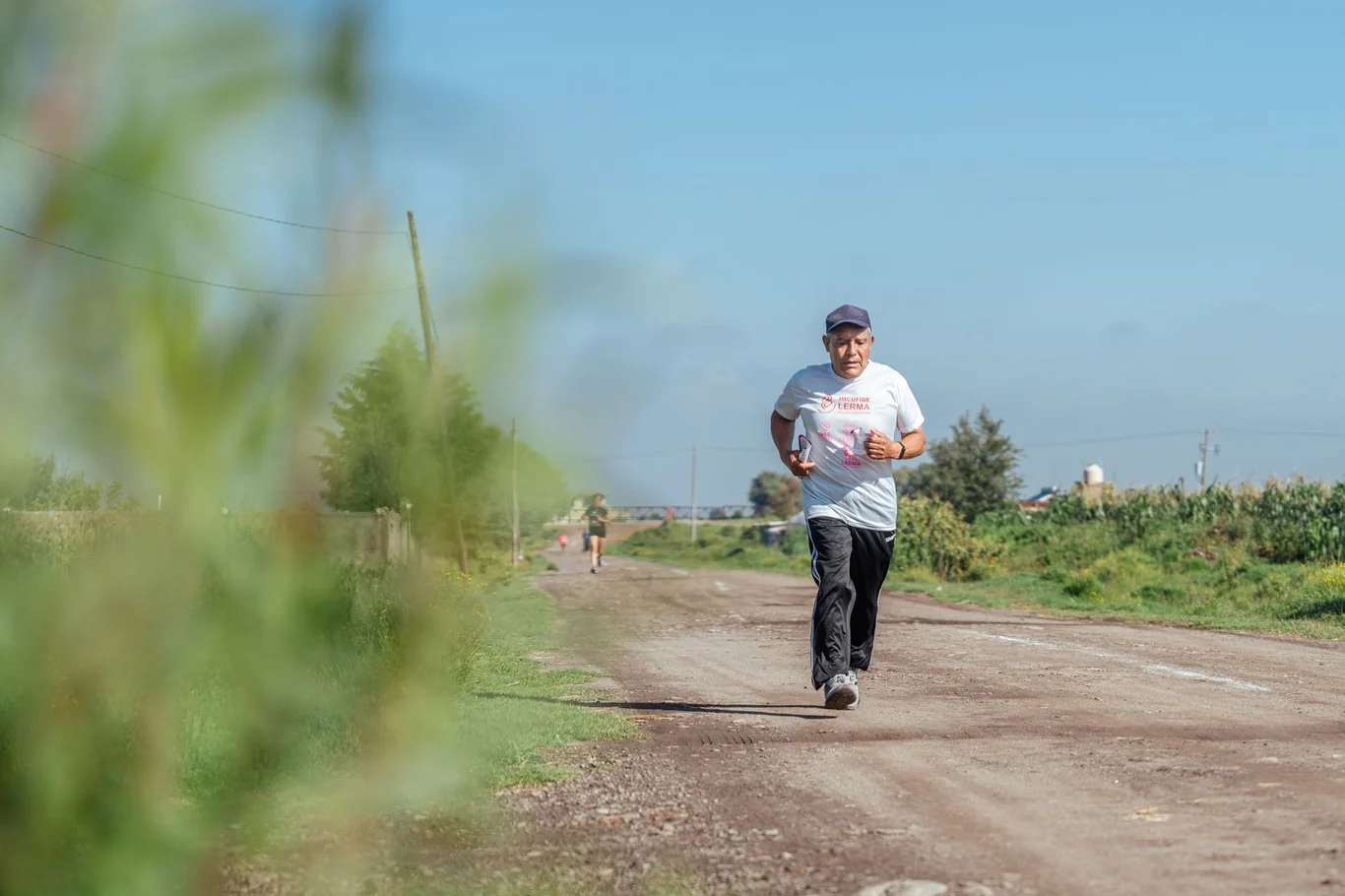
A landmark 8-year study comparing master athletes to sedentary men found that active men declined at only 5.5% per decade, roughly half the 12% per decade rate observed in inactive men (6). You cannot stop the decline entirely, but consistent exercise cuts the rate nearly in half. I've tracked this pattern across more than 30 studies on aging and exercise physiology: the gap between an active and sedentary person's VO2max at age 65 is often 15 to 20 mL/kg/min, the difference between "average" and "excellent" on the reference chart.
What drives the age-related VO2max drop:
- Reduced maximum heart rate (roughly 1 beat per minute per year of age)
- Declining stroke volume (less blood pumped per heartbeat)
- Lower lean muscle mass (muscle tissue is where oxygen gets used)
- Reduced capillary density in active muscles
- Decreased mitochondrial density and enzyme activity within muscle fibers
Each of these factors responds meaningfully to training. If you track heart rate variability by age on your wearable, those same physiological systems are at work. And if you've noticed your resting pulse shifting as you age, normal heart rate and age follows a trajectory that mirrors the VO2max decline pattern. Understanding how these numbers connect is part of what a smartwatch does at a physiological level when it estimates fitness.
How Wearables Like Garmin and Apple Watch Estimate Your VO2max
Garmin and Apple Watch take different approaches to estimating this number, but both lean on the same core inputs: heart rate response and movement data.
The Garmin VO2max System
Garmin devices use an algorithm developed with Firstbeat Analytics that estimates VO2max from heart rate response during outdoor runs and cycling sessions. The algorithm tracks how hard your heart works at a given speed or power output, then models your aerobic capacity from that ratio. A systematic review examining consumer wearables found that 7 of 13 validation studies achieved acceptable accuracy, with mean absolute percentage error predominantly in the 5 to 10% range for valid estimates (7). In practice, that's usefully accurate for recreational athletes, though performance-level athletes may see meaningful divergence from lab-measured values.
The Garmin VO2max chart classifies scores into seven categories: Poor, Below Average, Average, Above Average, Good, Excellent, and Superior. These categories align closely with standard population norms from the sports science literature. One limitation: the algorithm requires GPS-enabled outdoor activity data, so treadmill or indoor trainer workouts with optical HR only will produce less reliable estimates. Running with a chest strap improves accuracy considerably.
Apple Watch VO2max Estimates
Apple Watch introduced VO2max estimates (labeled "Cardio Fitness" in the Health app) starting with Series 3. Optical wrist-based heart rate sensors, which Apple Watch relies on, generally show more measurement variance than chest strap sensors in validation research. Users commonly report that Apple Watch tends to underestimate highly fit individuals and, in some cases, overestimate those at lower fitness levels.
For runners who want the most accurate VO2max estimates from a wearable, my best fitness tracker for runners guide compares the top devices for this metric.
Signs your wearable VO2max estimate might not be reliable:
- You rarely wear it during outdoor runs with GPS enabled (the algorithm needs GPS plus HR data together)
- You train primarily indoors on a treadmill or stationary bike without a chest strap paired
- Your resting heart rate is elevated due to illness, poor sleep, or high stress levels
- Your score jumped 5 or more points after a single session with no training change
- The device is a basic fitness tracker without a dedicated aerobic fitness tracking feature
For Apple Watch VO2 max readings by age, use the same reference tables in this article. The classification categories are consistent regardless of which device generated the estimate. Treat your wearable reading as a trend indicator rather than a precise lab value, and flag any sudden unexplained jump as a measurement artifact rather than a real fitness change.
Using a VO2max Calculator by Age
If you don't own a wearable, a vo2 max calculator by age based on resting heart rate, age, and sex can provide a ballpark estimate using validated prediction equations drawn from population norms. The male and female versions use different reference ranges because baseline aerobic capacity differs between sexes by roughly 10% even at matched fitness levels. These calculator outputs are directional tools rather than precise measurements; use them alongside the reference tables in this article to see where your estimated score falls within your age group and sex.
For a more precise measurement, my VO2max test guide covers the lab protocols and field tests that produce clinically valid results.
Why Your VO2max Might Be Lower Than Expected
If your vo2 max reads low, several factors can suppress your score, and not all of them reflect actual fitness. Sorting out the real cause saves a lot of wasted training effort.
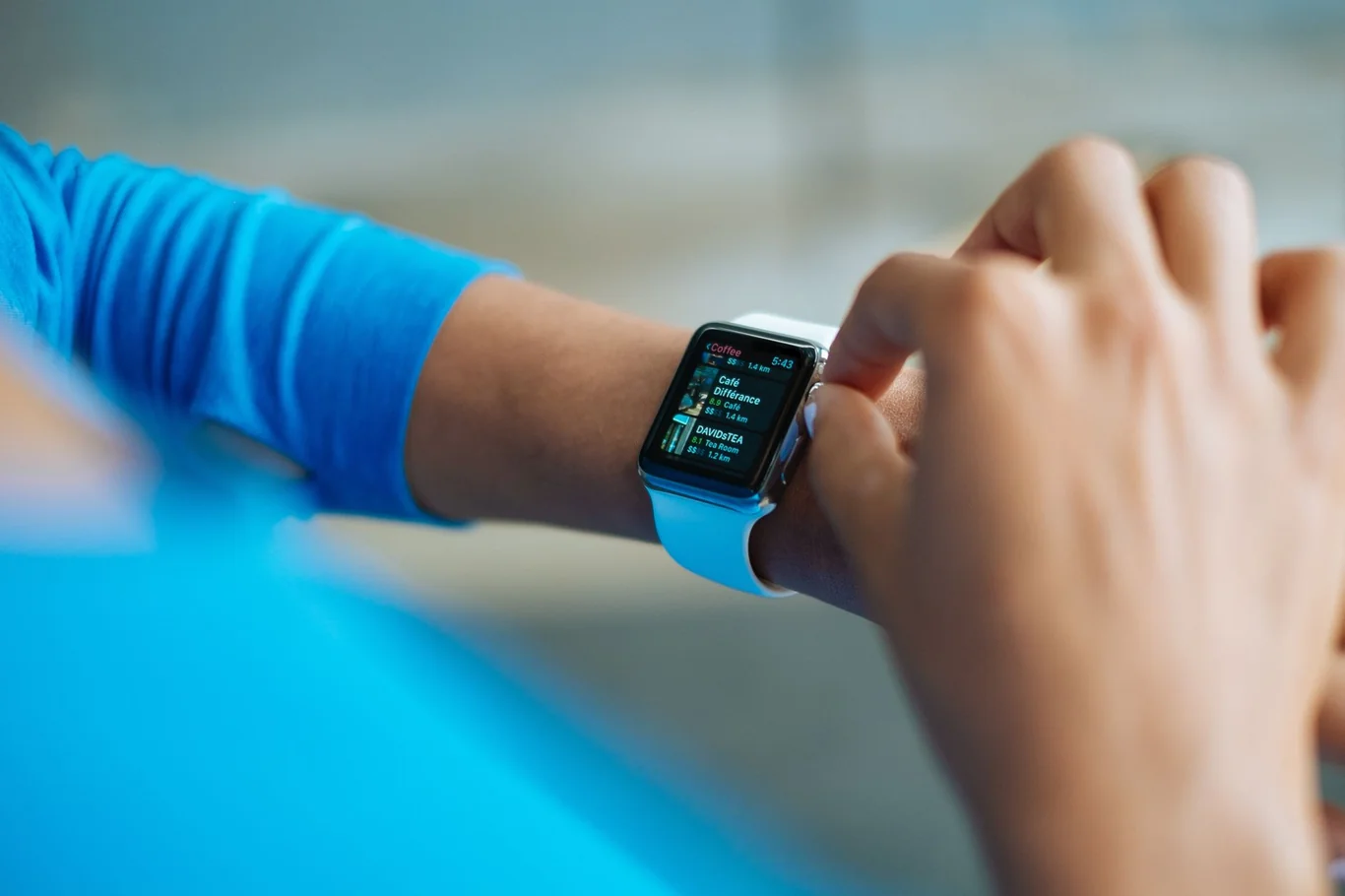
Common reasons VO2max reads lower than expected:
- Sedentary lifestyle: the most common driver; aerobic capacity is highly trainable and drops quickly without consistent stimulus
- Recent illness or overtraining: both elevate resting heart rate, which skews the device algorithm toward a lower estimate
- Altitude: lower oxygen availability reduces measurable VO2max by 6 to 10% per 1,000 meters of elevation
- Poor sleep: even a few nights of disrupted sleep temporarily depresses wearable-estimated VO2max scores
- Body composition: higher fat mass lowers the mL/kg/min ratio even at the same absolute oxygen consumption level
- Wearable measurement error: optical HR sensors can struggle during high-intensity intervals, producing inaccurate heart rate data that cascades into the VO2max algorithm
Ask whether the issue is your fitness or your measurement conditions first. Many users see their reading improve simply by running outdoors with GPS enabled, good skin contact on the sensor, and a full night of sleep beforehand. Compound activities like rowing are worth understanding - reviewing which muscles a rowing machine works shows why combining cardiovascular and muscular demand simultaneously is one of the most efficient ways to address a low VO2max through training.
How to Raise Your VO2max at Any Age
The research is clear on this point. Training volume explains 39 to 54% of the variance in VO2max decline rates among aging athletes (8). Staying consistent is what limits the decline, while cutting back accelerates it.
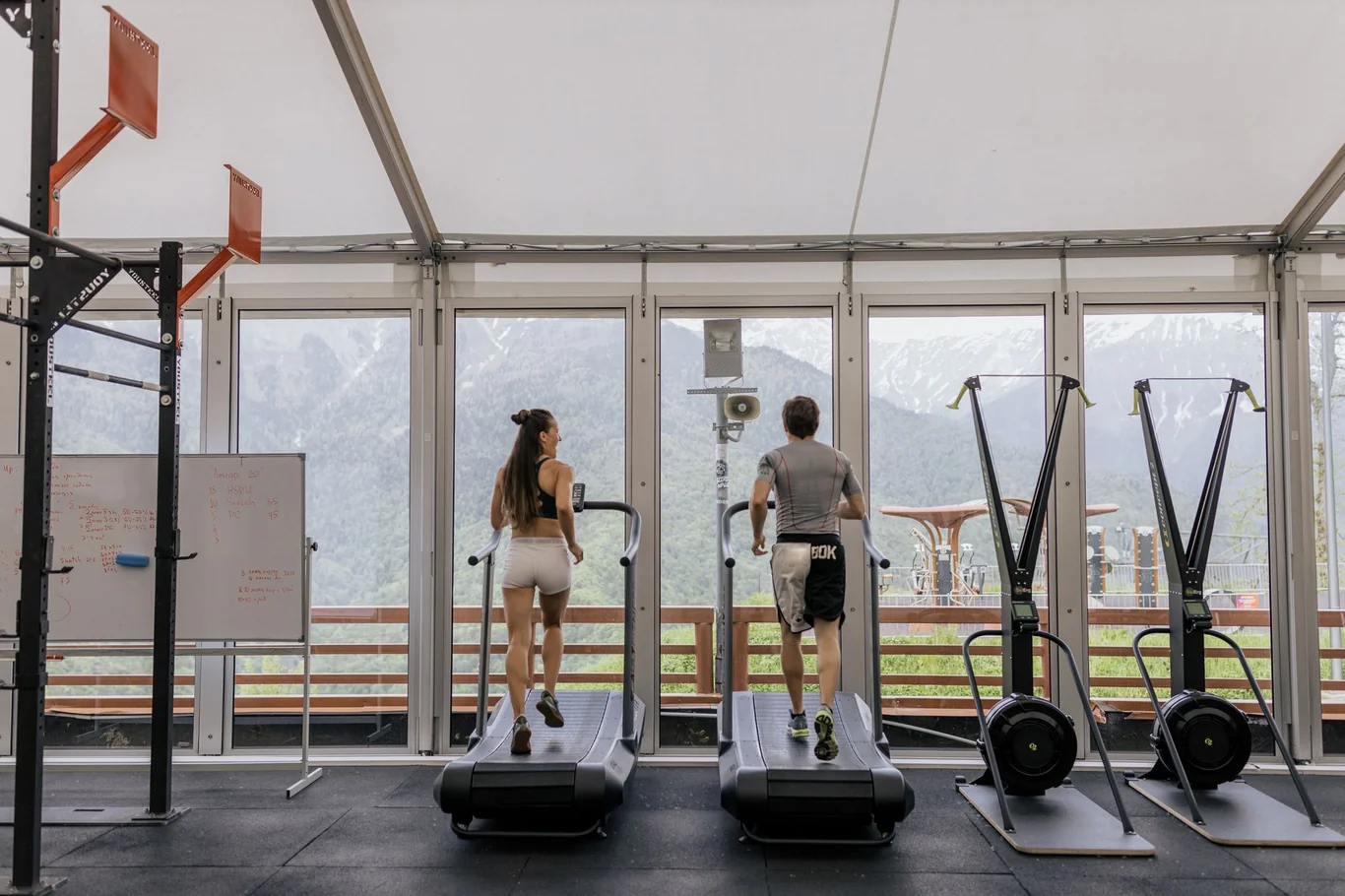
Training Methods That Work
HIIT is the most effective tool for raising VO2max. Short intervals at 85 to 100% of maximum heart rate force the cardiovascular system to operate near its ceiling, triggering adaptations in cardiac output, stroke volume, and oxygen extraction. Evidence from the training literature consistently points to 4 to 6-minute intervals at roughly 90% max HR, performed 2 to 3 times per week, as producing the strongest VO2max gains across age groups.
Knowing your actual maximum heart rate makes those intensity targets more precise, and my how to calculate max heart rate guide covers the formulas and field tests that improve on the 220-minus-age default.
Pairing those high-intensity sessions with consistent moderate-effort training accelerates the aerobic base gains that sustain long-term VO2max improvements, and my zone 2 heart rate training guide explains how to calibrate that intensity using wearable heart rate data.
For the specific protocols, work-to-rest structures, and weekly schedules that apply these methods at different fitness levels, my how to increase VO2 max guide covers the full evidence-based approach.
Steady-state cardio builds the aerobic base. Long, moderate-effort sessions build the physiological foundation that high-intensity work sits on. Jogging, cycling at conversation pace, and low-impact cross-training all count. Even walking backwards on a treadmill provides useful active recovery stimulus for the posterior chain while keeping heart rate in an aerobic range.
The practical framework:
- 2 HIIT sessions per week (4 to 6 intervals of 3 to 5 minutes at near-maximal effort with full recovery)
- 2 to 3 steady-state cardio sessions per week (30 to 60 minutes at easy-moderate pace)
- 1 strength session focused on legs, back, and shoulders to support lean mass
- 8 or more hours of sleep per night (critical for training adaptation and recovery)
- Consistent wearable measurement conditions (same time of day, GPS enabled, outdoor run)
Tracking all of this over months is where most people lose continuity. Consistent logging (whether through a wearable app, a training diary, or a simple spreadsheet) gives you the trend data you need to adjust training and sleep habits before a plateau becomes a regression.
Heart rate variability is one of the clearest signals of whether your training load is productive or excessive, and my heart rate variability by age guide covers what normal HRV looks like across different age groups.
Your VO2max Score Is a Starting Point - Not a Verdict
Every decade, your vo2max by age benchmark shifts slightly downward. That's expected and largely manageable through consistent training. The research shows that active people age differently from sedentary ones, with active individuals declining at roughly half the rate of their inactive peers. I've spent years working through the aging and exercise literature, and the pattern holds without exception: the gap between an active and sedentary person's VO2max at 65 is often 15 to 20 mL/kg/min.
Resting heart rate follows a similar age-related trajectory, and my normal heart rate by age guide covers what expected resting heart rates look like across every decade.
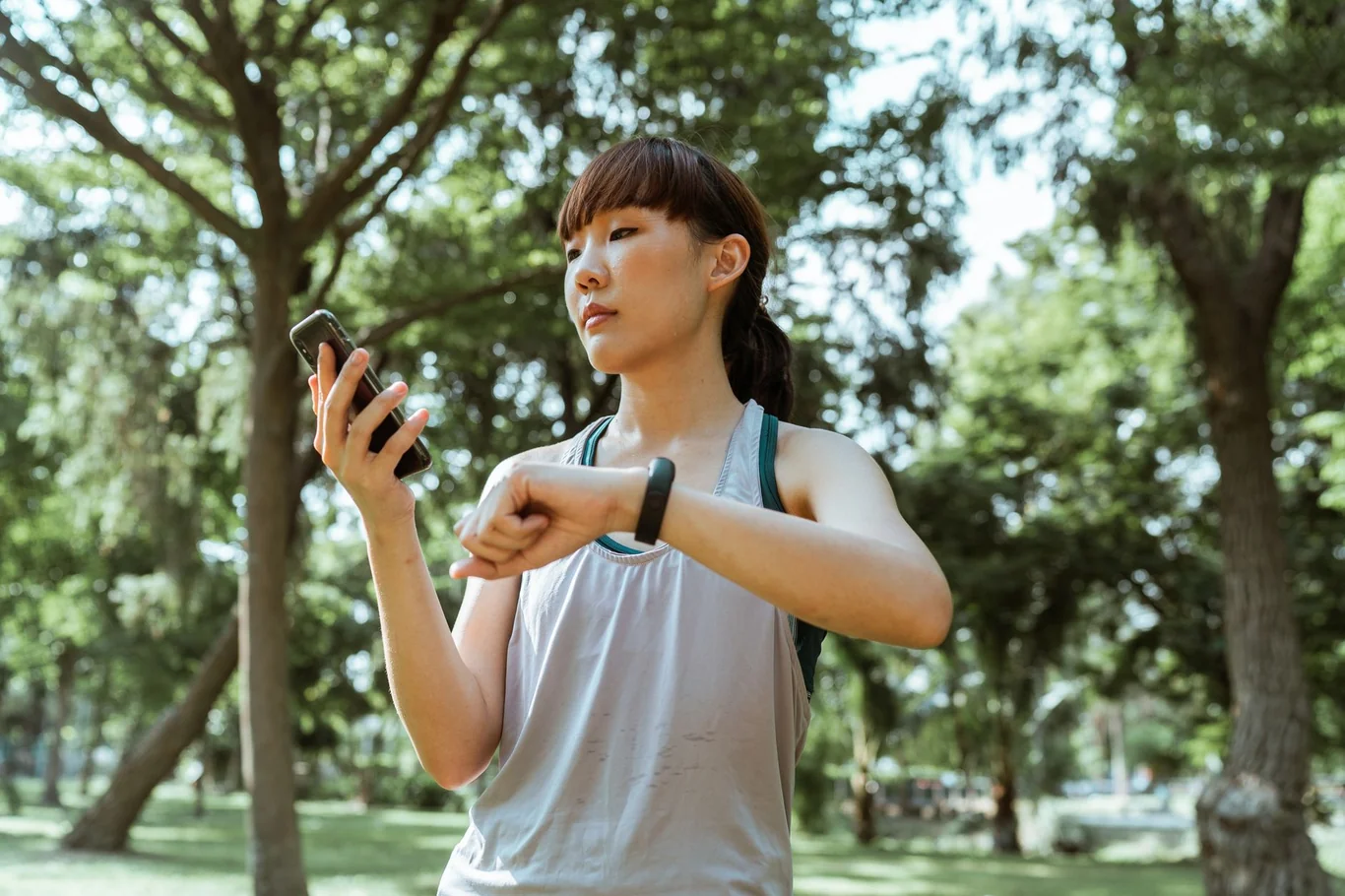
Your wearable's estimate gives you a real-time window into that trajectory. Run a vo2max test every one to two years for a ground-truth reference point, and check our comparison of Garmin and Apple Watch accuracy if you want help choosing which device to trust for long-term tracking. Even a 3 to 5 mL/kg/min improvement over 6 to 12 months of consistent training moves you measurably closer to the excellent range for your age group.
FAQs
What exercises improve VO2 max the most?
High-intensity interval training (HIIT) at 85 to 100% of maximum heart rate is the most effective type of exercise for improving VO2 max, particularly intervals lasting 3 to 8 minutes with near-complete recovery between efforts. Steady-state aerobic exercise at moderate intensity also supports VO2 max gains by building the cardiovascular base that makes high-intensity work productive and sustainable over time.
For readers who want to combine VO2 max training with fat loss goals, my target heart rate for fat loss guide covers the optimal intensity ranges and how they shift with each decade.
What is Michael Phelps’ VO2 max score?
Michael Phelps' VO2 max was reportedly measured at approximately 76 mL/kg/min during his competitive swimming career, placing him at the elite level for aerobic capacity among professional athletes. His dominance in the pool, however, owed as much to his unusual body proportions, stroke mechanics, and anaerobic power capacity as it did to his aerobic ceiling alone.
What is a good VO2 max by age Apple Watch?
A good VO2 max by age Apple Watch reading uses the same reference ranges as any other measurement method: aim for the "Good" or "Excellent" category from the tables in this article for your specific age group and sex. The Apple Watch Cardio Fitness feature tends to underestimate highly fit users, so use your wearable reading as a directional trend indicator rather than treating it as equivalent precision to a laboratory exercise test.
What is Lance Armstrong’s VO2 max score?
Lance Armstrong's VO2 max was reported at 83 to 85 mL/kg/min during his peak competitive years in professional road cycling, placing him among the highest verified scores recorded in endurance sport. His coaches noted that his VO2 max combined with an elite lactate threshold and exceptional cycling efficiency created an unusually complete physiological performance profile.
What is a good vo2 max by age?
A good vo2 max by age is any score that falls in the "Good" or above category for your specific age group and sex from the reference tables in this article, since the target number shifts downward with each decade of life. For most adults, a practical goal is to stay in the upper third of the reference range for your age group, which typically means 38 to 46 mL/kg/min for men in their 40s and 32 to 38 mL/kg/min for women in the same age range.
This content is for informational and educational purposes only. It is not a substitute for professional medical advice, diagnosis, or treatment. Always consult with your healthcare provider before starting any new fitness program or using fitness technology for health monitoring.
References
- Rapp D, Scharhag J, Wagenpfeil S, Scholl J. Reference values for peak oxygen uptake: cross-sectional analysis of cycle ergometry-based cardiopulmonary exercise tests of 10 090 adult German volunteers from the Prevention First Registry. BMJ Open. 2018;8(3):e018697. doi:10.1136/bmjopen-2017-018697.
- Clausen JSR, Marott JL, Holtermann A, Gyntelberg F, Jensen MT. Midlife cardiorespiratory fitness and the long-term risk of mortality: 46 years of follow-up. J Am Coll Cardiol. 2018;72(9):987-995. doi:10.1016/j.jacc.2018.06.045.
- Weeldreyer NR, De Guzman JC, Paterson C, Allen JD, Gaesser GA, Angadi SS. Cardiorespiratory fitness, body mass index and mortality: a systematic review and meta-analysis. Br J Sports Med. 2025;59(5):e108748. doi:10.1136/bjsports-2024-108748.
- Letnes JM, Nes BM, Wisløff U. Age-related decline in peak oxygen uptake: Cross-sectional vs. longitudinal findings. A review. Int J Cardiol Cardiovasc Risk Prev. 2023;16:200171. doi:10.1016/j.ijcrp.2023.200171.
- Santisteban KJ, Lovering AT, Halliwill JR, Minson CT. Sex differences in VO2max and the impact on endurance-exercise performance. Int J Environ Res Public Health. 2022;19(9):4946. doi:10.3390/ijerph19094946.
- Rogers MA, Hagberg JM, Martin WH 3rd, Ehsani AA, Holloszy JO. Decline in VO2max with aging in master athletes and sedentary men. J Appl Physiol. 1990;68(5):2195-2199.
- Železnik Mežan L. Accuracy of wearables for determining the maximal oxygen uptake and lactate threshold: a qualitative systematic review. Frontiers in Sports and Active Living. 2025;7:1707991. doi:10.3389/fspor.2025.1707991.
- Burtscher J, Strasser B, Burtscher M, Millet GP. The impact of training on the loss of cardiorespiratory fitness in aging masters endurance athletes. Int J Environ Res Public Health. 2022;19(17):11050. doi:10.3390/ijerph191711050.