

No device type is proven to be the most accurate step counter. Results change with the model and generation, the place you wear it and how slowly you walk, and the studies here tested older models, so look for a validation of the exact device you plan to use.
The most accurate step counter depends on the device, the way you wear it and the way you walk, and no single answer holds in every study. I compared the published validation studies for wrist watches, phones, waist-worn devices and clip-on pedometers. The results run in both directions: a treadmill test put one watch first, while a test of normal daily life found wrist devices about a fifth away from a pedometer's count.
This guide sets the study results side by side, names the device generation tested in each one, and says plainly where the evidence stops. It compares smartwatches, phone apps and clip-on pedometers. Most of the devices in these studies are older models than today's lineup, so read the results as what a device type has done in a test, not as a ranking of what you can buy now.
Most Accurate Step Counter: How Watches, Phones, and Clip-Ons Actually Compare
No device type wins in every study. A phone's count depends on whether it is on your body and how slowly you walk. Clip-on pedometers appear in the evidence mostly as the reference that other devices are measured against.
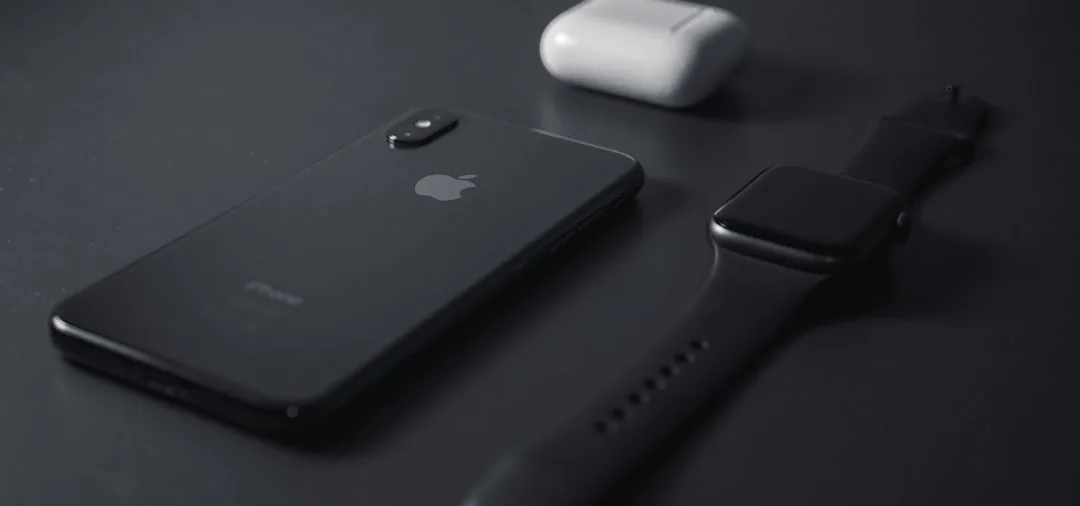
Normal life is harder on a step counter than a lab. In a 2021 study of 48 adults aged 18 to 59, an Apple Watch 2 (2016), a Fitbit Charge 2 and a Fitbit Alta tracked daily steps closely in trend, with a correlation of 0.94 against a Yamax Digi-Walker SW-200 pedometer. Even so, their mean absolute percentage error over a day of normal life (taken off for sleep and bathing) was about 17% for the Charge 2 and about 20% to 21% for the Apple Watch 2 and the Alta, and all three counted more steps than the pedometer (1). That gap matters when you aim at a daily target.
Table 1: Most Accurate Step Counter Results by Device Type
| Device Type | Result | Setting | Limit |
|---|---|---|---|
| Wrist watch or band (Apple Watch 2, Fitbit Charge 2, Fitbit Alta) | Mean error about 17% to 21% over a day | 48 adults, one day of normal life, against a waist pedometer | All three counted more steps than the pedometer even when the trend matched |
| Watch worn at the waist (Apple Watch Series 5) | Mean error 5.8%, the lowest of any device and position | 27 adults on a treadmill at slow and shuffling paces, hand count from video | One older model, and the waist is not where most people wear a watch |
| Phone (iPhone 6 and Nexus 6P) | Built-in step tracking was weaker than a custom app at slow speed on most walk lengths | 52 adults, walks of 6, 10 and 20 m at normal and slow speed | Two 2015-era phones in a front trouser pocket, short walks only |
| Wrist device for older adults (ADAMO Care Watch) | Error 1.3% to 1.9% at slow and normal speeds in adults 65 and older | 20 older and 20 young adults, 30 m walks, hand tally | One device model over short, controlled walks |
Smartwatch Step Trackers
Smartwatches estimate steps from wrist motion, using a built-in accelerometer and the maker's software. The wrist does not move the way a foot does, so the watch has to infer a step from arm swing.
A 2025 study of 27 adults tested 12 devices on a treadmill at a slow walk of 3.5 km/h (about 2.2 mph) and a shuffling walk of 2.0 km/h (about 1.2 mph), and counted the steps by hand from video. Devices were worn at the wrist, the ankle and the waist. The Apple Watch Series 5 (2019) had the lowest error of any device and position, 5.8% at the waist, and 9.3% across all positions. Among the others, the Garmin Vivofit 4 had a mean error of 19.2% across positions, the Fitbit Charge 4 22.0% and the Withings Steel HR 40.6% (2). That is one test of older models at two slow paces, so it does not rate the current Apple Watch Series 12, Ultra 4 or SE 3. Arm movement without walking may also add steps on a wrist device, so I would check any watch by moving the arm for a minute with the feet still.
Clip-On Pedometers
A dedicated step counter pedometer clips to the hip or waistband and needs no app. In the 2021 free-living study, a Yamax Digi-Walker SW-200 served as the step reference for three wrist devices (1). Using a pedometer as the yardstick was the researchers' choice, not a test of the pedometer, so that study does not show how accurate it is.
No study on this page compares a modern clip-on pedometer with a watch or a phone head to head, so nothing here backs a claim that a clip-on is the most accurate step counter. What a clip-on offers is simplicity: no app, no pairing and no account, which removes several ways for a step count to go missing. For a plain daily total at normal walking pace, that simplicity is the reason I would consider one.
Smartphone Step Counter Apps
Your iPhone or Android phone counts steps with its built-in motion sensors and passes the total to a health app, such as Apple Health on iPhone or Samsung Health on a Samsung phone. A 2018 study of 52 adults compared the built-in step tracking of an iPhone 6 and a Nexus 6P Android phone, carried in a front trouser pocket, with a custom step-counting app over walks of 6, 10 and 20 m at normal and slow speeds. The custom app did better at slow speed on the iPhone 6 at every distance, and on the Nexus 6P only over 6 m; over 20 m the Nexus 6P's own counter did better (3). In my view that makes a phone's built-in count a weaker choice for short, slow walks, the kind most people take around a house.
Placement is the part a phone cannot control. It sits in a pocket for one hour, a bag the next and on a desk after that, and a phone that is not on your body counts nothing. None of these studies measured phone placement, so this is my judgement from how the sensor works. If you rely on a phone as your most accurate step counter, carry it in the same pocket every day.
Best Step Counter Watch: What Separates Accurate from Unreliable
The best step counter watch cannot be picked by brand alone. A study result names a device generation, a wearing position and a walking condition, and it holds only for that combination. In the 2025 treadmill study above, the Apple Watch Series 5 had the lowest step error of 12 devices at slow and shuffling paces, which makes it the most accurate step counter watch in that study.
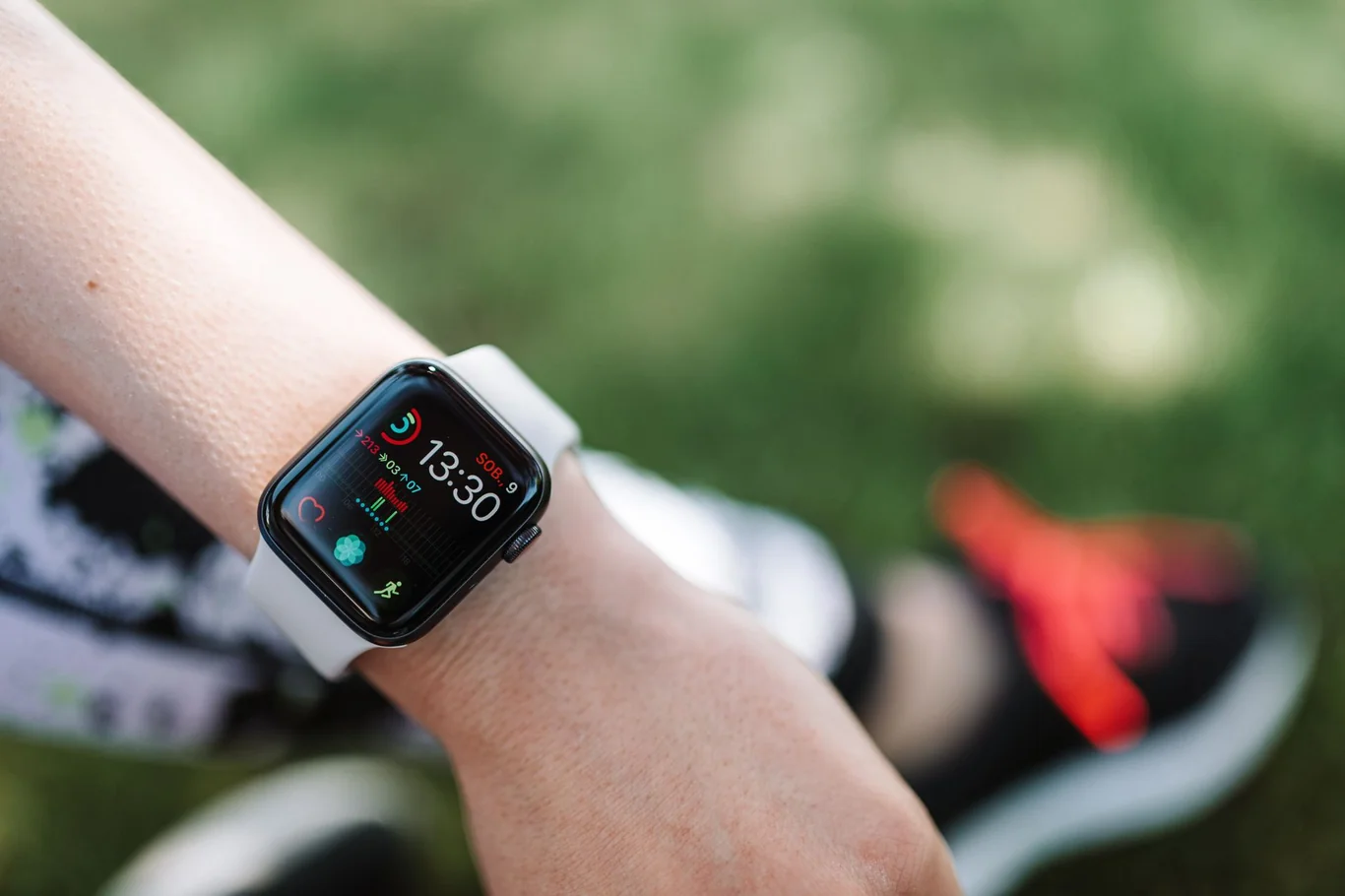
Treat a claim about the most accurate step counter watch as a claim about one model in one test. When I weigh a watch, I look at which model and generation was tested, who wore it, and whether steps were counted against a hand count or against another consumer device. A spec sheet cannot answer any of those three questions.
What to check before you trust a watch's step count:
- A named model and generation with a published validation study, not a brand-only claim
- A study that counted steps against a hand count or a research monitor, not against another consumer device
- Results at the pace you walk, because slow, shuffling and normal walks are different tests
- A wearing position you will keep up, either snug on the wrist or where the study placed the device
- Results from a normal day, not only a treadmill, because daily totals differ from lab results
For step counting, the Garmin vs Apple Watch accuracy question has thin and old evidence. The 2025 treadmill test included two Garmin devices, the Forerunner 45S and the Vivofit 4, and the Vivofit 4 had a mean error of 19.2% across positions against 9.3% for the Apple Watch Series 5 (2). A test of older models is not a verdict on the current Apple or Garmin lineup. The older Fitbit results carry the same caveat: the Fitbit Charge 2 and Alta were off by about 17% to 21% of daily steps (1), and the Fitbit Charge 4 had a 22.0% mean error averaged over wrist, ankle and waist on the slow treadmill (2).
Distance is a second number to check. On an outdoor walk, divide the distance your watch reports by your step count to see your average stride, and look for a sudden change from day to day. It is a rough self-check rather than a validated method, and it cannot show whether the step count itself is right. For the wider question of the most accurate fitness watch, heart rate and calories matter too, and the evidence there is separate.
Step Counter Pedometer vs. Smartwatch: Choosing for Your Walking Style
The choice between a dedicated pedometer step counter and a smartwatch depends on how you walk and what else you want from the device. Neither type has a head-to-head test on this page, so the points below are about convenience, not proven accuracy.

Advantages of a dedicated step counter pedometer:
- Waist placement: a device at the waist moves with the body, and in the 2025 treadmill test the lowest step error came from a watch strapped at the waist, though no clip-on was in that test (2)
- Simplicity: a basic clip-on needs no app, Bluetooth pairing or account
- A known reference role: researchers used a Yamax Digi-Walker SW-200 clip-on as the yardstick for daily steps (1)
Step counter bracelets and wristband trackers, including current Fitbit models, sit between full smartwatches and clip-ons. They are worn on the wrist all day, which avoids the placement problem a phone has. The older Fitbit Charge 2 and Alta were off by about 17% to 21% of daily steps (1), and the Fitbit Charge 4 had a 22.0% mean error averaged over wrist, ankle and waist on a slow treadmill (2). No study here tests a current band, so I would not pick one for step accuracy alone. If you want a simple first wearable, the budget fitness tracker picks are a place to start; judge them on comfort and battery, not on a claimed step edge.
Step Counter for Seniors: Accuracy at Slower Walking Speeds
Slow walking is where the evidence gets thin and where errors can grow. Slow speeds are normal for older adults, for people recovering from surgery and for anyone with a mobility limit, so a result at a brisk pace says little about their day.

A 2018 study put the ADAMO Care Watch on 20 adults aged 65 and older (mean age 75) and 20 young adults. The watch was worn on each wrist during 30 m walks at slow, normal and fast self-selected paces, a Timed Up and Go test and stair tasks, and steps were tallied by hand. In the older adults the error was 1.3% to 1.9% at slow and normal speeds, and agreement with the hand count (intraclass correlation) was 0.931 to 0.985 for the walks and the Timed Up and Go across all 40 adults (4). At the fast pace the error was larger, about 6% in the older adults and 17% in the young adults. That is one device model in one short, controlled test. It shows what is possible at slow speeds, not what a typical consumer watch does. For seniors, a published result at slow speeds is the first thing I weigh in a step counter.
For seniors or anyone walking at a slower pace, these factors matter most in a step counter:
- A published result at slow walking speeds
- Large display that is readable without adjusting glasses
- Setup that does not require a smartphone or Bluetooth pairing
- A clip or strap that attaches easily with limited hand strength
- Long battery life to avoid daily charging routines
In the 2025 treadmill test the Apple Watch Series 5 had the lowest errors at slow and shuffling paces (2), but a watch still needs charging and setup. A basic clip-on may suit a senior who wants simplicity, though no study on this page tests one at slow speeds. If an older adult wants a wearable anyway, I would look first at published slow-speed results and easy setup in any fitness tracker for seniors.
Factors That Shape the Accuracy of Step Counters
Several things change a step counter's result: how you move, where you wear the device and the setting it was tested in. The accuracy of a step counter is not a fixed number for a device, and the studies show it.
Walking Speed and Gait Type
Walking speed matters, but the direction of the error depends on the device. In a 2015 test of seven activity monitors of that time, including the Fitbit One and Jawbone Up, in 16 adults, five of the seven underestimated steps at every one of three self-selected walking speeds, and one overestimated them (5).
Table 2: Step Counter Accuracy by Walking Speed
| Walking Condition | Result | Setting and Notes |
|---|---|---|
| Slow walk of 3.5 km/h (about 2.2 mph) and shuffle of 2.0 km/h (about 1.2 mph) on a treadmill | Apple Watch Series 5: 9.3% mean error across positions, 5.8% at the waist | 27 adults, hand count from video; Garmin Vivofit 4 19.2%, Fitbit Charge 4 22.0% |
| Slow and normal 30 m walks, 0.5 to 1.5 m/s | ADAMO Care Watch: 1.3% to 1.9% error in adults 65 and older | Error was larger at the fast pace, about 6% in older adults |
| Slow and normal walks of 6, 10 and 20 m | A custom app beat built-in phone step tracking at slow speed | iPhone 6 at all three distances, Nexus 6P at 6 m only |
| Three self-selected speeds, indoor and outdoor walking | Five of seven monitors undercounted at every speed, one overcounted | 16 adults, reference sensors on the shanks; the Movemonitor stayed under 2% error |
This is why a lab result and a daily total can disagree. A review of 158 publications on nine wearable brands, searched to May 2019 and so mostly older generations, found that 45.2% of laboratory step comparisons with a reported error were within 3% of a manual count, with a tendency to undercount. In free-living settings, 42% of comparisons were within 10% of a research accelerometer, with a slight tendency to overcount (6). Casual movement through a day is harder to count than a deliberate walk, so a result from a treadmill walk should not be read as a result for a whole day.
A daily 10,000-step goal involves a lot of casual movement, so I weigh results from normal days more than treadmill results when choosing a device. Missed or extra steps also skew any estimate of the calories 10,000 steps burn.
Body Placement and Wearing Position
Placement changes the result, and the evidence here is one study. In the 2025 treadmill test the Apple Watch Series 5 had a mean error of 5.8% at the waist and 9.3% across all positions (2). A phone in a bag is a different case, because it is not on your body. Tip: check any new device once against a count you tally yourself, over 100 steps, and treat a large gap as a sign that the position or the settings need attention.
Ankle placement is the other non-wrist option. In the 2025 treadmill test, half of the 20 lowest-error device and position pairs were worn on the leg (2), which is why an ankle fitness tracker is worth a look for slow, shuffling steps.
How to improve step counter accuracy, in priority order:
- Wear the device where its test placed it (waist or hip for a clip-on, snug on the wrist for a watch)
- Enter your correct height and stride length in the companion app settings
- Keep the device software and the app up to date
- Secure the strap or clip firmly so the device does not bounce
- Compare GPS distance with your step count on an outdoor walk to spot a sudden change
- Reset stride length settings if you switch often between walking and running
Stair Climbing and Irregular Movement
Stair climbing, sideways steps, walking backward on a treadmill and carrying a heavy load all differ from the forward walking used in most validation studies, so treat step totals from those activities as rough. None of the studies on this page rates the device types on them.
For seniors or anyone tracking stair climbing in a recovery program, a smartwatch with an altimeter can report floors separately from steps, which gives a fuller picture of vertical movement than a step total alone. A day with many flights of stairs can look inactive on steps alone. If you are in a rehabilitation program, ask your therapist which number to track.
Best Step Counter App: Free Options for iPhone and Android
The best step counter app depends on your platform and the phone you carry. On iPhone, the Health app counts steps automatically, and Samsung offers Samsung Health free for Galaxy and other Android phones, so most people can track steps without buying an app. Check which app your own phone uses and what the current terms are.
Step counter apps have no head-to-head ranking on this page, so the most accurate step counter app cannot be named. Apps can be accurate: in a 2018 study of 44 students, two phone apps, Dongdong and Ledongli, had step errors of about 1% to 2% against a hand count, while the Apple Watch 2 had 42% and the Samsung Gear S3 21%. The authors tied the Apple Watch 2 gap mainly to the watch screen not being woken, which left data unsynchronized (7). The main options are:
- Apple Health: the health app on iPhone
- Samsung Health: Samsung's free health app for Samsung and other Android phones
- Google Health app (formerly the Fitbit app): the app for Fitbit devices and Pixel Watch
If you want an app that works without a cloud account, check each app's privacy and account terms before you install it, because a free app can still ask you to sign in.
Picking the Most Accurate Step Counter for Your Needs
My pick depends on what you will actually carry and wear. For a watch, I would look for a published step validation of that exact generation; the newest watch tested on this page is the Apple Watch Series 5, so no current model has a result here yet. For a pedometer, a clip-on worn at the waist avoids charging and pairing, but no study here proves it is the most accurate step counter. For a phone, keep it in one pocket and check it against a hand count.
The most accurate step counter in practice is the one you wear every day. A device on the desk counts zero steps, and a plain clip-on worn all day gives you a more useful total than a watch left on its charger. In my view consistent wearing matters more than brand, since even the closest wrist device in the daily-life study above was about 17% off the pedometer's count. A 2018 review of 67 Fitbit studies found step counts acceptably accurate about half the time (8).
For long-term tracking goals, look for validation data on the exact model and generation you plan to buy, because makers reuse model names across years. If you are comparing watches, start with the top-rated fitness trackers and check each model's validation record before trusting its step total. I would not pay extra for a feature on the strength of an accuracy claim that no independent study backs.
Frequently Asked Questions
Does swinging your arms count as steps?
Arm swinging is part of normal walking, so on a walk it helps a wrist device see steps. Arm movement without walking can add false steps on some devices, so move your arm for a minute with your feet still and watch the count.
Is Fitbit or iPhone more accurate for steps?
No study on this page compares a Fitbit with an iPhone head to head. The Fitbit Charge 2 and Alta overcounted daily steps by about 17% to 21% against a pedometer in one study, and the iPhone 6's built-in step tracking was weaker than a custom app at slow speeds in another.
What is the most accurate way to track my steps?
The most accurate way to count steps is a hand count, which is also how researchers check devices, so for daily tracking wear one device in the same position every day and check it once against a hand count. A watch worn at the waist had the lowest error in that 2025 lab study, but that is one test of one older model, so no placement or device type is proven best.
Which step counter app is most accurate?
Step counter apps have no head-to-head ranking on this page, so the most accurate one cannot be named; Apple Health and Samsung Health are the usual free choices, and neither has a validation result here. In a 2018 study of 44 students, two phone apps, Dongdong and Ledongli, had step errors of about 1% to 2% against a hand count.
What is the most accurate smart watch for fitness?
For step counting, the studies do not crown one model for every user. The Apple Watch Series 5 had the lowest step error among 12 devices in a 2025 lab study, and the Apple Watch 2 and two Fitbit models each had daily step errors of about a fifth in a 2021 study of normal days, all counting high. Neither test covered the current Apple Watch lineup or a current Garmin model, so look for a study of the exact model.
 Tech Fitness Lab
Author
Vanja Vukas
I founded Tech Fitness Lab and hold a master's degree from the Faculty of Sport and Physical Education in Novi Sad. I have competed in sport and coached clients, and my writing has appeared on Fitness Volt and BOXROX. I research products from their manuals, spec sheets and warranty terms, and I flag thin evidence.
This content is for informational and educational purposes only. It is not a substitute for professional medical advice, diagnosis, or treatment. Always consult with your healthcare provider before starting any new fitness program or using fitness technology for health monitoring.
We are always looking for expert inputs to make our content even better and more useful.
References
- Bai Y, Tompkins C, Gell N, Dione D, Zhang T, Byun W. Comprehensive comparison of Apple Watch and Fitbit monitors in a free-living setting. PLOS ONE. 2021;16(5):e0251975. doi:10.1371/journal.pone.0251975.
- Rowe G, Weight D, Rea A, Conlon J, Wood FM, Edgar DW. Accurate measurement of simulated slow and altered walking activity: Apple Watch best in class wearable devices. PLOS ONE. 2025;20(10):e0333504. doi:10.1371/journal.pone.0333504.
- Hurt CP, Lein Jr. DH, Smith CR, Curtis JR, Westfall AO, Cortis J, Rice C, Willig JH. Assessing a novel way to measure step count while walking using a custom mobile phone application. PLOS ONE. 2018;13(11):e0206828. doi:10.1371/journal.pone.0206828.
- Magistro D, Brustio PR, Ivaldi M, Esliger DW, Zecca M, Rainoldi A, Boccia G. Validation of the ADAMO Care Watch for step counting in older adults. PLOS ONE. 2018;13(2):e0190753. doi:10.1371/journal.pone.0190753.
- Storm FA, Heller BW, Mazzà C. Step detection and activity recognition accuracy of seven physical activity monitors. PLOS ONE. 2015;10(3):e0118723. doi:10.1371/journal.pone.0118723.
- Fuller D, Colwell E, Low J, et al. Reliability and validity of commercially available wearable devices for measuring steps, energy expenditure, and heart rate: systematic review. JMIR Mhealth Uhealth. 2020;8(9):e18694. doi:10.2196/18694.
- Xie J, Wen D, Liang L, Jia Y, Gao L, Lei J. Evaluating the validity of current mainstream wearable devices in fitness tracking under various physical activities: comparative study. JMIR Mhealth Uhealth. 2018;6(4):e94. doi:10.2196/mhealth.9754.
- Feehan LM, Geldman J, Sayre EC, et al. Accuracy of Fitbit devices: systematic review and narrative syntheses of quantitative data. JMIR Mhealth Uhealth. 2018;6(8):e10527. doi:10.2196/10527.