
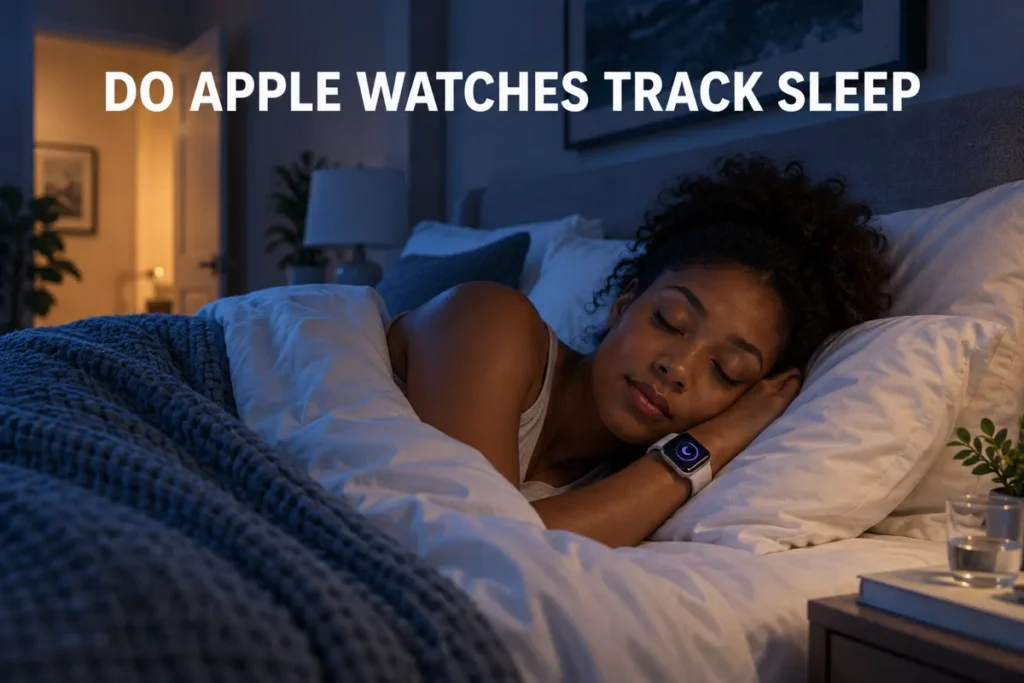
Apple watches track sleep. The Apple Sleep app captures nightly data on Core, REM, and Deep sleep stages, plus a 0-100 Sleep Score in watchOS 26. The feature works automatically once configured, running through the night to estimate how long you slept and which stages you cycled through. The more nuanced question is whether that data is reliable enough to guide actual decisions about sleep hygiene. This guide breaks down how apple watch sleep tracking actually works, what the research says about its accuracy, and what you can reasonably trust from your nightly results.
Do Apple Watches Track Sleep - And How Well Does the Data Actually Hold Up
Apple Watches do track sleep, and for most users, the feature runs automatically once set up. The Apple Sleep app uses the watch's accelerometer and optical heart rate sensor to detect when you fall asleep, when you wake, and which sleep stages you cycle through overnight. Apple's on-device machine learning classifies each 30-second block of your night into one of four states: Awake, Core, REM, or Deep sleep. From watchOS 9, the watch also logs respiratory rate throughout the night as an additional health signal.
The good news: Apple Watch is reliably accurate at detecting whether you're asleep or awake at any given moment. The challenge is sleep staging - determining the specific stage you're in - and that's where a more measured interpretation is warranted.
For most non-clinical uses, understanding what a smartwatch does beyond step counting and notifications is the first step. Apple Watch sleep tracking is genuinely useful for spotting patterns, tracking how lifestyle changes affect your rest, and building awareness of your nightly habits over time. Clinical precision is a different standard entirely, and the research is clear on where consumer wearables stand.
How Apple Watch Detects Sleep - The Technology Beneath the Wrist
Apple Watch estimates sleep using three primary data inputs working in combination:
- Accelerometer - detects wrist movements that signal stillness (sleep) or motion (wakefulness and stage transitions)
- Optical heart rate sensor - tracks heart rate and heart rate variability patterns, which shift predictably across sleep stages
- On-device machine learning - trained on large datasets collected alongside clinical polysomnography to classify sensor signals into sleep categories
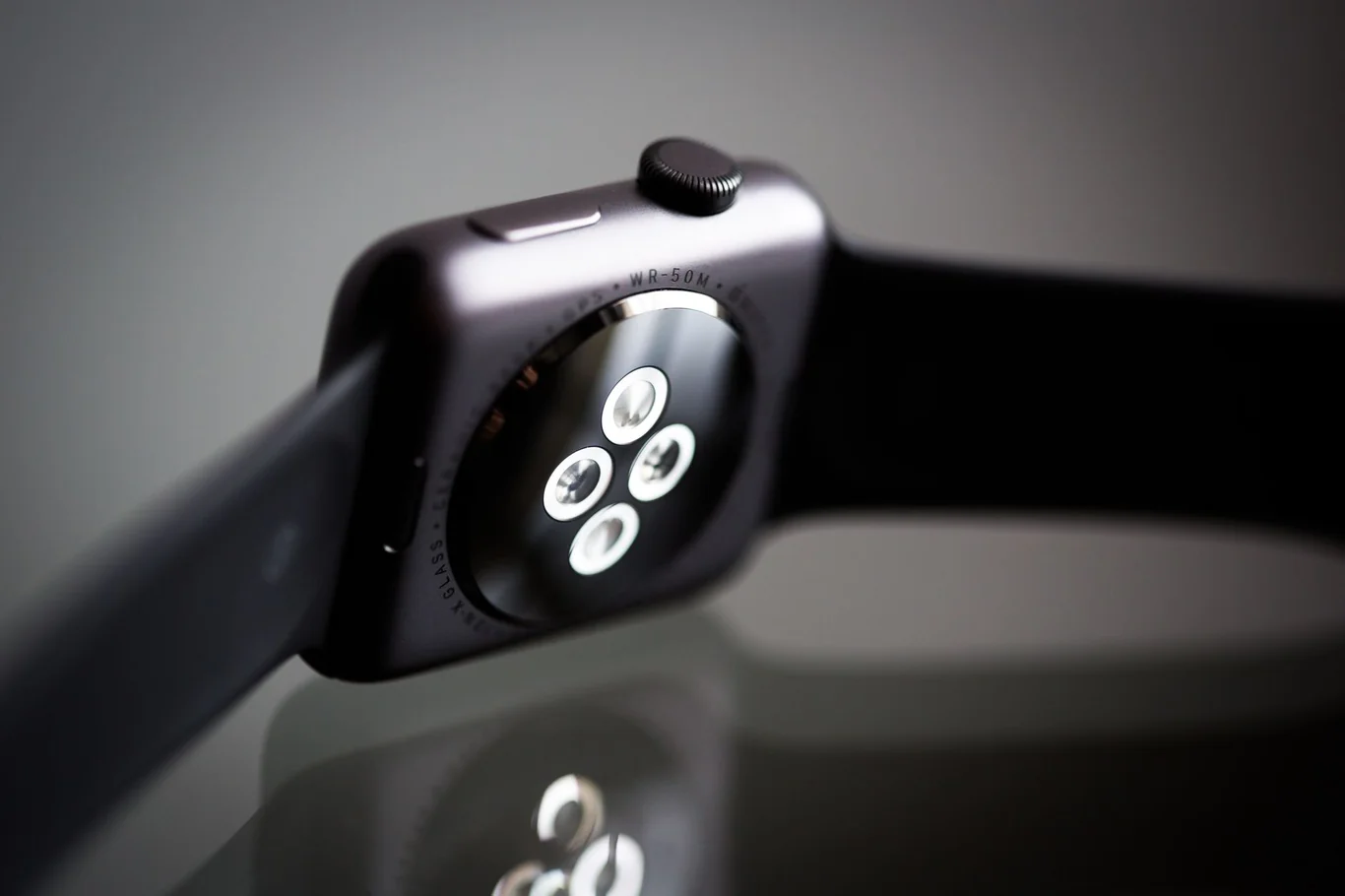
Series 8 and later also includes a wrist temperature sensor that contributes supplemental data during sleep, though temperature sensing is a secondary input rather than a primary stage-classification driver.
Blood pressure is handled the same way, and my Apple Watch blood pressure guide covers what Apple Watch actually detects versus what requires an external cuff-based device.
The combination of photoplethysmography (PPG) and motion sensing is the core approach used across most consumer wearables, including Fitbit, Garmin, and Oura Ring. A systematic review of 90 peer-reviewed studies on wearable sleep staging found that PPG combined with accelerometry typically achieves 65-75% classification accuracy for sleep staging, compared to 80-90% for EEG-based clinical systems (1).
That gap exists for a clear reason: the gold standard for sleep measurement - polysomnography, or PSG - uses electrodes placed on the scalp, face, and chest to capture brain waves directly. A wrist sensor works with far less physiological signal. This is a constraint of the entire sensor category, not a flaw specific to Apple Watch.
For heart rate data that bridges wrist sensor convenience and clinical-level precision, my chest strap heart rate guide covers the monitors that come closest to ECG accuracy during exercise.
Apple's on-device machine learning is trained to identify stage-specific patterns in motion-artifact-reduced heart rate data - the same contextual signal processing the watch applies during high-motion activities like rowing, where understanding what muscles a rowing machine works helps explain why those workouts produce distinct wrist motion signatures compared to running or cycling.
Apple Watch Sleep Stages - What Gets Tracked and How Accurately
Apple Watch tracks four states each night. The research validation numbers below come from a 2024 study comparing Apple Watch Series 8 against polysomnography (2):
Sleep Stage | Sensitivity | Notes |
Awake | 97% | Strongest performance - sleep-wake detection is highly reliable |
Core sleep | 86.1% | Solid accuracy for light sleep classification |
REM | 82.6% | Reasonably reliable; stable across nights |
Deep sleep | 50.5% | Least reliable - algorithm frequently underestimates this stage |
Apple Watch Series 8 achieves 97% sensitivity in sleep-wake detection and strong overall accuracy against PSG. For total sleep time, the watch showed no significant difference from PSG-measured values in this study (2). Those are genuinely strong results for a consumer wrist device.
If you want to understand which Apple Watch models support sleep tracking, reviewing apple watches in order by generation is useful context - basic sleep tracking (duration only) requires watchOS 7 or later, available on Series 3 and newer. Sleep stages (Core, REM, Deep) require watchOS 9 and Series 4 or later; Series 3 can track sleep duration and respiratory rate but not individual sleep stages.
Deep Sleep - The Hardest Stage for Apple Watch to Detect
Deep sleep is where accuracy drops most significantly. The 2024 validation study found that Apple Watch underestimated deep sleep by an average of 43 minutes and overestimated light sleep by 45 minutes. This pattern suggests the algorithm frequently misclassifies deep sleep as Core sleep rather than missing it entirely.
Fitbit's sleep stage tracking has similar accuracy patterns, and my Fitbit device lineup guide covers which models deliver the most reliable sleep data.
A 50.5% sensitivity rate means the watch correctly identifies deep sleep blocks only about half the time. Single-night readings should not be treated as precise measurements. Deep sleep supports physical recovery, immune function, and memory consolidation - making it the most clinically relevant stage to track accurately, and also the hardest. Weekly and monthly trends still provide meaningful behavioral signal, so tracking directional patterns across weeks has real value even when individual nights are imprecise.
REM and Core Sleep - More Reliable Readings
REM sleep detection is considerably more reliable at 82.6% sensitivity, and this stage tends to be stable across participants and nights. Core sleep detection at 86.1% sits in a reasonable range for behavioral tracking purposes.
A 2026 systematic analysis of consumer wearable sleep technology noted that motion-based devices tend to systematically overestimate total sleep and underestimate wakefulness, and that PPG sensors show reduced accuracy across different skin tones - a limitation the research community continues to investigate (3). This applies across the entire sensor category, not just to Apple Watch.
Apple Watch Sleep Score - What Your Number Actually Means
The apple watch sleep score is a 0-100 daily metric introduced in watchOS 26. It combines three components:
Component | Description |
Sleep duration | Hours slept measured against your personal sleep goal |
Sleep quality | Estimated time in each stage, based on overnight heart rate patterns |
Schedule consistency | How closely your actual bedtime and wake time matched your scheduled Sleep window |
A score of 70-100 is generally interpreted as good, though Apple has not published exact percentile benchmarks. The scoring was recalibrated in watchOS 26.2, changing how consistency is weighted - earlier scores are no longer directly comparable to post-update results. Sleep Score requires Apple Watch Series 6 or later (or Apple Watch SE 2nd generation, or any Ultra model); Series 4 and Series 5 track sleep stages but do not display a Sleep Score.
I'd treat the Sleep Score primarily as a behavioral feedback tool rather than a health metric. It rewards consistent schedules and adequate duration, which are evidence-based pillars of sleep hygiene. Where it falls short is in capturing sleep quality independent of timing - a night of fragmented, unrestful sleep can still score 85 if duration and schedule targets are met.
The score also does not account for blood oxygen levels, HRV trends, or respiratory disturbances - health signals that go beyond what the sleep algorithm captures. For context on do apple watches measure blood pressure and other physiological metrics Apple Watch does and does not track, understanding the full sensor picture helps set appropriate expectations for what the sleep data represents.
For a closer look at how HRV changes across age groups and what normal ranges look like, my heart rate variability by age guide covers what the numbers mean in practice.
How to Set Up Sleep Tracking on Apple Watch
Tracking sleep on an Apple Watch requires a few minutes of setup, then runs automatically each night. Here is the complete process for tracking sleep on an Apple Watch:
Step-by-Step Setup
- Open the Health app on your iPhone and navigate to Browse > Sleep
- Tap Get Started and follow the prompts to set your sleep goal (7-9 hours is the broadly accepted range for most adults, per established clinical sleep guidelines)
- Set a Sleep Schedule with consistent bedtime and wake time that matches your actual routine
- Enable Sleep Focus - this dims the watch face and silences notifications during your sleep window
- Optionally, configure the Wind Down routine in the same Sleep settings to create a pre-sleep buffer period with reduced screen access and calming app suggestions
- On your Apple Watch, confirm the schedule is active by opening the Sleep app and checking your next scheduled sleep window
The Apple Sleep app stores and visualizes all nightly data in Apple Health on your iPhone. Open Health, navigate to Browse > Sleep, and select any past date to see a detailed stage breakdown and your Sleep Score. The Health app surfaces daily, weekly, monthly, and 6-month trend views - use the weekly and monthly views for meaningful pattern analysis rather than relying on single-night readings.
From watchOS 10, Apple Watch also supports automatic nap detection - brief sleep periods outside your scheduled sleep window are captured and logged separately in the Sleep section of the Health app.
Apple Watch requires iOS for all functions, including sleep tracking - a common question is do apple watches work with androids, and the short answer is no. Android users looking for a similar sleep tracking experience should consider Fitbit or Garmin alternatives instead.
For users asking are apple watches waterproof - the watch is water-resistant to 50 meters on most models, meaning night sweat is not a concern for the sensor or device integrity during sleep.
Battery Requirements for Reliable Overnight Tracking
Battery management is frequently underestimated as a factor in sleep tracking reliability:
- Minimum recommended charge before bed: 30% or higher
- Typical overnight drain: 10-25% per 8-hour sleep period
- Sleep Focus enabled: reduces background activity and extends overnight battery life
- Low-Power mode impact: reduces drain but may limit heart rate sampling frequency
Apple's recommended routine is to charge the watch for 30-45 minutes during a wind-down period before bed, then wear it through the night. If you consistently wake to missing sleep data, low battery before the sleep window ends is the most common cause. I've found that building the pre-bed charge into an evening routine - 30 minutes while reading or stretching - removes the friction entirely and keeps the data consistent week over week.
Apple Watch Sleep Tracking Compared to Fitbit and Other Wearables
A frequently asked question is whether Apple Watch or a dedicated device like Fitbit or Oura Ring provides more accurate sleep data. The honest answer: no consumer wearable approaches clinical PSG accuracy, but there are meaningful differences across devices at specific sleep stages.
For a structured comparison of dedicated sleep trackers, my best fitness tracker for sleep guide breaks down how each device performs across the key stages.
Metric | Apple Watch Series 8 | Fitbit Charge 4 |
Sleep-wake detection | 97% sensitivity | ~95% |
REM sensitivity | 82.6% | 86.5% (~4-min mean difference from PSG) |
Deep sleep sensitivity | 50.5% | ~75% |
Data source | Robbins et al., Sensors 2024 | Schyvens et al., JMIR 2024 |
A 2024 systematic review comparing Fitbit Charge 4, Garmin Vivosmart 4, and WHOOP against PSG found that Fitbit Charge 4 achieved 86.5% REM sensitivity and approximately 75% deep sleep sensitivity - outperforming Apple Watch at those specific stages (4). Note these figures come from separate validation studies with different participant populations, so direct cross-device comparisons carry caveats.
The fitbit sleep score uses a similar 0-100 system to Apple's, with comparable weighting on duration and disruptions. Both are behavioral feedback tools with similar clinical standing. Apple Watch's main advantages are ecosystem depth - seamless iPhone Health integration, workout syncing, and activity tracking in a single device - rather than superior sleep staging accuracy.
For users who also swim and want to know whether their Fitbit handles pool use, my guide on Fitbit swim rating covers which models are rated for pool and open-water use and what the 5 ATM standard means in practice.
For users wanting deeper sleep analytics than the native app provides, third-party apps like AutoSleep, Sleep++, and Pillow are available on the App Store and offer expanded metrics, historical charts, and alarm optimization that the built-in Sleep app does not include.
For a deeper comparison beyond sleep data, our comparison of Garmin and Apple Watch accuracy covers heart rate, GPS, and workout tracking performance across both platforms.
Common Reasons Apple Watch Sleep Tracking Fails
If your watch consistently returns missing data or noticeably inaccurate readings, several well-documented causes are worth checking.
Missing sleep data (no stages recorded):
- Sleep Focus was not enabled or was turned off during the night
- Watch battery dropped below approximately 15% before the sleep window ended
- Bedtime fell outside the scheduled sleep window set in the Sleep app
Inaccurate wake-time or stage detection:
- Brief movements such as rolling over or a short bathroom trip can be logged as multi-minute awakenings
- The 30-second epoch system flags motion above a set threshold as wakefulness, even for brief events
Consistently low Deep sleep readings:
- As the research above shows, 50.5% sensitivity means single-night deep sleep readings are imprecise by design
- Avoid comparing individual nights; track 2-4 week averages to identify meaningful patterns
Data shifts after a software update:
- watchOS updates occasionally reset Sleep settings or alter how stage classification weighting is applied
- If your scores changed sharply after an update, re-confirm your sleep goal and schedule settings in the Sleep app
An observational study monitoring Apple Watch Series 10 wear across a nursing cohort found high wear compliance and minimal missing data over extended monitoring periods - confirming that missed nights are the exception when the device is properly configured (5). Missing data is almost always a configuration or battery issue, not a device failure.
For users considering whether platform dependency creates tracking gaps, my guide on Apple Watch platform compatibility covers which features require iPhone nearby and which work independently.
Understanding how Apple Watch handles nighttime heart rate monitoring - the same sensor data stream that feeds sleep staging - gives useful context. The analysis of how accurate smart watches are for heart rate covers the sensor-level picture in detail.
Is Apple Watch Sleep Tracking Worth Using - A Practical Summary
Apple Watch sleep tracking performs well for what it is designed to do: provide behavioral feedback on sleep habits, not clinical diagnostic data. Total sleep time, schedule consistency, and week-over-week pattern shifts are reliable enough to guide real decisions about routine and recovery. Deep sleep minute counts on any single night are not. I'd treat this data as directional rather than diagnostic.
If the performance makes a compelling case and you're weighing the investment, my how much do Apple Watches cost guide covers current pricing across every model in the lineup.
Pairing sleep data with consistent hygiene - a regular bedtime, limiting screens before bed, and opting for low-impact evening movement like walking backwards on a treadmill over high-intensity sessions close to sleep - gives nightly output more actionable context. For users who also track training load, understanding how to track workouts with Apple Watch creates a fuller recovery picture. The Sleep Score and native sleep tracking features are included on any Apple Watch Series 6 or later running watchOS 26 - no subscription required, regardless of how much do apple watches cost.
FAQs
How do I get my Apple Watch to track my sleep?
To get your Apple Watch to track your sleep, open the Health app on your iPhone, navigate to Sleep, and complete the setup to enable Sleep Focus and set a nightly sleep schedule. The watch then tracks automatically each night as long as it has adequate battery - at least 30% before bed - and Sleep Focus is active during your scheduled sleep window.
Is it good to wear an Apple Watch while sleeping?
Wearing an Apple Watch while sleeping is generally beneficial for tracking quality and safe for most people - Apple designed the watch and Sleep app with overnight wear in mind. Some users notice mild wrist irritation from extended band contact, and the 10-25% overnight battery drain requires planning a brief charge session into your evening wind-down routine, but neither is a health concern for the vast majority of wearers.
Why are people getting rid of Apple watches?
Many users who stop wearing Apple Watches cite battery life management as the primary frustration - daily charging and timing it around sleep tracking creates ongoing friction, particularly when switching from Fitbit or Garmin devices that offer multi-day battery life. Others report dissatisfaction with sleep score reliability following watchOS updates that changed how scores are weighted, making historical comparisons unreliable.
My smartwatch battery life comparison covers which current models deliver enough endurance to handle overnight tracking without the nightly charge friction Apple Watch requires.
Do cardiologists recommend Apple watches?
Cardiologists generally do not recommend Apple Watch as a standalone diagnostic tool for cardiac or sleep conditions, though most acknowledge its value for atrial fibrillation detection - that specific feature is FDA-cleared on Series 4 and later. It is useful for surfacing patterns that prompt clinical conversations, particularly when AF alerts appear, but evaluation and diagnosis remain the appropriate path through a qualified healthcare provider.
How does iPhone track sleep without watch?
iPhone can track sleep using motion data from its built-in accelerometer when the phone is placed on or near your bed, accessed through the Health app's Sleep section. This method captures approximate sleep duration and rough timing but does not provide heart rate data or sleep stage estimates - capabilities that require the Apple Watch's optical heart rate sensor.
For iPhone users without an Apple Watch, my guide on iPhone heart rate monitoring covers camera-based and Bluetooth chest strap methods that deliver usable readings without a paired watch.
This content is for informational and educational purposes only. It is not a substitute for professional medical advice, diagnosis, or treatment. Always consult with your healthcare provider before starting any new fitness program or using fitness technology for health monitoring.
References
- Imtiaz SA. A Systematic Review of Sensing Technologies for Wearable Sleep Staging. Sensors (Basel). 2021;21(5):1562. doi:10.3390/s21051562.
- Robbins R, Weaver MD, Sullivan JP, Quan SF, Gilmore K, Shaw S, Benz A, Qadri S, Barger LK, Czeisler CA, Duffy JF. Accuracy of Three Commercial Wearable Devices for Sleep Tracking in Healthy Adults. Sensors (Basel). 2024;24(20):6532. doi:10.3390/s24206532.
- Klier K, Masur L, Düking P. Consumer-oriented (Wearable) Sleep Technology: A Systematic SWOT Analysis and Recommendations for Athletes and Fitness Enthusiasts. Frontiers in Sports and Active Living. 2026;8:1872518. doi:10.3389/fspor.2026.1872518.
- Schyvens A-M, Van Oost NC, Aerts J-M, Masci F, Peters B, Neven A, Dirix H, Wets G, Ross V, Verbraecken J. Accuracy of Fitbit Charge 4, Garmin Vivosmart 4, and WHOOP versus Polysomnography: Systematic Review. JMIR mHealth and uHealth. 2024;12:e52192. doi:10.2196/52192.
- Lim SH, Aloweni F, Ong P, Ang SY. Validation and Feasibility of a Consumer-Grade Wearable Sleep Monitoring Device and an Exploratory Evaluation of Sleep Characteristics and Associated Factors Among Nurses: Observational Cohort Study. JMIR Nursing. 2026;9:e96912. doi:10.2196/96912.