
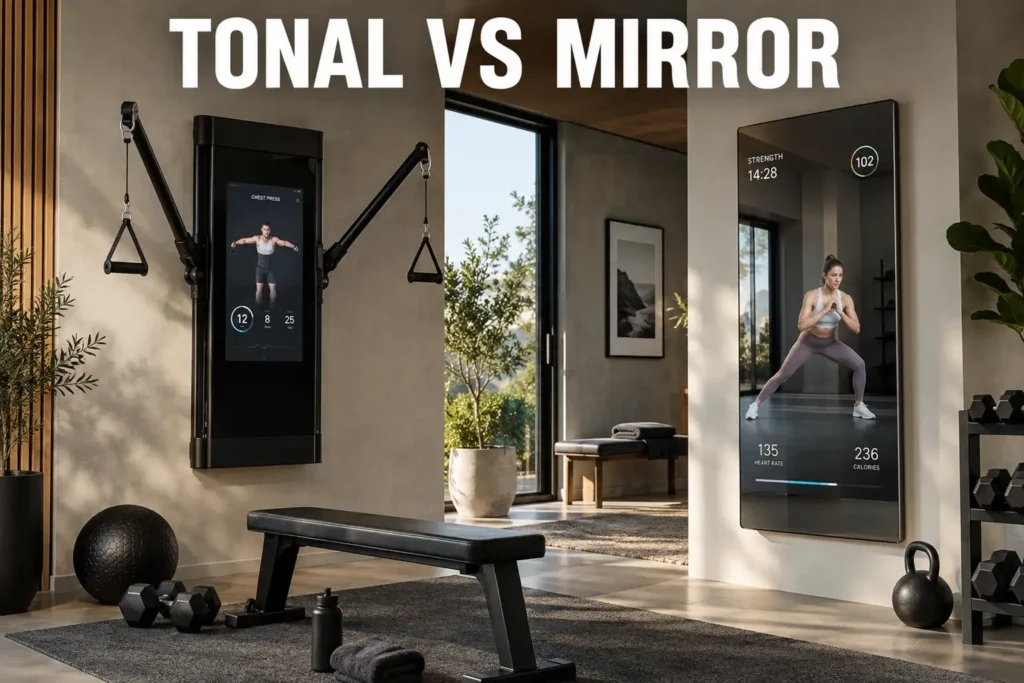
The tonal vs mirror debate shaped the premium smart home gym category for years. Tonal promised AI-powered strength training on your wall. Mirror (later rebranded as lululemon Studio) offered a sleek reflective screen for cardio, yoga, and guided variety workouts. If you are weighing these two devices today, the most important thing to know upfront is this: Mirror has been discontinued, and the competitive landscape has shifted significantly. Drawing on peer-reviewed research and category analysis, this guide breaks down what each device offered, where Tonal still leads, and what your real options look like in 2026 - whether you are a former Mirror owner or someone evaluating smart home gym equipment for the first time.

Key Takeaways
- Mirror hardware was discontinued in late 2023 after lululemon's $500 million acquisition and a $443 million write-down; existing owners keep the lululemon Studio membership, now with Peloton classes.
- Tonal 2 offers electromagnetic resistance from 2 lbs to 250 lbs; Mirror had no built-in resistance at all.
- Tonal suits committed strength trainers, while Mirror served variety-focused cardio and yoga users.
- Tonal 2 costs about $4,226 on Amazon plus a $59.95/month membership, so a first year regularly exceeds $5,000 with installation.
- If you want the mirror format today, the AEKE K1 is the closest thing sold: a true mirror with AI form feedback and 220 lb of built-in resistance.
Tonal
AI-powered electromagnetic cable resistance for structured strength training
Our Score: 9/10
Best for | Intermediate to advanced lifters who want AI-guided progressive overload with no equipment management |
Price | About $4,226 for Tonal 2 on Amazon plus a $59.95/month membership; first-year totals run past $5,000 with installation |
Lululemon Studio Mirror
Reflective display streaming live and on-demand cardio, yoga, and class variety
Our Score: 6.5/10
Best for | Variety-focused exercisers who wanted cardio, yoga, HIIT, boxing, and barre content, not built-in resistance |
Price | $1,495 at launch plus $39/month; existing owners keep the $39/month lululemon Studio All-Access membership |
Tonal vs Mirror - What Each Device Actually Does
Tonal and Mirror took fundamentally different approaches to home fitness. Tonal is a wall-mounted cable resistance machine powered by electromagnetic technology, simulating weights from 2 lbs to 250 lbs. Its AI coaching system adjusts resistance mid-set and recommends progressive overload based on your personal strength data. The platform is built around getting stronger.
Mirror, when it was active, was exactly what the name implied: a floor-length reflective display that streamed live and on-demand fitness classes. It covered over 50 content categories including cardio, yoga, HIIT, boxing, and barre. Strength training content existed, but without any actual resistance built into the hardware, it relied on bodyweight and whatever equipment you already owned.
For a broader look at how workout mirrors function and what separates different hardware formats, my guide on what is a workout mirror covers the category from streaming-only displays to cable-resistance hybrids.
Both devices mounted to walls, required ongoing subscriptions, and cost several thousand dollars at launch. Their fitness philosophies were entirely different: Tonal was built for lifters, and Mirror was built for variety seekers. Understanding that split is the entire tonal vs mirror decision.
The mirror vs tonal split - variety content vs structured strength - is the lens every comparison should start with. Our best smart home gym guide shows how both devices fit into the broader connected fitness category, including how newer entrants compare.
How Tonal Works - AI-Powered Strength Training at Home
Tonal uses two articulating arms extending from a central display unit, each running a cable attached to digital electromagnetic weights. There are no physical weight plates. Resistance is controlled in real time, which means the system can add eccentric overload, slow the negative portion of a rep, or engage a spotter mode that automatically reduces resistance when you are failing a set.
The Tonal 2 iteration, released in 2025, improved arm ergonomics, increased the display size, and refined the AI feedback loop. The coaching system becomes more accurate over time as it learns your strength patterns across hundreds of exercises. Research supports the model: a 2025 randomized controlled trial found that app-guided resistance training produced 81% session adherence compared to only 52% for self-directed PDF-based programs, with comparable bench press strength gains to in-person supervision (1).
For serious strength progression, Tonal's structured programming is the strongest offering in the category. The tonal home gym content library covers a wide range of training priorities:
- Strength and hypertrophy programs running 4-12 weeks in periodized blocks
- Functional fitness and athletic conditioning programs with defined skill levels
- Recovery and mobility content designed to slot into rest days
- Benchmarking tools that track your personal strength score against a community of similar users
Users follow periodized plans that scale in difficulty over months, and the platform's long-term orientation makes it genuinely useful for intermediate and advanced lifters, not just beginners.
In my assessment, the platform's real value emerges in months three and four when the AI has enough performance history to make truly individualized suggestions - and that long runway is what separates it from generic training apps. You can read a detailed breakdown of the hardware and membership value in our is tonal worth it review.
Before committing to Tonal, installation requirements are worth understanding upfront. The unit weighs approximately 150 lbs and requires professional installation into wall studs, typically adding a few hundred dollars to the purchase price. This is a meaningful tonal cost consideration that total-first-year estimates often undercount - renters and apartment dwellers should confirm mounting permissions before purchase.
How Mirror Worked - and Why It Was Discontinued
Mirror launched in 2018 as a premium at-home fitness display aimed at variety-focused exercisers. The hardware was a large, black-framed reflective display that mounted to a wall and showed instructor-led classes while overlaying your own reflection so you could check form. lululemon acquired the company in 2020 for $500 million, expecting the combined brand to dominate the home fitness space.

That did not happen. In 2023, lululemon discontinued the Mirror product entirely, winding down hardware sales and absorbing content operations. The acquisition resulted in a reported $443 million write-down. The failure came down to three structural problems:
- Pandemic-era demand peaked in 2020-2021 and reversed sharply as gyms reopened, which left high-cost hardware without customers
- The product sat in a no-man's-land between low-cost streaming apps and premium resistance machines
- lululemon's retail and brand integration never delivered the customer volume needed to sustain the hardware line
Mirror was caught between two markets - too expensive for the budget-conscious streaming app segment, and too light on resistance training to compete with Tonal for serious lifters.
Current Mirror owners are not left with a dead device. The lululemon Studio All-Access membership ($39 per month, up to six household members) still runs on existing Mirror hardware and now streams Peloton classes through the 2023 partnership, and lululemon continues to honor warranties and support requests. What nobody has is a stated end-of-support date, which is the real long-term risk. Tonal ran a trade-in offer for Mirror owners in late 2023 ($250 off plus a first year of membership), which shows how directly it courted that audience; our guide to the Lululemon Mirror discontinuation covers the full owner picture.
For users who valued Mirror's content variety and are now searching for a tonal workout mirror replacement, the category still has options. The smart fitness mirror space now centers on the AEKE K1, the Echelon Reflect and a wave of open Android mirrors, and our best workout mirror guide ranks all of them, though none match Mirror's content depth at launch.
Tonal vs Mirror vs Tempo - How Tempo Fits the Picture
Tempo entered the tonal vs mirror vs tempo conversation as a middle-ground strength option. It uses computer vision to track free-weight movements in real time, counting reps, identifying form issues, and guiding progression. Unlike Tonal, which uses electromagnetic cables, Tempo works with actual dumbbells and barbell plates stored inside its unit. Unlike Mirror, it is focused entirely on strength training.
For a detailed review of how Tempo performs in practice, including coaching depth and hardware quality, my Tempo Move review covers what it delivers against both Tonal and the original Mirror format.
The three-way comparison breaks down into clear user profiles:
- Tonal suits committed strength trainers who want AI-managed progressive overload with no equipment management
- Mirror served variety-focused users wanting cardio, yoga, and class entertainment - now discontinued with no direct replacement at the same price tier
- Tempo works best for users who prefer free-weight training and want form coaching without switching to cable-based resistance
I find Tempo best suited for anyone who already owns plates and dumbbells and want coaching layered on top - where Tonal's all-in-one approach removes all equipment friction from day one. Home-based training research supports meaningful results across all modalities: a 2023 meta-analysis of 12 RCTs found that home-based high-intensity interval training improved cardiorespiratory fitness by 1.75 ml/kg/min compared to non-exercise controls, with participants achieving 80% average adherence (2).
Our best smart home gym equipment guide covers the full competitive landscape, including newer entrants that have emerged since the original tonal vs mirror comparison era.
Some people also look specifically for best workout mirror with weights - meaning a mirror-style display with built-in resistance. The AEKE K1 and the Echelon Strength occupy this niche, combining cable resistance with a reflective display, though they do not reach Tonal's depth of AI programming.
The Best Tonal Alternative Options in 2026
With Mirror gone, the tonal alternative landscape has expanded. Users who cannot justify Tonal's cost or cannot wall-mount hardware have more options than at any point in the category's history:
- Speediance Gym Monster 2 - A free-standing electromagnetic cable machine. Speediance vs Tonal comparisons consistently show Speediance winning on portability and initial cost, while Tonal wins on AI programming depth and content library quality. Speediance offers operation without a mandatory subscription after purchase. Resistance maxes at 220 lbs vs. Tonal's 250 lbs.
- Vitruvian Trainer+ - A compact, floor-based machine with up to 440 lbs of electromagnetic resistance. Strong choice for powerlifters and advanced athletes who want to exceed Tonal's 250 lb ceiling. Compact footprint without requiring wall mounting.
- Kabata - A newer entrant positioned as a budget-conscious alternative without subscription requirements. Content depth is limited compared to Tonal, but the lower long-term cost resonates with anyone who resists mandatory membership fees.
- Smart fitness mirror brands - the Echelon Reflect, the AEKE K1 and open Android mirrors offer interactive mirror displays with streaming class content, while Fiture and the NordicTrack Vault are discontinued. Our AEKE K1 product page covers the one AI-guided mirror that sits closest to the original Mirror model. These work best for cardio and yoga-focused users rather than strength trainers.
- Fitness apps plus free weights - For anyone who primarily valued Mirror's content variety, a streaming fitness app subscription costs a fraction of either hardware device and covers cardio, yoga, and strength programming across hundreds of categories.

Our research consistently shows that cost and subscription fatigue are the two biggest reasons people move away from Tonal toward alternatives - not dissatisfaction with training results. A scoping review of 53 studies found that ease of use, personalized content, and motivational feedback were the top facilitators of long-term adherence to technology-supported fitness programs among older adults (3). The best alternative is the one you engage with consistently.
For a ranked list of mirrors that require no recurring fee, my guide on the best fitness mirror without subscription covers the top open Android options currently available.
What Research Shows About AI-Guided Home Training
Tonal's central claim is that AI-guided resistance training produces superior outcomes compared to self-directed lifting. The research supports a meaningful version of this. A 2025 network meta-analysis of 70 RCTs found that AI-assisted exercise demonstrated superior muscle strength improvements (standardized mean difference = 0.61) compared to traditional exercise programs among older adults - a framework that resonates for structured training at any level (4).
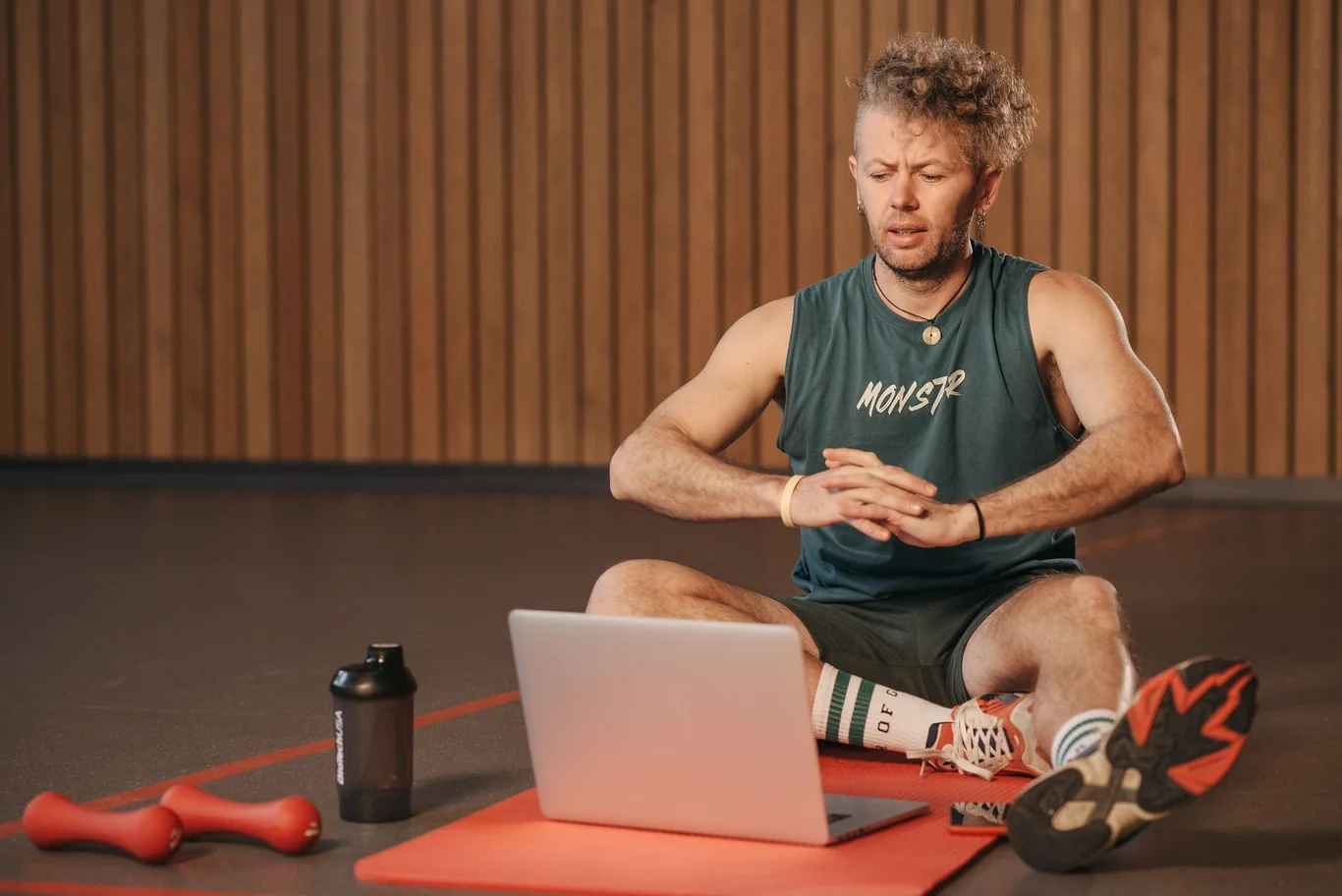
For Tonal users, these findings align with what consistent platform use actually looks like. The AI coaching layer removes programming decisions - how much weight to use, when to add load, when to deload. That matters most for intermediate lifters who know how to train hard but struggle with periodization and long-term structure.
A scoping review on AI applications in cardiovascular exercise interventions found that AI-driven guidance improved VO2max and daily activity metrics across included studies, though most evidence came from mixed study designs rather than exclusively large RCTs (5). The pattern holds: AI-guided movement improves outcomes when users engage with the feedback consistently rather than ignoring it.
What makes a smart home gym effective is less about hardware specs and more about the behavioral layer - whether the platform keeps you coming back. Our guide on what is a smart home gym explains how different devices approach that question.
Is a Tonal Home Gym Worth the Cost in 2026?
Tonal's tonal cost is the dominant concern for most people. Hardware alone runs in the premium-to-ultra-premium tier, installation typically adds a few hundred dollars for professional mounting, and the monthly membership is required to access most of the platform. A realistic all-in total for the first year regularly exceeds $5,000.

The value case is strongest for:
- Current gym-goers paying $100 or more monthly for memberships or personal training
- People who live far from a well-equipped facility and pay commute time in addition to fees
- Intermediate-to-advanced lifters with specific strength goals (hypertrophy, powerlifting, post-injury rehab)
- Homeowners with available wall space and no restrictions on permanent mounting
The value case is weakest for:
- Users who primarily want content variety, cardio, or yoga - a low-cost streaming app does this better
- Renters who cannot mount hardware to walls or who move frequently
- Beginners who need motivational content more than periodized progressive overload
- Anyone with budget constraints - the total cost of ownership is genuinely steep
The fitness mirror cost comparison is also worth noting. Mirror launched below Tonal's price point, which made the head-to-head more competitive for anyone who was not primarily strength-focused. With Mirror discontinued, the mid-price mirror slot belongs to the Echelon Reflect and the open Android mirrors, and our cost guide lays out what each of them adds up to over three years.
I'd suggest running the break-even calculation against your current gym or trainer spend before committing - if you are already spending over $100 per month on fitness, the math often works in Tonal's favor. If you are also weighing subscription-based fitness hardware, our is peloton worth it breakdown covers a parallel premium subscription decision worth reading before committing to any device in this category.
Tonal vs Lululemon Studio Mirror: Category-by-Category
Category | Winner | Why |
Strength training | Tonal | Tonal simulates 2 to 250 lbs via electromagnetic cables with AI-adjusted overload; Mirror relied on bodyweight only |
Content variety | Mirror | Mirror covered over 50 content categories including cardio, yoga, HIIT, boxing, and barre |
AI coaching depth | Tonal | Tonal's AI adjusts resistance mid-set and personalizes programming as it learns your strength patterns |
Cost at launch | Mirror | Both cost several thousand dollars at launch, but Mirror launched below Tonal's price point |
Installation | Tie | Both mount to walls; Tonal weighs about 150 lbs and needs professional installation into studs |
Current availability | Tonal | Mirror hardware sales ended in late 2023; Tonal 2 is sold direct, at Best Buy and on Amazon |
Long-term support | Tonal | Mirror hardware is discontinued with no stated end-of-support date; Tonal continues active development |
Choose Tonal if
- You want AI-managed progressive overload with no equipment management
- You are an intermediate to advanced lifter with specific strength goals
- You already pay $100 or more monthly for a gym or personal training
Wanted Mirror? Choose the AEKE K1 if
- You want the full-length reflective mirror format that Mirror pioneered
- You want real-time AI form feedback, which Mirror never offered
- You would rather skip a mandatory subscription (AEKE's base coaching has no monthly fee)
The Verdict - Choosing the Right Smart Home Gym for 2026
The tonal vs mirror comparison is partly historical at this point. Mirror is gone. What remains is Tonal as the category-defining premium strength machine, and a growing field of tonal alternative options at different price points and use cases.
If your primary goal is serious, progressive strength training and you have the budget and wall space, Tonal 2 actually remains the most complete at-home strength platform available. The AI coaching's ability to adapt weight in real time - adding eccentric overload, recommending deload weeks, and tracking personal records - is genuinely useful in a way that general fitness apps cannot replicate for strength-focused users.
If you want variety, lower cost, or portability, the tonal alternative market is broader than ever. Speediance is the closest like-for-like competitor for cable resistance without wall mounting. Fitness apps handle cardio and flexibility at a fraction of the price.
For users drawn to the mirror format specifically, my Fiture Mirror review covers one of the remaining connected mirror devices still in active development, including how its AI coaching compares to Tonal structured programming.
The smart home gym space has matured. Your best choice in 2026 comes down to what training you will actually do consistently, not which device has the better headline spec. If you want Tonal-style cable training without the wall mount, the Speediance Gym Monster 2 is the best-reviewed option on Amazon, and if you want the mirror format that Mirror pioneered, the AEKE K1 is the closest thing sold today.
Want the mirror format instead? The AEKE K1 is the closest thing to Mirror sold today, with AI form feedback and 220 lb of built-in resistance.
For a full comparison of mirror-format options that skip the mandatory monthly fee, my guide on the best fitness mirror without subscription ranks the AEKE K1 and its competitors on coaching quality, resistance range, and long-term cost.
FAQs
Which is better, Tonal or Mirror?
The better choice between Tonal and Mirror depends on your primary fitness goal. Tonal is the stronger option for progressive strength training, AI-guided cable resistance, and long-term lifting programs, while Mirror focused on cardio variety and content breadth without built-in resistance - though Mirror was discontinued in 2023 and is no longer available for purchase. For strength-focused users today, Tonal is the clear choice; for variety-focused users, fitness apps or newer smart fitness mirror brands offer a similar experience at lower cost.
Why did the lululemon Mirror fail?
Lululemon Mirror failed primarily because the pandemic-driven surge in home fitness hardware did not sustain after in-person gyms reopened post-2021. Lululemon's $500 million acquisition in 2020 overestimated long-term demand, and the product struggled to find its place between the low-cost fitness app market and the premium strength-training market that Tonal owned. The resulting $443 million write-down and eventual discontinuation reflected the structural challenge of selling high-priced connected fitness hardware in a post-pandemic market where most people returned to gym memberships.
My Peloton Mirror overview covers what Peloton's content partnership with lululemon Studio means for existing Mirror owners and what options remain for buyers still interested in the platform.
Is there anything better than Tonal?
Several alternatives outperform Tonal in specific areas, which makes each a better fit for certain users. Speediance offers comparable cable resistance without wall mounting and without a mandatory monthly subscription, making it a strong tonal alternative for renters or budget-conscious users. Vitruvian Trainer+ provides up to 440 lbs of resistance for advanced lifters who need more than Tonal's 250 lb ceiling. No single device beats Tonal across every measure - the best alternative depends entirely on your training style, budget, and space.
For users who want a vault-style mirror design with built-in cable resistance, my NordicTrack Vault review covers how it positions against Tonal on programming depth, equipment quality, and total cost of ownership.
Is Tonal actually worth it?
Tonal is worth the investment for users who commit to structured strength training, currently pay $100 or more monthly for gym access or personal training, and have appropriate wall space for installation. The all-in first-year tonal cost regularly exceeds $5,000, which is difficult to justify for casual exercisers or people who primarily want cardio and yoga content. For intermediate-to-advanced lifters who want AI-guided progressive overload at home without managing physical weight plates, the platform's long-term programming value is genuinely strong.
Is Tonal a mirror?
Tonal is not a mirror in the conventional sense. It is an electromagnetic cable resistance machine with an attached display screen and does not use reflective glass. The Mirror device (sold by lululemon until late 2023) was the true smart fitness mirror in this category, featuring a reflective display that showed your reflection while overlaying class content. The tonal mirror confusion is common because both mounted on walls and competed in the same premium smart home gym market, but the hardware was fundamentally different.
This content is for informational and educational purposes only. It is not a substitute for professional medical advice, diagnosis, or treatment. Always consult with your healthcare provider before starting any new fitness program or using fitness technology for health monitoring.
We are always looking for expert inputs to make our content even better and more useful.
References
- Gavanda S, Held S, Schrey S, et al. Optimizing Resistance Training Outcomes: Comparing In-Person Supervision, Online Coaching, and Self-Guided Approaches: A Randomized Controlled Trial. Journal of Strength and Conditioning Research. 2025;39(11):1129-1137. doi:10.1519/JSC.0000000000005216
- Tsuji K, Tsuchiya Y, Ueda H, Ochi E. Home-based high-intensity interval training improves cardiorespiratory fitness: a systematic review and meta-analysis. BMC Sports Science, Medicine and Rehabilitation. 2023;15:166. doi:10.1186/s13102-023-00777-2
- Geelen SJG, Kekäläinen T, Hassandra M, et al. Staying engaged: a scoping review of psychological and motivational drivers of adherence to technology-supported physical activity in older adults. European Review of Aging and Physical Activity. 2025;22:21. doi:10.1186/s11556-025-00387-6
- Fan S, Tan X, Zheng H, et al. Comparing the Effects of AI-Assisted and Traditional Exercise on Physical Health Outcomes in Older Adults: A Systematic Review and Meta-Analysis. Healthcare (Basel). 2025;13(23):2999. doi:10.3390/healthcare13232999
- Deligiannis A, Sotiriou P, Deligiannis P, Kouidi E. The Role of Artificial Intelligence in Exercise-Based Cardiovascular Health Interventions: A Scoping Review. Journal of Functional Morphology and Kinesiology. 2025;10(4):409. doi:10.3390/jfmk10040409