

Learning how to improve cardio is the question I hear most from athletes and everyday exercisers - not strength, not body composition, but why they get winded on a flight of stairs or feel like their lungs are on fire after a short run.
The good news is that cardiovascular fitness responds to training faster than almost any other physical quality. The not-so-good news is that most people train in a way that slows their progress - going too hard too often, or never pushing hard enough to create a real adaptation stimulus.
This guide covers what actually works: Zone 2 training to build your aerobic base, high-intensity intervals to push your ceiling, and progressive overload to keep you moving forward over months rather than days. I have spent over a decade coaching athletes at all levels, and the patterns here are consistent across age, starting fitness, and available equipment.

How to Improve Cardio - What You're Actually Training
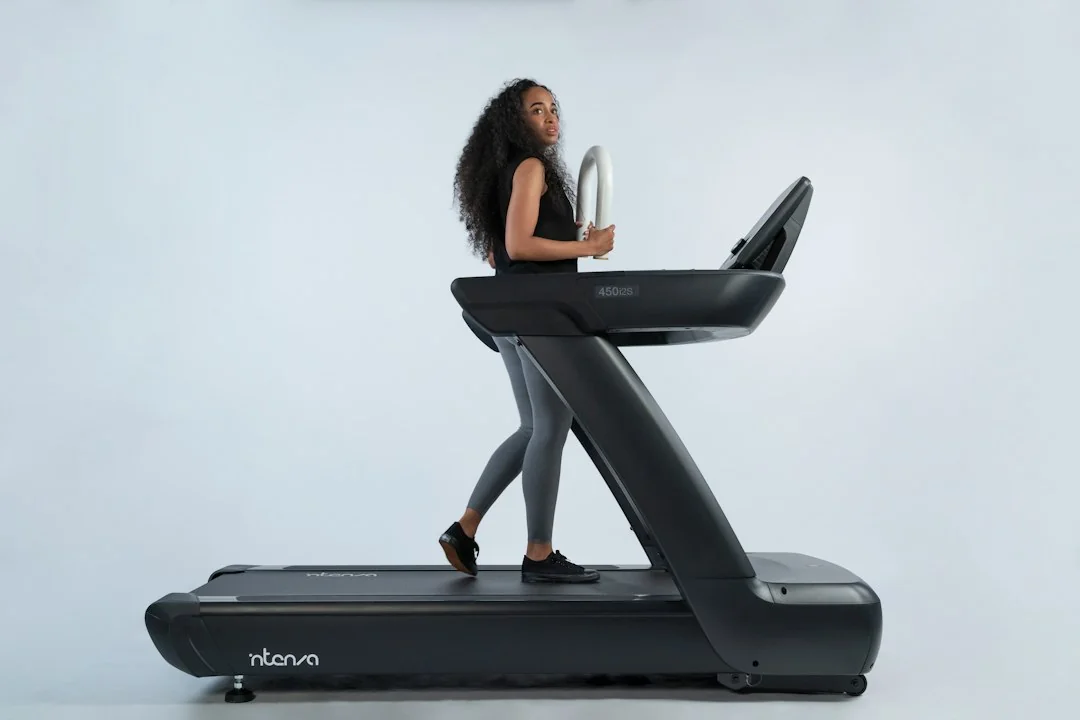
Before you can improve something, you need to understand what it is. How exercise improves cardiovascular health comes down to a set of interconnected systems your body uses to deliver oxygen to working muscles and remove metabolic waste. When someone says their cardio is poor, they usually mean one or more of those systems is the bottleneck. A treadmill for home use is one of the most practical tools for building all of them consistently. My roundup of treadmills for home use ranks eleven tested picks.
Key Cardiovascular Adaptations
Training drives measurable structural and functional changes across several systems. The ones that matter most for endurance are:
- Stroke volume - the amount of blood your heart pumps per beat. Training increases left ventricular volume, so each beat moves more oxygen-rich blood.
- Cardiac output - stroke volume multiplied by heart rate. A well-trained heart achieves higher output at lower heart rates, which is why elite athletes have resting heart rates in the 40s or even 30s.
- Mitochondrial density - the number and efficiency of mitochondria in muscle cells. More mitochondria means more aerobic energy production and less reliance on oxygen-costly anaerobic pathways.
- Lactate threshold - the exercise intensity at which lactate accumulates faster than it can be cleared. Raising this threshold lets you sustain harder efforts without hitting the wall. Zone 2 and Zone 4+ training are the two most effective ways to push it higher.
- Resting heart rate - a downstream marker of all the above. As your heart becomes stronger and more efficient, it does not need to beat as often at rest.
- VO2 max - the maximum volume of oxygen your body can consume per minute during peak exercise, expressed in milliliters per kilogram of body weight per minute. It is the single most accurate predictor of cardiovascular fitness and long-term health outcomes.
Understanding what is VO2 max and how to improve it comes down to these adaptations: raise any one of them consistently, and VO2 max rises with it. How to improve cardio fitness VO2 max is the byproduct of building each system through structured training.
Build an Aerobic Base - Zone 2 Training and Cardiovascular Fitness
This easy-feeling intensity does more structural work on your cardiovascular system than its low effort level suggests. I explain how Zone 2 trains the body, how to find your own target heart rate, and what a sample week looks like.
How Zone 2 Training Builds Your Aerobic Base
Zone 2 is the training intensity that does the most structural work on your cardiovascular system. It feels easy - almost too easy - but that is the point. Understanding heart rate zones for cycling gives you the exact targets you need for all cardio modalities, not just the bike.
At Zone 2, your body relies almost entirely on fat oxidation and aerobic metabolism. You are working hard enough to stress the mitochondria and the cardiac muscle, but not so hard that you accumulate lactate or require extended recovery.
A 2026 study found that adherence to heart rate-based intensity parameters during 12 weeks of aerobic cycling training predicted the cardiovascular response in sedentary older adults, confirming that staying in the correct zone - rather than just logging time - determines whether adaptations occur.(1) A separate 2026 analysis showed polarized training models that emphasize low-intensity work produce superior cardiorespiratory fitness gains compared to approaches where most training falls in a moderate-intensity gray zone.(2)
When I first shifted clients from mixed-effort training to strict Zone 2 three days per week, the most common reaction after three weeks was surprise - their resting heart rate had already dropped 4-6 bpm, and they were holding the same pace with noticeably less effort.
How to Find Your Zone 2 Heart Rate
Several methods exist for identifying Zone 2. Use whichever is most practical for you:
- Formula estimate - 60-70% of your maximum heart rate (220 minus your age gives a rough starting estimate; individual deviation can be 10-12 bpm in either direction, so treat this as a starting point only)
- Talk test - you can hold a full conversation but could not comfortably sing
- Nose breathing - you can breathe in and out through your nose without strain
- RPE 3-4 on a 10-point scale - it feels like moderate effort, never hard
Note that Zone 2 percentage definitions vary by training framework - some coaches use 65-75%, others 66-80%. The talk test and nose breathing methods are more reliable individual calibrators than any fixed formula.
Sample Zone 2 Training Week
Zone 2 works best as the foundation of your week, with two to three sessions totaling 90-150 minutes at minimum. Running, cycling, and structured treadmill workouts all work equally well for Zone 2 - the key variable is heart rate, not the machine. For beginners, 20-30 minutes per session is enough. For intermediate trainees, 45-60 minutes per session is the target. Full session plans are laid out in my treadmill workout breakdown.
How to Improve Cardio Fast - High-Intensity Interval Training
Where Zone 2 builds the engine, high-intensity interval training raises how hard that engine can run, but it only works once you already have an aerobic foundation. I lay out the session structure and when to favor HIIT over steady work.
How HIIT Raises Your Cardiovascular Ceiling
If Zone 2 builds the engine, high-intensity interval training (HIIT) raises the ceiling on how hard that engine can run. HIIT works by repeatedly pushing your cardiovascular system near its maximum capacity, forcing adaptations in VO2 max, stroke volume under load, and the efficiency of oxygen extraction in muscle tissue. A quality rowing machine is one of the best tools for HIIT because it demands full-body effort with minimal joint stress. I cover form and workouts in my walkthrough of using a rowing machine.
The fastest way to improve cardio and build cardio endurance fast is a periodized combination of Zone 2 and HIIT - but speed requires a base. Attempting HIIT without 4-6 weeks of Zone 2 foundation consistently leads to stalling and elevated injury risk.
A 2025 study comparing short-term HIIT with moderate-intensity interval training in patients with cardiovascular disease found comparable improvements in heart rate recovery across both protocols, confirming that intensity-driven cardiovascular adaptation is not exclusive to elite athletes.(3)
The most efficient 20-minute HIIT protocol I have used with deconditioned clients is 8 rounds of 20 seconds hard, 40 seconds easy on a rower or stationary bike, and I discuss HIIT on an exercise bike separately. Most reach first-session heart rate peaks they cannot match again for several weeks - that gap is the adaptation target.
HIIT Session Structure
A structured HIIT session follows a simple five-step format:
- Warm up for 5-10 minutes at Zone 1-2 to prepare the cardiovascular system
- Perform a hard interval at 85-95% of max heart rate for 20-60 seconds
- Recover at Zone 1-2 for 1-3 times the length of the work interval
- Repeat for 4-8 total work intervals depending on fitness level
- Cool down for 5-10 minutes at Zone 1-2
When to Use HIIT vs. Zone 2
HIIT and Zone 2 work as complements. The most effective cardio programs use both, with Zone 2 making up 70-80% of weekly volume and HIIT making up the remaining 20-30%. Running HIIT sessions more than twice per week on non-consecutive days rarely produces extra benefit and increases injury risk substantially. My guide, How Often Should You Do Cardio, covers weekly session counts and lengths.
If you have less than 30 minutes for a session, HIIT is the better choice. If you have 45-60 minutes and are not already fatigued, Zone 2 is usually the better investment.
Factor | Zone 2 | HIIT |
Share of Weekly Volume | 70-80% | 20-30% |
Typical Session Length | 45-60 minutes | Under 30 minutes |
Sessions Per Week | 2-3 | Up to 2 |
Primary Benefit | Aerobic base and fat oxidation | VO2 max ceiling |
How to Increase Stamina Through Progressive Overload
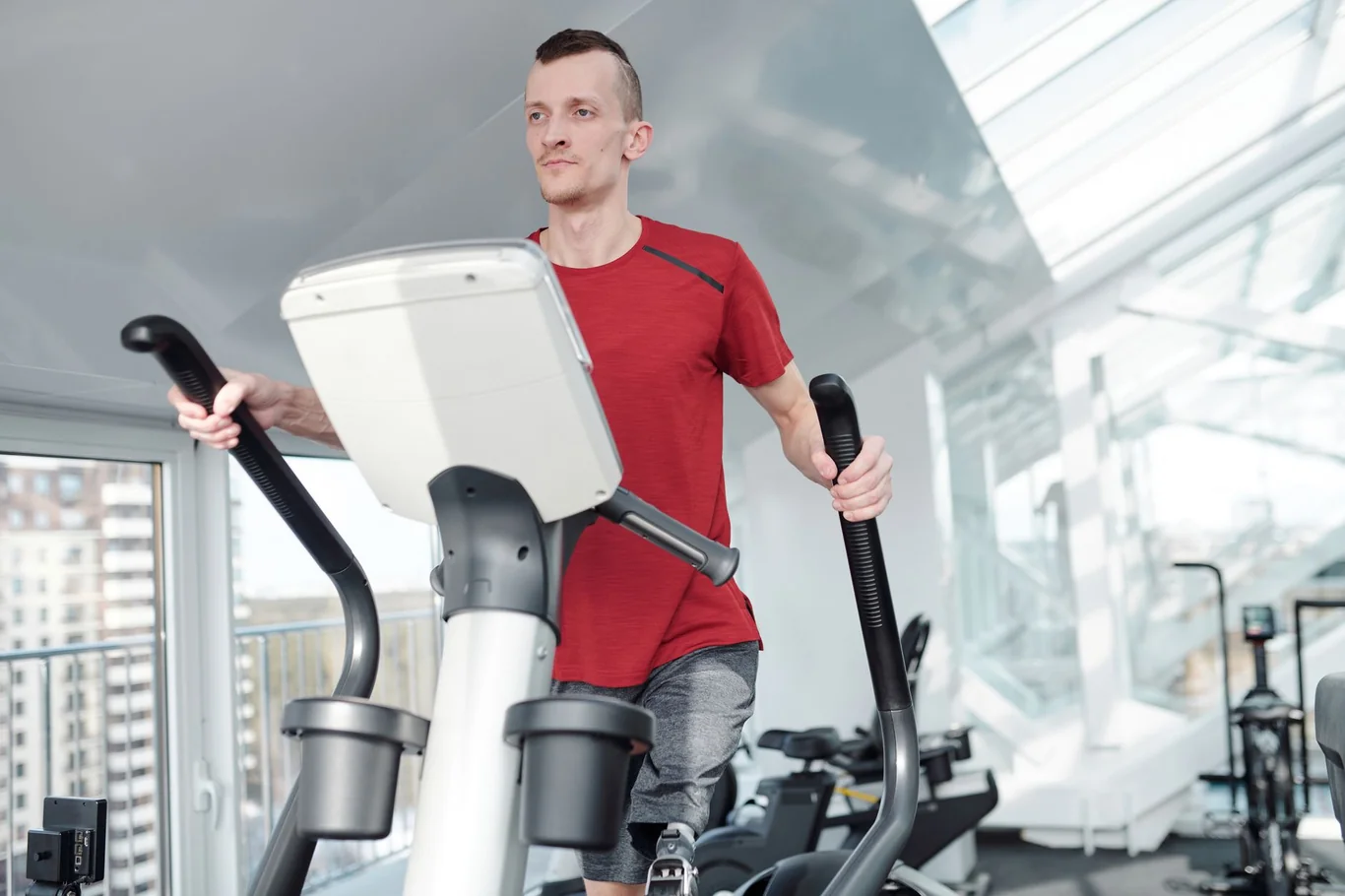
Progressive overload is the principle that drives all fitness adaptation. The cardiovascular system responds to progressive overload just like muscle tissue does - it adapts to the demands placed on it and then plateaus until a new stimulus is applied. The StairMaster vs treadmill debate often comes down to which tool lets you apply progressive overload more easily in your specific situation.
The 10% Weekly Volume Rule
The most widely cited rule of thumb for increasing cardio volume is no more than 10% per week. This applies to total weekly minutes, total distance, or total calories burned - whichever metric you are tracking.
For example: if you are currently doing three 20-minute Zone 2 sessions per week (60 minutes total), your next week should not exceed 66 minutes total. The week after that, no more than 73 minutes. This rate of progression feels slow, but it is the rate that allows connective tissue, joints, and the cardiovascular system to adapt together rather than letting cardiovascular fitness outpace structural readiness.
Duration vs. Intensity - Which to Increase First
When you are ready to progress, the order in which you add load matters:
- Increase duration first - add 5-10 minutes to existing sessions before increasing pace or resistance
- Increase frequency second - add a session to your week once existing sessions feel manageable
- Increase intensity last - raise pace, resistance, or heart rate targets only after volume is established
- Never increase both duration and intensity in the same week - this doubles the adaptation stress and dramatically raises the chance of stalling or getting injured
- Build to a target volume before adding intensity - aim for 150 minutes per week of Zone 2 as a base before pushing into Zone 3 or 4
Choosing Your Cardio Modality
The best cardio for improving cardiovascular fitness is the type you will actually do consistently. That said, I find that each modality has specific advantages for certain goals or physical limitations, which also informs my comparison of cardio machine options. The elliptical vs treadmill comparison is a useful starting point for understanding the tradeoffs between impact and intensity.

Running
Running provides the highest cardiovascular training stimulus per minute of any common cardio modality. It builds bone density, strengthens connective tissue, and translates directly to everyday functional fitness. The downside is impact - beginners and anyone with knee or hip issues should build into running gradually. For a deeper breakdown of how consistent running supports cardiovascular adaptation, our treadmill benefits guide covers the science of controlled-environment training.
Cycling and Rowing
Cycling and rowing are the two lowest-impact options that still allow high-intensity work, and I list more joint-friendly cardio exercises in a separate guide. Both allow you to control resistance precisely, which makes them excellent for structured Zone 2 sessions. A quality exercise bike supports both types of training and is one of the most versatile pieces of home cardio equipment for anyone building a base.
Elliptical
The elliptical is often underestimated. It provides low-impact cardiovascular training with a natural stride pattern that engages both the upper and lower body simultaneously. It is particularly well-suited for anyone returning from injury or for older adults for whom running creates too much joint stress. Our guide to the best ellipticals for seniors covers the specific features that matter for joint-safe cardiovascular training.
Modality | Impact Level | Primary Advantage |
Running | High | Highest cardiovascular stimulus per minute |
Cycling and Rowing | Low | Low impact with full Zone 2 and HIIT capability |
Elliptical | Low | Safe for injury recovery and older adults |
How to Improve Cardiovascular Fitness for Beginners
If you are starting from zero or returning after a long break, the rules are slightly different, and my 8-week guide to cardio for beginners covers them. The goal in the first four to six weeks is to build the habit and let your body adapt structurally so you can train consistently without breaking down. Understanding how to increase VO2 max becomes more relevant after the base is established, not at the start.

For beginners, how to improve VO2 max for the first time comes down to consistency at Zone 1-2 intensity. A 2021 systematic review of exercise intensity protocols in patients with cardiovascular disease found that even moderate-intensity continuous training produced meaningful VO2 max improvements, confirming that structured low-to-moderate intensity work can drive cardiovascular adaptation without requiring maximal-effort sessions.(4)
What to Do in Your First Month
Beginner starting points:
- Begin with 20-minute sessions three times per week
- Keep all sessions in Zone 1-2 for the first four weeks
- Walk-run intervals are valid - alternate 2 minutes of brisk walking with 1 minute of easy jogging
- Use a heart rate monitor rather than perceived exertion; beginners consistently underestimate their actual intensity
- Rest at least one day between sessions for the first month
- Do not add intensity until you can complete three 30-minute Zone 2 sessions per week without excessive fatigue the following day
How Quickly Can You Improve Cardiovascular Endurance - A Realistic Timeline
This is the question I hear most often, and the honest answer is: faster than you think for the first few weeks, then more slowly than you want for the following months. Tracking your progress with a calorie tracker gives you an additional data layer for correlating output with recovery across the weeks of this timeline. How quickly cardio improves heart health depends on training frequency and intensity - here is what the research and coaching experience show at each stage. I compare seven fitness bands and watches in my calorie tracker roundup.

Neural and Circulatory Changes in Weeks 1 to 2
Weeks 1-2 - Neural and circulatory adaptations: Plasma volume expands within the first week, improving heat tolerance and reducing heart rate at a given workload. Resting heart rate may already begin to drop by several beats per minute. Perceived exertion at the same pace decreases noticeably. Most people also experience improved mood and sleep quality as the autonomic nervous system becomes more responsive to training. Improve cardio fitness in 2 weeks is a realistic goal for these early markers, which reflect measurable shifts in how hard effort feels rather than structural cardiac remodeling.
Metabolic Adaptations in Weeks 3 to 4
Weeks 3-4 - Metabolic shifts begin: Fat oxidation efficiency improves at Zone 2 intensities. Recovery between sessions speeds up. First measurable VO2 max improvements typically appear, usually 2-4% above baseline. The aerobic engine is beginning to build in a way that persists.
Structural Cardiac Adaptations in Weeks 5 to 8
Weeks 5-8 - Structural cardiac adaptations: Left ventricular volume begins to increase, allowing more blood per beat. Stroke volume improvements lower heart rate at given workloads. Lactate threshold rises, letting you sustain harder efforts before fatigue accumulates. This is when clients I have trained tell me they feel genuinely different, structurally more capable of sustained effort.
Compounding Gains in Weeks 9 to 12
Weeks 9-12 - Consolidation and compounding: Capillary density in muscle tissue increases. Mitochondrial density reaches a new baseline. Resting heart rate is typically 5-10 bpm lower than at the program start. A 12-month randomized controlled trial comparing aerobic, resistance, and combined training in overweight and obese adults confirmed that the aerobic training group achieved superior improvements in cardiovascular risk markers compared to resistance training alone, reinforcing the unique role of dedicated cardio in long-term cardiovascular adaptation.(5) A 2026 meta-analysis of aerobic exercise in adults with coronary heart disease confirmed significant VO2 max improvements, supporting the conclusion that cardiovascular adaptability persists well into later life.(6)
The biggest mistake people make with these timelines is comparing week two to week twelve and concluding that progress has stalled. The early adaptations (neural efficiency, plasma volume expansion, reduced autonomic stress response) happen quickly. The structural adaptations (mitochondrial biogenesis, cardiac remodeling, capillary density increases) take months. Both are real and both matter.
Training Phase | Key Adaptation | Progress Marker |
Weeks 1 to 2 | Plasma volume and neural efficiency | Perceived exertion drops at same workload |
Weeks 3 to 4 | Fat oxidation and metabolic efficiency | VO2 max improves 2-4% above baseline |
Weeks 5 to 8 | Cardiac remodeling and stroke volume | Lactate threshold rises |
Weeks 9 to 12 | Capillary and mitochondrial density | Resting heart rate 5-10 bpm lower |
Common Mistakes That Slow Cardiovascular Progress
In my experience coaching both recreational and competitive athletes, the same mistakes appear over and over. Most of them come from good intentions applied in the wrong direction. These patterns show up the same at commercial gyms and home smart gym setups alike.
I have seen the polarized training research confirm what I have observed in practice: most people who train in the gray zone - too hard for Zone 2, not hard enough for real Zone 4+ work - see much slower cardiovascular progress than people who commit to the full intensity spectrum.(2)
The six most damaging patterns are:
- Training at the same moderate intensity every session - this keeps you in a metabolic gray zone where you accumulate fatigue without driving the specific adaptations that Zone 2 or Zone 4+ work produces
- Adding intensity before building volume - intensity without a base leads to rapid fatigue accumulation and stalled progress
- Skipping rest days - cardiovascular adaptations occur during recovery, not during training; two days of rest per week is minimum for most people
- Ignoring heart rate data - training by feel alone leads to chronic overtraining in motivated people and chronic undertraining in casual exercisers
- Switching programs before adaptations compound - most cardiovascular gains appear after four to six weeks; changing programs every two to three weeks means you never see the return on your early investment
- Neglecting sleep - cardiac output efficiency, autonomic nervous system recovery, and hormonal support for mitochondrial biogenesis all depend heavily on sleep quality; poor sleep will undermine even a perfect training program
The Path Forward
Improving your cardiovascular fitness is a long game, but the method is not complicated. Build your aerobic base with Zone 2 work three to four days per week. Add one to two HIIT sessions per week once that base is established. Increase total volume by no more than 10% per week. Track your resting heart rate as a simple marker of adaptation.

I track three numbers with every client starting a cardio program: resting heart rate weekly, perceived exertion at a fixed Zone 2 pace monthly, and total Zone 2 minutes per week. Those three numbers tell you whether the aerobic system is adapting or stalling - no lab test required.
How often you should do cardio is a question worth revisiting as your fitness improves - the optimal frequency changes as your capacity grows. The general answer is three to five sessions per week, with at least two of them being full Zone 2 sessions of 40 minutes or more.
If you commit to this structure for 12 weeks, the cardiovascular system you have at the end will be measurably different from the one you started with. Not slightly better - structurally, biochemically different. That is the power of training the aerobic system with intention. For anyone looking at how to further develop that engine, rowing machine benefits represents one of the highest-yield cardio tools for exactly that purpose. I cover what consistent training does in my guide to the benefits of rowing machines.
Frequently Asked Questions
What is the 3-3-3 rule in cardio?
The 3-3-3 rule is a beginner cardio framework: exercise for approximately 30 minutes, 3 times per week, for 3 months before adding intensity or additional sessions. It is designed to build an aerobic base and establish consistent training habits before progressive overload is applied. Some coaches apply it more literally as 3 miles, 3 times per week, for 3 months - the underlying principle is the same: build the habit and aerobic foundation before adding load.
Why is my cardio stamina so bad?
Poor cardio stamina usually comes down to one of four causes: training fewer than three times per week, consistently training at moderate intensity rather than true Zone 2 or high intensity, insufficient sleep impairing cardiovascular recovery, or simply starting from a low fitness baseline. The first two to three weeks of consistent Zone 2 training typically produce noticeable improvements in how hard cardio feels at the same heart rate - the cardiovascular system responds quickly when trained in the right zone.
Is 20 minutes of cardio a day enough?
20 minutes per day is enough to begin building cardiovascular fitness, particularly for beginners. Structured aerobic exercise at Zone 2 or HIIT intensity for 20 minutes produces measurable VO2 max improvements and reduces resting heart rate with consistent practice. For long-term progress, 45-60 minute Zone 2 sessions produce more substantial structural adaptations, but 20 minutes done consistently beats longer sessions done sporadically.
How much can I improve my cardio in 2 weeks?
In two weeks of consistent training at 3-5 sessions per week, most people notice reduced perceived exertion at the same pace, a slight drop in resting heart rate, and faster recovery between efforts. These early changes are primarily neural and circulatory - plasma volume expands and the autonomic nervous system becomes more efficient - rather than the structural cardiac changes that take 6-8 weeks to develop. Two weeks is when cardio starts to feel easier; it is not yet when it becomes measurably stronger in a structural sense.
How to improve cardiovascular endurance?
The most effective method for building cardiovascular endurance is establishing a high-volume Zone 2 base at 60-70% of max heart rate over 8-12 weeks, then adding 1-2 HIIT sessions per week once that base supports them. Progressive overload of no more than 10% additional volume per week ensures the cardiovascular system adapts steadily. Tracking resting heart rate weekly is the most reliable marker of endurance progress available without lab equipment.
This content is for informational and educational purposes only. It is not a substitute for professional medical advice, diagnosis, or treatment. Always consult with your healthcare provider before starting any new fitness program or using fitness technology for health monitoring. If you have a history of cardiovascular disease, are over 50 with no recent exercise history, or have symptoms such as chest tightness, dizziness, or unusual shortness of breath at rest, seek medical clearance before beginning.
References
- Novak TS, Quan C, McGregor K, Mammino K, Bello M, Nocera JR. Adherence to heart rate-based intensity parameters predicts cardiovascular response to 12-weeks of aerobic cycling training in sedentary older adults. Prev Med Rep. 2026;62:103388. doi:10.1016/j.pmedr.2026.103388.
- Zhou C, Teng Y, Xu Y. Adaptive responses of cardiorespiratory fitness and cardiometabolic risk factors to polarized versus other types of training intensity distribution in obese untrained females. J Sports Sci Med. 2026;25(2):395-404. doi:10.52082/jssm.2026.395.
- Song Q, Chang J, Bai B, Abudoukelimu M, Jiang Z, Zhu J, et al. Comparable improvements in heart rate recovery following short-term high-intensity and moderate-intensity interval training in patients with cardiovascular disease. J Multidiscip Healthc. 2025;18:8185-8196. doi:10.2147/JMDH.S560641.
- Goncalves C, Raimundo A, Abreu A, Bravo J. Exercise intensity in patients with cardiovascular diseases: systematic review with meta-analysis. Int J Environ Res Public Health. 2021;18(7):3574. doi:10.3390/ijerph18073574.
- Lee DC, Brellenthin AG, Lanningham-Foster LM, Kohut ML, Li Y. Aerobic, resistance, or combined exercise training and cardiovascular risk profile in overweight or obese adults: the CardioRACE trial. Eur Heart J. 2024;45(13):1127-1142. doi:10.1093/eurheartj/ehad827.
- Kelley GA, Kelley KS, Stauffer BL. Aerobic exercise response variation and cardiorespiratory fitness in adults with coronary heart disease: an SDir meta-analysis of randomized controlled trials. J Cardiovasc Dev Dis. 2026;13(7):307. doi:10.3390/jcdd13070307.