
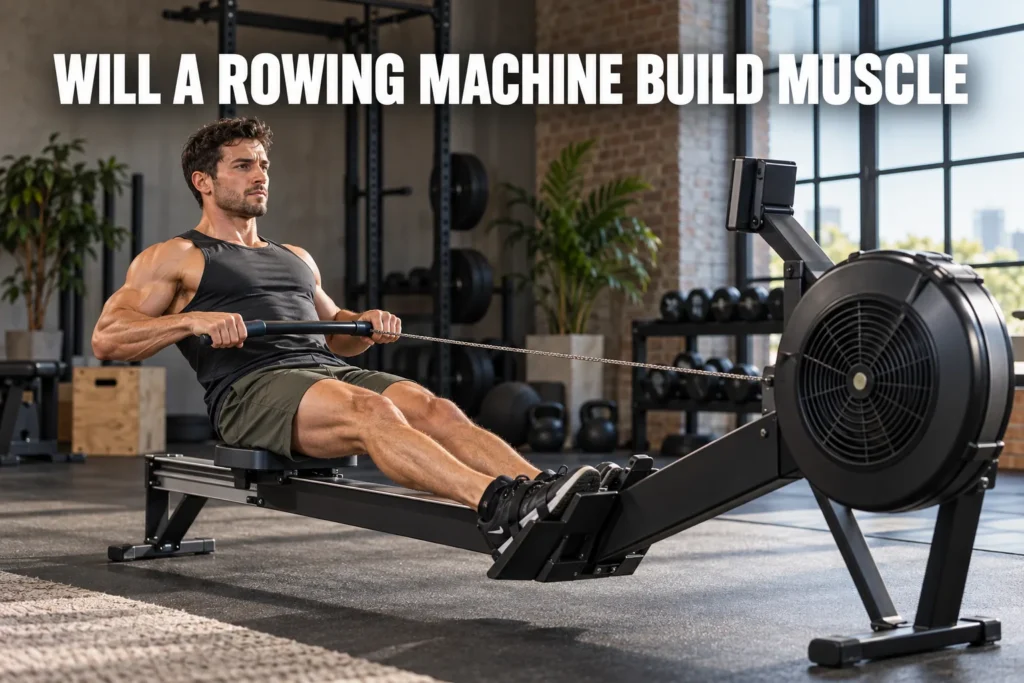
Will a rowing machine build muscle, or is it only good for burning calories? It can, and the gains are real for beginners and intermediates who train at the right resistance. A rowing machine is commonly cited to engage roughly 86% of the body's musculature per stroke, and research confirms that consistent rowing at the right intensity can produce real hypertrophy. When I first tested the Concept2 at damper 8 for strength intervals, the posterior-chain soreness the next day felt nothing like cardio fatigue. As a strength and conditioning coach, I use the rower with the athletes I train as both a conditioning and a strength tool, and I will be honest about where it stops being enough. This guide covers which muscles rowing works, what the science says about hypertrophy from endurance exercise, how to set up sessions for muscle, and what realistic results look like.

Will a Rowing Machine Build Muscle: The Short Answer
Yes, a rowing machine can build muscle, and the evidence is stronger than most cardio-focused narratives suggest. Regular rowing at moderate-to-high resistance produces measurable gains in leg, back, and core muscle over 8 to 16 weeks for most people who start with no established strength training background. That timeline shifts if you are an experienced strength athlete, since your muscles already require higher mechanical loads than an ergometer typically provides. Where I would push back is on the idea that any rowing builds muscle: easy, high-cadence sessions mostly train your heart and lungs, so the resistance and stroke rate you choose decide the result.
The Science Behind Rowing and Hypertrophy
Muscle growth from rowing follows the same principles as any resistance-based stimulus, just delivered through an endurance movement pattern. The research shows real hypertrophy potential, but how much you gain depends heavily on where you're starting from.
How Mechanical Tension Drives Muscle Growth
The mechanism behind rowing-induced muscle growth is the same as any other resistance training: mechanical tension applied consistently over time. What makes rowing unusual is that it applies this tension through an endurance-based movement pattern rather than isolated loading. A comprehensive review in Cold Spring Harbor Perspectives in Medicine found that endurance training can produce muscle hypertrophy comparable to resistance training over 12-week training periods, particularly in the quadriceps (1). This finding matters for anyone rowing consistently who wonders whether the effort translates to visible muscle development.
Training Status and the Resistance Ceiling
The key caveat is training status. Beginners see the largest gains because their muscles respond strongly to any new, consistent stimulus. Advanced athletes plateau faster on a rower because the resistance ceiling is lower than a loaded barbell offers. That ceiling is a structural reality the rowing machine shares with all bodyweight-relative resistance tools.
Rowing for Muscle Versus Pure Cardio: Where the Line Is
Not every cardio machine works muscle the way rowing does, and that difference shapes what results you can expect. The sections below break down how rowing compares to pure cardio tools and whether it can stand alone as a complete program.
What Sets Rowing Apart From Pure Cardio
Rowing sits at an intersection few machines occupy: it provides aerobic demand and meaningful muscular stimulus in every session. Pure cardio tools like upright stationary bikes and treadmills primarily stress the cardiovascular system with limited muscle activation outside the lower body. Rowing's multi-joint, full-body pattern trains conditioning and muscle in the same session.
When Rowing Alone Is Sufficient
This distinction matters most when evaluating whether rowing alone is sufficient. For people with a moderate fitness goal - better endurance, improved muscle tone, and some fat loss - rowing alone may be enough. For those chasing significant hypertrophy, rowing works best as a complement to compound strength training rather than a standalone program. In my experience, people who move from a recumbent bike to a rower notice the jump in upper-body and posterior-chain work within the first few sessions, since the bike leaves the back and arms almost idle. Having conditioned professional tennis players, including Carlos Alcaraz, I value tools that add work capacity without extra pounding on joints the sport already loads, which is why I rate rowing machines for conditioning so highly for athletes.
Which Muscles Does a Rowing Machine Work
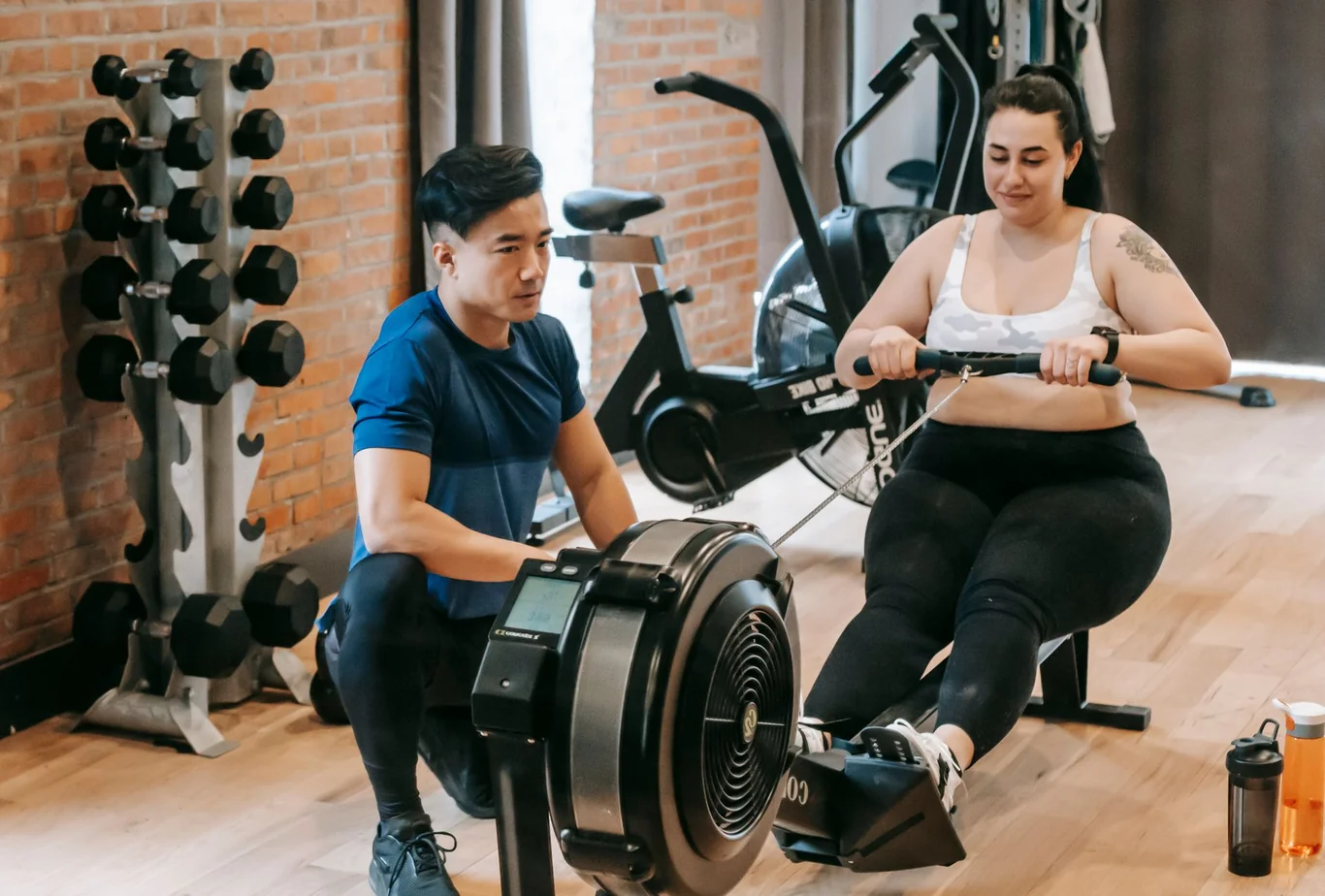
The rowing stroke divides into four phases: the catch, the drive, the finish, and the recovery. Each phase recruits a distinct set of muscles, and the legs and back do most of the work, and the main rowing muscles are the quadriceps, glutes, and lats. The rowing machine muscles worked during a single stroke span from the feet through the fingertips, a scope no single-joint gym exercise matches.
Primary Muscles: The Engine of Every Stroke
The legs provide approximately 60% of the power in a correct rowing stroke. The vastus medialis - the teardrop-shaped muscle on the inner quadriceps - contracts powerfully through the drive phase. A field study of elite national-squad rowers using surface electromyography showed that the vastus medialis undergoes a slow stretch-shortening cycle during each stroke - a mechanical loading pattern that places consistent stress on this muscle with each pull (2). The gastrocnemius also activates during the drive and is engaged in a similar mechanical pattern.
The back handles the final pull at the finish and is responsible for much of the upper-body muscle development associated with rowing. The latissimus dorsi, rhomboids, and trapezius all contract during the lean-back and arm-draw phases. On a rowing machine, the back muscles are among the most consistently loaded structures per stroke, which explains why competitive rowers develop wide, strong back musculature even without dedicated pulling exercises.
The glutes and hamstrings complete the lower-body contribution by extending the hip through the second half of the drive. Strong hip extension is both a performance driver and a primary source of posterior-chain development that regular rowers notice over time.
Muscle Group | Primary Role | Stroke Phase |
Quadriceps (vastus medialis) | Power generation (~60% of force per stroke) | Drive |
Latissimus dorsi, rhomboids, trapezius | Pull completion and upper-body development | Finish |
Glutes and hamstrings | Hip extension and posterior-chain drive | Drive (second half) |
Gastrocnemius | Force transfer and ankle stability | Drive and catch |
Secondary Muscles: Stabilizers and Support
The seated rowing machine works muscles differently from standing or cable-based row variations: the ergometer's hip hinge and leg drive shift the emphasis to the posterior chain rather than the upper-back isolation typical of gym machine rows. While the legs and back provide the primary force, these secondary muscles remain active throughout every stroke:
- Biceps brachii: elbow flexion during the final arm draw at the finish
- Triceps brachii: elbow extension and arm control during the recovery phase
- Core (rectus abdominis, transverse abdominis, obliques): spinal stabilization during the drive and lean-back phases
- Deltoids: shoulder control and positioning throughout the pull
- Calves (gastrocnemius, soleus): ankle stability and force transfer at the catch position
Surface EMG research comparing trained rowers to non-athletes during a standardized 500-meter effort found that trained rowers showed significantly superior muscle activation consistency and delayed fatigue onset in both biceps and quadriceps (3). This neuromuscular adaptation - better motor unit recruitment over time - develops alongside structural muscle changes and represents a real performance gain.
How Rowing Compares to Weight Training for Building Muscle
Directly comparing a rowing machine to free weights or cable machines clarifies exactly what rowing does and does not deliver for muscle building. In my own programming the two work as partners: I use the rower for conditioning and muscular endurance, and loaded lifts when the goal is maximal strength or size.
Strength Adaptations: What the Research Shows
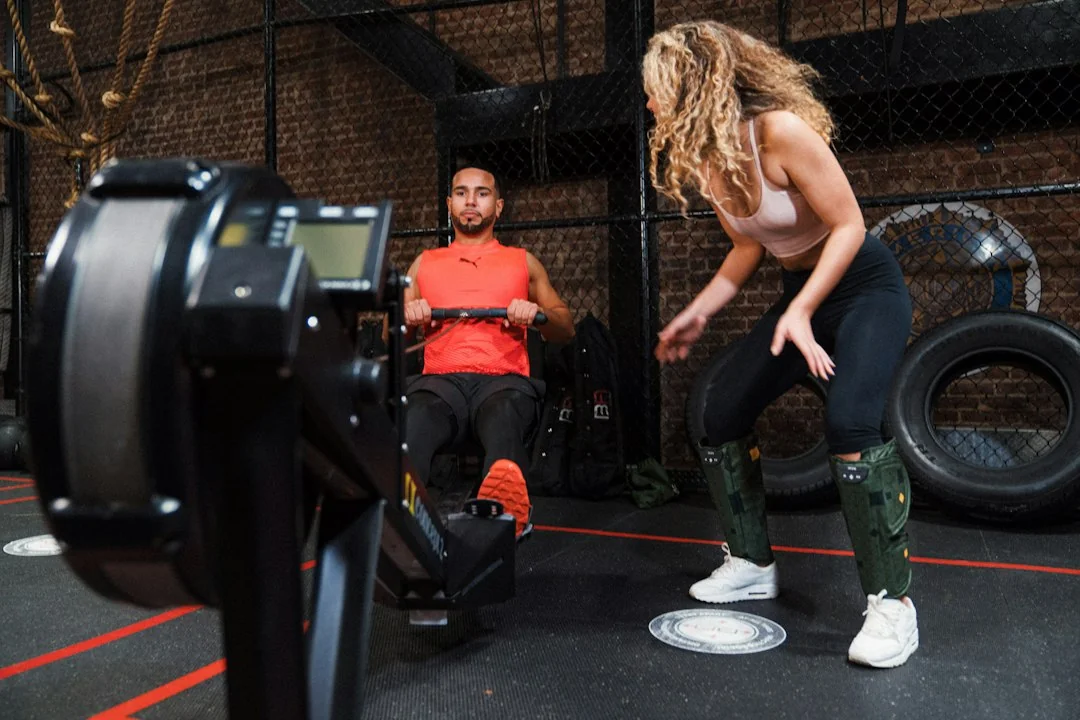
A randomized controlled trial in young male rowers tested whether machine-based global strength training at 70% of one-rep maximum produced greater adaptations than local stability training. The global strength group showed significantly larger improvements in back extensor strength, lower-body maximal strength, jump height, and 700-meter rowing performance (4). The muscles rowing targets - back extensors, quadriceps, glutes - respond strongly to progressive overload and transfer those gains directly into rowing capacity.
The Cardiovascular Advantage That Supports Muscle Growth
Rowing's cardiovascular demand directly supports long-term muscle development. A 21-week longitudinal study tracking elite rowers across a competitive season measured arterial diameter, flow-mediated dilation, and peak oxygen consumption. Female athletes demonstrated progressive vascular remodeling including increased brachial artery diameter, while both sexes showed improved peak oxygen consumption and vascular capacity across the competitive season (5). Greater vascular capacity means better oxygen and nutrient delivery to working muscles and faster removal of metabolic waste during recovery, which supports better training quality over the long term.
Rowing Machine Technique and Training Strategies for Building Muscle
Using a rowing machine with muscle building in mind changes how you approach every session. Poor rowing machine technique shifts load away from the primary muscles and into compensator patterns that increase joint stress and reduce hypertrophic stimulus. When I trained alongside a competitive club rower for a month, the difference was obvious from the first session: trained rowers drive with the legs first, maintain a controlled stroke rate, and generate power from the hip, not the arms - most beginners do the opposite and overload the lower back instead.
Resistance, Stroke Rate, and Muscle Stimulus
The two variables that determine muscle stimulus on a rower are resistance level and stroke rate. Most people default to a high cadence with low resistance, which is primarily a cardiovascular drill. For muscle building, you want the opposite approach:
- Low stroke rate (18-22 spm) with high resistance: maximum force per stroke, targets fast-twitch muscle fibers, highest hypertrophic potential
- Moderate stroke rate (22-26 spm) with moderate resistance: balanced cardiovascular and muscle conditioning
- High stroke rate (26-32 spm) with low resistance: primarily cardiovascular, minimal muscle-building effect
On air rowers like the Concept2 RowErg I use for most client sessions, the damper scale runs from 1 to 10. On water rowers, resistance mainly rises as you drive harder, with water level affecting the base feel. For beginners, I recommend damper 7-8 to build the force habit without compromising technique; intermediate and advanced rowers can push damper 9-10 for maximum muscle stimulus. On one of the quieter magnetic rowing machines, set the resistance to 70-80% of maximum for strength-focused intervals. These high-resistance, short-effort intervals follow the same structure as a HIIT rowing workout and are the most direct pathway to rowing-induced hypertrophy.
Sample Workouts Targeting Muscle Development
If you are new to rowing, learn the stroke mechanics before adding intensity. I keep these sessions shorter and heavier than a typical rowing workout for cardio, and the two formats below maximize muscular demand at different fitness levels.
Beginner muscle-building protocol:
- Warm up 5 minutes at easy pace, damper 3-4
- Complete 8 rounds of 250 meters at maximum effort (damper 7-8)
- Rest 90 seconds between rounds
- Cool down 5 minutes at easy pace
- Total time: 30-40 minutes
Intermediate muscle-building protocol:
- Warm up 5 minutes at light resistance
- Row 3 x 2000 meters at 85% effort (damper 7-9), rest 3 minutes between
- Add 5 x 500-meter power pieces at maximum resistance, rest 2 minutes between
- Total time: 50-60 minutes
Progressive overload strategy: To keep producing muscular stimulus as the body adapts, increase the challenge every 2-3 weeks. Add one interval per session (8 rounds becomes 10), increase damper by one setting, or reduce rest periods by 15 seconds. Without this progressive escalation, the body adapts to the same session quickly and hypertrophic gains plateau.
My tip: change only one of those three variables at a time. When I let athletes raise the damper and cut rest in the same week, their stroke quality usually falls apart by round 6.
Recovery and Nutrition for Rowing-Based Muscle Growth
Protein intake is the most underappreciated variable in rowing-induced muscle building. The recommended range for active individuals targeting hypertrophy is 1.6 to 2.2 grams of protein per kilogram of body weight per day (6). Rowing sessions create the stimulus, but protein provides the raw material for repair and growth. Without adequate protein and at least 48 hours of recovery between high-intensity sessions, the muscle-building signal from rowing will not convert into structural change. A 26-year-old athlete I coached rowed hard 4 times a week for 6 weeks with barely any change in his legs, and his progress only picked up once he moved his protein intake into that range.
Realistic Results: What to Expect From Rowing Machine Training
One of the most common reasons people abandon rowing programs is misaligned expectations. Knowing what realistic rowing before and after results look like, and over what timeline, is what separates people who stay consistent from those who quit.
Timelines for Visible Muscle Development
A systematic review of 34 studies on rowing ergometer performance identified VO2max, peak power output, and power at lactate threshold as the dominant physiological predictors of rowing capacity (7). These adaptations build incrementally, not linearly. The timeline below reflects 3-4 rowing sessions per week at moderate-to-high intensity. Individual results depend on body weight, effort, stroke rate, and prior fitness level - treat these as estimated ranges, not guarantees.
Timeframe | Strength Changes | Body Composition | Notable Adaptations |
Weeks 1-4 | Measurable neuromuscular gains; first strength increases | Little visible change; some early fat reduction | Improved stroke efficiency, better muscle coordination |
Weeks 4-8 | Clear strength gains in legs and back | Early muscle definition in posterior chain | Cardiovascular threshold improves significantly |
Weeks 8-16 | Visible hypertrophy in quads, upper back, and core | Rowing machine muscles before and after comparisons show clear definition changes | Most beginners reach a new baseline; intermediates continue progressing |
Rowing Versus Treadmill for Fat Loss and Muscle Gain
For belly fat and overall body composition, the rower and the treadmill take different routes: rowing engages the upper body, core, and lower body simultaneously, while running primarily stresses the lower body and cardiovascular system. At equal effort levels, a 170-pound person burns approximately 500-600 calories per hour rowing at moderate intensity, compared to roughly 750-800 calories per hour running at 6 mph. These are estimates that depend on body weight, stroke rate, and intensity, not flat figures. Where I land in the rowing versus running debate is simple: running burns more per hour, while rowing builds more upper-body and back muscle for the same effort.
Attribute | Rowing Machine | Treadmill |
Muscles engaged | Upper body, core, and lower body | Primarily lower body and cardiovascular system |
Estimated calories per hour (170 lbs) | 500-600 at moderate intensity | 750-800 at 6 mph |
Primary training effect | Cardiovascular and full-body muscular | Primarily cardiovascular |
Who Benefits Most From Rowing for Muscle Building
Not all exercisers benefit equally from rowing as a muscle-building tool. The following groups tend to see the strongest results:
- Beginners and early intermediates with no established strength training background; their muscles respond to lower mechanical loads
- People with joint limitations who cannot safely load the spine or hips under heavy weight
- Older adults who need a low-impact option that still stimulates muscle protein synthesis and preserves lean mass; rowing machine benefits for this group extend to bone loading and balance alongside muscle retention, and for anyone with reduced bone density, the evidence on rowing for osteoporosis helps set realistic expectations before starting a program
- Athletes in complementary sports (kayaking, combat sports, cycling) who want functional muscle endurance alongside cardiovascular fitness
- Home gym users who want one compact machine that covers both cardio and resistance training
- Anyone focused on body composition who wants to build lean, functional muscle rather than bulk - rowing produces endurance-grade hypertrophy, not the size associated with maximal-load barbell programs, which makes it well-suited to people who want definition without bulk
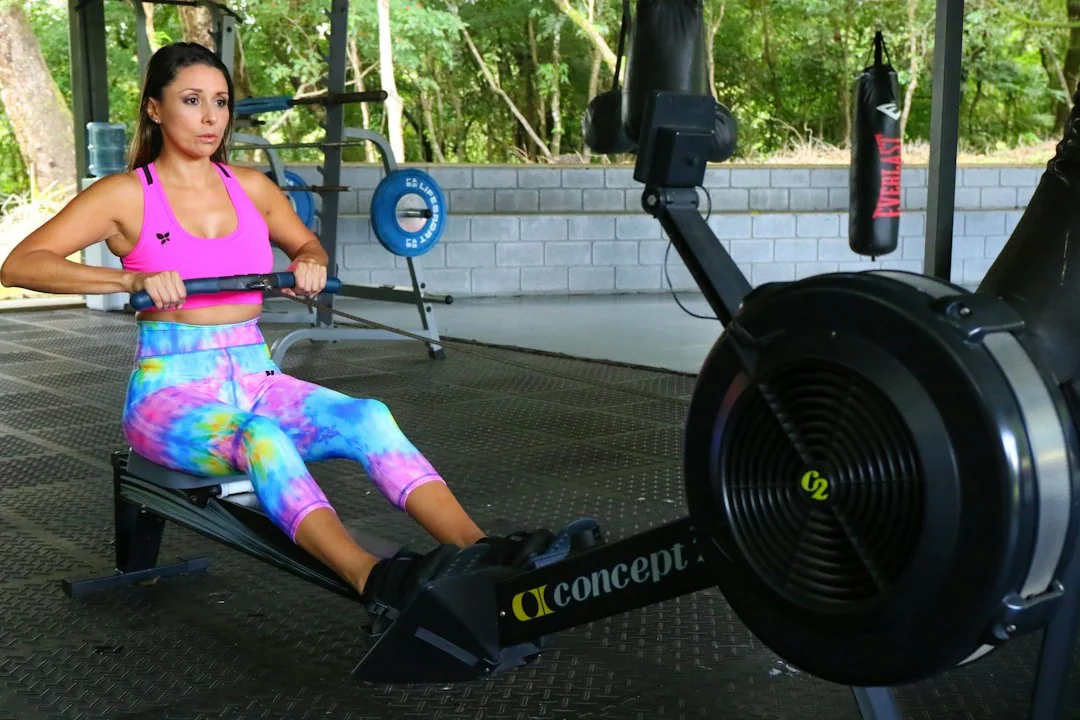
Rowing also suits households that need a rowing machine for multiple users, since beginners and more advanced exercisers can train effectively on the same machine by adjusting resistance to their own level.
Making Rowing Work for Your Muscle-Building Goals
So, will a rowing machine build muscle? For a wide range of users who approach it with the right variables, yes. The most important mindset shift is from a cardio mentality to a strength-interval approach: low stroke rate, high resistance, deliberate power per stroke, and sufficient recovery between sessions. If you are still choosing equipment, I would put a smooth, adjustable resistance system ahead of screens when comparing the best rowing machines, and it helps to browse rowing machines by resistance type before deciding.

In my own sessions, heavy rowing intervals produced noticeable leg and back fatigue, and on a rowing machine the back muscles, particularly the rhomboids and lower trapezius, were where soreness felt most distinct from typical cardio fatigue. Still, I would not treat rowing as a substitute for progressive lower-body lifting: it builds functional, endurance-grade muscle across your legs, back, and core, and if maximum hypertrophy is the goal, progressive overload with weights is still the better tool.
If you have a history of back trouble, build rowing volume gradually, because rounding at the catch once fatigue sets in can contribute to rowing-related back pain. The key principle: challenge your muscles with meaningful resistance, recover with adequate protein, and measure progress over weeks rather than days.
This article is for informational purposes only and does not constitute medical advice. Consult a qualified healthcare provider before starting a new exercise program, particularly if you have existing injuries or health conditions. We are always looking for expert inputs to make our content even better and more useful.
FAQs
How long on rowing machine to build muscle?
The time it takes to build muscle on a rowing machine depends primarily on your training intensity, resistance settings, and session frequency. Based on the available research, beginners training at 3-4 sessions per week with high resistance typically see measurable strength gains within 4-8 weeks and visible hypertrophy in the 8-16 week range.
Is 20 minutes of rowing a day enough?
Twenty minutes of rowing per day can support muscle endurance and cardiovascular fitness when performed at high intensity with adequate resistance. Structuring those 20 minutes as high-resistance intervals - such as 8 rounds of 250 meters with 90 seconds of rest - will maximize the muscle stimulus possible within that time frame.
Can you lose belly fat on a rowing machine?
A rowing machine can support fat loss, including reduction of abdominal fat, as part of an overall caloric deficit, since rowing burns a significant number of calories while engaging multiple major muscle groups simultaneously. No machine selectively removes fat from one area, but rowing's high-calorie output combined with its full-body muscle engagement makes it an effective tool for overall body composition change.
What are the downsides of rowing?
The main downsides of rowing are the technical learning curve, the limited resistance ceiling for experienced strength athletes, and potential back discomfort if technique breaks down under fatigue. Poor form - specifically excessive lower-back rounding at the catch or an incorrect stroke sequence - shifts load away from the legs and onto the spine, which is why learning correct technique from the first session matters.
What muscles does a rowing machine work?
A rowing machine works the quadriceps, hamstrings, glutes, latissimus dorsi, rhomboids, trapezius, triceps, biceps, deltoids, and core muscles during each stroke. The legs generate approximately 60% of the force per stroke, while the back and arms complete the pull in the drive-to-finish sequence.
References
- Hughes DC, Ellefsen S, Baar K. Adaptations to endurance and strength training. Cold Spring Harb Perspect Med. 2018;8(6):a029769. doi:10.1101/cshperspect.a029769.
- Held S, Siebert T, Donath L. Electromyographic activity of the vastus medialis and gastrocnemius implicates a slow stretch-shortening cycle during rowing in the field. Sci Rep. 2020;10:9451. doi:10.1038/s41598-020-66124-4.
- Grzejszczak T, Roksela A, Poswjata A, Siemianowicz A, Kielbon A, Mikulski M. Surface electromyography data analysis for evaluation of physical exercise habits between athletes and non-athletes during indoor rowing. Sensors (Basel). 2024;24(6):1964. doi:10.3390/s24061964.
- Hammami R, et al. Effects of global versus local trunk muscle strength training on muscle strength, proxies of power and rowing-specific performance in pubertal male rowers. PLoS One. 2026;21(2):e0343291. doi:10.1371/journal.pone.0343291.
- Henley-Martin SR, et al. Vascular adaptation in elite female and male rowers across a competitive season. Curr Res Physiol. 2025;8:100164. doi:10.1016/j.crphys.2025.100164.
- Morton RW, Murphy KT, McKellar SR, et al. A systematic review, meta-analysis and meta-regression of the effect of protein supplementation on resistance training-induced gains in muscle mass and strength in healthy adults. Br J Sports Med. 2018;52(6):376-384. doi:10.1136/bjsports-2017-097608.
- Borges I, Veiga S, Gonzalez-Frutos P. The evaluation of physical performance in rowing ergometer: a systematic review. J Funct Morphol Kinesiol. 2025;10(4):437. doi:10.3390/jfmk10040437.