

Calories burned cycling vary far more than most riders expect, and knowing the real numbers makes it easier to plan sessions around a specific fat-loss or fitness target. Cycling burns anywhere from 200 to over 800 calories per hour depending on body weight, intensity level, and bike type. This guide breaks down actual estimates by weight and duration, explains why your stationary bike's display often disagrees with your fitness tracker, and gives you the key variables to track for more accurate readings - whether you ride indoors or outdoors. I find that riders consistently underestimate the impact of resistance level on calorie burn - in a 60-minute session, working at high resistance rather than spinning fast at low resistance can add 80-150 calories to the total - many assume pedaling speed is the primary driver.

Calories Burned Cycling - What the Research Actually Shows
The standard framework for estimating cycling calorie expenditure is the Metabolic Equivalent of Task (MET) system, which assigns each activity a numeric value representing how many times more energy it demands compared to sitting at rest. For cycling, MET values range from 4.0 for leisurely pedaling to 12.0 or higher at competitive racing pace.
The calculation is straightforward: multiply your body weight in kilograms by the MET value and by session duration in hours. A 155-pound (70 kg) rider at light pace (MET 6.0) for one hour burns approximately 420 calories. Increase effort to moderate intensity - 12 to 14 mph with active resistance (MET 8.0) - and that same rider burns closer to 560 calories in the same time.
Research published in the Journal of Human Kinetics indicated that MET values for stationary cycling range from 8.8 at vigorous power outputs to 14.0 at high intensity, demonstrating how sharply effort level controls calorie burn (1). A shorter, harder session can match or exceed a longer easy one in total calories burned.
Key Variables That Affect Calories Burned Cycling
The main variables that determine your calorie burn per session:
- Body weight - the most consistent predictor at any given intensity
- Riding intensity - speed, resistance, and terrain combined
- Session duration - longer sessions accumulate proportionally more burn
- Fitness level and metabolic efficiency - fitter riders burn slightly fewer calories for the same workload
- Indoor versus outdoor environment - wind resistance and coasting availability both shift the total
How Body Weight Affects Your Calorie Burn
Body weight is the most predictable driver of calories burned cycling at any given intensity. Moving a heavier body demands proportionally more energy - a 185-pound rider burns nearly 50% more per session than a 125-pound rider at the same effort level and duration.
Calorie burn estimates at moderate cycling intensity (12-14 mph equivalent, MET 8.0):
Body Weight | 30 Minutes | 60 Minutes | 90 Minutes |
125 lbs (57 kg) | 228 cal | 456 cal | 681 cal |
155 lbs (70 kg) | 281 cal | 562 cal | 843 cal |
185 lbs (84 kg) | 336 cal | 672 cal | 1,007 cal |
215 lbs (98 kg) | 390 cal | 780 cal | 1,170 cal |
These figures use standard MET 8.0 values for moderate cycling. Actual results vary with individual fitness level, terrain, and metabolism. For shorter sessions, a 155-pound rider at moderate effort burns approximately 140 calories in 15 minutes - roughly half the 30-minute total.
Intensity Level - The Multiplier Factor
Speed and resistance directly determine how hard your body works, which controls how many calories cycling burns beyond what weight alone predicts. Moving from a leisurely 10 mph to a vigorous 15 mph pace can add 200 or more calories per hour for a 155-pound rider.
The reason is increased muscle engagement at higher resistance: my guide on what muscles does an exercise bike work covers how resistance level shifts the primary load between quads, hamstrings, glutes, and calves.
Calories burned per hour cycling by intensity level (155 lbs / 70 kg):
Intensity | Speed Equivalent | MET | Calories/Hour |
Leisure | Under 10 mph | 4.0 | 280 |
Light | 10-12 mph | 6.0 | 420 |
Moderate | 12-14 mph | 8.0 | 560 |
Vigorous | 14-16 mph | 10.0 | 700 |
Very Vigorous | 16-19 mph | 12.0 | 840 |
If you are choosing between stationary bike types to optimize your training effort, our guide on how to choose an exercise bike breaks down the resistance systems that directly determine how hard you can push - and therefore how much you burn per session.
Calories Burned Cycling Per Hour on a Stationary Bike
Stationary bikes give you a controlled environment to match a target intensity reliably, making them well-suited for calorie-focused training. A cycling calorie calculator typically uses your body weight, session duration, and effort level mapped to MET values to generate an estimate. Better calculators also factor in live heart rate, which significantly improves accuracy.
My guide on chest strap heart rate monitors covers why wrist-based sensors underreport heart rate during high-effort cycling intervals and how a chest strap closes that accuracy gap.

Why Bike Calorie Displays Are Often Inaccurate
The built-in calorie display on most exercise bikes is not a reliable personal estimate. Manufacturers calibrate these displays around an assumed average user - typically 155 pounds at steady moderate effort. Riders who weigh significantly more, less, or vary effort during a session can see the machine's readout diverge from reality by 20-30%.
My guide on the most accurate fitness watch covers which wrist devices deliver the most reliable calorie and heart rate estimates during cycling, and what to look for in sensor accuracy.
Using a quality calorie counter stationary bike app or a wearable that accounts for your actual weight and live heart rate gets you considerably closer to the real number. The best calorie trackers combine heart rate monitoring with weight-adjusted formulas and can reduce estimation error to under 15% for most steady-state sessions.
My best calorie tracker guide covers the devices that deliver the most reliable intake and burn estimates for cyclists pairing training with a dietary approach to fat loss.
Indoor Cycling Calories Calculator - How to Get the Best Estimate
An indoor cycling calories calculator works best when you supply three specific inputs:
- Your exact body weight in pounds or kilograms
- Total session duration in minutes
- Intensity level (light, moderate, or vigorous - each mapped to a MET range)
Some calculators also accept average heart rate, which narrows the estimate considerably. Heart rate is the most accessible real-time proxy for metabolic demand outside of a lab setting, and devices that track it continuously throughout a ride produce the most reliable output. A calorie calculator cycling tool that incorporates live heart rate data will outperform any fixed MET estimate for personalized results. For a deeper look at wearable accuracy during exercise, our guide on how accurate smart watches are for heart rate tracking covers the key limitations to know about.
A 1 hour cycling calories calculator estimate for a 155-pound rider at moderate effort (MET 8.0) returns approximately 560 calories, consistent with MET-derived calculations and a solid baseline for planning. At light to moderate pace, the realistic range is 420-560 calories.
Stationary Bike vs. Outdoor Cycling - Calorie Burn Differences
The common assumption is that outdoor cycling automatically burns more calories. That is only partially accurate. The gap between indoor and outdoor calorie burn is smaller than most riders expect, and a properly challenging stationary session can outperform a moderate outdoor ride.

Outdoor riding introduces wind resistance, gradient changes, and unpredictable speed variation. Wind resistance accounts for a meaningful share of energy cost at speeds above 15 mph. On a stationary bike, you lose the wind variable but can precisely control the resistance demand. The absence of coasting is also a significant factor - a stationary bike does not let you rest on descents, which forces a higher average effort level across the full session.
Calorie burn factors compared:
Factor | Stationary Bike | Outdoor Cycling |
Wind resistance | Absent (controlled) | Variable above 15 mph |
Terrain variation | Resistance settings only | Real hills, real coasting |
Coasting | None on most models | Reduces average intensity |
Calorie tracking | Built-in counter unreliable | GPS + heart rate = better estimate |
Session consistency | Highly repeatable | Route and weather dependent |
Research on indoor cycling confirms that session energy output scales predictably with power level and perceived effort, making stationary training well-suited to precise calorie targets (2). Pairing heart rate tracking with your sessions gives you a far more actionable number than the bike display alone. Understanding what a smartwatch can do for exercise tracking helps you set up a more complete monitoring system before your next ride.
Cycling Calories Burned by Bike Type
Not all calories burned cycling are equal - bike geometry and resistance mechanism both shift the metabolic demand of a session at equivalent perceived effort.
For a direct comparison of how upright and recumbent designs differ in calorie output, cardiovascular ceiling, and muscle engagement, my guide on recumbent exercise bike vs upright covers the key trade-offs for riders choosing between the two.
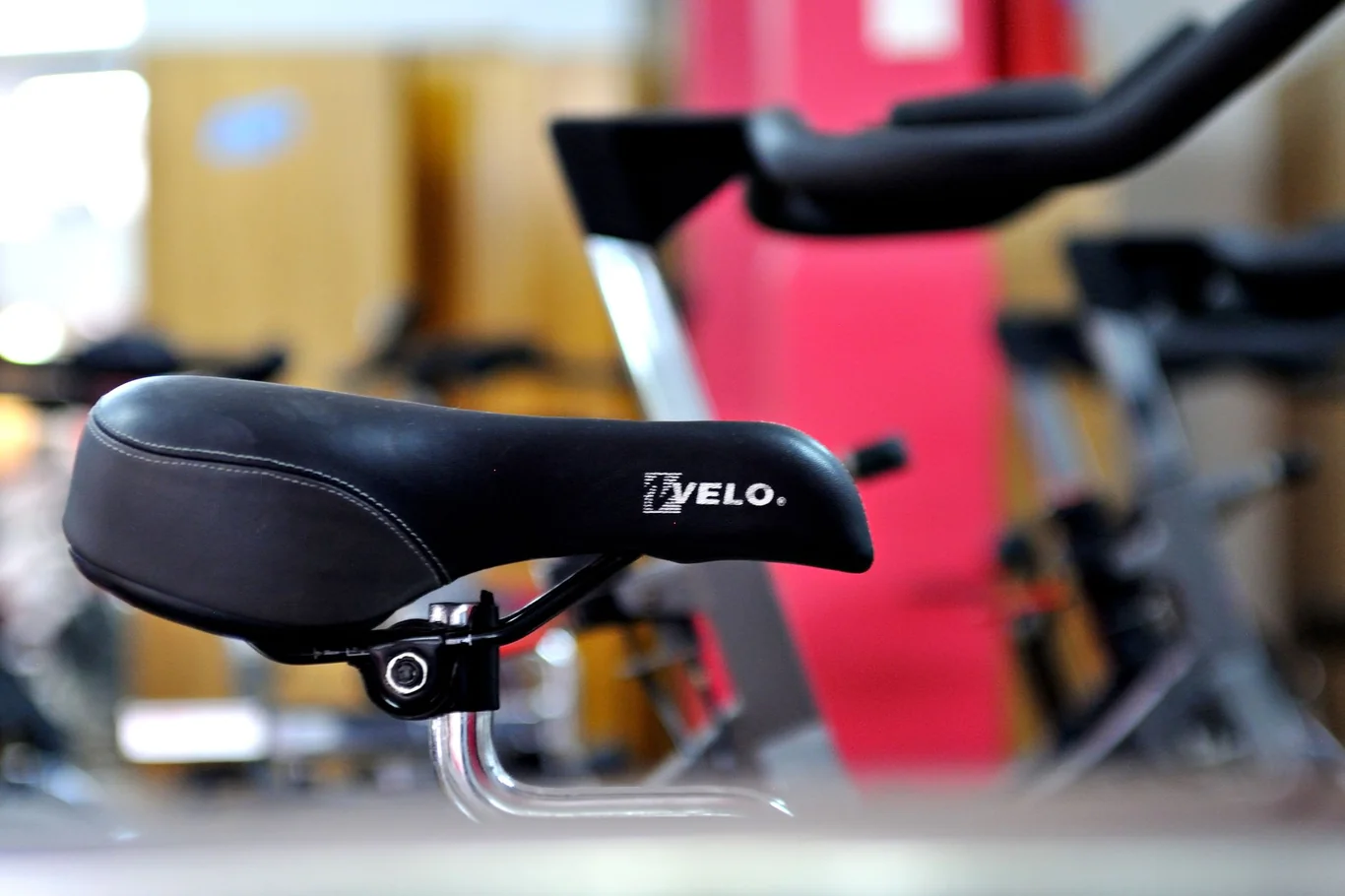
Upright Bikes, Spin Bikes and Recumbent Bike Calories
Upright stationary bikes and spin bikes most closely match the road cycling MET values in TABLE_2 above. Recumbent bikes - where the rider sits back in a reclined chair position - typically burn 10-15% fewer calories than upright cycling at equivalent perceived effort, due to reduced core and postural muscle engagement. A recumbent bike calories burned calculator estimate for a 155-pound rider at moderate effort falls in the range of 380-480 calories per hour - lower than the 562 cal/hr for the same rider on an upright bike.
Mountain Bikes and Electric Cycling Calorie Output
Bike Type | Effort Level | Est. Calories per Hour (155 lbs) |
Upright / Spin Bike | Moderate (MET 8.0) | ~562 |
Recumbent Bike | Moderate (MET 8.0) | 380-480 |
Mountain Bike | Sustained Technical Terrain | 600-800 |
Mountain biking sits at the opposite end of the spectrum: sustained technical terrain, constant weight shifting, and variable intensity spikes push calorie burn well above road cycling figures, often reaching 600-800 cal/hr for a 155-pound rider. Research on e-cycling - pedal-assist cycling that adds motorized support to pedal effort - found that low-assist riding produces aerobic capacity gains comparable to those seen with traditional cycling programs, with VO2max effect sizes of 0.48 across diverse study populations (5). As assist level increases, calorie burn decreases proportionally.
How Many Calories Does Cycling Burn Compared to Other Cardio?
Cycling lands in the upper tier of cardio calorie burn, outpacing walking by a meaningful margin and roughly matching running at equivalent intensities. A calories burned cycling calculator approach shows that cycling at moderate effort outperforms most common cardio alternatives on a per-hour basis.

Approximate calorie burn comparison at 60 minutes for a 155-pound rider:
- Leisurely walking (2.5 mph): 200-230 calories
- Brisk walking (3.5 mph): 260-320 calories
- Moderate cycling (12-14 mph): 420-560 calories
- Running at 6 mph: 600-650 calories
- Vigorous rowing: 500-620 calories
Cycling vs. Walking for Calorie Burn
A 155-pound person burns roughly 260-320 calories per hour during brisk walking. That same rider on a stationary bike at moderate effort burns 420-560 calories in the same period - a 50-75% advantage in favor of cycling per hour. For a 155-pound person, 1 hour walking calories burned at brisk pace totals approximately 260-320 calories - roughly 40-55% of moderate cycling output in the same timeframe.
Brisk walking for 45 minutes burns approximately 195-240 calories for a 155-pound person - about half the output of moderate cycling in the same window. Calories burned walking 45 minutes falls to roughly 115-145 calories at a casual pace, making moderate cycling the stronger choice for time-efficient calorie burning.
Per-distance numbers tell a different story. Cycling calories burned per mile come to roughly 40-50 calories per mile at moderate intensity, compared to 80-100 calories per mile walking briskly for the same person. On a per-kilometer basis, moderate cycling burns approximately 25-31 calories per km for a 155-pound rider - meaning the 10 km cycling calories burn works out to roughly 250-310 calories at this effort level. Calories burned walking per km at brisk pace run approximately 50-60 calories per km for the same body weight. You cover ground faster on a bike, so time efficiency favors cycling, but per-mile and per-km efficiency do not.
A longitudinal study found that greater cycling engagement was significantly associated with lower body fat percentage, explaining a meaningful share of adiposity variance that walking engagement did not replicate (3). This supports cycling as the stronger option when time-efficient calorie burning is a primary goal. Our guide to the benefits of walking backwards on a treadmill covers how low-impact walking variations can complement a cycling routine for a balanced weekly program.
Cycling vs. Rowing for Calorie Burn
Vigorous rowing can match or slightly exceed cycling in calories burned per hour because rowing recruits more total muscle mass - upper back, arms, and core in addition to legs - raising overall metabolic demand. Our breakdown of what muscles a rowing machine works explains exactly why full-body engagement shifts the calorie math compared to lower-body-dominant cycling.
For riders managing lower-body joint issues, cycling's lower impact profile often sustains higher effort levels over longer sessions, which can offset rowing's peak calorie-per-hour advantage across a full training week.
My cycling and rowing comparison breaks down how these two machines differ in calorie output, muscle recruitment, and long-term training compatibility.
Riders who want specific guidance on managing knee conditions while building that weekly training volume will find my exercise bike knee pain breakdown a useful clinical reference.
For a detailed look at how the two machines compare on calorie burn, joint impact, and muscle recruitment, my guide on recumbent exercise bike vs rowing machine covers which format delivers better outcomes by training goal.
How to Increase Calories Burned Cycling
We cover the specific training strategies that help you burn more calories on every ride, from interval structure to terrain and gear choices. These adjustments compound over time, so even small tweaks to how you train can meaningfully raise your total calorie burn.
Training Strategies for Higher Calorie Burn
Burning more calories while cycling does not always require more time on the bike. The following strategies raise your average burn rate within the same session length:
- Raise resistance before raising speed. Higher resistance increases power output and MET value more effectively than pedaling faster at low resistance.
- Add intervals. Alternating vigorous bursts with active recovery elevates your metabolic rate during and for up to two hours after the session through excess post-exercise oxygen consumption (EPOC).
- Train in Zone 3-4. Riding at 70-85% of your maximum heart rate puts you in the highest sustainable calorie-burn range without accumulating fatigue faster than you can recover.
- Maintain posture throughout. Engaging your core and avoiding a slumped position over the handlebars increases overall energy demand compared to passive riding.
- Extend duration progressively. Each additional 15 minutes at moderate intensity adds approximately 100-150 calories for a 155-pound rider.
- Vary session structure. A session alternating between 3-minute hard efforts and 2-minute recovery periods consistently outperforms a single-pace session of equivalent duration in total calorie output.
Cortis et al. (2021) confirmed that recovery-phase energy expenditure varied significantly based on interval sequence structure, with ascending-intensity designs generating higher post-exercise calorie burn than descending sequences (2). High-intensity interval work generates meaningful EPOC, continuing to elevate calorie burn after you step off the bike. I've seen interval-trained riders hit Zone 4 output for only 20 minutes and outperform 45 minutes of steady-state - the EPOC window can add 30-50 additional calories post-session, a difference that compounds across multiple weekly rides.
For structured protocols, work-to-rest ratios, and beginner-through-advanced interval plans, my guide on high intensity training on exercise bike covers how to build HIIT sessions that maximize that EPOC benefit safely.
Cycling Heart Rate Zones for Calorie Optimization
Target heart rate zones for calorie optimization:
Zone | % Max Heart Rate | Feel | Calorie Focus |
Zone 2 | 60-70% | Comfortable, conversational | Lower rate, fat-dominant fuel |
Zone 3 | 70-80% | Moderately challenging | Balanced carbohydrate and fat use |
Zone 4 | 80-90% | Hard, labored breathing | Highest sustainable burn rate |
Zone 5 | 90-100% | Near-maximal effort | Short bursts only |
Does Cycling Burn a Lot of Calories for Weight Loss?
Cycling is one of the most efficient calorie-burning exercises available, particularly for people managing joint sensitivity or recovering from impact-related injuries. A consistent routine of 45-60 minutes at moderate intensity four to five days per week generates a weekly calorie burn of 1,500-2,500 calories depending on body weight and effort - enough to drive meaningful body composition change when combined with a stable dietary approach.
Riders just starting out who want a structured progression to build toward those session durations will find my beginner cycling workout plan a clear first step.
For a structured weekly plan that applies this principle across different intensity formats, my exercise bike workout for weight loss guide covers HIIT and steady-state protocols with realistic timelines for each fitness level.

Fat loss from cycling is systemic. Where your body loses fat first is determined by genetics and hormones, not by which muscles you activate. Cycling strengthens the lower body and improves cardiovascular efficiency, but it does not selectively reduce fat in the abdomen, thighs, or any specific area. What it does is create the overall calorie deficit that drives fat loss gradually throughout the body.
Why Cycling Is Effective for Sustained Fat Loss
Reasons cycling works well as a long-term calorie-burning tool:
- Low joint impact allows longer, more frequent sessions compared to running
- Intensity scales easily from leisurely to vigorous on the same equipment without changing machines
- Indoor and outdoor options remove weather and access barriers that interrupt other exercise habits
- Interval and steady-state protocols target different calorie-burn objectives within the same bike session
Research on commuter cycling showed that 150 minutes per week of cycling increased VO2max by an average of 10.5% and improved cardiovascular markers - even without changes in body weight or fat mass (4). The health benefits of consistent cycling appear well before meaningful scale changes do, which matters for motivation in the early weeks of a new routine.
Riders who want a concrete breakdown of what those early-week changes compound into by end of month one will find my exercise bike before and after guide a clear results timeline.
Weekly Fat Loss and Calorie Burn Estimates
Weekly fat-loss estimates from cycling (155-pound rider, moderate intensity):
Sessions/Week | Duration Per Session | Est. Weekly Calorie Burn | Est. Fat Loss/Week |
3x | 30 min | ~756 cal | ~0.2 lbs |
4x | 45 min | ~2,016 cal | ~0.6 lbs |
5x | 60 min | ~2,520 cal | ~0.7 lbs |
Estimates assume stable caloric intake. Actual results depend on diet and individual metabolic rate.
Getting the Most from Your Cycling Calorie Data
Calories burned cycling depend on three factors above all: your body weight, your effort level, and the consistency of your sessions over weeks and months. The MET-based tables in this guide give you reliable estimates to plan around; real-world results typically fall within 10-20% of those figures based on individual physiology.
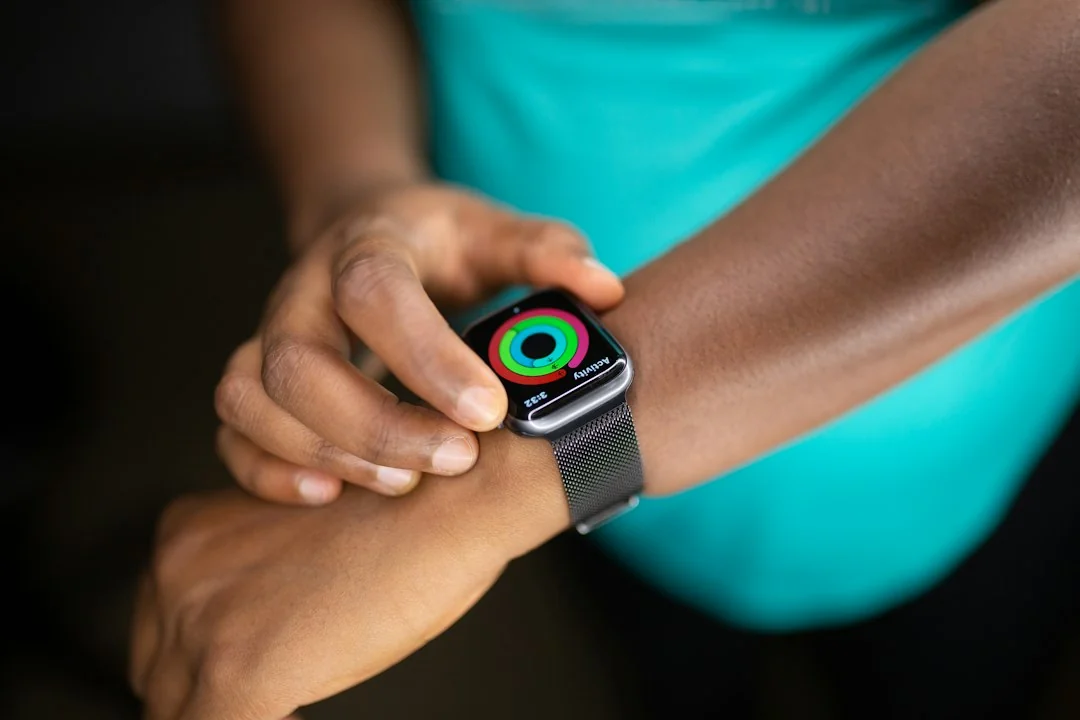
For tracking, step away from your bike's built-in display and use a heart-rate-based approach. A calories burned cycling calculator that incorporates your actual weight and live heart rate will serve you far better than any generic formula baked into the machine. Pairing a wearable with your sessions gives you the most actionable data over time. Our guide on how accurate smart watches are for heart rate tracking covers which tracking methods deliver the most reliable output for cycling specifically.
In reviewing cycling programs over months, the weekly accumulation is what separates riders who see body composition change from those who plateau. A 4x per week rider at moderate effort accumulates roughly 2,000 calories per week - a threshold where meaningful fat loss becomes mathematically possible alongside stable dietary intake. A vigorous 60-minute ride burns around 700 calories for a 155-pound rider, but a single high-calorie meal can replace an entire session's output. Show up consistently over months and let the cumulative calorie deficit do the work.
FAQs
How many calories will I burn in 30 minutes of cycling?
The calories you will burn in 30 minutes of cycling depend on your body weight and intensity level. A 155-pound rider at moderate pace (MET 8.0) burns approximately 280 calories in 30 minutes, while vigorous effort at that same weight pushes the estimate closer to 350 calories.
What is the 75% rule in cycling?
The 75% rule in cycling is a training guideline recommending that at least 75% of your weekly riding time be completed at low to moderate intensity, with the remaining 25% reserved for harder efforts. This balance supports consistent aerobic calorie burn and cardiovascular development while managing fatigue and reducing the risk of overtraining.
Can I lose belly fat by cycling?
You can reduce overall body fat through cycling, but the activity does not target belly fat specifically, since spot reduction is not how fat loss works physiologically. Consistent cycling creates a calorie deficit that draws on fat stores throughout the body, and with sustained effort and dietary management, that process can include a gradual reduction in abdominal fat as part of total body composition improvement.
How many calories can I burn in 90 minutes of cycling?
The calories you can burn in 90 minutes of cycling range from approximately 681 at moderate intensity for a 125-pound rider to over 1,170 calories at vigorous pace for a heavier rider. A 155-pound person at moderate effort burns approximately 843 calories in a 90-minute session, with intensity increases pushing that estimate higher.
How many calories does cycling burn in 30 minutes?
The calories cycling burns in 30 minutes range from about 175 for a lighter rider at low intensity to 390 or more for a heavier rider at vigorous pace. To estimate your own number, multiply your weight in kilograms by 0.5 (half an hour) and by the MET value for your intensity level - use 6.0 for light effort, 8.0 for moderate cycling, or 10.0 for vigorous pace.
This content is for informational and educational purposes only. It is not a substitute for professional medical advice, diagnosis, or treatment. Always consult your healthcare provider before starting a new fitness program.
References
- Evans SA, James DA, Rowlands D, Lee JB. Impact of centre-of-mass acceleration on perceived exertion, the metabolic equivalent and heart rate reserve in triathlete spin cycling: a pilot study. J Hum Kinet. 2022;81:41-52. doi:10.2478/hukin-2021-0102.
- Cortis C, Fusco A, Cook M, Doberstein ST, Gillette C, Porcari JP, Foster C. Indoor cycling energy expenditure: does sequence matter? Int J Environ Res Public Health. 2021;18(3):870. doi:10.3390/ijerph18030870.
- Orbolato R, Simoes EV, Palma A, Kooreman W, Andrade RD, Belusso AC, Pinheiro FA. Impact of cycling and walking on adiposity and healthcare costs among adults: longitudinal study. Cad Saude Publica. 2024;40(2):e00102623. doi:10.1590/0102-311XE00102623.
- Novis BJ, Hargreaves EA, Jowett T, Rehrer NJ. Effects of commuter cycling on physical activity, cardiometabolic health and body composition. Eur J Sport Sci. 2025;25(5):e12289. doi:10.1002/ejsc.12289.
- Riiser A, Bere E, Andersen LB, Nordengen S. E-cycling and health benefits: a systematic literature review with meta-analyses. Front Sports Act Living. 2022;4:1039624. doi:10.3389/fspor.2022.1039624.