

Heart rate zones cycling transforms every ride from guesswork into structured training. When you know which zone you are in, each pedal stroke has a precise physiological purpose - from the easy conversational spin that builds your aerobic base in Zone 2 to the maximal effort that raises your VO2 max ceiling in Zone 5. I started tracking zones after noticing my "easy" days were leaving me too fatigued for quality hard sessions; within two weeks the pattern was clear: I was drifting into Zone 3 on every intended recovery ride. This guide covers how the five heart rate zones work, how to calculate them for your physiology, what each zone builds, and which devices keep you on target.

Heart Rate Zones Cycling - What They Are and Why They Matter
Training intensity is the most controllable variable in any cycling program, and cycling heart rate zones provide the practical framework for managing it. Rather than riding at whatever effort feels comfortable, zone-based training assigns each session to a specific physiological band with a defined stimulus. Research on training intensity distribution in cyclic endurance sports documents distinct molecular mechanisms at each zone boundary - mitochondrial biogenesis at low intensity, lactate clearance adaptations in the middle zones, and VO2 max development at the upper end, each requiring different intensities to activate (1).
The Five Cycling Heart Rate Zones
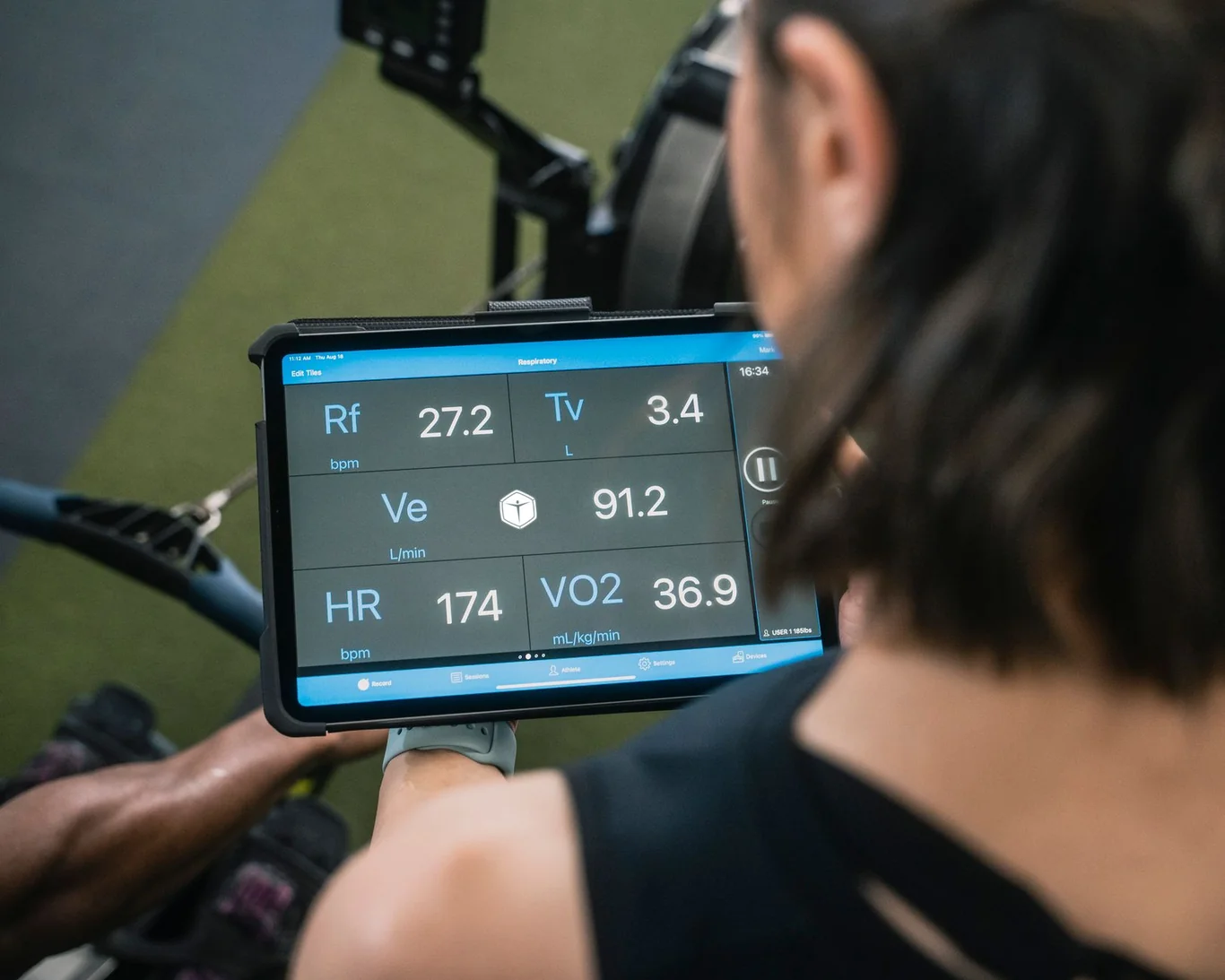
Heart rate zones cycling are expressed as a percentage of your maximum heart rate. Garmin, Polar, Wahoo, and most major cycling apps use a five-zone model as their foundation:
Zone | Training Name | % Max HR | What It Feels Like |
1 | Recovery | 50-60% | Fully conversational, almost no effort |
2 | Aerobic Base | 60-70% | Comfortable, easy breathing throughout |
3 | Tempo | 70-80% | Moderately hard, full sentences are difficult |
4 | Lactate Threshold | 80-90% | Hard effort, breathing is labored |
5 | VO2 Max | 90-100% | All-out effort, typically 1-5 minutes at full intensity |
The percentages in this table are starting points, not rigid thresholds. A 2025 study of 50 cyclists demonstrated that standardized Zone 2 markers show interindividual variability with coefficients of variation between 6% and 29%, meaning the same percentage of max HR produces different physiological responses in different riders (2). Your heart rate zones cycling profile is not identical to your training partner's, even at the same age.
Zone 2 - The Foundation of Cycling Fitness
Zone 2 receives the most attention in current cycling science, and the research justifies it. An expert consensus panel of 14 applied sport scientists and coaches defines Zone 2 as the intensity band immediately below the first lactate or ventilatory threshold, documenting expected adaptations including improved aerobic capacity, mitochondrial density, and fat oxidation efficiency (3). Sustained Zone 2 cycling produces these measurable changes over 8-12 weeks:
- Greater mitochondrial density in slow-twitch muscle fibers
- Improved ability to oxidize fat as fuel at progressively higher exercise intensities
- Gradual increase in cardiac output at any submaximal effort level
- Faster recovery between consecutive hard training sessions
Zone 2 should feel genuinely easy - if you cannot hold a complete conversation throughout the entire ride, you have drifted into Zone 3. The most common mistake cyclists make is unconsciously accelerating into what exercise scientists call the "grey zone" between aerobic and threshold intensity, an effort that does not produce meaningful adaptation in either recovery or hard fitness.
For cyclists who want full control over zone training indoors - without weather, traffic, or terrain interruptions - our guide on how to choose an exercise bike covers models that integrate with cycling computers and heart rate monitors for precise zone sessions.
Calculating Heart Rate Zones Cycling - Three Methods That Work
Accurate cycling heart rate zones start with accurate inputs. There are three practical approaches: a formula-based heart rate zone calculator that estimates your maximum, a field test that measures it directly, and a lactate threshold test that anchors Zone 4 assignment more precisely once you have mastered the basics.
Method 1 - The Heart Rate Zone Calculator Formula
The classic "220 minus age" formula carries a standard deviation of approximately 10-12 bpm, which is large enough to push your zone assignments into the wrong physiological band entirely. A more accurate heart rate calculator for cyclists uses the Tanaka formula: 208 minus (0.7 x age). To calculate cycling heart rate zones with this approach:
- Multiply your age by 0.7 - a 40-year-old gets 28
- Subtract from 208 to find estimated max HR - for a 40-year-old, that is 180 bpm
- Multiply your estimated max HR by the lower and upper percentage of each zone from the table above
- Program your zone boundaries into your cycling computer or heart rate monitor app
A zone 2 heart rate calculator using the Tanaka formula gives a substantially better starting estimate than the 220-minus-age shortcut. Refine the zones further with a field test as your fitness progresses.
Method 2 - The Max Heart Rate Test
A max heart rate test eliminates formula-based estimation error by finding your real physiological ceiling. One practical field protocol:
- Warm up thoroughly for 15-20 minutes at Zone 1 effort
- Begin a steady 8-10 minute build on a moderate climb or a flat segment with no traffic
- In the final 2 minutes, push to the hardest effort you can maintain and do not back off
- Record the highest number displayed on your cycling computer - this is your measured max HR
Heart rate variability-guided approaches add another layer of precision. A 2023 systematic review found that HRV-derived lower thresholds correlated with ventilatory thresholds at r=0.84 with only a 1 bpm average bias, compared to simple percentage-based methods that can misestimate zone boundaries by up to 6% of max heart rate (4). Retest your zones every 8-12 weeks, since cardiovascular adaptations shift the location of each zone boundary as fitness improves - how to calculate max heart rate at regular intervals is one of the most underutilized tracking habits in recreational cycling.
Method 3 - The Lactate Threshold Heart Rate Test
The lactate threshold heart rate (LTHR) marks the boundary between Zone 3 and Zone 4 - the point where lactate accumulates faster than your body can clear it. Many Garmin, Wahoo, and Polar devices reference LTHR in their zone algorithms alongside max HR, making it worth testing directly. A reliable field protocol:
- Ride a 30-minute solo time trial at the highest sustained effort you can maintain throughout
- Record your average heart rate for the final 20 minutes only - this is your LTHR estimate
- Use LTHR as your Zone 4 floor; Zone 3 sits roughly 10-20 bpm below it
LTHR-based zones respond better to fitness gains than max HR zones because LTHR itself shifts upward as threshold fitness improves. I track mine every 6-8 weeks - a rising LTHR with a stable max HR is one of the clearest signs that structured zone training is working.
Heart Rate When Cycling - What the Numbers Mean
Normal heart rate while cycling varies with intensity, fitness, heat, and individual physiology. Average heart rate when cycling at a moderate aerobic pace typically falls in the 50-70% of max HR range. A recreational fitness ride on mostly flat terrain will produce an average cycling heart rate somewhere between 110 and 145 bpm for most adults, depending on pacing and conditions.

The table below shows heart rate zones by age using the Tanaka formula, giving a reference frame for Zone 2 and Zone 4 boundaries across common age groups:
Age | Est. Max HR | Zone 2 Range | Zone 4 Range |
20 | 194 bpm | 116-136 bpm | 155-175 bpm |
30 | 187 bpm | 112-131 bpm | 150-168 bpm |
40 | 180 bpm | 108-126 bpm | 144-162 bpm |
50 | 173 bpm | 104-121 bpm | 138-156 bpm |
60 | 166 bpm | 100-116 bpm | 133-149 bpm |
Zone 2 heart rate by age drops meaningfully across decades. The same absolute number - 130 bpm - is a comfortable Zone 2 effort for a 25-year-old but crosses into Zone 3 for a 50-year-old. This is why heart rate zones by age shift throughout a career: max heart rate declines at roughly 0.7 beats per year (about 7 beats per decade) after age 20, pulling every zone boundary downward with it.
Lowest resting heart rate is a separate metric that trained cyclists monitor as a long-term fitness marker. A resting heart rate cyclist with years of consistent aerobic training will often see resting values between 40 and 55 bpm, significantly below the general population average. If your morning resting HR climbs 5-7 beats above your personal baseline on two or more consecutive mornings, it typically signals incomplete recovery, elevated life stress, or the early onset of illness.
Understanding what a smartwatch does for cyclists beyond basic heart rate - including live zone display, training load tracking, and morning HRV readiness scores - helps you choose a device that supports full zone-based training, not just step counting.
Training Adaptations by Zone - What Each Intensity Builds
Different cycling heart rate zones produce different physiological changes, not simply more or less of the same outcome. Zone specificity matters because each intensity band activates distinct molecular pathways. The table below summarizes the primary adaptation each zone develops and a realistic window for detecting measurable changes:
Zone | Primary Adaptation | Realistic Timeframe |
1-2 | Mitochondrial density, fat oxidation, cardiac efficiency | 6-12 weeks |
3 | Lactate threshold, sustained power output | 4-8 weeks |
4 | VO2 max ceiling, lactate buffering capacity | 4-6 weeks |
5 | Neuromuscular power, short-duration peak output | 3-6 weeks |
Research on polarized training models - distributing roughly 80% of volume in Zones 1-2 with 20% in Zones 4-5 - shows VO2 max gains of 11.7% in structured programs (1). Elite cyclists and triathletes who train systematically spend approximately 80-95% of total training time in Zones 1-2, using middle-zone efforts sparingly and purposefully (5). The key insight from the data is that most cyclists benefit from training less in Zone 3, not more.
Zone 2 for Fat Burning and Aerobic Efficiency
Zone 2 is the fat-burning zone - but with an important nuance that generic training advice usually omits. A study quantifying fat oxidation across training intensities found that maximal fat burning occurs at approximately 54% of VO2 max, with corresponding heart rate ranges between 67% and 87% of max HR across the study population (6). This range spans from mid-Zone 2 through lower Zone 3, confirming that sustained aerobic effort - not intense cardio - maximizes fat metabolism at the cellular level.
Target heart rate for fat burning for a 40-year-old with a 180 bpm max HR falls between approximately 108 and 126 bpm. Tracking my morning resting HR while committing to proper Zone 2 pacing, I noticed a 4-5 bpm drop over several months - a measurable signal of improved cardiac efficiency. Do not confuse fat oxidation at a cellular level with total caloric expenditure: higher zones burn more calories per hour, as our breakdown of calories burned cycling shows, but Zone 2 trains the underlying metabolic system that makes every intensity level more sustainable and efficient over time.
Zone 4-5 for VO2 Max and Cycling Performance
Cycling VO2 max - your body's ceiling for oxygen processing and delivery - responds primarily to Zone 4-5 intervals. A standard session for cycling VO2 max intervals uses the following structure:
- Duration: 3-8 minutes per interval at Zone 4-5 intensity (85-95% max HR)
- Recovery: Equal or greater duration at Zone 1 between each interval
- Volume: 15-20 minutes total work time per session
- Frequency: Once per week or every 10 days to allow complete recovery
A meta-analysis of HRV-guided training in endurance athletes found that individualized zone-based training produced VO2 max improvements with an effect size of 0.402, compared to 0.215 for non-individualized conventional training (7). Knowing your personal zone boundaries drives better outcomes than effort alone - the cyclist who trains in correctly assigned zones consistently improves faster than the cyclist who simply rides hard.
VO2 max cycling workouts produce their best results when preceded by 4-8 weeks of Zone 2 base work. The aerobic infrastructure built at low intensity allows the body to tolerate and adapt to the high-intensity stimulus rather than simply accumulating fatigue. When structuring VO2 max cycling intervals, plan them in blocks: 2-3 sessions per 3-4 week training block, interspersed with higher-volume Zone 2 riding - our guide to high-intensity training on an exercise bike breaks down indoor interval structures further.
On active recovery days between hard cycling sessions, rowing provides Zone 1-2 cardio with full-body muscle engagement. Our overview of which muscles a rowing machine works explains why rowing complements cycling so well for endurance athletes who want variety without abandoning zone discipline.
Heart Rate vs. Power in Cycling Training
Power meters measure work output directly in watts, while heart rate measures the physiological cost of that work. Both have a role in a complete heart rate zones cycling program, and neither replaces the other entirely.
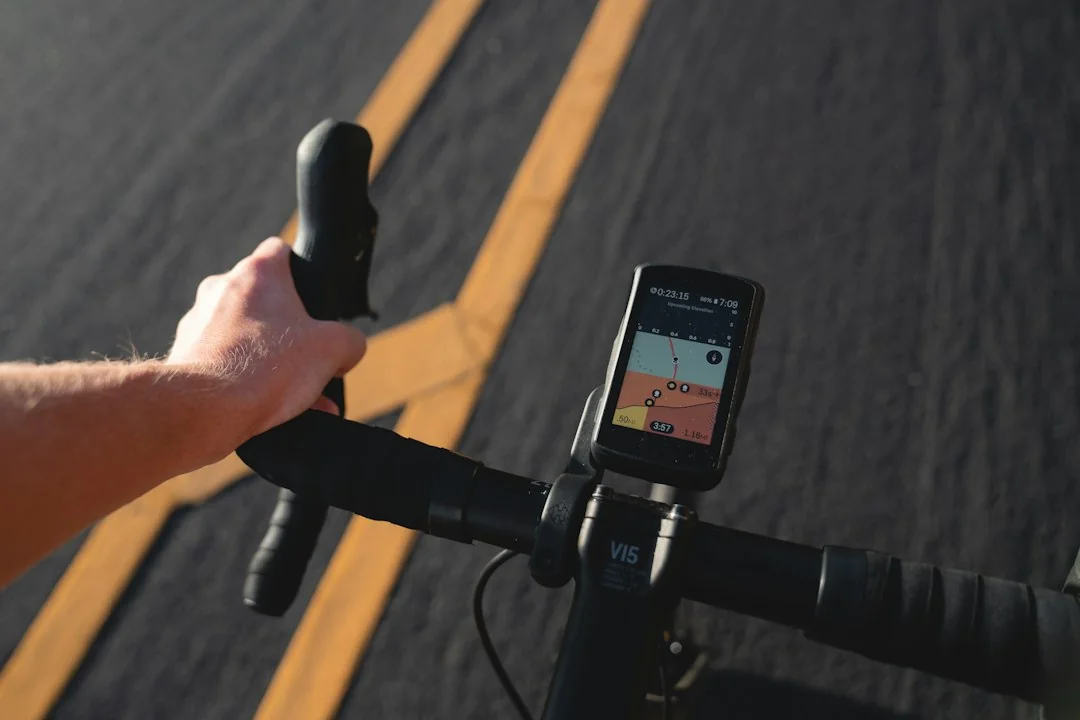
Power is immediate and unaffected by heat, fatigue, or hydration - 250 watts is always 250 watts. Heart rate lags 30-60 seconds behind intensity changes and drifts upward during prolonged efforts at the same power output (cardiac drift). For short, structured Zone 4-5 intervals, power is the more precise control variable.
For aerobic base building in Zone 2, heart rate zones give you the full physiological picture. A day when your heart rate sits 8-10 beats high for a given power output tells you something your power meter cannot: that recovery is incomplete or heat stress is elevated. I use power to set the interval target and heart rate to confirm my body is actually in the zone I intend - neither metric alone captures the complete training picture.
Gear That Tracks Heart Rate Zones Cycling Accurately
A tracker that lags during intensity changes or produces erratic readings defeats the purpose of heart rate zones cycling training. Two main categories of device are available to cyclists.

Chest strap heart rate monitors are the gold standard for zone training. They detect electrical signals from the heart using conductive electrodes rather than optical sensors, responding in real time without lag during rapid intensity changes. Most structured cycling training software includes a built-in heart rate zones calculator, and those programs are calibrated against chest strap data - any serious VO2 max cycling test protocol will specify electrical-contact monitoring for the hard intervals.
Wrist-based optical sensors from Garmin, Wahoo, Polar, and Apple Watch have improved considerably over recent device generations. Our research into how accurate smart watches are for heart rate monitoring found optical wrist sensors adequate for steady-state Zone 2 rides but less reliable during rapid intensity transitions like steep climbing or sprinting. If your training program includes structured Zone 4-5 sessions, a chest strap preserves the data integrity those efforts need.
Both device types share known limitations worth understanding: heart rate lags 20-30 seconds during sprint efforts, cardiac drift inflates zone readings during sessions over 90 minutes, and heat or altitude elevate HR independently of true intensity. Frame these as factors to account for, not reasons to abandon zone-based training.
How to check heart rate on iPhone through Apple Watch and the native Health app is one of the simplest entry points for cyclists new to zone training. The Fitness app records zone distribution automatically for every workout, giving you an instant review of how much time you actually spent at each intensity level.
Heart rate zones running will read higher than your equivalent cycling zones at the same perceived effort - typically 5-10 bpm above bike-based readings - because running recruits upper-body muscles and imposes impact forces that cycling does not. Cyclists who cross-train on foot should expect their cycling zones to feel easier at the same absolute heart rate than equivalent efforts on the road.
Train Smarter, Not Just Harder
The single most impactful step most cyclists can take is testing their actual max heart rate rather than relying on 220-minus-age - that one correction repositions heart rate zones cycling by 5-15 bpm, immediately changing the physiological stimulus of every ride. Commit to genuinely easy Zone 2 for at least 60-70% of weekly riding volume, and reserve Zone 4-5 intervals for one or two focused sessions per week.

For active recovery days, our guide on the benefits of walking backwards on treadmill outlines a Zone 1 method that promotes joint recovery without adding cardiovascular load to an already taxed aerobic system.
Heart rate variability by age is a complementary metric that captures how well the nervous system recovers between hard efforts. Normal heart rate and age follow a predictable decline across decades - consistent zone 2 heart rate training slows that decline and keeps the aerobic ceiling higher for longer.
FAQs
What is the 75% rule in cycling?
The 75% rule in cycling is a training guideline stating that at least 75% of weekly riding volume should be completed at or below 75% of maximum heart rate, which corresponds to the top of Zone 2 and the lower end of Zone 3. This principle protects the aerobic base and ensures sufficient recovery capacity for quality hard sessions by preventing the chronic accumulation of mid-intensity fatigue.
Is a 190 heart rate bad when cycling?
A 190 heart rate when cycling is not inherently harmful if it represents a near-maximal effort appropriate for your age, since maximum heart rate is largely determined by genetics and declines at roughly 0.7 beats per year after age 20. That concern depends on your age, the context of the effort, and whether you experienced any symptoms beyond normal exercise discomfort such as chest tightness, dizziness, or shortness of breath disproportionate to the effort.
Should I cycle in zone 2 or 3?
The choice between Zone 2 and Zone 3 depends on the purpose of the session - Zone 2 builds aerobic base and fat oxidation efficiency through genuinely easy riding, while Zone 3 develops lactate threshold and sustained power at a higher recovery cost. The evidence consistently points toward spending 80% or more of total weekly training volume in Zones 1-2, using Zone 3 intentionally for specific tempo sessions rather than as a default cruising intensity.
Is 140 bpm too high for zone 2?
Whether 140 bpm falls in Zone 2 depends entirely on your personal maximum heart rate - for a 30-year-old with an estimated max HR of 187, Zone 2 tops out at approximately 131 bpm, making 140 bpm a Zone 3 effort, while a younger cyclist with a max HR of 200 has a Zone 2 ceiling of 140 bpm. The only reliable way to know is to calculate your personal zones from your measured max heart rate rather than a generic age-based table.
What is a dangerous heart rate when cycling?
A dangerous heart rate when cycling is any effort accompanied by chest pain, dizziness, shortness of breath disproportionate to the exertion level, or an irregular heartbeat sensation, regardless of the absolute number. Brief maximal efforts are a normal part of sprint and interval training, but any sustained near-maximal effort warrants medical clearance for recreational adults - particularly those over 45 or with cardiovascular risk factors - before including it as a regular training element. Always consult your healthcare provider before starting a high-intensity cycling program.
This content is for informational and educational purposes only. It is not a substitute for professional medical advice, diagnosis, or treatment. Always consult with your healthcare provider before starting any new fitness program or using fitness technology for health monitoring.
References
- Sun Q, Yu Y, Cui J, Lin S, Wang X, Zhou T. Recent Advances in Training Intensity Distribution Theory for Cyclic Endurance Sports: Theoretical Foundations, Model Comparisons, and Periodization Characteristics. Frontiers in Physiology. 2025;16:1657892. doi:10.3389/fphys.2025.1657892.
- Meixner B, Filipas L, Holmberg H-C, Sperlich B. Zone 2 Intensity: A Critical Comparison of Individual Variability in Different Submaximal Exercise Intensity Boundaries. Translational Sports Medicine. 2025;2025:2008291. doi:10.1155/tsm2/2008291.
- Sitko S, Artetxe X, Bonnevie-Svendsen M, et al. What Is "Zone 2 Training"?: Experts' Viewpoint on Definition, Training Methods, and Expected Adaptations. International Journal of Sports Physiology and Performance. 2025;20(11):1614-1617. doi:10.1123/ijspp.2024-0303.
- Kaufmann S, Gronwald T, Herold F, Hoos O. Heart Rate Variability-Derived Thresholds for Exercise Intensity Prescription in Endurance Sports: A Systematic Review of Interrelations and Agreement with Different Ventilatory and Blood Lactate Thresholds. Sports Medicine - Open. 2023;9:59. doi:10.1186/s40798-023-00607-2.
- Stöggl TL, Sperlich B. The Training Intensity Distribution Among Well-Trained and Elite Endurance Athletes. Frontiers in Physiology. 2015;6:295. doi:10.3389/fphys.2015.00295.
- Carey DG, Pliego GJ, Raymond KD. Quantifying Differences in the "Fat Burning" Zone and the Aerobic Zone: Implications for Training. Journal of Strength and Conditioning Research. 2009;23(7):2090-2095. doi:10.1519/jsc.0b013e3181bac5c5.
- Granero-Gallegos A, González-Quílez A, Plews D, Carrasco-Poyatos M. HRV-Based Training for Improving VO2max in Endurance Athletes. A Systematic Review with Meta-Analysis. International Journal of Environmental Research and Public Health. 2020;17(21):7999. doi:10.3390/ijerph17217999.