
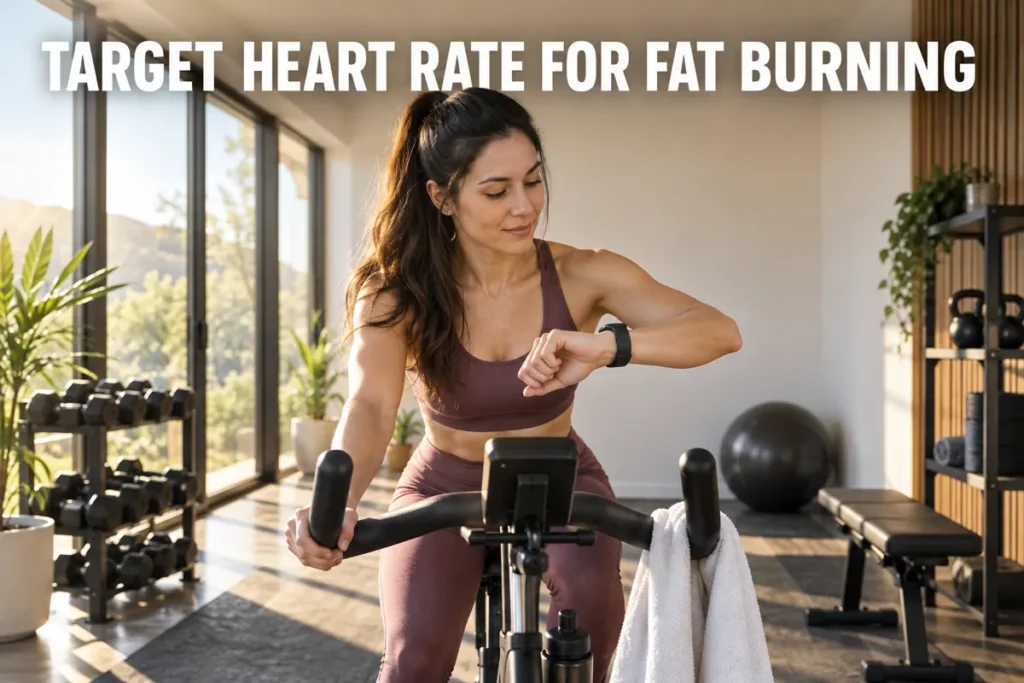
The target heart rate for fat burning is a commonly misunderstood concept in fitness. You have probably seen the fat-burning zone labeled on a treadmill display, heard a trainer mention 60% of your maximum heart rate, or wondered why your workout app assigns different colors to different intensity levels. The idea sounds simple: stay in a specific heart rate range and your body burns fat.
But the research tells a more complicated story, and understanding that story can reshape how you structure your workouts. This guide covers what the fat-burning zone is, how to calculate your personal target, how to monitor it consistently, and whether the zone delivers the results most people expect.

Target Heart Rate for Fat Burning - What the Research Shows
The target heart rate for fat burning generally falls between 50% and 70% of your estimated maximum heart rate. At this intensity, your body draws a higher proportion of energy from fat rather than carbohydrates. A systematic review and meta-analysis in Biology of Sport analyzing 24 randomized controlled trials found that training at maximal fat oxidation intensity produced significant reductions in fasting glucose, insulin resistance, and triglyceride levels in overweight individuals (1). That is real, clinically meaningful change from staying in this heart rate zone.

The fat-burning zone describes the percentage of calories coming from fat, not the absolute amount burned. The relationship between fat percentage and total fat burned is more nuanced than the zone label suggests. More on that in the section on the percentage paradox below. For a broader baseline before diving into zone training, understanding normal heart rate and age helps you contextualize where your resting and active numbers fit relative to population norms.
A 2024 study in Frontiers in Sports and Active Living measured maximal fat oxidation across 761 participants and found it occurred at intensities ranging from 35% to 43% of peak power output, with wide individual variation that made any single percentage target imprecise (2). Your personal target heart rate for fat burning is genuinely individual.
In years of reviewing fitness wearables and analyzing training patterns, the most consistent error I see is relying on the basic 220-minus-age formula without adjusting for resting heart rate. The Karvonen method shifts the fat-burning zone 8 to 14 bpm higher for anyone with a resting heart rate below 60 bpm, which applies to most people training 3 or more sessions per week.
The Five Heart Rate Zones - Where Fat Burning Fits
Heart rate zone training divides exercise intensity into five bands, each associated with a different fuel source and training effect. The fat-burning zone occupies Zones 1 and 2 in the standard model:
Zone | % Max HR | Primary Fuel | Training Effect |
Zone 1 | 50-60% | Fat | Active recovery, light activity |
Zone 2 | 60-70% | Fat (peak fat oxidation) | Fat-burning zone, aerobic base |
Zone 3 | 70-80% | Mixed | Cardio fitness, aerobic capacity |
Zone 4 | 80-90% | Carbohydrates | Lactate threshold, high-intensity |
Zone 5 | 90-100% | Carbohydrates | Maximum effort, VO2 max |
Zone 2 is where maximal fat oxidation occurs for most people, though the 50-70% range extends slightly into Zone 1 territory. Zone 2 is the primary fat-burning zone, and Zone 1 extends the benefit at lower intensity.
How to Calculate Your Fat-Burning Heart Rate
The standard fat-burning heart rate calculator method follows two steps:
- Estimate your maximum heart rate: subtract your age from 220. A 40-year-old has an estimated max HR of 180 bpm.
- Apply the fat-burning zone percentages: multiply your max HR by 0.50 (lower bound) and 0.70 (upper bound).

For the 40-year-old: 180 x 0.50 = 90 bpm and 180 x 0.70 = 126 bpm. Their target heart rate for fat burning spans 90 to 126 bpm. Using a fat burning zone heart rate calculator with these inputs takes less than a minute and gives you a practical starting target.
A more accurate fat burning zone calculator approach uses the Karvonen formula, which factors in your resting heart rate for a result that reflects your actual fitness level:
- Heart Rate Reserve (HRR) = Max HR minus Resting HR
- Target HR = (HRR x intensity%) + Resting HR
If the 40-year-old has a resting heart rate of 60 bpm: HRR = 120. Lower bound: (120 x 0.50) + 60 = 120 bpm. Upper bound: (120 x 0.70) + 60 = 144 bpm. The Karvonen result shifts the zone upward for fitter individuals, where the basic formula would underestimate true capacity. This fat-burning heart rate calculator approach is appropriate for healthy adults without cardiac conditions. Anyone on heart rate-altering medications should confirm targets with their healthcare provider first. For guidance on finding your maximum heart rate more precisely, how to calculate max heart rate covers testing methods beyond the 220-minus-age approximation.
Fat-Burning Heart Rate by Age - Reference Chart
Using the 220-minus-age formula, this fat-burning heart rate chart shows the zone for common age groups. These values are general reference ranges, not medical targets. Factors like medications, altitude, fitness level, and heat can shift actual zones meaningfully.
Age | Est. Max HR | Fat-Burning Zone (50-70%) |
20 | 200 bpm | 100 - 140 bpm |
25 | 195 bpm | 98 - 137 bpm |
30 | 190 bpm | 95 - 133 bpm |
35 | 185 bpm | 93 - 130 bpm |
40 | 180 bpm | 90 - 126 bpm |
45 | 175 bpm | 88 - 123 bpm |
50 | 170 bpm | 85 - 119 bpm |
55 | 165 bpm | 83 - 116 bpm |
60 | 160 bpm | 80 - 112 bpm |
65 | 155 bpm | 78 - 109 bpm |
70 | 150 bpm | 75 - 105 bpm |
This fat-burning heart rate by age table serves as a starting framework. Refer back to this fat-burning heart rate chart whenever you adjust your training block or move into a new age decade. Beta-blockers and other heart rate-altering medications make the 220-minus-age formula unreliable. If you take such medications, work with your healthcare provider to establish a safe target heart rate for fat burning before starting a program.
Does the Fat-Burning Zone Work for Weight Loss
Training at the fat-burning heart rate can produce visible fat loss, but the evidence reveals a more nuanced picture.

The honest answer is yes, with important caveats.
For context on how fat-burning capacity shifts across decades, my VO2max norms by age guide covers published aerobic capacity ranges and what they mean for zone-based training.
The Percentage Paradox - Fat Fuel vs. Total Fat Loss
Consider two 30-minute workouts for the same individual:
- Fat-burning zone at 55% max HR: 250 calories burned, approximately 160 from fat
- Higher-intensity zone at 80% max HR: 400 calories burned, approximately 180 from fat
The higher-intensity session burned more total fat even though fat contributed a smaller percentage of the fuel mix. Your fat burning zone heart rate sets a reliable practical target, but a 2025 study in Translational Sports Medicine comparing multiple Zone 2 intensity markers found that while heart rate-based cutoffs are among the most consistent across individuals (CV 6-7%), the underlying metabolic thresholds they approximate vary considerably by fitness level and training history (3). The zone is a reliable guide, but the metabolic intensity it represents differs from person to person.
Higher-intensity exercise also triggers EPOC (excess post-exercise oxygen consumption), an afterburn effect that extends calorie and fat burning for hours after the session ends. This further narrows the real-world gap between fat-burning zone sessions and higher-intensity cardio in terms of total fat burned per day.
Fat-Burning Zone vs. Cardio Zone - Which Burns More Fat?
The cardio zone (Zone 3, roughly 70-80% max HR) burns more total calories per minute than the fat-burning zone, but a smaller percentage of those calories comes from fat. Most people cannot sustain Zone 3 cardio for as long as Zone 2 work. A 60-minute fat-burning zone session at 55% max HR may produce more total fat oxidation than a 30-minute cardio zone session, simply through greater session duration. For sustained fat-burning over a single session, Zone 2 wins on duration; for maximum calorie burn in a fixed time window, Zone 3 cardio has the edge.
Walking sessions that stay comfortably in the fat-burning zone accumulate meaningful calorie totals, and my guide on steps and calorie burn breaks down the numbers across different body weights and paces.
Why the Fat-Burning Zone Has Genuine Value
Despite the calorie arithmetic, the fat-burning zone offers advantages that research supports directly:
- Sustainable for much longer sessions, typically 45 to 90 minutes versus 20 to 30 minutes at high intensity
- Lower injury risk for beginners, older adults, and those returning after a break
- Builds aerobic base that makes all subsequent training more metabolically efficient
- More appropriate for individuals with cardiac risk factors or those requiring exercise clearance
- Preserves lean muscle tissue better during extended cardio compared to repeated sprint efforts
A 12-week randomized controlled trial in Journal of Sports Science & Medicine found FATmax training significantly reduced fat mass, visceral trunk fat, and improved HDL-cholesterol in overweight older women (4). These outcomes came from consistent moderate-intensity zone training, not high-intensity intervals. The most effective long-term approach combines both: regular fat-burning zone sessions for sustained oxidation and aerobic development, plus 1 to 2 higher-intensity sessions weekly for increased calorie expenditure and metabolic adaptation.
Tracking that calorie expenditure accurately is where device quality matters, and my best calorie tracker guide covers the most reliable wearables for monitoring both zone-specific burn and daily totals.
If you are comparing devices to monitor zone intensity accurately, our comparison of Garmin and Apple Watch accuracy covers which platform reads zone transitions most reliably during steady-state cardio.
How Long to Stay in the Fat-Burning Zone
Questions about how long to stay in fat-burning zone sessions are among the most common from readers starting a new cardio program. The answer depends on fitness level, training history, and your current goal. General evidence-based duration guidelines:
Beginners (first 4 to 6 weeks):
- 20 to 30 minutes per session, 3 sessions per week
- Focus on staying aerobic and learning what the zone feels like before adding duration
Intermediate exercisers:
- 45 to 60 minutes per session, 3 to 4 times per week
- Add one higher-intensity session weekly alongside fat-burning zone work
Advanced and endurance-focused:
- 60 to 90 minutes per session, 4 to 5 times per week
- Use extended sessions to develop fat adaptation and fuel efficiency
When I tracked my own fat-burning zone sessions over a 10-week block at 55 to 60% max HR, the practical benefit that became most obvious was session duration: I could sustain 65-minute sessions 4 days per week without the recovery demand I accumulated when pushing into Zone 3 cardio at 75 to 80% max HR.
Cycling is one of the most sustainable ways to accumulate fat-burning zone volume, and my top exercise bike picks guide covers machines that hold up well for consistent longer sessions.
The evidence consistently shows that 8 to 12 weeks of regular fat-burning zone sessions produces measurable body composition changes. A 12-week study in Reviews in Cardiovascular Medicine found college students with obesity training at their maximal fat oxidation intensity saw significant reductions in body weight, body fat percentage, visceral fat, and cardiovascular inflammatory markers (5). This was not a high-intensity protocol. It was consistent, moderate-intensity zone training applied over weeks.
Signs you are in the fat-burning zone during a workout:
- You can hold a full sentence with moderate effort, not just single words
- Breathing is elevated, rhythmic, and controlled rather than labored
- Perceived exertion sits around 5 to 6 out of 10
- You feel warm and lightly sweaty rather than breathless
- You could continue at this pace for another 30 minutes or more
For reference on what your heart rate should look like during running specifically, our guide to normal heart rate when running provides context for whether a particular jogging pace is landing in the fat-burning zone or pushing into the carbohydrate-dominant aerobic zone.
Training With a Heart Rate Monitor in the Fat-Burning Zone
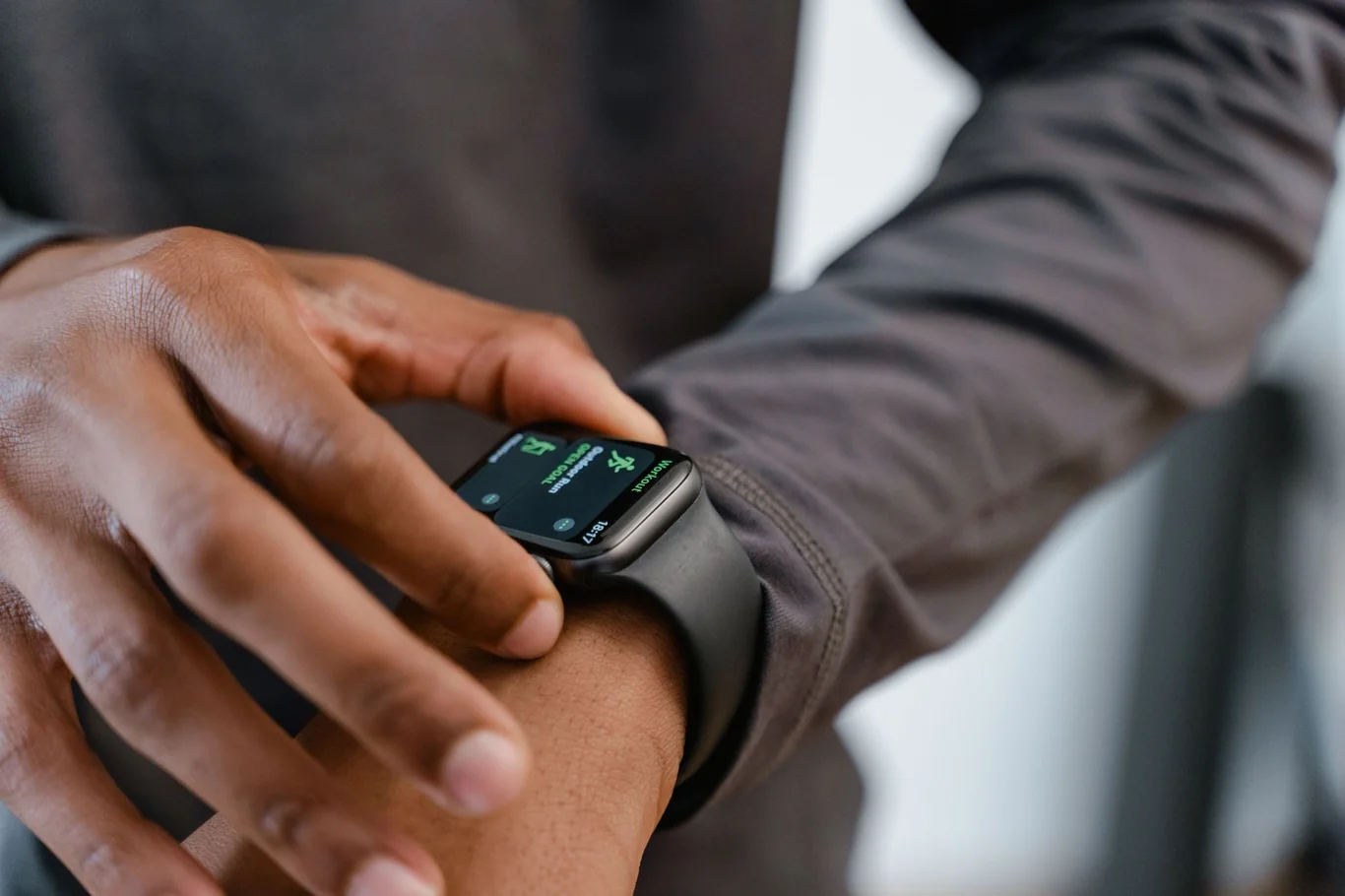
Training with a heart rate monitor removes the guesswork from zone sessions. Without a monitor, you estimate intensity from perceived effort alone, which is workable but imprecise. I have reviewed dozens of wearables, and the accuracy gap between device types is more significant than most users expect. The full analysis of how accurate smartwatches are for heart rate quantifies exactly where wrist-based optical sensors struggle and where they perform adequately for zone training purposes.

Heart rate monitor accuracy for fat-burning zone work:
Monitor Type | Steady-State Accuracy | Interval Accuracy | Best For |
Chest strap heart rate | +/- 1 to 2 bpm | +/- 2 to 3 bpm | Precise zone training, research-grade tracking |
Optical wrist monitor | +/- 5 to 10 bpm | +/- 10 to 15 bpm | Everyday fitness, casual zone monitoring |
Optical arm band | +/- 3 to 7 bpm | +/- 5 to 10 bpm | Moderate accuracy with comfort advantage |
For pure fat-burning zone training where staying precisely between, say, 120 and 135 bpm is the goal, chest strap heart rate remains the most reliable option. Wrist monitors introduce enough error that a 130-bpm target could read anywhere from 120 to 142 bpm depending on movement artifact. That said, optical monitors are accurate enough to detect gross zone violations, alerting you when you drift significantly high or low.
My chest strap heart rate monitor guide covers the most accurate models tested against ECG reference values for precise zone-based training.
Setting up your device for fat-burning zone monitoring:
- Enter your age and resting heart rate in the device settings for personalized zone calculations
- Set a lower heart rate alert at 50% of your estimated maximum heart rate
- Set an upper heart rate alert at 70% of your maximum heart rate
- Enable continuous heart rate tracking mode, not power-saving interval polling
- Wear the device snugly against the wrist or arm to reduce optical signal loss
To understand the full scope of what your wearable can track beyond heart rate, our guide on what a smartwatch does covers zone-locked workout modes, calorie estimation from heart rate, and recovery tracking features that complement fat-burning zone training. For those monitoring without a dedicated device, how to check heart rate on iphone walks through both the camera-based pulse detection method and Apple Watch pairing.
Heart Rate Training Programs for Fat Loss
Structured heart rate training programs built around the fat-burning zone consistently outperform unstructured cardio for measurable outcomes because they prevent two common errors: staying too easy and never reaching the fat-burning threshold, or going too hard and burning primarily carbohydrates while exhausting capacity for duration. I weigh session consistency and progressive overload more heavily than intensity when reviewing fat-loss training programs, because the evidence on duration effects is stronger than the evidence on intensity effects for this goal.
The fat-burning zone and zone 2 training overlap significantly in practice, and my zone 2 heart rate guide explains how to apply that framework for long-term aerobic development.

Here is an 8-week framework using zone 2 heart rate as the training foundation:
Weeks 1 and 2 - Base Building:
- 3 sessions per week, 25 to 35 minutes at 50 to 60% max HR
- Walk, cycle, or elliptical at a pace that sustains the talk test comfortably
Weeks 3 and 4 - Volume Expansion:
- 4 sessions per week, 35 to 45 minutes at 55 to 65% max HR
- Add one 20-minute session at 70 to 75% max HR for metabolic variety
Weeks 5 and 6 - Intensity Progression:
- 4 to 5 sessions per week, 45 to 55 minutes at 60 to 70% max HR
- Two sessions include 5-minute intervals at 75 to 80% max HR
Weeks 7 and 8 - Peak Volume:
- 5 sessions per week, 50 to 70 minutes in the fat-burning zone
- One session extends to 80 to 90 minutes for fat adaptation work
For endurance athletes applying marathon training with heart rate monitor protocols, these fat-burning zone principles form the aerobic foundation: long runs at 55 to 65% max HR build mitochondrial density and fat-substrate efficiency without the accumulative injury risk of training hard every session.
Effective activities for fat-burning zone sessions:
- Brisk walking at 3.5 to 4.5 mph, which naturally keeps most adults in the zone without much effort to moderate pace
- Light to moderate cycling on flat terrain at a comfortable cadence
- Rowing machine at steady state: understanding which muscles a rowing machine works explains why rowing is particularly effective for sustained zone sessions, engaging both upper and lower body without the joint stress of impact activities
- Elliptical or cross-trainer at resistance levels 4 to 7 out of 20
- Walking backwards on treadmill at 2.5 to 3.5 mph: benefits of walking backwards on treadmill shows this increases posterior chain engagement while keeping heart rate reliably in the fat-burning range
Tracking heart rate variability by age alongside your resting heart rate gives an early signal of cumulative fatigue. When HRV drops noticeably alongside elevated resting heart rate, the fat-burning zone is the right prescription that day, not an interval session. Recovery-day training at 50 to 55% max HR still contributes to weekly fat-burning volume without adding training stress.
A meta-analysis of 11 randomized clinical trials found that FATmax training over 8 to 20 weeks produced a 10% increase in VO2max and reduced fat mass by more than 4 kg in adults with obesity (6). Earlier work published in PLoS One confirmed that heart rate at ventilatory threshold reliably predicts maximal fat oxidation across different obesity classes in women, supporting individualized zone prescription over generic age-based formulas (7).
For runners applying these protocols during training blocks, my top running fitness trackers guide covers devices with the most accurate zone monitoring for outdoor sessions.
Putting the Fat-Burning Zone to Work
The target heart rate for fat burning is a genuine, research-supported training concept. It works best when you understand its purpose: to maximize fat as a fuel source during sustained cardio, build an aerobic base, and make longer sessions physiologically sustainable. It does not override caloric balance, and it is not a shortcut. But it is one of the most practical frameworks for structuring cardio training consistently over weeks and months.
Here is the practical approach that produces results. I recommend starting with this framework regardless of fitness level:
- Calculate using the Karvonen formula rather than just 220 minus age. Any fat burning zone heart rate calculator using the Karvonen method gives a more precise result than the basic formula. Your resting heart rate meaningfully shifts your target heart rate for fat burning, especially if your fitness level is above average.
- Use a reliable monitor. Even a moderately accurate optical wrist device helps you avoid the most common mistake: training too hard, burning predominantly carbohydrates, and wondering why the scale is not moving.
- Combine fat-burning zone sessions with higher-intensity work. A training week weighted roughly 70% fat-burning zone and 30% higher-intensity sessions outperforms either approach alone for most goals. The Karvonen fat burning zone calculator makes it straightforward to set precise targets for both session types.
- Prioritize session duration over intensity. A 60-minute moderate session produces more total fat oxidation than a 25-minute sprint session for most people at most fitness levels.
Any consistent cardio habit, maintained for 8 to 12 weeks, produces far greater results than the theoretically optimal zone trained inconsistently. Zone targets matter at the margin. Consistent weekly volume matters most. Find your target heart rate for fat burning, set your monitor, and show up regularly.
If you are deciding which device to use for this, my Apple Watch pricing guide covers the full current lineup by price tier.
Pairing that habit with structured aerobic development amplifies the results, and my guide on raising aerobic capacity explains how to build VO2 max alongside consistent fat-burning zone training.
FAQs
Is a 170 heart rate good for burning fat?
A heart rate of 170 bpm falls above the fat-burning zone for most adults and sits in the high-intensity aerobic zone, where carbohydrates become the dominant fuel source. At this intensity, fat burning contributes less to the fuel mix than at lower intensities, though total calorie burn is higher. For a 25-year-old with an estimated max HR of 195, 170 bpm represents approximately 87% of maximum heart rate, which is well beyond the 50 to 70% fat-burning range for that individual.
Staying within that range during every session requires a reliable device, and my top fitness tracker picks guide covers the most accurate options across all price points.
What is the 3-3-3 rule for fat loss?
The 3-3-3 rule for fat loss is an informal coaching framework that typically involves 3 meals per day, 3 training sessions per week, and 3 liters of water daily, though the definition varies by source. It is not a standardized or clinically validated protocol. Most peer-reviewed fat loss research focuses on sustained caloric deficit, exercise consistency, and sleep quality rather than any specific numerical rule like 3-3-3.
What bpm is best for fat burning?
The target heart rate for fat burning for most adults falls between 50% and 70% of maximum heart rate, estimated by subtracting your age from 220. For a 35-year-old with an estimated max HR of 185 bpm, that means approximately 93 to 130 bpm using the standard formula. The target heart rate for fat burning calculator using the Karvonen method shifts this range based on resting heart rate and gives a more personalized result depending on your fitness level and individual response to exercise.
What are signs your body is burning fat?
The signs your body is burning fat during exercise include being able to hold a full conversation without gasping, breathing that is elevated but steady and controlled, and a perceived exertion level of about 5 to 6 out of 10. Over weeks of consistent fat-burning zone training, you may notice your resting heart rate decreasing, endurance improving at the same pace, and gradual body composition changes. These physiological adaptations develop over weeks and months, not after a single session.
How long to stay in fat-burning zone?
You should stay in the fat-burning zone for a minimum of 20 to 30 minutes per session to see meaningful fat-oxidation benefit, with longer sessions of 45 to 90 minutes producing substantially greater outcomes. Research consistently shows that real body composition changes come from 8 to 12 weeks of regular sessions. How long you sustain the habit across weeks matters more than how long any single session runs.
This content is for informational and educational purposes only. It is not a substitute for professional medical advice, diagnosis, or treatment. Consult your healthcare provider before starting any new fitness program.
References
- Liu Y, Gao J, Bao Z, et al. The impact of maximal fat oxidation intensity exercise on glucose and lipid metabolism in individuals with overweight or obesity: A systematic review and meta-analysis. Biology of Sport. 2026;43:1193-1210. doi:10.5114/biolsport.2026.143693.
- Puhringer M, Ring-Dimitriou S. The influence of cardiorespiratory fitness level on the relationship between work rates at the aerobic threshold (AerT) and the point of maximal fat oxidation (Fatmax) in untrained adults. Frontiers in Sports and Active Living. 2024;6:1321896. doi:10.3389/fspor.2024.1321896.
- Meixner B, Filipas L, Holmberg HC, Sperlich B. Zone 2 intensity: A critical comparison of individual variability in different submaximal exercise intensity boundaries. Translational Sports Medicine. 2025;2025:2008291. doi:10.1155/tsm/2008291.
- Cao L, Jiang Y, Li Q, Wang J, Tan S. Effect of maximal fat oxidation intensity exercise training on body composition and lipid metabolism in overweight or obese older women. Journal of Sports Science & Medicine. 2019;18(3):413-418.
- Yang J, Zhu H, Sun F, Pei Z. Effects of maximal fat oxidation exercise training for body composition and cardiovascular risk factors on college students with obesity. Reviews in Cardiovascular Medicine. 2026;27(4):46637. doi:10.31083/RCM46637.
- Chavez-Guevara IA, Urquidez-Romero R, Perez-Leon JA, Gonzalez-Rodriguez E, Moreno-Brito V, Ramos-Jimenez A. Chronic effect of FATmax training on body weight, fat mass, and cardiorespiratory fitness in obese subjects: a meta-analysis of randomized clinical trials. Int J Environ Res Public Health. 2020;17(21):7888. doi:10.3390/ijerph17217888.
- Emerenziani GP, Ferrari D, Marocco C, et al. Relationship between individual ventilatory threshold and maximal fat oxidation (MFO) over different obesity classes in women. PLoS One. 2019;14(4):e0215307. doi:10.1371/journal.pone.0215307.