
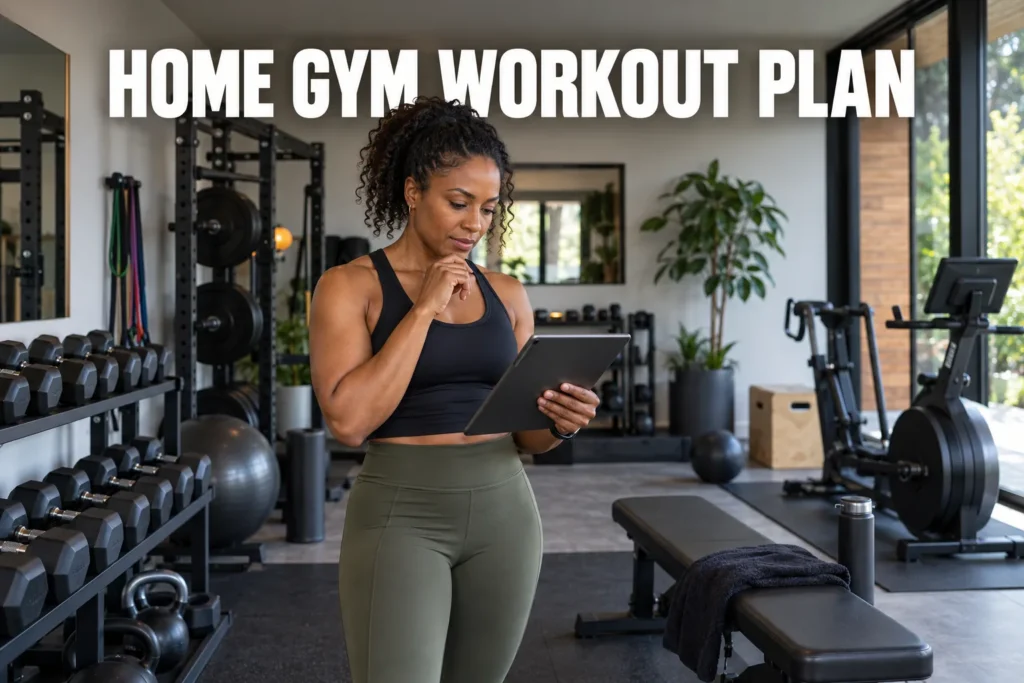
A solid home gym workout plan is one of the most effective tools for building strength, improving endurance, and staying consistent year-round. You do not need a full commercial gym setup, because a pair of adjustable dumbbells and a structured program can deliver real, measurable results. I have written and coached these programs for competitive athletes and everyday clients training in garages, spare rooms, and small apartments, so the plans below reflect what trainees actually stick with. You'll find the core principles, sample 3-, 5-, 6-, and 7-day schedules, and my honest advice for beginners, women, and anyone serious about long-term progress.

Home Gym Workout Plan: What You Need to Know Before You Start
Before diving into schedules and sets, understanding a few core principles will determine whether your home gym workout plan produces lasting results. Most programs fail not because of exercise selection, but because the principles around it get applied inconsistently or skipped entirely.
The Core Principles Behind Any Effective Home Gym Workout Plan
Progressive overload is the single most important driver of strength and muscle development in any training program. It means consistently challenging your muscles with more stress than they have adapted to, through heavier weight, more reps, shorter rest, or slower tempo. The principle holds for fitness in general too: a systematic review of home-based exercise programs found that programs applying progressive overload produced a 3.02 mL/kg/min improvement in VO2 peak, compared to near-zero improvement (-0.07 mL/kg/min) in programs without it (1). In my coaching, trainees who log their lifts usually progress more consistently than those following rigid, static routines.
The second principle is specificity. Your body adapts to the exact demands you place on it. A training approach built around compound movements - squats, deadlifts, rows, and presses - trains your whole body more efficiently than isolation-heavy programs. Compound lifts generally deliver more training stimulus per unit of time, which matters especially when training without a coach or a fixed gym schedule.
Recovery is the third principle that most beginners skip. Muscles grow during rest periods, not during training sessions. Allowing at least 48 hours between sessions targeting the same muscle group is a widely supported guideline for most trainees - a principle that applies whether you follow a 3-day or 6-day training program.
How Much Equipment Do You Actually Need?
The honest answer is less than most people assume. A set of adjustable dumbbells handles the majority of foundational movements in any home gym setup. Adding a pull-up bar, resistance bands, and a flat bench opens up dozens more exercises and progressions. If floor space is tight and you prefer one connected machine over separate pieces, the smart home gyms for small spaces cover most of the same movements, although I still recommend starting with dumbbells because they cost less and are easier to progress. A mirror-style unit such as the AEKE K1 smart home gym is the kind of connected option I would consider for a small apartment, but only once the dumbbell basics are in place, and I would compare it with other smart fitness mirrors on subscription cost first.
Here is a practical breakdown by equipment tier:
Tier | Equipment | Best For |
Minimal | Adjustable dumbbells, resistance bands, pull-up bar | Beginner home workouts, 3 days/week |
Intermediate | Above + flat bench, kettlebell, jump rope | 5-day home gym workout program, 4-5 days/week |
Advanced | Above + barbell with plates, power rack, cable system | 6-7 day advanced training |
Plan the space before you buy anything. Measure the floor area, check ceiling height for overhead presses, and decide where a pull-up bar can mount safely. If you are going the connected route, the steps to set up a smart home gym add power and Wi-Fi placement to that checklist.
Choosing Your Home Gym Workout Plan Schedule
How many days per week you train shapes the structure of every session in your training schedule. A meta-analysis of training frequency found that when total weekly training volume is equated, low-frequency and high-frequency training produce comparable strength gains (2). In practice, your total weekly volume matters more than how many days you spread it across - though frequency determines how you organize each session and how much per-session volume is sustainable.
Schedule | Days Per Week | Split Type | Best For |
3-Day Full Body | 3 | Full body each session | Beginners and returning trainees |
5-Day Upper Lower Split | 5 | Upper, lower, and full body or specialization day | Intermediate trainees with 3 to 6 months of training |
6-Day Push Pull Legs | 6 | Push, Pull, Legs twice per week | Advanced lifters with high recovery capacity |
7-Day PPL Plus Active Recovery | 7 | Push, Pull, Legs cycle with one active recovery day | Experienced lifters with 12 or more months of consistent training |
3-Day Full Body Split: Best for Beginners
A 3-day full body split trains every major muscle group three times per week on non-consecutive days - Monday, Wednesday, and Friday is the most common structure. This is the best-supported starting point for beginners and for anyone returning to training after a break.
Why a 3-day split works for beginners:
- High movement frequency accelerates motor pattern development
- Lower per-session volume reduces delayed onset muscle soreness
- Longer recovery windows between sessions reduce injury risk
- Fewer weekly time commitments make consistency much easier to maintain
A typical session includes 3 sets of 8-12 reps of squats, Romanian deadlifts, chest press, dumbbell rows, and overhead press. That covers all major movement patterns in 45-60 minutes. My tip for the first month: finish every set feeling you could have done two or three more clean reps.
5 Day Gym Workout Schedule: Intermediate Upper and Lower Split
A 5 day gym workout schedule makes sense once you have 3-6 months of consistent training. The most common structure is an upper/lower split - two upper body days, two lower body days, and one full-body or specialization day. In my experience, intermediate trainees who jump to a 5-day schedule too early often burn out within three weeks - building to it after establishing a reliable 3-day habit is the smarter progression.
Research on time-efficient resistance training suggests that a minimum of 4 weekly sets per muscle group is needed for hypertrophy, with 10 or more weekly sets producing superior results in trained individuals (3). A 5-day home gym workout program makes hitting that range straightforward without overloading any single session.
6 Day Gym Workout Schedule for Advanced Lifters
A 6 day gym workout schedule is most often organized as a Push, Pull, Legs cycle run twice per week. Each session targets a specific movement pattern:
- Push (Days 1 and 4): chest, shoulders, triceps
- Pull (Days 2 and 5): back, biceps, rear delts
- Legs (Days 3 and 6): quads, hamstrings, glutes, calves
This structure delivers high weekly volume per muscle group while allowing 72 hours before repeating the same session. Recovery nutrition and sleep quality become critical factors at this frequency - if both are not dialed in, the 6-day schedule becomes counterproductive. When I conditioned tennis players at elite academies, including Carlos Alcaraz, high-frequency weeks only worked because sleep and fueling were planned as carefully as the sessions themselves.
7 Day Gym Workout Plan: Daily Training for Experienced Lifters
A 7 day gym workout plan only works when it alternates high-intensity training days with low-intensity active recovery sessions, so no day is a hard session for muscles that are still recovering. The most effective format pairs a 6-day PPL cycle with one dedicated mobility and restoration day.
Sample 7 day gym workout plan structure:
- Days 1-3: Push, Pull, Legs (full working sessions at high effort)
- Days 4-6: Push, Pull, Legs repeated at moderate intensity (approximately 70% of Days 1-3 effort)
- Day 7: 20-30 minutes of active recovery - light walking, mobility work, or foam rolling
This structure is appropriate only for trainees with 12 or more months of consistent training and a dialed-in nutrition and sleep routine. Most people achieve better results with a 5- or 6-day schedule at higher effort rather than spreading effort across 7 days.
Sample Home Gym Workout Plan: 4-Week Progressive Training Block
This 4-week training block performs best when structured with clear progressions built in. The framework below is built around home gym equipment exercises using dumbbells and bodyweight, and it is designed for beginner to intermediate trainees who want a full-body strength base. It also works as a free beginner workout plan for women or men, since every movement scales with load.

Week 1-2: Foundation Phase
The goal in Weeks 1-2 is movement quality and establishing baseline performance numbers you can build from. Use a weight you can control through the full range of motion without form breakdown. Keep rest periods at 90 seconds between working sets.
Training week structure (three lifting days on non-consecutive days, plus one active recovery day):
- Day 1 (Push focus): dumbbell bench press 3x10, overhead press 3x10, lateral raise 3x12, close-grip floor press 3x12
- Day 2 (Pull focus): dumbbell row 3x10 per arm, face pull with bands 3x15, bicep curl 3x12, rear delt fly 3x12
- Day 3 (Lower body): goblet squat 3x12, Romanian deadlift 3x10, walking lunge 3x10 per leg, calf raise 3x15
- Day 4 (Active recovery): 20-30 minutes of light walking, outdoors or on a walking pad at an easy pace
I suggest printing this weekly structure and keeping it at your training station, so each session starts with your numbers in front of you.
Week 3-4: Progressive Overload Phase
Increase weight by 5% or add 2 reps per set compared to your Week 1-2 performance. Reducing rest periods from 90 seconds to 60 seconds also increases training density without requiring heavier loads.
Key progressions to apply in Weeks 3-4:
- Add 1 working set to each primary compound lift (bench, squat, deadlift, row)
- Introduce supersets for accessory work (pair biceps with triceps, lateral raises with rear delts)
- Log your sets, reps, and weight every session - this written record is what proves you are progressing and shows you exactly when to increase load
Training Variable | Week 1 to 2 | Week 3 to 4 |
Rest between sets | 90 seconds | 60 seconds |
Working sets per compound lift | 3 sets | Add 1 working set per compound |
Load or rep target | Baseline performance | Add 5 percent weight or 2 reps per set |
Warm-Up and Cool-Down Protocols
Every training session in this block should begin and end with a structured warm-up and cool-down. Five to ten minutes of warm-up before resistance training significantly reduces injury risk and improves early-set performance.
Effective warm-up sequence (5-8 minutes):
- 3 minutes of light cardio (jumping jacks, high knees, or stationary cycling)
- 5 dynamic movements: leg swings, arm circles, hip hinges, thoracic rotations, and bodyweight squats
Cool-down sequence (5 minutes):
- Static stretching targeting the muscle groups trained that day
- 90-second holds per major muscle group worked
- Diaphragmatic breathing to support the parasympathetic recovery response
Home Gym Workout Plan for Women: Tailored Guidance
A gym workout plan for female trainees follows the same foundational principles as any strength program: progressive overload, compound movements, and adequate recovery. What changes is often the starting point, the goal emphasis, and a few structural nuances that align with common training objectives. In my experience, women who follow a compound-first approach see better body composition changes than those who stick to very light weights or cardio-heavy routines.
Gym Workout Plan for Beginners Female: Where to Start
A beginner gym workout plan for women starts with the same 3-day full body split outlined above. Many women benefit from including extra glute and posterior chain work, which addresses both common aesthetic goals and frequent biomechanical imbalances around the hip complex.
Suggested beginner weekly structure for women:
- Monday: full body, squat-based (goblet squat, hip hinge, dumbbell row, push-up variation)
- Wednesday: full body, hinge-based (Romanian deadlift, glute bridge, dumbbell press, band pull-apart)
- Friday: full body, lunge-based (split squat, hip abduction, overhead press, core work)
Form before load is the non-negotiable rule at this stage. Lighter weight with clean mechanics builds a stronger, safer foundation than heavy weight executed poorly. Sessions should run 45-60 minutes, with at least 48 hours of recovery between each. As a free starting plan for beginner women, it needs no equipment beyond adjustable dumbbells and resistance bands.
Each session should progress weekly by adding 1-2 reps per set or increasing load by 2.5-5 lbs on compound movements. Tracking progress in a log is the difference between a beginner who plateaus at 4 weeks and one who keeps improving at 4 months. The structure above (3-day split, compound-first, progressive load) is the same framework I recommend regardless of starting fitness level.
Home Gym Workout Plan for Women Over 40
For women over 40, a structured training plan designed for their specific stage carries particular value. A randomized pilot trial of perimenopausal women aged 40-50 found that a structured remote strength training program achieved 100% intervention-group retention, with significant improvements in self-efficacy, exercise enjoyment, and habit formation (4). If desk work leaves your lower back sensitive, I would build hinge strength with light Romanian deadlifts before adding heavy pulls or long rows, since rounding under fatigue is the usual cause of rowing-related back pain.
One 44-year-old client of mine started with two 40-minute dumbbell sessions a week, moved to three after 6 weeks, and at week 12 told me the biggest change was not the weight she lifted but that she no longer skipped sessions. That is the pattern I look for in this age group, more than any single strength number.
Specific focus areas for an over-40 workout plan for women at home:
- Bone-loading exercises: squats, deadlifts, and rows directly stimulate bone mineral density maintenance - prioritize these over machine-based isolation
- Moderate intensity, consistent frequency: 3-4 days per week at 60-75% maximum effort tends to produce better long-term results than 2 maximal-effort days
- Recovery time: allow 48-72 hours between sessions targeting the same muscle groups, as recovery capacity changes with age
- Mobility integration: 10 minutes of targeted mobility work per session preserves joint range of motion and reduces chronic joint discomfort over time
Adding Weight Loss to Your Home Gym Workout Plan
Weight loss results from a home gym depend on more than just showing up to train. This section covers why strength work outperforms cardio alone for fat loss and lays out practical guidelines for structuring your week.
Why Strength Training Outperforms Cardio for Weight Loss
A strength training plan focused on weight loss requires one non-negotiable element alongside training: a caloric deficit. Exercise drives body composition change powerfully, but nutrition sets the ceiling. Strength training is the most effective workout type for weight loss because it preserves lean tissue while the deficit removes fat - unlike cardio-only approaches that frequently reduce both.
The evidence supports this clearly. A meta-analysis of six randomized controlled trials in older adults with obesity showed that resistance training prevents 93.5% of the lean body mass loss that caloric restriction alone would cause, while achieving comparable fat loss results to diet-only approaches (5). That is the strongest argument for putting strength work at the center of any weight loss workout plan, for women and men alike.
Practical Training Guidelines for a Weight Loss Schedule
Practical guidelines for a weight-loss-focused training schedule:
- Training frequency: 3-4 resistance training sessions per week as the foundation, not cardio alone
- Protein intake: target 0.7-1.0 grams of protein per pound of bodyweight to support muscle retention during a caloric deficit
- Cardio supplementation: 150-200 minutes per week of moderate activity. I like the rower here because it is low impact and works the legs, back, and arms together, which is why rowing for weight loss pairs well with a strength plan
- Sleep: 7-9 hours per night directly supports the hormonal environment for fat loss and muscle retention, and is one of the most underutilized tools in any female workout plan
Are Home Gym Workouts as Effective as the Gym?
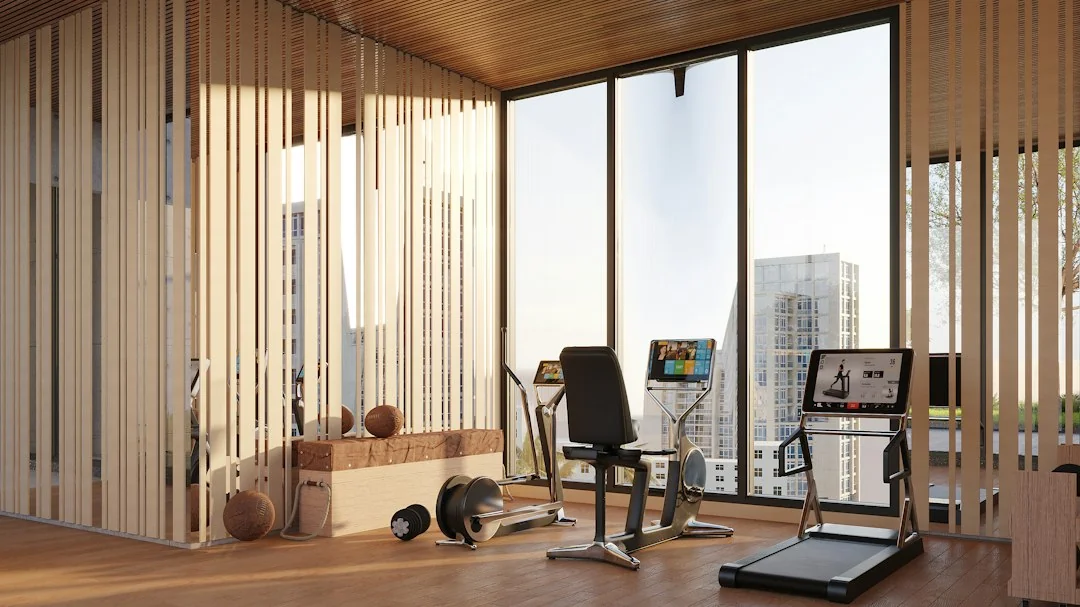
For the majority of fitness goals, home gym workouts are as effective as gym training, provided the programming is structured and progressive. A systematic review with meta-analysis confirmed that home-based exercise programs improve cardiorespiratory fitness in healthy individuals and cardiac populations alike, with measurable VO2 peak gains (1). Home-based HIIT specifically produces comparable improvements to laboratory-based HIIT, with a mean 80% adherence rate across all included trials (6). From what I have seen coaching in both settings, the programming gap matters far more than the equipment gap.
How Home Gym Training Compares to Commercial Gyms
The honest difference comes down to supervision and accountability. Gym training benefits from coaching, social environment, and a wider equipment range - all factors a home gym trainee must manage independently. Studies on supervised versus unsupervised home training suggest that structured program design and adherence protocols close most of that gap.
Five Strategies to Maximize Home Gym Training Results
Five strategies that make home gym training as effective as a commercial gym:
- Follow a periodized program instead of random daily sessions
- Track weight, reps, and total volume in a written or digital log every session
- Use phone video to self-check form on major compound lifts
- Schedule workouts at fixed times in the week to anchor the habit
- Add automatic feedback if manual logging keeps slipping, since some budget smart home gyms can record reps and loads for you
Building a Consistent Home Gym Workout Program for Long-Term Results
A home gym workout program that lasts is one you can realistically maintain 12 months from now. The most common failure pattern is starting at six days per week when your consistent-training history is measured in weeks. Start with fewer training days than you think you need, nail the consistency habit, and add frequency once the routine is locked in. If you are new and want the program built for you, I would look at smart home gyms for beginners that adjust the load as you progress, but the same rule about fewer days still applies.
The Fundamentals Behind Lasting Home Gym Progress
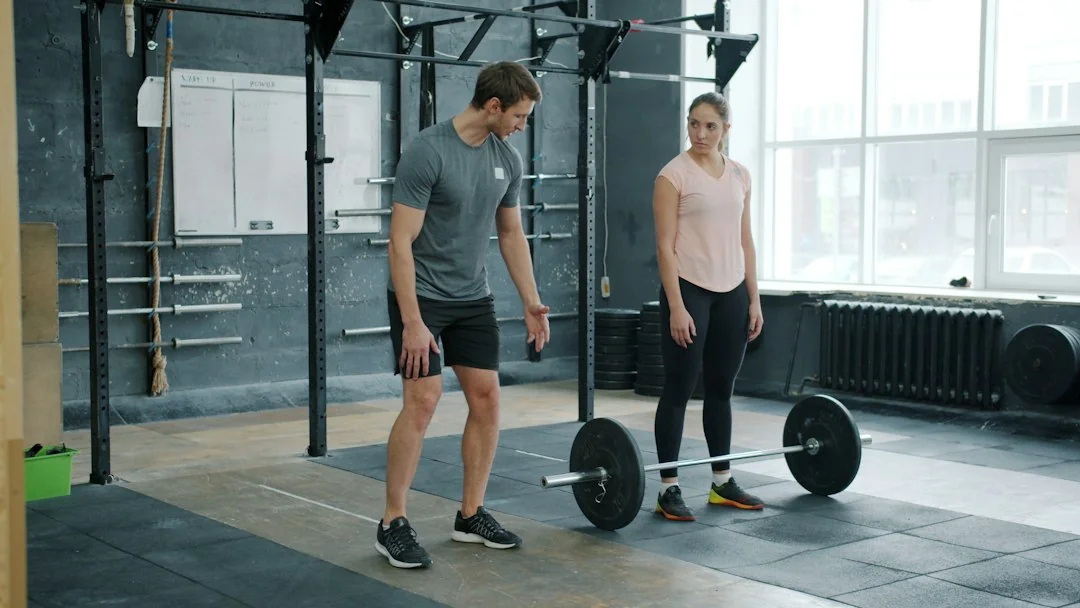
I consistently see the best outcomes from trainees who stay disciplined about the basics: compound movements with good form, consistent load progression, sufficient protein intake, and adequate sleep. No equipment upgrade or complex periodization scheme outperforms those fundamentals applied over months.
Signs Your Home Gym Workout Plan Is Working
Signs your training is working:
- You are lifting more weight or completing more reps than 4 weeks ago
- Your body composition is visibly changing within 6-8 weeks of consistent effort
- Your energy and mood outside training sessions are stable or improving
- You recover well enough to maintain quality across all sessions in the week
If those signs are missing, change one variable at a time, usually load or weekly sets, before you change the whole home gym workout plan. I have seen far more people stall from program-hopping than from picking the wrong split, and a simple dumbbell program run consistently beats an expensive setup used on and off.
FAQs
What is the 3-3-3 rule for working out?
The 3-3-3 rule for working out refers to performing 3 sets of 3 exercises for 3 different muscle groups within a single session. It is a simplified framework that helps beginners build a balanced workout without overthinking exercise selection, and it works well as an entry point into a home gym workout plan.
What is the 3/2/1 rule in gym?
The 3/2/1 rule in the gym describes a session format built around 3 minutes of strength-focused work, 2 minutes of cardiovascular effort, and 1 minute of core training, cycled repeatedly for the duration of the workout. It is a time-efficient approach that combines conditioning and strength into one session, making it a useful structure when a full split is not available in a home gym workout program.
What is the 5 5 5 30 rule?
The 5 5 5 30 rule is a cardio interval protocol structured as 5 minutes of warm-up, 5 high-intensity intervals at near-maximum effort, 5 minutes of cool-down, and 30 total minutes of active exercise. It is often applied on non-strength days within this training schedule as a time-efficient way to improve cardiovascular capacity without equipment.
Are home workouts effective as gym?
Home workouts are effective as gym workouts for building strength, improving cardiovascular fitness, and achieving fat loss when the programming is structured and progressive. The primary factors that determine results - progressive overload, adequate weekly volume, recovery, and consistency - are all fully controllable within a well-designed home gym workout plan.
This content is for informational and educational purposes only. It is not a substitute for professional medical advice, diagnosis, or treatment. Always consult with your healthcare provider before starting any new fitness program or using fitness technology for health monitoring.
We are always looking for expert inputs to make our content even better and more useful.
References
- Casanova-Lizón A, Manresa-Rocamora A, Sarabia JM, Moya-Ramón M. Effect of home-based exercise and influence of training principles on cardiorespiratory fitness in sedentary healthy people and patients with cardiovascular disease: a systematic review with meta-analysis. Eur J Sport Sci. 2026;26(5):e70158. doi:10.1002/ejsc.70158.
- Ralston GW, Kilgore L, Wyatt FB, Buchan D, Baker JS. Weekly training frequency effects on strength gain: a meta-analysis. Sports Med Open. 2018;4:36. doi:10.1186/s40798-018-0149-9.
- Iversen VM, Norum M, Schoenfeld BJ, Fimland MS. No time to lift? Designing time-efficient training programs for strength and hypertrophy: a narrative review. Sports Med. 2021;51(10):2079-2095. doi:10.1007/s40279-021-01490-1.
- Lewis BA, Schuver KJ, Swinney KB, Dregney TM, Linde JA. Examining the feasibility and preliminary efficacy of a group-based physical activity intervention integrating strength training among pre- and perimenopausal women: a randomized pilot trial. Womens Health (Lond). 2025;21:17455057251361243. doi:10.1177/17455057251361243.
- Sardeli AV, Komatsu TR, Mori MA, Gaspari AF, Chacon-Mikahil MPT. Resistance training prevents muscle loss induced by caloric restriction in obese elderly individuals: a systematic review and meta-analysis. Nutrients. 2018;10(4):423. doi:10.3390/nu10040423.
- Tsuji K, Tsuchiya Y, Ueda H, Ochi E. Home-based high-intensity interval training improves cardiorespiratory fitness: a systematic review and meta-analysis. BMC Sports Sci Med Rehabil. 2023;15:166. doi:10.1186/s13102-023-00777-2.