
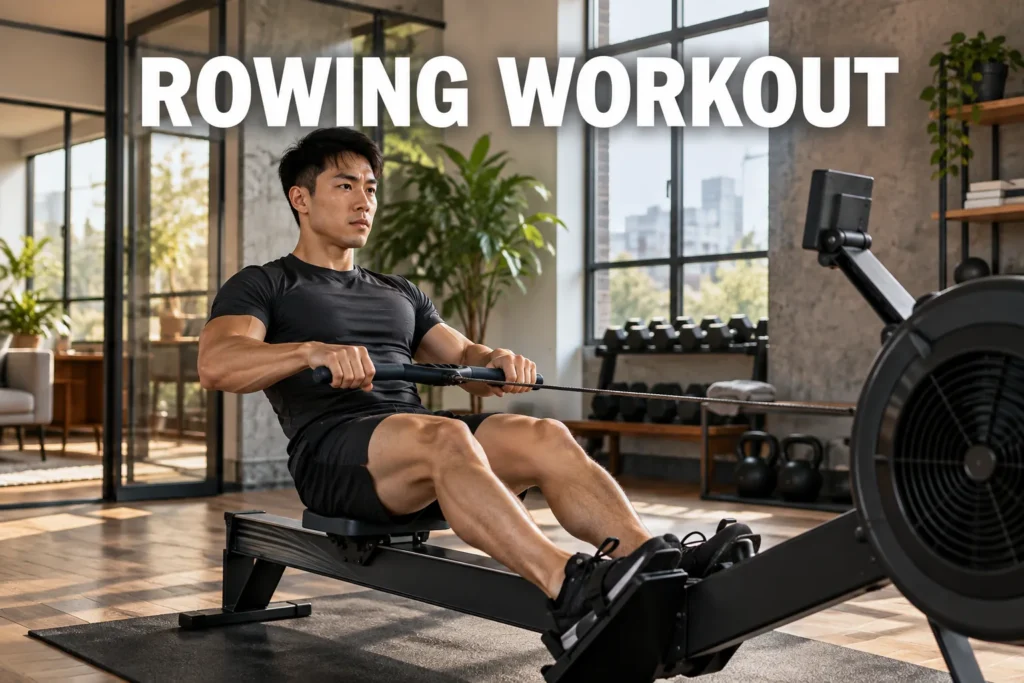
A rowing workout stands apart from most cardio options because it challenges your aerobic system and nearly every major muscle group in a single session. I program rowing into my own training and for the athletes I coach, from recreational lifters to professional tennis players, and I have gone through the current research behind it: rowing delivers genuine cardiovascular intensity alongside a meaningful strength stimulus, which makes it a valuable tool for weight loss, endurance improvement, and functional fitness.
This guide covers why rowing works, how to structure your sessions for any goal, and three ready-to-use plans that scale from beginner to advanced. You will find calorie estimates grounded in peer-reviewed data, performance benchmarks, and practical guidance on duration and frequency, and where the evidence is thin, I say so. I also flag where my coaching experience differs from what the studies suggest, so you can tell the two apart.

Rowing Workout Benefits: Why the Rower Delivers Full Body Results
Few cardio machines deliver rowing machine benefits as comprehensively as the rowing ergometer. A properly executed rowing stroke engages the legs, hips, core, back, shoulders, and arms in coordinated sequence, activating most of the body's major muscle groups on every pull. That breadth of recruitment is what gives the rowing machine its reputation as a genuinely full body exercise.
Cardiovascular and Metabolic Benefits
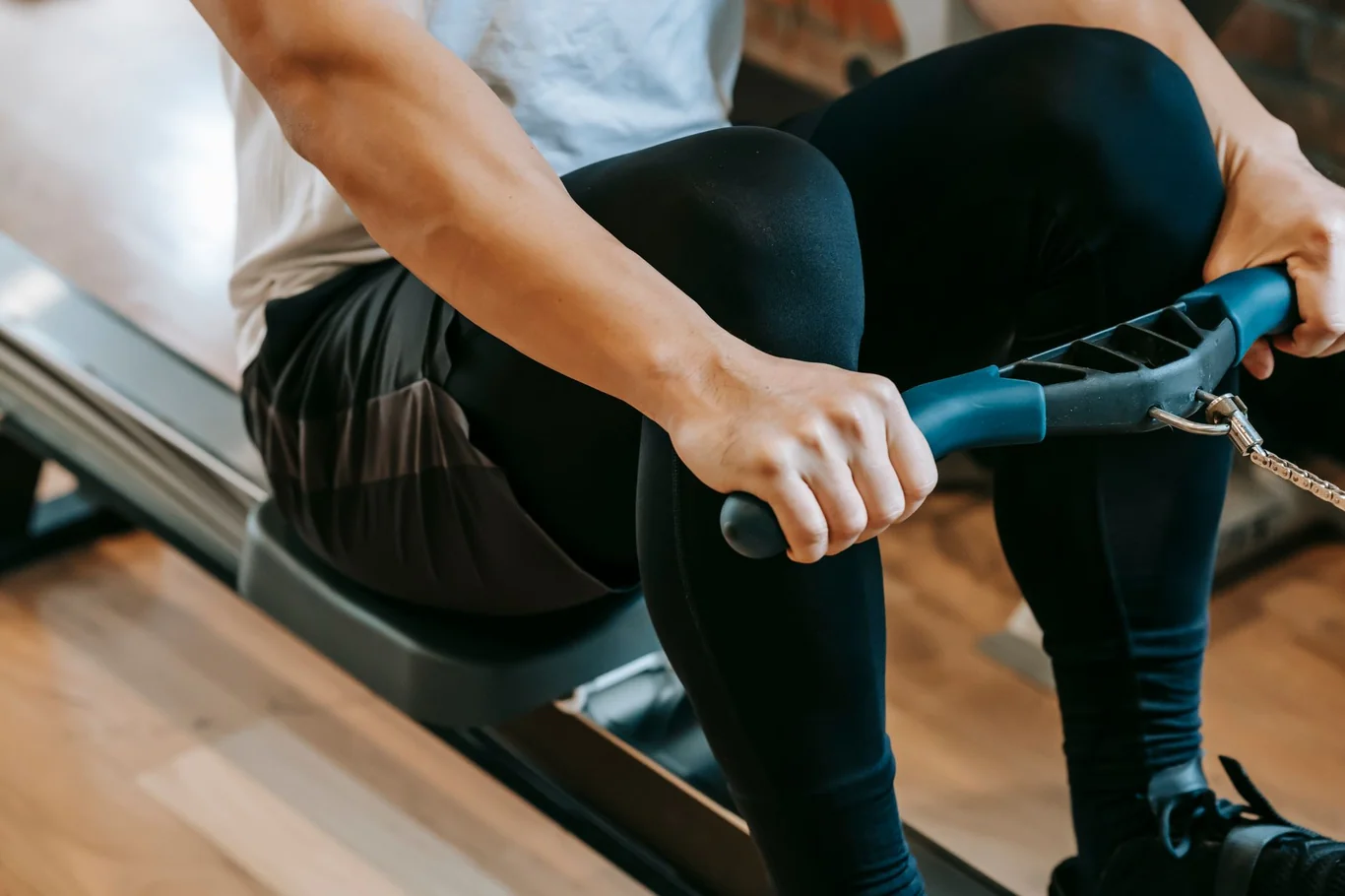
Studies suggest rowing is a high-value cardiovascular training tool. A 2024 controlled study comparing seven indoor cardio machines found that rowing produces 11.45 kcal/min at vigorous submaximal effort and up to 13.46 kcal/min at maximum intensity, which makes it one of the highest calorie-burning machines tested (1). That translates to roughly 690-800 calories per hour under controlled testing conditions - your actual burn varies with body weight, stroke rate, and effort.
An eight-week HIIT program combining rowing and cycling improved insulin sensitivity by 27-42%, increased VO2max by 8-15%, and reduced fat mass by 1.6-2.3 kg in men with obesity and type 2 diabetes - with over 95% participant adherence and no reported injuries in the study cohort (2). Those are outcomes typically associated with much longer training cycles.
In my own training, moderate rowing works well as a substitute for easy running on days when my joints need a break from impact, since it keeps the aerobic demand without the pounding. Last season I swapped two easy 30-minute runs per week for 30-minute rows with a 34-year-old client coming back from shin splints, and his aerobic base held steady while his shins settled.
Muscle Engagement: What the Rowing Machine Actually Works
The lower body drives approximately 60% of the power output in each stroke, while the upper body handles the remaining 40%. Across the full stroke, the muscles a rowing machine works run from the quads, glutes, and hamstrings on the drive to the lats, rhomboids, biceps, and core stabilizers at the finish.
One important clarification: rowing is primarily a cardiovascular and muscular endurance exercise, not a substitute for progressive resistance training. The strength stimulus is real, especially in the legs and posterior chain, but hypertrophy requires progressive overload that a fixed rowing motion cannot fully deliver. As for whether a rowing machine will build muscle in the hypertrophy sense, my honest answer is yes for beginners, but modestly, and mostly as a side effect of endurance work rather than the primary mechanism.
How to Structure a Rowing Workout: Technique Before Training
No rowing workout produces consistent results if form degrades under fatigue. Lower back pain and shoulder strain are the two most commonly reported rowing injuries, and both trace back to preventable technique errors. Locking in the mechanics before increasing intensity is always the better use of training time.
The Four Phases of a Rowing Stroke
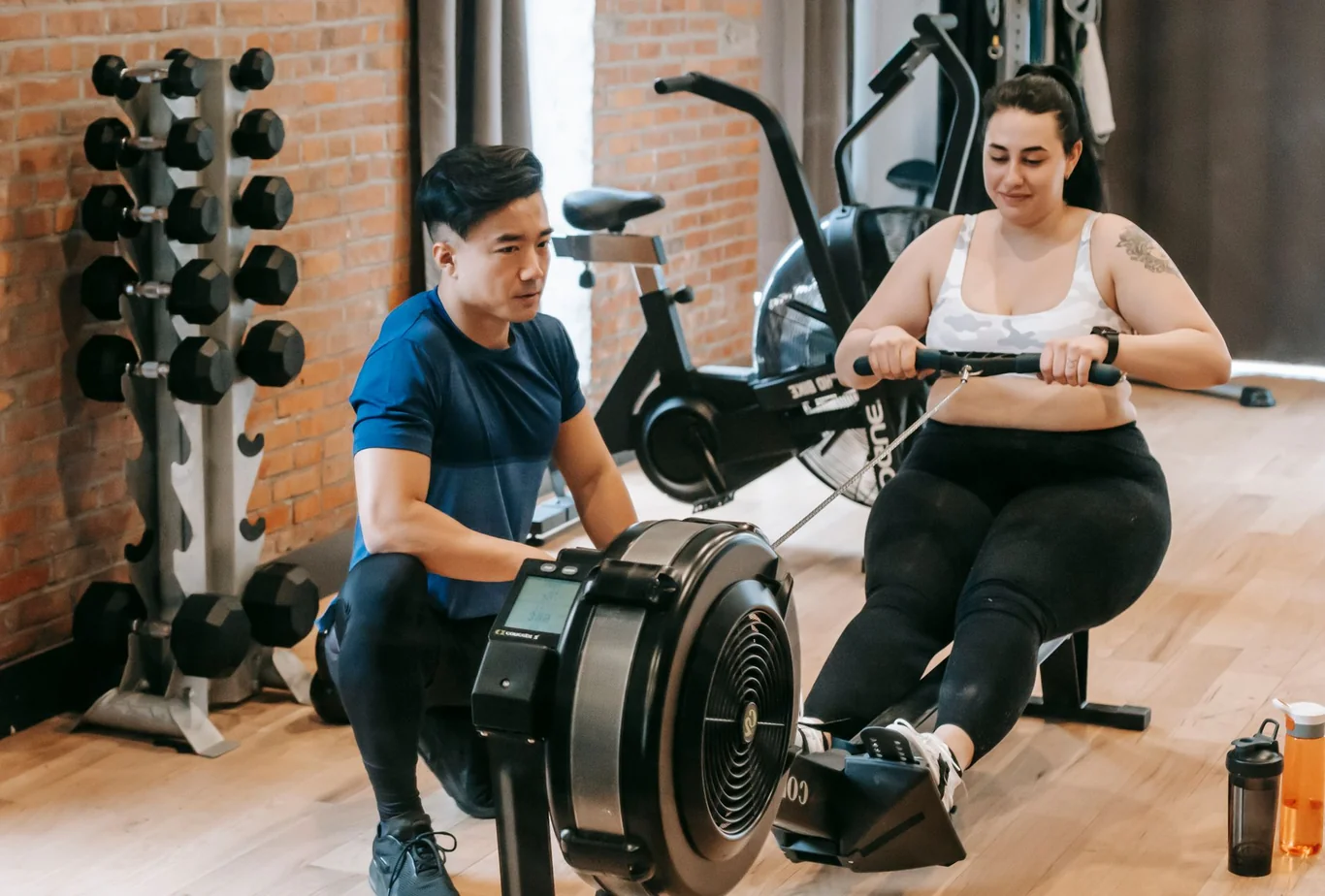
Each stroke follows the same four-phase sequence. Executing them in the correct order determines both power output and joint safety:
The Catch - Sit upright with shins vertical, arms fully extended, and core braced. This is the starting position; rushing it is the most common beginner error and the primary driver of lower back strain.
The Drive - Push through your legs first, keeping the handle level. Hips and back should swing open only after the legs have extended roughly two-thirds of the way through the push.
The Finish - Lean back slightly to about 11 o'clock, pull the handle to your lower chest, and squeeze your shoulder blades together to activate the upper back.
The Recovery - Reverse the sequence: arms extend first, torso pivots forward, then knees bend to return to the catch. The recovery should take roughly twice as long as the drive.
Common Technique Mistakes That Reduce Effectiveness
Identifying form errors early prevents wasted effort and avoids setbacks. These are the most frequently observed technique problems in beginners and casual rowers:
- Leading with the back at the catch - jerking the torso backward before the legs engage places direct load on the lumbar spine
- Breaking the arm-leg sequence during the drive - pulling the handle while the legs are still bending limits power transfer and over-recruits the smaller arm muscles
- Hunching the shoulders at the finish - causes rotator cuff impingement and reduces lat and rhomboid activation
- Letting the seat rush forward uncontrolled - shortens the recovery phase and accelerates cumulative fatigue across sets
- Setting the damper too high - creates a heavier feel without proportionally increasing aerobic demand; a setting of 3-5 is the recommended starting range for most recreational rowers
Chronic lower back pain is the most frequently reported rowing injury, and rowing-related back pain often relates to form errors such as leading with the back at the catch or breaking the leg-first sequence. If you already have a back condition, I always ask clients to clear any increase in intensity with their physician first.
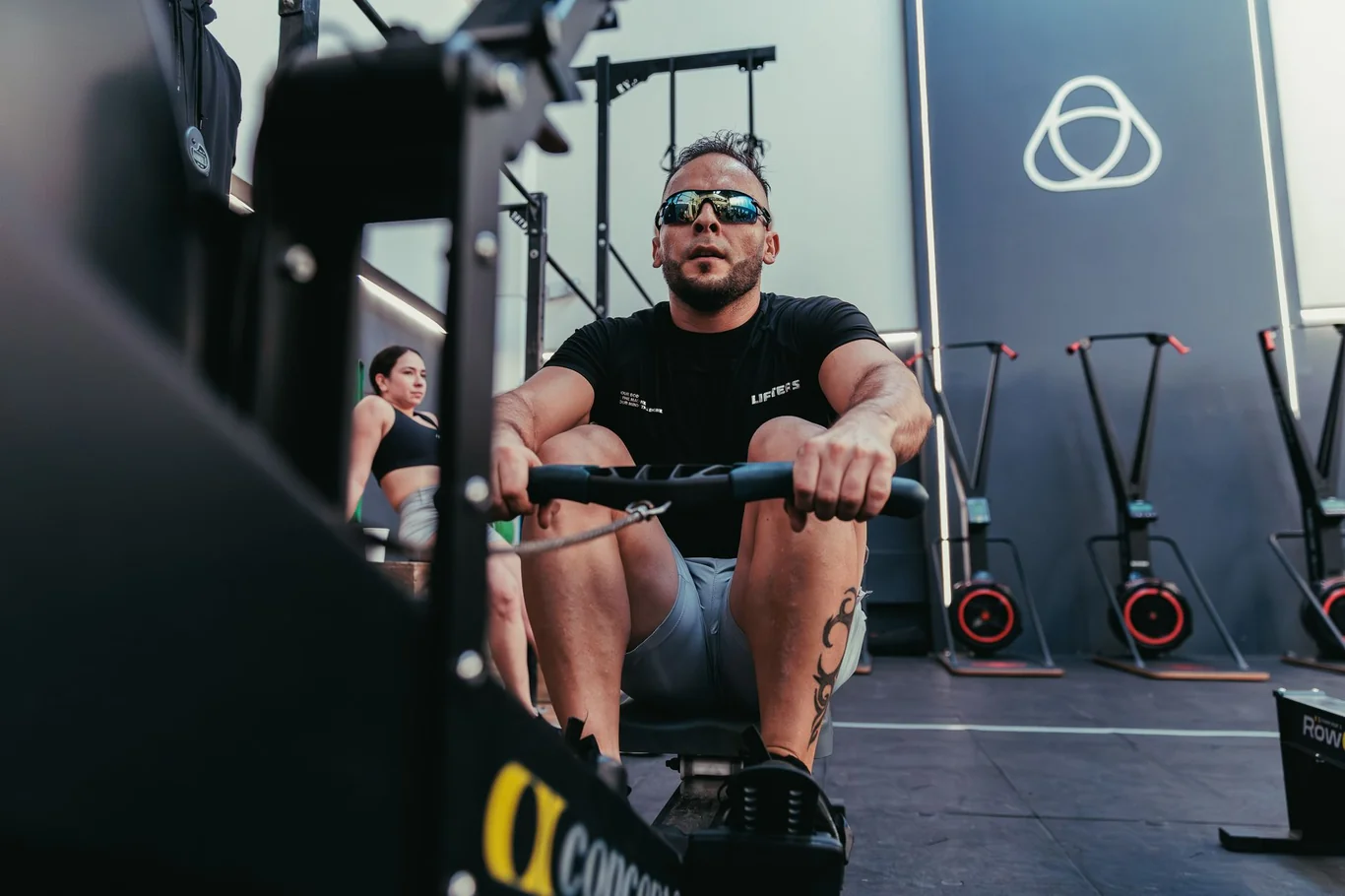
I usually start beginners around a damper setting of 4 on a Concept2 RowErg with PM5 and adjust it based on stroke control rather than how heavy the handle feels. If a new rower's back rounds at the catch within the first 5 minutes, I lower the damper before I change anything else.
Rowing Workout Plans for Every Level
The three plans below use three core session types: steady-state (consistent moderate pace), interval work (alternating hard and easy segments), and HIIT (short maximal-effort bursts). Before starting any of them, I want you to check your setup against the basics of using a rowing machine: footpad height, strap position, and damper setting.

All plans run four weeks. Progress by adding five minutes per session before moving to the next level.
Beginner Rowing Workout Plan (Weeks 1-4)
Target: 3 sessions per week, 15-25 minutes each. This is the plan I give anyone new to the rowing machine: focus on technique and aerobic base over speed. If you are still choosing equipment, the best rowers for beginners tend to have a smooth, predictable resistance that makes this phase easier to learn on. Keep stroke rate between 18-22 strokes per minute (spm) throughout, since higher is not better at this stage.
Week 1-2: Foundation Phase
Session A: 5-minute warm-up at 16-18 spm, 10 minutes steady at 20 spm, 5-minute cool-down stretch
Session B: 5-minute warm-up, 4x4 minutes at 20 spm with 2-minute easy-row rest between sets, 5-minute cool-down
Session C: 20 minutes continuous at 18-20 spm, focusing on the catch position and leg-before-back drive sequence
Week 3-4: Volume Phase
Session A: 25 minutes steady at 20-22 spm
Session B: 5x4 minutes at 22 spm with 90-second easy-row rest between sets
Session C: 30 minutes easy at 18-20 spm; use this session to practice recovery phase ratio and control
This beginner rowing workout builds aerobic base without overloading connective tissue. Most people report measurable improvements in technique and cardiovascular endurance within three to four weeks. The clients I coach through this block usually cut their 2,000-meter time by 15 to 30 seconds by the end of week four, mostly from better sequencing rather than more fitness. These rowing machine workouts integrate naturally into a home gym workout plan alongside bodyweight or resistance work and require no equipment beyond the rower itself.
Intermediate Rowing Machine Workout Routine (Weeks 1-4)
Target: 4 sessions per week, 25-40 minutes each. Introduce stroke rate progressions and heart rate zone training.
Session A (Steady-State Base): 30-35 minutes at 22-24 spm, maintaining conversational pace (you can speak in short sentences without gasping)
Session B (Pyramid Intervals): 1 min hard / 1 min easy, 2 min hard / 1 min easy, 3 min hard / 1 min easy, then back down; total interval block 20 minutes with 5-minute warm-up and cool-down
Session C (Split Focus): 3x8 minutes at 24-26 spm with 3-minute easy row between sets
Session D (Volume Row): 40 minutes at 20-22 spm with deliberate focus on stroke ratio: slow controlled recovery and a powerful leg-driven drive
This rowing machine workout routine builds on the beginner plan by adding training variety and higher stroke rates. Sessions should feel moderately challenging - you should finish tired but not depleted. My rule for this phase: if you cannot hold your target split on the last interval of Session B, the whole session was paced too hard from the start.
Advanced HIIT Rowing Workout
A controlled trial found that HIIT training significantly outperformed high-volume steady-state work in trained rowers across VO2max, lactate threshold, and 2000m race performance (3). The HIIT rowing workout below applies the same performance-first principles.
Protocol: Power Interval Sessions (4 days per week)
Warm-up: 5 minutes easy rowing at 18-20 spm
First work block: 8 rounds of 40 seconds all-out at 28-32 spm followed by 20 seconds complete rest
Active bridge: 5 minutes easy rowing at 18-20 spm
Second work block: 6 rounds of 1 minute hard at 26-28 spm followed by 1 minute easy recovery
Cool-down: 5 minutes at 16-18 spm
Use this protocol on two sessions per week; complete the other two as 30-35 minute steady-state rows. Total weekly volume reaches approximately 150-200 minutes. This is a demanding rowing workout program, and beginners should not start here. If you pair this full body rowing machine workout with a heavy strength training program, monitor cumulative fatigue closely; I treat adequate sleep and an easy day after each HIIT session as part of the plan, not an optional extra.
How Long Should Your Rowing Workout Be?
Most rowing workouts should last 20 to 45 minutes, and picking the right length for your goal matters as much as picking the right intensity. The table below gives practical starting points; treat these as guides, not rigid prescriptions:
Goal | Sessions Per Week | Session Length | Session Type |
General fitness | 3 | 20-30 minutes | Steady-state |
Cardiovascular endurance | 4 | 30-45 minutes | Steady + intervals |
Weight loss | 4-5 | 30-45 minutes | Mixed: steady + HIIT |
Athletic performance | 5-6 | 30-60 minutes | Periodized: HIIT + long rows |
Twenty minutes of rowing cardio at moderate intensity (22 spm, RPE 5-6) is sufficient for general health maintenance and cardiovascular benefit. For weight loss or performance goals, sessions closer to 35-45 minutes with varied intensity drive faster adaptation. Working out with a rowing machine more than five times per week without planned recovery days elevates injury risk, particularly to the lower back and shoulders.
Heart rate zone training helps confirm you are working at the right intensity for your goal rather than guessing. On the rower, I trust a chest strap over a wrist sensor for interval work, because the constant grip and wrist flexion of each stroke can shift an optical sensor and reduce smartwatch heart rate accuracy.
When I wore a chest strap and an optical watch together through a 6x1-minute interval session, the watch lagged the strap by several beats on almost every hard minute and caught up only during the easy rows. That gap is exactly why I do not program interval zones from wrist data.
Rowing Machine Workout for Weight Loss: What the Research Shows
Rowing supports weight loss primarily through high energy expenditure per session. Because the lower and upper body are both active throughout, the metabolic demand is higher than isolated cardio like cycling or upper-body-only machines. The estimates below derive from published research under controlled testing conditions (1), and your actual calorie burn varies with body weight, stroke rate, effort level, and drag factor setting:
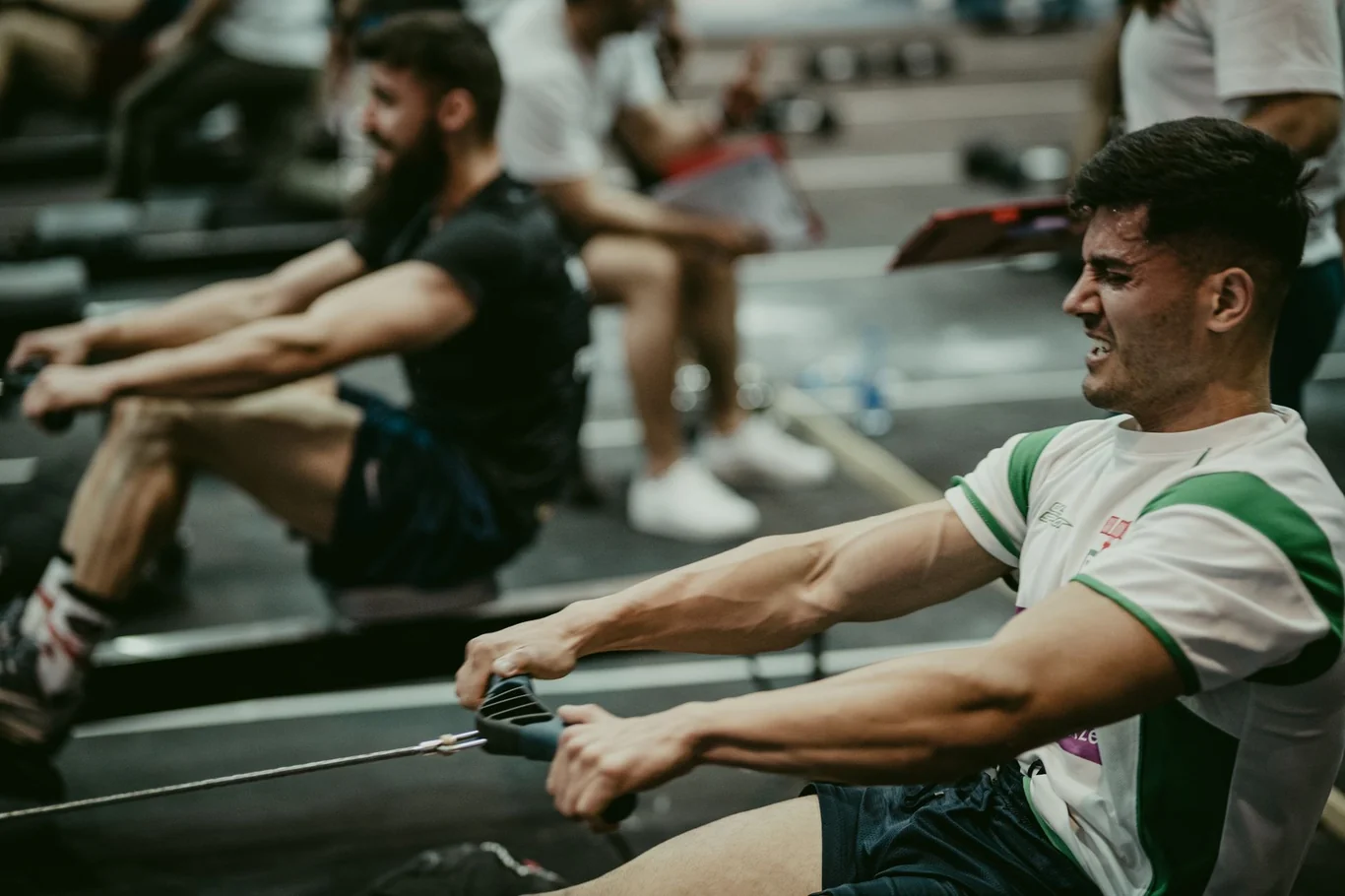
Body Weight | Moderate Effort (~22 spm) | Vigorous Effort (~26+ spm) |
130 lbs / 59 kg | ~330-370 kcal/hr | ~490-540 kcal/hr |
155 lbs / 70 kg | ~395-440 kcal/hr | ~580-640 kcal/hr |
185 lbs / 84 kg | ~470-530 kcal/hr | ~685-760 kcal/hr |
220 lbs / 100 kg | ~560-630 kcal/hr | ~810-900 kcal/hr |
These are estimates extrapolated from controlled research conditions. Individual results differ based on technique, machine type, and fitness level.
Caloric deficit from diet remains the primary driver of weight loss; rowing accelerates the deficit. No guaranteed timeline applies - most beginners following a structured rowing workout plan with a moderate dietary deficit report visible changes in endurance and body composition within 8-12 weeks, with significant individual variation based on starting fitness, dietary adherence, and sleep quality.
Air-resistance ergometers such as the Concept 2 rowing machine are the reference equipment in most calorie studies, so the figures above translate most directly to that style of rower. A water rowing machine or a magnetic model can feel different at the same effort, so I treat these numbers as a starting point rather than a promise. For clients who need a quiet machine for early mornings, I usually suggest quiet magnetic rowing machines and accept that their calorie readouts will not match the research figures exactly.
500m Split Times: Tracking Progress on the Rower
The 500m split is the standard performance metric for indoor rowing: it shows the time needed to row 500 meters at your current pace - lower is faster. The benchmarks below represent typical ranges from aggregated fitness community data and should be treated as general guides, since performance varies meaningfully with age, sex, body weight, training history, and drag factor setting:
Experience Level | 500m Split Range | Stroke Rate | Effort Description |
Beginner | 2:30-3:00/500m | 18-22 spm | Easy, controlled |
Recreational | 2:05-2:30/500m | 22-26 spm | Moderate, sustainable |
Intermediate | 1:50-2:05/500m | 24-28 spm | Comfortably hard |
Advanced | 1:35-1:50/500m | 28-32 spm | Hard effort |
Competitive | Under 1:35/500m | 32+ spm | Race pace |
A practical early milestone: sustaining a 2:00/500m split for a continuous 10-minute effort. Most beginners reach this within 8-12 weeks of consistent training, though individual variation is wide. Age and sex shift these benchmarks considerably, so I suggest comparing your split against 500m rowing times for your own age group rather than the general ranges above.
I find split time a more motivating progress metric than session duration alone because it gives each session a concrete, visible target.
Ready to Build Your Rowing Routine?
I include rowing in my training three days per week specifically because of its post-session joint cost - after a 40-minute session at moderate intensity, I can progress to strength training the next day without the recovery delay I consistently see after the same duration of running.
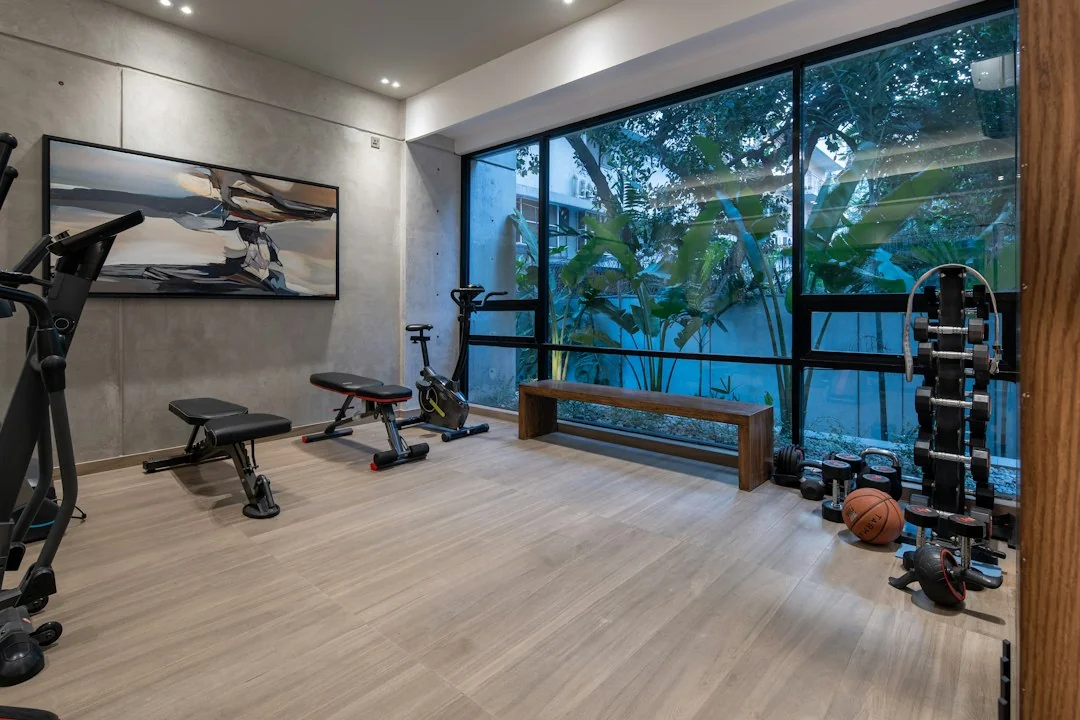
A rowing workout earns its place in any training program because it generates real cardiovascular and endurance returns with minimal joint stress. The low-impact profile is the most underrated advantage and the biggest practical difference between rowing and running: you can often row the day after heavy strength training without compromising recovery. That training flexibility makes it easier to hit weekly volume targets consistently.
Start with three sessions per week at the beginner level. Focus on form before intensity, and add five minutes of duration before increasing stroke rate or effort level. The advanced HIIT protocol becomes appropriate only once you can complete 30 minutes of steady-state rowing at 22-24 spm with controlled form throughout.
When you choose the best rowing machine for home training, I recommend an air-resistance ergometer with a performance monitor, because the split data is what makes structured training measurable. If budget is the limit, the best budget rowing machine picks still cover the beginner plan above, and you can compare current models side by side in the rowing machines shop. What I would not trust is any rower without a visible split, because without it you cannot follow any of the plans in this guide.
FAQs
Is 20 minutes of rowing a day enough?
Twenty minutes of daily rowing is sufficient for general cardiovascular health and fitness maintenance for most healthy adults. The effectiveness increases significantly when you vary intensity across the week, alternating between steady-state sessions and short interval efforts rather than repeating the same moderate-pace row every day.
Is rowing good for losing weight?
Rowing is effective for weight loss because simultaneous upper and lower body engagement generates high calorie expenditure per session, with vigorous rowing burning an estimated 580-800+ calories per hour depending on body weight and effort level. Combining a structured rowing workout plan with a moderate caloric deficit from diet produces the most consistent and measurable weight loss results.
How long does it take for a good rowing workout?
A good rowing workout takes between 20 and 45 minutes depending on your goal and experience level. Beginners benefit most from 20-30 minute sessions focused on technique and steady-state effort, while intermediate and advanced rowers typically use 30-45 minute sessions combining steady rowing with interval blocks for greater cardiovascular and performance adaptation.
Is rowing a good enough workout?
Rowing is a complete cardiovascular and muscular endurance workout that engages the majority of the body's major muscle groups in a coordinated, low-impact motion, and research confirms it produces significant improvements in VO2max, insulin sensitivity, and body composition within eight weeks of structured training. Rowing does not replace progressive resistance training when building muscle mass is the primary goal. As a standalone cardio modality, it compares favorably with most other options.
How to use a rowing machine?
To use a rowing machine correctly, strap your feet into the footpads, sit tall with your core braced, and begin each stroke by pushing through your legs before swinging your back and pulling the handle to your lower chest.
This content is for informational and educational purposes only. It is not a substitute for professional medical advice, diagnosis, or treatment. Always consult with your healthcare provider before starting any new fitness program or using fitness technology for health monitoring. We are always looking for expert inputs to make our content even better and more useful.
References
- Prieto-González P, Yagin FH. Energy expenditure, oxygen consumption, and heart rate while exercising on seven different indoor cardio machines at maximum and self-selected submaximal intensity. Front Sports Act Living. 2024;6:1313886. doi:10.3389/fspor.2024.1313886.
- Petersen MH, de Almeida ME, Wentorf EK, Jensen K, Ortenblad N, Hojlund K. High-intensity interval training combining rowing and cycling efficiently improves insulin sensitivity, body composition and VO2max in men with obesity and type 2 diabetes. Front Endocrinol. 2022;13:1032235. doi:10.3389/fendo.2022.1032235.
- Ni Cheillcachair NJ, Harrison AJ, Warrington GD. HIIT enhances endurance performance and aerobic characteristics more than high-volume training in trained rowers. J Sports Sci. 2017;35(11):1052-1058. doi:10.1080/02640414.2016.1209539.