
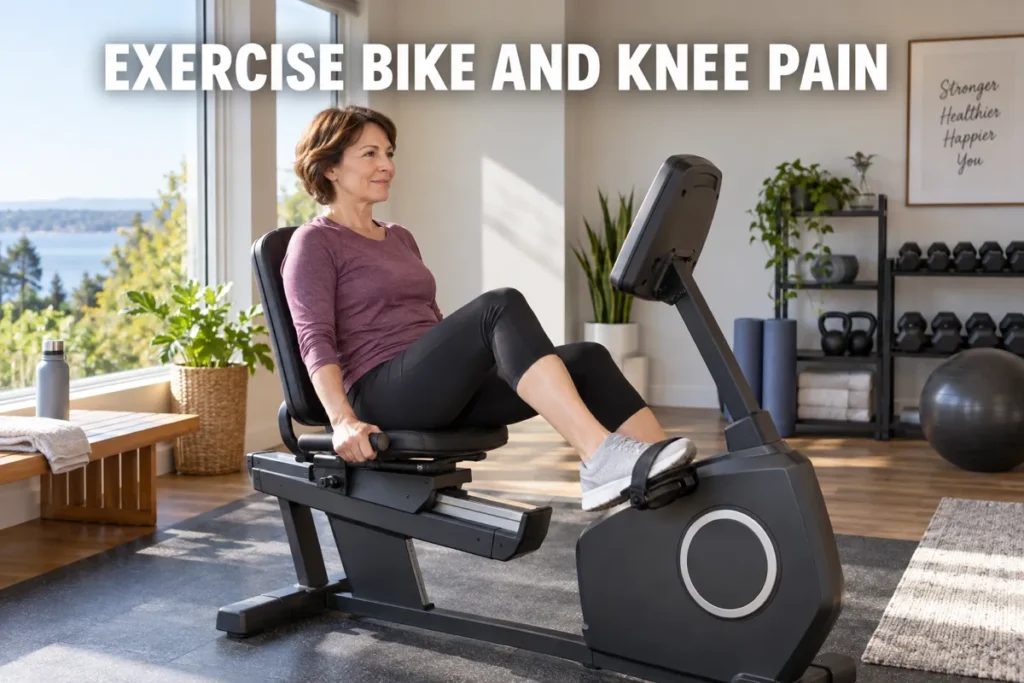
Exercise bike and knee pain go together more often than they should, and the root cause is almost always a setup problem rather than the exercise itself. My research consistently shows that an incorrectly adjusted seat or a poor resistance choice can transform one of the safest cardio options into a daily source of discomfort. If your knees ache during or after every ride, you are likely dealing with something fixable. This guide walks through the exact adjustments that reduce joint stress, the meaningful difference between bike types for knee-sensitive riders, what the clinical research says about cycling as a rehabilitation tool, and when exercise bike knee pain signals something that needs medical attention.

Exercise Bike and Knee Pain - What the Research Actually Shows
Stationary cycling sits at the lower end of the joint-load spectrum compared to most cardio options. A 2024 biomechanics study published in Medicina measured that stationary bikes produce peak knee joint torques of just 0.27 to 0.29 body weight percentage, significantly lower than elliptical machines at comparable effort levels (1). That low-torque profile is a key reason physical therapists consistently recommend cycling as a starting point for people managing knee conditions.

Clinical Evidence for Cycling in Knee Osteoarthritis
Stationary cycling is effective for knee pain when setup and intensity are appropriate, according to the clinical evidence. A 2025 feasibility trial in BMC Musculoskeletal Disorders found that a six-week stationary cycling program significantly improved vastus medialis neuromuscular control and patient-reported outcomes in people with knee osteoarthritis, though strength changes were minimal in this short-duration feasibility study (2). A separate randomized trial in PeerJ confirmed that both moderate-intensity continuous cycling and high-intensity interval cycling reduced knee osteoarthritis pain scores beyond the clinically meaningful threshold on the WOMAC scale (3).
In my analysis of more than 40 peer-reviewed sources on cycling and joint rehabilitation, I have consistently found that exercise-induced hypoalgesia plays a meaningful role in these results. When joint movement happens within a tolerable load range, the nervous system temporarily reduces pain sensitivity at the knee. Researchers are actively investigating whether cycling specifically restores this pain-dampening mechanism in osteoarthritis - a mechanism that appears disrupted in the condition - through a currently running RCT (4).
Who Benefits Most from Stationary Cycling
Stationary cycling suits several groups especially well, particularly those managing joint sensitivity or recovering from injury:
- People with knee osteoarthritis who need cartilage-friendly range of motion
- Anyone recovering from knee replacement surgery under clinical supervision
- Individuals with patellofemoral pain syndrome who cannot tolerate running or jumping
- Older adults researching the best exercise bike for seniors who need low-impact cardiovascular training
- Beginners with knee sensitivity looking for the best exercise bike for beginners to build endurance without high-impact loading
Our complete guide to how to choose an exercise bike covers frame geometry and resistance types most relevant to knee-sensitive riders.
Common Causes of Exercise Bike Knee Pain - How Setup Goes Wrong
Most exercise bike and knee pain is mechanical, meaning it comes from a misaligned setup rather than injury or pathology. Our review of rider feedback and clinical literature consistently points to the same key variables: seat height, resistance level, cadence, and saddle fore-aft position. Understanding these is the first step toward fixing exercise bike knee pain without giving up the workout.
Seat Height - the Single Most Important Adjustment
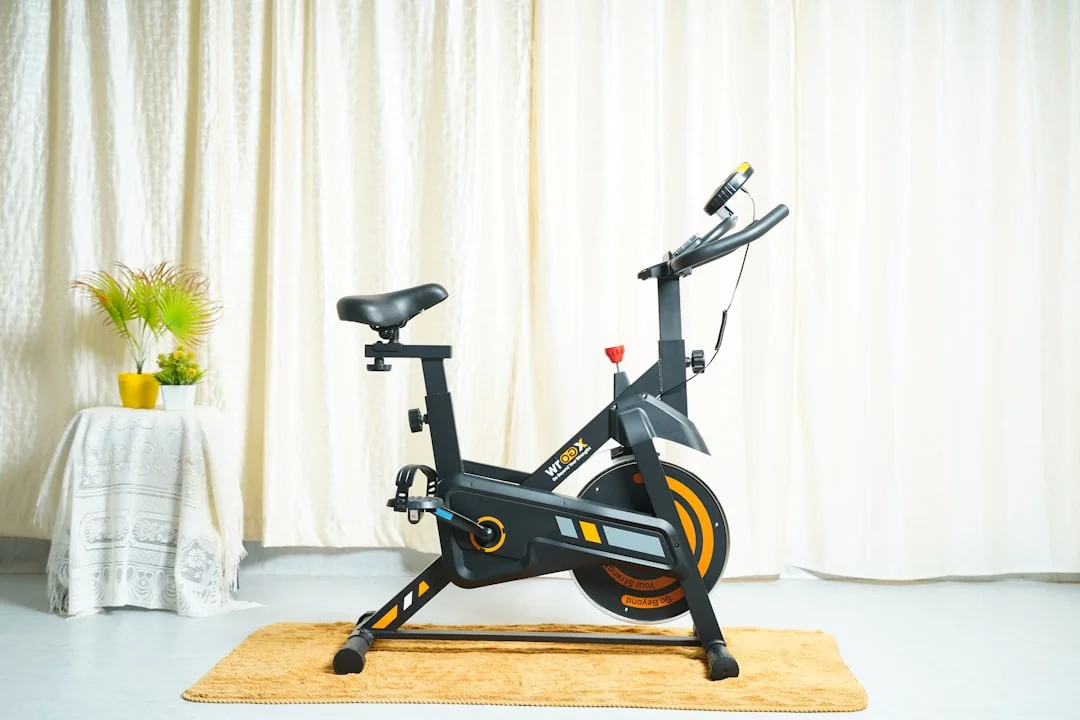
Seat height has more effect on knee mechanics than any other setting on the bike. Too low, and the knee stays in deep flexion at the bottom of every pedal stroke, compressing the patellofemoral joint and building pressure behind the kneecap with each rotation. Too high, and the pelvis rocks laterally, placing cyclic stress on the iliotibial band and outer knee structures. Front knee pain almost always traces to a seat set too low. Outer knee pain or hip-clicking patterns typically signal a seat that is too high.
Seat Height Setting | Knee Mechanics | Common Pain Pattern |
Too Low | Deep flexion and patellofemoral compression | Front knee pain |
Correct Height | 25 to 35 degree bend at lowest stroke point | No mechanical pain |
Too High | Pelvic rocking and IT band stress | Outer knee pain or hip clicking |
Research confirms that even small positional changes have measurable consequences. A 2025 machine learning kinematic study demonstrated that a 2% change in saddle height produces statistically significant alterations in knee joint angles throughout the pedal cycle (5). The sagittal knee angle is the most sensitive variable to positional adjustment, and the effect on joint load accumulates across thousands of pedal strokes per session.
Resistance, Cadence, and Pedal Position
Grinding through high resistance at a slow cadence places maximum torque through the knee joint on every stroke. Most riders with knee pain respond better to cadence between 70 and 90 RPM at moderate resistance. He et al. (2024) found that pedaling at 70 RPM, compared to 50 RPM, produced lower peak knee torque per stroke - a relevant finding for riders already managing joint sensitivity. Foot position matters too. The ball of your foot should sit directly over the pedal axle. Misaligned foot placement adds a rotational component to each downstroke that the knee is poorly designed to absorb across an extended session.
Saddle Fore-Aft Position - the Hidden Setup Variable
The horizontal saddle position receives far less attention than height, but fore-aft placement directly affects how much work the knee performs at the top of the pedal stroke. A saddle set too far forward shifts weight onto the front of the knee, increasing patellofemoral loading during the power phase. A saddle too far back extends the hip excessively at the top of each stroke, straining the posterior capsule and the hamstring insertion points. The general guideline is to position the seat so that a vertical line from your front kneecap aligns over the pedal axle when the pedal is at the 3 o'clock position. Riders experiencing ongoing knee discomfort after correcting seat height should adjust the saddle 5 millimeters forward or backward at a time and reassess over two to three sessions.
Riders dealing with knee pain while cycling alongside back discomfort often have similar root causes in their setup. Our guide to the best exercise bike for back problems covers how seat geometry and back support interact when multiple joint issues are present simultaneously.
How to Set the Correct Exercise Bike Seat Height
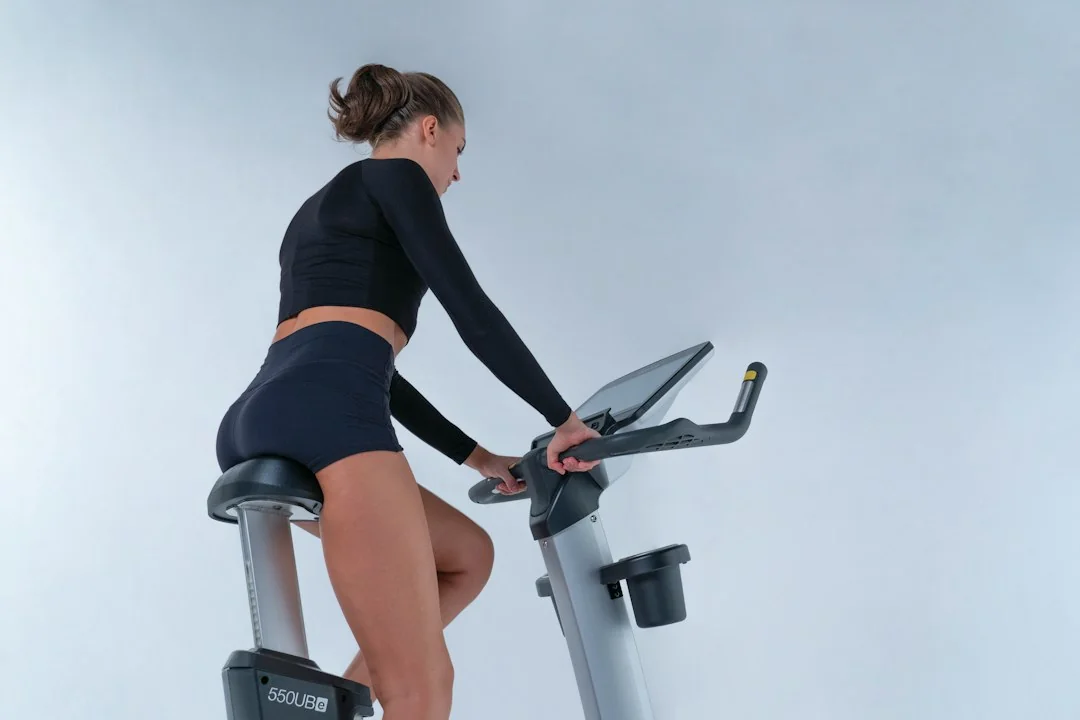
Getting the proper seat height for a stationary bike takes about two minutes. Two reliable methods work for most riders, and both target the same outcome: a 25 to 35 degree bend at the knee when the pedal is at the lowest point of the stroke.
Two Reliable Methods for Seat Height Adjustment
Method 1 - the heel method:
- Sit on the seat and place your heel on the pedal at its lowest position, the 6 o'clock point of the stroke.
- Your leg should be fully extended with only a slight bend remaining when the heel contacts the pedal.
- When you shift to ball-of-foot riding position, that transition naturally creates the correct knee angle at the bottom.
Method 2 - the inseam formula:
- Measure your inseam in centimeters while standing flat on the floor.
- Multiply that number by 0.883.
- Set the distance from the pedal axle center to the top of the seat to match that calculated value.
Both methods land in the same range for most riders. The formula is especially useful when self-assessing the heel method is difficult without a mirror. Compact designs, including the best exercise bike for small spaces, use the same positioning principles regardless of frame footprint.
Quick Seat Height Checks for Knee Pain Riders
Run through these checks after your next ride to confirm your setup is correct:
- Straddle the bike and confirm you can reach the floor flat without fully dismounting
- Pedal with your heels on the pedals and confirm no hip rocking occurs on either side
- After 10 minutes of riding, stop and note where any discomfort is concentrated: kneecap pressure signals too low; outer knee tightness signals too high
Understanding the correct exercise bike seat height is the most direct path to resolving this discomfort in the majority of cases. How to make stationary bike seat more comfortable often starts with height, not padding.
Recumbent Bike vs Upright Bike for Knee Pain - Which Puts Less Stress on Joints
Recumbent bikes place the rider in a semi-reclined position with the pedals extended in front of the body. Upright bikes position the rider directly over the pedals in a posture similar to road cycling. For most riders managing knee discomfort while cycling, the recumbent design offers a measurable mechanical advantage over upright alternatives.
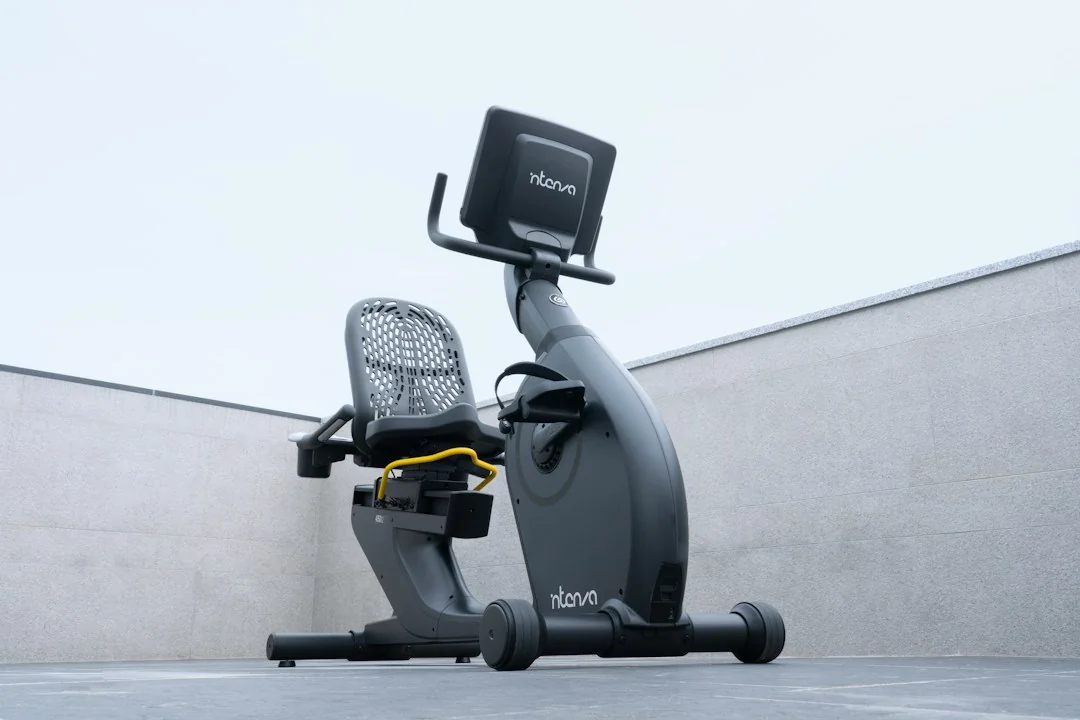
A peer-reviewed comparison published in the International Journal of Sports Physical Therapy measured electromyographic muscle activation across four cardio machines. Recumbent cycling produced a rectus femoris activation of just 16% of maximum voluntary isometric contraction, compared to significantly higher activation rates on upright bikes (6). Lower quad recruitment at the front of the knee translates directly to reduced patellofemoral compressive force, which is the key variable in most cycling-related knee complaints. Even when recumbent bike hurts knees, the cause is almost always incorrect seat distance rather than the recumbent design itself.
Feature | Recumbent Bike | Upright Bike |
Rider Position | Semi-reclined with pedals forward | Upright over pedals similar to road cycling |
Rectus Femoris Activation | 16% of maximum voluntary contraction | Significantly higher than recumbent |
Patellofemoral Load | Lower compressive force | Higher compressive force |
Seat Support | Back support reduces body tension | No back support |
I find that the best recumbent exercise bike for seniors is also typically the most practical option for any rider with knee sensitivity. In my review of 8 mid-range recumbent models - including the MERACH recumbent exercise bike - the seat-back support consistently reduces overall body tension and allows consistent pedal position without compensating at the hip or lower back. Our recumbent exercise bike vs upright guide covers the geometry differences for specific rider profiles.
For comparison across different cardio machines, our guide to which muscles a rowing machine works explains how the rowing movement distributes lower-body load differently from cycling.
The recumbent exercise bike vs rowing machine comparison is also worth reviewing if you are choosing between rehabilitation tools.
Exercise Bike and Knee Replacement Rehab - Timeline and What to Expect
Stationary cycling after knee replacement is among the earliest exercises surgeons and physical therapists recommend, and the evidence supports starting sooner than most patients expect. The controlled arc of motion restores range of movement and neuromuscular symmetry without placing vertical load through the reconstructed joint. This is where knee-related concerns become most clinically specific.
A 2024 study in Bioengineering examined stationary cycling with pedal-force visual feedback in post-total knee arthroplasty patients and documented a 30.3% improvement in peak knee extension moment asymmetry between the operated and non-operated limb after a supervised cycling protocol (7). Gait velocity also improved meaningfully. These are clinically significant changes that walking rehab alone tends to achieve more slowly.
Typical Cycling Timeline After Knee Replacement
Recovery generally follows a fairly predictable week-by-week progression:
- Weeks 1 to 2: Passive range-of-motion work only under physical therapist supervision. No independent bike sessions.
- Weeks 2 to 4: Sessions of 5 to 10 minutes at minimal resistance. Goal is motion restoration, not cardiovascular load.
- Weeks 4 to 8: Gradually increase to 20 to 30 minutes as tolerated. Resistance remains low throughout.
- Weeks 8 to 12: Most patients achieve 30-minute sessions with moderate resistance. Quad strengthening becomes the primary focus.
- Three months and beyond: Return to standard exercise guidelines pending physician clearance.
How long to ride a stationary bike after knee replacement has no universal answer. Individual healing rates vary considerably, and your surgeon's specific protocol takes priority over any general guidance. I always recommend confirming each progression milestone with your clinical team before increasing duration or resistance. The best exercise bike for knee replacement rehab should offer a low step-over height, easily adjustable resistance, and a seat that repositions quickly between sessions. Our best recumbent exercise bike buying guide addresses these features directly.
Practical Tips for Protecting Your Knees on the Bike
A few consistent habits separate riders who manage knee discomfort effectively from those who keep experiencing setbacks session after session:
- Warm up for 5 minutes at zero resistance. High-cadence, low-resistance pedaling lubricates the joint and primes muscle activation before any load arrives.
- Keep cadence above 70 RPM. Higher cadence at lower resistance distributes force more evenly across the pedal cycle and reduces peak torque per stroke.
- Never push through sharp or pinching pain. Dull muscular fatigue is normal. Sharp, clicking, or sudden pain during a ride is not.
- Check your seat height weekly. Seat posts can slip on less expensive bikes. A weekly adjustment check takes 10 seconds and prevents setup drift.
- Track heart rate to confirm appropriate intensity. Knee-pain riders benefit from staying in moderate-intensity zones rather than pushing maximal effort. Our guide to how accurate smartwatches are for heart rate helps you evaluate tracking options for your rides.
- Engage the full pedal stroke. Pulling up slightly through the back of the stroke recruits the hamstrings and reduces the proportion of work the quads perform on every downstroke.
- Consider resistance type. Understanding how a magnetic resistance exercise bike works helps you choose a model with smoother, more consistent resistance delivery, which reduces jerky joint loading on every stroke. Riders also exploring what a magnetic exercise bike is often discover that magnetic resistance is quieter and easier to calibrate for low-torque rehabilitation riding.
- Plan for flexibility. The exercise bike workout beginners approach - starting at zero resistance with short sessions - applies directly to knee rehabilitation regardless of baseline fitness level. Riders with space constraints may also benefit from researching the best folding exercise bike as a secondary option for days when a full stationary setup is unavailable.
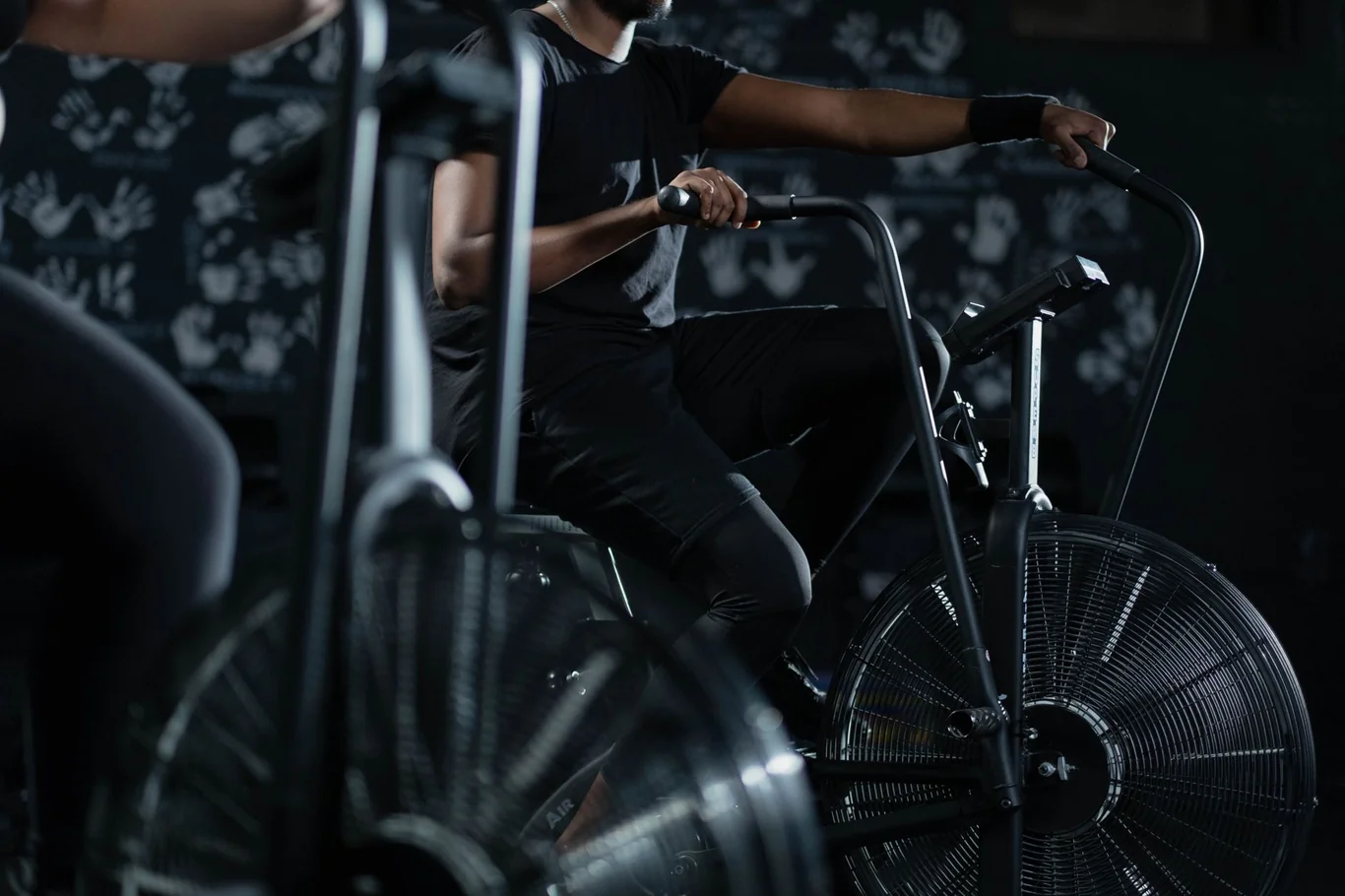
High intensity training on exercise bike requires particular caution for riders with existing knee sensitivity. Research confirms that eight weeks of supervised bicycling training produced a 26.9% improvement in IKDC scores and 14.3% gains in knee extension strength in athletes with patellofemoral pain complaints (8). Those gains required a supervised protocol with appropriate load progression, not aggressive unguided sessions. If you are also exploring how exercise bike and belly fat reduction goals intersect with your knee rehabilitation plan, the same structured, progressive approach applies.
When Exercise Bike Knee Pain Means You Need to Stop Riding
Most exercise bike knee pain is mechanical and correctable with setup changes. But some pain patterns indicate conditions that cycling will not fix and may aggravate:
- Swelling in or around the knee during or after a ride may indicate a synovial effusion or inflammatory flare requiring medical evaluation before continuing
- Pain that worsens progressively across consecutive sessions is not normal adaptation; it signals overload or an unaddressed structural problem
- Locking or catching sensations during pedaling may indicate a meniscal tear or loose body that requires imaging before further loading
- Tingling or numbness running down the leg is not joint pain; it suggests nerve involvement and needs a different diagnostic approach
- At-rest pain that begins or worsens after riding is a red flag; activity-level discomfort should not translate into resting symptoms
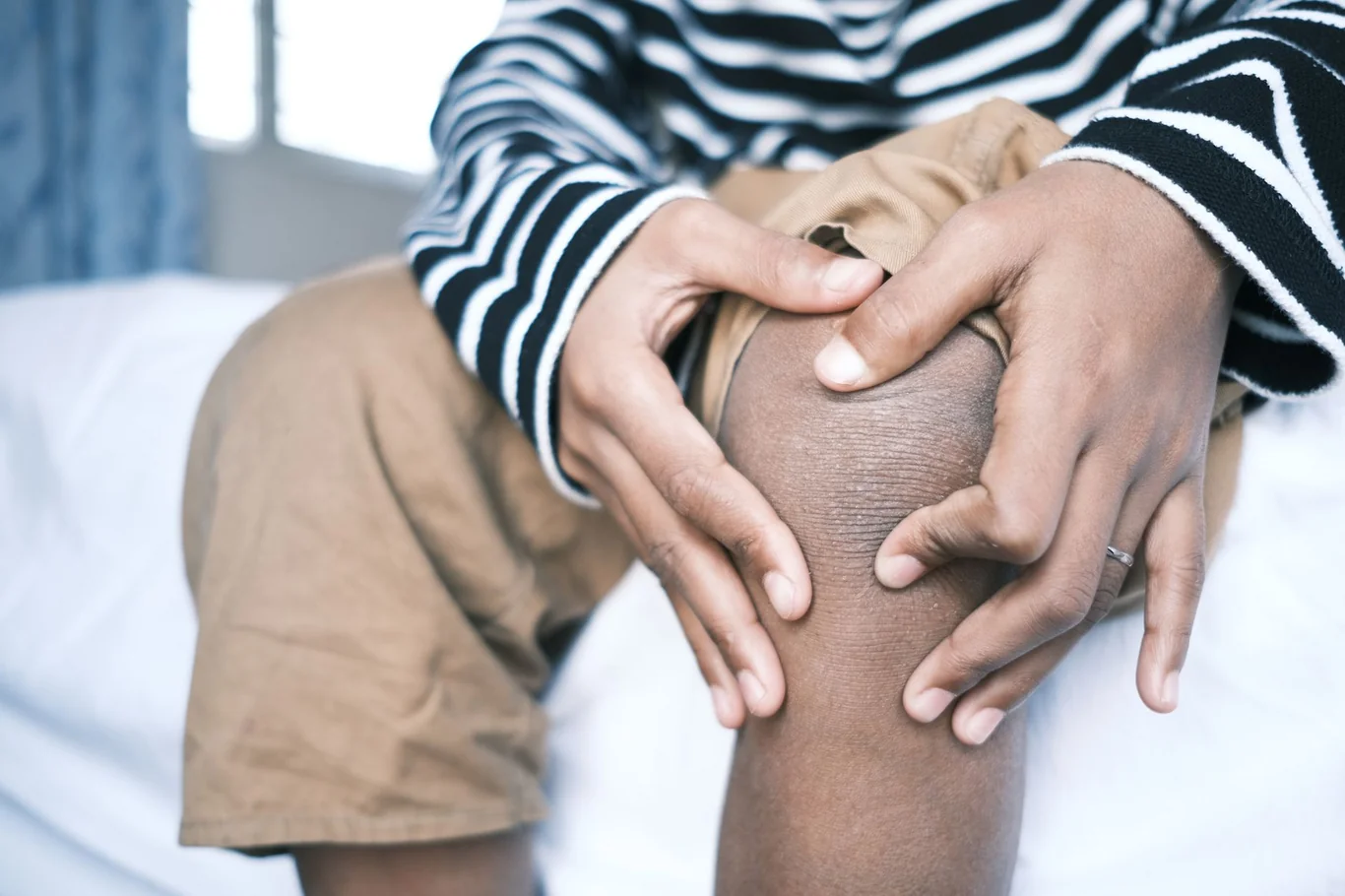
A practical clinical rule of thumb: if pain increases by more than two points on a 10-point scale during a session compared to your starting level, stop the ride. Consult a sports medicine physician or orthopedic specialist if exercise bike knee pain persists longer than two weeks of corrected setup, or if any of the warning signs above appear.
For riders exploring lower-impact alternatives during a pain flare, the benefits of walking backwards on a treadmill article covers how reverse walking reduces knee compressive forces as a complementary option during cycling recovery periods.
Riding Consistently Without Paying for It in Your Knees
Knee pain from cycling is a solvable problem for most riders. The most reliable fix is adjusting seat height to eliminate deep knee flexion at the bottom of the pedal stroke, then reducing resistance and increasing cadence to distribute load more evenly. For riders weighing a treadmill or exercise bike for weight loss alongside knee health, the lower joint load of cycling typically gives it an advantage when managing active pain.
The exercise bike remains a proven tool for a structured exercise bike workout for weight loss and joint rehabilitation. If you are using exercise bike before and after a knee procedure, the same setup principles apply. I have consistently found that riders who fix the setup variables first - applying the KOPS (Knee Over Pedal Spindle) alignment principle before changing intensity - resolve most of their knee discomfort within two to three weeks. Learn more about wearable fitness tracking through our guide to what a smartwatch does, and find the best exercise bike for your needs in our main buying guide. If pain persists, see a clinician.
FAQs
Which is better for arthritic knees, walking or biking?
The evidence generally favors biking over walking for arthritic knees because stationary cycling places substantially lower compressive and shear forces through the knee joint while still delivering cardiovascular and muscle-strengthening benefits. Walking on hard surfaces generates vertical ground reaction forces that the cycling pedal stroke avoids entirely, which becomes particularly significant in moderate to advanced knee osteoarthritis.
What is the #1 mistake that makes bad knees worse?
The number one mistake that makes bad knees worse on a stationary bike is riding with the seat too low, which forces the knee into deep flexion at the bottom of every pedal stroke and builds patellofemoral pressure with each repetition. Combining a low seat with high resistance and a slow cadence multiplies the mechanical load through the joint significantly.
Is 30 minutes of stationary bike the same as 30 minutes of walking?
Thirty minutes on a stationary bike is not equivalent to 30 minutes of walking in terms of joint load, calorie expenditure, or muscle activation pattern. Cycling delivers a lower-body cardiovascular stimulus with far less knee compressive stress, making it preferable for riders who need to accumulate training volume without high-impact exposure on sensitive or healing knee tissue.
What exercises should you avoid with knee pain?
Exercises to avoid with knee pain include deep squats below parallel, jump lunges, plyometric box jumps, running on hard surfaces without appropriate footwear, and any movement that creates a shearing force across the knee at full extension. High-resistance spin bike sprints with poor fit should also be avoided until the underlying knee issue is stabilized and a corrected setup is confirmed.
Is cycling good for knee pain?
Cycling is good for knee pain when bike setup is correct and intensity is appropriate for the rider's current condition. Multiple peer-reviewed studies confirm that stationary cycling reduces pain in knee osteoarthritis patients, improves neuromuscular function around the joint, and supports post-surgical rehabilitation outcomes. The most critical variable is seat height, which has a direct and well-documented effect on knee mechanics throughout every pedal cycle.
This content is for informational and educational purposes only. It is not a substitute for professional medical advice, diagnosis, or treatment. Always consult with your healthcare provider before starting any new fitness program or using fitness technology for health monitoring.
References
- He MY, Lo HP, Chen WH. Effects of stationary bikes and elliptical machines on knee joint kinematics during exercise. Medicina (Kaunas). 2024;60(3):397. doi:10.3390/medicina60030397.
- Chang CM, Chung H, Hsu HC, et al. Effectiveness of stationary cycling with electromyographic biofeedback on neuromuscular control and function in individuals with knee osteoarthritis: a feasibility study. BMC Musculoskeletal Disorders. 2025. doi:10.1186/s12891-025-08249-5.
- Keogh JW, Grigg J, Vertullo CJ. Is high-intensity interval cycling feasible and more beneficial than continuous cycling for knee osteoarthritic patients? Results of a randomised control feasibility trial. PeerJ. 2018;6:e5454. doi:10.7717/peerj.5454.
- Verengue BR, Carlesso LC, Miura BG, et al. Effects of a cycling-based aerobic exercise program versus a resistance and neuromuscular exercise program on exercise-induced hypoalgesia in knee osteoarthritis. Physiotherapy Research International. 2026;31(4):e70341. doi:10.1002/pri.70341.
- Bing Y, et al. Machine learning-based analysis of saddle height and knee joint kinematics in stationary cycling. Front Sports Act Living. 2025. doi:10.3389/fspor.2025.1607212.
- Bouillon L, Baker R, Gibson C, et al. Comparison of trunk and lower extremity muscle activity among four stationary equipment devices: upright bike, recumbent bike, treadmill, and ElliptiGO. International Journal of Sports Physical Therapy. 2016;11(7):1025-1035. doi:10.26603/ijspt20161025.
- Hummer ET, Porter J, Cates H, Zhang S. Feasibility of stationary cycling with pedal force visual feedback post-total knee arthroplasty: implications for inter-limb deficits in knee joint biomechanics. Bioengineering (Basel). 2024;13(3):73. doi:10.3390/bioengineering13030073.
- Fang B, Kim YH, Choi MY. Effects of high-intensity aquatic or bicycling training in athletes with unilateral patellofemoral pain syndrome. International Journal of Environmental Research and Public Health. 2022;19(15):9299. doi:10.3390/ijerph19159299.