
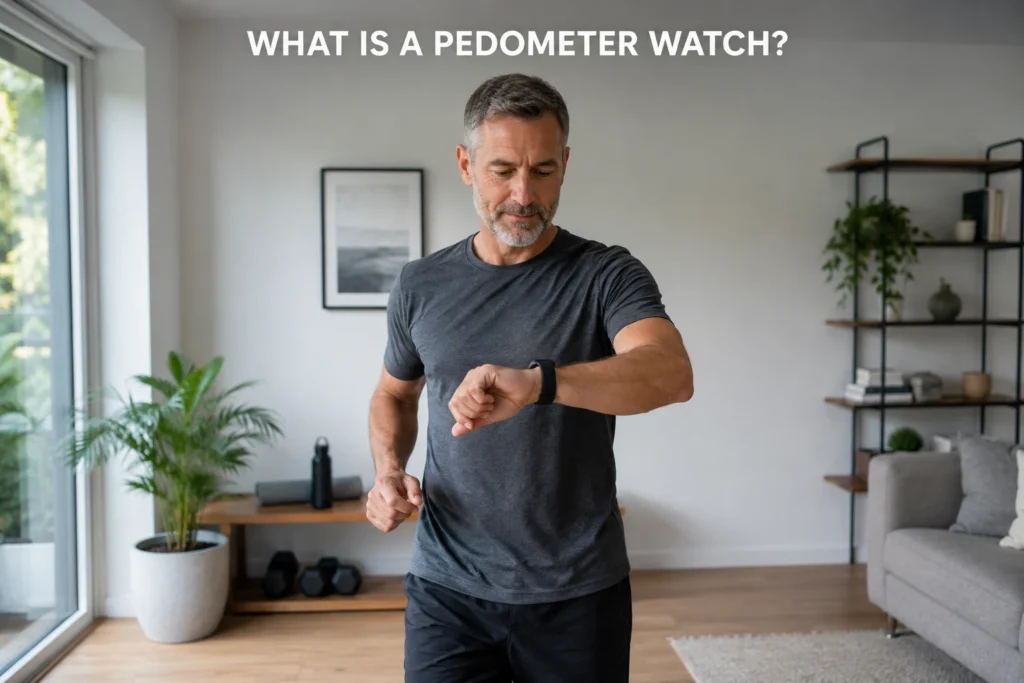
A pedometer watch is a wrist-worn device that counts every step you take throughout the day, showing that running total directly on the watch face. Unlike a smartwatch, a simple pedometer watch requires no phone, no app, and no nightly charging - it works the moment you strap it on. From seniors managing daily activity goals to minimalists who prefer traditional gear, this tool is more relevant than ever. In this guide, I will cover how pedometer watches function, what the research says about step tracking, and when a basic watch with a built-in pedometer beats a full smartwatch for your needs.

What Is a Pedometer Watch - and What Does It Actually Track?
A pedometer watch is a wristwatch with a built-in motion sensor designed to count steps. These devices fall into two categories: electronic models that use an accelerometer chip, and older mechanical models that use a swinging lever arm triggered by hip motion. Nearly every simple pedometer watch sold today uses electronic sensing, which is more accurate and durable. Beyond steps, most models also calculate an estimated distance walked and a rough calorie estimate based on your stride length and weight, both of which you configure during setup. The display is clean and readable - no touchscreen, no app interface, no notifications crowding your wrist.
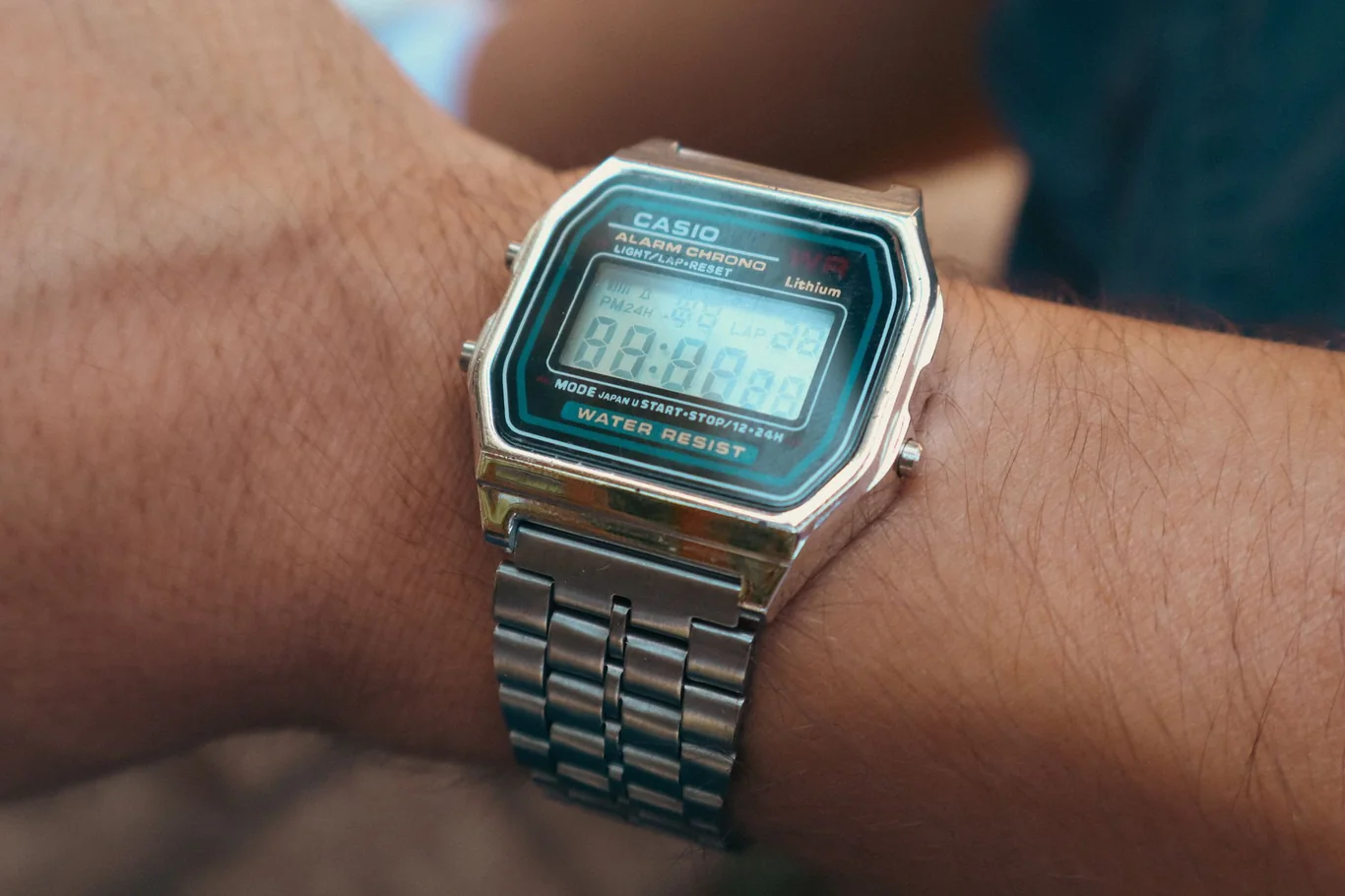
What sets a non-smart pedometer watch apart from a fitness tracker or smartwatch is what it leaves out. There is no Bluetooth connection, no heart rate sensor, no sleep tracking, and no smartphone pairing required. For people who find smartwatches overcomplicated or who want a reliable daily step count without managing another device, that absence of features is the point.
If you want to compare pedometer watch options against fully featured wearables, our best budget fitness trackers guide lays out both categories at comparable price points.
Pedometer Watch vs. Smartwatch at a Glance
Feature | Pedometer Watch | Smartwatch |
Step counting | Yes | Yes |
Battery life | 1-2 years (coin cell) | 1-7 days |
Smartphone pairing | Not required | Required |
Heart rate monitoring | No | Yes (most models) |
GPS tracking | No | Yes (most models) |
Sleep tracking | No | Yes (most models) |
Price tier | Budget to mid-range | Mid-range to premium |
From my experience advising readers on fitness technology, battery life is the single most cited reason people choose a pedometer watch over a smartwatch - more than accuracy, price, or feature set. A device requiring weekly charging rarely makes it past a reader's first month of consistent use.
For context on where pedometer watches sit within the broader wearable technology landscape alongside fitness trackers, smartwatches, and medical devices, my overview of what are wearable devices explains the full category with its key trade-offs.
How a Simple Pedometer Watch Counts Your Steps
The counting mechanism inside a simple pedometer watch is an accelerometer - a small chip that measures movement along three axes simultaneously. When your wrist motion matches the rhythm of a walking stride, the counter increments by one. Most models also include a brief motion buffer - typically a 5 to 10-step threshold before counting begins - which prevents random wrist movements from inflating your count. The process is automatic and continuous throughout the day.

Accuracy varies based on several factors that affect wrist motion:
- Walking speed: Normal-paced walking registers most reliably; speeds below 2 mph can cause undercounting because arm swing does not consistently cross the detection threshold
- Arm restriction: Pushing a grocery cart or carrying bags in both hands typically produces lower counts than actual steps taken
- Sensitivity setting: Most pedometer watches include a high, normal, or low sensitivity toggle - adjusting for your natural walking style improves reliability
- Dominant wrist placement: Wearing the watch on your dominant hand typically increases accuracy because arm movement is more pronounced
- Activity type: Non-ambulatory movement such as cycling or rowing is not captured, since the leg-driven motion pattern differs from walking gait
Research confirms these variables matter. A technical review found that wrist-worn step counters had an error rate of 1.5-9.6% during normal walking, with waist and ankle placement showing meaningfully lower error rates in controlled conditions (1). The waist position outperforms the wrist because it captures hip displacement directly - the biomechanical event closest to a true step - rather than using arm swing as a proxy. For everyday walking goal tracking, wrist-level accuracy is more than sufficient.
Most pedometer watches let you enter your height or stride length during setup, which calibrates the distance and calorie estimates. The step count itself never needs calibration - it is computed directly from motion detection.
For readers who want to understand how more advanced devices extend this motion-detection approach into multi-sensor pipelines, my post on how fitness trackers work covers the sensor differences, data outputs, and key distinctions from smartwatches.
Health Benefits of Tracking Your Steps Every Day
Step counting is not just a motivational tool - the research behind it is substantial. A systematic review published in JAMA found that pedometer users increased their daily physical activity by an average of 2,491 steps above baseline, and that setting a concrete step goal was one of the strongest predictors of that increase (2). That is a meaningful behavioral shift driven entirely by having a visible number on your wrist.

The downstream effects on longevity are compelling. A Lancet Public Health meta-analysis tracking over 47,000 adults across 15 international cohorts found that each additional 1,000 steps per day progressively reduced all-cause mortality risk. Benefits plateaued at approximately 6,000-8,000 steps for adults over 60 and at 8,000-10,000 for younger adults (3). Most people can reach meaningful health thresholds without chasing an arbitrary round number.
Cardiovascular outcomes follow the same pattern. A systematic review of prospective cohort studies found that each additional 1,000 daily steps reduced cardiovascular disease risk by 5-21% and all-cause mortality risk by 6-36% (4). These are population-level reductions from real-world walking data, not laboratory conditions.
Step Count Targets and Associated Health Outcomes
Daily Step Target | Primary Benefit | Population |
5,000-6,000 | Reduced cardiovascular risk | Adults 60+ |
6,000-8,000 | All-cause mortality reduction plateau | Adults 60+ |
7,000-8,000 | Strong mortality risk reduction | General adults |
8,000-10,000 | Mortality reduction plateau | Adults under 60 |
Mental health is also part of the picture. A preliminary study in overweight adults found early evidence that a 12-week pedometer intervention was associated with reductions in anxiety, depression, and fatigue, alongside improvements in body weight and waist circumference (5). The act of tracking creates awareness, and awareness drives small daily choices that compound over months.
For people managing type 2 diabetes, step tracking has additional clinical relevance. A randomized controlled trial found that a 10,000-step walking prescription produced a 0.74% reduction in HbA1c - a meaningful glycemic improvement - even among participants who only partially achieved the step target (6). Partial success still produces real results.
My consistent advice when people ask about starting a step-tracking program: wear the watch for a full week before setting any goal. Your natural baseline tells you far more about what target is realistic than any generic recommendation does.
For readers ready to move beyond step counts into heart rate, sleep, and GPS data, my breakdown of the top-rated fitness tracker options covers the models ranked highest across sensor accuracy, battery life, and price.
The benefits most consistently supported across the research include:
- Increased daily step count averaging 2,000-3,000 steps above baseline for pedometer users vs. non-users
- Reduced cardiovascular risk starting at as few as 5,000-6,000 daily steps for older adults
- Improved mental health markers including lower anxiety, depression, and fatigue in early intervention studies
- Better glycemic control in type 2 diabetes patients following a structured step prescription
For dedicated runners who need more than step counts, our best fitness trackers for runners guide covers GPS-enabled options built for performance tracking.
Who Should Choose a Basic Non-Smart Pedometer Watch
A basic non-smart pedometer watch is the right tool for a specific set of users. The market has spent years chasing smartwatch buyers while ignoring people who genuinely want less complexity. Those people include:
- Seniors and older adults who find app setup and daily charging impractical or frustrating
- Non-tech users who want step data displayed directly on a watch face without a learning curve
- Privacy-conscious individuals who prefer no Bluetooth signal, no cloud sync, and no data sharing
- Minimalists who carry a separate phone for communication and want the watch to only tell time and count steps
- Rehabilitation patients tracking daily movement during recovery without needing complex data outputs
- Budget-conscious buyers who want reliable step tracking without subscription fees or a premium device

A pilot study in older adults found that personalized step goals with pedometer feedback increased daily steps by over 2,000 per day, outperforming generic 10,000-step instructions delivered without a device to track progress (7). The simplicity of the interface, combined with one clear daily number, is what makes the tool work for this group.
For older adults who want more than a step count but still need a simple, low-friction device, my guide to the best fitness tracker for seniors covers the models that balance health monitoring with ease of use.
The best pedometer watch for women often comes down to fit and aesthetics alongside function. Many standard pedometer watches default to larger case sizes (42-48mm) designed around a male average. Women typically benefit from 36-40mm options with narrower bands - a specification worth confirming before purchasing.
For readers who would rather skip a wrist device entirely, my post on tracking steps without a watch or phone ranks the most accurate device-free methods with their practical limitations.
Men weighing both pedometer-only and more advanced options can find our comparison in the best fitness trackers for men guide.
When to Upgrade to a Fitness Tracker or Smartwatch
A pedometer watch is not the right tool if you need any of the following:
- Heart rate monitoring during exercise for intensity management and training zone control
- GPS route tracking for hiking, running, or cycling with distance and pace accuracy
- Sleep tracking and overnight recovery metrics
- Sport-specific modes for swimming, strength training, or interval workouts
- Smartphone notifications for calls, messages, or calendar alerts
For high-intensity training needs, the best fitness trackers for CrossFit guide covers durability-first options built for demanding daily workouts.
What to Look for in the Best Pedometer Watch
The best pedometer watch for your needs comes down to a handful of practical specifications. A pedometer watch that is simple to set up and easy to maintain will outlast more complex alternatives over the long run. I would prioritize these criteria in order:
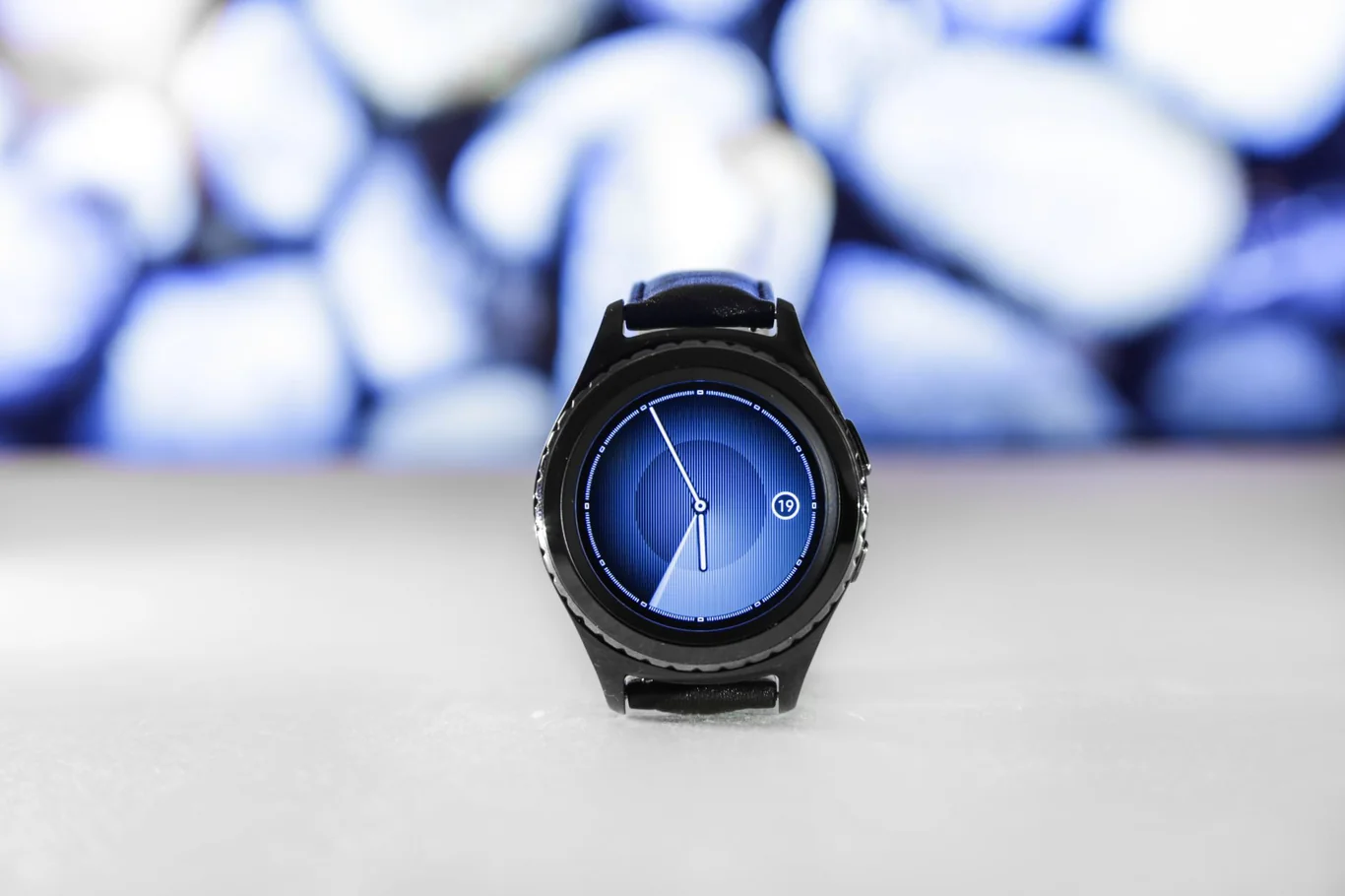
Battery life. The defining practical advantage of a pedometer watch without Bluetooth is battery endurance. Coin cell models (most commonly CR2032) last 1-2 years without any intervention. Confirm the model uses a standard replaceable coin cell rather than a built-in rechargeable battery if long-term convenience is your priority.
Display readability. The step count needs to be legible outdoors in direct sunlight and without reading glasses. Look for high-contrast LCD with a backlight for indoor and low-light use.
Water resistance. Minimum 3 ATM covers hand-washing and light rain. If you shower or exercise outdoors in wet conditions, look for 5 ATM minimum.
Size and band fit. Case diameter matters more than most buyers realize before purchasing. Smaller wrists are best served by 36-40mm cases with 16-18mm band widths. The best pedometer watch for women specifically should be verified for case diameter, since many mid-range models default to 42-48mm.
Manual stride calibration. Even basic models should allow you to enter your stride length during setup. This one-time configuration significantly improves the accuracy of distance and calorie estimates.
Brands like Casio and GRV produce well-regarded options in this category. If you are browsing Amazon for a pedometer watch, or specifically want a GRV model with no Bluetooth, these manufacturers stand out for battery longevity and build quality. A non-smart pedometer watch from an established brand will typically outlast budget alternatives by several years.
People who walk slowly or have conditions affecting arm swing may find ankle placement more accurate than wrist position. Our best ankle fitness trackers guide covers below-knee options that consistently outperform wrist placement for slow walkers.
For readers comparing a basic pedometer watch against a mid-range Fitbit on step, distance, and calorie data, my post on what does Fitbit track covers the full sensor suite and how its outputs compare to simpler step counters.
Your Next Steps Toward a More Active Day
A pedometer watch removes every structural barrier to starting a step-counting habit. No app to download, no phone to carry, no charging schedule to manage - just a watch that tells you how much you walked. Research consistently shows that simply tracking steps produces real increases in daily activity (2), and real increases in daily activity reduce mortality, cardiovascular risk, and metabolic disease markers over time.

My recommendation for anyone starting out: wear the watch for one full week without a goal. Note your average daily step count, then set a target 500-1,000 steps above that number. This personal baseline approach produces more durable habit formation than aiming for an arbitrary round number from day one.
For readers who later upgrade to a multi-sensor device, my guide on getting the most out of a fitness tracker covers the setup, metric interpretation, and goal-setting steps that make the data actionable.
If you find after a month that you want more data - heart rate, sleep tracking, GPS routes - that is a good sign your habit is forming. The best budget fitness trackers guide covers the next tier of options at entry-level price points.
FAQs
What is the difference between a pedometer and a smart watch?
The key difference between a pedometer and a smartwatch is the scope of data each device collects and how it connects to other devices. A pedometer watch counts steps and estimates distance and calories, operating entirely independently without a smartphone, app, or Bluetooth connection, while a smartwatch pairs with your phone and typically tracks heart rate, GPS location, sleep, and app notifications, requiring daily or near-daily charging.
What are the downsides of using a pedometer?
The main downsides of using a pedometer include limited accuracy during slow walking, activities with restricted arm movement such as pushing a cart, and non-ambulatory exercise like cycling or swimming. Most pedometer watches also lack heart rate monitoring, GPS tracking, and sleep data, which means they measure daily steps well but cannot provide a complete picture of workout intensity or overall fitness progress.
How much does a pedometer watch cost?
Pedometer watches span a wide range of price tiers, from entry-level models designed for basic step counting to mid-range options from established brands. Budget-tier options offer reliable step counting with coin-cell battery life, while mid-range pedometer watches from brands like Casio add improved build quality and display readability. A fully featured smartwatch with step tracking sits at a noticeably higher price point than a dedicated pedometer-only model that needs no app.
Is there a pedometer watch that doesn’t require a phone?
The majority of dedicated pedometer watches are designed to work completely without a phone, which is one of their primary selling points. A pedometer watch with no Bluetooth operates fully standalone, recording and displaying your step count, estimated distance, and calorie estimate directly on the watch face without pairing to a smartphone, downloading an app, or requiring any charging cable.
This content is for informational and educational purposes only. It is not a substitute for professional medical advice, diagnosis, or treatment. Always consult your healthcare provider before starting a new fitness program or using fitness technology for health monitoring.
References
- Bassett DR Jr, Toth LP, LaMunion SR, Crouter SE. Step Counting: A Review of Measurement Considerations and Health-Related Applications. Sports Medicine. 2017;47(7):1303-1315. doi:10.1007/s40279-016-0663-1
- Bravata DM, Smith-Spangler C, Sundaram V, et al. Using pedometers to increase physical activity and improve health: a systematic review. JAMA. 2007;298(19):2296-2304. doi:10.1001/jama.298.19.2296
- Paluch AE, Bajpai S, Bassett DR, et al. Daily steps and all-cause mortality: a meta-analysis of 15 international cohorts. Lancet Public Health. 2022;7(3):e219-e228. doi:10.1016/S2468-2667(21)00302-9
- Hall KS, Hyde ET, Bassett DR, et al. Systematic review of the prospective association of daily step counts with risk of mortality, cardiovascular disease, and dysglycemia. Int J Behav Nutr Phys Act. 2020;17:78. doi:10.1186/s12966-020-00978-9
- Yuenyongchaiwat K. Effects of 10,000 steps a day on physical and mental health in overweight participants in a community setting: a preliminary study. Braz J Phys Ther. 2016;20(4):367-373. doi:10.1590/bjpt-rbf.2014.0160
- Fayehun AF, Olowookere OO, Ogunbode AM, Adetunji AA, Esan A. Walking prescription of 10,000 steps per day in patients with type 2 diabetes mellitus: a randomised trial in Nigerian general practice. Br J Gen Pract. 2018;68(667):e139-e145. doi:10.3399/bjgp18X694613
- Strath SJ, Swartz AM, Parker SJ, Miller NE, Grimm EK, Cashin SE. A pilot randomized controlled trial evaluating motivationally matched pedometer feedback to increase physical activity behavior in older adults. J Phys Act Health. 2011;8(Suppl 2):S267-S274. doi:10.1123/jpah.8.s2.s267