
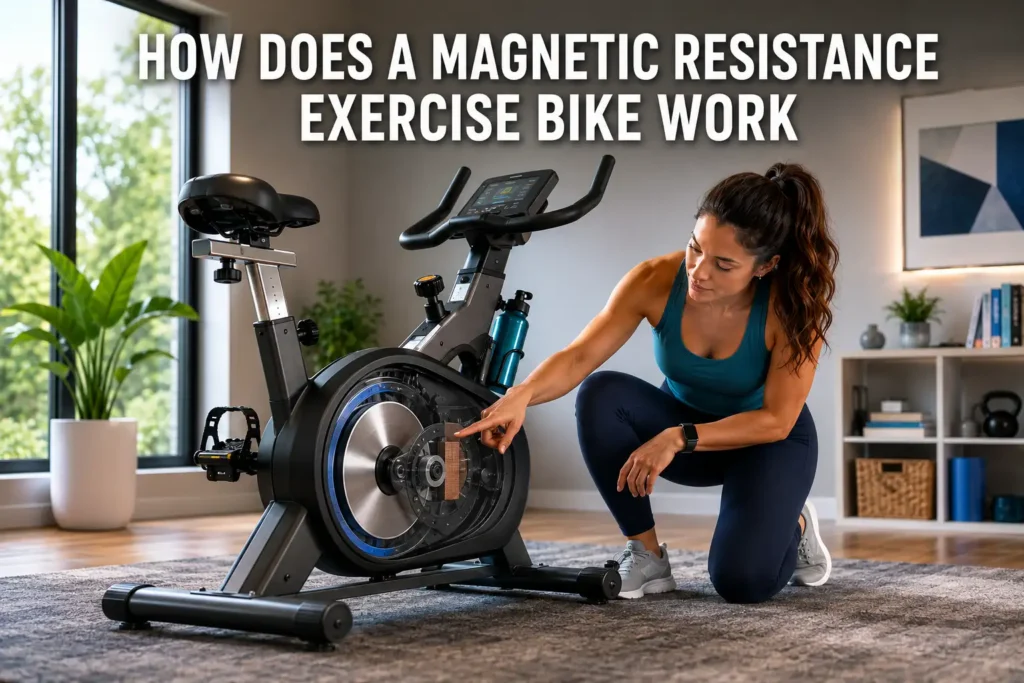
How does a magnetic resistance exercise bike work is one of those questions that sounds complex but has a genuinely satisfying answer. The mechanism relies on electromagnetism to create drag on a spinning flywheel, all without any physical contact between parts. That distinction is what makes magnetic bikes quieter, smoother, and far lower maintenance than friction-based counterparts.
This guide covers the core mechanics, compares magnetic resistance to other designs, reviews the health benefits the research supports, and troubleshoots the most common problems. After testing exercise bikes across multiple categories, we built this breakdown to help you train more effectively and make smarter buying decisions.

How Does a Magnetic Resistance Exercise Bike Work - Core Mechanics
Understanding magnetic resistance begins with a physics concept called eddy currents. When a conductive metal disc, the flywheel, spins near a magnetic field, that field induces circular electric currents inside the metal. Those currents generate a counter-force that resists the flywheel's rotation, and the strength of that counter-force is what you feel as pedaling resistance.

The magnets in a magnetic resistance exercise bike never touch the flywheel. They hover close to it instead. Resistance levels are adjusted by moving the magnets closer to or farther from the flywheel surface. Closer magnets create a stronger field and harder resistance; move them away, and resistance drops almost instantly.
Most bikes adjust resistance through one of two methods. A manual knob physically repositions the magnets. An electronic motor shifts the magnet housing on command from a console or connected app. Electronic adjustment enables programmed workouts, hill simulations, and precise resistance changes mid-ride without interrupting your cadence.
The flywheel itself plays a significant role in ride quality. Heavier flywheels (16 pounds or more) store more rotational momentum, which makes the pedal stroke smoother and more consistent, especially at low resistance. This is why quality magnetic bikes list flywheel weight alongside resistance level counts as a key specification.
Our recumbent bike catalog lists the available resistance specifications for each model.
Our best exercise bike roundup covers both upright and spin models across a range of flywheel weights and magnetic resistance configurations. And if you are comparing magnetic resistance across elliptical trainers, read our best elliptical machine review, which covers how the same eddy-current principle applies to a full-body low-impact cardio format.
What Is a Magnetic Exercise Bike? Types, Formats, and the Exercise Bike Flywheel vs. Magnetic Debate
What is a magnetic exercise bike in practical terms? It is any stationary bike that uses a magnetic braking system rather than friction pads to control resistance. That definition covers three main formats: upright bikes, recumbent bikes, and spin bikes. Recumbent bikes, in particular, differ significantly from the other two formats in seat geometry and use case; my overview of recumbent bike design and applications covers the design, backrest types, and typical clinical applications for riders new to this format.
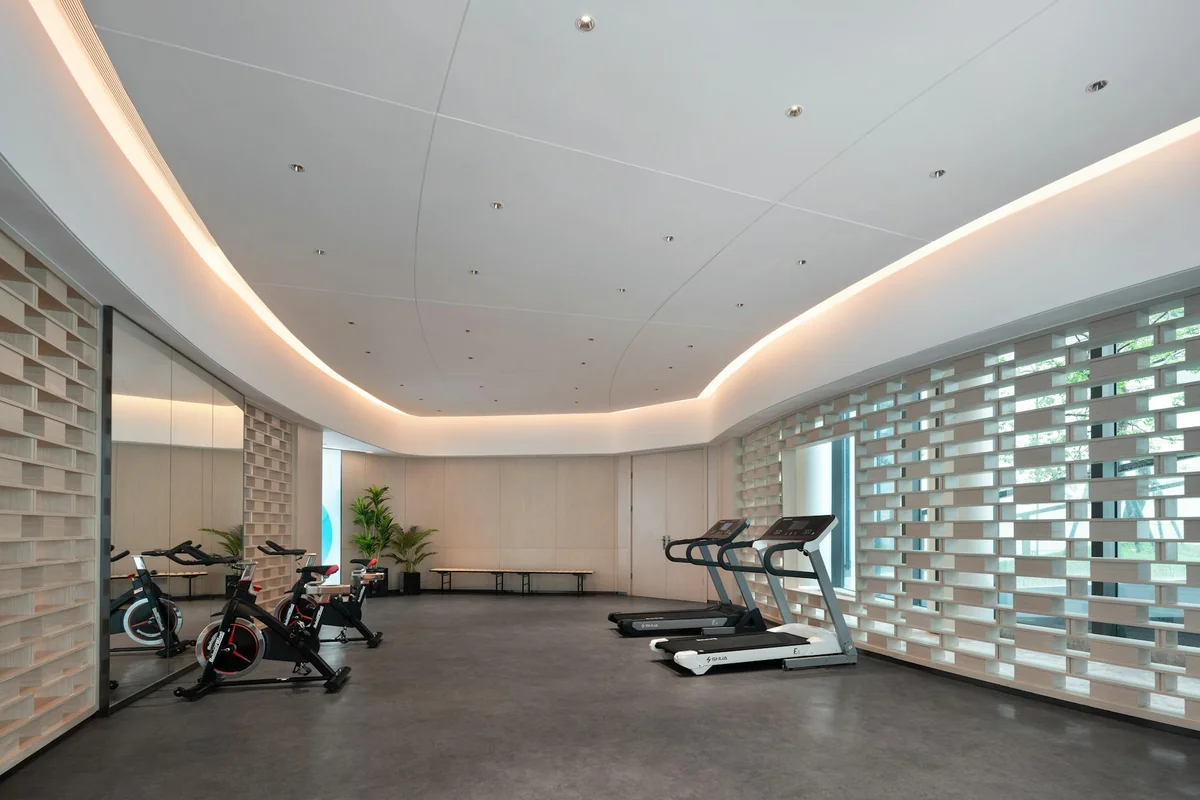
- Upright bikes position you similarly to a standard road bike.
- Recumbent bikes angle the seat back and position the pedals in front, significantly reducing lower back and hip stress.
- Spin bikes use a heavy fixed flywheel with a more aggressive forward lean that mimics road cycling geometry and suits high-intensity training.
The Marcy ME-706 uses a self-charging pedal motor with 24 resistance levels, an example of magnetic-resistance recumbent tech.
Also, most quality spin bikes use both a heavy flywheel and magnetic resistance. The flywheel provides momentum and a smooth pedal stroke feel, while the magnetic system controls the training load. Choosing one over the other is a false trade-off on any well-designed bike.
Magnetic bike resistance now appears across all price tiers, from entry-level folding designs to commercial-grade spin bikes. For compact models specifically, our folding exercise bike roundup covers the top magnetic options in this category. Lower-end models use simple tension-knob systems with 8-16 resistance levels. Higher-end models offer 24-100 levels via electronic adjustment, most useful for HIIT and structured programs. Knowing what a recumbent exercise bike is helps you decide whether upright or recumbent geometry better fits your body mechanics before choosing a resistance system.
Our best under-desk elliptical guide covers how the same magnetic flywheel mechanism applies to compact pedal units built for office use. And for all those who are weighing low-impact cardio options broadly, our elliptical vs treadmill comparison breaks down how magnetic flywheel resistance compares to motorized belt resistance across the two most popular home cardio formats.
Health Benefits of Riding Stationary Bikes with Magnetic Resistance
Stationary bikes with magnetic resistance deliver the same cardiovascular training stimulus as any other high-quality exercise bike. The key advantage is consistency: because magnetic resistance holds steady without friction fade, the intensity you set is the intensity you train at for the full session.
A 2011 systematic review in the Scandinavian Journal of Medicine and Science in Sports found strong evidence that cycling improves cardiovascular fitness and reduces all-cause mortality in middle-aged and older adults (1). Subsequent indoor cycling research has confirmed these effects across a range of training frequencies and intensities.
My guide on why exercise bikes are good for cardio covers the broader health evidence across different training goals and user profiles, from cardiovascular improvements to metabolic adaptations.
A 2019 systematic review published in Medicina analyzed 13 studies involving 372 participants and found that indoor cycling at 2-3 sessions per week produced an 8-10.5% increase in VO2max alongside improvements in blood pressure, HDL cholesterol, and body fat percentage (2).
Results improved further when participants combined training with dietary changes.
Weight management is one of the most common reasons people turn to stationary bikes. A 2024 study in Medicine and Science in Sports and Exercise found that 12-week stationary cycling HIIT programs significantly reduced total body fat, abdominal fat, and visceral fat in adults with overweight (3). Precise resistance control on a magnetic bike makes it easier to sustain the intensity that effective interval work requires.
Endurance markers also improve reliably. An overview of 11 systematic reviews confirmed that exercise training at all intensities robustly increases VO2max, with high-intensity interval protocols showing particular advantage in older and less-fit populations (4). Magnetic resistance bikes are especially suited to HIIT because resistance changes are near-instant, allowing fast transitions between work and recovery intervals.
Our elliptical machine benefits guide compares cardiovascular engagement across major low-impact cardio designs, and our weight loss guide covers intensity benchmarks for fat-loss programming on magnetic resistance equipment.
Magnetic Resistance Exercise Bike Problems and How to Fix Them
Magnetic resistance exercise bike problems are far less common than friction-based issues, but they do occur. Knowing the most likely failure points helps you distinguish a simple home fix from a warranty repair.
- Reduced resistance range. The most common problem is magnets shifting out of alignment when mounting bolts loosen over time. Before assuming a mechanical failure, tighten all visible bolts on the resistance housing and test each level across the full range. This resolves most range-reduction complaints in under five minutes.
- The resistance is stuck at one level. On electronically adjusted bikes, a faulty potentiometer, the sensor that reads knob or dial position, can cause resistance to freeze. If tightening hardware does not help, check whether your console displays an error code. Most manufacturer apps list error codes by model name.
- Noise from the flywheel area. Magnetic bikes are quiet but not silent. Clicking or grinding near the flywheel usually signals a loose flywheel bolt or worn bearing rather than a magnetic system failure. Tighten the flywheel axle nut first; persistent noise after that typically indicates a bearing replacement.
- Complete resistance loss. This happens most often on electronic systems when the motor that moves the magnet housing fails. This repair typically requires a technician. Check your warranty status before scheduling service.
Our elliptical workout guide covers how to adjust resistance settings on magnetic cardio equipment across different training phases, which also helps you identify whether unusual pedal resistance is a calibration issue or a mechanical one.
Getting the Most from Your Stationary Bike with Magnetic Resistance
A stationary bike with magnetic resistance technology works best when you match the design to how you actually plan to train. Understanding how an exercise bike targets muscle groups across upright, recumbent, and spin designs helps narrow which configuration best serves your specific strength or cardio goals. Here is what our testing found matters most:

- Flywheel weight is the most underrated specification. Look for 14 pounds or more for a smooth upright ride. Spin bikes should have 20-30 pounds for a road-cycling feel. Recumbent designs work well at lower flywheel weights because the geometry distributes pedaling force differently.
- Manual vs. electronic adjustment. Manual knob systems are reliable and cost less. For home use without structured classes, a quality manual system is sufficient. For HIIT or streaming platforms like Zwift or iFit, look for Bluetooth-enabled electronic adjustment.
- Drive type. Belt-drive designs are quieter than chain-drive designs. If noise is a concern in a shared space, the small premium for a belt-drive magnetic bike is worth it.
The Schwinn 230 combines 16 magnetic resistance levels with a step-through recumbent frame.
The Body-Solid Best Fitness BFRB1B Recumbent Bike uses this manual dial system with no app or subscription required.
The THERUN Recumbent Elliptical uses eight-level magnetic resistance in a recumbent cross-training format.
A 12-week study of sedentary overweight women training 3 sessions per week on an indoor bike produced significant weight reduction and cardiorespiratory fitness gains with no dietary changes (5). Frequency and consistency matter far more than having the highest-end bike on the market. An 8-week randomized controlled trial also demonstrated that high-intensity cycling significantly reduced waist-to-hip ratio, systolic blood pressure, and LDL cholesterol in middle-aged adults (6).
What muscles an exercise bike works is worth researching alongside your format decision; upright, recumbent, and spin bikes all engage lower-body muscle groups differently based on seating geometry, not just resistance level. Our exercise bike top picks for older adults cover low-impact magnetic resistance designs built for joint-friendly cardio.
Making the Right Call on Your Magnetic Resistance Bike
Magnetic resistance is the most practical home cardio resistance system in 2026. It is quiet, requires minimal maintenance, and stays consistent across the full life of the bike. The eddy-current principle means no friction pads to replace and no performance drop-off over years of use. For riders weighing a stationary bike against full-body cardio alternatives, my recumbent bikes and rowing machines comparison covers how cycling and rowing differ in cardiovascular output, muscle recruitment, and joint loading.
The same quiet, maintenance-free magnetic resistance system applies directly to rowing machines: buyers comparing options in that category can find seven reviewed picks in our guide to the top magnetic rowing machine options.
In our testing, the bikes that stood out were the ones with stable, well-weighted flywheels, well-calibrated level spacing, and quiet belt-drive systems. Research consistently shows meaningful cardiovascular and body composition results from regular indoor cycling, whether sessions run 20 minutes or 60. For riders still deciding between upright and recumbent geometry, my upright versus recumbent exercise bike differences comparison covers the cardiovascular output, muscle emphasis, and joint safety differences that determine which design fits your training profile.
The same evaluation approach applies when choosing a wearable: my guide on fitness tracker features to consider covers the spec differences that determine how accurately a device tracks cycling-specific metrics.
For a seated, low-impact format with back support, our best recumbent exercise bike guide covers the top magnetic recumbent options. For riders managing chronic back pain, our exercise bike roundup for lumbar support covers models ranked by lumbar support design.
FAQs
Is magnetic resistance good on an exercise bike?
Magnetic resistance is one of the best systems available for exercise bikes because it provides smooth, consistent resistance without the friction-based wear that degrades performance over time. The no-contact design means quieter operation, lower maintenance costs, and accurate resistance levels across the full life of the bike.
For a step-by-step look at all the other selection criteria, my exercise bike selection guide covers resistance type alongside seat fit, flywheel weight, and budget tier matching.
Can you lose belly fat by riding a stationary bicycle?
Riding a stationary bicycle can contribute to belly fat reduction when combined with a calorie-controlled diet and consistent training intensity (but spot reduction is not possible, and that’s a common fitness myth people fall for). Research shows that 12-week stationary cycling HIIT programs produce significant reductions in abdominal and visceral fat, particularly when sessions are completed 3 or more times per week (Couvert et al., 2024).
What is better, spin flywheel or magnetic exercise bike?
Spin bikes with heavy flywheels and magnetic resistance systems are not mutually exclusive designs; most quality spin bikes use both simultaneously. A heavy flywheel provides pedal stroke momentum and smoothness, while magnetic resistance controls the training load, and combining them produces the best-riding category of home cardio equipment.
Is 30 minutes of stationary bike the same as 30 minutes of walking?
Thirty minutes on a stationary bike at moderate-to-high intensity burns significantly more calories than 30 minutes of walking at a standard pace. Stationary cycling at moderate effort averages 11-12 kcal per minute on an upright magnetic bike, compared to roughly 4-5 kcal per minute for a 3 MPH walk at equivalent bodyweight.
Is 20 minutes a day on a stationary bike enough?
Twenty minutes daily on a stationary bike produces measurable cardiovascular and fitness improvements, particularly for beginners and deconditioned individuals. Research on VO2max adaptations consistently shows gains from training sessions as short as 20 minutes when performed at sufficient intensity 3-5 times per week (Crowley et al., 2022).
References:
- Oja P, Titze S, Bauman A, et al. Health benefits of cycling: a systematic review. Scand J Med Sci Sports. 2011;21(4):496-509. doi:10.1111/j.1600-0838.2010.01116.x
- Chavarrias M, Carlos-Vivas J, Collado-Mateo D, Pérez-Gómez J. Health benefits of indoor cycling: a systematic review. Medicina (Kaunas). 2019;55(8):452. doi:10.3390/medicina55080452
- Couvert A, Goumy L, Maillard F, et al. Effects of a cycling versus running HIIT program on fat mass loss and gut microbiota composition in men with overweight/obesity. Med Sci Sports Exerc. 2024;56(5):839-850. doi:10.1249/MSS.0000000000003376
- Crowley E, Powell C, Carson BP, Davies RW. The effect of exercise training intensity on VO2max in healthy adults: an overview of systematic reviews and meta-analyses. Transl Sports Med. 2022;2022:9310710. doi:10.1155/2022/9310710
- Bianco A, Bellafiore M, Battaglia G, et al. The effects of indoor cycling training in sedentary overweight women. J Sports Med Phys Fitness. 2010;50(2):159-165. PMID:20585293
- Gordon N, Abbiss CR, Maiorana AJ, et al. High-intensity single-leg cycling improves cardiovascular disease risk factor profile. Med Sci Sports Exerc. 2019;51(11):2234-2242. doi:10.1249/MSS.0000000000002053