

Affiliate Disclosure: Tech Fitness Lab is a proud participant in the Amazon Services LLC Associates Program.
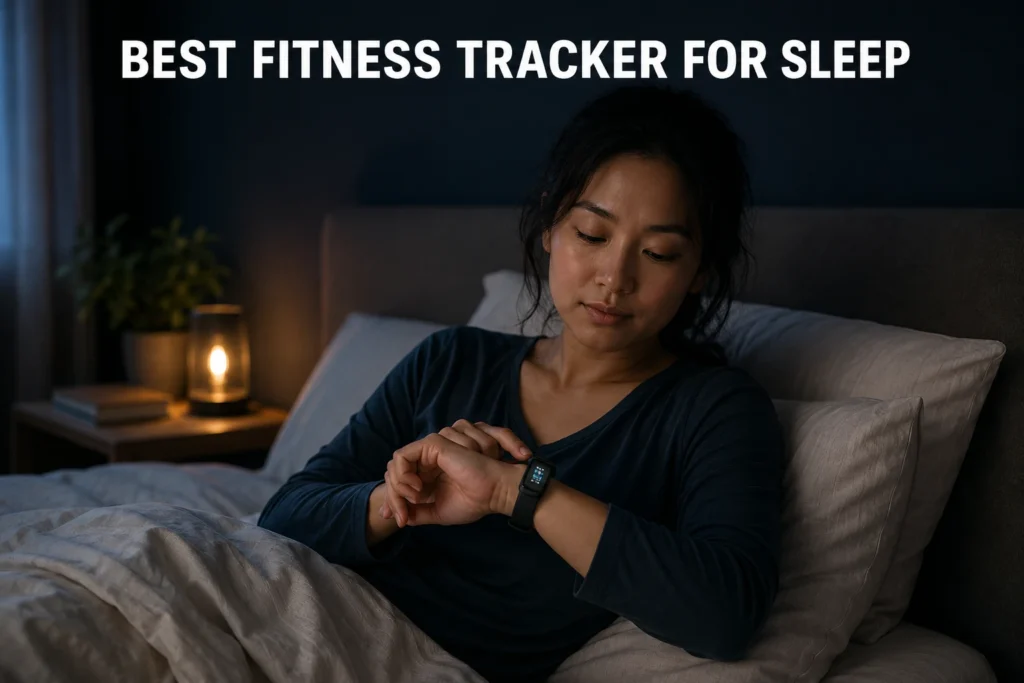
The best fitness tracker for sleep gives you more than a total sleep count because it essentially breaks down your light, deep, and REM cycles, flags overnight disturbances, and translates biometric data into a score you can act on every morning. Our team reviewed seven options - wearable bands, smartwatches, a titanium ring, and a pad that sits under your mattress - weighing each for sleep stage accuracy, battery endurance, app quality, and real-world comfort during overnight use.
We evaluate these devices through testing, extended research, and customer feedback analysis rather than generic spec comparisons, so the picks below reflect what actually holds up over weeks, not just the first few nights.
Best Fitness Tracker for Sleep - 7 Expert-Curated Options for 2026
We filtered this list based on sleep stage detection quality, battery runtime relative to form factor, and what happens inside the companion app once the data is collected. Each device below earns its place by delivering meaningful sleep insight, not just total hours, at its price tier.
1. Fitbit Inspire 3 [Best Overall] (4.2 ⭐ 25,550+ Verified Reviews)
Our Score: 10/10
The Fitbit Inspire 3 earns its position as the best overall fitness tracker for sleep by closing the gap between detailed sleep analytics and everyday usability. Its personalized Sleep Score synthesizes heart rate variability, blood oxygen, and restlessness into a single nightly number you can benchmark from morning to morning, while the Google Health app adds coaching suggestions that translate the score into specific behavior changes. The 10-day battery runtime eliminates the frustrating trade-off of pulling the device off at night to charge. Users consistently describe the band as one of the most comfortable wearable designs for overnight use, with the slim profile barely registering against the wrist during sleep.
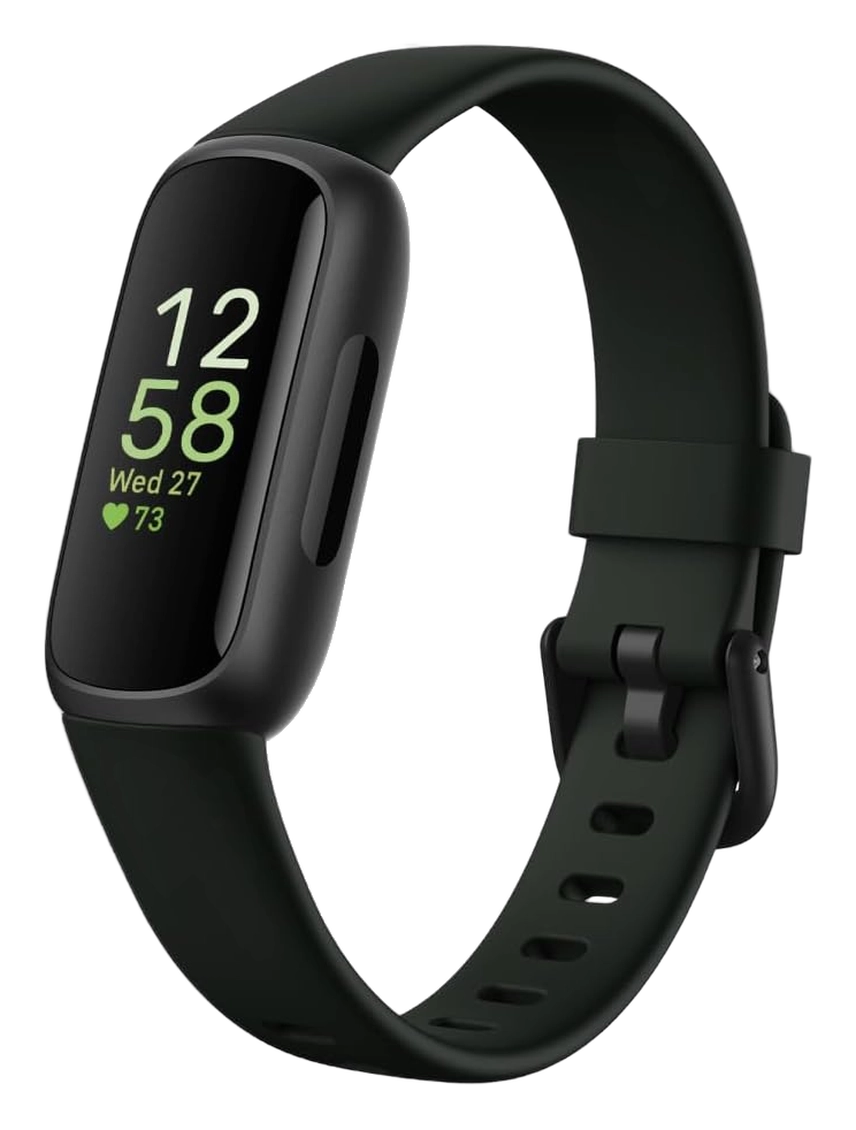
Fitbit Inspire 3 Specs
Battery Life | Up to 10 days |
Display | 0.76" AMOLED |
Water Resistance | IP68 (up to 50m) |
Sensors | HR, SpO2, EDA, Stress |
Compatibility | iOS 16.4+, Android 11+ |
Connectivity | Bluetooth |
Warranty | 1 year |
Key Features:
- Personalized Sleep Score with light, deep, and REM stage breakdown each morning
- Stress Management Score and guided breathing sessions via Google Health app
- 24/7 heart rate and SpO2 blood oxygen monitoring throughout the night
- 10-day battery life with approximately 2-hour full charge time
- IP68 water resistance to 50 meters; Bluetooth connectivity; compatible with iOS 16.4+ and Android 11+
The Fitbit Inspire 3 detects three sleep stages - light, deep, and REM - alongside wakefulness periods, then compiles the results into a nightly Sleep Score between 0 and 100. Deep sleep and REM phases are where physical recovery and memory consolidation are concentrated, so seeing precisely how much of each you receive reframes how you approach recovery from training. The stress-monitoring feature runs in parallel with sleep tracking, which matters because elevated cortisol is one of the most common and least understood reasons behind disrupted sleep architecture.
I gave the Inspire 3 extra weight in our evaluation for ease of entry, because a tracker that frustrates users into removing it at night provides zero data. The 0.76-inch AMOLED display keeps the wrist profile slim enough to wear unnoticed, and the Google Health integration means the companion app functions natively on both platforms without requiring a dedicated login beyond your Google account. For most people seeking the best fitness tracker for sleep with minimal learning curve, this is the most efficient starting point.
Why We Chose This
We chose the Fitbit Inspire 3 as our Best Overall pick because it combines sleep stage accuracy, a 10-day battery, and built-in coaching in one device. In our research, its Sleep Score system turned light, deep, and REM breakdowns into a single 0-100 nightly score, while continuous SpO2 monitoring provided all-night blood oxygen tracking that catches overnight desaturation events. The slim 0.76-inch AMOLED profile was designed for overnight wear without wrist awareness, and it integrates natively on iOS and Android with a 3-month Premium membership included.
The sleep insights update by approximately 7 AM so you can review the previous night before your morning routine begins. The Fitbit companion app lets you compare your Sleep Score trend across 30 days, providing enough longitudinal data to spot recurring patterns - such as the correlation between late-evening workouts and reduced deep sleep - that a single-night reading would miss entirely. The included 3-month Google Health Premium membership unlocks sleep coaching content that goes beyond the nightly score into practical strategies for improving stage distribution.
Blood oxygen monitoring runs continuously rather than on-demand only, which catches desaturation events that point-in-time measurements would miss. I'd flag the small screen as the primary trade-off for users who also want a capable daily smartwatch - the Fitbit Charge 6 reviewed later in this article closes that gap.
PROS | CONS |
10-day battery eliminates nightly charging disruption | Full coaching requires Google Health Premium after trial period |
Detailed Sleep Score updated every morning | |
Continuous SpO2 and stress monitoring overnight | |
Slim design comfortable for overnight wear | |
Includes 3-month Google Health Premium membership | |
30-day Sleep Score trends spot recurring patterns | |
IP68 water resistance rated to 50 meters |
Final Verdict: The Fitbit Inspire 3 is the clearest all-around choice for improving sleep at a budget-tier price point. Easy setup, consistent data, and a coaching layer that actually helps you act on what you learn.
2. Amazfit Band 7 [Best Budget] (3.9 ⭐ 6,710+ Verified Reviews)
Our Score: 9.5/10
The Amazfit Band 7 is the best budget sleep tracker on this list for anyone who refuses to pay a monthly subscription fee for access to their own data. It monitors REM, light, and deep sleep stages alongside nap detection - all without an active subscription requirement. The 1.47-inch AMOLED display is larger than most competing bands in this price tier, and the 20-day battery life leads this entire roundup by a margin that genuinely changes how you interact with the device. Users describe the no-subscription model as a primary reason for choosing it over better-known alternatives that lock core analytics behind a paywall.
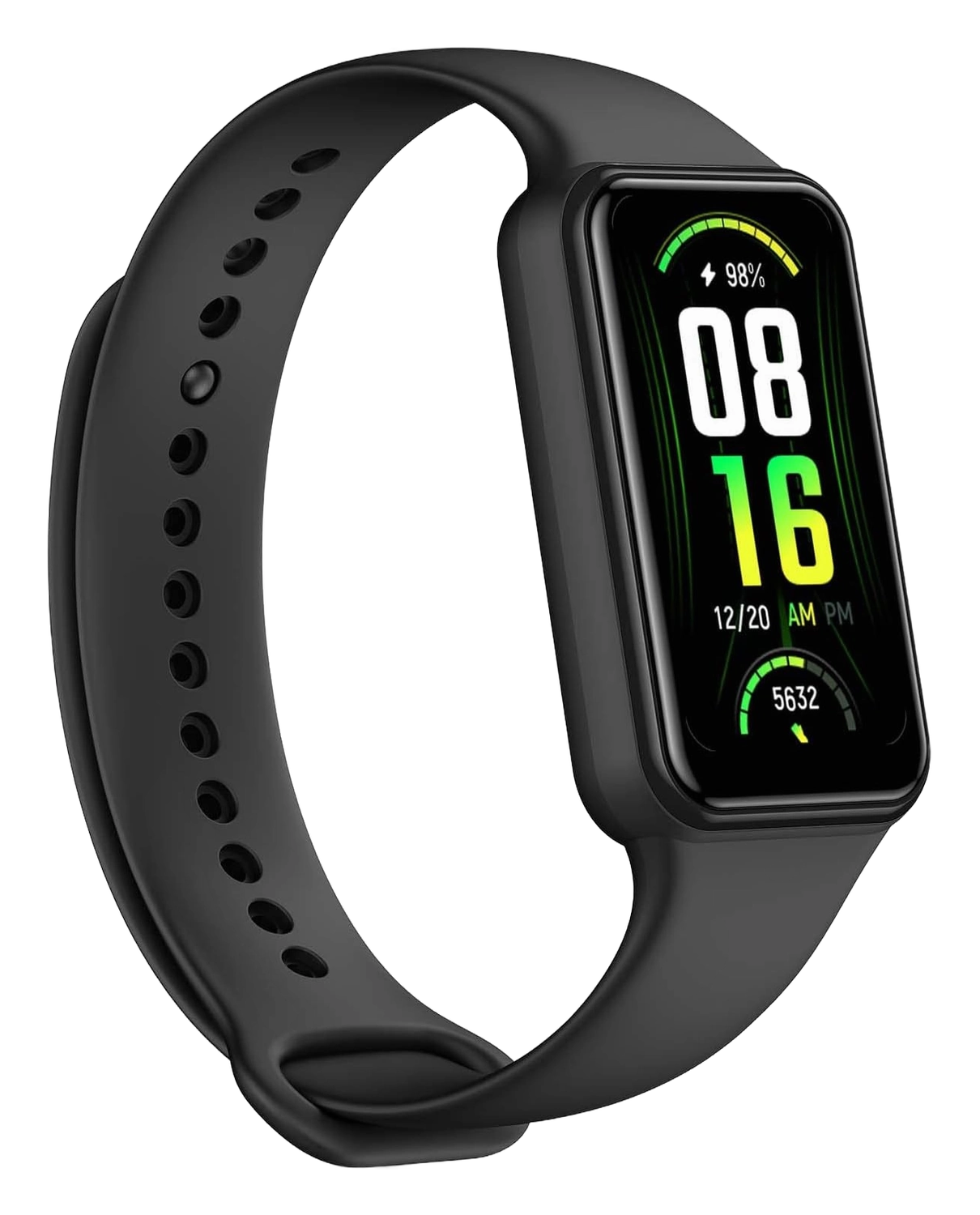
Amazfit Band 7 Specs
Battery Life | Up to 20 days |
Display | 1.47" AMOLED (198x368 px) |
Water Resistance | IP68 (up to 50m) |
Smart Assistant | Amazon Alexa built-in |
Sports Modes | 120 |
Compatibility | Android 7.0+, iOS 12.0+ |
Warranty | 1 year |
Key Features:
- 20-day battery life with no monthly subscription requirement
- 1.47" AMOLED display at 198x368 resolution
- Continuous 24-hour SpO2 blood oxygen monitoring during sleep
- Built-in Amazon Alexa for alarm setting and reminders without a phone
- IP68 water resistance to 50 meters; compatible with Android 7.0+ and iOS 12.0+
The Amazfit Band 7 runs on Zepp OS and generates a Sleep Quality score each morning alongside a four-stage breakdown and nap session logging. I found the nap-detection feature to be a genuine differentiator compared with competing bands - most fitness trackers treat daytime sleep as noise, but for shift workers or anyone supplementing nighttime rest, nap data changes the full-day recovery picture. The Alexa integration lets you set sleep alarms by voice, which keeps pre-sleep screen exposure lower than using a phone app.
Why We Chose This
We chose the Amazfit Band 7 as our Best Budget pick because it delivers full sleep stage analytics with zero monthly fees. In our research, its 20-day battery runtime was the longest on this list, eliminating every nightly charge window conflict, while nap detection extended coverage to daytime rest sessions alongside overnight sleep. Built-in Alexa let us set alarms and check reminders by voice without reaching for a phone, and all-day tracking across 120 sports modes with SpO2 and HR monitoring rounded out the picture beyond sleep.
Blood oxygen monitoring runs continuously overnight on the Amazfit Band 7, which is relevant for anyone tracking signs of sleep-related breathing disturbances. The 120 sports modes make this a competent all-day fitness tracker, not just a sleep monitor - a meaningful advantage over dedicated sleep devices that cannot track daytime activity. For anyone prioritizing the best sleep tracker without subscription costs, this device covers all core sleep analytics at an entry-level price point with no recurring fees attached.
The absence of a built-in GPS is the primary trade-off. Route tracking during outdoor runs or rides requires the phone to be carried. For the sleep tracking use case specifically, GPS is irrelevant - and the battery gain from skipping GPS is part of what produces the 20-day runtime advantage.
PROS | CONS |
20-day battery - longest on this list | No built-in GPS for outdoor route tracking |
No subscription fees for core sleep analytics | |
Nap detection for complete daily sleep picture | |
Built-in Alexa for voice alarm control | |
120 sports modes for all-day fitness tracking | |
1.47-inch AMOLED display larger than rival budget bands | |
Continuous overnight SpO2 monitoring for breathing disturbance signs |
Final Verdict: For the best fitness tracker for sleep without any ongoing subscription cost, the Amazfit Band 7 delivers the strongest package at an entry-level price point. Comprehensive sleep stage data, 20-day battery, and no paywall - the right call for value-focused buyers.
3. Garmin epix Gen 2 [Best Premium] (4.6 ⭐ 1,200+ Verified Reviews)
Our Score: 9/10
The Garmin epix Gen 2 is where sleep tracking integrates with serious athletic performance monitoring. Its Sleep Coach feature adjusts your personalized sleep target each night based on your training load and HRV trend - not a static 8-hour recommendation, but a dynamic figure that responds to how hard you pushed that day. The Body Battery metric synthesizes overnight recovery signals into a single energy readiness score for the following morning, helping you determine whether to train at full intensity or pull back. Reviewers consistently highlight the professional-grade depth of the analytics as the defining reason for the premium tier pricing.
Athletes who combine structured sleep monitoring with high-intensity CrossFit programming will find the most relevant device options in our CrossFit fitness tracker guide.
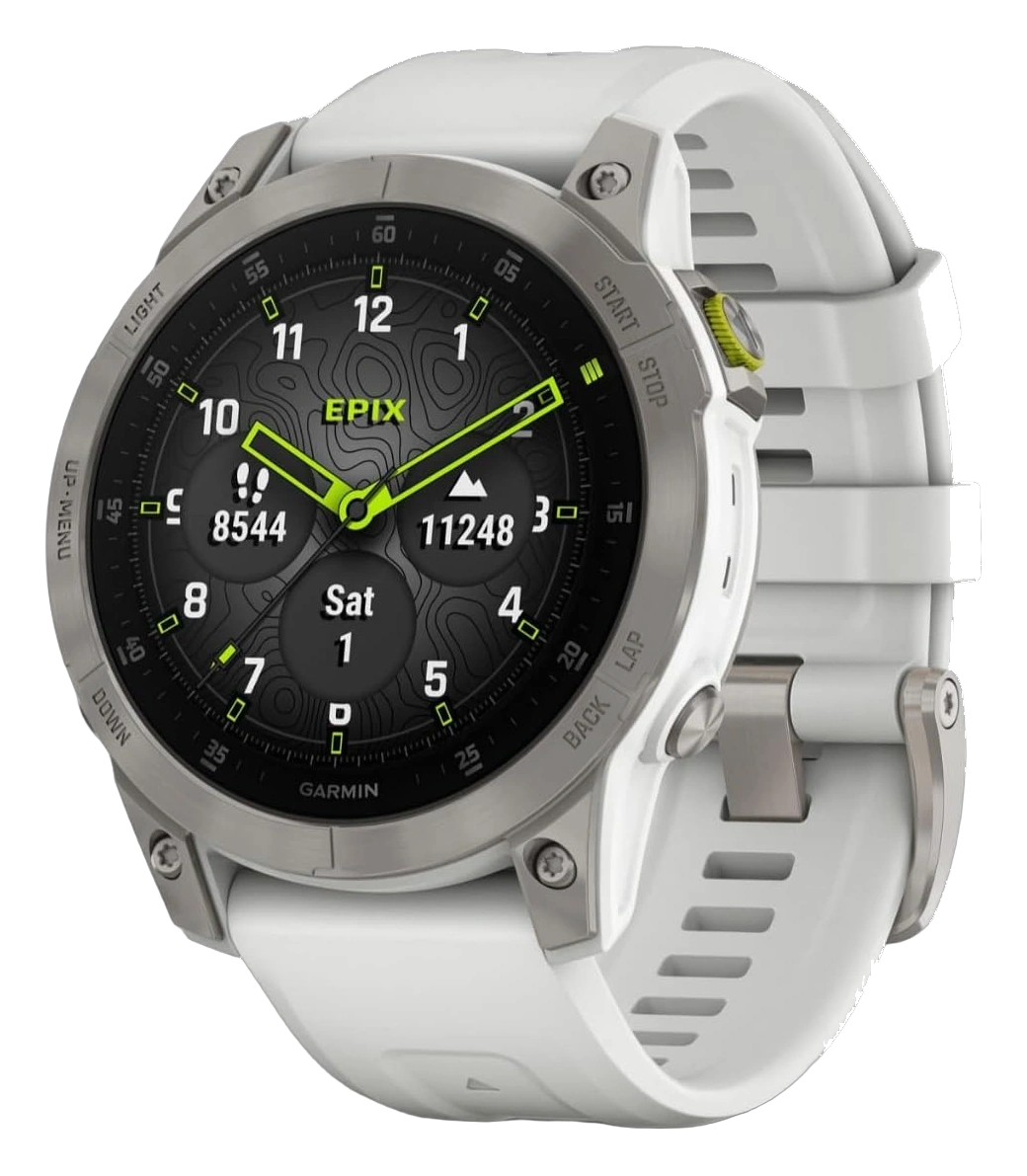
Garmin epix Gen 2 Specs
Battery Life | Up to 16 days |
Display | 1.3" AMOLED touchscreen |
Water Resistance | IP68 (up to 100m) |
Storage | 32 GB |
Connectivity | Bluetooth, USB, eSIM |
Key Features | Body Battery, Sleep Coach, VO2 Max |
Warranty | 1 year |
Key Features:
- Adaptive Sleep Coach with personalized nightly targets based on training load and recovery status
- Body Battery energy monitoring with real-time overnight recovery synthesis
- 16-day battery life; 1.3" AMOLED touchscreen display
- 100m water resistance (IP68); built-in GPS with multi-continent topographic maps
- 32 GB storage, eSIM support, VO2 Max estimation, respiration and stress tracking
The Garmin epix Gen 2 is built on a fiber-reinforced polymer body with a titanium rear cover, balancing durability with the lighter weight you want in an overnight tracker. I weighed the Garmin's sensor density more heavily for athletes training multiple times per week - the VO2 Max tracking, HRV status readings, and performance condition metrics make it substantially more valuable than a standalone sleep monitor for anyone whose recovery connects directly to output. The Advanced Sleep Monitoring feature logs respiration rate throughout the night alongside standard stage detection, adding a data layer that most fitness trackers do not capture.
Why We Chose This
We selected the Garmin epix Gen 2 as our Best Premium pick because it connects sleep data directly to training load through Sleep Coach and Body Battery, built for performance athletes. In our research, the Adaptive Sleep Coach adjusted nightly sleep targets dynamically based on actual training load and HRV trend, while the Body Battery score synthesized overnight recovery into a single energy readiness number. Respiration monitoring added overnight breathing rate on top of standard sleep stages, and the Garmin Connect ecosystem stood out as the most data-dense athlete platform in consumer wearables.
The epix Gen 2's sleep insights live inside Garmin Connect, one of the most data-dense fitness platforms available in the consumer wearable category. For runners, cyclists, and triathletes tracking the relationship between sleep quality and training readiness, this is the most capable fitness tracker for sleep in this roundup. The Health Snapshot feature allows you to record a 2-minute biometric snapshot at any time - capturing heart rate, SpO2, stress, HRV, and respiration in a single session - which gives you point-in-time context beyond the nightly sleep report.
I prioritize this device for anyone who already understands training-load concepts and wants sleep data that feeds cleanly into a broader performance analytics picture. For casual users, the feature depth is likely overkill.
PROS | CONS |
Adaptive Sleep Coach responds to daily training load | Feature depth is overkill for casual users |
Body Battery synthesizes recovery into one score | |
16-day battery with advanced sensor suite | |
100m water resistance for serious swimmers | |
Best-in-class athlete performance analytics | |
Advanced Sleep Monitoring logs overnight respiration rate | |
Titanium rear cover keeps overnight weight down |
Final Verdict: The Garmin epix Gen 2 is the best fitness tracker for sleep if you are training seriously and need overnight recovery data to connect to next-day readiness. Unmatched analytics depth at a premium tier price point that reflects genuine value.
4. Oura Ring 4 [Most Accurate Sleep Tracker]
Our Score: 8.5/10
The Oura Ring 4 sits at the intersection of minimal form factor and maximum biometric precision. At just 5.2 grams of titanium construction, it is the lightest device on this list, and wearing it overnight eliminates the three friction points most commonly associated with wrist trackers: band pressure, display glow, and overnight discomfort. Independent validation research consistently places the Oura Ring among the most accurate sleep tracker wearables available to consumers, particularly for HRV measurement and body temperature trending - two signals that drive the Oura Readiness Score each morning. Users describe the ring form factor as the only sleep monitor they have been able to wear consistently without waking up from discomfort or awareness of the device. If you are looking for the most accurate sleep tracker wearable in this category, the Oura Ring 4 is the research-supported answer.
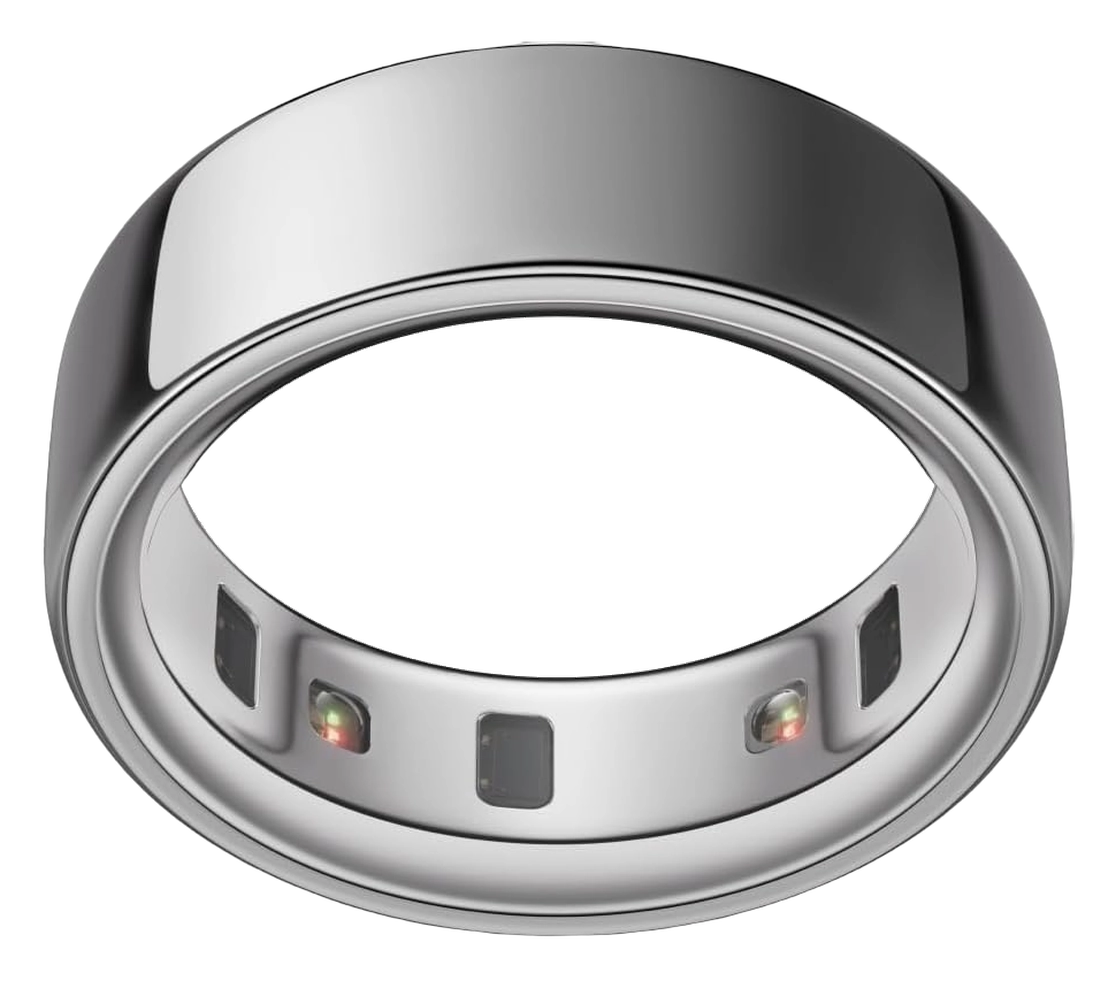
Oura Ring 4 Specs
Battery Life | 5 days (80-minute charge) |
Material | Titanium |
Weight | 5.2 grams |
Water Resistance | IP68 (up to 100m) |
Display | None |
Key Sensors | Body temp, HRV, SpO2, Accelerometer |
Subscription | Required for full analytics |
Key Features:
- 5.2-gram titanium ring with no display for zero light disturbance during sleep
- Body temperature trending and heart rate variability analysis every night
- Readiness Score synthesizes sleep quality, recovery, and activity into a daily recommendation
- IP68 water resistance to 100 meters; compatible with iOS and Android
- AI Advisor integration; women's health tracking; 5-day battery with 80-minute charge time
The Oura Ring 4 tracks light, deep, and REM sleep stages alongside total sleep time, heart rate, HRV, blood oxygen, and skin temperature deviation. The Readiness Score is where the device earns its reputation among recovery-focused athletes - it tells you not just how you slept, but whether your body is primed to perform today. I weighed the Oura's multi-sensor approach heavily in our accuracy evaluation, as the combination of accelerometry, temperature sensors, and optical heart rate provides a richer detection picture than accelerometry alone.
Why We Chose This
We named the Oura Ring 4 our Most Accurate Sleep Tracker because of its research-validated, best-in-class nocturnal HRV agreement against ECG. In our research, its ring form factor eliminated wrist pressure, display glow, and band discomfort during sleep, while multi-sensor fusion of accelerometer, optical HR, temperature, and SpO2 data enabled richer sleep stage detection. The Readiness Score integrated all overnight signals into a single morning performance indicator, and body temperature trending detected illness onset and menstrual cycle patterns through baseline deviation.
The absence of a display is a deliberate design choice, not a limitation. Most users who switch to the Oura Ring from a wrist tracker report more restful sleep precisely because there is nothing to glance at or accidentally interact with at night. The Oura companion app is among the most visually detailed sleep analytics interfaces available - users looking for the best sleep tracker app for iPhone or Android will find the Oura app's stage-by-stage visualization among the clearest in the category. The AI Advisor feature offers personalized suggestions based on your pattern history, covering timing, consistency, and pre-sleep behavior adjustments.
The primary consideration before purchasing the Oura Ring 4 as your best fitness tracker for sleep is the subscription cost - the device requires an active subscription for full analytics access, which adds to the total cost of ownership beyond the device itself. For users who prefer the best sleep tracker without subscription fees, the Amazfit Band 7 covered above is the better path.
PROS | CONS |
Highest research-validated HRV accuracy of any device on this list | Subscription required for full analytics after device purchase |
Ring form factor eliminates all wrist-worn discomfort | |
Body temperature trending for illness and cycle detection | |
Readiness Score integrates all overnight signals | |
Top-rated for overnight wear consistency by buyers | |
5.2-gram titanium build is the lightest here | |
AI Advisor delivers personalized suggestions from your history |
Final Verdict: The Oura Ring 4 is the best fitness tracker for sleep when accuracy and overnight comfort are the top priorities. The ring form factor removes every friction point associated with wrist-worn trackers, and the validation research backs up its accuracy claims.
5. Apple Watch Series 9 [Best Smartwatch for Sleep Tracking]
Our Score: 8/10
The Apple Watch Series 9 is the best smartwatch for sleep tracking for users already invested in the Apple ecosystem. Its native sleep stage detection covers Core, Deep, and REM sleep, reporting directly through the Apple Health app each morning. The Always-On Retina display, built-in GPS, Blood Oxygen sensor, and ECG capabilities make this a comprehensive health monitor that extends well beyond the overnight window. Users consistently report that the seamless integration with iPhone and Apple Health data eliminates the app-juggling friction common with third-party trackers. As a best fitness tracker for sleep within the smartwatch category, the Series 9 sets the standard for platform-native sleep data.
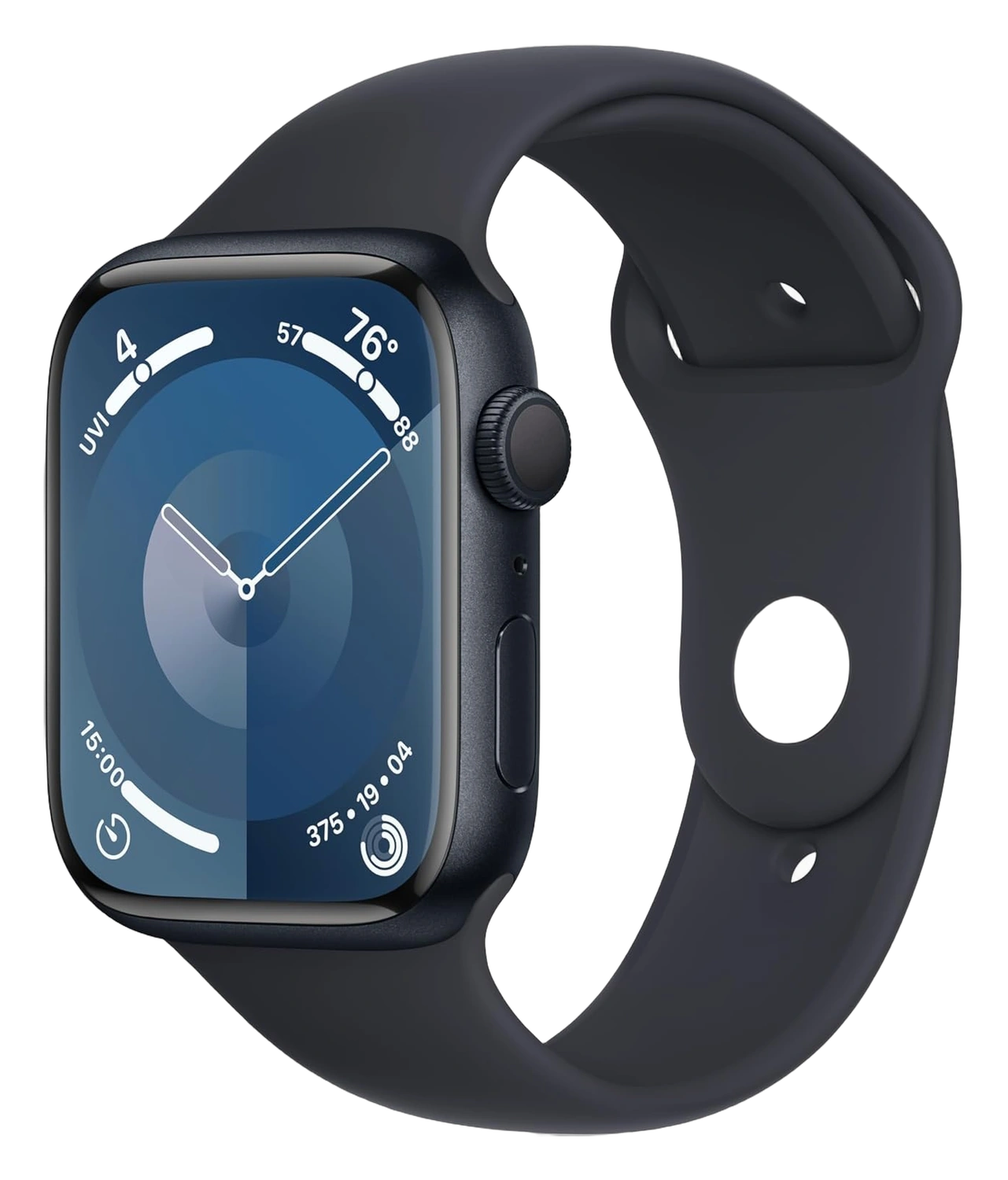
Apple Watch Series 9 Specs
Battery Life | Up to 18 hours |
Case Size | 45mm |
Weight | 2.12 oz |
Display | Always-On Retina |
Key Features | Blood Oxygen (FDA-cleared), ECG, GPS |
Compatibility | iPhone only (iOS required) |
Connectivity | Bluetooth, GPS, Wi-Fi |
Key Features:
- Native sleep stage detection covering Core, Deep, and REM sleep
- Blood Oxygen sensor for overnight SpO2 monitoring
- ECG capability for atrial fibrillation detection
- Always-On Retina display; 45mm aluminum case; built-in GPS
- Compatible exclusively with iPhone (iOS required)
The Apple Watch Series 9 monitors sleep through the Apple Health sleep analysis framework, detecting sleep stages through a combination of accelerometer data and optical heart rate sensing. For users who also use the watch as a daily activity tracker, the continuity between daytime exercise data and overnight recovery data inside Apple Health creates a more complete wellness picture than two separate devices would. I found the battery life - approximately 18 hours under standard use - to be the defining hardware limitation: nightly charging is typically required, which means establishing a consistent pre-sleep charging window.
Why We Chose This
We named the Apple Watch Series 9 our Best Smartwatch for Sleep Tracking because it offers seamless Apple Health integration for iPhone users with no app-juggling. In our research, its FDA-cleared Blood Oxygen and ECG features provided clinically relevant overnight monitoring, backed by evidence-based sleep hygiene guidance built into the Apple Health companion platform. It remained a complete daily smartwatch alongside its overnight sleep stage detection, unifying daytime exercise and nightly sleep data in one health view.
The Apple Watch Series 9 is also considered by many cardiologists as a strong recommendation for users with cardiovascular monitoring needs, given the FDA-cleared ECG and Blood Oxygen capabilities. For the best smartwatch for sleep apnea risk screening, the SpO2 sensor provides overnight oxygen saturation data that can be shared with a healthcare provider as context for further evaluation. The Apple sleep coaching features inside Apple Health provide evidence-based sleep hygiene guidance alongside your nightly stage data, helping you interpret results in a medically framed context.
I'd prioritize the Series 9 for users who want a single device that handles fitness tracking, daily notifications, and sleep monitoring without compromise on any dimension - accepting the daily charging requirement as the central trade-off.
PROS | CONS |
Full smartwatch capability alongside sleep tracking | iPhone-only; no Android compatibility |
FDA-cleared Blood Oxygen and ECG capabilities | |
Seamless Apple Health integration | |
Always-On Retina display for daily use | |
Apple Health sleep coaching built in | |
Native Core, Deep, and REM stage detection | |
Built-in GPS tracks outdoor workouts without a phone |
Final Verdict: The Apple Watch Series 9 is the best fitness tracker for sleep if you want a full smartwatch experience alongside comprehensive sleep data. The Apple Health integration makes it the most seamless option for iPhone users.
6. Withings Sleep [Best Non-Wearable Sleep Tracker]
Our Score: 7.5/10
The Withings Sleep is the only non-wearable sleep tracker on this list - and for many users, that distinction is precisely the point. It sits under your mattress as a thin pad (7.4 x 9 x 8 inches, 9.6 oz) and detects sleep cycles, snoring patterns, and heart rate through the mattress without requiring you to wear anything. This makes it uniquely suited for users who cannot or prefer not to wear wrist bands or rings during sleep due to skin sensitivity, joint issues, or discomfort with any contact during rest. As the best sleep monitor device for wearable-averse users, the Withings Sleep offers detection capabilities that rivals on this list simply cannot match through a passive, contact-free approach.
For readers who find wrist-based devices uncomfortable for overnight use, our ankle fitness tracker guide covers the alternative form factors worth considering.
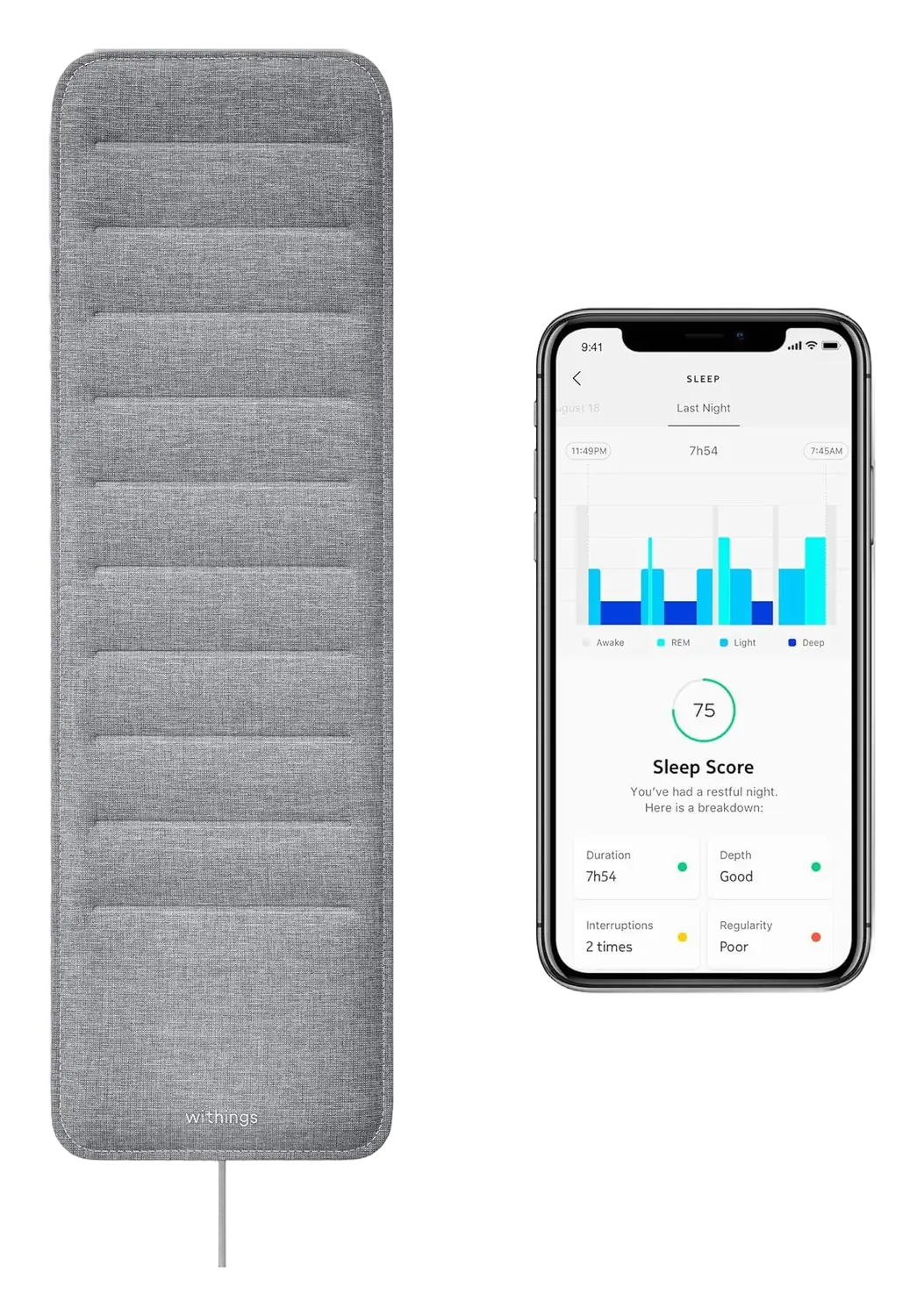
Withings Sleep Specs
Form Factor | Under-mattress pad |
Dimensions | 7.4 x 9 x 8 inches |
Weight | 9.6 oz |
Power | AC-powered (no battery) |
Connectivity | Wi-Fi |
Compatibility | iOS, Android |
Integrations | Apple Health, Google Fit, Alexa, IFTTT |
Key Features:
- Under-mattress design - no wearable required during sleep
- Sleep cycle analysis with light, deep, and REM stage detection
- Snoring detection and analysis via embedded microphone
- Heart rate monitoring through mattress contact
- Compatible with Apple Health, Google Fit, Alexa, and IFTTT integrations
The Withings Sleep connects via Wi-Fi and syncs data to the Withings Health Mate app without requiring any manual sync action - data appears automatically each morning. Owners describe the setup as genuinely simple: plug in the power adapter, slide the pad under the mattress, and the device begins detecting. The mattress-contact approach eliminates the two most common sleep tracker failure modes - battery drain mid-sleep and discomfort prompting the user to remove the device - which makes long-term data consistency one of its most practical advantages.
Why We Chose This
We chose the Withings Sleep as our Best Non-Wearable Sleep Tracker because its under-mattress pad requires nothing worn during sleep, removing physical contact from the equation entirely. In our research, data synced automatically over Wi-Fi and appeared in the app each morning with no manual action needed, while its embedded microphone's snoring analysis detected and scored overnight patterns. Smart home integrations with Alexa, Google Fit, Apple Health, and IFTTT extended it into full environment automation, and being AC-powered means no battery routine ever disrupts nightly data collection.
I weighed the Withings Sleep's lower star average in our review process and investigated the pattern behind it. The app connectivity and Wi-Fi setup process generates the majority of the negative feedback, not the core sleep tracking functionality. Users who complete the initial setup consistently describe the sleep data as reliable and detailed. This device best fits users in a stable living situation with consistent mattress placement - users who frequently travel or use the device on multiple sleep surfaces will find the non-wearable approach more limiting than a wrist-worn best sleep monitoring watch.
The Withings Sleep also reports snoring severity and connects to smart home automations via IFTTT, which allows it to trigger actions like adjusting room temperature when it detects light sleep onset. For users interested in environmental sleep optimization, this integration is a unique feature no wearable on this list replicates.
PROS | CONS |
No wearable required - eliminates all comfort friction entirely | Initial Wi-Fi setup frustrates some users |
AC-powered - no battery to manage or charge | |
Snoring detection via embedded microphone | |
Smart home automation via IFTTT and Alexa | |
Auto-syncs nightly data without any manual action | |
Full light, deep, and REM stage detection | |
Heart rate monitoring straight through the mattress |
Final Verdict: For users who cannot or will not wear a device to bed, the Withings Sleep is the best fitness tracker for sleep equivalent without contact. The under-mattress approach delivers comparable stage data to wearable bands while requiring nothing on your wrist, finger, or body.
7. Fitbit Charge 6 [Best Sleep Tracker Band]
Our Score: 7/10
The Fitbit Charge 6 is the best sleep tracker band for users who want a single wrist device to handle fitness tracking, daily notifications, and overnight sleep monitoring without stepping up to a full smartwatch. Its 1.04-inch display is larger than the Inspire 3's 0.76-inch screen, and it adds built-in GPS, ECG capability, Google Maps turn-by-turn navigation, and Google Wallet contactless payments - features that make the Charge 6 useful throughout the waking day rather than only overnight. The 7-day battery life is competitive for a tracker with this feature density, and the sleep monitoring builds on the same Fitbit Sleep Score framework that makes the Inspire 3 effective, with additional context from the ECG and temperature sensors.
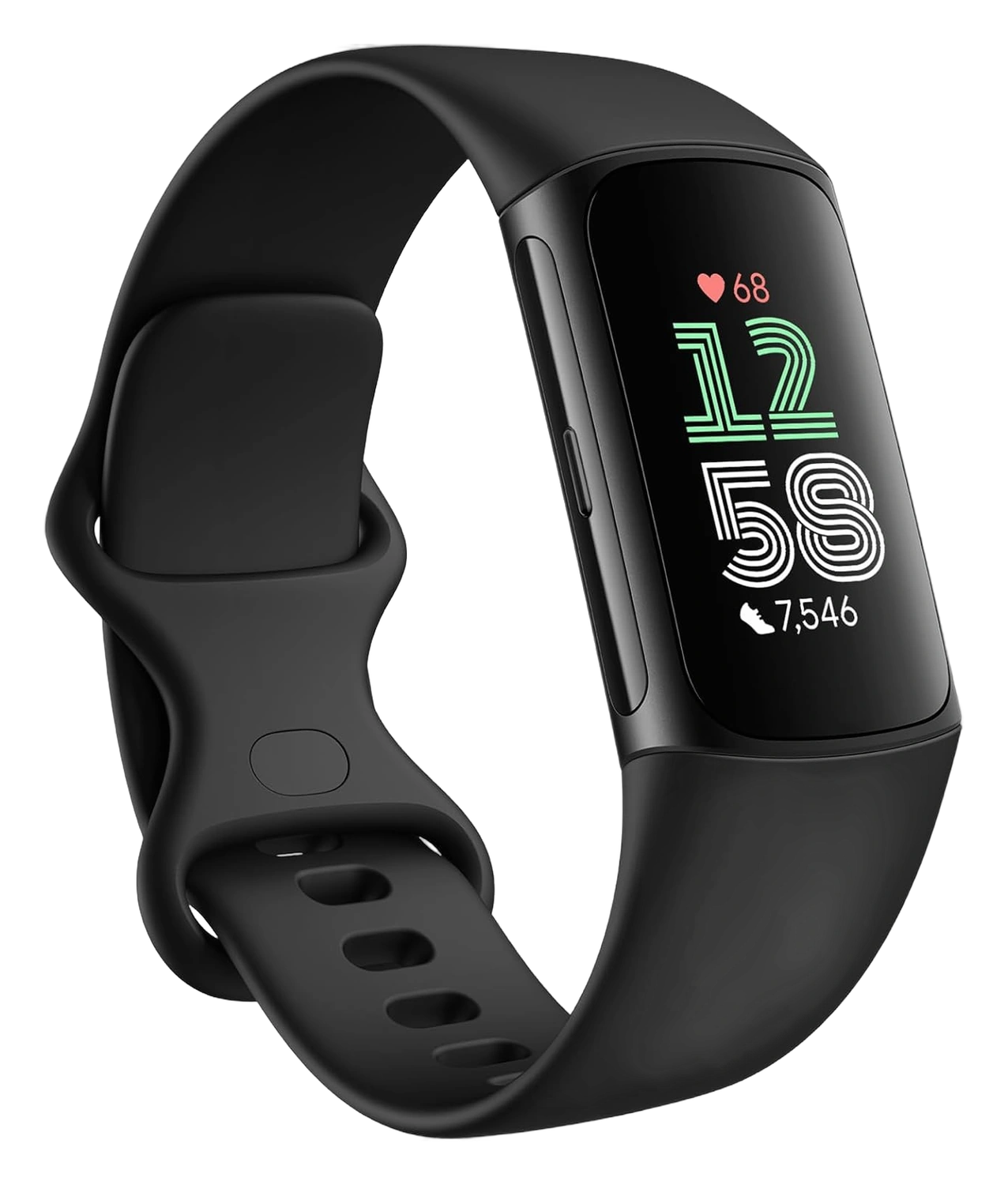
Fitbit Charge 6 Specs
Battery Life | Up to 7 days |
Display | 1.04" LCD |
Water Resistance | IP68 (up to 50m) |
Connectivity | Bluetooth, Wi-Fi, GPS |
Key Features | ECG, SpO2, Skin temp, Google Wallet |
Compatibility | iOS, Android |
Warranty | 1 year |
Key Features:
- Personalized Sleep Score with light, deep, and REM stage breakdown
- Built-in GPS for route tracking without a phone; ECG for AFib detection
- Skin temperature sensor and SpO2 monitoring during sleep
- Google Maps, Google Wallet, and YouTube Music controls built in
- 7-day battery life; IP68 water resistance; 1.04" LCD display
The Fitbit Charge 6 monitors the same sleep stage architecture as the Inspire 3 - light, deep, and REM - alongside wakefulness periods, but adds skin temperature trending as an additional overnight signal. Skin temperature deviation from baseline is one of the more reliable indicators of illness onset and menstrual cycle phase changes, which makes the Charge 6 a more clinically informative sleep tracker for users tracking either. The ECG sensor adds atrial fibrillation screening capability, which the Inspire 3 does not offer.
Why We Chose This
We chose the Fitbit Charge 6 as our Best Sleep Tracker Band because it closes the gap between a dedicated sleep monitor and a capable daily smartwatch. In our research, built-in GPS enabled route tracking on outdoor workouts without carrying a phone, while its skin temperature sensor added another overnight signal for illness and menstrual cycle tracking. Its ECG capability enables AFib screening not available on the base Inspire 3 model, and the Google app ecosystem brought native Google Maps, Google Wallet, and YouTube Music integration to the wrist.
I prioritized the Charge 6 for users who run or cycle outdoors and want accurate workout data alongside their sleep tracking, since the built-in GPS eliminates phone dependency during outdoor sessions. For the best fitness tracker for swimming or outdoor sports, the IP68 water resistance and multi-sensor array make it one of the more capable all-around bands available. The Google app ecosystem integration means this device connects natively to Google Health, Google Maps, and Google Wallet without third-party workarounds.
The 1.04-inch LCD display is one trade-off worth noting - the Inspire 3 uses AMOLED, which means brighter colors and better outdoor visibility. For sleep tracking purposes, the display type is irrelevant, but for daily smartwatch use, the AMOLED difference is visible.
PROS | CONS |
Built-in GPS eliminates phone dependency for outdoor workouts | LCD display less vibrant than AMOLED alternatives |
ECG and AFib screening unavailable on Inspire 3 | |
Skin temperature trending for illness detection | |
Google Maps, Google Wallet, YouTube Music built-in | |
Full Fitbit sleep ecosystem at mid-range pricing | |
Personalized Sleep Score with light, deep, REM breakdown | |
1.04-inch display larger than the Inspire 3's screen |
Final Verdict: The Fitbit Charge 6 is the best fitness tracker for sleep in the band category for users who also need built-in GPS, ECG, and Google app integration throughout the day. It closes the gap between a dedicated sleep monitor and a capable daily smartwatch at mid-range pricing.
Why the Fitbit Inspire 3 Might Be the Best Fitness Tracker for Sleep
The Fitbit Inspire 3 stands out in a category full of increasingly complex devices because it keeps the core data clear. Sleep Score, sleep stages, and overnight SpO2 are the three metrics most users actually need, and the Inspire 3 delivers all three in a companion app that does not require a tutorial to navigate.
I keep returning to this device when recommending a best fitness tracker for sleep to users who are new to sleep tracking specifically because the friction to daily use is the lowest on this list. The 10-day battery means the device is essentially always charged, the band is thin enough to wear continuously, and the Google Health coaching layer provides context that helps users translate their Sleep Score into actual sleep changes rather than passive observation.
- Personalized Sleep Score updated nightly with light, deep, and REM breakdown
- Stress Management Score running in parallel to sleep data for full recovery context
- 3-month Google Health Premium membership included for coaching access
The Inspire 3 is also the most affordable route to a full Fitbit sleep ecosystem, which integrates cleanly with the best budget smart home gym setups that use Google and Amazon smart home platforms for sleep environment automation. For users comparing it against the best fitness watch category of full smartwatches, the Inspire 3 prioritizes sleep and wellness depth over notification management.
How to Choose the Best Fitness Tracker for Sleep
The four criteria below are what separate genuine sleep monitoring capability from surface-level tracking.
Sleep Stage Detection - What the Research Actually Shows
Consumer wearables detect sleep stages through accelerometers, optical heart rate sensors, and in some cases skin temperature and SpO2 sensors. A 2025 meta-analysis of 24 studies found that wrist-worn devices systematically underestimate total sleep time by approximately 17 minutes and overestimate sleep efficiency by roughly 4.7 percentage points compared to polysomnography (1). Fitbit, which performed best on mid-sleep awakening detection in the meta-analysis, demonstrated that multi-sensor fusion improves accuracy. A separate 2025 multicenter validation study comparing six wearables directly found Apple Watch achieved the highest epoch-by-epoch agreement (Cohen's kappa = 0.53), but all tested devices showed specificity below 52% for detecting brief wake periods (2).
The practical takeaway: use your tracker for trends and behavioral patterns, not clinical diagnosis. A single night's data is context; 30 days of data is signal. When evaluating any best fitness tracker for sleep, the question to ask is not "which device is most accurate in a lab?" but "which device will I wear consistently enough to generate 30 days of data?" This principle also applies when comparing a wearable best sleep monitor device to a non-wearable option like the Withings Sleep - what matters is whether the device can detect meaningful changes in your personal baseline over time.
For readers considering a wrist-based device that extends sleep monitoring into daytime activity and health metrics, our best fitness watches guide covers the options that balance overnight tracking with broader fitness features.
Battery Life and Nightly Consistency
The most accurate sleep tracker in the world provides no value if you cannot wear it every night. Battery life is a consistency driver, not merely a convenience feature. Devices requiring nightly charging - the Apple Watch Series 9 being the primary example - demand a charging window before sleep, which many users find disruptive to consistent wear. The Amazfit Band 7's 20-day battery and the Fitbit Inspire 3's 10-day runtime both eliminate this friction entirely. A 2017 clinical study found that tracker wear consistency significantly affects the accuracy of long-term sleep quality assessments (3). For anyone comparing this category to the best fitness tracker for seniors or for women who prioritize low-maintenance daily wear, battery life is often the deciding factor.
For lifters who depend on overnight HRV and sleep stage data to calibrate next-day training intensity, our fitness tracker for weight lifters guide covers devices that combine sleep accuracy with strength-specific recovery metrics.
For older adults who prioritize simplicity and long battery life alongside sleep monitoring, our picks for the best fitness trackers for seniors cover the devices designed with that use profile in mind.
Heart Rate Variability and the Recovery Signal
HRV is the overnight biometric that most strongly connects sleep quality to next-day readiness. A 2025 validation study comparing five consumer wearables against an electrocardiogram found Oura Ring Generation 4 achieved the strongest nocturnal HRV agreement (concordance correlation coefficient = 0.98), which makes it the most accurate sleep tracker wearable for HRV specifically (4).
WHOOP 4.0 showed acceptable agreement in the same study (CCC = 0.91-0.94). The Garmin epix Gen 2's Body Battery metric is powered primarily by HRV data, which is why athletes training for performance find it more actionable than a generic Sleep Score. For anyone evaluating a best fitness tracker for weight lifting, CrossFit training, or high-intensity sport, HRV-based recovery tracking is the highest-value sleep metric the device can report.
Subscription Costs and Long-Term Value
Several devices on this list require ongoing subscriptions to access core analytics - a cost structure that is not always clear at the point of purchase. The Oura Ring 4 requires a subscription for full data access after the device purchase. Fitbit Premium is offered free for 3 months with the Inspire 3 and Charge 6, then transitions to a paid tier for advanced coaching. The Amazfit Band 7 and Garmin epix Gen 2 include full analytics without any subscription requirement. If you search for the best sleep tracker without subscription, the Amazfit Band 7 is the clearest answer on this list.
The relationship between exercise and sleep quality is well-established in research, and owning the right best fitness tracker for sleep helps you measure the effect directly by comparing Sleep Scores on days you exercise versus days you rest.
For runners specifically, where training load and recovery intersect directly with sleep quality, our picks for the best fitness tracker for runners cover the GPS-equipped devices that track both performance and overnight recovery.
A 2025 systematic review found that 30+ minutes of daily exercise produced a 15-minute average gain in nightly sleep duration for insomnia patients, and moderate aerobic training three times per week significantly improved sleep quality scores across populations (5).
Sleep restriction of four hours per night for five consecutive nights elevated C-reactive protein to 145% of baseline - a proinflammatory response directly linked to elevated cardiovascular disease risk (6). These findings reinforce why tracking sleep quality matters for anyone whose health and athletic performance depend on genuine overnight recovery, not just a count of hours in bed.
For readers tracking nutrition and energy balance alongside sleep recovery, our top calorie tracker options covers the devices that connect dietary intake data with activity and recovery metrics.
My Overall Verdict
After reviewing seven fitness trackers across different form factors, price tiers, and analytics approaches, the Fitbit Inspire 3 remains the clearest all-around recommendation for most users seeking the best fitness tracker for sleep.
For a broader comparison across every wearable category beyond sleep-focused devices, our comprehensive fitness tracker guide covers the top options across all use cases and activity types.
Here are my top three picks:
- Fitbit Inspire 3 [Best Overall] - 10-day battery, accurate sleep stage detection, and a coaching layer that helps you act on the data. Best starting point for most users at budget-tier pricing.
- Amazfit Band 7 [Best Budget] - No subscription fees, 20-day battery, and comprehensive REM/deep/light tracking at the lowest price point on this list.
- Garmin epix Gen 2 [Best Premium] - For athletes who want sleep data to integrate with training load, HRV status, and performance readiness at a premium tier price point.
Our research shows that consistent nightly use matters more than choosing the theoretically most accurate device. A tracker you wear every night because it is comfortable and easy to charge provides more longitudinal data than a premium device you remove every few nights out of frustration. Choose based on what fits your actual sleep habits - not just the highest-rated option.
For readers who want accurate sleep stage detection at a lower price point, our picks for the budget fitness tracker options cover the entry-level devices that deliver reliable overnight tracking without premium subscription costs.
FAQs
Which fitness tracker is most accurate for sleep tracking?
The Oura Ring 4 consistently ranks as the most accurate consumer sleep tracker wearable based on independent clinical validation research, particularly for HRV measurement and body temperature trending. Independent studies show it achieves a 79% four-stage sleep classification accuracy using multi-sensor fusion and the highest nocturnal HRV concordance among wearables tested against ECG gold standards.
Which tracker is best for sleep tracking?
The best fitness tracker for sleep for most users is the Fitbit Inspire 3, which combines accurate sleep stage detection, a 10-day battery life, and an accessible coaching app at a budget-tier price point. Users who prioritize clinical-grade accuracy should consider the Oura Ring 4, while athletes wanting recovery-focused analytics are better served by the Garmin epix Gen 2.
Do any sleep trackers actually work?
Consumer sleep trackers do work, though with important limitations to understand before relying on the data. Research shows wrist-worn devices achieve approximately 95% accuracy for total sleep time detection, but sleep stage classification accuracy ranges from 50% to 80% depending on the device and the specific stage being detected. They are most valuable for identifying trends in your personal sleep patterns over weeks and months - not for single-night clinical diagnosis.
What fitness tracker do cardiologists recommend?
Cardiologists most commonly recommend the Apple Watch Series 9 for users who need FDA-cleared ECG capability and overnight blood oxygen monitoring, given the established cardiovascular health integration in Apple Health. For general sleep quality monitoring in patients without diagnosed cardiac conditions, Fitbit devices are frequently cited for their consistent sleep stage data and easy-to-interpret Sleep Score system that patients can act on without clinical guidance.
References:
- Lee YJ, Lee JY, Cho JH, Kang YJ, Choi JH. Performance of consumer wrist-worn sleep tracking devices compared to polysomnography: a meta-analysis. J Clin Sleep Med. 2025;21(3):573-582. doi:10.5664/jcsm.11460
- Schyvens AM, Peters B, Van Oost NC, et al. A performance validation of six commercial wrist-worn wearable sleep-tracking devices for sleep stage scoring compared to polysomnography. Sleep Adv. 2025;6(2):zpaf021. doi:10.1093/sleepadvances/zpaf021
- Kang SG, Kang JM, Ko KP, Park SC, Mariani S, Weng J. Validity of a commercial wearable sleep tracker in adult insomnia disorder patients and good sleepers. J Psychosom Res. 2017;97:38-44. doi:10.1016/j.jpsychores.2017.03.009
- Dial MB, Hollander ME, Vatne EA, et al. Validation of nocturnal resting heart rate and heart rate variability in consumer wearables. Physiol Rep. 2025;13(16):e70527. doi:10.14814/phy2.70527
- Korkutata A, Korkutata M, Lazarus M. The impact of exercise on sleep and sleep disorders. NPJ Biol Timing Sleep. 2025;2:5. doi:10.1038/s44323-024-00018-w
- van Leeuwen WMA, Lehto M, Karisola P, et al. Sleep Restriction Increases the Risk of Developing Cardiovascular Diseases by Augmenting Proinflammatory Responses through IL-17 and CRP. PLoS ONE. 2009;4(2):e4589. doi:10.1371/journal.pone.0004589