
Teeter FreeStep Recumbent Cross Trainer
The Teeter FreeStep swaps the pedaling motion of a normal recumbent bike for a seated stepping stride, built around the same physical therapy technology Teeter licensed from commercial rehab equipment. If your knees, hips, or lower back cut your cardio sessions short, this machine is designed around exactly that limitation. Below is the full teeter freestep review: exact specs pulled from the product listing, the honest cons owners raise most often, and a clear look at how it stacks up against Teeter's pricier LT3 and LT7 tiers plus three recumbent bikes from our own catalog.
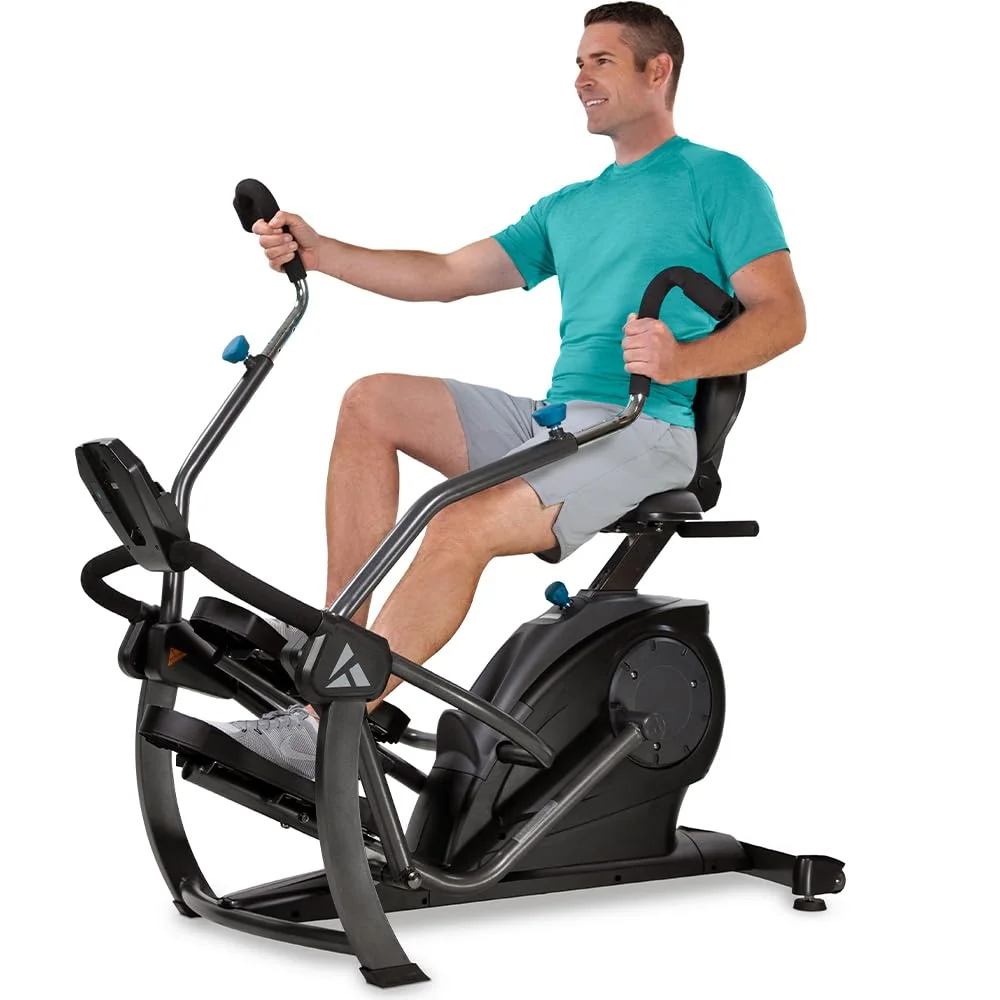

- Seated stepping motion is genuinely easier on knees, hips, and lower back than a bike's pedal stroke
- 13 levels of quiet magnetic resistance adjust from rehab-gentle to a real cardio push
- Dual power motion works arms and legs together for a full-body workout in one machine
- Free Teeter Move app includes trainer-led classes with no subscription required
- Transport wheels and a water bottle holder make it practical to store in a small apartment
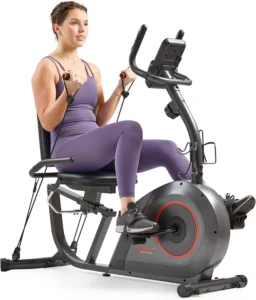
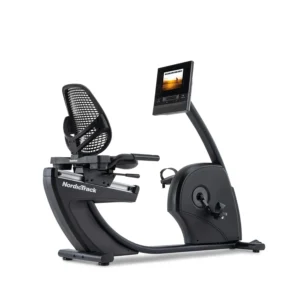
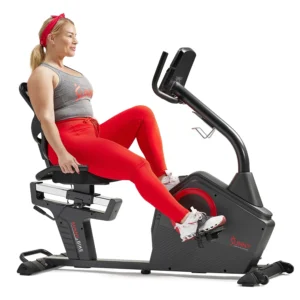
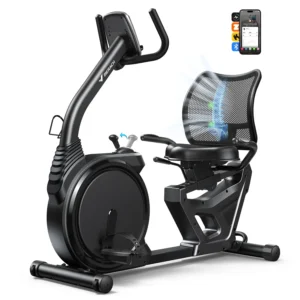
Here's how this pick stacks up within our recumbent bike lineup: Beats the Schwinn 290 on joint comfort, though the Schwinn's 330 lb capacity and 25 resistance levels win on raw specs., Costs a fraction of the NuStep T-series while using a comparable stepping mechanism, just with a lower 300 lb capacity and a lighter-duty build., Sits well above the MERACH on price, but the seated PT-style motion is a genuinely different exercise than the MERACH's standard pedaling..
Which rider are you?
From this page to your first ride
Unbox and sort hardware
Lay out the frame, seat, pedals, and handle assemblies using the BILT app's parts checklist before you start turning any bolts.
Bolt the frame and base
Most of teeter freestep assembly time goes into the base and column. Watch for the elbow guard, the one part that gave a reviewer trouble.
Attach seat, pedals, and console
The seat clicks onto its rail, the pedals thread onto the crank arms, and the console snaps in without extra tools.
Pair the Teeter Move app
Download the free app, connect over Bluetooth if your phone prompts for it, and start a beginner class to test all 13 resistance levels.
Why the FreeStep wins its class

A motion competitors don't have
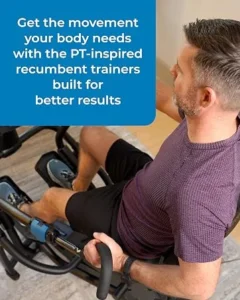
Most recumbent machines at this price pedal in a circle. The FreeStep's licensed PT stride is a genuinely different mechanism, not a marketing label stuck on the same motion.
Real clinical backing
The 93% easier-on-joints and 17.4% higher calorie burn figures trace to a Colorado Center for Health & Sport Science comparison study against recumbent bikes, cited identically by Teeter and by Amazon's own product content.
A brand that outlasts the warranty period
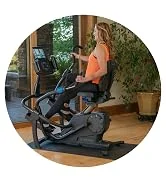
Teeter has built joint-friendly fitness equipment for over 40 years, and US-based support backs the frame and mechanical warranty.
What owners keep saying
We read through the verified Amazon reviews for this unit before writing this page, rather than lean on a single quote. Two themes stand out: buyers with joint pain or limited mobility say the stepping motion feels noticeably gentler than a bike, and one reviewer, a 90-year-old heart attack survivor, credits it with keeping her active on days a walker is otherwise needed. Build quality gets praise too, with owners describing the frame as sturdy and the resistance as smooth and quiet. The complaints cluster around two things: assembly ran long for at least one buyer because of a fiddly elbow guard, and one owner with limited mobility found getting on and off the seat harder than expected, worth weighing given that's exactly the audience the machine targets. Worth flagging: Teeter's current site organizes the FreeStep line into separate LT1, LT3, and LT7 tiers, and this unit's spec sheet lines up with the entry tier's features.
The honest cons
- 300 lb weight capacity is lower than Teeter's own LT7 tier and some rival recumbent bikes at this price
- Entry-level seat and pedals lack the ComfortSelect padding and SureGrip texture Teeter adds on the LT3, and the larger ComfortMax seat on the LT7
- Getting on and off the seat can be awkward for users with very limited hip or knee mobility, the exact group most likely to buy it
- Assembly can run long even with the guided BILT app; one owner needed 2 to 2.5 hours after getting stuck on the elbow guard, though others finished solo without issue
FreeStep vs. three recumbent bikes we track
Here's how this recumbent cross trainer compares against a mainstream recumbent bike, a rehab-grade stepper, and a budget senior-focused pick from our own catalog.
| FreeStep | Schwinn 290 | NuStep T-Series | MERACH Seniors | |
|---|---|---|---|---|
| Motion type | Seated stepping stride | Pedaling cycle | Seated stepping stride | Pedaling cycle |
| Weight capacity | 300 lb | 330 lb | 400 lb | 330 lb |
| Amazon rating | 4.5 (1,938 reviews) | 4.0 (299 reviews) | 4.7 (110 reviews) | 4.6 (744 reviews) |
| Best for | Joint pain relief without a clinical price tag | Budget-friendly standard cardio | Clinical-grade rehab budgets | Seniors wanting the lowest entry price |
| Spec | Teeter FreeStep Recumbent Cross Trainer |
|---|---|
| Model number | SE2001 |
| Motion type | Seated stepping stride (dual power motion), not a pedaling cycle |
| Weight capacity | 300 lb |
| Resistance | 13-level magnetic, friction-free |
| Maximum stride length | 18 inches |
| Display | 3.5-inch LCD, tracks time, distance, speed, and calories |
| Dimensions | 55.25"D x 38"W x 52.5"H |
| Unit weight | 106.9 lb |
| Frame material | Aluminum |
| Power source | Corded electric |
| Warranty | 2-year frame, 1-year mechanical |
| Included app | Teeter Move (free, no subscription) |
FAQ
What's the real difference in a teeter freestep vs lt3 comparison?
The LT3 adds UltraGlide steel bearings for smoother long-term motion, SoftStep pedals with a grippier tread, SureGrip PVC handles, and a slightly larger ComfortSelect seat, all for roughly 150 dollars more on Teeter's own site. Resistance levels, weight capacity, and the core stepping mechanism stay the same between the two, so the LT3 is mostly a comfort and durability upgrade rather than a different workout. We don't stock the LT3 directly, but the comparison is worth knowing if you're deciding how much to spend.
Does the 300 lb weight capacity match what's advertised?
It does once you check the specification sheet rather than the marketing title. The Amazon listing title mentions up to 350 lb, but the product's detailed spec sheet and user guide both list a 300 lb maximum weight recommendation, which matches the entry tier in Teeter's current lineup. We're flagging the discrepancy directly rather than repeating the higher number, since a 50 lb gap matters if you're near the limit.
Is this a good pick for seniors or people with arthritis?
Yes, based on both the manufacturer's cited study and the pattern in owner reviews. The seated position, step-through frame, and resistance that starts near zero make it approachable for arthritis, Parkinson's, or general mobility limits, and Teeter cites a study showing 93 percent of surveyed users found it easier on their knees and back than comparable cardio equipment. The one caution from real owners is that getting on and off the seat takes a bit more coordination than a standard bike, so anyone with significant balance issues should have someone nearby for the first few sessions.
How long does assembly take, and do I need help?
Plan for at least an hour, possibly longer. One reviewer needed 2 to 2.5 hours after getting stuck on the elbow guard, while others found the process straightforward. The BILT app walks through each step with 3D visuals, which one reviewer with neuropathy in her hands credited for making solo assembly manageable. A second pair of hands speeds things up but isn't required.
Does the machine actually help with weight loss?
It contributes as part of consistent cardio use, but it's not a standalone weight-loss tool any more than any other cardio machine is. One verified reviewer noted disappointment that the machine alone didn't produce weight loss, which reflects calorie balance rather than a flaw in the equipment. Teeter's cited study shows the stepping motion burns roughly 17.4 percent more calories than the same effort level on a recumbent bike, which adds up over months of regular use.
Is the Teeter Move app required, and does it cost anything?
No subscription is required. The app is free with no paywall gating the core class library, unlike some competitors that shift to a paid plan after an included trial. The machine also works fully with the app closed, using only the built-in console for time, distance, speed, and calories.
The verdict
This recumbent cross trainer earns its price if joint pain, not aerobic capacity, is what's been stopping your workouts. The stepping motion genuinely feels different from a bike, and 1,938 Amazon buyers rating it 4.5 stars over multiple years is hard to dismiss as marketing noise. Budget for real assembly time, and accept that the entry-level seat and pedals are basic compared to Teeter's higher tiers. With those two things factored in, this holds up as one of the more honestly differentiated cardio machines in the recumbent bike category.
If it’s close but wrong
Teeter FreeStep Recumbent Cross Trainer