
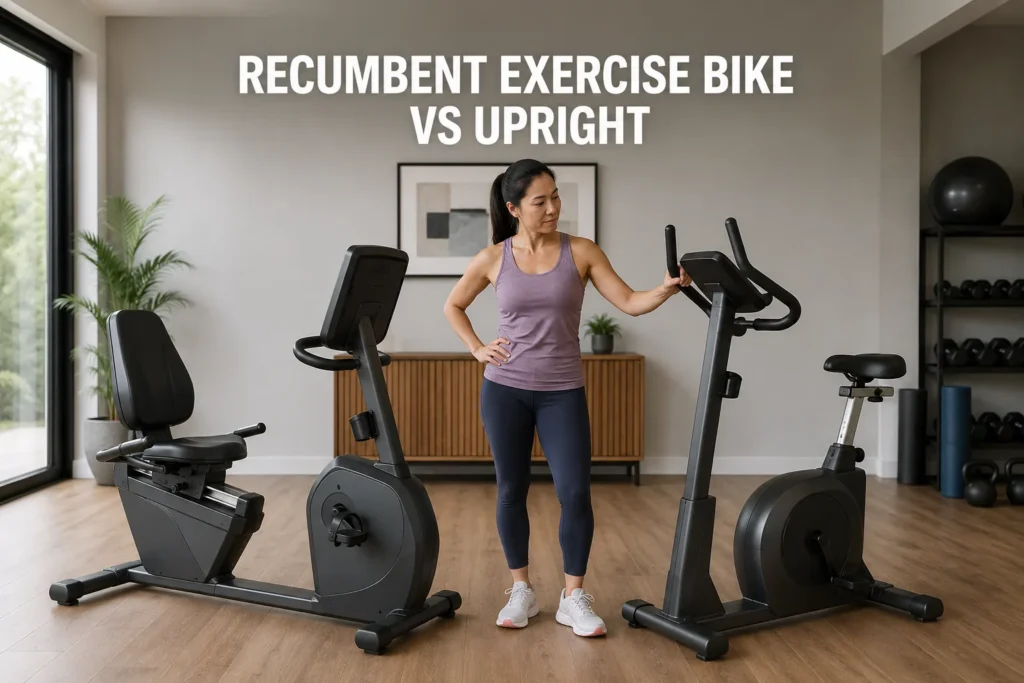
The recumbent exercise bike vs upright decision is one of the most common questions riders face when building an indoor cardio routine. Both designs produce real cardiovascular and lower-body conditioning benefits, but position, joint loading, and comfort differ in ways that matter depending on your goals and physical history. In this guide, I cover what the research shows on cardiovascular performance, muscle activation, joint safety, and practical use - including what a recumbent exercise bike actually is for anyone comparing these designs for the first time - so you can make a well-informed choice.

Recumbent Exercise Bike vs Upright - Core Design Differences
The fundamental distinction in any recumbent exercise bike vs upright comparison is body position. On a recumbent bike, you sit in a reclined seat with your legs extending forward, roughly parallel to the ground. Your back rests against a padded support, and the pedals sit in front of your body rather than below. On an upright bike, you sit directly above the pedals in a posture that mirrors outdoor cycling, with weight distributed across the seat, handlebars, and feet.
Once you know which position you want, you can shop recumbent bikes in our store by seat style and resistance type.

This positional difference drives everything else: the muscles each design recruits, the cardiovascular demand at different intensities, the joint loading across the hip, knee, and lumbar spine, and the degree of core activation required to maintain posture. Both types feature prominently in the best exercise bike category because they serve different training profiles well.
Feature | Recumbent Bike | Upright Bike |
Seating position | Reclined, back supported | Upright, over pedals |
Core demand | Low (supported posture) | Moderate to high |
Back support | Full lumbar | None standard |
Footprint | Larger | Smaller |
Cardiovascular ceiling | Moderate at high intensity | Higher at peak effort |
Calorie burn at matched intensity | Comparable | Slightly higher at max |
Best application | Comfort, rehab, seniors | Performance, cross-training |
The table above gives a quick reference. The terms upright bike vs recumbent bike are often used interchangeably across fitness publications - both refer to the same positional distinction described here. The sections that follow explain the why behind each row, grounded in the current research literature. My dedicated overview of recumbent exercise bike design covers the geometry, backrest variations, and clinical use cases in more depth for riders new to this format.
Cardiovascular Performance and Calorie Burn
A common question when comparing recumbent exercise bike vs upright is whether the recumbent produces enough cardiovascular challenge to drive meaningful fitness adaptations. The research gives a nuanced answer: at low to moderate intensities, the difference is small; at high intensity, the upright has a measurable edge.
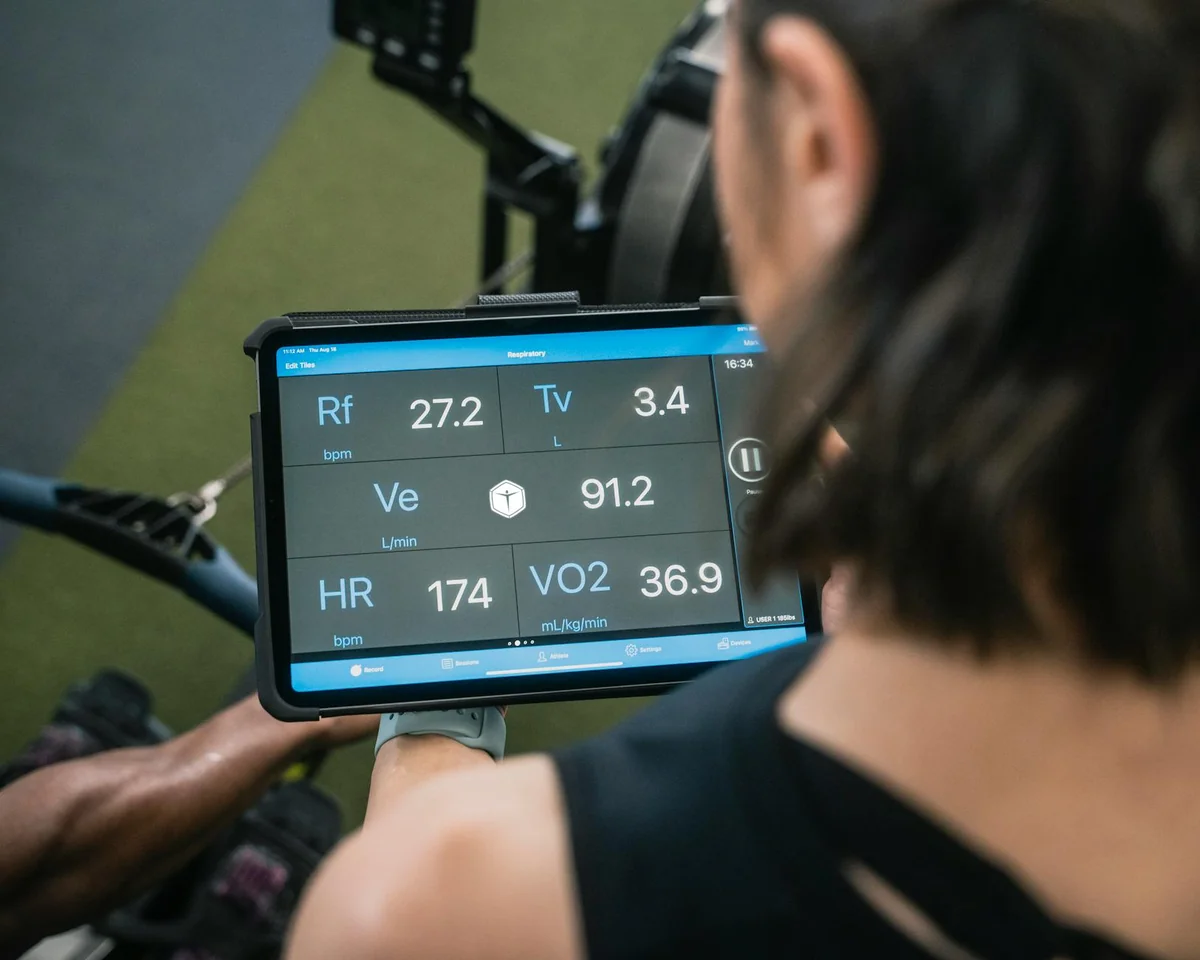
Bonzheim et al. demonstrated that at submaximal workloads of 100 watts, upright cycling produced significantly higher heart rate, systolic blood pressure, and oxygen consumption compared to recumbent cycling in cardiac rehabilitation patients (1). A broader study comparing body positions to exhaustion confirmed the pattern: upright cycling achieved higher peak VO2 and gross efficiency compared to both recumbent and supine positions (2).
What this means practically for recumbent bike vs upright bike for weight loss decisions: intensity drives calorie expenditure more than equipment type. A moderate upright session and a vigorous recumbent session can produce similar total calorie output. What matters most is consistency.
For riders who want a structured protocol to apply that intensity consistently, my exercise bike fat loss workout guide covers steady-state and interval formats with session lengths suited to different fitness levels.
Key cardiovascular comparisons by use case:
- Steady-state cardio (60-75% max HR): Both bikes produce comparable cardiovascular stimulus. Choose based on what you'll maintain consistently.
- High-intensity interval training: Upright bikes allow greater peak power and higher heart rate zones. They are the better choice for HIIT protocols.
- Extended endurance sessions (45 minutes or more): Recumbent bikes support longer durations through reduced upper-body fatigue and improved seat comfort.
- Calorie burn over time: Compliance is the deciding factor. Riders who stay on equipment consistently burn more calories than those who stop early from discomfort.
I'd emphasize the cardiovascular argument for the upright bike only when peak conditioning or competitive cross-training is the goal. For general health maintenance, both designs are effective when used consistently. Our best recumbent exercise bike guide compares specific models across resistance types and price tiers if you're ready to narrow down options.
Muscle Activation - What the Research Shows
A persistent concern is that the reclined position of a recumbent bike reduces muscular demand compared to an upright bike. Two EMG studies provide meaningful data.
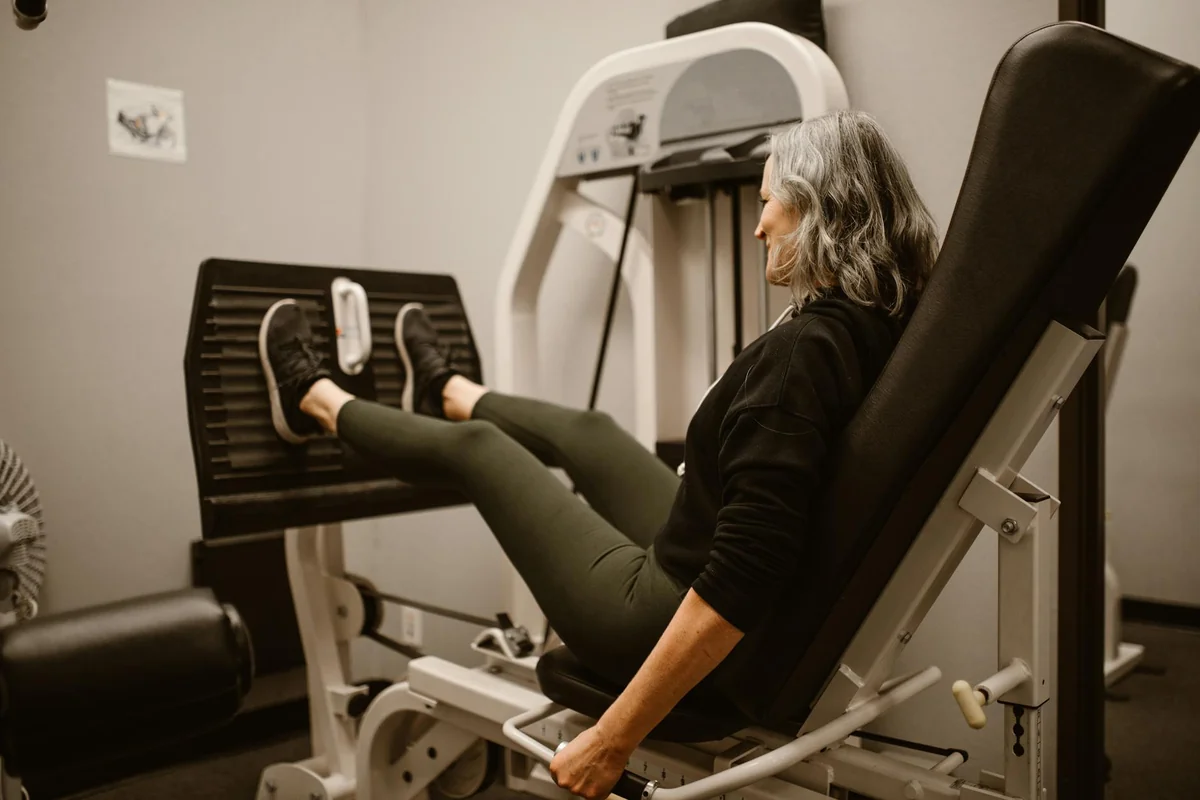
The first found no statistically significant differences in peak activation of the rectus femoris, semitendinosus, tibialis anterior, or medial gastrocnemius between recumbent and upright cycling at moderate intensity (3). Both bikes drove the same primary movers at comparable activation levels. The second study - comparing four stationary devices - found that upright bikes activated the lateral gastrocnemius at roughly twice the rate of recumbent bikes (71% versus 33% of maximum voluntary contraction), while trunk muscle activation was equal across both types (4).
A six-week prospective study adds a longer-term dimension: recumbent cycling better preserved posterior thigh (hamstring) muscle thickness compared to upright cycling, while knee cartilage showed no significant changes in either group (5). For anyone in a lower-body rehabilitation program, the muscles each design targets - recumbent versus upright - differ meaningfully in the hamstring and calf, less so in the quadriceps or trunk.
Riders in that rehabilitation context who want a detailed guide on bike setup and intensity management for knee-specific conditions will find my guide on stationary bike and knee pain a thorough clinical reference.
Muscle Group | Recumbent | Upright | Notes |
Quadriceps | Moderate | Moderate-High | Upright slight edge |
Hamstrings | Better preserved | Moderate | Recumbent advantage long-term |
Lateral gastrocnemius (calf) | Lower | Higher (~2x recumbent) | Upright clear advantage |
Core stabilizers | Low | Moderate | Upright demands active stabilization |
Trunk muscles | Equal | Equal | No meaningful difference |
Glutes | Moderate | Moderate | Roughly equal |
A biomechanical analysis also found that recumbent bikes require approximately 20% less additional mechanical external power at equivalent workloads and produce more symmetrical lower-body motion compared to upright cycling (6). This efficiency advantage explains why physiotherapists frequently prescribe recumbent cycling during early rehabilitation - and why recumbent riders can sustain longer sessions at comparable perceived effort. For an in-depth look at what muscles an exercise bike works across both designs and resistance levels, our dedicated guide covers the full muscle-activation breakdown.
Joint Safety and the Low-Impact Advantage
For joint and spinal health, the recumbent exercise bike holds a clear structural advantage over the upright design. The reclined position eliminates the forward lean that places compressive load on the lumbar spine and reduces hip flexion range-of-motion demands throughout each pedal stroke.
For those comparing these machines to rowing specifically because of lumbar concerns, my guide on rowing machine lumbar safety covers how rowing's axial load differs from cycling's and which back conditions can progress safely with rowing.

A randomized controlled trial examining stationary cycling for chronic nonspecific low back pain found that cycling produced equivalent improvements to targeted physical therapy exercises - including in pain, disability, fear-avoidance, and catastrophizing - at both 8-week and 6-month follow-up (7). This supports recumbent cycling specifically for this population, given its additional elimination of lumbar extension demands versus the upright position. For specific model recommendations, our exercise bike review for back pain covers recumbent options ranked by lumbar support.
For riders managing knee health, a systematic review and meta-analysis of 11 randomized controlled trials found stationary cycling significantly reduced pain and improved sport function in knee osteoarthritis patients compared to no-exercise controls (8). The prospective comparison by Güvener et al. (2026) confirmed that neither recumbent nor upright cycling produced significant changes in knee cartilage thickness after six weeks of regular training.
Joint-specific breakdown:
- Lumbar spine: Recumbent removes forward lean and lumbar compression. Clear advantage for disc conditions, stenosis, and facet arthropathy.
- Knees: Both designs are low-impact and safe at moderate intensity. The recumbent reduces knee flexion demand and may be preferable during acute flares.
- Hips: Recumbent geometry reduces hip flexion angle. Preferred for hip impingement or post-hip-procedure recovery.
- Shoulders and wrists: Upright bikes distribute some weight through the upper extremities; extended sessions can cause wrist soreness and shoulder tension. Recumbent bikes remove this load entirely.
For anyone navigating this recumbent exercise bike vs upright decision with a musculoskeletal history, for riders with documented spinal or lower-limb conditions, our best exercise bike for back problems guide covers how to evaluate lumbar support adjustability, seat cushion density, and resistance mechanism smoothness for this specific population.
For a full breakdown of how the magnet-and-flywheel system achieves that smooth, consistent resistance and why it outperforms friction pads over time, my guide on what is a magnetic exercise bike covers the mechanism, maintenance differences, and which rider types benefit most.
For those whose musculoskeletal concern is bone density rather than pain, my guide on rowing machine for bone health covers whether adding a rower to a bike-based routine provides meaningful additional skeletal stimulus.
Who Benefits Most from a Recumbent Bike
The recumbent design outperforms the upright in several specific use cases. These are the profiles where I'd recommend it without hesitation:
- Seniors and older adults: Stability, step-through frame access, and back support reduce fall risk and session fatigue. The best recumbent exercise bike for seniors typically features low step-over height, wide padded seating, large readable displays, and secure entry handles. Our senior exercise bike roundup covers the top-rated models with side-by-side comparisons on step-over height, seat width, and handle placement.
- Chronic lower back pain: Full lumbar support eliminates the forward-lean posture that aggravates disc and facet joint conditions. Riders who previously found upright bikes uncomfortable often sustain regular recumbent sessions without pain escalation.
- Injury rehabilitation: Hip, knee, and lower back recovery protocols regularly specify recumbent cycling for its reduced range of motion and force profile.
- Extended low-intensity cardio: Sessions of 45 minutes or more are significantly more sustainable on a recumbent due to reduced seat pressure and upper-body postural effort.
- Larger riders and those needing higher weight capacities: Many recumbent models carry higher rated capacities than equivalent upright designs, and wider seat profiles improve load distribution.
- Anyone prioritizing long-term consistency: A bike you'll use three times weekly without pain is worth more than a higher-performing design you'll abandon after a few uncomfortable sessions.
The recumbent bike benefits - back support, joint protection, extended session sustainability, and accessibility for mobility-limited riders - make it the stronger default recommendation for most non-athletes building a cardio habit.
Riders in that category who are starting their first consistent routine will find a practical 4-week progression in my structured exercise bike workout for beginners.
Who Benefits Most from an Upright Bike
The upright bike earns its place when training goals center on performance, space efficiency, or specific conditioning outcomes:

- High-intensity interval training: The open body position enables higher peak power output, makes it easier to spike heart rate into upper training zones, and supports more aggressive interval protocols.
- Cyclists cross-training indoors: The upright geometry replicates outdoor cycling biomechanics more closely. The distinction between an upright bike vs spin bike matters here - spin bikes use heavier flywheels and a more forward-aggressive lean, while standard upright bikes offer a more relaxed road-cycling feel with less intensity required.
- Space-constrained home gyms: Upright bikes typically occupy 30-40% less floor space than equivalent recumbent designs. Pairing one with the best folding treadmill maximizes cardio variety within a compact footprint. For riders who want a bike that also folds away, our best folding exercise bike guide covers upright and recumbent models built for compact storage.
- Core conditioning as a secondary goal: The unsupported torso activates erector spinae, obliques, and transverse abdominis throughout the session - a genuine conditioning benefit for riders targeting functional fitness alongside cardio.
- Budget-constrained buyers: Entry-level upright bikes tend to be more affordable than entry-level recumbent models at equivalent build quality.
For the smallest footprint of all upright variants, compact folding designs are worth exploring. Our best folding exercise bike guide covers the top options for riders where space is the primary constraint.
Before committing to a folding model, my post on whether folding exercise bikes are worth buying covers the trade-offs in stability, resistance range, and frame durability that determine whether the format suits regular home training.
Recumbent Bike vs Elliptical
Both the recumbent bike and the elliptical market themselves as joint-friendly, low-impact cardio options. The differences between them are meaningful and worth understanding before purchase.
Hybrid options like the Teeter FreeStep Recumbent Cross Trainer split the difference, combining a recumbent seat with elliptical-style pedals.
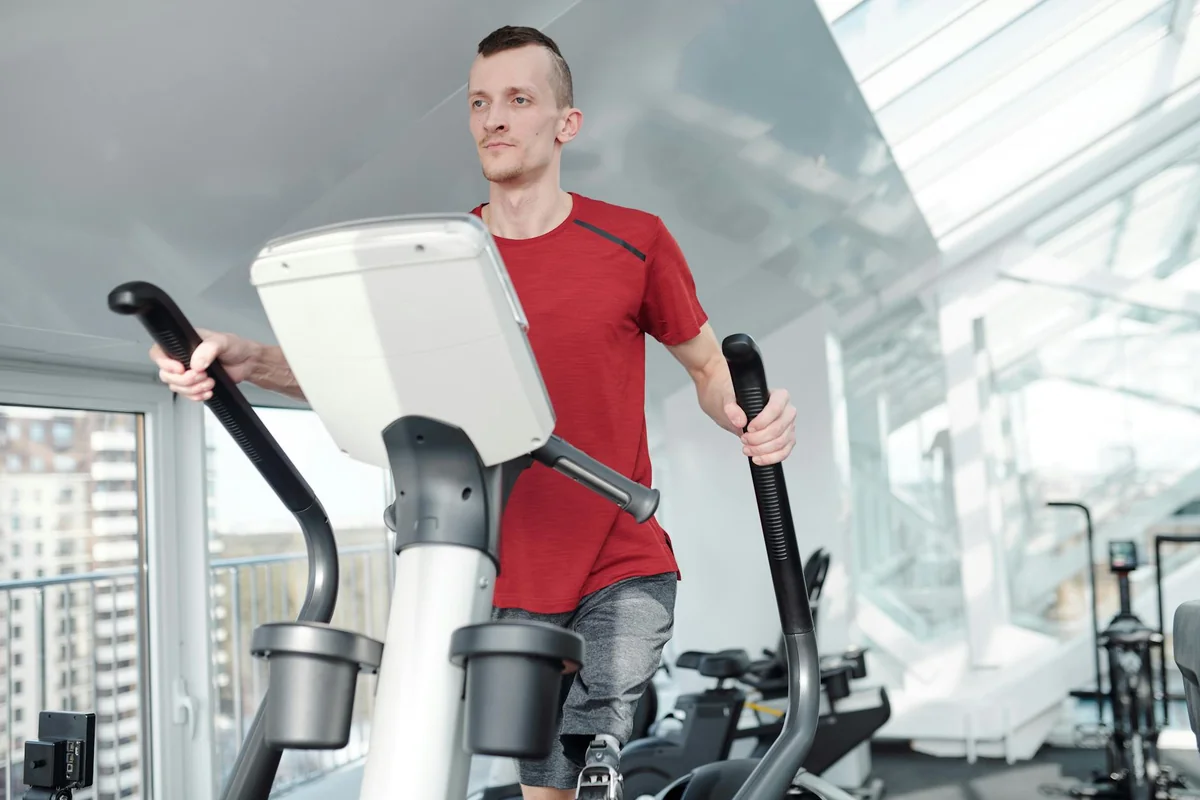
A brief note on terminology: the recumbent elliptical bike is a distinct equipment category from a standard recumbent bike. These hybrid machines - such as the NuStep recumbent cross-trainer - combine the reclined seated position of a recumbent with the elliptical stride motion and upper-body handlebars. They are separate devices from both standard recumbent bikes and standing elliptical trainers.
The NuStep Recumbent Cross Trainer pairs a 400 lb capacity with a 360-degree swivel seat, a common example of this hybrid category.
For a standard recumbent bike vs elliptical comparison at equivalent effort:
Factor | Recumbent Bike | Elliptical |
Primary muscles | Lower body only | Lower body + upper body |
Calorie burn at matched perceived effort | Moderate | Slightly higher |
Joint loading | Minimal weight-bearing | Low-impact, no foot strike |
Core demand | Low | Moderate |
Balance requirement | Very low (fully seated) | Moderate (standing) |
Accessibility for joint limitations | Highest | High |
Upper body involvement | Minimal (standard models) | Significant |
Our elliptical machine benefits guide explores the full cardiovascular and calorie-burning profile of the elliptical for riders weighing that option. The best recumbent exercise bike with arm exerciser addresses the upper-body engagement gap - these hybrid designs add arm levers to a recumbent frame, approaching elliptical-level full-body activation while retaining the fully seated, back-supported position.
For home gym planning that involves multiple machines - whether adding a recumbent bike alongside existing cardio equipment - our guide to how to disassemble a treadmill is a useful resource for understanding how to configure and reconfigure your space as your equipment needs evolve.
What to Look for When Buying
Regardless of which design you choose, several universal criteria affect long-term training satisfaction:

- Resistance mechanism: Magnetic resistance provides smooth, quiet operation and requires minimal maintenance. Air and friction resistance add mechanical complexity. For home use, magnetic systems are the practical recommendation.
- Flywheel weight: Heavier flywheels produce more inertia and smoother pedal strokes at lower cadences - particularly relevant for rehabilitation users on recumbent bikes.
- Seat adjustability: Both horizontal and vertical adjustments matter for proper knee extension at the pedal stroke's lowest point. Poor fit accelerates joint fatigue and reduces training efficiency.
- Display and connectivity: Heart rate monitoring, Bluetooth connectivity for fitness apps, and cadence tracking improve training structure and long-term engagement.
- Weight capacity: Match the manufacturer's rated capacity to your body weight with a minimum 20% safety buffer to preserve mechanical longevity.
The VANSWE Light Commercial Recumbent Bike lists a 450-lb capacity per Amazon with an 11-lb flywheel for that kind of margin.
The Marcy Dual Action Recumbent Bike pairs an 8-level magnetic flywheel with a dual-action arm exerciser for riders who want that upper-body option built in.
Understanding how the flywheel-magnet interaction creates resistance tiers helps you evaluate build quality and resistance smoothness across price points before purchase.
The Right Choice Comes Down to Your Goals
Making the right call on a recumbent exercise bike vs upright comes down to your training priorities and your body's needs. If joint protection, lumbar support, long session duration, or senior-specific accessibility drives the decision, the recumbent is the stronger recommendation. If intensity ceiling, space efficiency, core engagement, or cycling-specific transfer matters more, the upright earns its place.
My guide on how to choose an exercise bike extends this framework across all five major bike types, with a full breakdown of resistance, fit, and budget considerations.
I'd also encourage riders comparing cardio modalities more broadly to look at the recumbent vs rowing machine comparison - rowing involves substantial upper-body pull that neither bike type replicates, which matters if total-body conditioning is the goal.
For tracking step count and heart rate without a wrist device during stationary cycling, my top ankle fitness tracker picks covers ankle-worn options that pair with fitness apps without interfering with your grip.
Readers who have decided on a rowing machine can find the full category breakdown in my top rowing machine guide, which covers 11 options tested across air, magnetic, and water resistance.
Both designs produce genuine cardiovascular health benefits when used consistently. The best bike is the one you'll mount regularly, in a position that lets you sustain effort without pain or discomfort, cutting sessions short.
Riders who want to maximize those cardiovascular benefits by training in specific intensity zones will find my guide on cycling training zones a practical framework for calibrating effort on either bike design.
Riders who have made their choice and want to understand what consistent riding actually delivers over the first month will find my exercise bike before and after results guide a concrete next reference.
Riders who want to see how recumbent and upright designs compare to all five major bike categories can find a full reference in my complete stationary bike types overview.
For a health-focused breakdown of stationary cycling, my guide on why exercise bikes are good for you covers the cardiovascular, metabolic, and joint-health evidence in full.
FAQs
What are the disadvantages of a recumbent bike?
The main disadvantages of a recumbent bike are its larger floor footprint, higher upfront cost at equivalent build quality, reduced cardiovascular ceiling at high intensity compared to upright cycling, and lower core engagement due to back support. Riders focused on peak conditioning, HIIT protocols, or cycling-specific transfer typically find the upright design better matched to those training goals.
For riders in that category who want structured protocols and progression guidelines, my guide on exercise bike HIIT training covers beginner through advanced interval plans with sample sessions and safety modifications.
For a detailed breakdown of what each price tier delivers across recumbent, upright, and spin bike categories, my guide on stationary bike pricing by category covers the full spectrum from entry-level to premium.
What is the best exercise bike for Parkinson’s disease?
The best exercise bike for Parkinson's disease is typically a recumbent design with a step-through frame, stable handgrips, and large clearly visible controls - features that reduce fall risk and accommodate motor control variability. Research on forced pedaling therapy for Parkinson's patients supports the recumbent configuration because it allows cadence-assisted cycling while keeping the rider safely supported. Always consult a neurological physiotherapist for a protocol matched to your specific symptom profile.
Is 30 minutes of stationary bike the same as 30 minutes of walking?
Thirty minutes of stationary biking is not directly equivalent to 30 minutes of walking in calorie burn or muscle activation, but the comparison depends heavily on intensity. At light effort, both produce similar energy expenditure. At moderate-to-vigorous intensity, cycling typically exceeds walking in calorie burn per unit time because it sustains higher heart rate without the joint impact that limits walking pace for some riders. Both meet cardiovascular health guidelines for moderate-intensity physical activity.
Can I lose belly fat using a recumbent bike?
A recumbent bike supports fat loss, including abdominal fat reduction, when used as part of a consistent caloric deficit - but no exercise modality targets fat from a specific body region. Recumbent cycling contributes to overall energy expenditure and cardiovascular health, which together drive fat loss over time. Sessions of 30-45 minutes at 60-75% of maximum heart rate, performed three to five times per week, align with evidence-based fat loss protocols for stationary cycling.
Riders who want the full clinical research on how that fat loss affects the abdominal region will find my guide on exercise bike and abdominal fat a detailed breakdown of the evidence.
Anyone following these protocols will want to know how many calories those sessions actually burn; my cycling calorie burn data guide breaks down output by resistance level, duration, and body weight.
What burns more calories recumbent bike or elliptical?
An elliptical generally burns more calories than a recumbent bike at equivalent perceived effort because it recruits more muscle groups simultaneously, including the upper body. The actual difference narrows as intensity increases, and at matched heart rate levels, the gap is smaller than most riders expect. For riders who cannot tolerate elliptical use due to joint limitations or balance concerns, a recumbent bike provides an effective low-impact alternative with moderately lower peak calorie expenditure.
References:
- Bonzheim SC, Franklin BA, DeWitt C, et al. Physiologic responses to recumbent versus upright cycle ergometry, and implications for exercise prescription in patients with coronary artery disease. Am J Cardiol. 1992;69(1):40-44. doi:10.1016/0002-9149(92)90673-m
- Wehrle A, Waibel S, Gollhofer A, Roecker K. Power output and efficiency during supine, recumbent, and upright cycle ergometry. Front Sports Act Living. 2021;3:667564. doi:10.3389/fspor.2021.667564
- Lopes AD, Alouche SR, Hakansson N, Cohen M. Electromyography during pedaling on upright and recumbent ergometer. Int J Sports Phys Ther. 2014;9(1):76-81. doi:10.4103/ijspt.ijspt_31_13
- Bouillon L, Baker R, Gibson C, Kearney A, Busemeyer T. Comparison of trunk and lower extremity muscle activity among four stationary equipment devices: Upright bike, recumbent bike, treadmill, and ElliptiGO. Int J Sports Phys Ther. 2016;11(2):190-200. doi:10.16603/ijspt20160042
- Guvener O, Dag F, Sahin G, Ozcakar L. Effects of recumbent and upright bicycle exercises on knee joint cartilage and lower extremity muscles. Eur J Appl Physiol. 2026;126(1):541-548. doi:10.1007/s00421-025-05916-w
- Telli R, Seminati E, Pavei G, Minetti AE. Recumbent vs. upright bicycles: 3D trajectory of body centre of mass, limb mechanical work, and operative range of propulsive muscles. J Sports Sci. 2017;35(5):491-499. doi:10.1080/02640414.2016.1175650
- Marshall PW, Kennedy S, Brooks C, Lonsdale C. Pilates exercise or stationary cycling for chronic nonspecific low back pain: does it matter? A randomized controlled trial with 6-month follow-up. Spine. 2013;38(15):E952-9. doi:10.1097/BRS.0b013e318297c1e5
- Luan L, Bousie J, Pranata A, Adams R, Han J. Stationary cycling exercise for knee osteoarthritis: A systematic review and meta-analysis. Clin Rehabil. 2021;35(4):522-533. doi:10.1177/0269215520971795