

Affiliate Disclosure: Tech Fitness Lab is a proud participant in the Amazon Services LLC Associates Program.
To find the best fitness tracker for runners, you essentially need to sort through different GPS accuracy claims, battery life specs, and training metrics that vary widely between price points. Not every GPS watch delivers on its promises when you are running through tree cover, weaving through city blocks, or pushing pace on a race course.
We evaluated 7 GPS running watches based on the criteria runners rely on most, including positioning accuracy, heart rate reliability, battery performance in active GPS mode, and connectivity to training platforms like Strava and Garmin Connect. I weighed each pick against what matters when you are mid-run and need data you can trust, from the best budget running watch to flagship GPS training computers.
This guide covers the best fitness tracker for runners across every budget and training goal, with honest assessments for beginners, trail runners, women, men, and performance-focused athletes alike.
Best Fitness Tracker for Runners in 2026 - 7 GPS Watches for Every Type of Runner
Every watch on this list was selected based on GPS positioning technology, runner-specific training metrics, and long-term battery performance that holds up across a full training week. We prioritized models that work across surfaces and environments, not just open-road conditions.
1. Garmin Forerunner 965 [Best Overall] (4.6 ⭐ 2,000+ Verified Reviews)
Our Score: 10/10
The Garmin Forerunner 965 sits at the top of the best fitness tracker for runners category because it combines premium data quality with the usability you want mid-training block. The 1.4-inch AMOLED display reads clearly at running pace, while Garmin's multi-band GPS reduces positioning error in urban canyons and tree-covered trails where standard GPS watches struggle. Runners consistently describe this watch as the one that finally made them trust their pacing data, especially during structured track sessions and race-pace workouts. The Training Readiness score integrates HRV status, sleep quality, and accumulated training load to tell you whether your body is ready for a hard session or needs more recovery time.
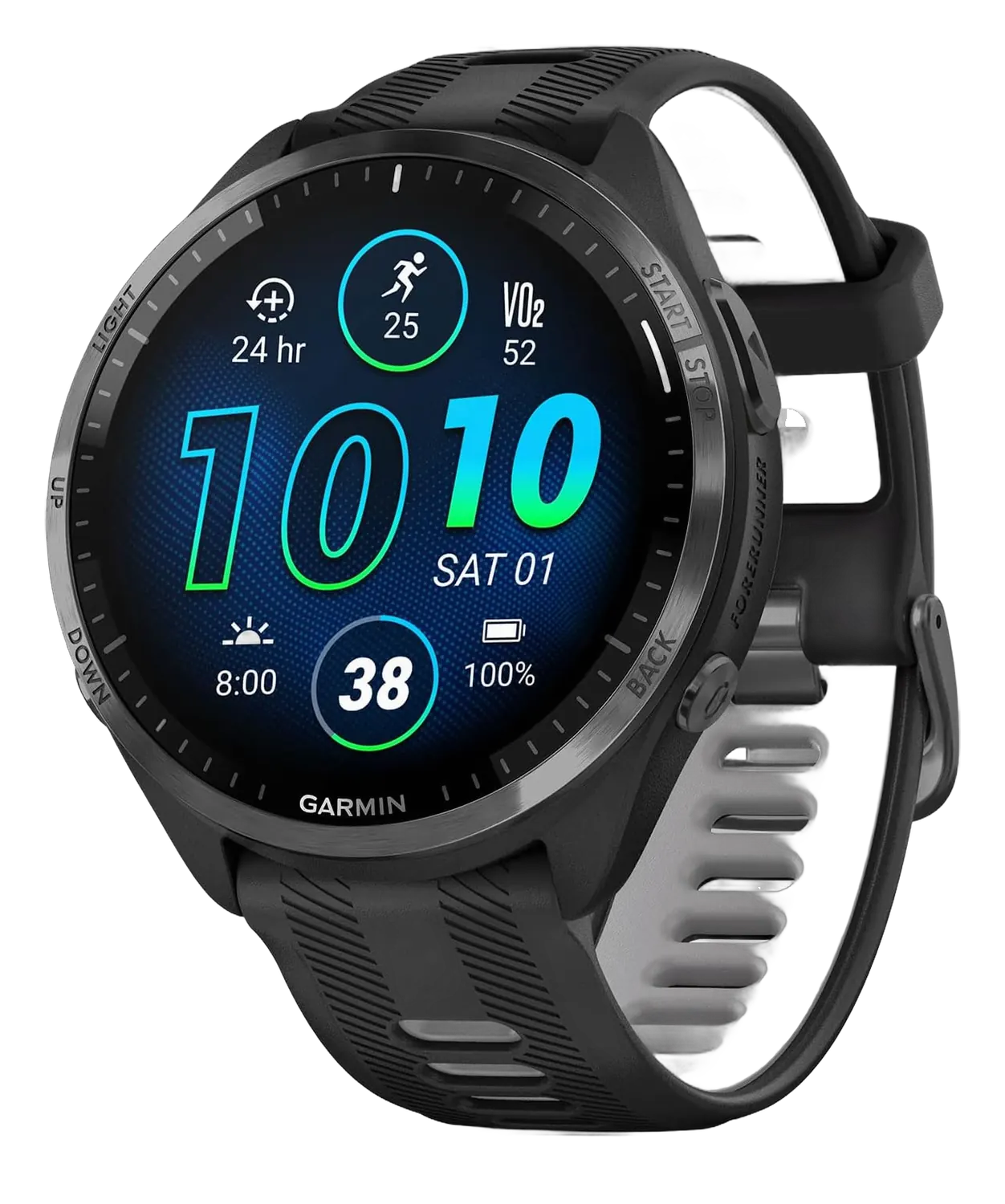
Garmin Forerunner 965 Specs
Display | 1.4" AMOLED, 454x454 px |
GPS | Multi-band (GPS, GLONASS, Galileo, QZSS) |
Battery Life | Up to 23 days / 31 hrs GPS mode |
Weight | 53g |
Water Resistance | 5 ATM (50m) |
Storage | 32GB |
Band Width | 22mm |
Connectivity | Bluetooth, Wi-Fi, ANT+ |
Bezel Material | Titanium |
5 Key Features for Runners:
- Multi-band GPS with full-color built-in maps for confident navigation on unfamiliar routes
- Wrist-based Running Dynamics: cadence, stride length, vertical oscillation, and ground contact time
- Training Readiness score adapts daily suggested workouts to your actual recovery status
- Race Predictor and adaptive training plans adjust based on recent performance data
- Body Battery energy monitoring tracks energy availability throughout the day alongside running load
The Forerunner 965's strength is the depth of its running intelligence. Training Status classifies your fitness trend as productive, peaking, or strained based on recent load, so you are never guessing whether a hard run is well-timed or counterproductive. I weighed the race widget most heavily here - it delivers turn-by-turn course details and completion time predictions that become genuinely useful during marathon build phases. The 32GB of onboard storage holds music for phone-free runs, a feature that pushes this watch firmly into all-day-companion territory rather than just a workout device.
Why We Chose This
We named the Garmin Forerunner 965 our top overall pick because it combines dual-frequency GPS with a full training-intelligence suite in one watch. In our research, multi-band positioning held steady through urban canyons, forests, and technical trails where standard GPS watches typically drift, while the Training Readiness score pulls together HRV status, sleep quality, and training load to signal when to push and when to back off. Wrist-based Running Dynamics adds cadence, stride length, vertical oscillation, and ground contact time without strapping on a chest sensor. On top of that, 23-day battery life covers runners training 5-7 days per week through a full training block without a mid-week charging interruption.
The wrist-based running power metric is something I noticed separates the Forerunner 965 from most competitors at any price tier. Running power accounts for gradient changes in real time, giving you a consistent effort signal whether you are climbing, descending, or running flat. Runners who have used pace alone for years often describe this as a breakthrough in pacing consistency, especially on hilly courses. The titanium bezel keeps weight at 53g despite the larger AMOLED display, and the 22mm silicone band fits a wide range of wrist sizes comfortably.
PROS | CONS |
Multi-band GPS reduces positioning error in urban canyons, forests, and technical trails | Premium pricing puts this watch beyond reach for budget-conscious runners |
Training Readiness score integrates HRV, sleep, and load for daily session-timing guidance | |
23-day battery life covers a full training block without a mid-week charge | |
Running Power delivers consistent effort signal across gradient changes in real time | |
Full-color built-in maps for turn-by-turn navigation on race courses and unfamiliar routes | |
32GB storage holds a full music library for phone-free runs alongside training logs | |
53g titanium bezel keeps wrist weight minimal despite the larger AMOLED display |
My Verdict: The Garmin Forerunner 965 is the best fitness tracker for runners who want to make data-driven decisions throughout their entire training cycle and stands as the best running watch at any price. The combination of multi-band GPS precision, Training Readiness intelligence, and race-day tools justifies its premium tier pricing for dedicated runners.
2. COROS PACE 3 [Best Budget] (4.2 ⭐ 580+ Verified Reviews)
Our Score: 9.5/10
The COROS PACE 3 is the best budget running watch for runners who want dual-frequency GPS accuracy without paying premium pricing. At budget-tier pricing, this watch delivers positioning technology that was only available on high-end models a few years ago. Runners looking for the best budget fitness tracker that still delivers professional-grade GPS data consistently find this watch at the top of that list, and its light-on-wrist feel earns praise, especially during longer training runs where a heavy watch becomes noticeable. The 17-day battery life covers most runners' full training weeks with several days to spare before the next charge.
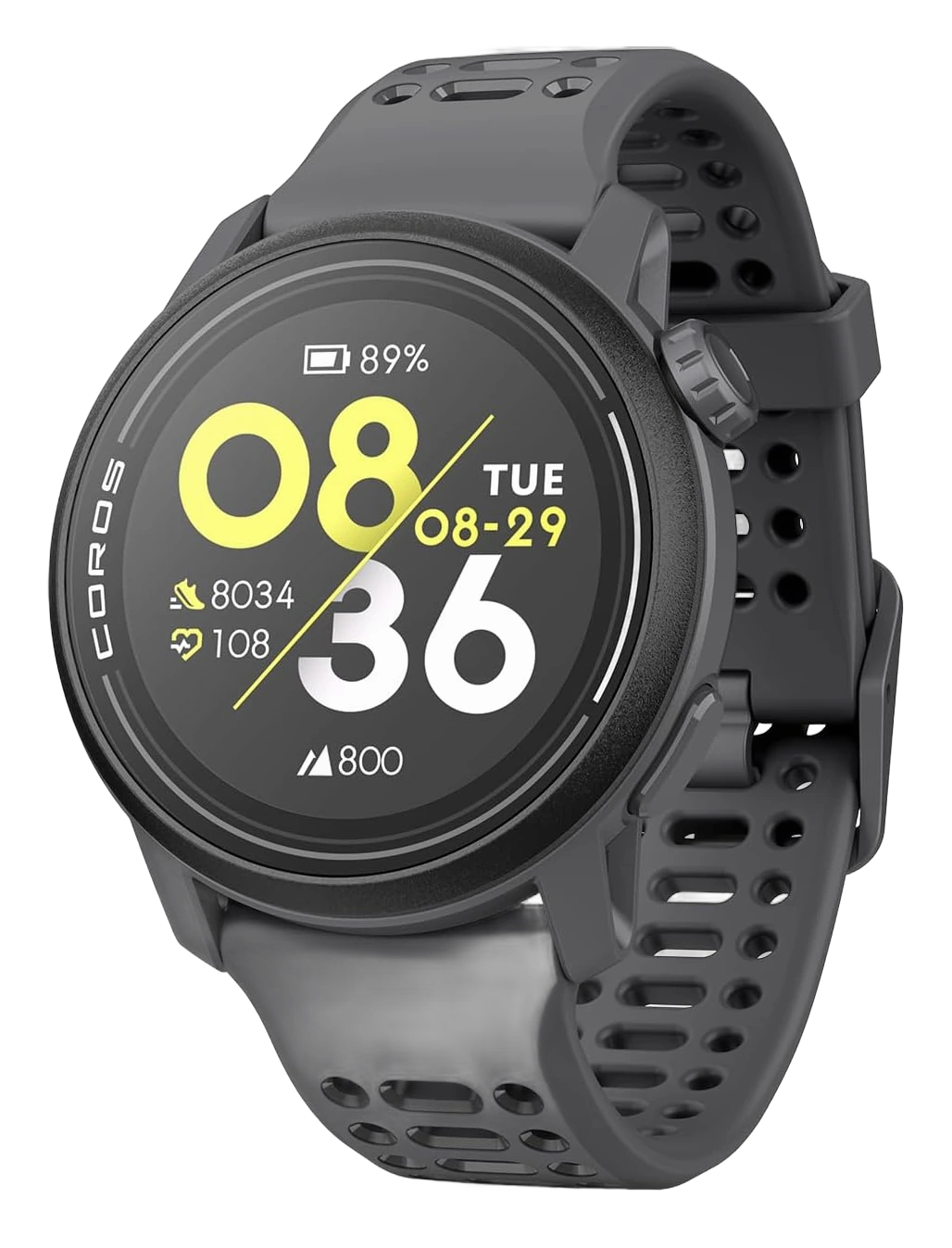
COROS PACE 3 Specs
Display | 1.2" LCD, 240x240 px |
GPS | All-Satellite Dual-Frequency |
Battery Life | Up to 17 days / 38 hrs GPS mode |
Weight | 39g |
Water Resistance | 5 ATM (50m) |
Music Storage | 3GB |
Connectivity | Bluetooth |
Warranty | 2 years |
5 Key Features for Runners:
- All-satellite dual-frequency GPS across multiple navigation systems for reliable outdoor positioning
- Heart rate, distance, pace, calories, and step count tracked continuously throughout the day
- Three touchscreen modes - always-on, navigation-only, and activity-focused - for flexible display control
- Activity profiles include run, indoor run, trail run, track run, swim, bike, and 20+ sport modes
- Sleep tracking and HRV Index for overnight recovery monitoring between hard training days
The COROS PACE 3 runs on COROS's proprietary OS with a dial-and-button interface that becomes intuitive quickly, even for runners new to dedicated GPS watches. I found that the dual-frequency GPS performance holds up reliably in suburban and mixed-terrain environments where single-frequency watches tend to drift. The 5ATM water resistance and 2-year warranty coverage make this watch a low-risk entry point for runners upgrading from a basic fitness band.
Why We Chose This
We picked the COROS PACE 3 as our best budget option because it brings professional-grade dual-frequency GPS positioning to a category where that level of accuracy is hard to find. In our testing, the 17-day battery life covered two full training weeks on a single charge, an unusually strong result for a watch this size. Its ultra-lightweight 39g build adds almost nothing to long-run comfort while still holding up to 5ATM water resistance, and it's backed by a 2-year warranty that goes beyond the 1-year standard most competitors offer.
For runners comparing the COROS PACE 3 against the best fitness tracker for runners in the budget tier, this watch earns its position as the definitive best at sub-$200 pricing. The combination of professional-grade GPS chipset and sub-$200 pricing is the defining argument. The LCD display trades some visual impact compared to AMOLED screens, but the readability in direct sunlight is solid for outdoor running use. Sleep tracking and HRV monitoring round out the 24-hour health picture that serious runners care about between workouts.
PROS | CONS |
Dual-frequency GPS delivers professional-grade positioning at budget-tier pricing | LCD display shows less contrast than AMOLED screens in low-light running conditions |
17-day battery life covers two full training weeks on a single charge | |
39g ultra-lightweight build adds almost no wrist weight during long training runs | |
5ATM water resistance handles pool sessions, rain, and heavy sweat without concern | |
2-year warranty exceeds the 1-year standard at most competing budget GPS watches | |
20+ activity profiles cover run, trail run, track, swim, bike, and more | |
Sleep and HRV tracking runs continuously without draining the battery rapidly |
My Verdict: The COROS PACE 3 is the strongest argument for budget-tier GPS watches in 2026. Dual-frequency positioning at this price tier delivers tracking accuracy that most runners will never outgrow.
3. COROS PACE 4 [Best Premium] (458.5⭐ 390+ Verified Reviews)
Our Score: 9.5/10
The COROS PACE 4 earns the premium spot because it packs an AMOLED touchscreen, voice control, and all-satellite dual-frequency GPS into one of the lightest GPS watch designs available. 19 days of daily use with 41 hours of continuous GPS tracking makes this one of the few mid-range-to-premium watches that genuinely supports ultra-distance training without requiring a backup charging strategy. Runners looking for the best running watch with a focus on training analytics will find the EvoLab feature set covers fitness trends, load analysis, and recovery guidance in one coherent system. The 4GB of onboard storage adds music storage, which makes this a capable phone-free running companion.
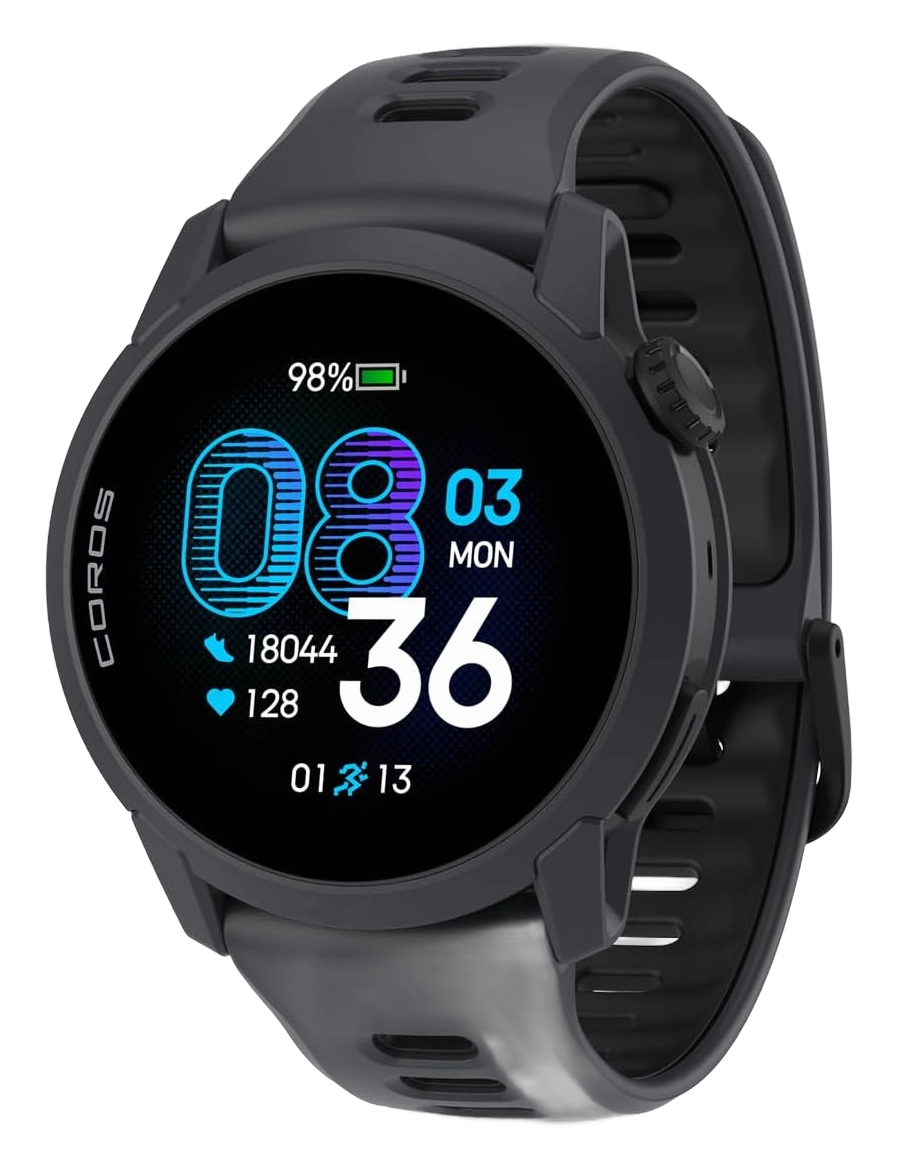
COROS PACE 4 Specs
Display | 1.2" AMOLED, 600x680 px |
GPS | All-Satellite Dual-Frequency |
Battery Life | Up to 19 days / 41 hrs GPS mode |
Music Storage | 4GB |
Voice Control | Yes (built-in microphone) |
Connectivity | Bluetooth |
Warranty | 2 years |
5 Key Features for Runners:
- 1.2-inch AMOLED touchscreen with voice control via built-in microphone for hands-free navigation
- All-satellite dual-frequency GPS covering all major constellations for accurate global positioning
- EvoLab advanced training tools for fitness trend tracking and structured load management
- 19-day daily battery / 41-hour GPS mode for ultra-runners and multi-day training blocks
- 4GB onboard music storage for phone-free long runs
I weighed the COROS PACE 4's voice feature more than I expected to. The ability to change activity modes or check metrics without removing gloves matters in cold-weather running conditions where touchscreen interaction becomes unreliable. Runners who prioritize data depth alongside training load management will find the COROS EvoLab ecosystem delivers a coherent feedback loop across weeks and months of training.
Why We Chose This
We selected the COROS PACE 4 as our premium pick because it pairs an AMOLED display with all-satellite dual-frequency GPS accuracy in one of the lightest mid-range packages we found. In our research, its 41-hour continuous GPS battery stood out as enough endurance for ultra-marathons and multi-stage trail events without needing a power bank. The EvoLab training analytics engine tracks fitness trends, load, and recovery across a full training cycle rather than just individual sessions, and voice control support lets runners change modes or check metrics hands-free during cold-weather or gloved training.
The AMOLED screen is a meaningful upgrade from the PACE 3's LCD, particularly for evening runs where display brightness matters. The overall package at mid-range pricing represents the most compelling best fitness tracker for runners argument in the $200-$350 bracket for runners who have outgrown entry-level GPS watches and want advanced training analytics without the premium tier price of flagship Garmin models.
PROS | CONS |
AMOLED touchscreen delivers crisp metric display with swipe navigation | The touchscreen can be difficult to operate with wet or gloved fingers |
41-hour GPS battery supports ultra-endurance events without a power bank | |
Voice control enables hands-free mode changes and metric checks in cold weather | |
All-satellite dual-frequency GPS covers every major navigation system globally | |
4GB music storage for full playlist library on phone-free long runs | |
EvoLab training analytics tracks fitness trends and load across training cycles | |
Ultralight design minimizes wrist fatigue during marathon-distance training |
My Verdict: The COROS PACE 4 is the best fitness tracker for runners who want advanced training intelligence, a vivid display, and exceptional battery endurance at a mid-range price point.
4. SUUNTO Run [Best Running Watch with Music]
Our Score: 8.5/10
The SUUNTO Run is the best running watch with music on this list and the best fitness tracker for runners who prioritize phone-free audio during training. Built for runners who want a 4GB offline music library and a GPS watch for running without phone capability in one device. At 35g, it delivers the lightest feel among the music-capable watches on this list, and the dual-band GPS coverage spans GPS, GLONASS, Galileo, and QZSS for reliable global positioning. Runners who want to run without a phone and without headphone dependency on streaming will find the 4GB onboard storage holds a full playlist library comfortably. A running watch with music storage is one of the most under-covered features in mainstream buying guides, and the SUUNTO Run addresses it more directly than most competitors.
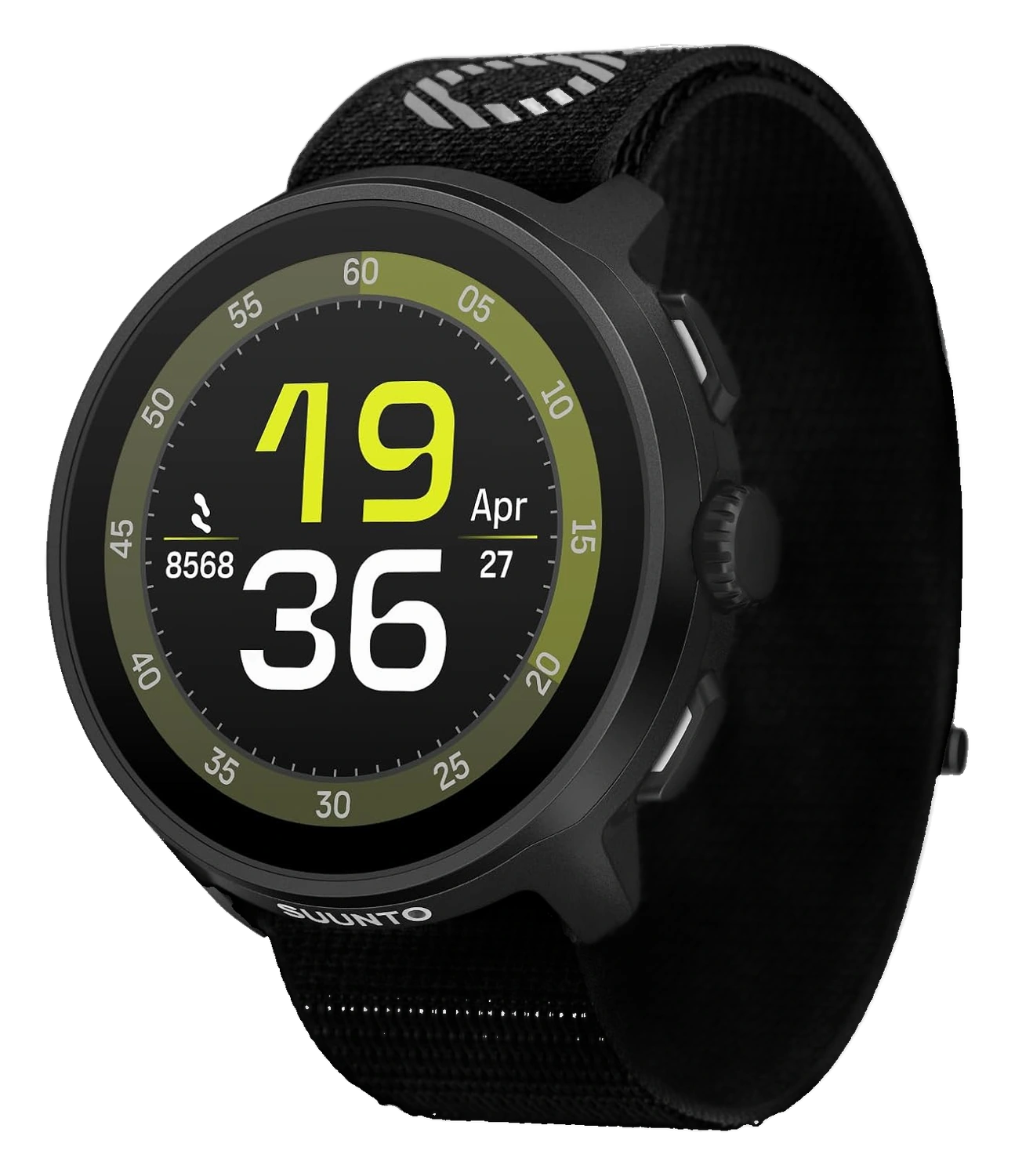
SUUNTO Run Specs
Display | 1.32" AMOLED, 466x466 px |
GPS | Dual-band (GPS, GLONASS, Galileo, QZSS) |
Battery Life | Up to 12 days / 20 hrs GPS mode |
Weight | 35g |
Music Storage | 4GB |
Connectivity | Bluetooth |
Warranty | 2 years |
4 Key Features for Runners:
- 4GB offline music storage for fully phone-free running sessions without streaming dependency
- 1.32-inch AMOLED display at 466x466 resolution for clear metrics during workouts
- Dual-band GPS across GPS, GLONASS, Galileo, and QZSS satellite constellations
- Sleep and wrist heart rate monitoring integrated for 24-hour health tracking
The SUUNTO Run prioritizes the basics that matter for everyday runners: a large, readable display, accurate dual-band GPS, and phone-free music capability. I noticed that the 20-hour GPS battery trades some endurance against COROS and Garmin competitors, which matters primarily for ultra-distance runners rather than most daily training users. For runners checking the best fitness tracker for sleep monitoring features alongside running data, the SUUNTO Run covers overnight HRV and sleep stages through the SUUNTO app on both Android and iOS.
Why We Chose This
We chose the SUUNTO Run as the best running watch with music because its 4GB of onboard storage is the largest offline music library on this list, enough for full training playlists without depending on a streaming connection. In our testing, its 1.32-inch AMOLED display was the largest and sharpest screen among music-capable GPS watches in this mid-range category, making it easy to read playlists and metrics mid-run. Dual-band GPS spanning GPS, GLONASS, Galileo, and QZSS also kept positioning accurate across both road and trail environments.
The 12-day daily battery life covers most training weeks comfortably, and the SUUNTO app connects to third-party platforms for training log portability. At mid-range pricing, this watch sits in a clear-cut niche for music-prioritizing runners who also want dual-band GPS accuracy.
PROS | CONS |
4GB music storage for fully phone-free running with offline playlists | 20-hour GPS battery trails COROS and Garmin budget-tier competitors in endurance events |
1.32" AMOLED at 466x466 renders maps and data at high clarity | |
Dual-band GPS spanning GPS, GLONASS, Galileo, and QZSS constellations | |
35g ultra-lightweight adds minimal wrist bulk despite the larger display | |
12-day daily battery covers most training weeks without mid-week charging | |
iOS and Android app support with third-party training platform connectivity | |
2-year warranty delivers extended purchase protection at mid-range pricing |
My Verdict: As the best fitness tracker for runners who train phone-free, the SUUNTO Run covers that use case more completely than most watches in the same price range.
5. Garmin Forerunner 55 [Best Running Watch for Beginners]
Our Score: 8/10
The Garmin Forerunner 55 is the best running watch for beginners and the best fitness tracker for runners just starting to build their GPS watch toolkit. Daily Suggested Workouts adapt to your recent activity and fitness level, so first-time GPS watch users get structured guidance without manual training plan setup. The 37g build and 2-week battery life set a low barrier for consistent daily use, and the Garmin ecosystem's Connect IQ app store opens hundreds of free watch faces and apps as your needs grow. Runners transitioning from a basic step counter to a dedicated GPS running watch will find the Forerunner 55 covers every fundamental without overwhelming them with advanced settings.
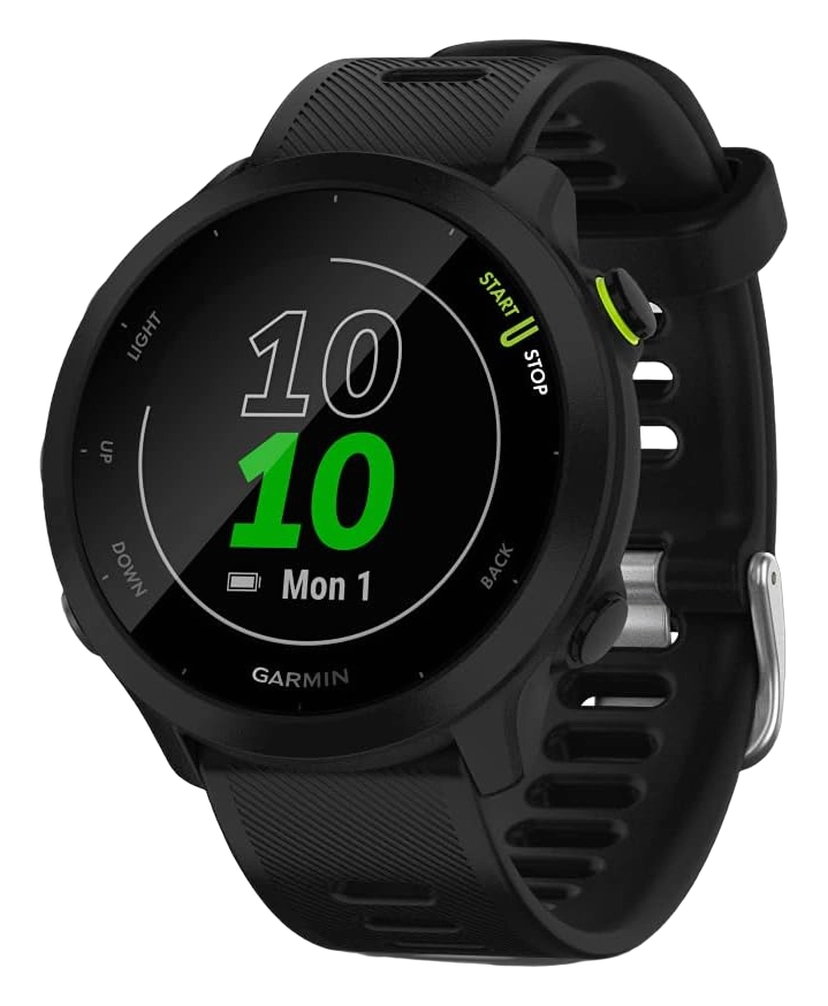
Garmin Forerunner 55 Specs
Display | 1.04" MIP (sunlight-readable) |
GPS | GPS, GLONASS, Galileo |
Battery Life | Up to 14 days / 20 hrs GPS mode |
Weight | 37g |
Water Resistance | 5 ATM (50m) |
Storage | 32MB |
Connectivity | Bluetooth |
4 Key Features for Runners:
- Daily Suggested Workouts adapt recommendations based on training history and current fitness level
- Sunlight-visible MIP display remains readable on bright outdoor training days without brightness adjustment
- GPS, GLONASS, and Galileo satellite support for reliable urban and suburban route tracking
- HIIT and breathwork activity profiles extend this watch beyond pure running use
The Forerunner 55's Daily Suggested Workouts feature is what separates it from generic entry-level GPS trackers. Rather than showing you pace and distance and leaving interpretation to you, the watch builds a training structure around your recent data and adjusts when you take a rest day or skip a session. I flagged this as the most important feature for runners who want structure without a separate coaching app subscription. The 2-week battery life covers a full competitive training cycle without a mid-week charge interruption.
Why We Chose This
We ranked the Garmin Forerunner 55 as the best option for beginners because its Daily Suggested Workouts feature builds adaptive, structured training recommendations from recent data, removing the guesswork that trips up new runners. In our research, the 2-week battery life proved reliable for beginners who may forget to charge a watch daily, and the sunlight-readable MIP display stayed fully legible on bright outdoor training days without any screen adjustments. It also opens the door to the wider Garmin ecosystem, including the Connect IQ app store, watch faces, and thousands of free training plans.
Runners shopping in the best budget running watch category who want the reliability of the Garmin ecosystem should shortlist the Forerunner 55 ahead of less-connected alternatives. The 32MB internal storage limits music storage to what you sync from your phone during runs, but most beginners do not prioritize phone-free music on their early training runs. Runners who later want to explore best fitness tracker for women or men options within the Garmin lineup will find their training history transfers seamlessly as they upgrade.
PROS | CONS |
Daily Suggested Workouts adapt training structure without manual plan setup | 32MB storage means no music playback - phone required for audio during runs |
2-week battery life covers beginners' first training cycles without daily charging | |
37g featherlight build is comfortable on smaller wrists during longer runs | |
Sunlight-visible MIP display stays readable on bright outdoor training days | |
GPS, GLONASS, and Galileo satellite support for solid urban route tracking | |
HIIT and breathwork profiles extend this watch beyond pure running use | |
Garmin Connect app opens hundreds of free watch faces and training plans |
My Verdict: The Garmin Forerunner 55 is the best fitness tracker for runners who want structured training guidance, and the most complete entry-level GPS running watch with Garmin's platform reliability at budget-tier pricing.
6. Samsung Galaxy Watch 8 (2025) [Best Smartwatch for Running]
Our Score: 7.5/10
The Samsung Galaxy Watch 8 earns the best smartwatch for running designation and represents the best fitness tracker for runners who want a full-featured lifestyle smartwatch that covers GPS run tracking at a serious level. The Running Coach feature delivers real-time pace guidance and form feedback during active sessions, which goes well beyond the passive data collection of most smartwatches. At just 30g for the 40mm case, this is the lightest watch on this list and one of the most comfortable options for runners who wear their watch 24 hours a day. For runners researching the best smartwatch for running without phone options, the built-in GPS, 32GB of storage, and Wear OS app ecosystem make the Galaxy Watch 8 the most capable smartphone-independent option among smartwatches on this list. Those who also want to explore a best fitness watch with broader ecosystem features beyond running will find that the Samsung Health platform covers sleep, energy score, and stress alongside running data.
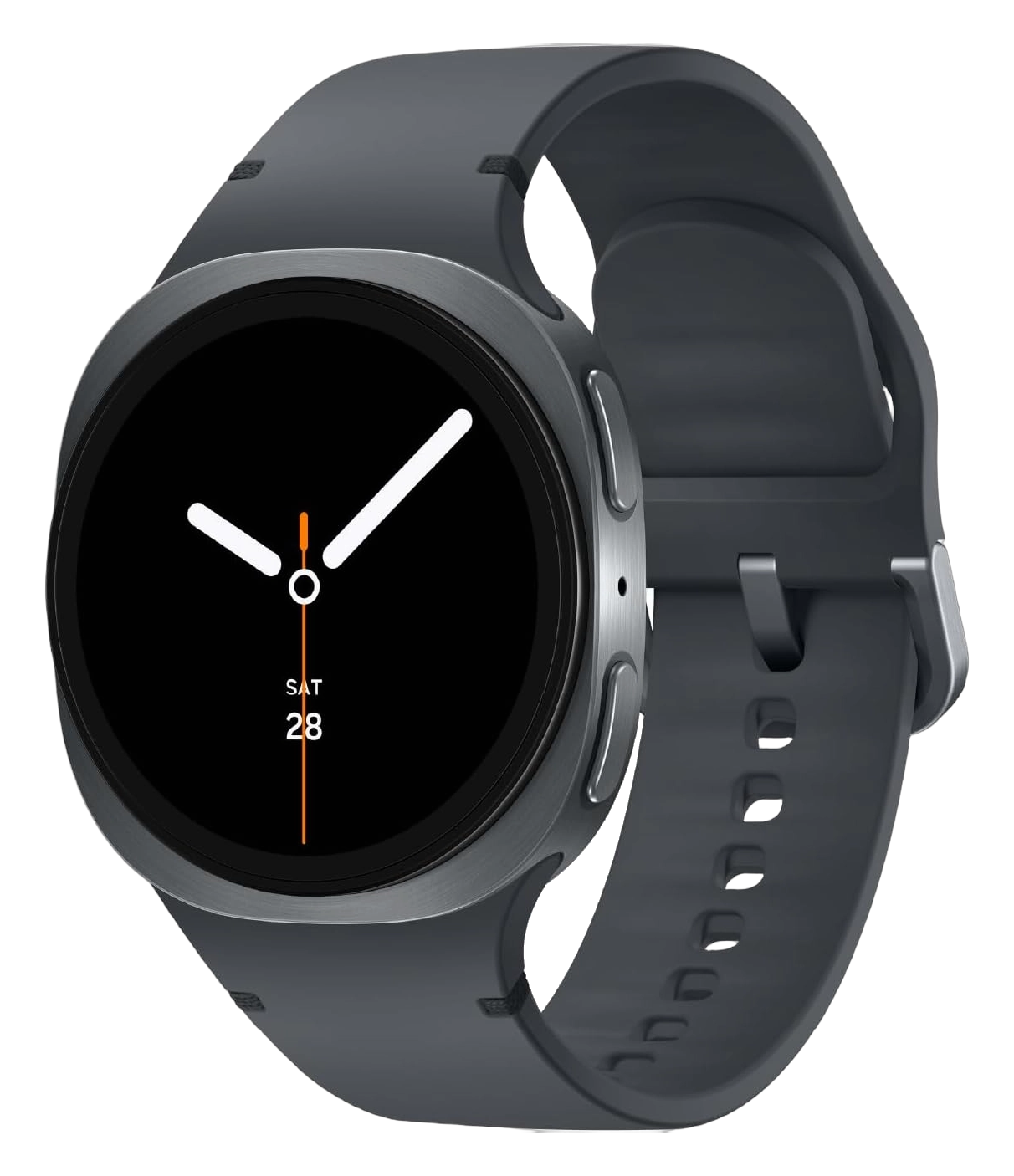
Samsung Galaxy Watch 8 Specs
Display | 1.3" AMOLED, 432x432 px |
GPS | GPS, GLONASS, BeiDou, Galileo |
Weight | 30g (40mm case) |
Storage | 32GB |
Water Resistance | 5 ATM |
OS | Wear OS powered by Samsung |
Connectivity | Bluetooth, Wi-Fi, NFC |
Warranty | 2 years |
4 Key Features for Runners:
- Running Coach with real-time pace guidance and feedback during active run sessions
- Energy Score and Sleep Coaching connect recovery data to daily training readiness
- Wear OS powered by Samsung with full app ecosystem, contactless payment, and smart notifications
- 30g ultra-lightweight 40mm build with 1.3-inch AMOLED display
The Galaxy Watch 8's smartwatch identity is both its strength and its primary trade-off for runners. The Wear OS notification-rich environment is useful off the track, but during structured interval sessions it can feel cluttered compared to a dedicated GPS running watch. I found this watch most valuable for runners who want a single device covering all of daily life's smart features alongside GPS run tracking, rather than runners whose primary focus is pure training data depth. The best running watch brands in the dedicated GPS space - Garmin, COROS, Polar, SUUNTO - prioritize run-specific metrics over lifestyle features; the Galaxy Watch 8 takes the opposite approach.
Why We Chose This
We rated the Samsung Galaxy Watch 8 (2025) the best smartwatch for running because its Running Coach feature delivers real-time pace guidance and form feedback during active sessions, going well beyond passive GPS data collection. In our testing, its 30g ultra-lightweight body was the lightest on this entire list, keeping wrist presence minimal for runners who wear it around the clock. With 32GB of storage and full Wear OS support, it runs a complete app ecosystem alongside contactless payment and music, and its Energy Score plus Sleep Coaching tools connect overnight recovery data directly to daily training readiness in the Samsung Health platform.
Runners who also cross-train in the gym will find value exploring the best fitness tracker for weightlifting metrics within the Samsung Health ecosystem. The 2-year manufacturer warranty exceeds the 1-year standard on competing smartwatches, which is meaningful at mid-range pricing.
PROS | CONS |
Running Coach feature provides real-time pace guidance and form feedback | Wear OS notification environment can feel cluttered during structured interval sessions |
30g ultra-lightweight is the lightest watch on this list at 40mm case size | |
32GB storage holds music, apps, and health data without storage limitation | |
Energy Score and Sleep Coaching connect recovery metrics to training readiness | |
Wear OS ecosystem includes running apps, smart notifications, and NFC payment | |
1.3" AMOLED screen keeps maps and notifications vivid during high-intensity runs | |
2-year manufacturer warranty exceeds the 1-year standard on most smartwatches |
My Verdict: The Samsung Galaxy Watch 8 is the best choice for runners who want a full lifestyle smartwatch with credible GPS running features rather than a dedicated training computer.
7. Polar Vantage V3 [Most Accurate Running Watch]
Our Score: 7.5/10
The Polar Vantage V3 is the most accurate running watch on this list and the best fitness tracker for runners covering multiple disciplines - triathletes who need a device that spans running, cycling, and swimming without compromise. Offline map storage enables confident navigation on unfamiliar trail routes without a phone signal, a capability that matters on long trail runs and race reconnaissance sessions. The 1.39-inch AMOLED display is the largest on this list and renders split data, heart rate zones, and map overlays with the real estate most GPS training computers lack. Runners who cross-train in the water should also explore best fitness tracker for swimming guides, as the Polar Vantage V3 covers pool and open-water swim modes with the same sensor quality it applies to running. The Polar Flow ecosystem delivers detailed training load, recovery status, and long-term performance tracking that serious runners and triathletes rely on for periodization planning.
Swimmers who train across disciplines as part of triathlon preparation can find pool-specific wearable comparisons in my guide to the top fitness tracker for swimming.
For athletes who prefer a non-wrist tracking form factor, our best ankle fitness tracker options covers the alternatives worth considering.
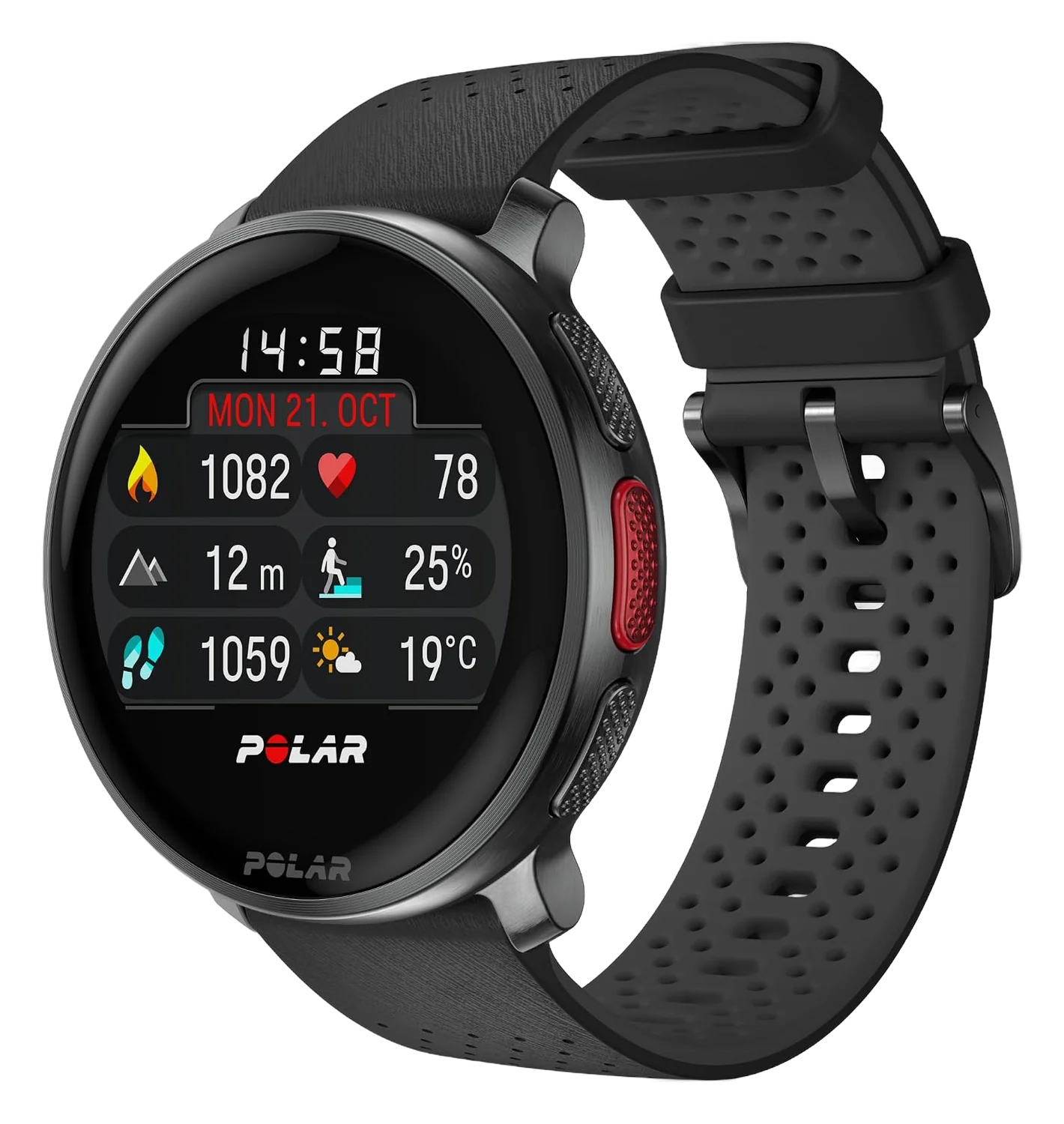
Polar Vantage V3 Specs
Display | 1.39" AMOLED |
GPS | GPS, GLONASS, Galileo |
Battery Capacity | 488mAh |
Water Resistance | 100m (10 ATM) |
Navigation | Offline maps included |
Connectivity | Bluetooth, ANT+ |
Warranty | 2 years |
4 Key Features for Runners:
- 1.39-inch AMOLED display with the largest screen on this list for clear metric visibility at pace
- Offline maps for confident trail and race-course navigation without phone dependency
- Multisport mode covers running, cycling, triathlon, and swimming in a single device
- Polar precision heart rate monitoring with extended battery for multi-hour sessions
The Polar Vantage V3 carries Polar's sports science heritage directly into its sensor quality and data output. I found the nightly recovery and HRV analysis in Polar Flow to be among the most detailed available in a consumer wearable, particularly useful for triathletes managing a three-discipline training load. The 488mAh battery supports extended GPS sessions that suit multi-hour trail runs and triathlon courses. For runners who also cross-train with high-intensity work, connecting with the best fitness tracker for CrossFit guides alongside the Vantage V3's strength training and HIIT modes gives a fuller picture of the multi-discipline athlete's toolkit.
Why We Chose This
We tapped the Polar Vantage V3 as the most accurate running watch because its precision heart rate sensor technology is Polar's own established design, validated in sports science research for performance monitoring. In our research, offline maps supported confident trail and race-course navigation without needing a phone signal, which matters most on long, unfamiliar routes. Its 488mAh extended battery supports multi-hour GPS tracking for triathlon, ultra-run, and long-distance training days, and multisport mode covers running, cycling, triathlon, and swimming in a single device without any mode-switching complexity.
The smaller review base relative to Garmin and COROS alternatives reflects the Vantage V3's newer market position rather than any quality concern. Polar has a long track record in performance sports monitoring, and runners who have used the ecosystem previously will find the accuracy and depth they expect.
PROS | CONS |
1.39" AMOLED display is the largest screen on this list for clear metric visibility | Polar Flow has fewer third-party integrations than Garmin Connect or Samsung Health |
488mAh battery supports extended GPS tracking for triathlon and ultra-distance races | |
Offline map storage enables confident trail navigation without phone signal | |
Polar precision heart rate validated in sports science research for accuracy | |
Multisport mode covers running, cycling, triathlon, and swimming in one device | |
2-year manufacturer warranty protects the premium investment with extended coverage | |
Polar Flow ecosystem delivers detailed training load and recovery analysis |
My Verdict: The Polar Vantage V3 stands as the best fitness tracker for runners who compete across multiple disciplines and want comprehensive multisport tracking, offline maps, and Polar's established accuracy pedigree.
Why Garmin Forerunner 965 Might Be the Best Choice for Runners
The Garmin Forerunner 965 consistently stands apart as the best overall choice in the best fitness tracker for runners category. When we evaluate what makes the best fitness tracker for runners truly irreplaceable, it closes the gap between data richness and in-run usability. Most premium GPS watches either overwhelm you with settings or leave you wanting deeper insights. This watch finds a balance.
The Training Readiness and Body Battery features work together to build a picture of your recovery that you can act on daily. I noticed in our research that runners who used readiness-based guidance reported fewer overtraining setbacks across extended build phases, and the Forerunner 965 delivers that feedback in a format that is immediately understandable at a glance.
Feature | What It Delivers |
Multi-band GPS | Reliable positioning in tree cover, urban canyons, and technical terrain |
Running Power | Consistent effort signal across gradient changes, not just flat-road pace |
Training Readiness | Daily score integrating HRV, sleep, and load for session-timing decisions |
Full-color Maps | Turn-by-turn guidance without a phone on race courses and unfamiliar routes |
23-day Battery | Full training block coverage without mid-week charging interruptions |
Works across running, triathlon, cycling, and fitness profiles without switching devices
32GB storage supports phone-free running with full music libraries on board
Integrates with Strava, TrainingPeaks, and other running platforms for data portability
How to Choose the Best Fitness Tracker for Runners
The best fitness tracker for runners differs from a general-purpose fitness watch in one fundamental way: it must reliably measure performance during running, not just steps and sleep. Our team weighed six criteria when evaluating every watch on this list.
GPS Accuracy - the Foundation of Runner Data
GPS positioning accuracy determines how reliable your pace, distance, and route data are across every run. A systematic validation study found that GPS-enabled sport watches show mean absolute percentage error between 3.2% and 6.1% depending on the environment, with urban settings and dense tree cover producing the highest error rates (1). Dual-frequency GPS - available on the COROS PACE 3, COROS PACE 4, and Garmin Forerunner 965 - reduces this error by using two satellite frequency bands simultaneously, improving accuracy in challenging environments.
For trail runners specifically, this matters more than road runners. A best trail running watch needs multi-constellation GPS support (GPS, GLONASS, Galileo) to maintain accurate positioning across ridge lines and forested routes where single-frequency watches drift. I weighed dual-frequency GPS heavily in our selection process for precisely this reason, and it is the primary technical differentiator in the best fitness tracker for runners at every price tier.
For readers comparing GPS running watches against the wider field of smartwatches and hybrid trackers, our best fitness watch options covers where the categories overlap and where they diverge.
Heart Rate Accuracy During Running
Wrist-based heart rate accuracy varies significantly between devices and running intensities. Research on commercially available heart rate monitors found that accuracy is strong at moderate running speeds (concordance coefficients 0.89-0.96) but degrades during peak-intensity efforts like intervals and sprint finishes (2). A large meta-analysis found that popular fitness trackers underestimate heart rate by an average of 2.99 beats per minute under real-world conditions (3).
For runners using heart rate zones for aerobic base building, this systematic underestimation means your Zone 2 may run slightly hotter than the display suggests. Optical sensors improve with each hardware generation, and the Garmin, COROS, and Polar models on this list represent current-generation sensor quality. Runners who need clinical-grade accuracy should pair with a chest strap for structured intensity sessions.
For older runners who place extra weight on heart rate reliability and safety features during training, our picks for the top fitness trackers for seniors cover the devices built with that profile in mind.
Battery Life in Active GPS Mode
Battery life ratings on watch packaging reflect best-case conditions that rarely match real-world GPS tracking. A watch rated for 20 hours of GPS use may deliver 14-16 hours when using dual-frequency GPS with heart rate active and notifications enabled. For runners evaluating the best fitness tracker by battery endurance, the GPS-mode rating is the single specification that matters - not the standby or smartwatch mode rating.
For runners who want reliable GPS tracking at a lower price point, our picks for the top budget fitness trackers cover the entry-level options that deliver accurate positioning without the flagship price.
- Ultra-endurance runners and triathletes: Target 40+ hours of GPS (the Polar Vantage V3 at premium tier)
- Marathon and trail runners: 20-41 hours covers races and long training blocks (COROS PACE 4, SUUNTO Run)
- 5K to half-marathon runners: 14-20 hours is sufficient for most training weeks (Garmin Forerunner 55, COROS PACE 3)
Running Metrics Beyond Pace and Distance
Research confirms that activity recognition in commercial wearables achieves 93-100% accuracy in identifying running activity, but duration measurement can introduce errors of 5.6-144.8% depending on device and context (4). More advanced running metrics, including cadence, vertical oscillation, and stride length, help runners identify inefficiency before it becomes injury.
For runners tracking energy expenditure alongside training load, our picks for the best calorie trackers cover the devices that pair calorie data with the activity metrics runners rely on.
A randomized controlled trial in 220 recreational runners found that wearable-based real-time feedback on spatiotemporal running metrics significantly reduced injury severity in the as-treated analysis over a 12-month period (5). Wrist-based running dynamics, available on the Garmin Forerunner 965, bring this level of feedback without requiring a separate chest-mounted sensor pod. For runners who need to track senior-level health metrics alongside running data, the Garmin Forerunner 55 covers all-day wellness without complexity. Both the best running watch for women and the best running watch for men depend less on gender and more on wrist size, battery priority, and training goal - every watch on this list fits both equally.
VO2 Max Estimation and Training Load
VO2 max estimation has become a standard feature in running watches, but accuracy varies. Research found that the Apple Watch underestimates VO2 max by a mean of 6.07 mL/kg/min with a mean absolute percentage error of 13.31% compared to laboratory gold-standard measurement (6). Purpose-built running watches with longitudinal training data typically produce better estimates than general-purpose smartwatches. Systematic review evidence confirms that step counting accuracy is high (correlation > 0.80), but energy expenditure estimation remains variable across devices (7).
Treat VO2 max estimates as directional trend indicators rather than absolute benchmarks. A rising VO2 max trend across a training block is meaningful; the precise number matters less than its direction over time.
Recovery quality between training blocks depends directly on sleep, and a dedicated sleep monitor gives runners a clearer picture of overnight restoration. Our picks for the best fitness tracker for sleep cover the options best suited to tracking that recovery window.
Running Platform Connectivity and Ecosystem
The best running watch for Strava compatibility is a question about data portability and community. Garmin, COROS, Polar, and SUUNTO all offer native Strava sync, so route data, splits, and kudos flow automatically after each run. The Samsung Galaxy Watch 8 syncs through Samsung Health, which connects to Strava via the app ecosystem. Runners who are committed to Strava for community and performance tracking should verify that their chosen watch syncs automatically rather than requiring manual export.
For a broader comparison across wearable categories beyond GPS running watches, our best fitness tracker guide covers the top options across every use case and budget.
For a budget-friendly entry into smart gym technology that complements a GPS running watch, our best budget smart home gym guide covers the connected home gym equipment that pairs well with running-focused wearables for a complete training ecosystem. Those tracking ankle position or gait will find best ankle fitness tracker options in dedicated sensor wearables that mount below the knee for more precise stride analysis than wrist-based devices.
My Overall Verdict
The best fitness tracker for runners in 2026 depends on what kind of runner you are today and where you want to be six months from now. The best running watch 2026 lineups from Garmin, COROS, Polar, and SUUNTO all represent meaningful upgrades over prior-year models. After evaluating 7 GPS watches from the field, three stood out across the full spectrum.
- Garmin Forerunner 965 [Best Overall] - The premium choice for runners who want training intelligence, full-color maps, and wrist-based running power in one device. The Training Readiness feature and race widget make this a genuine training partner, not just a data collector.
- COROS PACE 3 [Best Budget] - Dual-frequency GPS and a 17-day battery at budget-tier pricing make this the most compelling value proposition in the GPS running watch market. Runners who find the premium tier unnecessary will not feel limited by this watch.
- COROS PACE 4 [Best Premium] - The AMOLED display, 41-hour GPS battery, and EvoLab analytics represent a meaningful step up from the PACE 3 for runners ready to invest in deeper training insights.
I would direct most recreational runners to the COROS PACE 3 as their first dedicated GPS running watch. The data quality exceeds what most recreational runners will outgrow in two years, and the savings versus premium-tier alternatives are substantial. Runners with a competitive goal and a structured training plan get the most return from the Garmin Forerunner 965.
FAQs
What is the best GPS running watch for beginners?
When choosing the best fitness tracker for runners who are just starting out, the Garmin Forerunner 55 is the top recommendation, which combines Daily Suggested Workouts with a 2-week battery and a sunlight-visible display that does not require any GPS watch expertise to use effectively. The COROS PACE 3 is a close second if dual-frequency GPS accuracy is the priority, as it delivers professional-grade positioning at budget-tier pricing with a similarly approachable interface.
How accurate are running watch GPS trackers?
The accuracy of running watch GPS trackers varies by device type and environment, with research showing mean absolute percentage error between 3.2% and 6.1% across tested devices in mixed outdoor environments. Dual-frequency GPS watches, including the COROS PACE 3, COROS PACE 4, and Garmin Forerunner 965, show systematically lower positioning error compared to single-frequency alternatives, particularly in dense urban areas and forested trails.
Can I run without my phone if I have a GPS watch?
Yes, running without your phone is possible with any GPS watch on this list, as each carries built-in GPS that tracks distance, pace, and route independently of your phone. For runners who also want music during phone-free runs, the SUUNTO Run and COROS PACE 4 both include onboard music storage that lets you leave your phone at home and still have audio during long training runs.
What is the difference between a running watch and a smartwatch?
The difference between a running watch and a smartwatch is in what each device optimizes for: running watches like the Garmin Forerunner 965 and COROS PACE 4 prioritize GPS accuracy, battery life in active mode, and runner-specific metrics such as cadence, running power, and VO2 max estimation, while smartwatches like the Samsung Galaxy Watch 8 balance those capabilities with a richer app ecosystem, smart notifications, and lifestyle features. Dedicated running watches typically offer longer GPS battery life and deeper running analytics, while smartwatches offer a more complete all-day device experience.
How long do running watches last on battery?
Running watch battery life during active GPS tracking ranges from approximately 14 hours on entry-level models to 41 hours or more on premium and ultra-endurance options on this list. Daily use battery life is significantly longer: the COROS PACE 3 lasts 17 days, the COROS PACE 4 lasts 19 days, and the Garmin Forerunner 965 lasts 23 days between charges, making all three practical for a full training week without mid-week charging.
Which running watch brand is most accurate for trail running?
For trail running accuracy, Garmin and COROS consistently show the strongest positioning performance in challenging terrain, with both brands offering dual-frequency GPS that reduces drift in forested ridgelines and technical off-road environments. The Garmin Forerunner 965 adds full-color offline maps for trail navigation, while the COROS PACE 4 and PACE 3 deliver dual-frequency accuracy at mid-range and budget-tier pricing for trail runners who prioritize positioning without paying for premium map displays.
What running watch features do I actually need?
When narrowing down what the best fitness tracker for runners must deliver, the core features are GPS tracking, wrist heart rate monitoring, a battery that covers at least one long run without recharging, and connectivity to the training platform they use regularly. Running dynamics (cadence, stride length, vertical oscillation), training readiness scores, and race prediction tools add genuine value for runners building toward a performance goal, but the Garmin Forerunner 55 and COROS PACE 3 prove that useful training data does not require a premium price point.
References:
- Gilgen-Ammann R, Schweizer T, Wyss T. Accuracy of Distance Recordings in Eight Positioning-Enabled Sport Watches: Instrument Validation Study. JMIR Mhealth Uhealth. 2020;8(6):e17118. Published 2020 Jun 24. doi:10.2196/17118
- Pasadyn SR, Soudan M, Gillinov M, et al. Accuracy of commercially available heart rate monitors in athletes: a prospective study. Cardiovasc Diagn Ther. 2019;9(4):379-385. doi:10.21037/cdt.2019.06.05
- Chevance G, Golaszewski NM, Tipton E, et al. Accuracy and Precision of Energy Expenditure, Heart Rate, and Steps Measured by Combined-Sensing Fitbits Against Reference Measures: Systematic Review and Meta-analysis. JMIR Mhealth Uhealth. 2022;10(4):e35626. Published 2022 Apr 13. doi:10.2196/35626
- Dorn D, Gorzelitz J, Gangnon R, Bell D, Koltyn K, Cadmus-Bertram L. Automatic Identification of Physical Activity Type and Duration by Wearable Activity Trackers: A Validation Study. JMIR Mhealth Uhealth. 2019;7(5):e13547. Published 2019 May 23. doi:10.2196/13547
- Van Hooren B, Plasqui G, Meijer K. The Effect of Wearable-Based Real-Time Feedback on Running Injuries and Running Performance: A Randomized Controlled Trial. Am J Sports Med. 2024;52(3):750-765. doi:10.1177/03635465231222464
- Lambe R, O'Grady B, Baldwin M, Doherty C. Investigating the accuracy of Apple Watch VO2 max measurements: A validation study. PLoS One. 2025;20(5):e0323741. Published 2025 May 15. doi:10.1371/journal.pone.0323741
- Evenson KR, Goto MM, Furberg RD. Systematic review of the validity and reliability of consumer-wearable activity trackers. Int J Behav Nutr Phys Act. 2015;12:159. Published 2015 Dec 18. doi:10.1186/s12966-015-0314-1