
Affiliate Disclosure: Tech Fitness Lab is a proud participant in the Amazon Services LLC Associates Program.
For iPhone owners, the Apple Watch SE (2nd generation) is the first pick: a small, full watch with fall and crash detection, GPS and Cycle Tracking. For temperature-based cycle insights, choose the Oura Ring 4; for recovery coaching with an ECG, the WHOOP MG; for a band on any phone, the Fitbit Charge 6.
Finding the best fitness tracker for women comes down to three questions: will you wear it every day and night, does it track your cycle in a way you can use, and what does it cost to keep running once the box is open. The seven picks here cover each form a tracker takes: a smartwatch for iPhone, slim bands for Android or any phone, a screenless recovery band and a smart ring that reads nightly temperature. I evaluated each one on its women's health tools, its health and safety sensors, battery and daily wear, the app and any membership it needs, and how it holds up for the people who own it.
1. Apple Watch SE (2nd Gen)
- Fall and Crash Detection with built-in GPS
- Cycle Tracking in the iPhone Health app
Skip if you use Android or want temperature-based cycle data.
2. Samsung Galaxy Fit3
- 1.6 inch screen, the largest of the bands here
- Up to 13 days per charge on Samsung's claim
Skip if you have an iPhone.
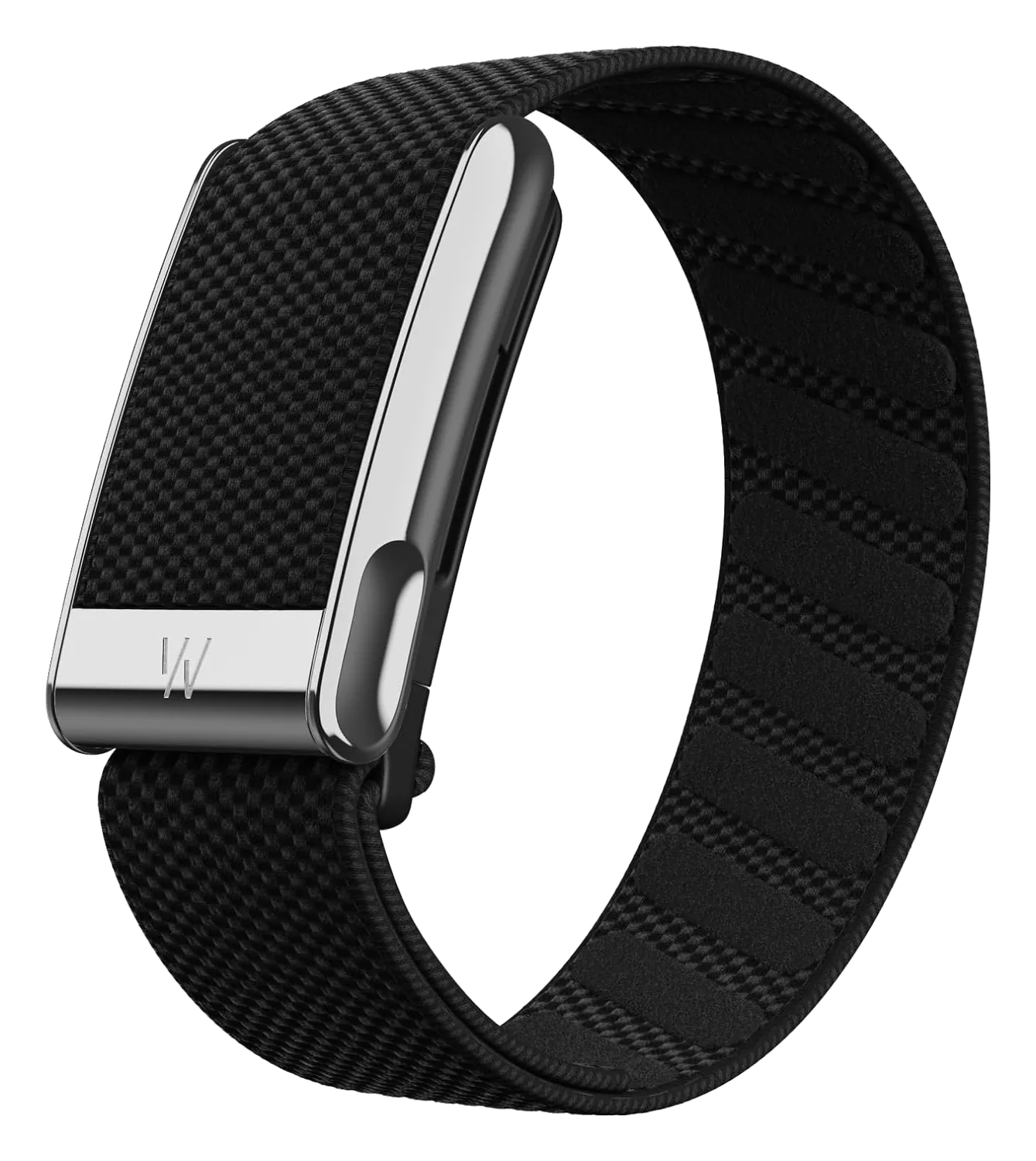
3. WHOOP MG
- Cycle-aware Recovery scores and an FDA-cleared ECG
- No screen, up to 14+ days per charge
Skip if you want no membership fee.
| Model | Best for | Form | Battery (maker claim) | Cycle features |
|---|---|---|---|---|
| 1Apple Watch SE (2nd generation) | iPhone owners | Watch | Up to 18 hours | Logs, predictions, deviation alerts |
| 2Samsung Galaxy Fit3 | Android phones | Band | Up to 13 days | Cycle logs in Samsung Health |
| 3WHOOP MG | Recovery coaching | Screenless band | Up to 14+ days | Cycle and pregnancy insights |
| 4Fitbit Charge 6 | GPS and ECG in a band | Band | Up to 7 days | Logs and predictions |
| 5Amazfit Band 7 | Fewest charges | Band | Up to 18 days | Period and fertile predictions |
| 6Fitbit Inspire 3 | Simple daily tracking | Band or clip | Up to 10 days | Logs and predictions |
| 7Oura Ring 4 | Cycle insights | Ring | 5 to 8 days | Temperature-based phases |
The Oura Ring 4 is the only cycle feature here that its maker says is built on nightly temperature.
How We Evaluated These
- I evaluated each tracker's women's health tools: how it logs and predicts periods, whether it reads temperature, and what the maker says it is not for.
- I assessed the health and safety sensors against their FDA status, from ECG and irregular rhythm notifications to fall detection.
- I compared each maker's battery claim with the charging routine it forces, and the app and membership each device needs.
- Accuracy figures on this page come only from studies that name the device generation and the reference method.
- Scored every tracker on the same five criteria.
- Women's health tools25%
- Health and safety sensors20%
- Battery and daily wear20%
- App and membership15%
- Owner feedback20%
Best Fitness Tracker for Women - 7 Expert Picks Reviewed for 2026
When choosing the best fitness tracker for women, I rated cycle tracking, safety features and the running cost of a membership above extra sport modes, because those are the points that decide whether a tracker earns a place on your wrist or finger for the long run. None of these devices diagnoses anything: cycle predictions, heart rhythm alerts and temperature trends are screening and tracking tools, and fitness trackers for women are no substitute for a doctor's care.
1. Apple Watch SE (2nd Gen)
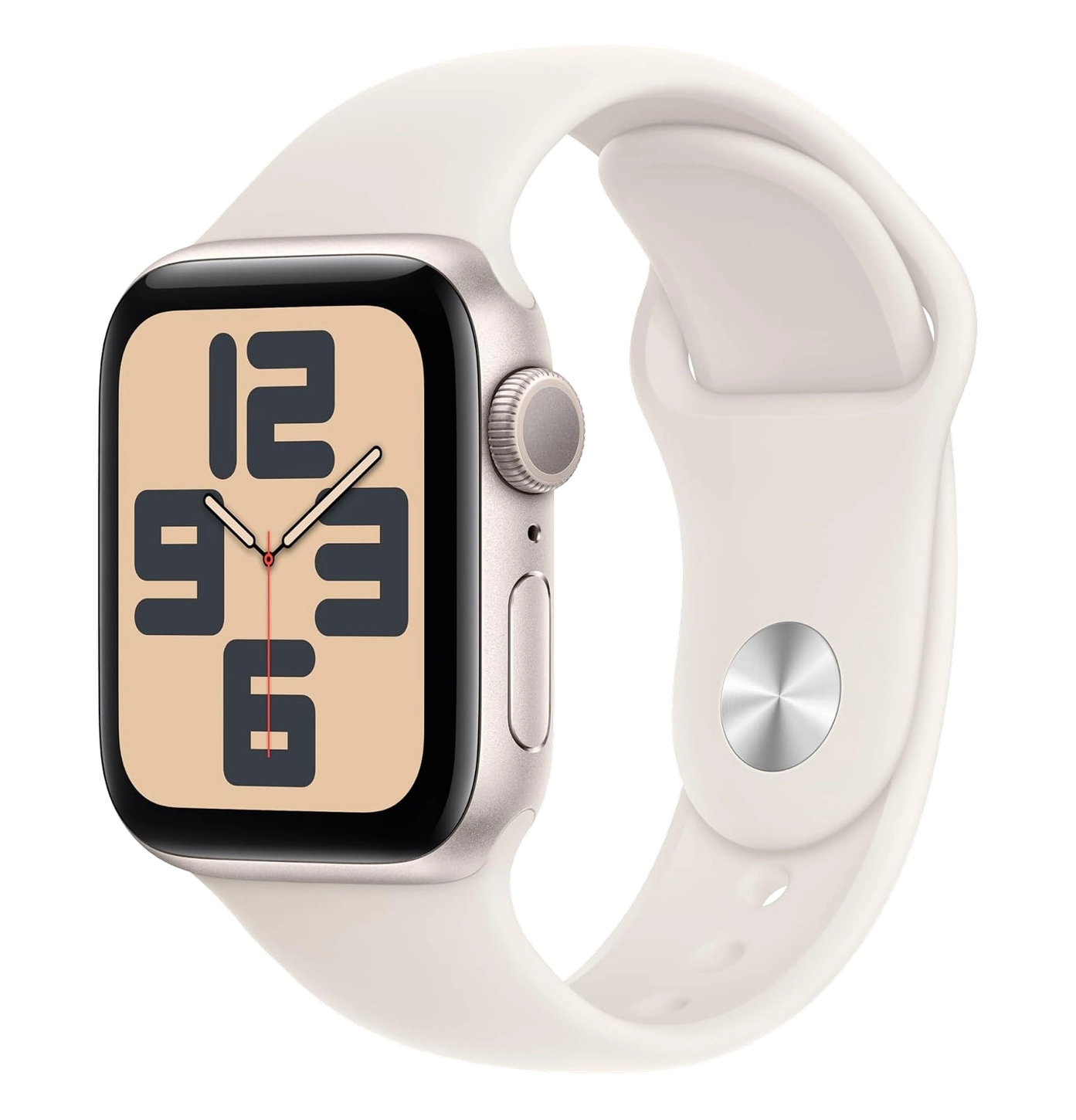
The Apple Watch SE (2nd generation) is the pick for a woman who already lives on an iPhone and wants a real smartwatch on a small wrist: a 40 mm aluminum case of 26.4 grams, built-in GPS, Fall Detection, Crash Detection and irregular rhythm notifications, with Cycle Tracking in the same Health app as the rest of her data. It is the 2022 SE, not the newer SE 3, and the catch with that age is a battery that lasts about a day and no wrist temperature sensor.
- Case Sizes
- 40 mm / 44 mm aluminum
- Display
- Retina LTPO OLED
- Battery Life
- Up to 18 hours (Apple's claim)
- GPS
- Built-in L1 GPS, Galileo, QZSS
- Water Resistance
- 50 m water resistant (swimproof)
- Heart Rate
- Second-generation optical sensor
- Health Features
- Fall and Crash Detection, irregular rhythm notifications, Cycle Tracking
- Connectivity
- Works with your iPhone or Wi-Fi
- Compatibility
- iPhone Xs or later, iOS 18 or later
- Warranty
- Check Apple's current terms
Features:
- Retina LTPO OLED display, 324 by 394 pixels on the 40 mm case, up to 1000 nits
- Built-in GPS for distance and pace on walks and runs without the phone
- Fall Detection, Crash Detection and Emergency SOS
- Irregular rhythm notifications and high or low heart rate alerts
- 50 m water resistance for pool and open-water swims
Fit decides this one first. The 40 mm case weighs 26.4 grams and comes with a small to medium sport band, so it suits slim wrists that a 44 mm watch would overhang. Heart rate runs all day from the second-generation optical sensor, and the Activity rings set a daily target for moving, exercising and standing. Steps, stand credit and calories can read low against a busy day on your feet, so treat those totals as a trend and do not chase the number.
Cycle Tracking is where this watch earns a place on a women's list, and also where its age shows. You log periods, symptoms and flow on the wrist or in the Health app, and Apple bases period predictions on the cycles and cycle lengths you have logged. It can notify you before a predicted period or fertile window, and it flags a six-month history that suggests irregular, infrequent or prolonged periods or persistent spotting. Apple uses wrist temperature to estimate ovulation only on Series 8 or later and Ultra models, and the 2nd-generation SE has no temperature sensor, so every estimate here comes from your logs. Apple is clear that Cycle Tracking is not birth control and its data does not diagnose a condition.
Safety features carry real weight for women who walk, run or ride alone. After a hard fall, if the watch detects you have been immobile for about a minute, it starts a 30-second countdown and then automatically contacts emergency services as well as your emergency contacts. Fall Detection is available only for those 18 or older, it turns on by itself if you enter an age of 55 or over, and Apple states the watch cannot detect all falls. A hard knock can also start the countdown by mistake, so learn how to cancel it in the first week. No other wrist band on this page combines fall and crash calls with built-in GPS; the Galaxy Fit3 offers fall detection and SOS calling only through a paired phone.
The heart features are screening tools, not tests. The irregular rhythm notification looks for patterns that suggest atrial fibrillation; Apple's ECG and irregular rhythm features were granted De Novo by the FDA in 2018, but this SE has no ECG app, no blood oxygen app and no wrist temperature. It is not meant for anyone under 22 or for someone already diagnosed with AFib, and the absence of a notification does not rule anything out. A woman who wants an on-demand ECG strip to show a doctor gets one from the Fitbit Charge 6 or the WHOOP MG on this page, not from this watch.
Why We Chose This
I chose the SE for iPhone owners because it is the only device on this list that is a full watch, with calls, payments and safety calls, at a size that fits small wrists. Its Health app keeps cycle logs, sleep, heart rate and workouts in one record you can share with a doctor, and it asks for no membership: Fitness+ is an optional subscription for guided workout videos.
Battery life is the trade. Apple claims up to 18 hours of normal use, so the SE needs a charger every day, and a woman who wants sleep and cycle data each night has to find a charging window, often while getting ready in the morning or in the evening before bed. Expect a daily charge and plan around it: it is the one habit this watch asks for that every band on this page does not. The display is bright and easy to read outdoors, and the watch is comfortable enough to wear through the night once that routine is set.
Software support is the second point to weigh before you order. Apple's watchOS 27 requires Series 9 or later, the SE 3 or Ultra 2 or later, so this 2nd-generation SE stays on an older watchOS while Apple's newer features go to newer watches. The SE 3, Apple's current SE, adds wrist temperature, which is what unlocks temperature-based ovulation estimates in Cycle Tracking. Check which SE the product page sells today: this one is the 2022 model, part number MXEF3LL/A, and a woman who cares most about cycle insights should look at the SE 3 or the Oura Ring 4 instead.
A display that stops waking on a raised wrist after the first year is a fault to watch for, so keep the receipt and consider extended cover. Setup also takes some learning: the Activity, Fitness and Health apps on the iPhone split the data in ways that confuse first-time owners, and the step count can disagree with another watch worn the same day. Against the rest of this list, the SE wins on safety calls, GPS and the Apple ecosystem, and loses on battery to every other device here and on temperature data to the Charge 6, Inspire 3, WHOOP MG and Oura ring.
Pros
- Fall and Crash Detection with automatic emergency calls
- Built-in GPS for routes without carrying the phone
- Irregular rhythm notifications that screen for AFib patterns
- Cycle Tracking with deviation alerts in the Health app
- Light 40 mm case of 26.4 grams for small wrists
- Bright Retina display that reads well outdoors
- 50 m water resistance for pool and open-water swims
Cons
- Up to 18 hours per charge and no wrist temperature sensor on this 2022 model
What it means: plan a daily charging slot, or sleep and cycle nights go unrecorded.
A full smartwatch for small wrists, with a daily charge.
For iPhone owners with small wrists, this SE is a full smartwatch with fall and crash calls, GPS and Cycle Tracking. It is the 2022 model, charges daily and has no temperature sensor.
2. Samsung Galaxy Fit3
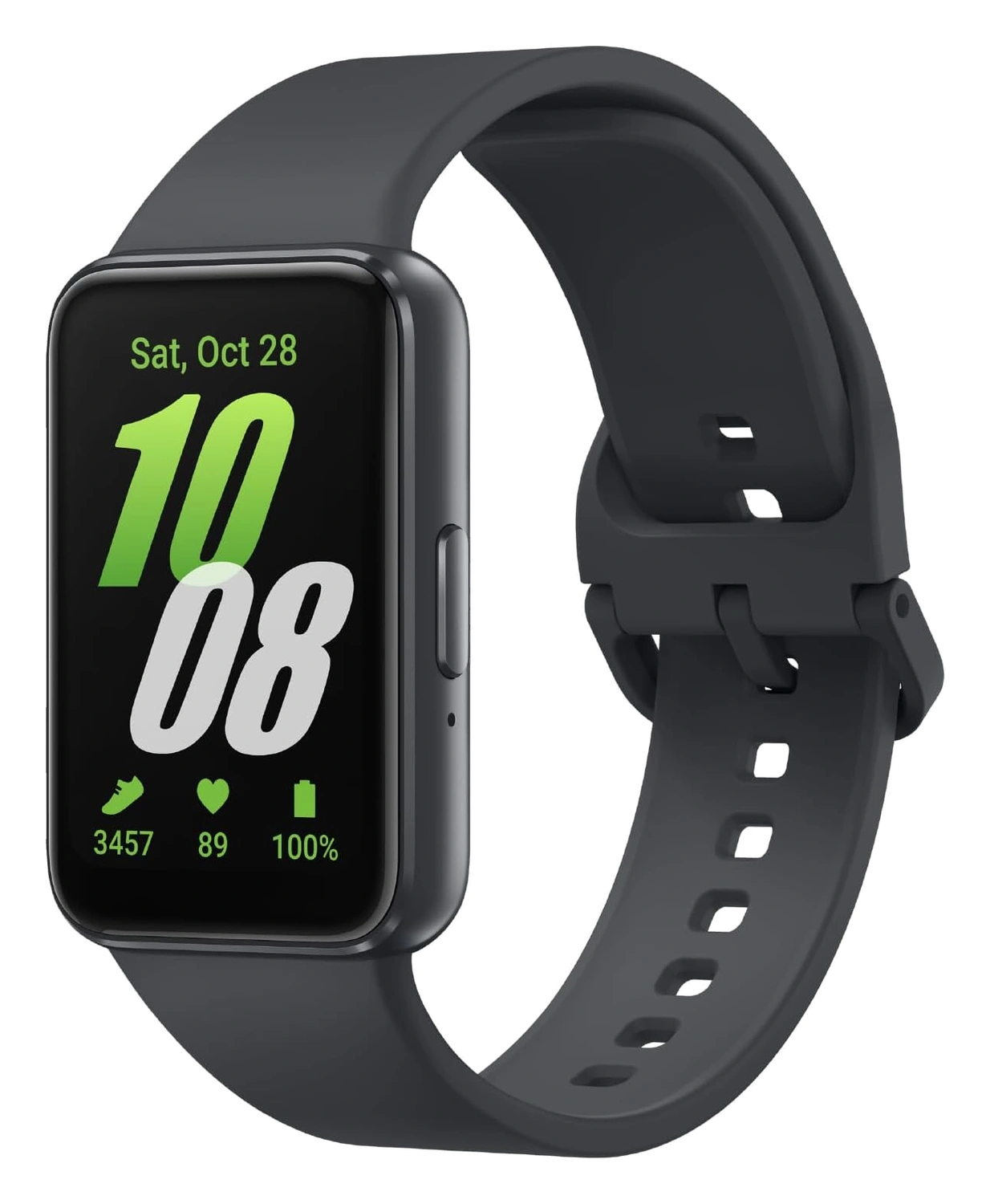
The Samsung Galaxy Fit3 is a slim band for Android phones with a screen larger than most bands: a 1.6 inch AMOLED of 256 by 402 pixels on a band listed at about 19 grams. It is rated for up to 13 days with the always-on display off, and it logs sleep, blood oxygen, stress and menstrual cycles into Samsung Health. It will not work with an iPhone.
- Display
- 1.6 inch AMOLED, 256 x 402
- Battery Life
- Up to 13 days (always-on display off)
- GPS
- Connected GPS (via phone)
- Water Resistance
- 5ATM and IP68
- Heart Rate
- Optical heart rate sensor
- Health Features
- Sleep, snoring (phone microphone), SpO2, stress, cycle tracking
- Sport Modes
- Automatic detection of select workouts
- Connectivity
- Bluetooth to an Android phone
- Compatibility
- Android phones only
- Warranty
- 2 years, manufacturer
Features:
- 1.6 inch AMOLED touchscreen that you can set to show your own photo
- Sleep tracking with snore detection through the paired phone's microphone
- Blood oxygen (SpO2) readings during sleep in Samsung Health
- Automatic detection of select daily workouts, with a compatible Galaxy phone
- Fall detection and SOS emergency calling with a paired Galaxy phone
What sets the Fit3 apart from the Inspire 3 and Charge 6 is the screen. At 1.6 inches it is the largest display on any band here, which helps a woman who glances at pace or heart rate mid-workout and wants more than a narrow strip. The screen is a touch display that can show a family photo instead of your step count, which suits anyone who wears it to work and would rather not show colleagues her numbers. It is listed at 5ATM and IP68, so it can stay on for pool laps and the shower.
For cycle tracking, the Fit3 is the simplest device on this page. Samsung lists menstrual cycle tracking among its features, and period dates live in Samsung Health on the phone. The sensor list is an accelerometer, gyro, barometer, light sensor and an optical heart rate sensor, with no skin temperature sensor, so cycle predictions come from what you log, not from your body. A woman who mainly wants her period dates in the same app as her steps and sleep is covered; one who wants temperature-based cycle phases needs the Oura Ring 4 or the WHOOP MG.
Battery is the number to read carefully. Samsung's 13 days assume typical use with the always-on display off, the default setting, so switching it on costs days. Battery life also runs short of the 13-day rating in daily use and can fade over the first year, with a charge that lasted a week shrinking to a few days. Turn the always-on display off, check the battery after the first month, and if it falls fast, use the warranty while you have it. Even well short of the rating, the Fit3 charges far less often than the Apple Watch SE.
Snore detection is the Fit3's sleep extra, and it works through the phone, not the band: Samsung says the paired phone must be within 2 feet of you, with snore detection turned on in Samsung Health. That makes it useful for a woman who wants to know whether snoring breaks her nights, and awkward for anyone who keeps the phone out of the bedroom. Sleep tracking, workout detection and blood oxygen need a compatible Samsung Galaxy phone, so on another brand of Android phone the band does less.
Why We Chose This
I rate the Fit3 as the right band for a woman with an Android phone, and above all a Samsung phone, who wants a big, bright screen and long gaps between charges, and needs nothing more than steps, sleep, heart rate and cycle logs. Its fall detection with SOS calling through a paired Galaxy phone is a safety layer the Inspire 3 and Band 7 do not list.
Setup is the hurdle. The band needs a Samsung account, the Galaxy Wearable app, the Samsung Health app and a plug-in for the Fit3, plus a long list of phone permissions before it pairs; you can switch some of them off later. Samsung's US support page states that the Fit3 is only compatible with Android phones. The watch faces are customizable, and the band pairs with other Android brands, though without the Galaxy-only features. It scores lowest on this page because its cycle tools are the most basic here and its battery tends to fall short of the rating.
Check the paperwork on arrival. This Amazon item is sold as a US version with a 2-year manufacturer warranty, so register the serial number with Samsung in the first days. If Samsung shows no warranty for it, return it inside the window. Against the Band 7, its closest rival on this page, the Fit3 gives up five days of rated battery and iPhone support, and gains a larger screen, fall detection and a Samsung Health record that pairs naturally with a Galaxy phone.
For workouts, the Fit3 is a logger more than a coach. It detects select daily workouts by itself with a Galaxy phone, but distance on a run comes from the phone, and the band shows no ECG and no training-load score. Its sleep analysis is likely to be the part you value most, with sleep stages, blood oxygen and snoring in one morning report. A woman training for a race gets more from the Charge 6, with its built-in GPS and stronger heart-rate evidence.
Pros
- Largest screen of the bands here at 1.6 inches
- Up to 13 days with the always-on display off
- Fall detection and SOS calling with a paired Galaxy phone
- Menstrual cycle tracking in Samsung Health
- Snore detection through the phone's microphone
- Rated 5ATM and IP68 for swims and showers
- Light band listed at about 19 grams for sleep tracking
Cons
- Works only with Android phones and needs several Samsung apps and permissions
What it means: an iPhone owner should look at the Charge 6, Band 7 or Inspire 3 instead.
A big screen and long battery for Android phones.
The Fit3 suits Android owners, Samsung phone owners most, who want a large bright screen, fall detection and cycle logs in Samsung Health, and no temperature data.
3. WHOOP MG
The WHOOP MG has no screen at all: it is a sensor on a knit band that turns heart rate, HRV, skin temperature, blood oxygen and sleep into daily Recovery, Strain and Sleep scores in the WHOOP app. This item is a 12-month WHOOP Life membership with the MG device included, which adds an FDA-cleared ECG feature and WHOOP's menstrual cycle and pregnancy insights. It runs only with an active membership.
- Design
- Screenless sensor, no buttons
- Battery Life
- Up to 14+ days (WHOOP's claim)
- GPS
- None built in
- Water Resistance
- IP68, up to 10 m
- Heart Rate Sampling
- Not published
- Sensors
- Optical heart rate, skin temperature, SpO2, accelerometer, ECG clasp contacts
- Health Features
- Recovery, Strain, Sleep, cycle and pregnancy insights, ECG (MG)
- Membership
- 12-month WHOOP Life included; device comes with it
- Connectivity
- Bluetooth to the WHOOP app
- Compatibility
- WHOOP app for iPhone and Android
Features:
- No screen and no buttons, so nothing lights up at night or buzzes for attention
- Up to 14+ days per charge, with a battery pack that charges it on the wrist
- On-demand ECG on the MG through a band with a conductive clasp
- Menstrual cycle and pregnancy insights tied to sleep, recovery and training
- Daily Recovery, Strain and Sleep scores with AI coaching in the app
This is the device for a woman who trains with a plan and wants to know whether her body is ready for a hard day. Recovery is a morning score built around overnight heart rate variability against a 30-day baseline, shown green at 67% or above, yellow from 34% to 66% and red at 33% or below; Strain rates the day's load from 0 to 21. WHOOP describes its women's health insights as showing how your menstrual cycle affects sleep, recovery and training, with tracking of cycle phases and symptoms.
For the wider market beyond this women's list, the top fitness tracker roundup covers bands, watches and rings for general use.
The missing screen is the design choice to accept before anything else. There is no clock, no step count on the wrist and no workout display; everything lives in the app, and the haptics are for alarms and notifications. A woman who wants to see her pace during a run needs a phone or a second device, and the MG has no built-in GPS. In exchange it is small, 34.7 by 24 by 10.6 mm, with nothing to snag on a sleeve.
The ECG is what the MG adds over the WHOOP 5.0, and it is a regulated feature with clear limits. The WHOOP ECG feature has FDA 510(k) clearance (K243236, April 4, 2025) as over-the-counter software for adults 22 and older that classifies a reading as atrial fibrillation, normal sinus rhythm, or a low or high heart rate, for informational use only. It is not recommended for people with other known arrhythmias or with a pacemaker or other implanted device, it needs the conductive-clasp band, and the reading must be taken dry, on the wrist. The Charge 6 is the only other device here with an ECG app.
Blood Pressure Insights deserve a plain warning. WHOOP's blood-pressure insights are a wellness feature, not an FDA-cleared blood-pressure measurement; after a 2025 FDA warning letter, the FDA said in June 2026 it would not enforce device rules for the modified version. WHOOP says the feature estimates systolic and diastolic ranges from overnight data, so it does not replace a cuff. A woman who needs to monitor blood pressure, during pregnancy or after a diagnosis, should keep using a validated upper-arm cuff and her doctor's plan.
Heart rate during workouts is the risk to watch: readings can drift well away from a chest strap during exercise, and no study has tested the WHOOP 5.0 or MG yet; the published validations cover the older WHOOP 4.0. Wear it snug and compare it with a chest strap on a few sessions before you trust its zones. For overnight data the picture is better: in a 2025 study of 13 healthy adults over 536 nights, the WHOOP 4.0 agreed closely with a chest-strap ECG for resting heart rate and HRV, though not quite as closely as the Oura rings in the same study.
Why We Chose This
I rate the MG highest on this page because it combines an ECG, skin temperature and blood oxygen with cycle-aware recovery coaching and a battery that charges on the wrist. Its insights are its strength: the daily scores turn a large amount of data into a clear call on whether to train hard, ease off or sleep more.
The membership is the real cost of this device and the main reason to hesitate. You pay only for the 12-month WHOOP Life membership, and the MG is included at no additional cost. An account goes inactive three days after a missed payment and cannot upload data. The yearly fee is its main drawback, so total the membership over two or three years before you compare it with a band that has no fee, and check current terms. The ECG and Blood Pressure Insights come only with WHOOP Life on the MG; the WHOOP One and Peak tiers come with the 5.0.
Living with it is easy once the strap fits. WHOOP claims up to 14+ days per charge, the longest of any device here after the Band 7, and the included battery pack charges the band while you wear it, so sleep and cycle data never miss a night. It is rated IP68 and water-resistant up to 10 meters of submersion, and not suitable for diving. Skin irritation under the band after several days is a risk to watch; moving it to the other wrist helps. The amount of data suits some women and overwhelms others: if all you want is steps and heart rate, the Inspire 3 does that with no fee.
For cycle tracking, WHOOP connects with Natural Cycles, and WHOOP describes daily fertility insights through that app. Natural Cycles is a separate app with its own FDA records; the WHOOP band itself is not a contraceptive or a fertility test, and WHOOP's terms state the device is not a medical device except where otherwise expressly indicated. Against the Oura Ring 4, the MG gives an ECG and a longer battery; the ring gives a smaller form and a cycle feature that Oura builds on nightly temperature.
Pros
- FDA-cleared ECG feature on the MG with the clasp band
- Cycle and pregnancy insights linked to recovery and sleep
- Up to 14+ days per charge on WHOOP's claim
- Charges on the wrist with the included battery pack
- Daily Recovery and Strain scores with clear guidance
- No screen or buttons to light up at night
- Water resistant to 10 meters, rated IP68
Cons
- Needs an active WHOOP membership, and an inactive account cannot upload data
What it means: the membership is the main running cost, so total it over two or three years and check current terms.
Recovery and cycle coaching with no screen, on a membership.
The WHOOP MG suits women who train to a plan and want recovery, cycle and ECG data with no screen. Count the yearly membership before you buy.
4. Fitbit Charge 6
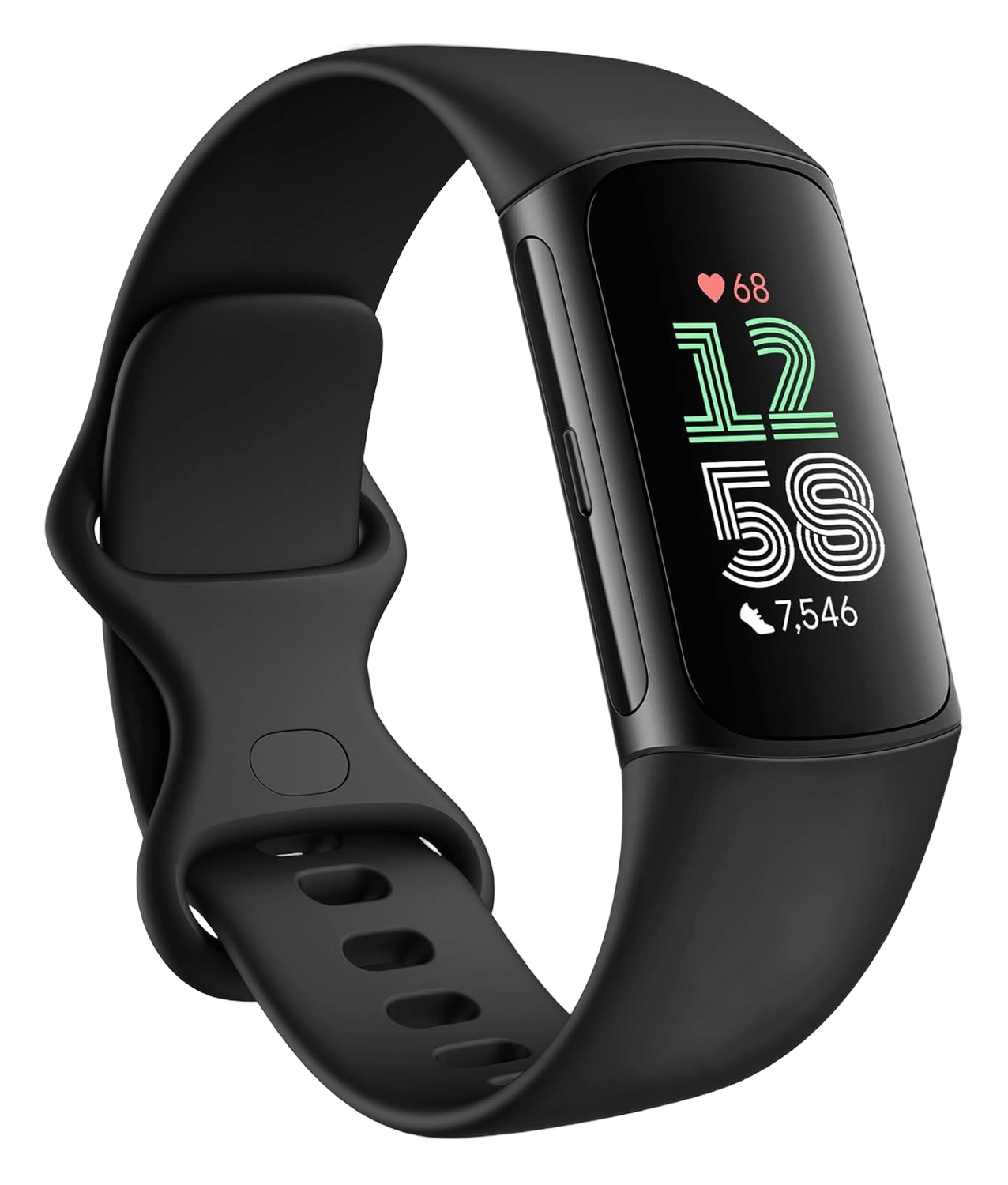
The Fitbit Charge 6 packs more health tools into a slim band than anything else on this page: built-in GPS, an ECG app, irregular rhythm notifications, blood oxygen during sleep and skin temperature variation, plus Google Wallet and Google Maps on the wrist. It works with iPhone and Android, and in a 2026 lab study it had the lowest typical heart-rate error of ten wearables.
- Display
- Color touchscreen
- Battery Life
- Up to 7 days (Google's claim)
- GPS
- Built-in, dynamic and phone GPS
- Water Resistance
- Water resistant to 50 m
- Sensors
- Optical heart rate, ECG, EDA scans, SpO2, skin temperature
- Health Features
- ECG app, irregular rhythm notifications, Google Maps, Google Wallet
- Exercise Modes
- Exercise app with auto-detection
- Connectivity
- Bluetooth, NFC for Google Wallet
- Compatibility
- Android 11+ / iOS 16.4+
- Warranty
- Check Google's current terms
Features:
- Built-in GPS for pace and distance without carrying the phone
- ECG app for an on-demand heart rhythm reading (not for under 22)
- EDA scans on the band, with results kept on the device
- Google Maps directions and Google Wallet payments on the wrist
- Heart-rate zones and real-time stats in the Exercise app
GPS is the Charge 6's first advantage over the other bands. It can use its own GPS or the phone's when the phone moves with you, so a woman who runs or walks routes without her phone still gets distance and pace. Google's battery claim is up to 7 days, up to 3 days with the always-on display, and up to 5 hours of continuous GPS, so a week of daily outdoor sessions will need a top-up. Calorie totals stay an estimate on any band: a review of 67 Fitbit studies found calorie estimates unlikely to be accurate in any condition, so use them to spot trends, not to set food portions.
Heart rate is where the evidence on this exact model is good. In a 2026 lab study, ten wearables were each tested on about ten of 45 healthy adults against an ECG chest strap at rest, during a stress task and while walking, in neutral, hot and cold rooms; the Charge 6 had the lowest median error, 4.5 beats per minute (5.5%), and climate made no significant difference. That gives its heart-rate readings the strongest published support of the devices here, which the screenless WHOOP MG and the Inspire 3 cannot match.
The top calorie tracker roundup covers trackers chosen for calorie estimates and food logging.
The heart tools are regulated screening features. The Fitbit ECG app has FDA 510(k) clearance (K200948, 2020) as an app that creates and stores a single-channel ECG reading; it is not for people under 22, the AFib result is not recommended for people with other known arrhythmias, and it is available only in select countries. Irregular rhythm notifications (K212372, 2022) check pulse data in the background for patterns suggestive of AFib and are not for people already diagnosed with it. Neither needs a subscription. Blood oxygen is estimated during sleep and is not intended for medical purposes.
For cycle tracking, the Charge 6 works through the Google Health app (formerly the Fitbit app). You log periods, symptoms, flow and ovulation tests, and the app predicts the next period and a fertile window from what you log, with a reminder two days before a predicted period. None of it needs a subscription, and it is not for contraception or other medical purposes and may not predict cycles accurately. The band also records skin temperature variation, shown in the app in certain regions, but Google does not use it for cycle phases the way Oura does.
Why We Chose This
I rate the Charge 6 as the most complete band here for a woman who wants health screening and outdoor workouts in one device: it is the only band on this page with both built-in GPS and an ECG app, and its heart-rate accuracy in the 2026 study was the best of the ten devices tested. Sleep data is a strength too, with REM, deep and light stages broken down each morning.
Google Health Premium is optional. It gates the Google Health Coach, built with Gemini, and the Charge 6 comes with a trial that must be activated within 60 days of setting up the band; the ECG app, irregular rhythm notifications and cycle tracking need no subscription. Check current terms before the trial ends. The band also takes EDA scans for stress, but since Google's app changes the results stay on the device and no longer save to the phone. Google Wallet and Maps work on the wrist, while YouTube Music controls need a phone nearby and a paid YouTube Music plan.
For a device worn away from the wrist, the top ankle fitness tracker roundup covers bands made for the lower leg.
Long-term ownership is the weak side. Battery life is likely to fade toward the two-year mark, the band's latch is a likely weak point, so plan on a replacement band. Check that the magnetic charger has seated before you walk away. Google has also removed features from the app over time, so a function you buy it for may not stay. Water Lock does not turn on by itself for a swim on the Charge 6; turn it on before you get in. The band is water resistant to 50 meters.
Against the Inspire 3, the Charge 6 adds built-in GPS, the ECG app, Wallet and Maps and far better heart-rate accuracy, for three fewer days of rated battery. Against the Apple Watch SE, it lasts days instead of hours and works with Android, but has no fall detection. For a woman who wants one band to run with and to check her heart rhythm, it is the strongest all-rounder here.
Pros
- Built-in GPS on a slim band
- FDA-cleared ECG app and irregular rhythm notifications
- Lowest typical heart-rate error of ten devices in a 2026 study
- Detailed sleep stages each morning in the app
- Google Wallet and Maps on the wrist
- Cycle logs and predictions with no subscription
- Works with iPhone and Android phones
Cons
- Up to 7 days per charge, the shortest of the bands here
What it means: plan a weekly charge, and more often with daily GPS workouts.
The most complete band for GPS and heart health.
The Charge 6 is the band to pick for built-in GPS, an ECG app and accurate heart rate on iPhone or Android. Expect to charge it weekly and to replace the band.
5. Amazfit Band 7
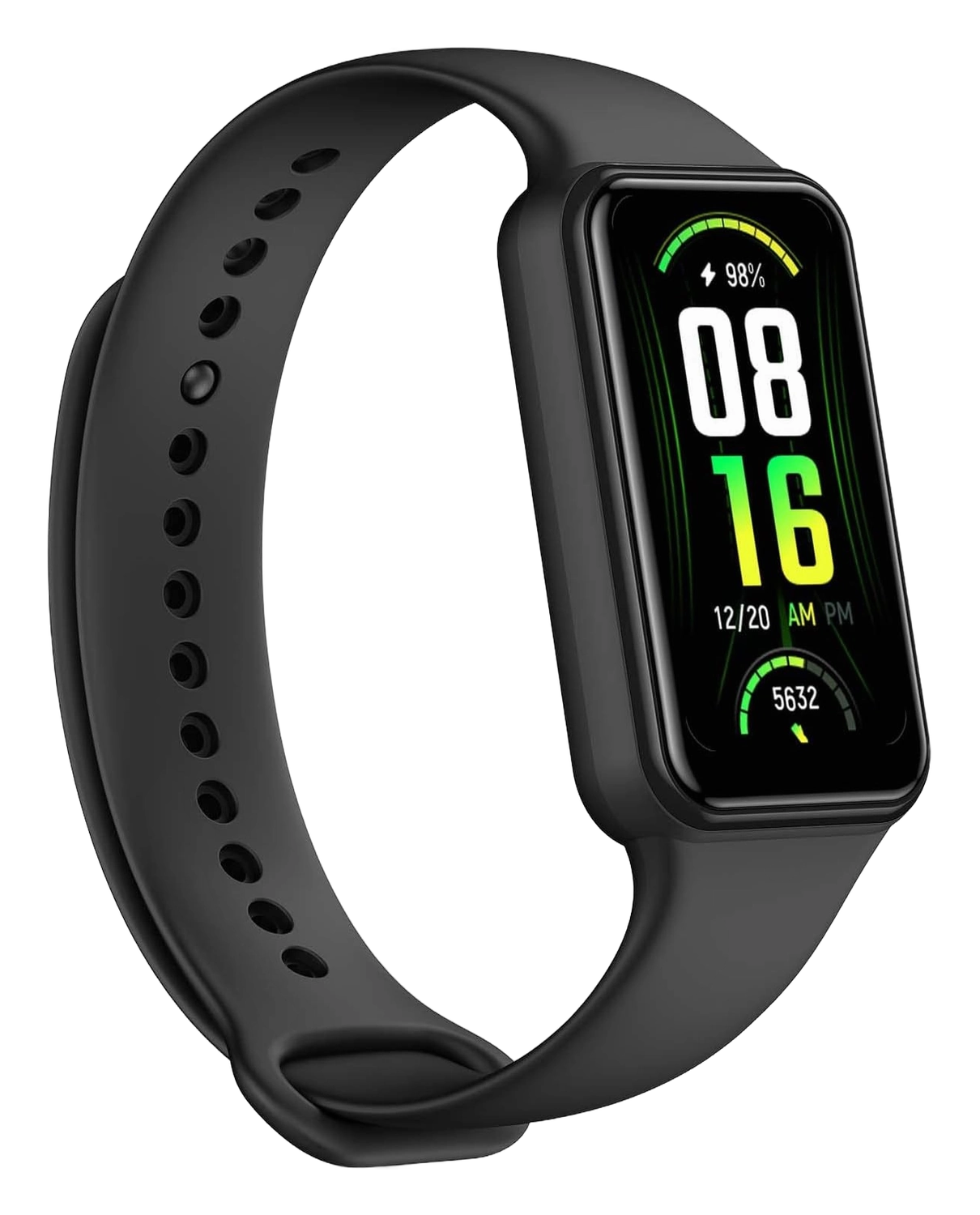
The Amazfit Band 7 is the band to choose when charging is the chore you hate most. It is listed at up to 18 days of typical use and up to 28 days in battery saver mode, the longest of any device on this page, and no membership is listed for the Zepp app it runs on; check current terms. It tracks heart rate, blood oxygen, stress, sleep stages and menstrual cycles on a 1.47 inch AMOLED screen.
- Display
- 1.47 inch AMOLED, always-on option
- Battery Life
- Up to 18 days (28 in battery saver)
- GPS
- Connected GPS (via phone)
- Water Resistance
- 5 ATM
- Sensors
- Optical heart rate, SpO2
- Health Features
- PAI, stress, sleep stages, cycle tracking
- Voice Assistant
- Amazon Alexa built-in
- Sport Modes
- 120
- Connectivity
- Bluetooth to the Zepp app
- Compatibility
- iPhone and Android (Zepp app)
Features:
- 1.47 inch AMOLED display with an always-on option
- Up to 18 days of typical use on Amazfit's claim
- Amazon Alexa built in for reminders, timers and quick questions
- 120 sports modes, with automatic recognition of four everyday ones
- Menstrual cycle and fertile period tracking and prediction in the Zepp app
Battery is the reason to buy it, and it holds up. The band runs for well over a week between charges with heart rate on all day, so a weekly or fortnightly top-up replaces the daily routine of the Apple Watch SE. That matters most for sleep and cycle logs: a band that never comes off for charging never misses a night. The PAI score is a single activity number worked out from heart-rate changes over the past 7 days, a simpler target than counting steps.
Comfort is its second strength. The band is light at 28 grams and slim enough to sleep in, and the strap can be swapped for a metal or fabric one to wear with work clothes. The 1.47 inch screen is bright and easy to read, a touch smaller than the Galaxy Fit3 and much larger than the Inspire 3. It is listed at 5 ATM, so it handles swimming and showers. GPS comes from the phone, so carry it on runs where distance matters.
For cycle tracking, the Band 7 can track and predict menstrual and fertile periods, with the data in the Zepp app on iPhone or Android. Like the Fit3, it has no skin temperature sensor, so its predictions rest on the dates you log. That is enough for a woman who wants period reminders on her wrist and a calendar of past cycles, and it is not a fertility tool: plan nothing around the fertile-window estimate of a calendar app. For predictions that also read your body temperature, the Oura Ring 4 is the device on this page built for it.
Expect a few quirks. A long press on the screen opens the watch-face picker, which is easy to trigger by accident, and if you wake around midnight or sleep by day after a night shift, check that your sleep is not filed as naps. Early failures are a likely trait: some bands have died within one to two years, and a cracked screen in the first weeks is a risk to watch. Run every function inside the return window and keep the receipt.
Check the strap fit in the first days. On some wrists the standard strap sits a little loose on one hole and a little tight on the next, so a replacement strap with finer adjustment is worth having if heart rate or sleep readings look patchy.
Why We Chose This
I rate the Band 7 as the longest-lasting device here and the one with the fewest strings attached: no membership, works with iPhone and Android, and a large, readable screen. It does less than the Charge 6 for heart health, with no ECG, no irregular rhythm notifications and no built-in GPS.
The Zepp app covers daily reports, sleep stages, PAI and cycle logs well enough, but it does not offer the depth of Apple Health or the Google Health app, and its integrations are fewer. The band works as a standalone health record rather than one part of a larger platform. It was announced in July 2022, and Amazfit has newer models; buy it for the battery, the screen and an app with no listed membership, not for new features.
Against the Galaxy Fit3, the Band 7 offers five more days of rated battery, iPhone support and no Samsung account, and gives up fall detection and SOS calling. Against the Inspire 3, it lasts longer and shows a much bigger screen, but has no irregular rhythm notifications or skin temperature data. For a woman who wants a simple band that stays on through two weeks of sleep, periods and workouts, it is the easiest to live with.
Workout tracking is broad rather than deep. The band offers 120 sports modes and recognises four everyday ones by itself: walking, running, and elliptical and rowing machine sessions. Alexa answers quick questions, sets reminders and runs timers from the wrist, in the countries where Amazfit offers it. For timing rest between sets or logging a daily walk that is plenty; for pace-based running, carry the phone or choose the Charge 6.
The health readings run around the clock: the band monitors heart rate, blood oxygen and stress 24 hours a day and tracks light, deep and REM sleep. Those are wellness readings, not medical measurements, and with no irregular rhythm notification the band will not prompt you about an unusual heart rhythm. For that screening on a simple band, the Inspire 3 is the closer fit.
Pros
- Up to 18 days per charge on Amazfit's claim
- No membership listed for the Zepp app
- Bright 1.47 inch AMOLED with an always-on option
- Period and fertile-window predictions from your logs
- Light 28 gram band that is easy to sleep in
- Alexa built in for reminders and timers
- Works with iPhone and Android
Cons
- No ECG, no irregular rhythm notifications and no built-in GPS
What it means: for heart rhythm screening, choose the Charge 6 or Inspire 3 instead.
The longest battery here, with no membership.
The Band 7 suits women who want the longest battery and no membership, on iPhone or Android. It has no ECG, no temperature sensor and no built-in GPS.
6. Fitbit Inspire 3
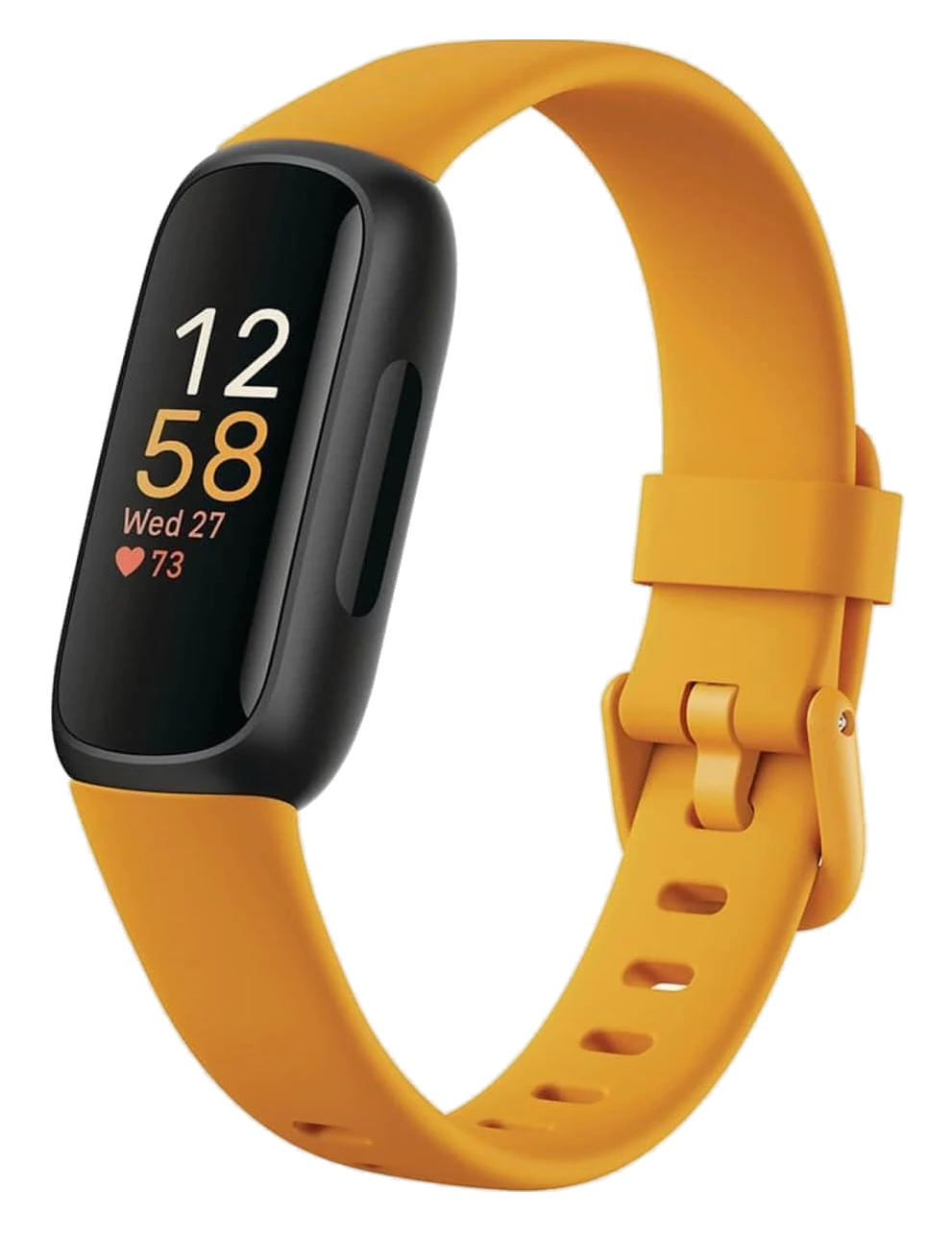
The Fitbit Inspire 3 is the small, quiet option: a slim band that tracks steps, heart rate, sleep stages, blood oxygen during sleep and skin temperature variation, with irregular rhythm notifications, for up to 10 days on Google's claim. It comes in Midnight Zen, Lilac Bliss and Morning Glow, and it can move into a clip on a waistband or bra for days when a wrist band does not suit the outfit.
- Display
- Color touchscreen
- Battery Life
- Up to 10 days (Google's claim)
- GPS
- Connected GPS (via phone)
- Water Resistance
- Water resistant to 50 m
- Sensors
- Optical heart rate, SpO2, skin temperature
- Health Features
- Irregular rhythm notifications, sleep stages, cycle tracking in the app
- Sport Modes
- Exercise app with auto-detection
- Connectivity
- Bluetooth
- Compatibility
- iPhone or Android (Google Health app)
- Warranty
- Check Google's current terms
Features:
- Slim, light band with a color touchscreen
- Irregular rhythm notifications in the background
- Up to 10 days per charge with all-day heart rate and sleep stages
- Blood oxygen during sleep and skin temperature variation in the app
- Clip mode for wear on the body instead of the wrist
Size is what makes the Inspire 3 easy to wear every day. The band is small and light enough that you stop noticing it, and the screen stays legible despite its size. That is the right trade for a woman who wants tracking with nothing that looks like sports gear at work or with evening clothes, and it is why it suits the Lilac Bliss and Morning Glow bands or a metal mesh strap. Check that the wrist-raise lights the screen reliably for you; on some units a tap is needed.
Clip mode is a feature no other band here offers. Set the Inspire 3 to Clipped on Body and it can ride in an accessory clip, but heart-rate tracking, automatic exercise tracking and Active Zone Minutes turn off in that mode, so it counts steps and little else. In bed, the screen can wake if the band is pressed, so check this in the first nights if light disturbs your sleep. For a full night of sleep stages, wear it snug on the wrist: nights can go unrecorded when it sits loose.
Heart-rate accuracy is the weak point on published data. In a 2026 lab study of ten wearables against an ECG chest strap at rest, during a stress task and while walking, the Inspire 3 had the highest typical error of the ten, 14.3 beats per minute, reading low on average, while the Charge 6 in the same study had the lowest, 4.5. Use the Inspire 3 for daily trends, resting heart rate and sleep, and choose the Charge 6 if heart-rate zones guide your training.
For women's health, it covers the basics through the Google Health app (formerly the Fitbit app): period logs, symptoms, a predicted period and fertile window from your logs, and skin temperature variation in certain regions. Google states cycle tracking is not for contraception or other medical purposes. The irregular rhythm notification screens for AFib patterns in the background (FDA 510(k) K212372), but there is no ECG app, so a notification means booking a doctor's visit rather than taking a reading on the spot.
Battery covers more than a week. Google claims up to 10 days per charge, but only up to 3 days with the always-on display, and it says battery figures are approximate and based on default settings. Leave the always-on display off and the Inspire 3 needs charging less often than the Charge 6 and far less often than the Apple Watch SE.
Why We Chose This
I rate the Inspire 3 as the best simple bracelet here: it does the daily essentials, steps, sleep, resting heart rate and cycle logs, on a band small enough to forget, with Google's claim of up to 10 days per charge, and it works with iPhone and Android.
The trade-offs are clear. There is no built-in GPS, so distance on runs comes from the phone you carry; the screen is the smallest of the bands here; and there is no ECG. Sync is the likely frustration since Fitbit moved to Google: the band keeps tracking, but data can stop transferring to the app until you re-pair, and an app update can reset a day's totals. If sync breaks, update the app and the band first, then re-pair. For strength training detail, the best fitness tracker for weight lifting is a separate topic with its own picks.
Google Health Premium is optional here too: a trial comes with the Inspire 3 and must be activated within 60 days of setting it up, and the paid plan renews afterwards, so check current terms before it bills. Before a swim, swipe down from the clock screen, tap Water Lock and firmly tap the screen twice to turn on water lock. Against the Band 7, it gives up about a week of rated battery and the bigger screen, and gains irregular rhythm notifications, skin temperature data and clip wear. Against the Charge 6, it is smaller and lasts longer, and gives up GPS, the ECG app and accuracy.
Stress shows up as the Resilience score, a daily status of Optimal, Balanced or Low built from heart rate, heart rate variability, recent exercise and sleep. It is not a diagnosis, but it gives a useful prompt to rest or to check in with a doctor. The band has no EDA sensor, so it reads stress from your heart and sleep rather than from your skin.
Pros
- Small, light band that is easy to wear all day
- Up to 10 days per charge on Google's claim
- Irregular rhythm notifications included with no subscription
- Skin temperature and blood oxygen trends in the app
- Clip mode for wear on the body
- Cycle logs and predictions in the Google Health app
- Works with iPhone and Android
Cons
- Heart rate was among the least accurate of ten devices in a 2026 lab study
What it means: if heart-rate zones guide your training, the Charge 6 is the better band.
A small band for everyday tracking that you forget you wear.
The Inspire 3 suits women who want a small, discreet band for steps, sleep and cycle logs on iPhone or Android, and do not need GPS or an ECG.
7. Oura Ring 4
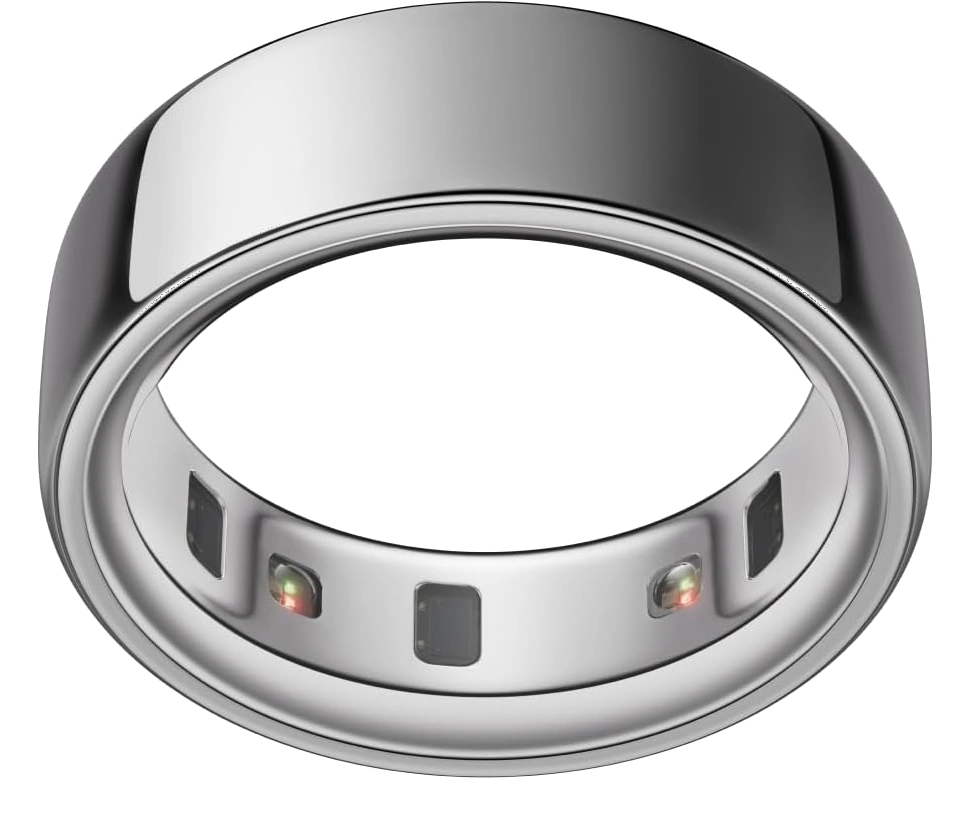
The Oura Ring 4 moves tracking from the wrist to the finger and is the device on this page built around the menstrual cycle: Oura's Cycle Insights use your nightly temperature, with signals such as HRV, to track cycle phases and predict periods. It is a titanium ring of 3.3 to 5.2 grams, water resistant to 100 meters, and Oura now sells the Oura Ring 5 as its newest generation, with the Ring 4 as the previous one.
- Material
- Titanium
- Available Sizes
- 4 to 15
- Battery Life
- 5 to 8 days (Oura's claim)
- Water Resistance
- Water resistant to 100 m (not for diving)
- Sensors
- Red, infrared and green LEDs, temperature sensor, accelerometer
- Health Features
- Readiness, Sleep and Activity scores, Cycle Insights
- Connectivity
- Bluetooth
- Membership
- Oura Membership needed for most data; check current terms
- Compatibility
- iOS 16+ / Android 11+
Features:
- Titanium ring, 3.3 to 5.2 grams by size, water resistant to 100 m
- Digital temperature sensor that reads nightly temperature trends
- Daily Readiness, Sleep and Activity scores
- Cycle Insights with phases, period predictions and a fertile window where allowed
- Sizes 4 to 15, so size before you order
A ring is the most discreet tracker here. It looks like jewelry, matches dresses and rings in gold or silver, and leaves both wrists free for a watch, bracelets or work with the hands. It is comfortable to wear around the clock. The catch with that form is fit: a ring cannot be loosened, so a change in finger size means a different ring. Confirm your size on the finger you will wear it on before you order.
Daily care is simple. The ring is titanium on both its inner and outer surfaces, which Oura describes as non-allergenic, and it charges in 20 to 80 minutes on a size-specific charger, so a top-up during a shower or breakfast keeps the nights covered. It is water resistant to 100 meters, suitable for swimming and the shower but not for diving. Light scratches on the underside are possible if you work with your hands.
Cycle Insights is the reason this ring carries the women's health lead on this page. Oura tracks the two main phases from nightly average temperature with other signals such as HRV, and predicts periods for the next 12 months, sharpening as you log more cycles. It shows a fertile window only in countries that meet regulatory requirements, and Oura states that fertile window insights are for tracking purposes only and should not be used as a form of birth control. On hormonal contraception you see period predictions but not phases or a fertile window; in menopause, temperature trends still show.
Birth control is a separate product. Natural Cycles is a stand-alone app with FDA records of its own: a De Novo grant as a contraceptive software application (DEN170052, August 10, 2018) and a 510(k) (K202897, June 24, 2021) that lets it take temperature input from the Oura ring. The FDA-cleared device is the app; the Oura ring itself has no FDA clearance, and Oura states it is not a medical device. A woman who wants to use temperature data for contraception should read Natural Cycles' own instructions and talk to her doctor.
The overnight data is the best documented on this page. In a 2025 study of 13 healthy adults, six of them women, over 536 nights, the Oura Ring 4 matched a chest-strap ECG (Polar H10) closely for resting heart rate (mean absolute percentage error 1.94%) and HRV (5.96%), ahead of the WHOOP 4.0 in the same study. That supports the ring's Readiness score as a reflection of your nights. For workout heart rate, check how often the ring records during exercise in the first week; a band with a screen, such as the Charge 6, is the better tool there.
Why We Chose This
I rate the Ring 4 highest of all seven for women's health tools: it is the only device here whose cycle feature reads your body temperature by Oura's own description, it is comfortable for sleep, and its overnight heart data has the strongest published support. It also has the fewest features without a membership.
Without an active Oura Membership you see only the three daily scores, Readiness, Activity and Sleep; Cycle Insights, detailed sleep, 24/7 heart rate, blood oxygen and step tracking need it, so count the membership as a running cost and check current terms. Oura claims 5 to 8 days per charge, and a charge takes 20 to 80 minutes. If you swim often, the 100 meter rating compares well with the 50 meter bands; the best fitness tracker for swimming roundup covers that use in detail.
Battery wear is the known weak point. The battery can decline within the first year or two of daily use, with some rings dropping to a day or two per charge or dying, and Oura replaces failed rings quickly under warranty. Keep the membership and warranty records, check the charge time each month, and contact Oura as soon as it falls. The app tends to be wordy and takes time to learn, and it is worth checking that long stretches of sitting are not logged as naps.
Against the WHOOP MG, the ring is smaller, has a cycle feature based on temperature and needs a lower commitment to wear, but it has no ECG and a shorter battery. Against the Charge 6 and Apple Watch SE, it gives up the screen, GPS and safety features. For a woman whose first goal is understanding her cycle, sleep and recovery, with nothing on her wrist, it is the device I would pick.
Pros
- Cycle Insights built on nightly temperature
- Strong overnight heart data in a 2025 study of the Ring 4
- Light titanium ring of 3.3 to 5.2 grams
- Water resistant to 100 meters
- Readiness, Sleep and Activity scores each day
- Looks like jewelry and leaves the wrists free
- Works with iPhone and Android
Cons
- Cycle Insights and most data need a paid Oura Membership
What it means: the cycle feature lasts only as long as the membership, so check current terms before you buy.
Temperature-based cycle insights on a discreet ring.
The Oura Ring 4 suits women who want temperature-based cycle insights, sleep and recovery data on a ring. Size it first and plan for the membership.
Why Apple Watch SE Might Be the Best Fitness Tracker for Women Right Now
For a woman who uses an iPhone and wants one device for calls, payments, workouts and safety, the Apple Watch SE (2nd generation) still covers the essentials: Fall Detection, Crash Detection and Emergency SOS, built-in GPS, and irregular rhythm notifications that screen for patterns suggestive of atrial fibrillation. Those notifications are not meant for anyone under 22, and the absence of a notification does not rule out AFib.
What it lacks matters just as much on a women's list. It has no wrist temperature sensor, so Cycle Tracking predicts from your logs alone, and it does not get watchOS 27. That is why it leads only for iPhone owners who value safety and the Apple ecosystem, and why the SE 3 or the Oura Ring 4 is the better choice when cycle insight comes first.
The Health app is the SE's long-term strength. Sleep, cycle logs, heart rate trends and workout history sit in one record on the iPhone, and you can share it with a doctor or export it. Apple's Cycle Tracking also flags a six-month logged history that points to irregular, infrequent or prolonged periods, which is a useful prompt to book an appointment, not a diagnosis.
The SE 3 is the newer model in Apple's lineup and adds wrist temperature, which feeds ovulation estimates in Cycle Tracking, and it gets watchOS 27. If the SE 3 fits your plans, it is the better buy for a woman who cares about cycle data; the 2nd-generation SE here suits a woman who wants the safety features and the smallest case and is content with log-based predictions.
For small wrists, the 40 mm case with the small to medium band is the size to order. For a home workout setup that pairs with a wearable, the best budget smart home gym options are a separate topic.
How to Choose the Best Fitness Tracker for Women
No single device wins on every point, so start with the one that matters most to you. The best fitness tracker for women comes down to four choices, in this order.
Form Factor - Bracelet, Watch, Ring, or Screenless Band
Form is the first filter, because a tracker you leave in a drawer records nothing. A watch (the Apple Watch SE) gives the most features on the wrist and the shortest battery. Slim bands (the Galaxy Fit3, Charge 6, Band 7 and Inspire 3) last a week or more and suit sleep tracking. A screenless band (the WHOOP MG) shows nothing and sends everything to the app. A ring (the Oura Ring 4) is the most discreet and leaves the wrists free, but it must be sized right, because it cannot be loosened.
Safety features differ sharply across the seven. The Apple Watch SE has Fall Detection, Crash Detection and Emergency SOS, and calls for help itself after a hard fall if you stay immobile. The Galaxy Fit3 lists fall detection and SOS emergency calling with a paired Galaxy phone. The bands from Fitbit and Amazfit, the WHOOP MG and the Oura ring list no fall detection, so a woman who runs or hikes alone and wants that layer should choose between the first two.
The priorities here differ from a general list: cycle tracking, discreet form and the cost of a membership weigh more than GPS or sport modes. Evidence that a tracker alone changes behaviour is modest. In a 2021 randomized trial of 47 women with overweight or obesity, self-reported walking rose only in the group that got a tracker plus weekly support emails, and no difference between groups was significant (1). The habit you build around the device matters as much as the device.
The best fitness tracker for men roundup covers the same question for men.
All seven picks sync to their apps over Bluetooth, so none is an offline device. A woman who wants no wireless link at all needs a basic pedometer rather than any tracker here.
Subscription Costs - Total Cost of Ownership
The device is only the first cost.
What you pay over two or three years is the fair comparison.
The WHOOP MG comes with a WHOOP Life membership: you pay for the membership and the device is included, and the account goes inactive if a payment is missed. The Oura Ring 4 needs an active Oura Membership for Cycle Insights and most of its data. The Charge 6 and Inspire 3 work without a subscription; Google Health Premium is optional and gates the Google Health Coach. Apple's Fitness+ is an optional subscription for guided workout videos. No membership is listed for the Zepp app, and Samsung lists no membership for the Fit3. Check current terms for each before you buy.
Read what each membership gates before you count it. Without an Oura Membership the ring shows only its three daily scores, Readiness, Activity and Sleep, so Cycle Insights stop. A WHOOP account goes inactive three days after a missed payment and can no longer upload data. Google Health Premium mainly adds the Google Health Coach, while the ECG app on the Charge 6, and irregular rhythm notifications and cycle tracking on both Fitbits, stay free; a trial comes with each band and must be activated within 60 days of setting it up. Total two or three years of any fee next to the device before you decide.
Accuracy - What the Research Actually Shows
Accuracy differs a lot by metric, and that should set how much you trust each number. A 2024 umbrella review of 24 systematic reviews, covering 249 validation studies and 430,465 participants (43% female), found heart rate within about 3% mean bias, steps mostly undercounted, energy expenditure mostly underestimated, and total sleep time overestimated, with errors often above 10% (2). A 2015 review of early Fitbit and Jawbone trackers found energy expenditure more often underestimated (3).
So trust heart rate and sleep trends more than calorie totals. A 2018 review of 67 Fitbit studies found step counts met the accepted error limit about half the time, and calorie estimates unlikely to be accurate in any testing condition (4). On specific models, a 2026 lab study found the lowest typical heart-rate error of ten wearables on the Charge 6 (4.5 bpm) and the highest on the Inspire 3 (14.3 bpm). Use calorie data as a trend, not a target.
Blood oxygen and temperature are wellness readings on all seven devices. None of them is an FDA-cleared blood-oxygen or temperature measurement, and the FDA notes ongoing concerns that pulse oximeters may be less accurate in people with darker skin pigmentation. Use these readings as trends against your own baseline, and use a medical device and your doctor for anything that matters to your care.
For a full watch with ECG, GPS and apps, the top fitness watch roundup compares watch-style trackers.
A 2020 meta-analysis of 12 randomized trials with 1,693 healthy adults, about 64% of them women, linked tracker use with a modest, short-term rise in physical activity, with no clear effect on weight (5). A tracker supports a routine; it does not replace one.
Sleep numbers deserve the same caution. Wearables tend to overestimate total sleep time, so a tracker that reports seven hours may be crediting time you spent lying awake. Judge your sleep by the trend over weeks and by how you feel, and pick a device you can wear every night: the bands and the ring here do that far more easily than a watch that needs a daily charge.
Lifting, swimming and CrossFit each ask different things of a tracker: rep and set logging, a water rating and swim modes, or a band that survives rough handling. Check those points against the spec boxes above before you choose.
Women's Health Features - Cycle Tracking and Hormonal Insights
Cycle tracking works in two ways on this page. Calendar-based tracking predicts periods and a fertile window from the dates and symptoms you log: that is how the Apple Watch SE, Galaxy Fit3, Band 7, Charge 6 and Inspire 3 work. Temperature-based tracking adds what the device reads from your body: Oura's Cycle Insights use nightly temperature with signals such as HRV, and WHOOP describes cycle insights tied to recovery. No device here is a contraceptive, and each maker says so for its own feature.
Research supports temperature as a useful signal, with limits. In a 2019 study, 237 women trying to conceive wore the Ava bracelet nightly; wrist skin temperature, heart rate and breathing rate shifted with cycle phase, and an algorithm detected the fertile window with 90% accuracy against urine ovulation tests (6). A 2026 meta-analysis of 27 studies found wearables detected the fertile window with pooled accuracy of 0.88, sensitivity 0.79 and specificity 0.80, with ring-type devices among the better designs (7). Neither study tested a device on this page, so treat any fertile window as an estimate.
Hormonal contraception and pregnancy change what these features can show. Oura shows period predictions but no cycle phases or fertile window for a woman on hormonal contraception. Apple's Cycle Tracking lets you log a pregnancy and follow menopause stages, and WHOOP describes pregnancy insights in its app. Each maker says its cycle feature is not birth control, so treat every fertile window on this page as an estimate for planning conversations with your doctor, not as protection.
Wrist heart rate can also differ by device and age group. In a 2020 study of 40 young and older adults during sedentary and moderate activities, two wrist bands differed from a chest strap by 3.8% to 7.7% on average, and both read low (8). Those were older bands, not models on this page, so they show the size of error to expect, not a verdict on any pick here.
For lower-intensity routines and long-term health monitoring at later life stages, the top fitness tracker for seniors roundup is a separate guide.
For women in perimenopause or menopause, a tracker's value lies in long-term trends such as resting heart rate, sleep and, on the Oura ring, temperature. Apple's Cycle Tracking can also show notices that suggest perimenopause for women 40 and older based on logged cycles. Take any such pattern to a doctor.
Before you order, check three practical points for your own body. Band and case size: the Apple Watch SE comes in 40 and 44 mm, the Inspire 3 ships with small and large bands, and the Oura ring needs your exact size from 4 to 15. Phone: the Galaxy Fit3 is Android only and the Apple Watch needs an iPhone; the other five work with both. Charging: the SE needs a daily charge, the Charge 6 about a weekly one, and the Band 7 the fewest.
Overall Verdict
I evaluated seven devices on women's health tools, health and safety sensors, battery and wear, app and membership terms, and owner feedback. These three lead for different women.
- Apple Watch SE (2nd Gen) [Best Smartwatch for iPhone Users] For iPhone owners with small wrists who want a full watch with fall and crash calls, GPS and Cycle Tracking, and can charge it every day. It is the 2022 SE, without temperature data.
- Samsung Galaxy Fit3 [Best for Samsung Health Users] For Android owners who want a large bright screen, fall detection and cycle logs in Samsung Health, with long gaps between charges.
- WHOOP MG [Best for Recovery Coaching] This order is a WHOOP Life membership with the WHOOP MG: for women who train to a plan and want cycle-aware recovery scores and an ECG, and will keep paying for the membership.
The best fitness tracker for women is the one you keep wearing. Choose the form first, then the cycle features you will use, then the running cost; the highest score on this page is worth little if the device spends its nights on a charger or in a drawer. If two devices tie for you, pick the one with the battery and form you will tolerate every night, since sleep and cycle data are only as good as the nights the tracker actually records.
If the running cost decides it, the top budget fitness tracker roundup ranks bands on value.
Frequently Asked Questions
What is the best fitness tracker watch for women?
For iPhone owners, the Apple Watch SE (2nd generation) is the watch-style pick here, with fall and crash detection, built-in GPS and Cycle Tracking, but it needs a daily charge. For Android, the Galaxy Fit3 gives a large screen and up to 13 days per charge on Samsung's claim, and the Charge 6 adds GPS and an ECG app on either phone.
Can fitness trackers detect AFib?
Some can screen for it: the Charge 6 and WHOOP MG have FDA-cleared ECG features, and the Apple Watch SE, Charge 6 and Inspire 3 give irregular rhythm notifications that look for patterns suggestive of AFib. These features are not for people under 22, do not diagnose, and the absence of a notification is not intended to indicate that no disease is present, so see a doctor about symptoms or an alert.
Is there a better health tracker than Fitbit?
For temperature-based cycle insights the Oura Ring 4 goes further, and for recovery coaching and an ECG with no screen the WHOOP MG does, but both need a paid membership. The Charge 6 remains the stronger all-round band here, with GPS, an ECG app and the lowest typical heart-rate error of the ten devices in a 2026 lab study.
What is considered the most accurate fitness tracker?
Heart rate is the most accurate metric on most wearables, with a mean bias of about 3% in a 2024 umbrella review, while calories and sleep time are far less reliable. Of the devices on this page, the Charge 6 had the lowest typical heart-rate error in a 2026 lab study, and the Oura Ring 4 the strongest overnight resting heart rate and HRV result.
 Tech Fitness Lab
Author
Vanja Vukas
I founded Tech Fitness Lab and hold a master's degree from the Faculty of Sport and Physical Education in Novi Sad. I have competed in sport and coached clients, and my writing has appeared on Fitness Volt and BOXROX. I research products from their manuals, spec sheets and warranty terms, and I flag thin evidence.
References:
- Black M, Brunet J. A wearable activity tracker intervention with and without weekly behavioral support emails to promote physical activity among women who are overweight or obese: randomized controlled trial. JMIR mHealth and uHealth. 2021;9(12):e28128. doi:10.2196/28128
- Doherty C, Baldwin M, Keogh A, Caulfield B, Argent R. Keeping pace with wearables: a living umbrella review of systematic reviews evaluating the accuracy of consumer wearable technologies in health measurement. Sports Med. 2024;54(11):2907-2926. doi:10.1007/s40279-024-02077-2
- Evenson KR, Goto MM, Furberg RD. Systematic review of the validity and reliability of consumer-wearable activity trackers. Int J Behav Nutr Phys Act. 2015;12:159. doi:10.1186/s12966-015-0314-1
- Feehan LM, Geldman J, Sayre EC, Park C, Ezzat AM, Yoo JY, Hamilton CB, Li LC. Accuracy of Fitbit devices: systematic review and narrative syntheses of quantitative data. JMIR mHealth and uHealth. 2018;6(8):e10527. doi:10.2196/10527
- Tang MS, Moore K, McGavigan A, Clark RA, Ganesan AN. Effectiveness of wearable trackers on physical activity in healthy adults: systematic review and meta-analysis of randomized controlled trials. JMIR mHealth and uHealth. 2020;8(7):e15576. doi:10.2196/15576
- Goodale BM, Shilaih M, Falco L, Dammeier F, Hamvas G, Leeners B. Wearable sensors reveal menses-driven changes in physiology and enable prediction of the fertile window: observational study. J Med Internet Res. 2019;21(4):e13404. doi:10.2196/13404
- Shi Y, Wang CC, Yang Y, Li Q, Chung PW, Wang Y. The diagnostic accuracy of wearable digital technology in detecting fertility window and menstrual cycles: a systematic review and Bayesian network meta-analysis. NPJ Digit Med. 2026;9:139. doi:10.1038/s41746-025-02320-8
- Chow HW, Yang CC. Accuracy of optical heart rate sensing technology in wearable fitness trackers for young and older adults: validation and comparison study. JMIR mHealth and uHealth. 2020;8(4):e14707. doi:10.2196/14707