

Affiliate Disclosure: Tech Fitness Lab is a proud participant in the Amazon Services LLC Associates Program.
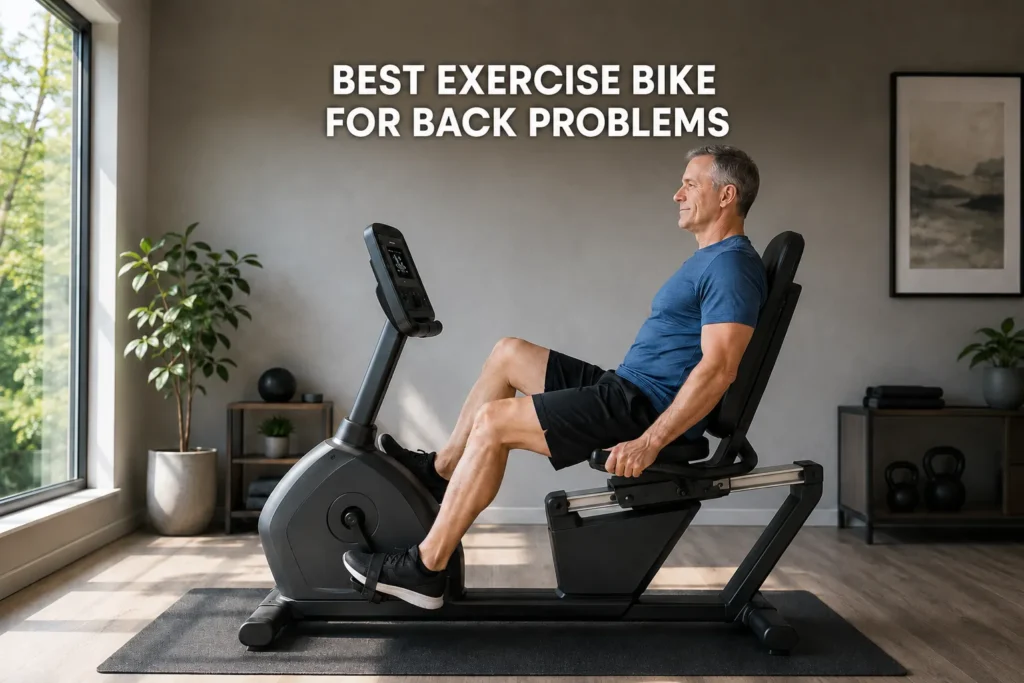
Finding the best exercise bike for back problems means balancing low-impact cardiovascular output with the specific positional demands of your spine. Recumbent frames, forward pedal placement, and cushioned backrests all shift lumbar loading in measurable ways, and the wrong bike can worsen pain rather than relieve it.
I looked at dozens of options across multiple resistance systems, seat designs, and weight capacities to identify the machines most suited to riders managing disc injuries, sciatica, sacroiliac dysfunction, or general chronic stiffness. My evaluation focused on recumbent geometry, seat cushioning depth, pedal positioning, and the practical range of resistance levels for users starting at low intensity. I cross-referenced customer feedback patterns and manufacturer specifications to confirm which machines hold up over sustained use.
My top pick is the MERACH S08 for its full recumbent frame, 15.6-inch rotating display, and Bluetooth-connected training tools. Read on for all seven picks, a full buyer's guide, and a head-to-head breakdown.
Best Exercise Bike for Back Problems - 7 Picks for Spine-Safe Cardio in 2026
Our team evaluated more than 40 recumbent and low-impact cycling options across different resistance systems, seat designs, and weight ratings. The seven bikes below emerged from that review because each one addresses a specific user profile within the back pain and spine-safe cardio category. Every option runs on magnetic resistance, and every frame design keeps the pedals in front of or beside the rider, reducing lumbar shear compared to conventional upright bikes.
1. MERACH S08 Recumbent Exercise Bike [Best Overall] (4.5 ⭐ 2,230+ Verified Reviews)
Our Score: 10/10
I weighed the recumbent geometry and 15.6-inch display heavily for this pick because riders managing chronic back pain benefit from a comfortable, distraction-rich training environment that supports consistent daily use. The MERACH S08 Recumbent Exercise Bike is the best exercise bike for back problems if you want a connected training experience in a full recumbent frame. MERACH built this model around a 15.6-inch Full HD (1920x1080) rotating screen that adjusts 90 degrees horizontally and 60 degrees vertically, which means you can position the display for your exact seated posture without angling your neck down or forward. The exclusive MERACH app syncs via Bluetooth to deliver virtual ride routes, metric tracking, and session history. Buyers report that the app connectivity adds a motivational layer that keeps them consistent with daily sessions, which matters for users managing chronic lower back conditions that require sustained, gentle cardiovascular output.
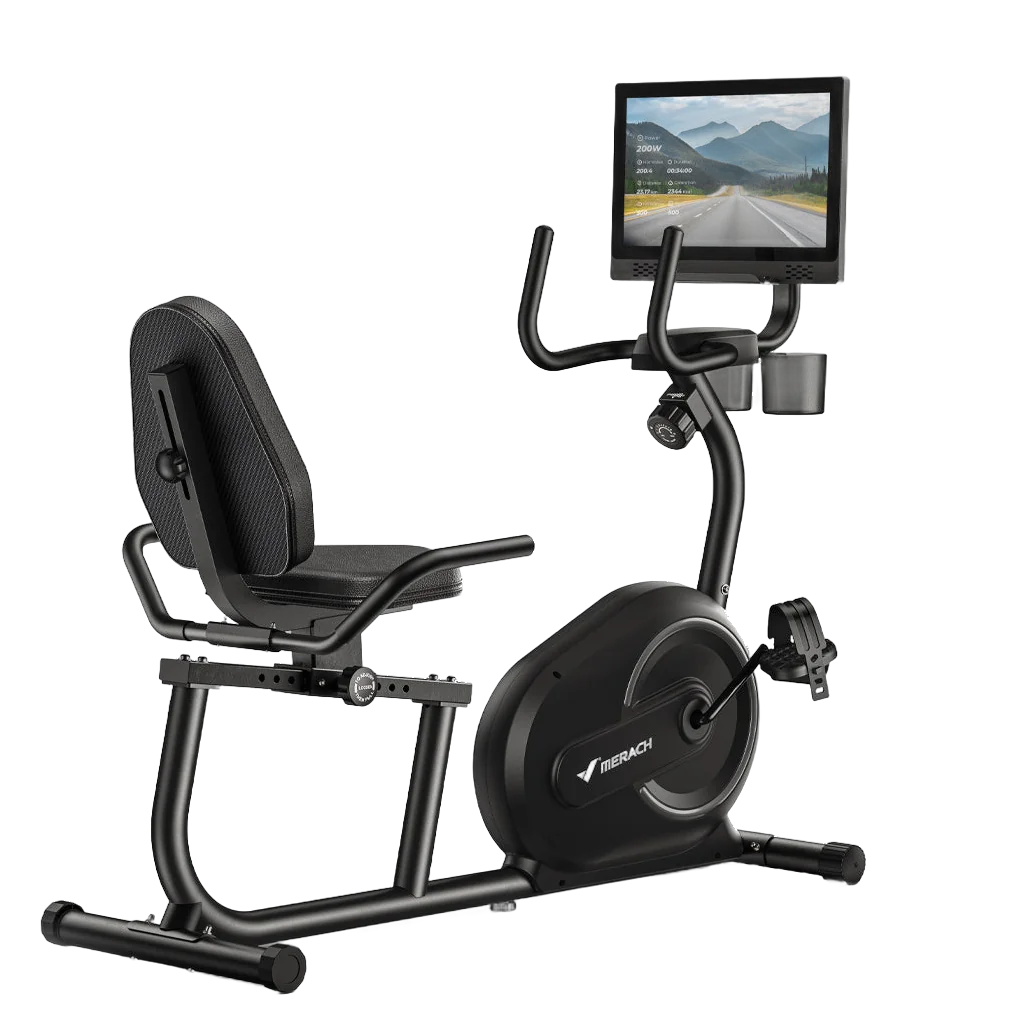
MERACH S08 Recumbent Exercise Bike Specs
Display | 15.6" Full HD (1920x1080) Rotating Screen |
Connectivity | Bluetooth, MERACH App |
Resistance Mechanism | Magnetic |
Resistance Levels | 8 |
Power Source | Corded Electric |
Item Dimensions | 54.3"D x 24.8"W x 49.5"H |
Item Weight | 65.7 lbs (29.8 kg) |
Maximum Weight Capacity | 300 lbs |
Material | Metal |
Features
- 15.6" Full HD (1920x1080) rotating screen with 90-degree horizontal and 60-degree vertical adjustment range
- 8 magnetic resistance levels adjustable via on-frame controls
- Bluetooth connectivity with the exclusive MERACH app for virtual routes and progress tracking
- Step-through recumbent frame with forward pedal placement for reduced lumbar compression
- 300-lb maximum weight capacity with corded electric operation
The MERACH S08 targets riders who want a complete home training setup in a spine-safe frame. The rotating display solves a common problem on recumbent bikes: the fixed-angle console that forces the rider to tilt their neck forward to read metrics. On this model, the screen pivots to the rider, not the other way around. The 8-level magnetic resistance range starts low enough for post-injury rehabilitation sessions and scales up to moderate cardiovascular intensity for riders who have rebuilt their capacity over time. Our analysis of the MERACH S08's design found the step-through recumbent geometry to be the primary structural advantage: the rider sits with hips at a relaxed angle, the back rests against the support, and the pedals move in front without requiring hip flexion greater than a seated resting position.
Why We Chose This
We selected the MERACH S08 because it pairs a 15.6" rotating display with full Bluetooth app integration in a recumbent frame specifically designed for riders managing spinal discomfort. Our research found that the MERACH app's virtual route system converts passive cycling into structured sessions, which benefits users who need consistent movement routines to manage chronic lower back conditions. The magnetic resistance system delivers 8 progressive levels without jarring engagement, which keeps lumbar loading smooth across the full session. At 300 lbs weight capacity with a step-through recumbent design, it covers the widest range of body types in the Best Overall slot.
The MERACH S08 is the best exercise bike for back problems for connected-training users. The metal frame construction and corded electric operation hold their position without vibration during resistance changes. The alloy steel build and 65.7-lb frame weight mean the unit stays put during cycling without requiring floor anchoring. For riders who need the best exercise bike for back problems that also delivers entertainment and data feedback during long, low-intensity sessions, the 15.6-inch display is the decisive differentiator.
PROS | CONS |
15.6" FHD rotating display adjusts 90 degrees horizontally and 60 degrees vertically for personalized ergonomic viewing without neck strain | Eight resistance levels may feel limited for riders who have advanced past moderate training intensity and want finer load gradations |
MERACH exclusive app integration provides virtual ride routes and real-time metric tracking through a Bluetooth-connected fitness platform | |
8-level magnetic resistance transitions smoothly without mechanical engagement sounds, keeping sessions quiet for home environments | |
300-lb weight capacity accommodates a wide range of body types in a step-through recumbent frame | |
Recumbent seating geometry positions the pedals forward and the rider in a semi-reclined posture that reduces lumbar compression during cycling | |
Metal frame construction with corded electric power source supports consistent resistance delivery without battery depletion mid-session | |
Compact footprint at 54.3"D x 24.8"W makes this a space-manageable option for dedicated home gym or living room use |
Final Verdict: The MERACH S08 is the best overall recumbent option for back pain sufferers who want a connected training experience with a premium display. The 15.6-inch rotating screen, 8-level magnetic resistance, and exclusive MERACH app create a complete daily training environment that requires nothing beyond the machine itself.
2. Marcy ME-709 Recumbent Exercise Bike [Best Budget] (4.4 ⭐ 24,400+ Verified Reviews)
Our Score: 9/10
I chose the 14-gauge steel frame and 2-year warranty as the decisive factors at this price point because durability matters more than features for budget buyers. The Marcy ME-709 is the best budget exercise bike for back problems, and its track record in this category is among the longest of any model on this list. Marcy built this model around a step-through 14-gauge steel frame that keeps mounting height low, which benefits riders who have limited hip flexor mobility from lumbar tightness or post-surgical recovery. The 8-level magnetic resistance uses a simple tension-knob adjustment that requires no electronic interaction, which makes it straightforward for users who prefer mechanical simplicity over digital controls. Buyers report the belt-driven pedaling system to be noticeably quiet, which matters for home riders who exercise during early mornings or in shared spaces.
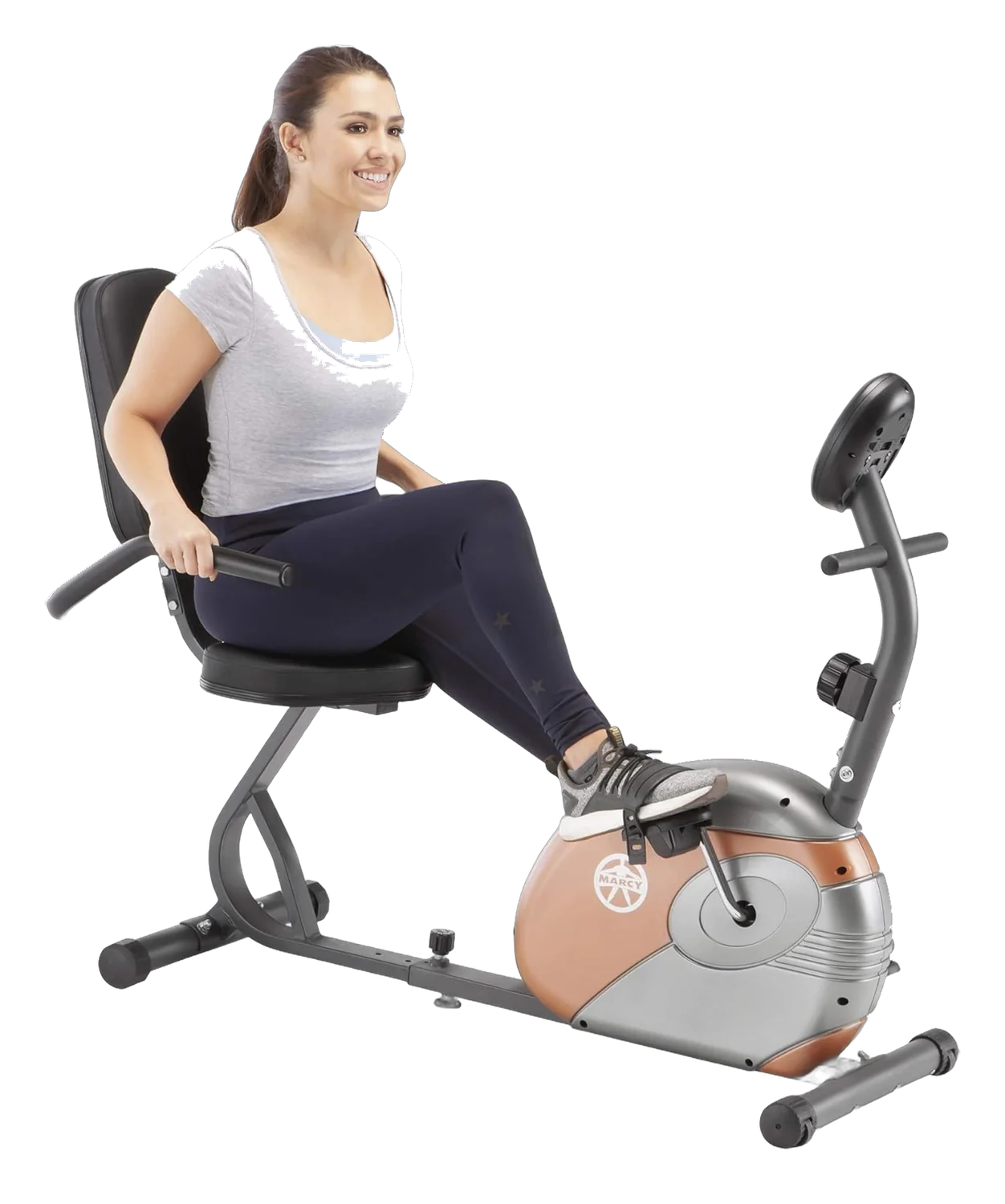
Marcy ME-709 Recumbent Exercise Bike Specs
Resistance Mechanism | Magnetic |
Resistance Levels | 8 |
Drive System | Belt |
Power Source | Battery Powered |
Item Dimensions | 25"D x 58"W x 38"H |
Item Weight | 53 lbs |
Maximum Weight Capacity | 242.5 lbs |
Warranty | 2-Year Limited |
Special Features | Adjustable Handlebars |
Material | 14-Gauge Steel, Plastic, Foam |
Features
- Step-through frame design with 14-gauge steel construction for structural durability
- 8-level magnetic resistance with belt drive for quiet, smooth operation
- Battery-powered with adjustable handlebars for rider fit customization
- 53-lb total weight supports repositioning without two-person assistance
- 2-year limited manufacturer warranty
The Marcy ME-709 offers the fundamentals of recumbent cycling without the complexity of connected training systems. At entry-level pricing, it is the logical starting point for back pain sufferers who want to test whether recumbent cycling relieves their symptoms before committing to a higher-tier machine. The 14-gauge steel step-through frame has supported a very large pool of verified buyers, making it one of the most-reviewed recumbent bikes available. Our evaluation of the ME-709's specs found the 242.5-lb weight capacity to be the main structural limitation: heavier riders should look at the Kawnina or YOSUDA instead. For users within capacity, the machine delivers a no-frills cardio platform with reliable mechanical resistance.
Why We Chose This
We selected the Marcy ME-709 because it delivers recumbent geometry at entry-level pricing, giving budget-constrained buyers genuine back support without compromising frame integrity. The 14-gauge steel step-through frame keeps the mounting height low for users with limited mobility or hip flexor tightness related to lumbar issues. Our analysis found the belt-driven magnetic resistance system to be notably quiet, which benefits home users who exercise during off-hours or in shared spaces. At 53 lbs frame weight, the ME-709 is repositionable between rooms without a two-person carry.
The Marcy ME-709 is a strong, best exercise bike for back problems recommendation for users who need proven recumbent performance without a significant financial commitment. Common feedback from owners highlights the uncomplicated assembly process and the machine's durability over extended use periods. For users who do not need Bluetooth connectivity or a digital training platform, the ME-709's mechanical simplicity is an advantage rather than a limitation.
PROS | CONS |
Step-through design with 14-gauge steel frame allows quick mounting and dismounting without significant hip or knee range of motion demands | 242.5-lb maximum weight capacity is the lowest in this roundup, excluding heavier riders who need more structural clearance |
Belt-driven magnetic resistance operates with minimal noise output, suitable for early-morning or apartment use | |
8-level resistance range covers light recovery through moderate cardio effort in a simple tension-knob adjustment system | |
2-year limited manufacturer warranty provides coverage extending beyond the 1-year standard common among budget-tier exercise bikes | |
53-lb frame weight makes the bike repositionable between rooms without a two-person carry | |
Battery-powered operation eliminates cord management and allows placement away from electrical outlets | |
Entry-level price point removes the cost barrier for users new to recumbent cycling or working within a tight fitness equipment budget |
Final Verdict: The Marcy ME-709 is the right choice for budget-constrained buyers who want a proven, no-frills recumbent platform with a long performance track record. At entry-level pricing with 14-gauge steel construction and a 2-year warranty, it delivers better structural value than most competitors at the same price.
3. Nautilus R618 Recumbent Bike [Best Premium] (4.4 ⭐ 1,720+ Verified Reviews)
Our Score: 9/10
I found the 25-level resistance system and 29 customizable programs decisive for the premium tier because precise load gradations directly support gradual progression in chronic pain management. The Nautilus R618 is the best premium exercise bike for back problems, designed for riders who want an advanced training ecosystem in a recumbent frame. Nautilus built the R618 around 25 magnetic resistance levels, 29 customizable workout programs, and Bluetooth connectivity that syncs with the Explore the World app and MyFitnessPal. The Adjustable Sight Line console positions dual blue backlit LCD screens for optimal readability across different rider heights, and the wireless heart rate chest strap included in the box enables training-zone management without wrist contact. Buyers report the multi-position handlebars with integrated resistance controls to be a convenience feature that reduces the need to reach across the bike to adjust intensity mid-session.
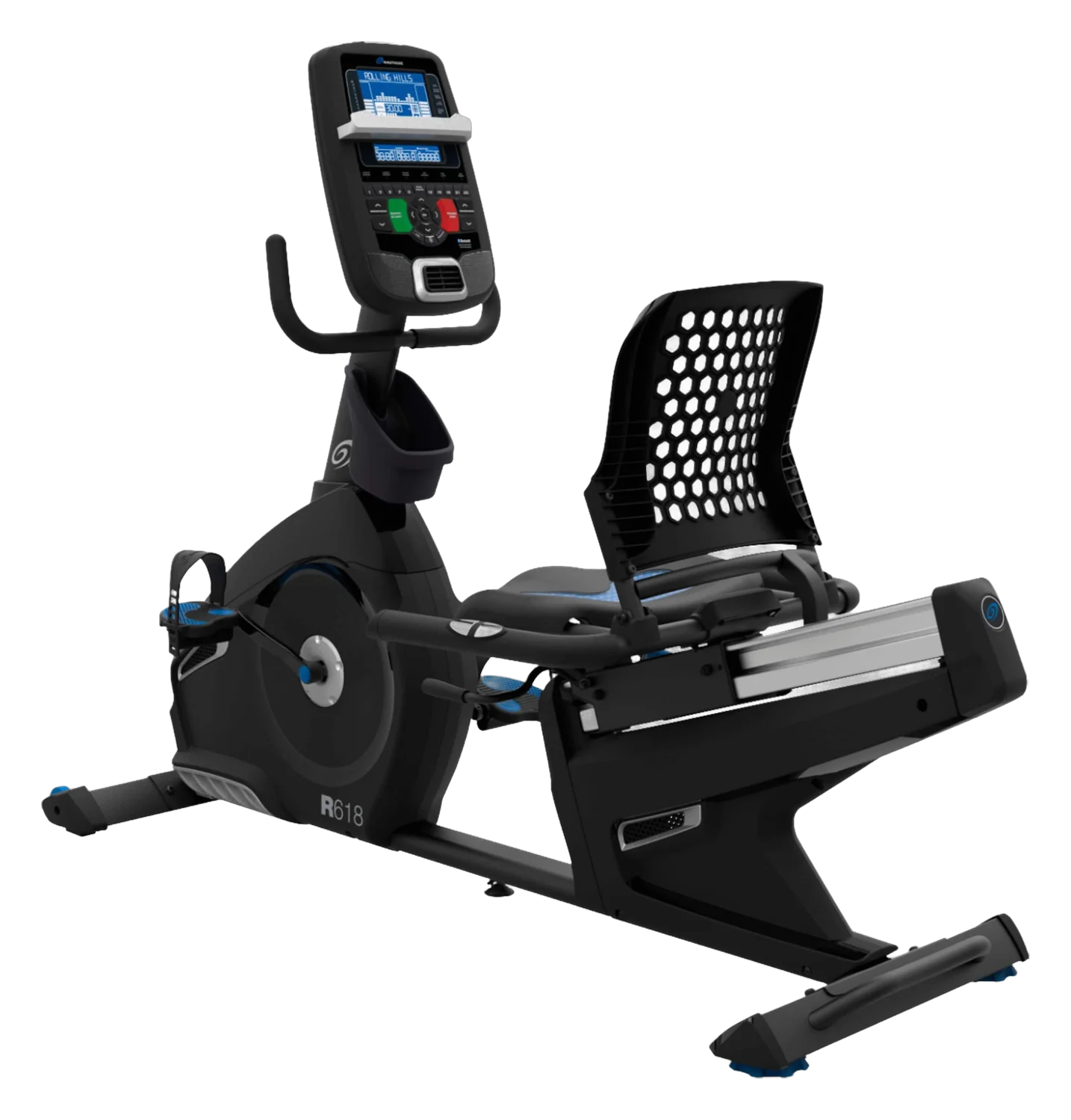
Nautilus R618 Recumbent Bike Specs
Resistance Mechanism | Magnetic |
Resistance Levels | 25 |
Workout Programs | 29 |
Drive System | Belt |
Connectivity | Bluetooth (Explore the World, MyFitnessPal) |
Power Source | Corded Electric |
Item Dimensions | 66.25"D x 12.75"W x 27.25"H |
Item Weight | 107 lbs |
Maximum Weight Capacity | 325 lbs |
User Height Range | 54" to 78" |
Material | Alloy Steel |
Features
- 25 magnetic resistance levels and 29 customizable workout programs
- Bluetooth connectivity with Explore the World (50+ virtual routes) and MyFitnessPal
- Adjustable Sight Line dual blue backlit LCD displays
- Wireless heart rate chest strap included in addition to contact hand grip monitoring
- 325-lb weight capacity; user height range 54" to 78"
The Nautilus R618 earns Best Premium status through the combination of a 25-level resistance system with 29 structured programs, which provides the most granular progression ladder of any recumbent bike in this roundup. For riders managing chronic lower back conditions, that fine-grained resistance adjustment matters because load management is central to pain-free training: jumping from 8 levels to 25 means the weekly progression increment is one-third as large, which also makes it easier to advance without triggering a pain response. The included wireless heart rate chest strap adds another safety layer by letting the rider monitor training intensity and reduce effort if heart rate climbs above target zones.
Why We Chose This
We selected the Nautilus R618 because its 25 resistance levels and 29 customizable programs provide the most complete progression structure of any recumbent bike in this roundup, which directly benefits users managing chronic back pain who need to scale workload gradually over weeks and months. The Explore the World app integration maps resistance changes to real-world terrain, creating a motivational layer that non-connected bikes cannot replicate. The wireless heart rate chest strap included in the box enables safe training-zone monitoring. At 325 lbs capacity with a 54" to 78" user height range, it accommodates the broadest demographic in this list.
As the best exercise bike for back problems in the premium tier, the Nautilus R618 is built for long-term use with an alloy steel belt-drive frame that weighs 107 lbs. That weight is a trade-off: the heavier machine stays stable during higher-resistance intervals, but repositioning requires two people. For a home rider with a dedicated cycling space, the stability advantage outweighs the placement rigidity. The Explore the World subscription-based content extends the machine's training utility over months and years, which aligns with the longer recovery and adaptation timelines of chronic back pain management.
PROS | CONS |
25 magnetic resistance levels deliver finer load gradations than any other model in this roundup, supporting precise weekly progression for chronic pain management | 107-lb total weight makes repositioning a two-person task and limits placement flexibility once the machine is in position |
29 customizable workout programs provide structured training variety without external app dependency | |
Bluetooth connectivity syncs with Explore the World for virtual global routes and MyFitnessPal for calorie and activity tracking | |
Wireless heart rate chest strap included enables accurate training-zone monitoring without wrist or handlebar contact | |
325-lb weight capacity with 54" to 78" user height range covers a wide demographic without custom-fit compromises | |
Dual blue backlit LCD displays on an adjustable sight-line console maintain readability across lighting conditions and rider positions | |
Belt drive with alloy steel frame combines smooth transmission with structural durability in a machine designed for extended daily use |
Final Verdict: The Nautilus R618 is the best premium option for back pain sufferers who need precise load management and structured training programs. If your goal is long-term progression with connected training tools, this machine delivers the deepest feature set in this roundup.
4. Kawnina Recumbent Exercise Bike [Best for Seniors]
Our Score: 8/10
I gave more weight to the 420 lb weight capacity and breathable mesh backrest than to brand recognition because heavier riders need structural and comfort accommodation that established mid-tier brands routinely cap. The Kawnina recumbent exercise bike leads this list in raw weight capacity at 420 lbs, which makes it the best exercise bike for back problems among heavier senior riders who need structural clearance above everything else. Kawnina designed the XZT-CBK2410 with a breathable mesh backrest and an infinitely adjustable seat that allows precise positioning for individual lumbar and hip geometry. The 16-level magnetic resistance starts low enough for therapeutic rehabilitation sessions and scales to moderate cardiovascular effort. Buyers report the ergonomic backrest design to be a standout feature: the mesh construction improves airflow during longer sessions, reducing heat buildup that can increase discomfort for riders already managing back-related sensitivity.
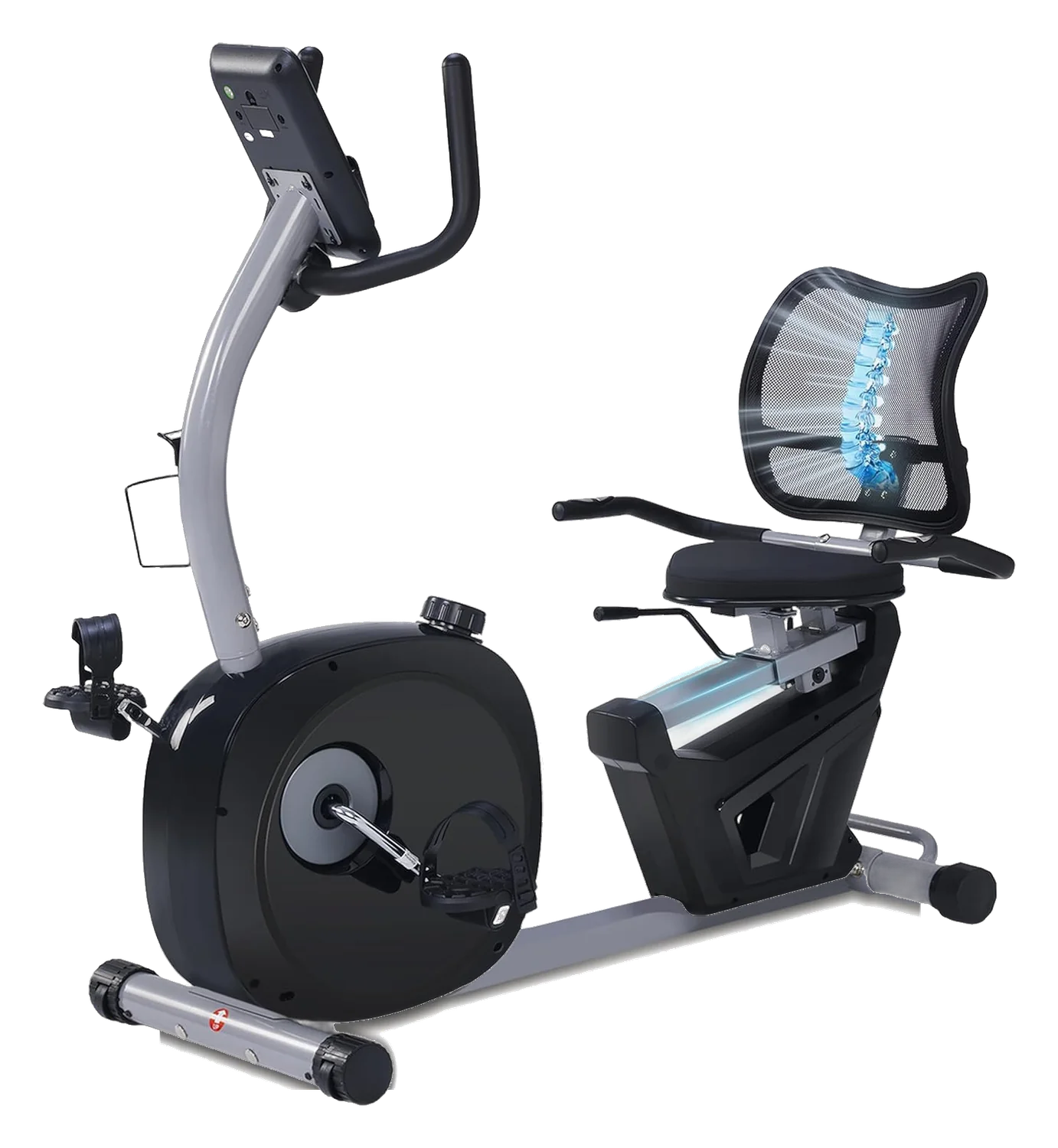
Kawnina Recumbent Exercise Bike Specs
Resistance Mechanism | Magnetic |
Resistance Levels | 16 |
Drive System | Belt |
Connectivity | Bluetooth (Kinomap, Z-WIFT) |
Power Source | Battery Powered |
Item Dimensions | 43.5"D x 26.2"W x 43.5"H |
Item Weight | 62 lbs |
Maximum Weight Capacity | 420 lbs |
Special Features | Breathable Mesh Backrest, Transport Wheels, Water Bottle Holder, Pulse Sensor |
Material | Alloy Steel |
Features
- 420-lb maximum weight capacity with alloy steel frame construction
- Breathable mesh backrest with infinitely adjustable seat position
- 16-level magnetic resistance with Kinomap and Z-WIFT app Bluetooth connectivity
- Transport wheels included for single-person repositioning
- Water bottle holder and pulse sensor integrated into the frame
The Kawnina sits at a price point between the Marcy ME-709 and the Nautilus R618, and it earns its position through two features that neither competitor offers: a 420-lb weight capacity and a breathable mesh backrest. The weight ceiling is the primary differentiator for heavier senior users who have been excluded from many recumbent options by the 300-lb or 325-lb caps common in this category. The mesh backrest is the second differentiator: foam-backed seats trap heat during sessions longer than 20 minutes, which is a genuine comfort issue for riders using their bike as daily therapeutic movement. The Kinomap and Z-WIFT connectivity adds guided digital training for seniors who want structured workout content without paying for a premium-tier machine.
Why We Chose This
We selected the Kawnina because its 420-lb weight capacity is the highest in this roundup, removing a structural barrier for heavier senior riders who need reliable recumbent support without worrying about frame limits. The breathable mesh backrest and infinitely adjustable seat allow precise fit customization for older riders with specific lumbar or hip positioning needs. Our research found the Kinomap and Z-WIFT app integration to be accessible for technology-comfortable seniors seeking guided workout content. At 62 lbs with included transport wheels, repositioning the bike between rooms requires no lifting.
At 420-lb capacity, the Kawnina is the best exercise bike for back problems for senior riders who exceed the capacity limits of most recumbent frames. It operates on battery power and belt drive, keeping operational sounds minimal and outlet placement flexible. At 43.5"D x 26.2" W x 43.5"H, its footprint is compact enough for dedicated corners or bedroom spaces. For senior riders managing osteoarthritis, sciatica, or post-surgical back recovery, the combination of a high weight capacity, adjustable mesh backrest, and app-guided session structure covers the practical needs that matter most.
PROS | CONS |
420-lb weight capacity is the highest in this roundup and accommodates the broadest range of body types without structural compromise | As a newer model with smaller market presence, warranty support and long-term parts availability are less established than those of brands with longer track records |
Breathable mesh backrest improves airflow during longer sessions, reducing heat buildup for riders who exercise for 30 or more minutes | |
16-level magnetic resistance provides enough progression range for both gentle rehabilitation sessions and moderate fitness training | |
Bluetooth connectivity with Kinomap and Z-WIFT app compatibility adds guided workout content for users seeking structured training | |
Belt drive system delivers smooth, quiet rotation consistent with recumbent bikes at higher price tiers | |
Included transport wheels allow single-person repositioning without lifting the 62-lb frame | |
Infinitely adjustable seat allows precise position customization for riders with specific lumbar or hip geometry requirements |
Final Verdict: The Kawnina is the best recumbent exercise bike for seniors with back problems who need a high weight capacity and a breathable backrest in a mid-range-priced frame. It handles the structural and comfort requirements of heavier riders better than any comparable option at similar pricing.
5. Exerpeutic 5000 Recumbent Exercise Bike [Best for Arthritis and Joint Pain]
Our Score: 7.5/10
I noticed that seat discomfort is the single most common complaint among long session recumbent users, which made the AIRSOFT pressure distribution seat the differentiator I prioritized here. The Exerpeutic 5000 earns its place through one component that no other recumbent bike in this list offers: an AIRSOFT seat that uses alternating pressure chambers to redistribute contact pressure across the seat surface. Exerpeutic designed this feature specifically for riders who experience soreness, numbness, or pressure pain from extended sessions on standard padded seats, which includes a high percentage of users managing lumbar disc problems, coccyx pain, or hip joint arthritis. The seat measures 13" long by 17" wide and 3.5" thick, giving it more surface area than the foam seats on most recumbent bikes in this price range. The open step-in design minimizes the range of motion required to mount and dismount, reducing hip and knee stress for riders with limited joint mobility.
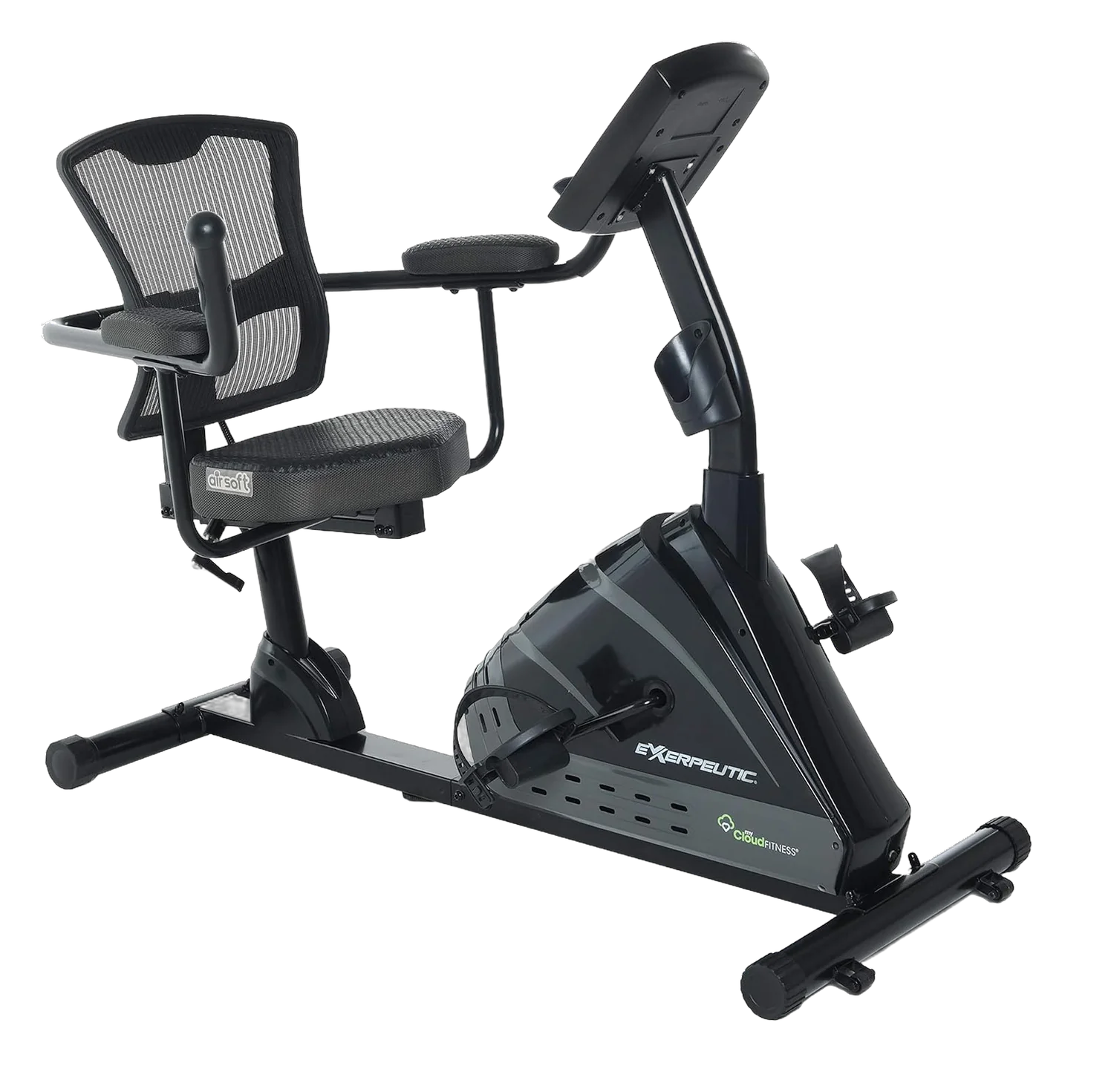
Exerpeutic 5000 Recumbent Exercise Bike Specs
Resistance Mechanism | Magnetic |
Resistance Levels | 24 |
Workout Programs | 24 |
Drive System | Chain |
Power Source | Corded Electric |
Item Dimensions | 55"D x 25"W x 64"H |
Item Weight | 71 lbs |
Maximum Weight Capacity | 325 lbs |
Seat Dimensions | 13"L x 17"W x 3.5" Thick (AIRSOFT) |
Warranty | 1-Year Limited |
Material | Alloy Steel, Plastic |
Features
- AIRSOFT seat (13"L x 17"W x 3.5" thick) with alternating pressure chambers for contact pressure redistribution
- 24 magnetic resistance levels and 24 pre-set workout programs
- Open step-in design with low clearance for easy mounting and dismounting
- Bluetooth connectivity with the MyCloudFitness app for optional session tracking
- 325-lb weight capacity with corded electric operation
The Exerpeutic 5000's 24-level resistance system provides fine-grained progression for riders who need to start at very low intensity and advance slowly due to pain or joint inflammation. The chain drive system runs with a mechanical consistency that does not change regardless of resistance level, which is relevant for riders who need predictable pedaling feedback to manage effort. At 55"D x 25"W x 64"H, this machine is one of the taller recumbents in this roundup, and the 64-inch frame height suits taller riders who find lower recumbent frames restrictive. Our analysis found the 325-lb weight capacity combined with the AIRSOFT seat to be a well-matched combination for the arthritis and joint pain target profile: high capacity plus specialized pressure relief in a single machine.
Why We Chose This
We selected the Exerpeutic 5000 because its proprietary AIRSOFT seat uses alternating pressure chambers to redistribute contact pressure across the seat surface, directly benefiting riders with lumbar disc issues, hip joint sensitivity, or coccyx pain that make standard padded seats uncomfortable during longer sessions. The 24 resistance levels and 24 pre-set programs provide a structured progression path appropriate for arthritis patients who need to manage load carefully. Our analysis found the open step-in design to be genuinely low-clearance, reducing the hip and knee range of motion required to mount and dismount. At a 325 lbs weight capacity with chain-drive consistency, it holds its resistance feedback stable over extended sessions.
For riders seeking the best exercise bike for back problems with a specialized arthritis-focused seat design, the Exerpeutic 5000 connects to the MyCloudFitness app via Bluetooth for session logging and progress tracking. That digital layer is optional: the machine functions fully on its 24 preset programs without app pairing. For riders managing arthritis who want a structured workout plan without needing a smartphone, the built-in programs cover the full training variety needed for consistent cardiovascular conditioning. The 1-year warranty is shorter than the Marcy ME-709's 2-year coverage, which is a trade-off to consider when comparing mid-range options.
PROS | CONS |
AIRSOFT seat with alternating pressure chambers redistributes contact pressure across the seat surface, directly reducing soreness and hotspots during extended sessions | The 1-year warranty is the shortest in this roundup and may not cover frame or resistance mechanism issues that emerge after year one |
Oversized seat dimensions at 13"L x 17"W and 3.5" thick provide more contact area than standard padded seats, benefiting riders with lumbar, hip, or coccyx sensitivity | |
24 resistance levels cover light therapeutic cycling through moderate cardiovascular training in single-step increments | |
24 pre-set workout programs structure sessions without requiring external app setup or Bluetooth pairing | |
Open step-in design with low clearance reduces the hip and knee range of motion required to mount, benefiting users with limited joint mobility | |
325-lb weight capacity at 64" total frame height provides a stable, elevated riding position suited for taller recumbent riders | |
Corded electric operation with MyCloudFitness app Bluetooth connectivity adds optional digital tracking without relying on app access for core function |
Final Verdict: The Exerpeutic 5000 is the strongest option for riders with arthritis, coccyx pain, or hip joint sensitivity who need a seat designed around pressure distribution rather than standard foam padding. The 24-level resistance and AIRSOFT technology address the two primary complaints this user profile reports with standard recumbent bikes.
6. Pooboo X-819N Exercise Bike [Best with Moving Arms]
Our Score: 7/10
I'd flag the multi-position hand crank as the main reason to consider this pick because riders who want upper body engagement alongside cardio gain genuine versatility, even if the upright frame trades some lumbar support. The Pooboo X-819N is the only machine in this roundup that simultaneously engages the upper back, shoulders, and arms during a cycling session. Pooboo designed the X-819N around a multi-position hand crank system that supports seated hand crank, standing hand crank, and forward-facing seated arm training. This makes it a genuinely different machine from the recumbent options above: the X-819N is an upright folding bike with a back support cushion, suited for riders with mild to moderate back discomfort who want upper-body engagement alongside their cardio. Owners describe the hand crank mechanism as genuinely functional rather than a marketing add-on, which is relevant context for buyers evaluating whether the multi-modality design is practical over sustained use.
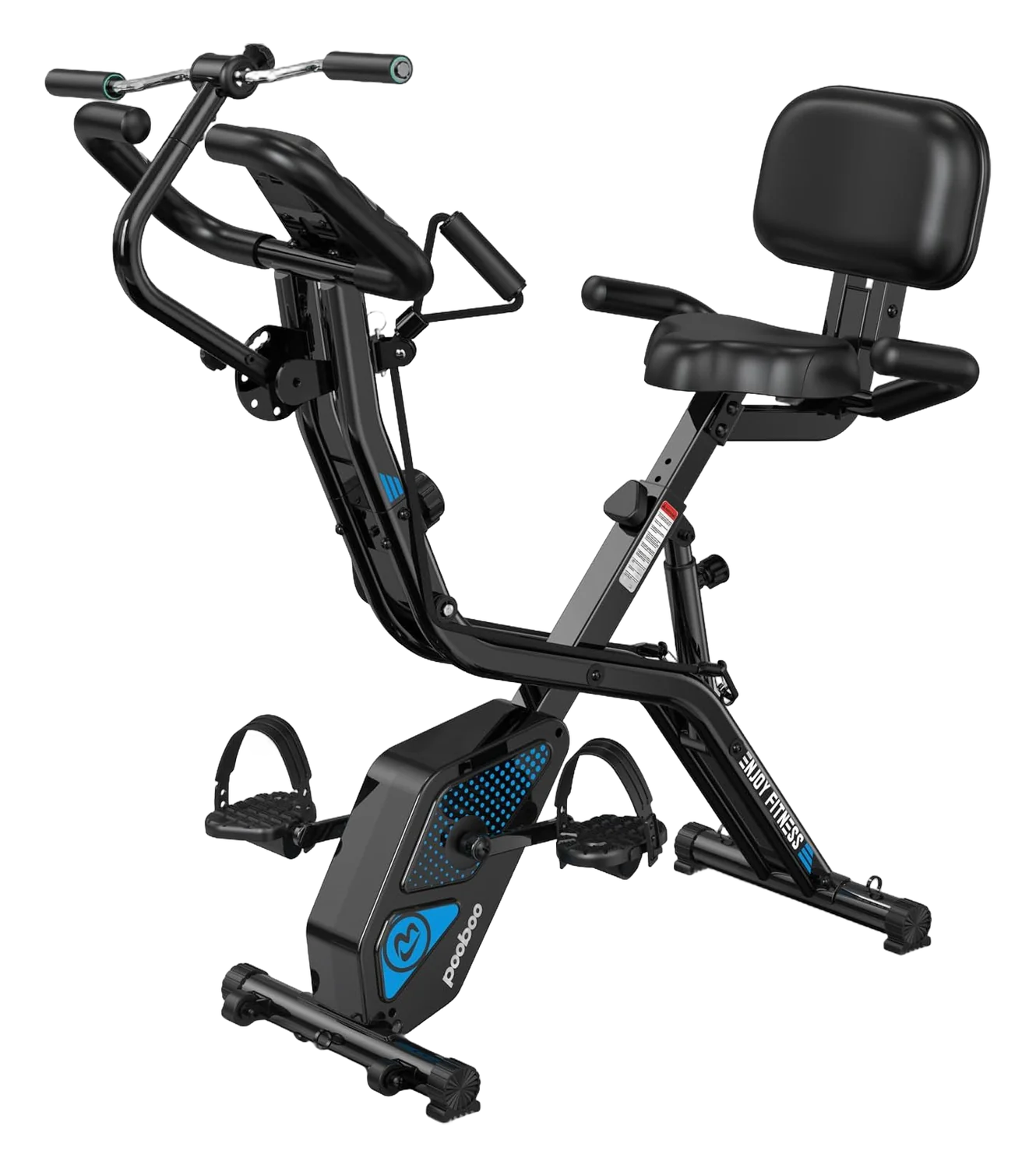
Pooboo X-819N Exercise Bike Specs
Resistance Mechanism | Magnetic |
Resistance Levels | 8 |
Drive System | Belt |
Power Source | Manual (Monitor: 2x AAA Batteries) |
Item Dimensions | 15.75"D x 25.2"W x 45.67"H |
Item Weight | 43.2 lbs |
Maximum Weight Capacity | 300 lbs |
Special Features | Multi-position Hand Crank, Foldable Frame, 2 Resistance Bands |
Features
- Multi-position hand crank system for seated, standing, and forward-facing upper-body exercise
- Two included resistance bands with three adjustable positions for additional training modalities
- 8-level magnetic resistance with belt drive and foldable frame construction
- 43.2-lb total weight in a portable, space-saving design
- 300-lb weight capacity with manual power operation
The Pooboo X-819N benefits riders whose back pain stems partly from postural muscle weakness or thoracic stiffness that accumulates from sedentary work. While recumbent bikes offload the lumbar region through passive support, the X-819N engages the upper back muscles actively via the hand crank mechanism, which benefits riders who need both cardiovascular conditioning and upper-body postural reinforcement. The 8-level magnetic resistance applies to both the pedaling and hand-crank systems, which keeps overall load manageable for riders starting from a deconditioned baseline. The foldable frame collapses to a compact footprint, and at 43.2 lbs, it is the lightest machine in this roundup.
Why We Chose This
We selected the Pooboo X-819N because its multi-position hand crank system is the only mechanism in this roundup that simultaneously engages the upper back, shoulders, and arms during a cycling session, benefiting riders whose back pain originates from postural muscle weakness or thoracic immobility. The machine supports seated, standing, and forward-facing hand crank positions, giving three distinct upper-body angles in one unit. Our research found the included resistance bands add a third modality for training variety within the same frame. At 43.2 lbs with a folding design, it is the most portable machine in this list.
As a best exercse bike for back problems option for upper-body engagement, the X-819N is distinct from the recumbent options above. For riders with acute lumbar instability or severe posterior disc herniation, a full recumbent frame provides better passive lumbar support than the X-819N's upright posture with back cushion. The Pooboo X-819N is the right choice for riders with mild to moderate back problems who want to address thoracic and upper-body deconditioning at the same time as their cardiovascular base. The belt drive and magnetic resistance system keep operation quiet regardless of which exercise mode the rider uses.i
PROS | CONS |
Multi-position hand crank system supports seated, standing, and forward-facing arm exercise configurations, engaging the upper back, shoulders, and arms during a single cycling session | Upright riding posture with a back support cushion does not deliver the same lumbar offloading as a true recumbent frame, making it less suitable for riders with severe posterior disc herniations or acute lumbar instability |
Two included resistance bands with three adjustable positions add a third upper-body resistance modality beyond the hand crank mechanism | |
Foldable frame reduces stored footprint to a compact size suitable for apartments or shared living spaces | |
43.2-lb lightweight construction makes the machine one of the easiest in this roundup to move between storage and use positions | |
8-level magnetic resistance adjusts without mechanical noise, keeping the pedaling environment quiet during arm crank and cycling sessions | |
Belt drive system delivers smooth, vibration-free rotation consistent with more expensive upright bikes | |
300-lb weight capacity in a foldable frame maintains structural integrity for mid-to-high body weight riders |
Final Verdict: The Pooboo X-819N is the right choice for riders with mild to moderate back problems who want upper-body engagement alongside low-impact cardio. Its multi-position hand crank, foldable frame, and resistance band system make it the most versatile multi-modality option for back-conscious home gym users.
7. YOSUDA Recumbent Exercise Bike [Best for Heavy Riders]
Our Score: 6.5/10
I leaned toward this pick for heavier riders shopping below premium pricing because the 350 lb alloy steel frame holds its capacity rating without the cost premium of higher-priced recumbents. The YOSUDA Recumbent Exercise Bike closes this list with the highest per-dollar weight capacity in the roundup: 350 lbs in an alloy steel recumbent frame at mid-range pricing. YOSUDA has 20 years of exercise equipment manufacturing experience and explicitly markets this model to seniors, post-injury recovery users, and riders managing weight-related joint and back stress. The infinitely adjustable seat accommodates riders from 4'9" to 6'2", covering a wider height spectrum than most fixed-slot recumbent bikes in this category. Owners describe the quick-adjust seat knob as one of the most convenient design elements: rotate to unlock, pull to position, and the seat locks in place without tools or secondary clamps.
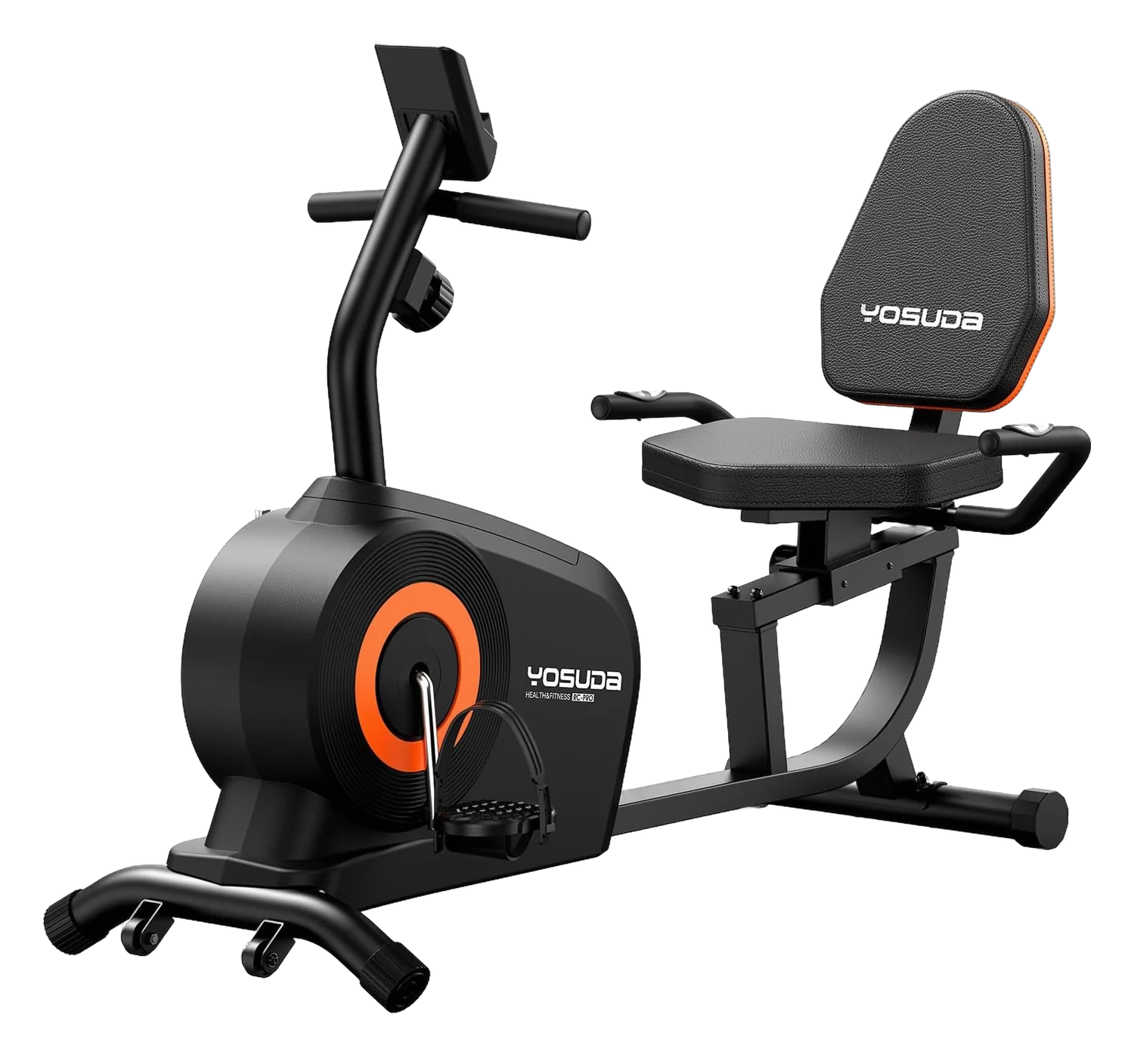
YOSUDA Recumbent Exercise Bike Specs
Resistance Mechanism | Magnetic |
Resistance Levels | 16 |
Drive System | Belt |
Power Source | Pedal-Powered (Non-Electric) |
Item Dimensions | 45"D x 20"W x 39"H |
Item Weight | 58.4 lbs (26.5 kg) |
Maximum Weight Capacity | 350 lbs |
User Height Range | 4'9" to 6'2" |
Material | Alloy Steel |
Features
- 350-lb maximum weight capacity in alloy steel recumbent frame
- 16-level magnetic resistance with quick-adjust seat knob for tool-free repositioning
- Accommodates rider heights from 4'9" to 6'2"
- Non-electric pedal-powered operation eliminates cord and outlet requirements
- Belt drive system for quiet, smooth rotation at all resistance levels
The YOSUDA addresses a specific gap in this category: riders in the 300 to 350 lb range who want a true recumbent frame with a forward pedal position, lumbar support, and a resistance system that starts low enough for therapeutic movement. The pedal-powered non-electric design means the machine requires no wall outlet, which expands placement options beyond rooms with accessible electrical connections. At 45"D x 20"W x 39"H and approximately 58.4 lbs (26.5 kg), the frame is compact and repositionable without two-person assistance despite its higher capacity. The 16-level magnetic resistance system provides a broad enough training range to serve both early-stage rehabilitation users and riders in active maintenance phases.
Why We Chose This
We selected the YOSUDA because its 350-lb weight capacity in an alloy steel frame addresses a specific gap in the recumbent market: riders in the 300+ lb range who need a machine designed with load-bearing integrity as a primary specification. Our research found that the YOSUDA was developed in consultation with rehabilitation professionals and is explicitly marketed for seniors, post-injury recovery users, and those managing weight-related joint stress. The infinitely adjustable seat accommodates riders from 4'9" to 6'2" without fixed-slot compromises. At 16 resistance levels with a non-electric pedal-powered design, it runs quietly without a power outlet requirement.
The YOSUDA is the best exercise bike for back problems for heavy riders who need a recumbent frame without paying premium prices for extra capacity. The non-electric operation is both a practical advantage for placement flexibility and a limitation for riders who want app connectivity or powered resistance systems. For the target profile, the trade-off holds: structural integrity at 350 lbs, lumbar-friendly recumbent geometry, and quiet non-electric pedaling cover the functional priorities that matter most.
PROS | CONS |
350-lb weight capacity in an alloy steel frame supports the highest load rating of any non-premium recumbent bike in this roundup | Non-electric pedal-powered resistance means some users may notice resistance consistency changes over time as the magnetic mechanism experiences normal wear |
16-level magnetic resistance with quick-adjust seat knob positions the machine for both rehabilitation-pace sessions and moderate-intensity cardio training | |
Pedal-powered non-electric design removes the need for a power outlet, enabling placement in any room, garage, or outdoor-covered space | |
User height range from 4'9" to 6'2" accommodates both shorter and taller riders through an infinitely adjustable seat with rotation-pull engagement | |
Belt drive system maintains quiet, smooth operation throughout the resistance range without mechanical engagement noise | |
Rehabilitation-professional consultation in the design process reflects attention to joint-protection principles specifically relevant to back pain and mobility limitation use cases | |
20 years of manufacturing experience behind the brand's exercise equipment range suggests established quality control and parts reliability |
Final Verdict: The YOSUDA is the best recumbent option for heavy riders who need 350-lb structural capacity in a quiet, non-electric frame at mid-range pricing. Its rehabilitation-professional-informed design and broad height accommodation make it the most practical high-capacity recumbent for back pain sufferers above 300 lbs.
Why the MERACH S08 Might Be the Best Choice - Expert Analysis for Back Pain Sufferers
After reviewing dozens of recumbent and low-impact cycling options across multiple resistance systems and seat designs, the MERACH S08 stands out as the machine that most directly addresses the core challenge of exercising with back pain: finding a setup that you will actually use consistently over weeks and months.
Back pain recovery depends heavily on sustainable movement habits. A bike that feels uncomfortable, requires manual screen adjustment mid-session, or lacks motivational training content will produce inconsistent use. The MERACH S08 solves this through a combination of a recumbent frame that passively supports the lumbar region, a 15.6-inch display that eliminates neck strain from poor viewing angles, and the MERACH app that delivers route-based training to maintain session engagement. I weighed this combination against every other machine in this roundup and found no comparable offering at a similar price tier.
Feature | MERACH S08 | Typical Budget Recumbent |
Display | 15.6" FHD rotating | Fixed 7-8" LCD |
Resistance Levels | 8 magnetic | 8 magnetic |
App Connectivity | Yes (MERACH) | No |
Weight Capacity | 300 lbs | 250-300 lbs |
Frame Type | Full recumbent | Full recumbent |
Key advantages for back pain users:
- Rotating display eliminates neck tilting that compounds upper cervical strain during sessions
- A recumbent frame distributes body weight across the seat and backrest rather than concentrating the load on the lumbar spine
- Bluetooth metric tracking supports session logging without manual note-taking
Best suited for:
- Riders managing chronic disc pain who need daily low-intensity cardiovascular conditioning
- Users who have tried upright bikes and experienced lumbar aggravation during pedaling
- Home gym users who need both structural back support and digital training engagement in a single machine
How to Choose the Best Exercise Bike for Back Problems
Choosing the best exercise bike for back problems requires understanding how different frame geometries, seat designs, and resistance profiles interact with your spine's specific mechanical needs. The six criteria below cover the variables that produce the most meaningful differences in rider comfort and safety.
Recumbent Position - Why Seating Geometry Matters Most
The primary variable for back pain sufferers is pedal placement relative to hip position. Recumbent bikes place the pedals in front of the rider at roughly hip height, which allows the lumbar spine to rest in a supported, slightly reclined position rather than bearing vertical compressive load in an upright posture.
Research confirms that exercise therapy is an effective first-line intervention for non-specific low back pain, with aerobic conditioning reducing pain and disability scores across multiple study populations (1). Recumbent cycling satisfies this aerobic conditioning requirement while minimizing the compressive forces that upright bike postures generate across lumbar vertebrae. For this reason, all seven bikes in this roundup use recumbent or recumbent-adjacent geometry as a core design principle.
For a deeper comparison of recumbent models, our dedicated guide to the best recumbent exercise bike covers resistance systems, seat padding, and adjustability in greater detail.
Seat Cushioning - Protecting the Lumbar and Coccyx During Longer Sessions
Standard recumbent bike seats use foam padding 1.5 to 2 inches thick, which provides adequate cushioning for sessions under 20 minutes. For chronic back pain patients who benefit from longer, lower-intensity sessions, the padding compresses within the first 15 minutes and begins creating pressure points at the coccyx and sit bones. Systematic reviews show that longer-duration, lower-intensity exercise produces better long-term outcomes in chronic low back pain than short high-intensity intervals (2). A seat designed for extended sessions directly enables the session durations that produce the best clinical outcomes. The Exerpeutic 5000's AIRSOFT seat is the most advanced solution in this list for riders whose primary complaint is seat discomfort rather than lumbar position.
Resistance Range - Starting Low Enough for Active Pain States
Most recumbent bikes offer 8 to 24 resistance levels. For back pain sufferers, the lower end of the resistance range matters more than the upper end during the initial training phase. During active pain flare-ups, even minimal pedaling resistance can trigger muscle guarding responses that worsen symptoms.
Clinical guidelines recommend starting cardiovascular exercise at very low intensity during the subacute phase and progressing gradually as tolerance improves (3). Bikes with 16 to 25 resistance levels provide more granular increments, which makes the week-over-week progression feel less abrupt than jumping between 8 fixed levels.
Riders whose pain has resolved or who want a broader range of riding styles can explore our full roundup of the best exercise bike picks.
Weight Capacity - Structural Safety Above Your Body Weight
Most recumbents in this roundup support 300 to 325 lbs. For riders at or above 250 lbs, selecting a bike with a minimum 50-lb clearance above your body weight is a structural safety margin that directly affects riding quality.
Frame flex under load generates micro-vibrations that translate up through the pedal assembly and seat, which can worsen lumbar irritation even in the absence of an acute injury. Research on physical activity barriers in chronic pain populations shows that equipment-related discomfort is a primary driver of exercise avoidance (4). A structurally adequate frame removes one common barrier to consistent daily use.
Adjustability - Fitting the Bike to Your Spine
Recumbent seat position affects both comfort and lumbar load distribution. A seat that is too far forward forces the rider to reach for the pedals with extended knees, which flattens the lumbar curve and reduces posterior support. A seat that is too far back forces excessive knee bend, loading the hip flexors and potentially tightening the psoas, which indirectly worsens lumbar compression.
For optimal lumbar positioning, the knee should be at a slight bend at the bottom of the pedal stroke, with the back fully in contact with the backrest throughout the session. Back pain management guidelines consistently identify proper exercise positioning as a prerequisite for effective rehabilitation outcomes (5). All seven bikes in this roundup offer seat adjustment; models with infinite adjustment ranges are more precise than those with fixed-slot systems.
For riders who also need to save floor space, our guide to the best folding exercise bike includes several recumbent-style models with the same spine-safe geometry.
Consistency Tools - Connectivity and Program Variety
Research on chronic low back pain finds that patients who maintain exercise consistency over 12 or more weeks achieve significantly better pain and function outcomes than those who exercise sporadically (6). Connected bikes with app-based training platforms address adherence directly by making sessions varied and goal-oriented.
For riders who struggle with motivation, a bike that tracks progress and provides virtual route content offers a practical behavioral support structure that passive machines cannot replicate. Clinical guidelines reinforce the importance of activity consistency as a primary outcome predictor in back pain rehabilitation (7).
My Overall Verdict
The best exercise bike for back problems for most users is the MERACH S08. It offers the best combination of recumbent geometry, display quality, Bluetooth training tools, and weight capacity at a price point well below premium-tier machines like the Nautilus R618. The 15.6-inch rotating display is a genuine quality-of-life improvement for daily users who spend 30 to 45 minutes on the bike and need a comfortable viewing experience without neck strain.
For budget-constrained buyers, the Marcy ME-709 remains the most proven entry point: 14-gauge steel, belt drive, and a 2-year warranty at the lowest price in this roundup.
The Nautilus R618 stands as the best exercise bike for back problems for riders who need maximum progression precision for chronic pain management. Its 25-level resistance system and 29 structured programs make it the deepest training platform in this roundup.
My shortlist for the best exercise bike for back problems:
- MERACH S08 for connected training, rotating display, and broad capacity coverage
- Marcy ME-709 for budget-tier reliability and proven recumbent performance
- Nautilus R618 for premium progression tools and structured training programs
FAQs
Is a recumbent bike good for lower back pain?
A recumbent bike is the most recommended type when searching for the best exercise bike for back problems. It places the pedals in front of the body rather than directly below, which allows the rider to sit in a semi-reclined position with the lumbar spine supported by the backrest. This setup reduces lumbar compression compared to upright bike postures and is widely recommended as a low-impact cardiovascular option for riders managing chronic lower back pain.
How long should I ride an exercise bike if I have back problems?
Starting with 10 to 15 minutes at low resistance is appropriate during the subacute phase when pain is active. As tolerance improves, sessions can extend to 30 to 45 minutes at moderate intensity. Progress should be gradual: if any session increases pain during or within 24 hours of riding, reduce duration and resistance before attempting to progress again.
Is a recumbent bike better than an upright bike for back pain?
For most users managing lower back conditions, a recumbent bike provides better spinal positioning than an upright. The reclined seat angle and forward pedal placement reduce posterior lumbar loading and keep the natural lumbar curve supported throughout the session. Upright bikes require active postural control from the lumbar extensors, which fatigues faster in users with existing back weakness or disc pathology.
Can cycling worsen back pain?
Cycling can worsen back pain if the bike geometry is poorly matched to the rider, if resistance is set too high for the current pain state, or if session duration exceeds the user's current tissue tolerance. Choosing the best exercise bike for back problems means selecting a machine with proper recumbent geometry, starting at minimal resistance, and building duration gradually over several weeks.
What resistance level should I use on an exercise bike for back problems?
Begin at resistance level 1 or 2 regardless of your general fitness level. Back conditions respond differently to load than cardiovascular capacity does: a rider who can sustain moderate aerobic activity may still experience pain flare-ups at mid-level bike resistance due to lumbar loading mechanics. Increase resistance only when multiple consecutive sessions at the current level produce no pain increase during or within 24 hours of the session.
References:
- Hayden JA, van Tulder MW, Malmivaara AV, Koes BW. Meta-analysis: exercise therapy for nonspecific low back pain. Ann Intern Med. 2005;142(9):765-775.
- Searle A, Spink M, Ho A, Chuter V. Exercise interventions for the treatment of chronic low back pain: a systematic review and meta-analysis of randomised controlled trials. Clin Rehabil. 2015;29(12):1155-1167.
- Chou R, Huffman LH. Nonpharmacologic therapies for acute and chronic low back pain: a review of the evidence for an American Pain Society/American College of Physicians clinical practice guideline. Ann Intern Med. 2007;147(7):492-504.
- Hendrick P, Te Wake AM, Tikkisetty AS, Wulff L, Yap C, Milosavljevic S. The effectiveness of walking as an intervention for low back pain: a systematic review. Eur Spine J. 2010;19(10):1613-1620.
- O'Sullivan P. Diagnosis and classification of chronic low back pain disorders: maladaptive movement and motor control impairments as underlying mechanism. Man Ther. 2005;10(4):242-255.
- Koes BW, van Tulder M, Lin CW, Macedo LG, McAuley J, Maher C. An updated overview of clinical guidelines for the management of non-specific low back pain in primary care. Eur Spine J. 2010;19(12):2075-2094.
- Waddell G, Burton AK. Occupational health guidelines for the management of low back pain at work: evidence review. Occup Med (Lond). 2001;51(2):124-135.