
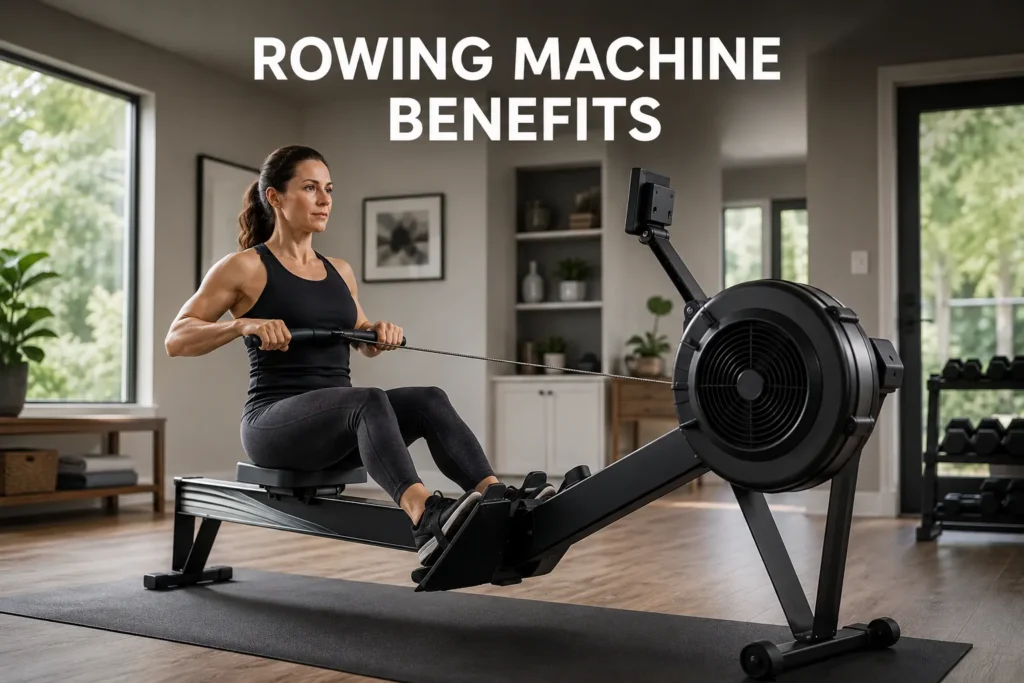
Few pieces of fitness equipment deliver the rowing machine benefits you can get from a single 20-minute session. Every stroke recruits nearly every major muscle group, legs, back, core, and arms working in sequence, while keeping your joints under significantly less stress than running. For anyone building a home gym or upgrading their cardio, rowing delivers an exceptionally high training return.
I consistently point beginners and experienced athletes toward the rowing machine because that training return is genuine. This guide covers cardiovascular gains backed by research, the exact muscles engaged, realistic weight loss timelines, bone health data for women, and how proper form prevents injury. It is also worth mentioning that all rowing machine benefits in this article apply across every fitness level and training goal.

How Rowing Transforms Cardiovascular Health
Cardiovascular improvement is among the most well-documented rowing machine benefits. A 2015 randomized crossover trial by Horn et al. compared rowing to cycling at equivalent workloads and found that rowing produced significantly higher stroke volume and cardiac output than cycling, which indictes a superior demand on the heart's contractility (1).
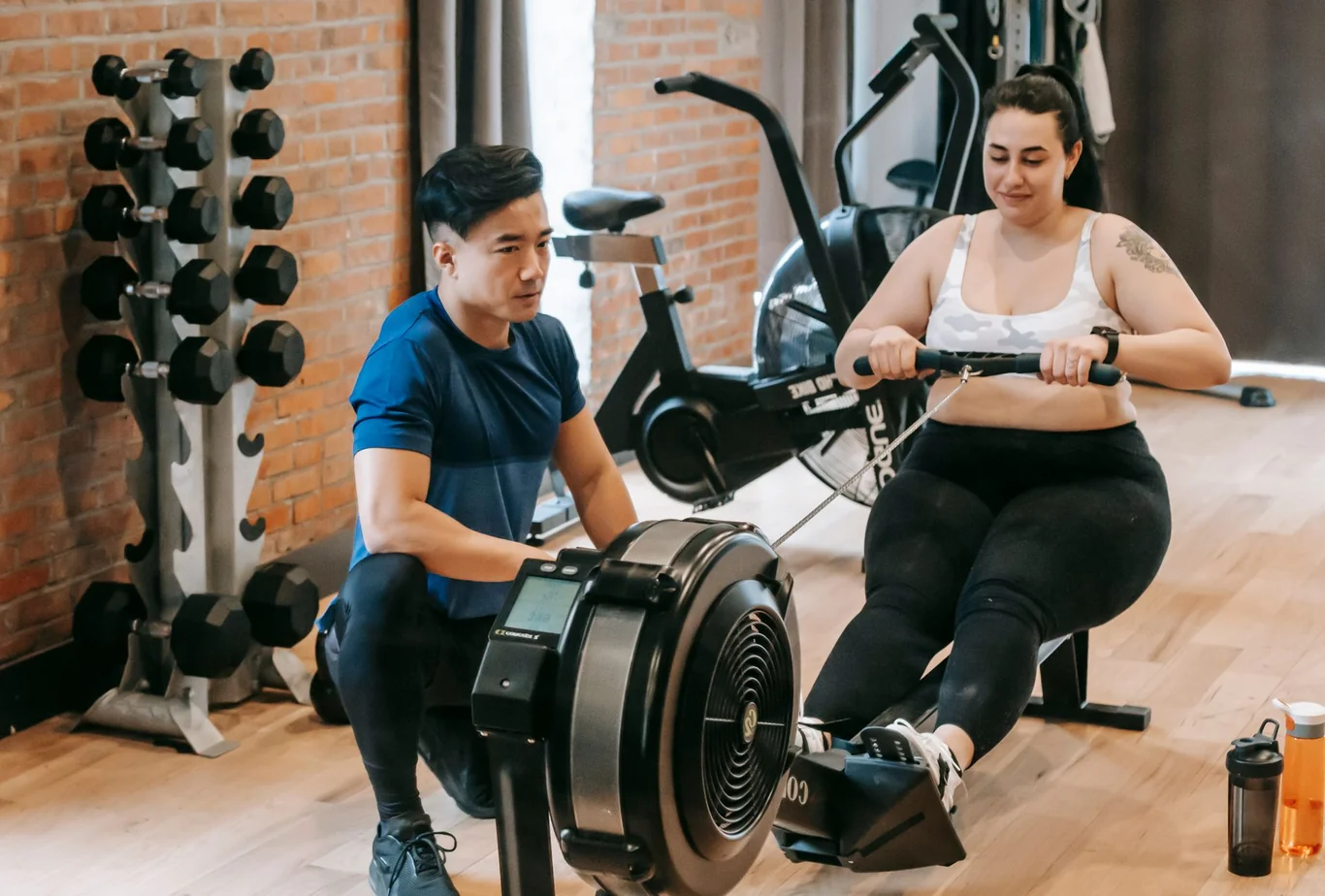
Stroke volume is the amount of blood your heart pumps per beat. Consistently increasing stroke volume through aerobic training is one of the most reliable markers of long-term cardiovascular health. Rowing forces your heart to work at elevated output levels while keeping perceived exertion manageable, which makes it easier to sustain the 20-45 minute sessions where cardiovascular adaptation actually occurs.
Readers comparing this to what the StairMaster delivers in the same time window will find the breakdown in my stairmaster vs rowing machine breakdown.
Shop rowing machines on our current lineup page if you want to start building this kind of cardiovascular base.
A 12-week randomized controlled trial by Hansen et al. found that three 30-minute rowing sessions per week increased VO2 peak and improved brachial artery diameter in participants, a physiological marker of better vascular endothelial health (2). Broader vascular diameter means blood moves more efficiently under exertion, a measurable reduction in long-term cardiovascular disease risk.
I have reviewed multiple studies on rowing and cardiovascular outcomes, and the consistent finding across different populations is that relatively short, moderate-intensity sessions drive meaningful adaptation. You do not need to row at elite intensity to benefit.
The table below compares key cardiovascular effects across common exercise modalities:
Exercise | VO2 Stimulus | Joint Stress | Upper Body Load |
Rowing | High | Low | High |
Running | High | High | None |
Cycling | Moderate-High | Low | None |
Elliptical | Moderate | Low | Moderate |
Compared to the treadmill benefits explored separately, rowing adds an upper body cardiovascular component that running cannot replicate without separate resistance training.
Rowing Machine Benefits for Weight Loss - Realistic Expectations
Weight loss is one of the most frequently cited rowing machine benefits, and the research supports the claim with important context. A systematic review by Borges et al. analyzing 34 studies found that VO2max was strongly correlated (r = 0.83-0.99) with rowing performance, confirming that consistent rowing significantly improves aerobic capacity, the primary physiological driver of sustained calorie burn (3).
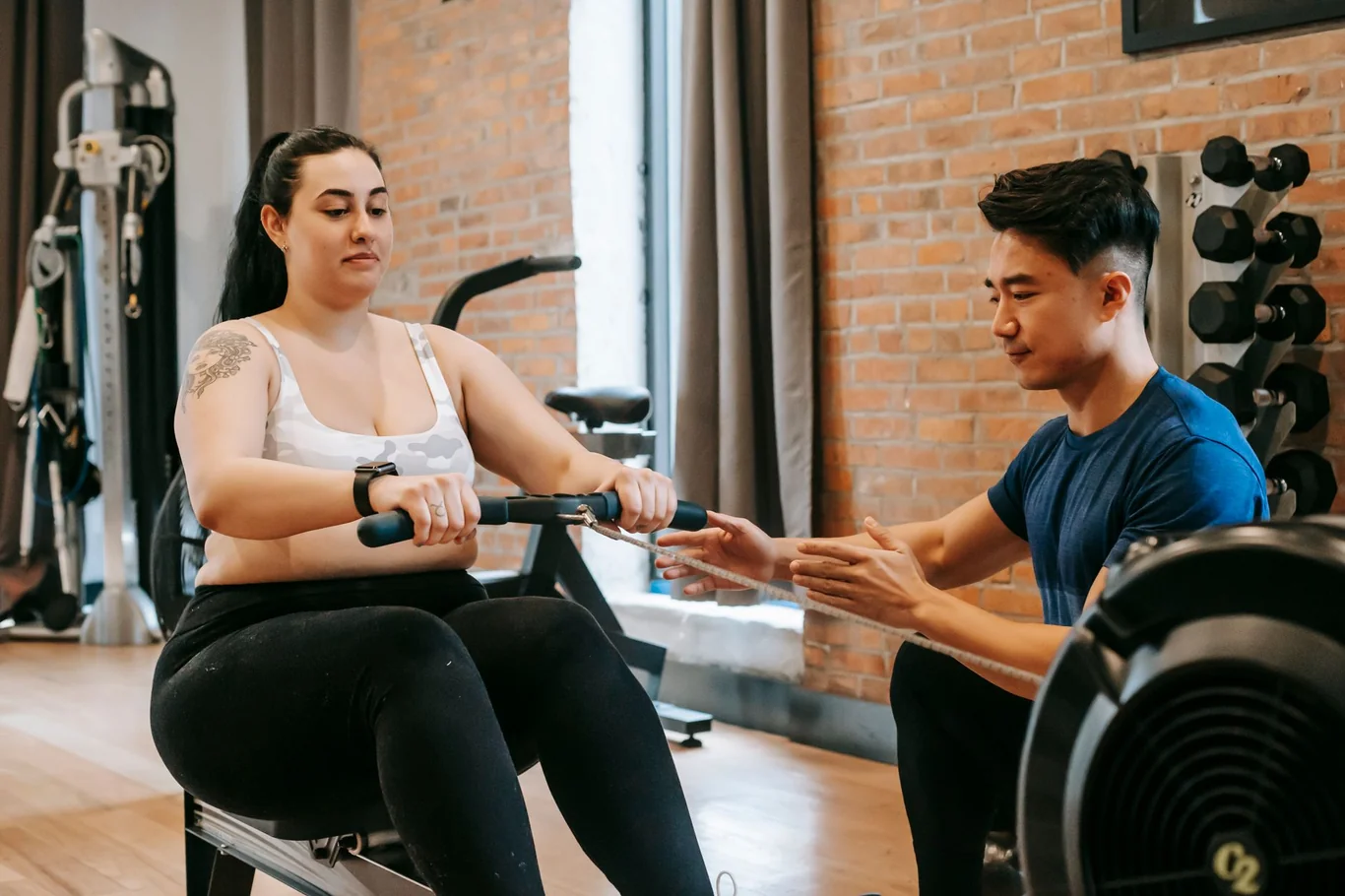
Calorie burn during rowing depends on your body weight and effort level. At moderate intensity, a 155-pound person burns approximately 210-260 calories per 30 minutes. At high intensity with interval training, that figure can reach 300-400 calories. Tracking effort by heart rate rather than relying solely on the machine display gives you a more accurate picture, since built-in calorie counters tend to overestimate.
Readers doing the same for their StairMaster sessions will find the research-backed calorie figures in my stairmaster calorie guide.
For detailed calorie strategies and realistic fat loss timelines built around rowing specifically, my guide on rowing machine for weight loss results covers the 8-12 week progression evidence and how to structure sessions for body composition change.
The most common frustration people experience using rowing for weight loss is the scale not moving despite consistent effort. This typically reflects muscle gain offsetting fat loss, a positive physiological change that a standard scale cannot distinguish.
Progress markers that better reflect real change include:
- Resting heart rate decreasing over 4-6 weeks of consistent training
- Recovery time after a hard session shortening noticeably
- Distance per stroke increasing as your power efficiency improves
- Clothing fit changing even when body weight stays flat
Estimating how many calories you burn per session is useful as a general guide, but rowing machine calorie burn varies enough by individual that long-term tracking trends matter more than any single figure. For specific guidance on fat reduction strategies, our resource on whether a rowing machine is good for weight loss covers calorie deficit approaches alongside rowing programming. The best budget rowing machine guide identifies quality options for building a weight-loss-focused home gym.
Why Joints Prefer Rowing - Low-Impact Training for Long-Term Health
Joint health is one of the rowing machine benefits that receives less attention than cardiovascular outcomes, but it is equally significant for long-term training sustainability. Rowing is a closed-chain, non-impact exercise: your feet never leave the footrests, and no force is transmitted upward through your ankles, knees, or hips from ground contact.
This contrasts directly with running, where ground reaction forces reach two to three times your body weight with each stride. For individuals managing knee pain, hip issues, or early-stage osteoarthritis, rowing provides the same cardiovascular and strength stimulus without the compressive loading that makes running unsustainable over time.
Readers who also want to explore the benefits of stair climbing as a high-output weight-bearing option will find them in my stairmaster training benefits guide.
Our Teeter Power10 rower page covers a bi-directional design that trains push and pull muscle groups without the ground-impact forces of running.
I would specifically point joint-sensitive athletes toward rowing as a first recommendation for maintaining cardio during recovery from injury. The seated position distributes spinal load differently than standing exercise, and the absence of eccentric impact loading makes rowing viable for many people who cannot tolerate high-impact modalities. For households where users have varied joint health and fitness levels, my guide to the top rowing machines for multiple users covers models that accommodate the full range of user sizes without compromising on capacity or footrest adjustability.
For individuals managing back issues alongside general training, the guide on best exercise bike for back problems compares low-impact cardio options for different injury profiles. Is a rowing machine bad for your back addresses which spinal conditions respond well to rowing and which require modification or professional clearance.
Three training contexts where rowing's low-impact nature provides the greatest advantage:
- Returning from injury - maintains cardiovascular fitness while protecting healing tissue from impact stress
- Training with osteoarthritis - full range-of-motion training without joint compression from ground contact
- Cross-training alongside heavy strength work - adds aerobic volume without increasing skeletal stress
Rowing Machine Benefits for Women
The rowing machine benefits for women extend into areas that most general resources skip entirely. Bone health is one of the least-discussed advantages, yet it is clinically meaningful for women in their 30s and beyond. A cross-sectional study by Baker et al. measuring bone mineral density in collegiate female rowers found higher total body and regional bone density compared to matched non-rowing controls, with lumbar spine and femur showing the most significant differences (4).
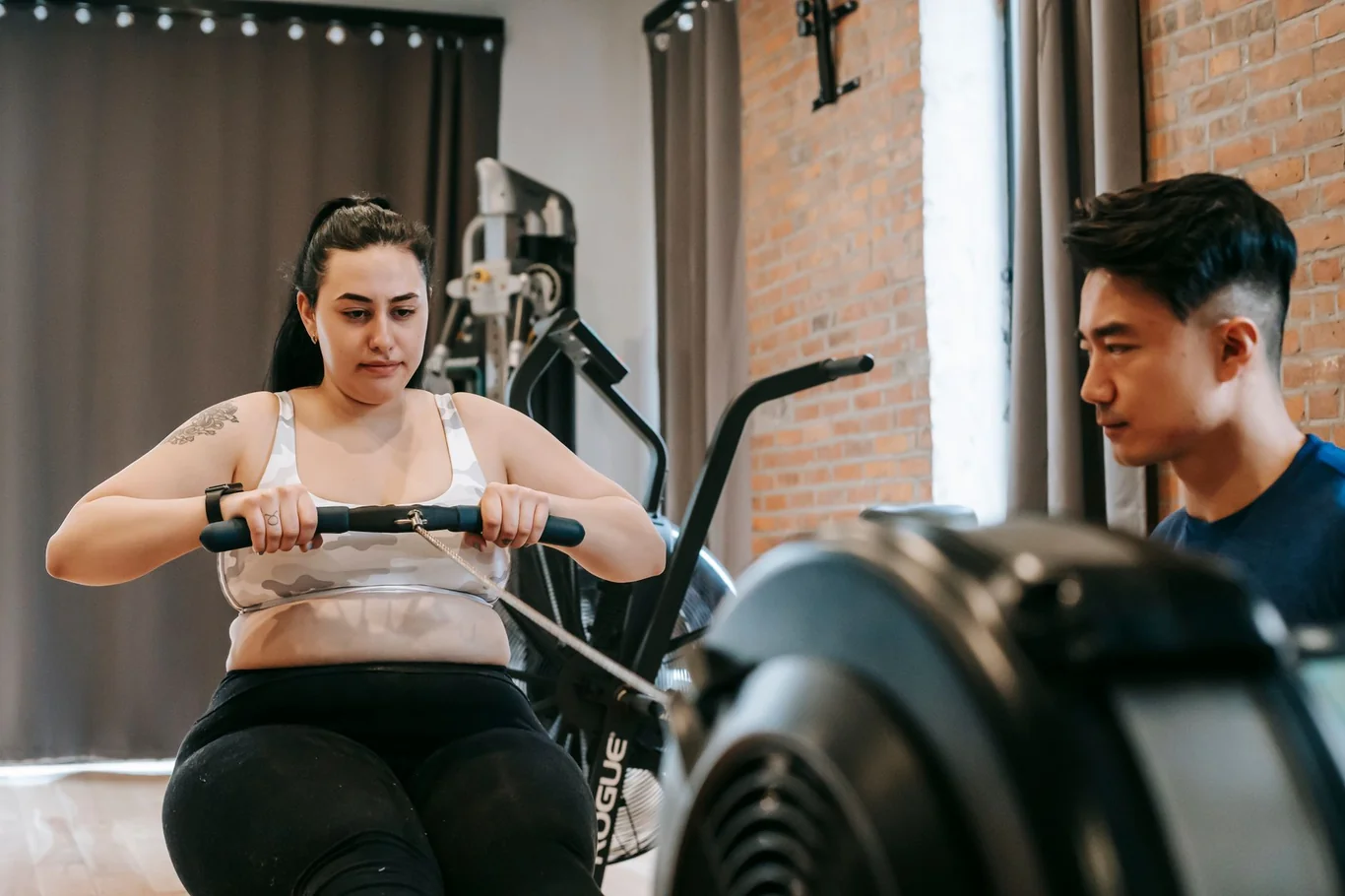
Rowing is a bone-loading exercise because your muscles pull against the footrests and handles with significant force during each drive phase. This results in a mechanical stress that stimulates bone remodeling. Also, this distinguishes it from swimming, which is also low-impact but provides minimal bone-loading stimulus. Women entering perimenopause or postmenopause can use rowing as one tool for maintaining skeletal density alongside resistance training.
For women managing a clinical osteoporosis diagnosis or low bone density, my guide on is a rowing machine good for osteoporosis covers the spinal loading research and how to adapt training safely.
A concern I hear frequently from women new to rowing is the worry about building oversized legs or overly broad shoulders. The evidence does not support this concern at volumes typical for recreational rowing. Three to five rowing sessions per week build muscular endurance and lean mass, not the hypertrophy associated with progressive high-volume resistance training. Muscle definition improves, but significant size increase does not occur at typical aerobic training volumes.
What Muscles a Rowing Machine Works - The Full Breakdown
A common misconception is that rowing primarily trains your arms. The reality is the opposite: your legs generate the majority of the power, while your back, core, and arms complete and stabilize each stroke.
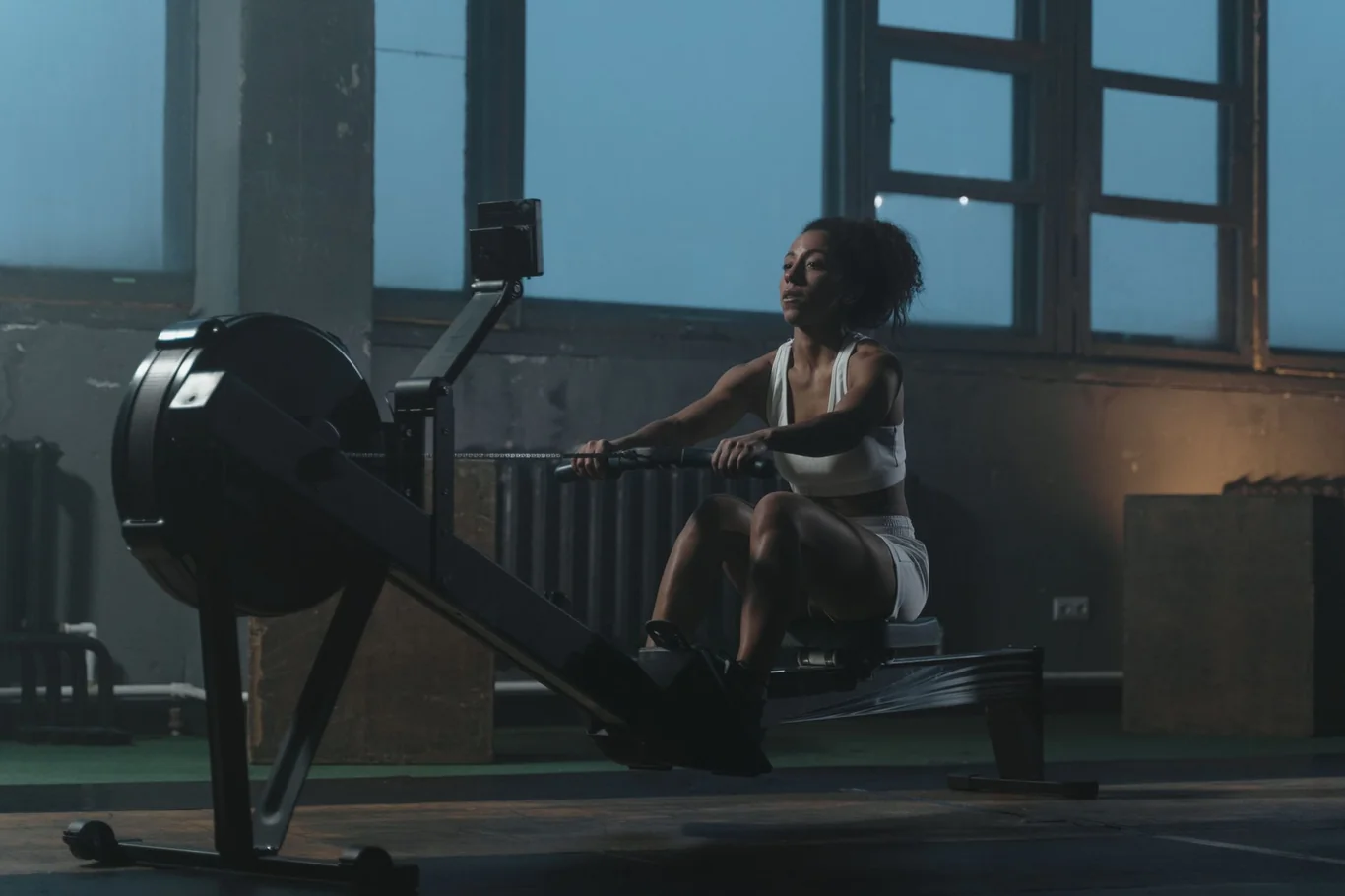
Understanding which muscles a rowing machine targets is essential for appreciating the full scope of rowing machine benefits and for designing a balanced training program. Our guide on what muscles a rowing machine works covers the full activation breakdown by stroke phase, including the EMG data behind each major muscle group.
Research using surface electromyography confirms the breadth of this engagement. A 2020 analysis of elite rowers by Vieira et al. measured activation timing across eight lower limb muscles during rowing, including the tibialis anterior, gastrocnemius, soleus, quadriceps, rectus femoris, and hamstrings, all showing consistent activation patterns across different stroke rates (5). A separate study by Czajkowska et al. confirmed biceps brachii, triceps brachii, and quadriceps activation throughout the stroke cycle phases (6).
In reviewing the muscle activation research, I found the phase-specific EMG data particularly useful for understanding why rowing technique matters so much for training outcomes. Muscle activation patterns shift significantly when form breaks down, reducing training stimulus for the targeted muscles while increasing load on the lower back.
Here is the muscle breakdown by stroke phase:
Stroke Phase | Primary Muscles | Secondary Muscles |
Catch | Quadriceps, tibialis anterior | Core stabilizers |
Drive | Hamstrings, glutes, lats | Rhomboids, deep core |
Finish | Biceps brachii, rear deltoids | Trapezius, forearms |
Recovery | Hamstrings (eccentric), abs | Tibialis anterior |
The muscles a rowing machine works extend beyond any single phase. Sustained sessions create cumulative fatigue across both lower and upper body, which drives the muscle endurance gains that make rowing effective for functional strength.
For a comparison of how cycling distributes muscle load differently, my guide on what muscles an exercise bike works covers the contrasting lower-body emphasis that separates cycling from rowing.
Rowing Machine Form and Frequency - How to Maximize Results
Proper rowing machine form is the difference between training that accelerates results and training that causes a preventable back or knee injury. Maximizing the rowing machine benefits you get from every session starts with internalizing the four-phase stroke before adding resistance or interval intensity: catch, drive, finish, recovery. Our guide on how to use a rowing machine covers each of these phases in detail, including the form errors that develop under fatigue and the cues that fix them.
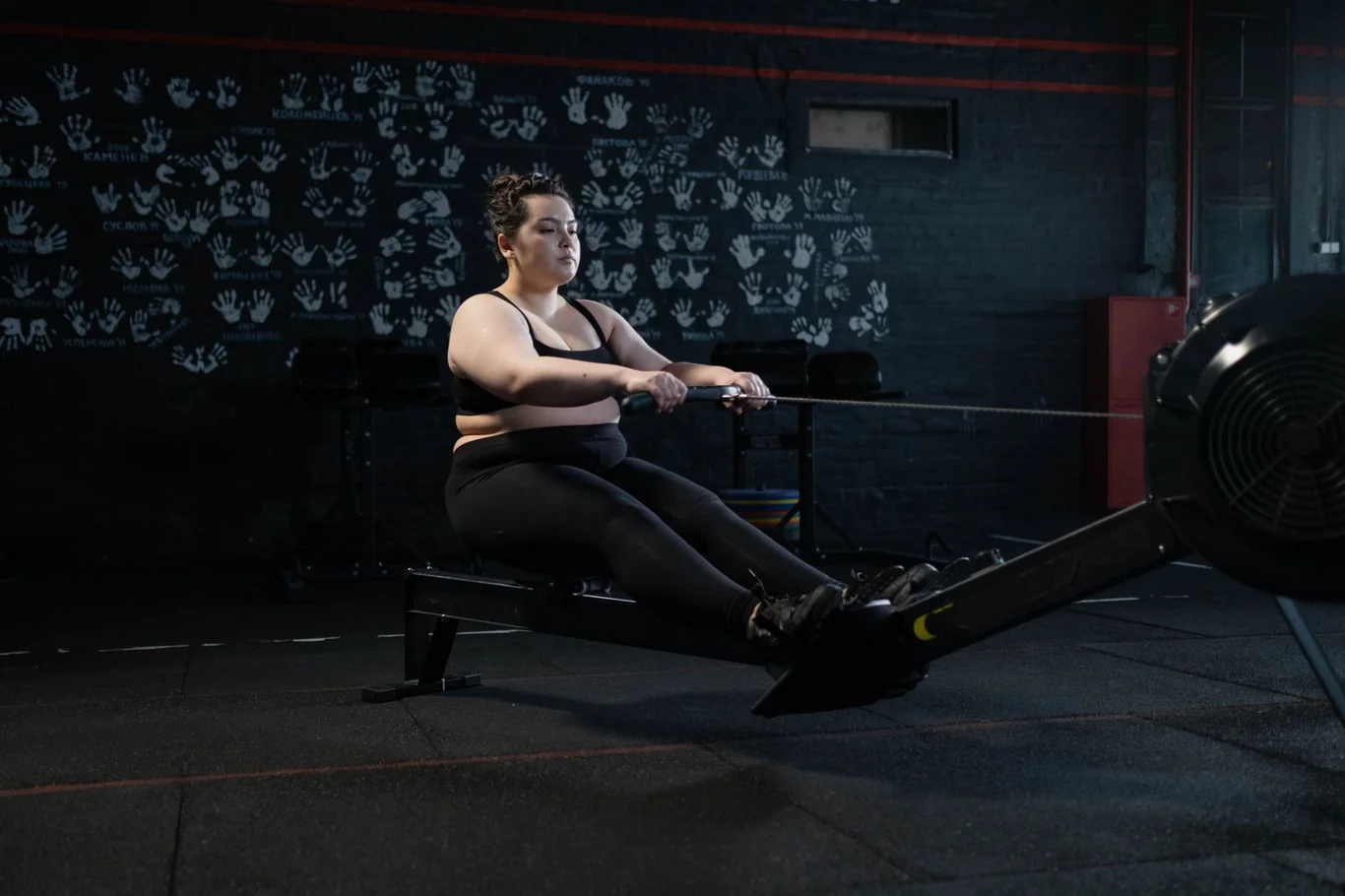
The most damaging form error is rounding the lower back during the drive phase. Your spine should remain neutral throughout, preserving its natural curve as your legs push down. Hinging forward at the hip before your legs are fully extended shifts load to your lumbar spine, where it does not belong. Shoulders stay slightly behind your hips at the finish, never collapsing forward.
For those with existing spinal conditions who want to know which back issues respond well to rowing and which require clearance or modification, my guide on rowing machine and lower back health covers the clinical breakdown.
In my experience reviewing rowing training research, the form breakdown point is where most beginners lose training potential fastest, not because rowing is technically complex but because fatigue shortcuts develop before proper technique is ingrained. This makes shorter, properly-executed sessions far more valuable than longer ones with deteriorating form.
New rowers looking for machine-specific guidance alongside technique fundamentals will find both in our best rowing machine for beginners guide, which reviews seven machines evaluated for new rowers.
Frequency recommendations by training goal:
- Cardiovascular baseline - 3 sessions per week, 20-30 minutes at moderate intensity (65-75% maximum heart rate)
- Weight loss focus - 4-5 sessions per week, mixing 2-3 moderate steady-state sessions with interval work
- Endurance and performance building - daily rowing possible when you alternate between high-intensity and low-intensity sessions with at least one full rest day per week
A 20-minute session is sufficient for meaningful aerobic adaptation when intensity is adequate. At 75-80% of your maximum heart rate, 20 continuous minutes produces a comparable cardiovascular stimulus to a 30-40 minute moderate-effort session.
Readers who also use the stair climber as a high-output cardio option will find a full breakdown in my stair climber machine overview.
If you are transitioning from a treadmill to rowing as your primary cardio tool, the guide on how to disassemble a treadmill can help you reclaim floor space for your rower.
Why No Other Cardio Machine Works This Way?
The defining advantage of a rowing machine is the full-body coordination it demands from the very first stroke. Unlike a treadmill, which is leg-dominant, or a stationary bike, which keeps your upper body almost entirely passive, rowing distributes effort across your legs, core, back, and arms in a single fluid movement.
For a structured look at how that full-body demand compares to cycling, my rowing vs cycling comparison breaks down the differences in calorie burn, VO2max development, and practical tradeoffs.
For a full breakdown of how rowing compares to a stationary bike across muscle recruitment, cardiovascular output, and joint loading, my rowing vs exercise bike comparison covers both modalities for readers still deciding between the two.
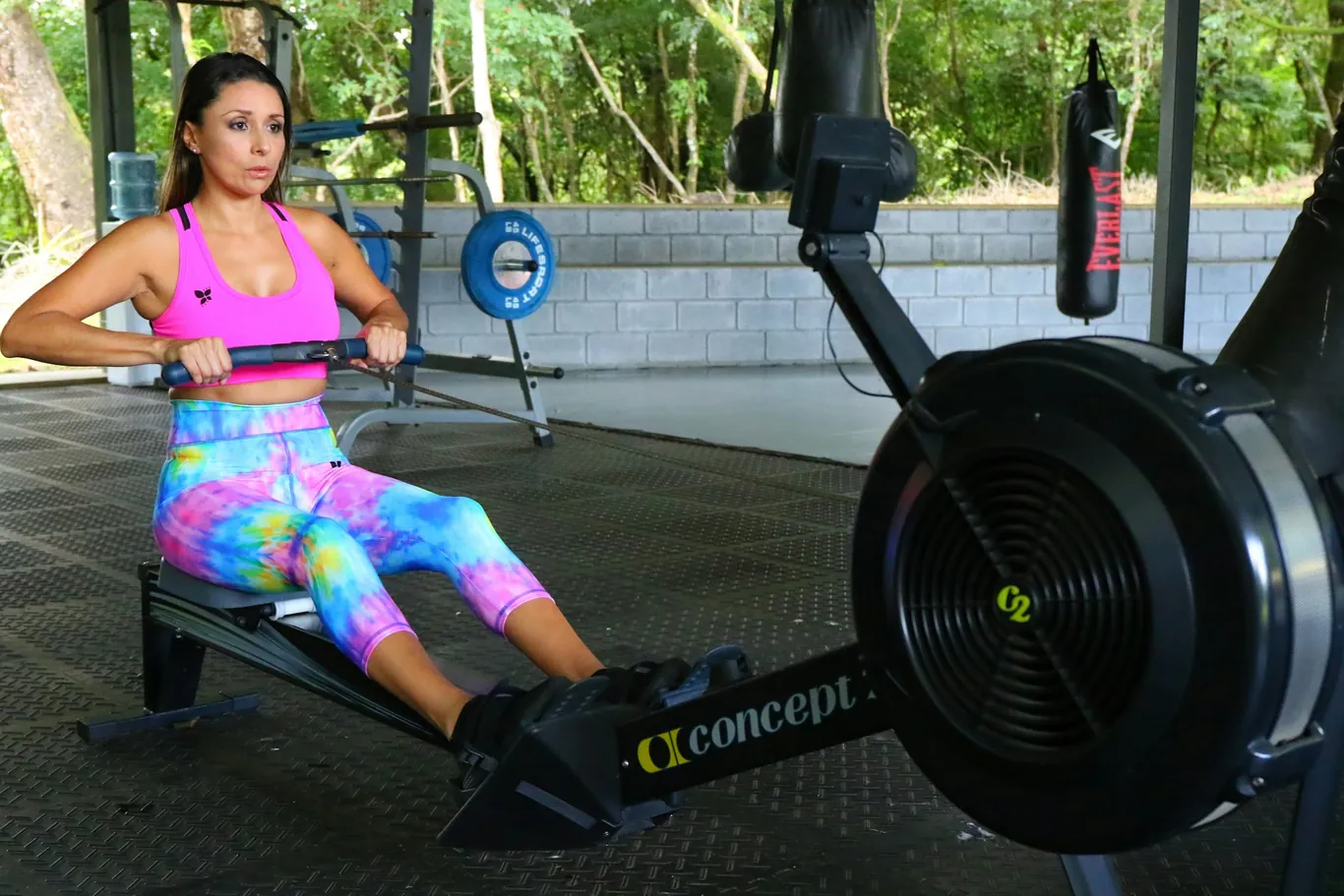
Your leg drive initiates every stroke, pushing through your heels to generate 60-70% of your total power output. Your core stabilizes your spine through the entire movement; your back muscles pull the handle toward your lower ribs, and your arms complete the drive at the finish position. Our research into rowing machine training consistently shows this sequenced activation is what makes rowing uniquely time-efficient: you build strength and cardiovascular fitness simultaneously rather than treating them as separate workout categories.
Readers who also use the StairMaster as part of their cardio rotation will find a complete technique guide in my stairmaster usage guide.
Readers using the rower alongside lower-body cardio machines will find the StairMaster vs elliptical comparison in my stairmaster vs elliptical breakdown.
A magnetic rowing machine adds another practical advantage for home training. Magnetic resistance operates without mechanical contact between the flywheel and any brake pad, which means near-silent operation, consistent resistance across all levels, and zero maintenance degradation compared to friction-based designs. For a home gym where noise matters, this is a meaningful daily benefit. For home buyers where space is as tight as noise tolerance, my guide to the best compact rowers covers the magnetic options that combine this noise advantage with the smallest possible deployed footprint.
When selecting the best rowing machine for home use, prioritizing magnetic or water resistance over friction-based models delivers a quieter experience and more durable long-term performance.
For a side-by-side breakdown of how air, magnetic, water, and hydraulic machines compare on noise, maintenance, and training suitability, my guide on what type of rowing machine is best covers the resistance type decision in depth across all major user profiles.
Our best magnetic rowing machine guide covers seven evaluated options in this category, with resistance quality, noise level, and connectivity as the primary selection criteria.
Build the Habit - How Long Until Rowing Machine Benefits Become Visible
The timeline for experiencing rowing machine benefits depends on your starting fitness level and training consistency. Cardiovascular improvements are typically detectable within 3-4 weeks of three-sessions-per-week training: resting heart rate begins to decrease, and you will notice the same workout distance covered at lower perceived effort.
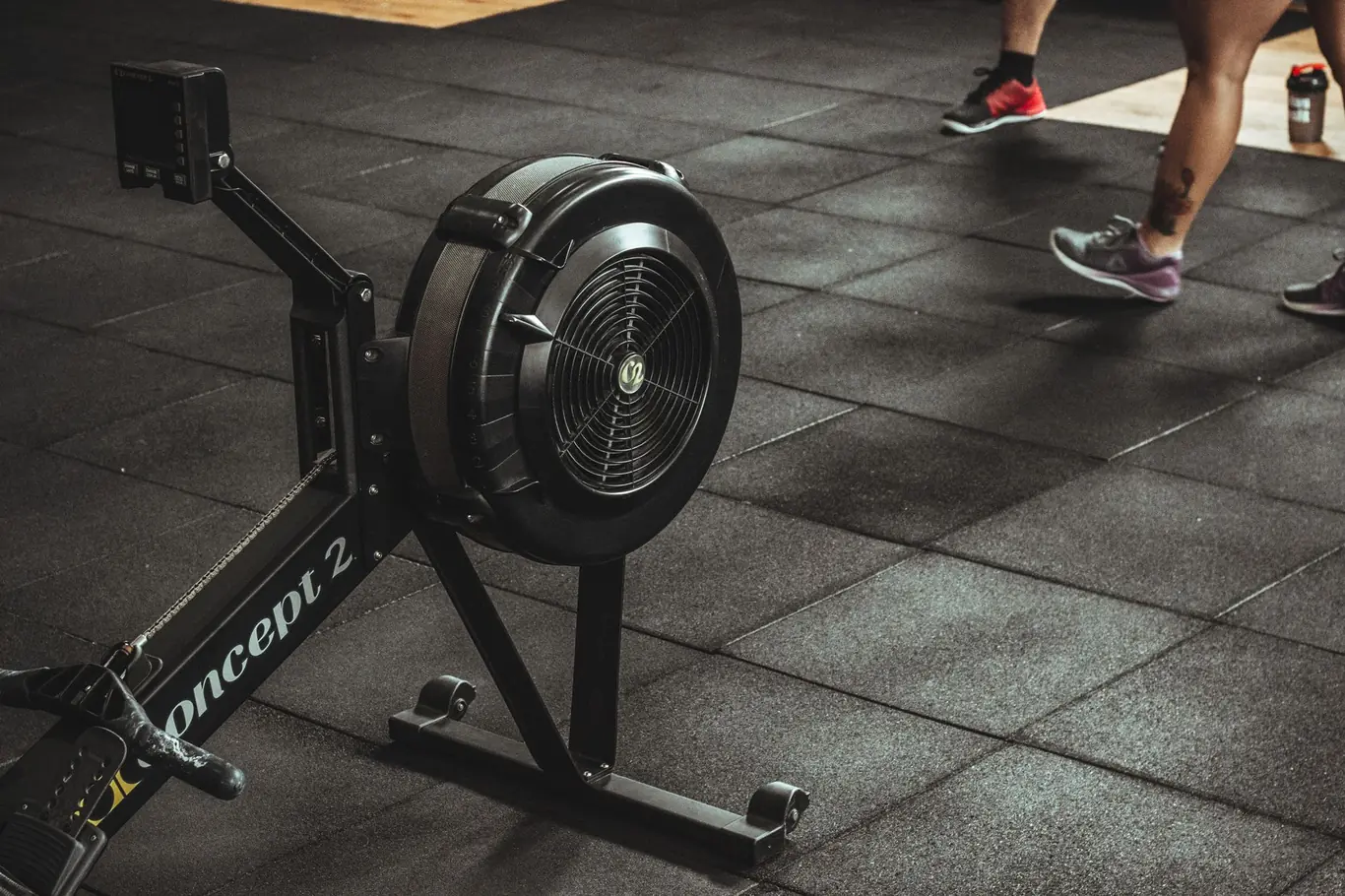
Visible muscle definition and body composition changes take longer. Most people see measurable body fat percentage changes at 8-12 weeks of consistent training. The clearest early signal is performance-based: faster split times on the same distance, or maintaining a challenging resistance setting for longer without breaking form.
I recommend tracking two metrics from your very first session: distance per stroke (meters per stroke, visible on most rower monitors) and your resting heart rate each morning. These two numbers tell you more about actual adaptation progress than scale weight or visual changes in the first eight weeks of training.
Our pooboo Foldable Magnetic Rower page covers a foldable model with Bluetooth Kinomap connectivity.
For those ready to buy, my guide on what to look for in a rowing machine covers the monitor quality, resistance type, and frame specs that determine whether the machine supports this kind of early-stage progress tracking.
My fitness tracker guide covers the devices that best capture these non-visual markers, particularly resting heart rate trends and HRV, which reflect cardiovascular adaptation before it becomes visible.
The rowing machine benefits compound as your cardiovascular base develops. Gains achieved in the first four weeks create a foundation for more intensive training, which produces accelerating improvements in months two and three. Building consistency at moderate intensity early is worth more than sporadic high-effort sessions without recovery.
For readers still weighing the decision, my post on deciding on a rowing machine covers the space, budget, and lifestyle factors that determine whether the benefits translate to consistent use.
The benefits of walking backwards on a treadmill makes a natural recovery-day pairing with rowing, engaging hip flexors and lower body from a different angle than the drive-dominant motion of rowing.
FAQs
Can you lose belly fat with a rowing machine?
You can lose belly fat with a rowing machine by creating a consistent calorie deficit through regular training, since rowing burns approximately 210-400 calories per 30-minute session depending on intensity and body weight. The most effective approach combines 4-5 rowing sessions per week with a diet that supports a moderate deficit, as exercise alone rarely produces significant fat reduction without corresponding nutritional changes.
Is 20 minutes of rowing enough?
Twenty minutes of rowing is enough to produce meaningful cardiovascular adaptation when you maintain moderate-to-high intensity, targeting 70-80% of your maximum heart rate throughout the session. For beginners, 20 minutes at consistent effort builds aerobic capacity effectively; more advanced athletes typically benefit from 30-45 minute sessions or structured interval work to continue progressing.
Users who also train on the StairMaster for lower-body cardio will find complete interval progressions and session templates in my stairmaster training plan.
Is rowing good for heart failure?
Rowing can benefit individuals with stable, compensated heart failure under medical supervision, since low-intensity rowing improves aerobic capacity and vascular function without the joint stress of weight-bearing exercise. Consult your cardiologist before starting any rowing program if you have a heart failure diagnosis, as contraindications vary significantly based on ejection fraction and current medication regimen.
What are the disadvantages of using a rowing machine?
The primary disadvantages of using a rowing machine are the technical learning curve required to row correctly and the potential for lower back or rib injury when technique breaks down under fatigue. Additional drawbacks include the large footprint of most models, the repetitive motion pattern that some users find monotonous over time, and the fact that results depend heavily on consistent intensity management alongside appropriate nutritional support.
How to use rowing machine?
To use a rowing machine correctly, begin each stroke from the "catch" position with knees bent, shins vertical, arms extended forward, and back straight, then drive through your heels to extend your legs before leaning back slightly and pulling the handle to your lower ribs. Return to the catch position by extending your arms first, hinging forward at the hip, then bending your knees, maintaining this sequence consistently to protect your lower back and maximize training stimulus across all major muscle groups.
This content is for informational purposes only and is not a substitute for professional medical advice. Consult your healthcare provider before starting a new exercise program if you have existing cardiovascular conditions, joint injuries, or chronic pain.
References:
- Horn P, Ostadal P, Ostadal B. Rowing increases stroke volume and cardiac output to a greater extent than cycling. Physiol Res. 2015;64(4):571-581. doi:10.33549/physiolres.932812
- Hansen RK, Samani A, Laessoe U, Handberg A, Mellergaard M, Figlewski K, Thijssen DH, Gliemann L, Larsen RG. Rowing exercise increases cardiorespiratory fitness and brachial artery diameter but not traditional cardiometabolic risk factors in spinal cord-injured humans. Eur J Appl Physiol. 2023;123(5):1137-1151. doi:10.1007/s00421-022-05107-9
- Borges I, Veiga S, Gonzalez-Frutos P. The Evaluation of Physical Performance in Rowing Ergometer: A Systematic Review. J Funct Morphol Kinesiol. 2025;10(1):5. doi:10.3390/jfmk10010005
- Baker BS, Buchanan SR, Bemben DA. Skeletal Health and Associated Injury Risk in Collegiate Female Rowers. J Strength Cond Res. 2022;36(4):1125-1133. doi:10.1519/JSC.0000000000003568
- Vieira TM, Cerone GL, Stocchi C, Lalli M, Andrews B, Gazzoni M. Timing and Modulation of Activity in the Lower Limb Muscles During Indoor Rowing: What Are the Key Muscles to Target in FES-Rowing Protocols? Sensors (Basel). 2020;20(9):2637. doi:10.3390/s20092637
- Czajkowska U, Swiatek-Najwer E, Jankowski L. Analysis of muscle activity during rowing stroke phases. Acta Bioeng Biomech. 2023;25(1):117-126. doi:10.37190/ABB-02271-2023-02