
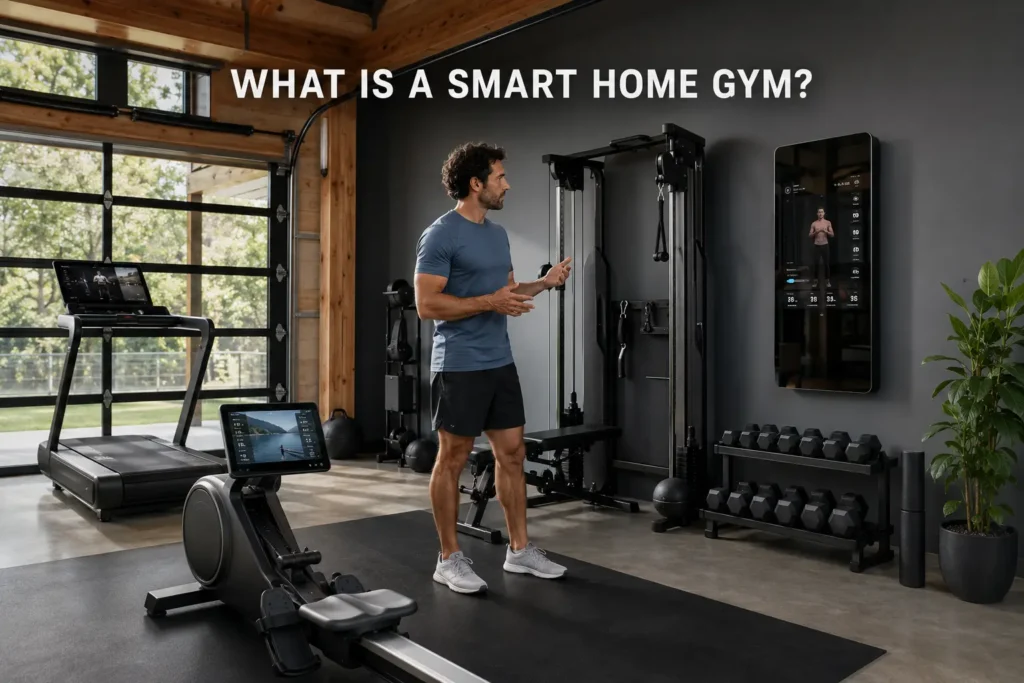
A smart home gym is a dedicated workout space equipped with internet-connected fitness machines, AI coaching software, and real-time performance tracking that deliver a guided fitness experience without leaving home. If you've been wondering what sets connected fitness apart from a basic exercise room or a traditional gym, this guide breaks down exactly how these systems work, what equipment to expect, what they cost, and how to decide whether one fits your training goals.
I've spent significant time analyzing customer-feedback patterns, research on home exercise adherence, and the evidence behind connected fitness systems. The picture that emerges is more nuanced than the glossy marketing suggests - real benefits exist for specific situations, and real limitations exist too.

What Is a Smart Home Gym - How Connected Equipment Works
The defining characteristic of a smart home gym isn't the price tag or a particular brand - it's the feedback loop. Traditional equipment gives you output (resistance, speed, distance) without any real-time guidance. Smart gym systems close that gap through digital resistance motors, integrated cameras or sensors, streaming coaches, and apps that track form, output, and progress over time.
The interactive fitness mirror category extended this feedback loop through AI camera systems that tracked body position in real time, and my Fiture fitness mirror guide covers what that approach achieved before the brand exited the US market.

Common smart features across connected fitness platforms include:
- AI-powered form correction - cameras or motion sensors detect dangerous technique and flag it in real time
- Adaptive resistance - equipment adjusts difficulty automatically based on your effort, heart rate, or output signals
- Streaming classes - live or on-demand sessions led by certified coaches displayed directly on the machine's screen
- Performance data tracking - workout logs, rep counts, heart rate trends, and weekly volume recorded in-app and visible across sessions
- Wearable integration - syncing with Apple Watch, Garmin, Fitbit, and similar devices to pull biometric data into a unified training dashboard
This feedback loop matters because unsupervised home exercise has historically shown inconsistent results. A systematic review and meta-analysis published in BMC Geriatrics found that unsupervised home-based programs showed no statistically significant improvements in lower extremity physical function among older adults (1). Smart coaching systems are specifically designed to fill that supervision gap, which is the core value proposition of the entire category.
My fitness tracker primer covers the sensor types and data points that determine how well a wearable integrates with a connected home gym platform.
Our best treadmill for home guide covers connected running machines across a range of budgets if you want to see how the technology translates into specific product choices.
What Equipment Makes Up a Smart Home Gym
A smart home gym can be a single connected machine or a full multi-equipment space. The best smart home gym equipment generally falls into two categories.
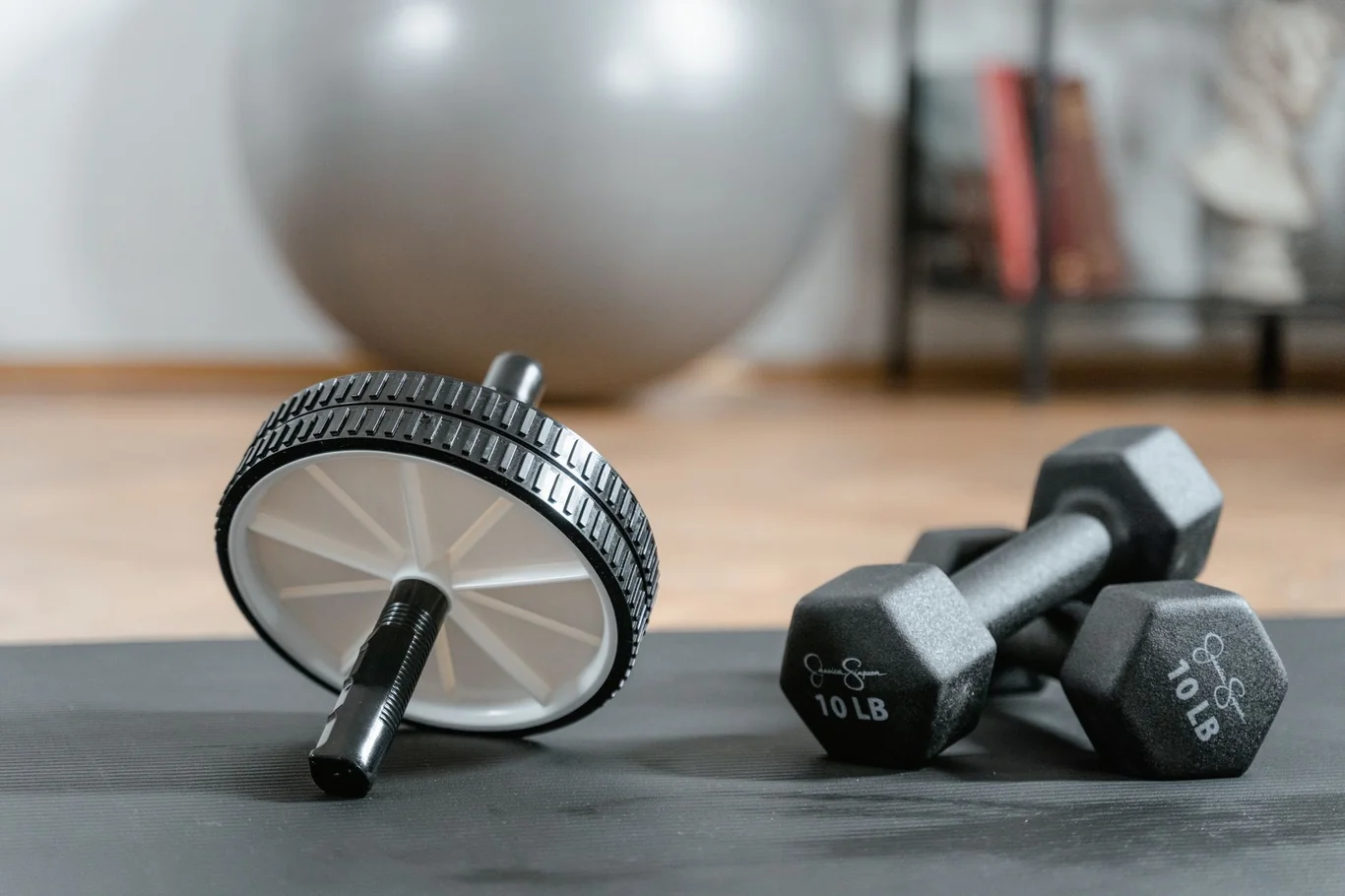
Smart Cardio Equipment
Connected cardio machines form the foundation of most home setups:
- Smart treadmills - NordicTrack, iFIT-enabled, and similar models that auto-adjust incline, stream trail runs, and track pace and heart rate
- Under-desk treadmills - lower-profile walking units designed for use while working; our best under desk treadmill guide covers the top app-connected options
- Smart ellipticals - low-impact elliptical machines with resistance auto-adjustment and integrated streaming, common choices for joint-sensitive users
- Connected exercise bikes - upright and recumbent exercise bikes with built-in touchscreens and on-demand class streaming across a wide range of price tiers
- Smart rowing machines - water or magnetic resistance rowers with stroke tracking, form feedback, and coach-led interval programming
Each machine targets a different training need. Ellipticals and recumbent bikes offer lower-impact cardio suited to recovery and joint-friendly training. Treadmills drive higher caloric output and replicate outdoor running mechanics. Rowing machines deliver full-body cardio with a meaningful strength component from the pulling pattern.
For those setting up a home gym specifically around fat loss and considering a rowing machine as the primary cardio tool, my guide on whether a rowing machine is good for weight loss covers calorie output, session structure, and body composition timelines.
For a complete guide to the top rowing machine options available in connected and standard formats, my rowing machine roundup covers 11 machines tested across resistance types and price points.
Our best exercise bike roundup covers the top connected options with performance comparisons and buyer guidance.
Smart Strength and Resistance Equipment
This is where the technology - and the price point - escalates the most:
- Digital resistance towers - Tonal, Tempo, and Speediance use electromagnetic or cable resistance instead of iron plates, mount to a wall or stand as free-standing units, and deliver adaptive workouts with guided load progression
- All-in-one cable stations - motorized cable machines with programmable resistance accessed through a touchscreen interface
- Smart mirrors - screens that display live fitness classes and blend into a room when not in use, sometimes paired with optional resistance accessories
- Connected adjustable dumbbells - Bowflex SelectTech and similar systems with Bluetooth rep counting and session logging
A 5-year longitudinal case study tracking three adults who trained consistently with a Tonal smart resistance system found sustained improvements across strength (chest press and squat one-rep max), cardiovascular fitness (VO2 max), and body composition when they maintained a minimum of three weekly sessions (2). The sample size is small, but the findings establish a useful proof-of-concept for long-term adherence and outcome potential when the technology is used consistently. My Tonal smart gym review covers the full cost breakdown, feature analysis, and who this system suits best.
For a focused look at how the two most established AI-powered home gym systems differ in practice, my Tonal and Mirror breakdown compares coaching depth, resistance range, and total cost of ownership.
For readers who want the interactive mirror format without a platform subscription, my guide on best no-subscription fitness mirrors covers open Android models that run any app from Google Play.
For best portable smart home gym options that work in smaller spaces, compact cable stations and adjustable dumbbell systems are the most flexible starting points. If joint comfort is the priority for the cardio side, our guide covering best exercise bike for back problems covers equipment specifically suited to low-impact resistance training.
Smart Home Gym vs. Traditional Gym - What the Research Shows
The honest comparison between a smart home gym and a traditional gym depends heavily on your training goals and how consistently you actually use the equipment.
For buyers considering a display-based training format as part of their home setup, my guide on the best home workout mirrors covers the open Android options that run any fitness app from Google Play.

Factor | Smart Home Gym | Traditional Gym |
Commute required | No | Yes (varies) |
Schedule flexibility | 24/7 | Limited hours |
AI coaching | Built-in | Absent (unless hiring a PT) |
Equipment variety | Focused range | Extensive |
Social environment | Solo or household | Community-driven |
Monthly cost | Hardware + subscription | Membership fee |
Space needed | 7-50+ sq ft at home | N/A |
Where smart home gyms hold their own:
A 12-month randomized controlled trial published in the Journal of Physiotherapy found that home-based exercise with structured support produced comparable quality-of-life outcomes to gym-based programs in adults with chronic health conditions (3). The key phrase here is "with structured support" - and structured coaching is exactly what smart fitness technology delivers automatically, without requiring a human trainer.
Adherence is another genuine strength of the home setup. A meta-analysis of 26 studies found that home-based video exercise programs achieved a weighted mean retention rate of 91.1% and a session attendance rate near 85% (4). The convenience factor - no commute, no waiting for machines, no schedule dependency - translates into measurable real-world consistency.
Where traditional gyms retain an edge:
For metabolic disease management specifically, a 2025 meta-analysis of 20 RCTs found that gym-based resistance training significantly reduced HbA1c in type 2 diabetes patients, while home-based approaches showed no meaningful metabolic improvement (5). Supervision, high-load equipment availability, and professional coaching drive much of that gap. Smart gym coaching systems narrow it, but they don't eliminate it entirely for clinical populations.
For general fitness, weight management, and cardiovascular health - the goals most home gym users are actually working toward - the research strongly supports the equivalence of well-structured home training programs.
You can explore how specific machine types compare on effort and outcomes in our elliptical vs treadmill breakdown and elliptical machine benefits guide.
How Much Does a Smart Home Gym Cost
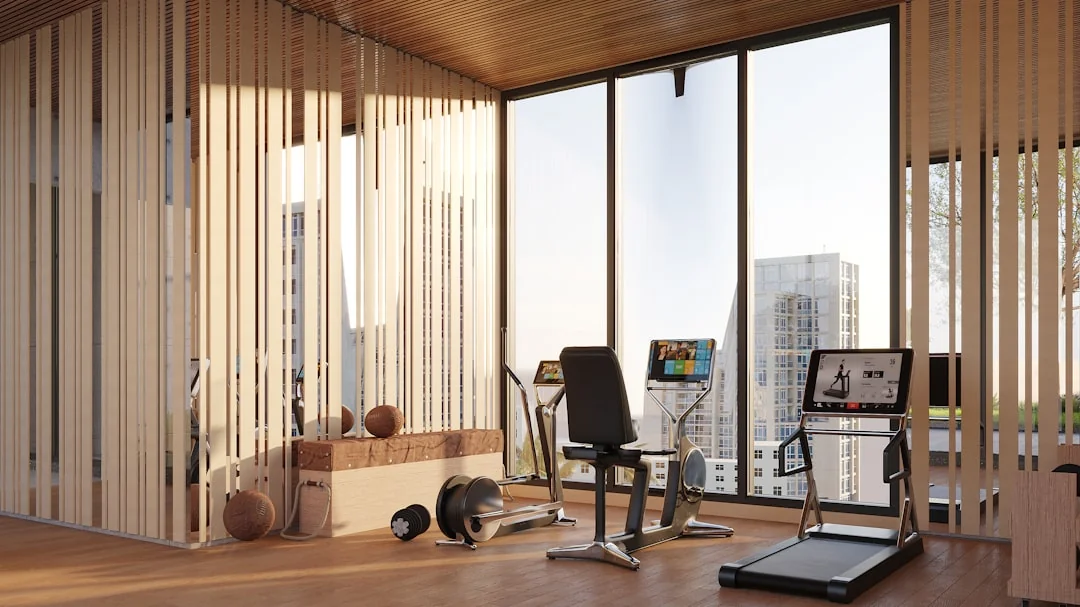
Cost is the most common sticking point with smart home gyms, and the total investment is higher than most people initially expect because it comes in multiple layers.
Cost Component | What to Know |
Entry-level connected cardio | Single machine at budget to mid-range pricing |
Mid-range cardio with screen + streaming | Mid-range to upper-mid pricing; includes class content |
Premium strength systems (Tonal, Tempo, Speediance) | High-end, premium-tier hardware investment |
Monthly subscription | Required for coaching, tracking, and adaptive features |
Installation, delivery, setup | One-time service fee at purchase |
Flooring and accessories (mats, mounts) | One-time additional investment |
A few things to keep in mind before committing:
- Most smart strength systems require an active subscription to access coaching and progress tracking. Without it, the machine still functions but you lose most of what makes it worth the premium price.
- Entry-level connected cardio - a basic smart exercise bike or under-desk elliptical with app connectivity - is accessible at far lower price points than a full-featured wall-mounted strength system.
- Over a 3-5 year horizon, a well-used smart home gym often competes favorably with a gym membership when you account for time savings and commute costs. The math only works if you actually use it.
A cross-sectional study among smartwatch users found that device attributes including interactivity, convenience, and novelty significantly enhanced exercise flow state and intention, with absorption scores showing a direct path to sustained workout behavior (6). The underlying takeaway: technology that makes exercise feel engaging has a measurable impact on whether you actually keep doing it - and that supports the subscription model if the content is genuinely good. If you are comparing connected cardio platforms, my Peloton cost and value analysis covers the full subscription economics and long-term cost structure of the most widely used system.
For budget-constrained setups, our reliable budget smart home gym resource covers how to build a connected fitness space without a premium price tag.
Who Benefits Most from a Smart Home Gym
Not every fitness goal is a strong fit for a smart home gym. These setups deliver the most value for specific user profiles. My smart home gym setup guide walks through the full sequence from space planning and equipment selection to connectivity and subscription decisions.
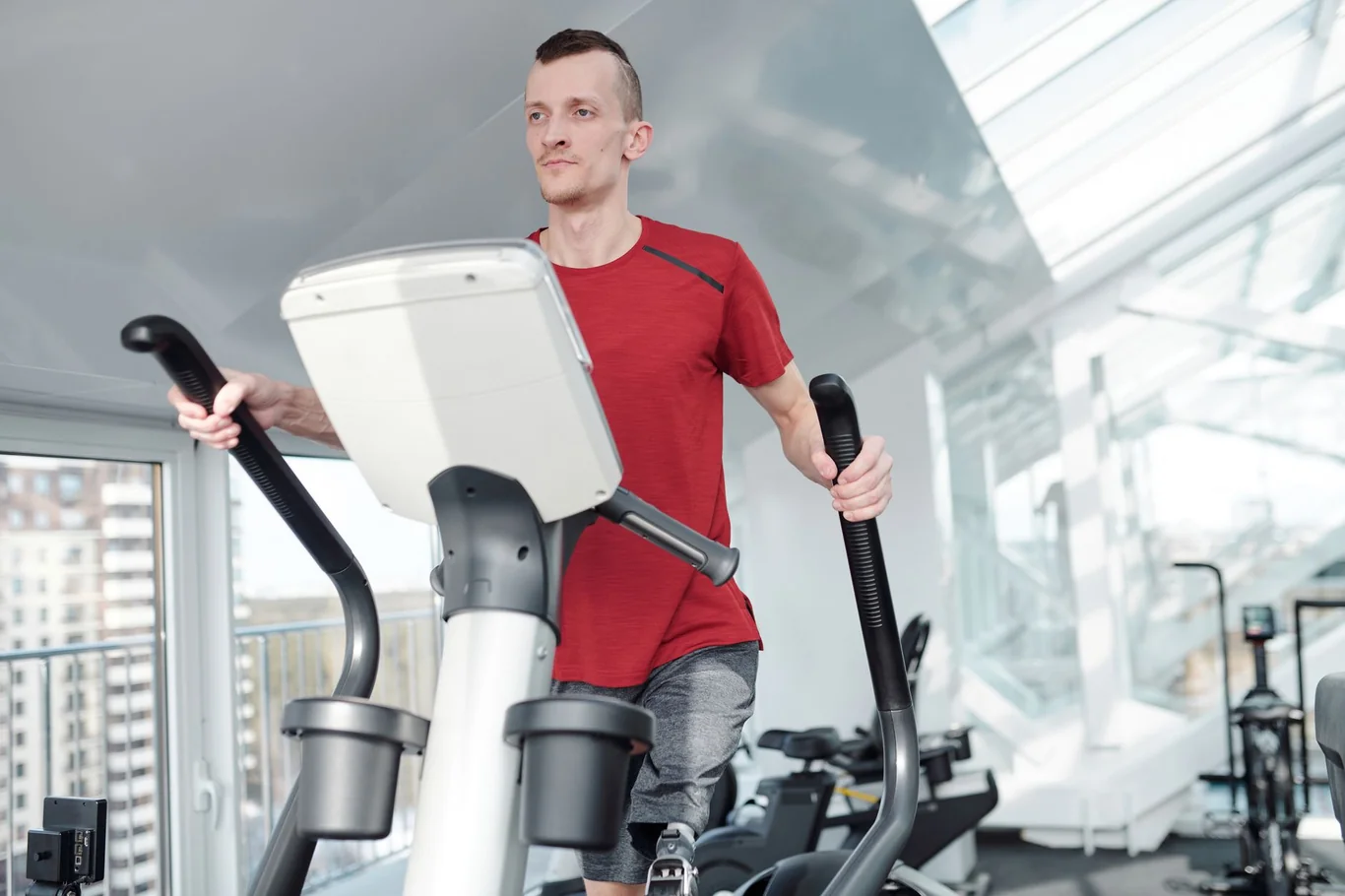
Strong candidates:
- Busy schedules - if commute time to a gym is your main consistency barrier, removing it entirely changes the equation
- Joint-sensitive or injury-prone users - AI form feedback and low-impact machine options reduce injury risk, and you control intensity without social pressure to push past pain
- Users managing health conditions - for osteoporosis goals, weight-bearing equipment like treadmills with guided incline protocols and progressive resistance towers deliver structured bone-loading stimulus; for sciatica, low-impact options like ellipticals and recumbent bikes decompress the spine while coaching helps avoid movement patterns that aggravate the nerve
- Data-motivated users - if progress visualization and detailed tracking drive your consistency, smart gym platforms deliver feedback traditional equipment simply cannot
- Small-space households - a digital resistance system like Tonal requires roughly 7 square feet of floor clearance, a fraction of what a free-weight rack or multi-station cable system demands
Less ideal situations:
- Users whose primary goal is heavy compound powerlifting at high loads (electromagnetic resistance systems have load limits below what experienced strength athletes require)
- Anyone whose main motivation comes from group energy and social interaction at a gym
- Households where multiple users have significantly different training goals that a single smart device cannot accommodate
Beginner options tend to be simpler cardio-first setups with clear app guidance, since the coaching layer is especially valuable when you're still building movement patterns and understanding training variables. My smart home gym options for beginners guide covers the most accessible entry-level connected systems for first-time home gym buyers.
How to Build Your Smart Home Gym Setup
Getting started follows a straightforward sequence regardless of budget. Best smart home gym for small spaces setups often begin with a single compact cardio machine before adding resistance equipment once the usage habit is established.
- Define your primary training goal - cardio fitness, strength building, weight management, rehab, or general health. Each goal points toward a different equipment category and subscription type
- Measure your available space carefully - smart cardio equipment typically requires 6-8 feet of length and 3-4 feet of clearance width; wall-mounted strength systems need 7-10 square feet of open floor area in front of the unit
- Set a realistic total budget that accounts for hardware, ongoing subscription, and first-year setup costs. Many buyers underestimate the subscription component significantly
- Start with one anchor machine - adding a second piece after 3-6 months of consistent use is more cost-efficient than buying a full setup upfront that may go underused once initial motivation fades
- Account for flooring and noise - smart cardio equipment produces vibration, particularly at higher speeds; rubber flooring mats significantly reduce impact transfer and protect both the equipment and the floor beneath it
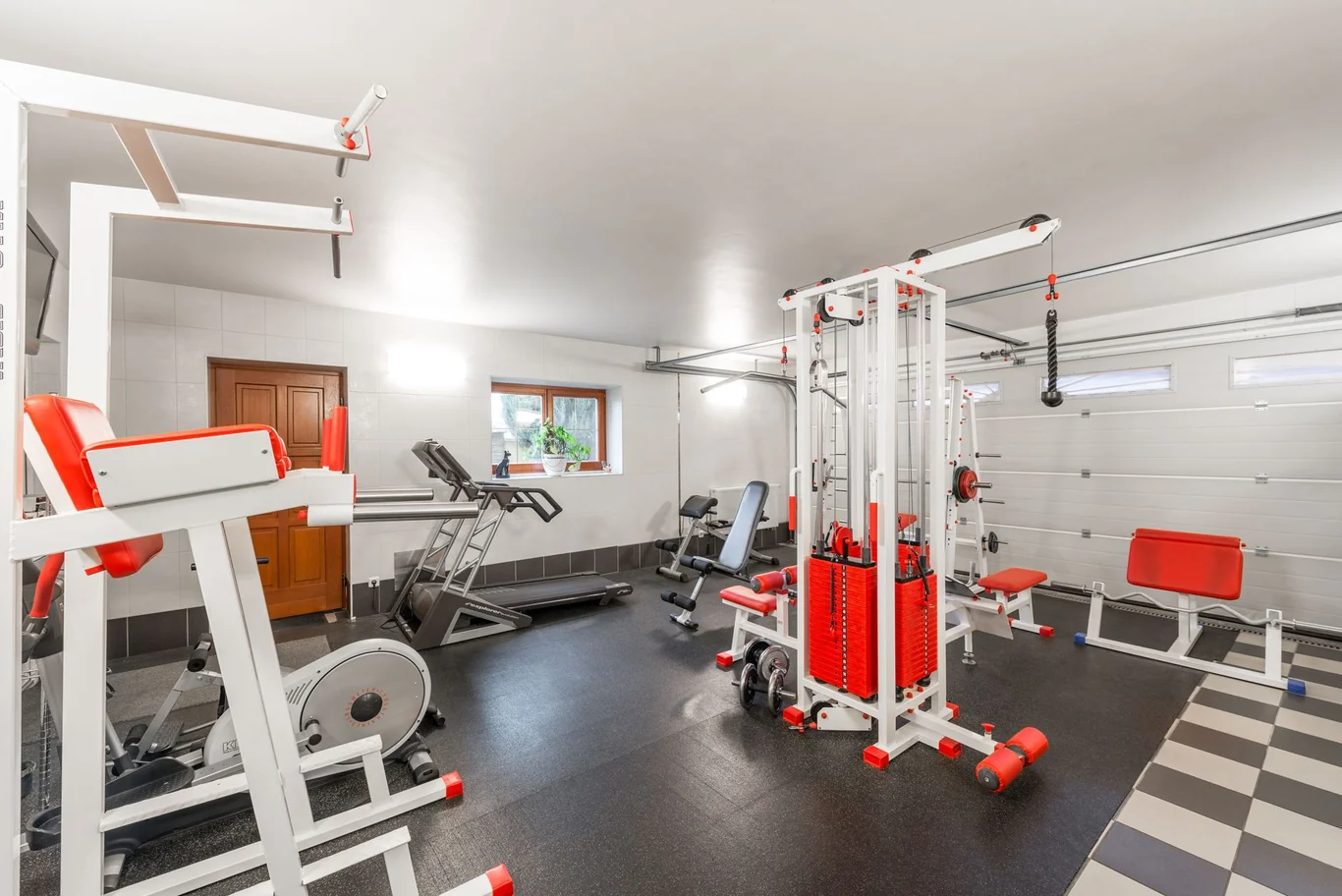
When you eventually need to move or reconfigure equipment, our guide on how to disassemble a treadmill covers the process for the most common home cardio machine category. For a comprehensive space planning and equipment configuration walkthrough, our resource about how to set up a smart home gym covers cable management, equipment placement, and subscription setup in detail.
The Real Case for a Smart Home Gym
The coaching layer, the data logs, the adaptive difficulty, and the class formats are all designed to keep you coming back after the initial motivation fades. That's the gap that sinks most basic home gym setups.
Research on home exercise consistently shows that structure and support are the variables that determine outcomes. Unstructured home workouts tend to plateau. Tech-enabled, coached home exercise produces results comparable to supervised gym training for general fitness goals, with the added benefit that the session happens on your schedule, in your space. My top connected home gym roundup ranks the leading smart platforms across resistance, cardio, and hybrid categories for buyers ready to choose a system.
FAQs
Is a SmartGym worth it?
A SmartGym is worth it primarily when you use it consistently and when the coaching features solve a real barrier in your current training routine. The ongoing subscription cost only justifies the investment when the convenience, AI coaching, and progress tracking meaningfully increase your workout frequency compared to a gym membership or a basic unconnected home setup. Buyers evaluating the two dominant connected platforms before purchasing hardware can compare both in my NordicTrack vs Peloton breakdown.
What gym machines are good for sciatica?
The gym machines best suited for sciatica are low-impact options that decompress the spine rather than loading it axially - ellipticals, recumbent exercise bikes, and seated cable systems are the most commonly recommended by sports medicine practitioners. These machines allow cardiovascular training and targeted strengthening while avoiding the spinal compression mechanics that tend to aggravate sciatic nerve pain during high-impact or heavily-loaded movements.
For those considering whether rowing would fit within a sciatica or chronic back pain management plan, my guide on rowing machine risks for your back covers the specific conditions where rowing is safe and those where it requires medical clearance first.
What exercise machine is good for osteoporosis?
The exercise machines most beneficial for osteoporosis are those that deliver weight-bearing or progressive resistance stimulus to the skeleton, since mechanical loading is what research links to bone density maintenance and improvement. Treadmills, upright exercise bikes, and progressive resistance cable systems are the most practical smart home gym options for this population, offering the structured load progression and form feedback that matter most for safe, consistent bone-health training.
For those specifically evaluating whether a rowing machine should be part of their osteoporosis management program, my guide on rowing and osteoporosis training covers the clinical evidence and how to build a safe progressive routine.
What is the 3-3-3 rule for gym?
The 3-3-3 rule for gym refers to a structured weekly training framework typically involving three strength sessions, three cardio sessions, and three recovery or mobility sessions - or variations that divide training effort into three balanced categories across the week. Smart home gym platforms support this structure through built-in weekly programming that automatically schedules and adapts session types, which makes it easier to follow a balanced plan without manually tracking which category each workout falls into.
This content is for informational and educational purposes only. It is not a substitute for professional medical advice, diagnosis, or treatment. Always consult with your healthcare provider before starting any new fitness program or using fitness technology for health monitoring.
References:
- Liang IJ, Perkin OJ, McGuigan PM, et al. The effectiveness of unsupervised home-based exercise for improving lower extremity physical function in older adults in Western and Eastern cultures: a systematic review and meta-analysis. BMC Geriatrics. 2024;24:800. doi:10.1186/s12877-024-05393-4
- Nguyen TH, Yamamoto T, Cho D, et al. Five years later - the impact of the COVID-19 pandemic on physical performance and cardiometabolic health using a smart home gym: an ecological case study. Int J Environ Res Public Health. 2025;22(5):762. doi:10.3390/ijerph22050762
- Jansons P, Robins L, O'Brien L, Haines T. Gym-based exercise and home-based exercise with telephone support have similar outcomes when used as maintenance programs in adults with chronic health conditions: a randomised trial. J Physiother. 2017;63(3):154-160. doi:10.1016/j.jphys.2017.05.018
- Rihova M, Jandova T, Vetrovsky T, et al. Adherence and retention rates to home-based video exercise programs in older adults: systematic review and meta-analysis. Telemed e-Health. 2024;30(11):2649-2661. doi:10.1089/tmj.2024.0100
- Bärg M, Idiart-Borda Polotto V, Geiger S, et al. Effects of home- and gym-based resistance training on glycemic control in patients with type 2 diabetes mellitus: a systematic review and meta-analysis. Diabetol Metab Syndr. 2025;17:228. doi:10.1186/s13098-025-01793-7
- Oh J, Kim D. Workout with a smartwatch: a cross-sectional study of the effects of smartwatch attributes on flow experience and exercise intentions depending on exercise involvement. Healthcare (Basel). 2023;11(23):3074. doi:10.3390/healthcare11233074