
Arc Trainer vs elliptical - two low-impact cardio machines that look similar from across the gym floor but feel completely different underfoot. One follows a smooth oval path; the other drives your foot in a downward-slanting arc. Both are popular with runners, rehabilitation patients, and everyday gym-goers who want effective cardio without joint stress.

Cybex International developed the Arc Trainer as a patented alternative-motion cross-trainer with biomechanics genuinely distinct from a standard elliptical. This guide covers how each machine moves, what the science says about calorie burn, muscle activation, and joint safety, and how to decide which one matches your goals.
Arc Trainer vs Elliptical - The Key Difference Explained
The most important thing to understand when comparing the Arc Trainer vs elliptical is that these machines do not just look different, as most people think. They also move your body in fundamentally different ways. For many gym-goers, the elliptical machine vs Arc Trainer distinction only becomes clear after using both - the experience underfoot is the most informative data point.
You can compare our elliptical picks directly if the elliptical side of this comparison fits your goals.
What is an elliptical machine?
An elliptical machine traces an oval or elliptical path with your feet, which keeps them moving in a smooth, circular stride that mimics walking or jogging without ground impact. The motion is continuous and closed, which means that your feet never leave the pedals. This eliminates the footstrike force entirely. Most ellipticals pair this foot path with moving arm handles, adding optional upper body engagement to the stride.
What is the Cybex Arc Trainer?
The Cybex Arc Trainer - a registered trademark of Cybex International, now part of Life Fitness - uses what the brand calls Reverse Arc Motion, where your feet travel in a downward-slanting arc rather than an oval. The Cybex Arc Trainer vs elliptical distinction starts with this single mechanical fact: the arc path changes which muscles fire, how your joints load, and what the workout actually feels like. On the elliptical, your foot traces a path similar to running on a flat surface. On the Arc Trainer, the foot path more closely resembles climbing or hiking, with a greater range of hip flexion and more engagement through the glutes and hamstrings.
Here is how the two machines compare across the variables that matter most:
Factor | Elliptical | Arc Trainer |
Foot path | Oval/elliptical | Downward-slanting arc |
Primary muscles | Quadriceps, hip flexors | Glutes, hamstrings, hip extensors |
Learning curve | Minimal | Moderate |
Joint impact | Very low | Very low |
Home availability | Wide range of options | Commercial gyms only |
Biomechanical variation | Limited (incline/resistance) | Adjustable arc settings |
Best for | Beginners, quad rehab, general cardio | Runners, glute development, and advanced users |
Price range | $300-$3,000+ (home) | $8,000-$14,000+ (commercial) |
Neither machine is universally superior. The Arc Trainer vs elliptical comparison is best understood as a complementary relationship - each machine excels in a different context.
It is also worth noting that "arc trainer" is not a generic product category. Arc Trainer is a specific brand name owned by Cybex, similar to how Kleenex is to tissue. The broader equipment category is sometimes called an Alternative Motion Cross-Trainer or Adaptive Motion Trainer, and other brands use their own terminology for similar concepts: Precor's Adaptive Motion Trainer and NordicTrack's FreeStride Trainer fall into this category. For most gym-goers, "Arc Trainer" refers specifically to Cybex equipment found in commercial facilities.
If you're deciding between cardio machines more broadly, our guide to the best treadmill for home covers treadmill options that provide a useful benchmark for comparing impact and intensity across machine types.
How the Motion Mechanics Differ Between Arc Trainer and Elliptical
The Arc Trainer machine vs elliptical difference comes down to the path your feet travel and the angle of force applied through each stride. This mechanical distinction is not subtle - it produces noticeably different muscular fatigue patterns and workout experiences even at matched intensities.
My complete guide to the elliptical machine covers the full mechanics of the standard elliptical so you can make a direct comparison.
Elliptical motion - the smooth oval path
On a standard elliptical, the foot pedals move in a fixed oval plane - the front-to-back length and height of the stride are preset by the machine's design. Most ellipticals use a flywheel and ramp system that creates a smooth, gliding stride that feels low-effort and rhythmic. The motion is intuitive from the first session, which is a genuine advantage for beginners and for anyone returning to training after time away.
Arc Trainer motion - the downward arc
The Cybex Arc Trainer changes the geometry entirely. The foot path drops lower at the rear of the stride, which creates an arc that requires your hip extensors, primarily the glutes and hamstrings, to push through a longer range of motion. This change in geometry also alters the knee joint angle throughout the movement, which is a key factor in injury recovery and rehabilitation use cases. The arc motion keeps the knee behind or in line with the toe throughout the stride, which also reduces anterior knee stress for many users.
Adjustability - where the machines diverge
The Arc Trainer allows users to adjust the stride arc through resistance settings that shift muscle emphasis within a single session. At lower arc settings, the motion resembles cycling or climbing stairs. At higher settings, the stride lengthens toward something closer to running mechanics. Elliptical machines generally do not offer this kind of biomechanical adjustment - you can increase resistance or incline, but the fundamental foot path stays largely the same.
This Arc Trainer vs elliptical contrast in adjustability is one of the clearest functional differences for experienced users.
One practical distinction that matters for most people: the Arc Trainer is almost exclusively found in commercial gyms, while home ellipticals span a wide range accessible to most buyers.
There is one exception worth knowing for serious home gym builders. The Cybex 750AT Total Body Arc Trainer, the same commercial model found on gym floors, is available on Amazon as a certified refurbished unit.
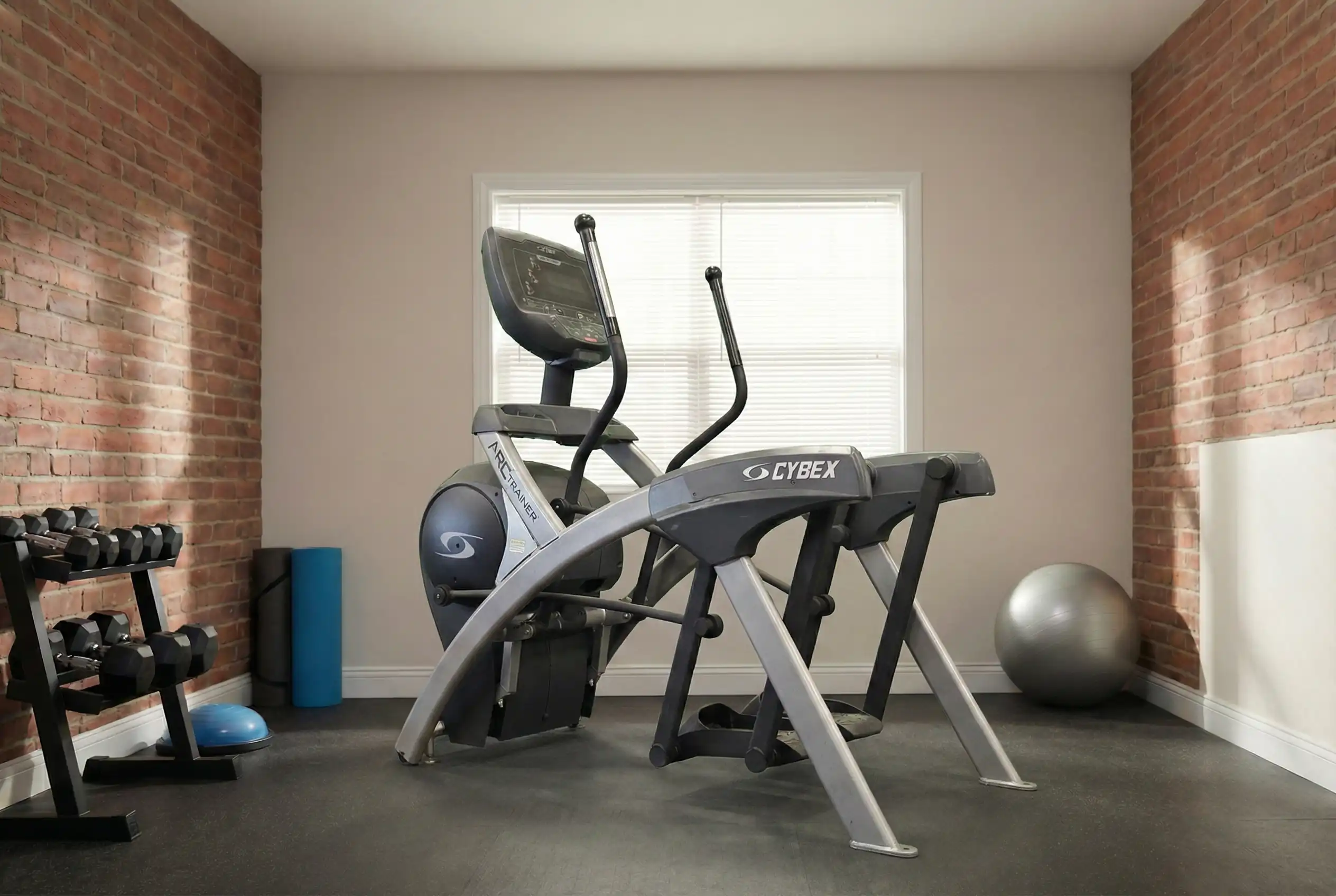
It includes all three arc zones (Glide, Stride, and Climb), 21 incline levels, 101 resistance levels, and a 23" stride length, inspected and tested before shipping. The machine is self-powered and cordless and uses an alternator and battery for power, which means no dedicated outlet is required. If the Arc Trainer's mechanics are what you're after and you don't want to build your training around gym availability, this is the most direct way to own one.
If you're shopping for adjustable resistance cardio options, reviews of the best incline treadmills provide useful comparison points for the kind of resistance and incline work the Arc Trainer delivers.
Arc Trainer vs Elliptical Calorie Burn - What the Research Shows
When comparing Arc Trainer vs elliptical for calorie burn, the claim you'll encounter most often is that the Arc Trainer burns 16 to 20% more calories than an elliptical. This number traces back to a study conducted in partnership with Cybex International around 2010, but that study was never published in a peer-reviewed journal. Treat this specific figure with caution because it originates from proprietary manufacturer research, not from independent academic literature.
The elliptical vs Arc Trainer calories comparison is further complicated by individual differences in body weight, fitness level, and effort output, which influence total burn far more than machine type.
What peer-reviewed research does tell us is that the elliptical produces metabolic responses comparable to other cardio modalities at matched workloads. A 2021 crossover study published in the International Journal of Sport Nutrition and Exercise Metabolism found no significant differences in VO2, heart rate, or fuel oxidation between treadmill, elliptical, and stepper exercise in trained runners (1). This suggests the elliptical is metabolically equivalent to other moderate-intensity cardio at the same intensity level.
The honest answer to the Arc Trainer vs. elliptical calorie question is that calorie burn depends far more on exercise intensity and duration than on which machine you use. At the same perceived effort level, the Arc Trainer may feel harder because it recruits more muscle mass through the posterior chain, and greater muscle recruitment does increase metabolic demand. But without independently published comparative studies, the exact calorie difference remains an open question rather than a settled fact.
What actually determines calorie burn on both machines:
- Exercise intensity - the single most important variable on either machine
- Body weight - heavier users burn more at any given effort level
- Session duration and interval structure
- Active handlebar engagement - using arm handles meaningfully increases total burn
- Resistance and arc setting (Arc Trainer) or incline setting (elliptical)
- Individual fitness level and baseline muscle mass
For Arc Trainer vs elliptical weight loss goals specifically, consistency and sustained intensity outweigh equipment selection. The elliptical vs Arc Trainer weight loss comparison points to adherence and effort as the deciding variables, not the machine label. Our treadmill weight loss guide covers the science of calorie expenditure and what actually determines results during machine-based cardio.
Muscle Activation - What Each Machine Actually Targets
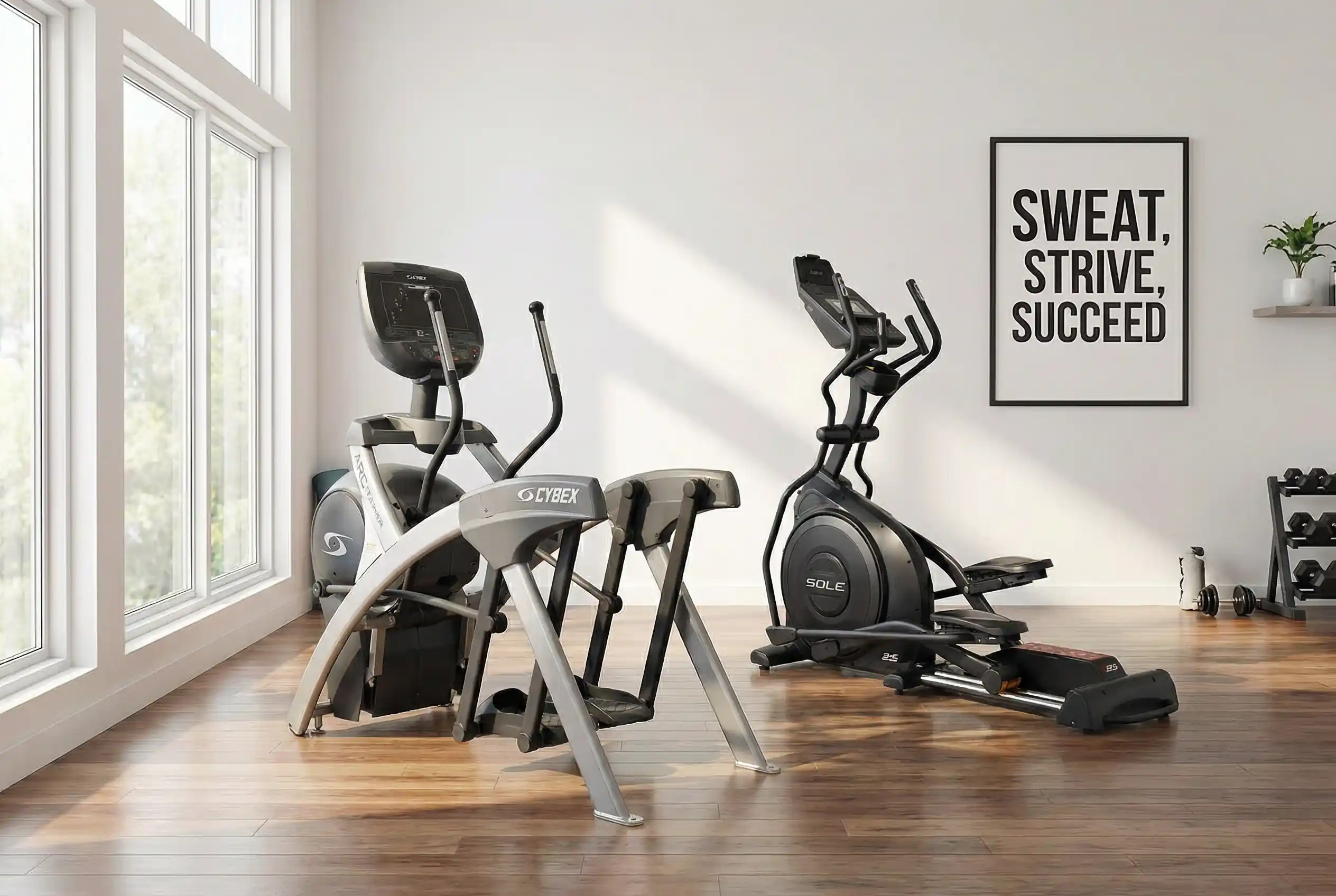
The Arc Trainer vs elliptical machine difference in muscle activation is one of the clearest distinguishing points between these two pieces of equipment.
Elliptical - quad-dominant training
Research on elliptical muscle activation shows a strong emphasis on the quadriceps throughout the stride cycle. A surface EMG study published in Gait and Posture found that elliptical training produces greater rectus femoris activity and higher quadriceps-to-hamstring coactivation compared to walking, cycling, and even running (2). For quad-dominant users or those in quadriceps rehabilitation, this is a meaningful advantage.
A 2022 study in the Journal of Strength and Conditioning Research adds important context: lower extremity muscle activation on an elliptical was significantly reduced compared to treadmill running - up to 60% lower in some muscle groups (3). For injury recovery, this is a feature rather than a limitation.
You can maintain cardiovascular fitness without fully loading the muscles and tendons that are healing, which is precisely why the elliptical appears so frequently in rehabilitation protocols. Comparing the elliptical vs Arc Trainer from a rehabilitation standpoint, the elliptical is the more conservative choice for early-stage recovery, while the Arc Trainer provides more challenge as users progress toward full loading.
Arc Trainer - posterior chain and glute emphasis
The Cybex Arc Trainer shifts muscle emphasis toward the posterior chain - the glutes, hamstrings, and hip extensors. The downward arc of the stride path demands more hip extension force, which directly recruits the gluteus maximus and hamstrings through a range of motion that the elliptical's oval path does not reach. Users who find ellipticals too easy, or who feel overly quad-dominant after workouts, consistently report that the Arc Trainer provides a noticeably more intense lower-body challenge through the back of the hip.
The elliptical machine vs Arc Trainer distinction in glute activation is particularly relevant for users in sedentary work roles and for bodybuilders or strength athletes supplementing lower body training with cardio. For Arc Trainer vs elliptical bodybuilding applications specifically, the Arc Trainer's higher posterior chain demand makes it the more relevant cross-training choice alongside lower body hypertrophy programs - the glute and hamstring stimulus carries over more directly than the elliptical's quad emphasis.
Muscle activation comparison
Muscle Group | Elliptical | Arc Trainer |
Quadriceps | High | Moderate |
Hamstrings | Moderate | High |
Gluteus Maximus | Moderate | High |
Hip Flexors | Moderate-high | Moderate |
Calves | Low-moderate | Low-moderate |
Upper back / Shoulders | Moderate (active handles) | Moderate (active handles) |
Core stabilization | Low-moderate | Moderate |
In terms of absolute upper-body recruitment, the elliptical machine vs Arc Trainer difference is minor. The real distinction remains in the lower body posterior chain, where the arc's stride geometry creates a meaningfully larger training stimulus.
For a broader look at how cardio machines contribute to cardiovascular and musculoskeletal health, our overview of treadmill benefits covers the physiological advantages that apply across machine-based exercise categories.
Joint Impact and Knee Safety - Arc Trainer vs Elliptical
Both machines are classified as low-impact cardio equipment, but the Arc Trainer vs elliptical difference in joint loading is more nuanced than that label suggests.
Elliptical joint mechanics
A biomechanical study published in Medicine and Science in Sports and Exercise found that elliptical training produces smaller vertical pedal reaction forces and lower loading rates than walking - but with greater hip flexor and knee extensor moments (4). In practical terms, the elliptical is gentler on the joints from an impact standpoint, but it does create specific muscular demands around the knee joint that some users with pre-existing conditions notice during longer sessions.
A 2024 study in Medicina using 3D motion capture confirmed that elliptical machines produce specific ankle kinematics and joint torque patterns that differ meaningfully from stationary cycling (5). This matters for users with ankle or knee conditions where even low-impact forces at certain angles can cause discomfort.
Arc Trainer knee alignment
The Cybex Arc Trainer is frequently cited by physical therapists for knee rehabilitation, specifically because the arc motion keeps the knee in a more favorable alignment throughout the stride. Users with anterior knee pain, patellofemoral syndrome, or recovering ACL injuries commonly find the Arc Trainer's movement pattern more comfortable than the elliptical's over extended training periods. Gym forums and running communities consistently report this finding from real-world use.
Who benefits most from each machine?
Approaching the elliptical machine vs Arc Trainer question from a joint safety angle, neither is definitively safer for all users - individual anatomy and specific injury history determine which motion pattern is more comfortable.
- Choose elliptical for: general low-impact cardio, early-stage recovery, moderate knee sensitivity, quad strengthening
- Choose an Arc Trainer for: anterior knee pain, patellofemoral syndrome, ACL recovery (later stages), higher hip flexion range of motion needs
For readers exploring low-impact alternatives more broadly, our article on the benefits of walking backwards on a treadmill discusses another underused technique for reducing knee stress during cardio.
Arc Trainer vs Elliptical for Runners - Cross-Training That Actually Transfers
For runners, the Arc Trainer vs elliptical for runners debate is one of the most practically relevant comparisons in cardio training. Both machines allow runners to maintain cardiovascular fitness without running's repetitive ground impact, which is critical during injury recovery or high-volume training blocks.
Elliptical cross-training - the evidence base
A randomized crossover trial in the Journal of Strength and Conditioning Research found that elliptical-only training produced equivalent improvements in ventilatory threshold and performance measures compared to run-only training over a 12-week period (6).
A separate 2018 comparative study found that elliptical training was the only cross-training modality to simultaneously improve both functional movement screen scores and running economy in high school cross-country runners (7). The evidence base for elliptical cross-training in runners is stronger and more established than for the Arc Trainer.
Arc Trainer running mechanics transfer
When evaluating the elliptical vs Arc Trainer for running cross-training, movement pattern relevance matters alongside cardio output. The Arc Trainer vs elliptical for runners distinction comes down to specificity: the Arc Trainer's mechanics offer a closer approximation of the push-off and hip extension demands that running actually requires.
The elliptical's oval path lacks the posterior chain loading of an actual running stride; the Arc Trainer fills part of that gap. For runners specifically trying to maintain glute and hamstring strength during injury-mandated rest, the Arc Trainer is the more transfer-relevant option.
The elliptical wins on availability and accessibility - Arc Trainers are primarily found in commercial facilities, while ellipticals are available across all gym tiers and at home. If you're building a structured home cardio routine, our guide to creating an effective treadmill workout covers interval and steady-state programming you can adapt across machine types.
Planet Fitness Arc Trainer vs Elliptical - What to Use at the Gym?
Picking between the Planet Fitness Arc Trainer and elliptical comes up frequently because Planet Fitness is one of the more accessible gym chains and has been adding Cybex Arc Trainers to many of its locations. The Arc Trainer vs elliptical at Planet Fitness follows the same logic as any gym comparison - your choice should reflect your fitness level and goal, not just what is available.
For beginners and general fitness maintenance
For beginners and general fitness maintenance, the elliptical is the better starting point. The motion is intuitive from the first attempt, the learning curve is minimal, and the stride path is forgiving for most body types. You can increase intensity gradually and monitor heart rate without adjusting to an unfamiliar movement pattern. The elliptical is also the right choice when returning from time off or building a cardiovascular base before moving to more demanding equipment.
A straightforward option like the pooboo elliptical keeps the learning curve simple with 16 magnetic resistance levels.
My full breakdown of how effective the elliptical is for cardio covers the VO2max data and calorie burn research behind this recommendation.
For intermediate and advanced users
For intermediate to advanced gym members, the Cybex Arc Trainer offers meaningful variety. Its adjustable arc and resistance levels allow you to shift muscle emphasis within a single session - emphasizing glutes at one setting, shifting toward hip flexors and quads at another. Runners and athletes who want cross-training that feels more sport-specific frequently gravitate toward the Arc Trainer once they've learned its mechanics.
One consistent real-world observation - confirmed repeatedly in Arc Trainer vs elliptical Reddit threads and gym community discussions - is that Arc Trainers often sit unused because people don't know how to operate them or assume they're more complicated than they are. If the ellipticals are all occupied, the Arc Trainer is worth trying.
The perceived intensity runs higher at the same heart rate, which means a productive session is achievable in less total time. For home gym options that offer similar compact efficiency, our review of the best folding treadmills covers space-efficient cardio equipment for smaller training environments.
Arc Trainer vs Elliptical vs Treadmill - How Do All Three Compare?
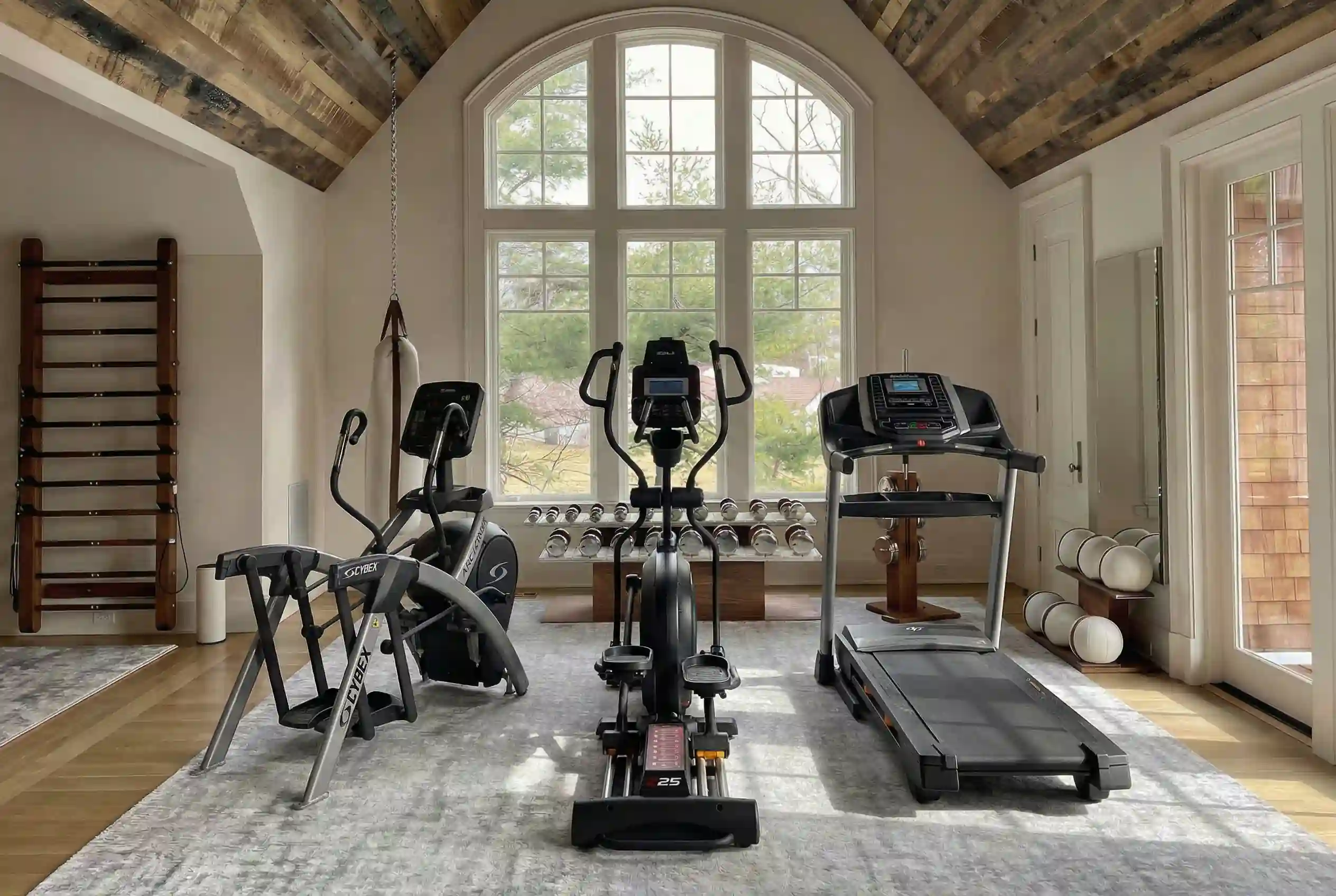
The Arc Trainer vs elliptical vs treadmill comparison provides a useful framework for understanding where each machine fits in a complete training program. Each has distinct characteristics across impact, muscle targeting, and practical accessibility.
Impact level
Impact level separates them most clearly. The treadmill carries the highest impact load - each footstrike transmits ground reaction forces through the ankle, knee, and hip. The elliptical eliminates foot-off-pedal impact entirely, which makes it genuinely low-impact. The Arc Trainer is similarly low-impact with a different joint loading profile that may be more comfortable for specific knee conditions.
Calorie burn and perceived exertion
Calorie burn at equivalent intensity is largely comparable across all three. Research confirms that matched-intensity exercise on a treadmill, elliptical, and stepper produces similar VO2 and heart rate responses (1). The Arc Trainer tends to produce a higher perceived exertion at the same heart rate due to greater posterior chain recruitment, which may translate to slightly higher total calorie burn in practice, though the published evidence for this remains limited.
Muscle specificity
Muscle specificity shows the clearest differentiation. The treadmill most closely replicates running muscle activation patterns. The elliptical emphasizes quadriceps and hip flexors. The Arc Trainer targets glutes and hamstrings more directly through its arc stride. For balanced lower body development, rotating between machines provides complementary muscle stimulus across the entire leg.
Factor | Treadmill | Elliptical | Arc Trainer |
Impact level | High | Zero | Zero |
Primary muscles | Full leg (running pattern) | Quadriceps, hip flexors | Glutes, hamstrings |
Calorie burn (high intensity) | Highest | High | High |
Learning curve | Low | Low | Moderate |
Home availability | Good | Excellent | Commercial only |
Rehab suitability | Limited | Good | Good (knee-specific) |
Running cross-training | Excellent | Good | Very good |
Glute development | Good (at incline) | Moderate | High |
For compact home cardio that delivers consistent cardiovascular work, our guide to the best under-desk treadmills covers options that fit well into daily routines.
Total Body Arc Trainer vs Elliptical - Upper Body Engagement
Both the Arc Trainer and elliptical typically include moving handlebars that incorporate upper body engagement during the stride. For total body Arc Trainer vs elliptical training, this upper body component adds to overall calorie burn and makes the workout more complete. In practice, the upper body contribution on both machines is relatively modest compared to dedicated upper body training, but it is meaningfully more than zero.
The Arc Trainer's handlebars move through the same arc motion as the pedals, which creates a push-pull pattern that some users find more mechanically natural. In terms of absolute upper body recruitment, the elliptical machine vs Arc Trainer difference is minor - the real distinction remains in the lower body posterior chain, where the arc's stride geometry creates a meaningfully larger training stimulus.
Using the handlebars actively, rather than resting on them passively, is the single most effective way to increase total calorie burn on either machine - regardless of which you choose. For general cardiovascular conditioning, either machine with active handlebar engagement delivers a full-body stimulus that is meaningfully more complete than cycling or rowing for lower body variation.
Proper maintenance of cardio equipment extends its useful life significantly. Our guide to treadmill maintenance covers essential upkeep practices that apply broadly to all motorized and resistance-based cardio machines.
How to Properly Use the Arc Trainer
Knowing how to properly use the Cybex Arc Trainer matters because the machine has a learning curve that the elliptical does not. Users who jump on without understanding the mechanics often feel awkward, use the handlebars for balance rather than drive, and miss most of the posterior chain stimulus the machine is designed to provide.
Starting position and form
- Step onto the pedals with feet flat and parallel.
- Grip the handlebars lightly - they should guide and stabilize, not bear your body weight.
- Stand tall with a slight forward lean from the hips, not the waist. Your knees should remain soft throughout and track directly over your toes during each stride. Avoid hunching the shoulders or gripping tightly, as upper body tension reduces lower body power output.
Arc setting selection
Most Cybex Arc Trainers include an arc adjustment feature that changes the stride geometry:
- Low arc setting - resembles climbing stairs; emphasizes glutes and hip extensors
- Mid arc setting - balanced stimulus across the posterior chain; best starting point for new users
- High arc setting - stride lengthens toward running mechanics; more hamstring and hip flexor demand
Start at a mid-range arc setting and spend a few sessions learning the motion before experimenting with extremes.
Resistance, stride length, and intensity
Begin with light resistance and focus on smooth, full-range strides before increasing load. The most common mistake new users make is compensating for high resistance by leaning heavily into the handlebars, which reduces leg drive and limits glute engagement. Let the legs generate the majority of the power. As fitness improves, increase resistance in small increments while maintaining upright posture and full stride range.
Recommended workout structure
The Arc Trainer responds particularly well to interval training. A starting protocol for new users:
- 5-minute warm-up at light resistance, mid-arc setting
- 30 seconds at moderate resistance - focus on smooth form and upright posture
- 30 seconds at high resistance - push through full stride range with active handles
- Repeat for 20 to 25 minutes total
- 3-5 minute cool-down at light resistance
As you adapt, extend the high-intensity intervals and shorten rest periods to progressively increase training demand. This structure takes full advantage of the Arc Trainer's capacity for intensity variation within a single session - something the fixed-path elliptical cannot replicate.
Our guide to treadmill assembly covers what to expect when setting up and learning to use new cardio equipment - the approach to familiarization applies broadly to unfamiliar machines, including the Arc Trainer.
Which Machine Is Right for You?
The elliptical machine vs Arc Trainer decision is much easier to make when matched to specific training requirements and user profiles.
Choose the elliptical if:
- You are a beginner or returning to training after an extended break
- You want accessible home equipment at a realistic price point
- Your primary goal is general cardiovascular conditioning
- You're in quad rehabilitation and need progressive, manageable knee loading
- You prefer a minimal learning curve and intuitive stride mechanics
For home use specifically, the SOLE E25 Elliptical covers this profile well at $1,299.99. Its foot pedals were built with a physical therapist and feature a 2-degree inward slope specifically designed to reduce ankle and knee stress, which is relevant for the joint sensitivity and early-stage recovery use cases covered earlier in this guide.
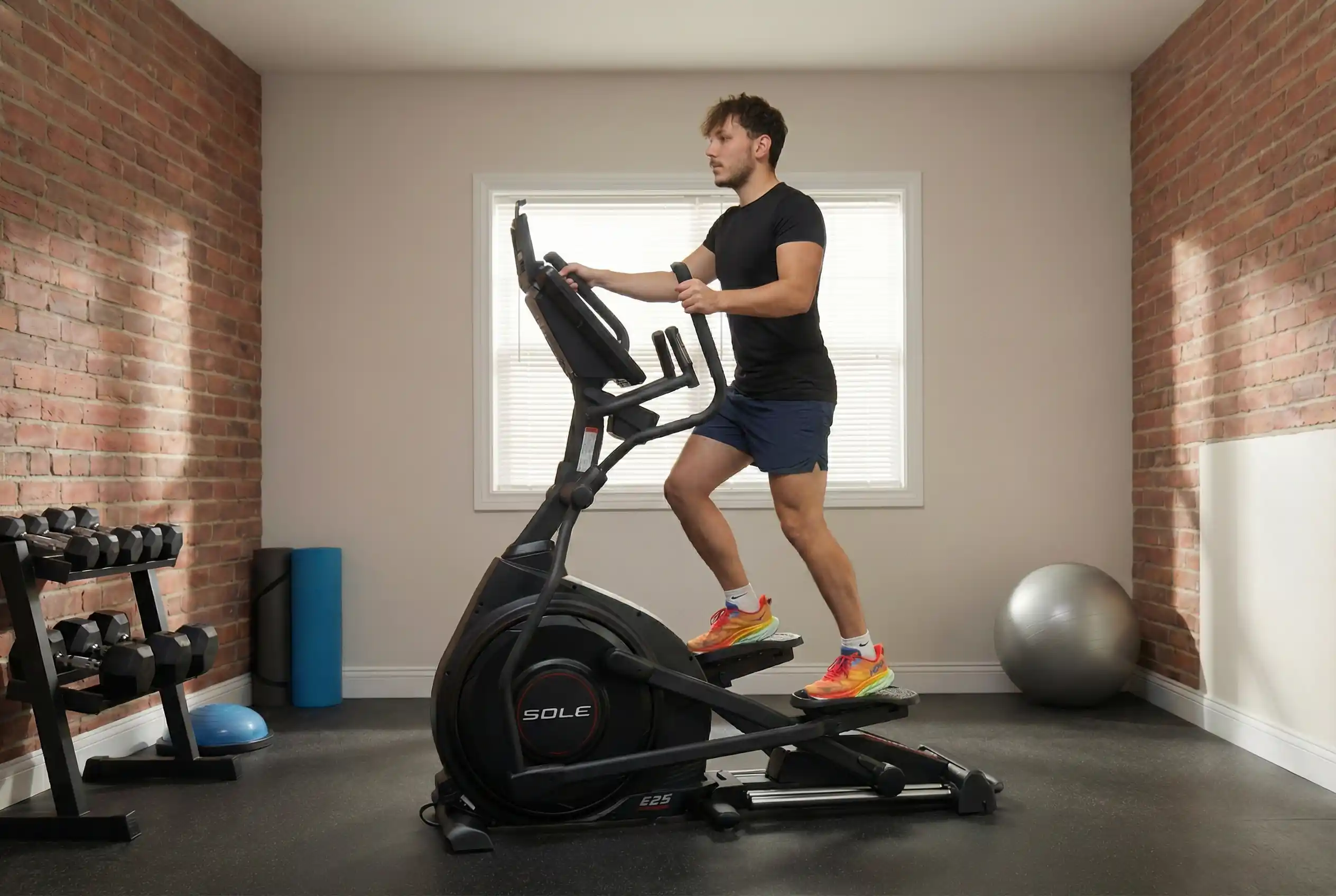
The machine runs a 20 lb flywheel, 20 resistance levels, and 20 power incline levels within a compact 70" x 24" footprint, with a 350 lb weight capacity. The frame and flywheel are covered by a lifetime warranty. It holds a 4.2/5 rating across 879+ Amazon reviews and ships directly from SOLE Fitness with a 30-day return window. No touchscreen, no subscription, just a reliable daily driver that delivers what this section of the guide recommends.
Choose the Arc Trainer if:
- You're an intermediate to advanced user seeking more glute and hamstring development
- You're a runner using cross-training to reduce impact mileage while maintaining fitness
- You experience anterior knee pain or patellofemoral discomfort on the elliptical
- You have access to a commercial gym with Cybex equipment
- You want a machine that allows meaningful biomechanical variation within sessions
Either machine works well for:
- Weight loss through sustained moderate-intensity cardio
- Active recovery between high-intensity training days
- Cardiovascular conditioning for users with arthritis or lower limb conditions
- Maintaining aerobic base during injury recovery from running
Arc Trainer vs elliptical for weight loss - decision summary:
Your Profile | Best Choice | Primary Reason |
Beginner, first cardio machine | Elliptical | Intuitive, minimal learning curve |
Runner in injury recovery | Arc Trainer | Better hip extension and glute transfer |
Glute / posterior chain focus | Arc Trainer | Higher posterior chain demand |
Knee rehab, early stage | Elliptical | More conservative joint loading |
Anterior knee pain | Arc Trainer | More favorable knee alignment |
Home gym on any budget | Elliptical | Widely available at all price points |
General cardio, any level | Either | Match to effort level and availability |
For readers managing equipment at home and thinking ahead about storage or relocation, our guide on how to disassemble a treadmill covers the practical steps for safely breaking down and moving cardio machines.
The Bottom Line on Arc Trainer vs Elliptical
Both machines deliver real cardiovascular value when used consistently at appropriate intensity. The elliptical is more accessible, better supported by published research, and easier for most users to pick up without instruction. The Cybex Arc Trainer targets the posterior chain more effectively, suits runners seeking mechanically relevant cross-training, and may be more comfortable for users with specific anterior knee issues.
For readers who have decided the elliptical is the right fit, my post on what an elliptical does well covers the specific health outcomes and fitness benefits it delivers across cardiovascular conditioning, muscle engagement, and joint safety.
Understanding the benefits of Arc Trainer vs elliptical training means recognizing that each machine's value is different, not greater or lesser.
- The elliptical builds a strong aerobic base with minimal joint loading and excellent quad stimulus.
- The Arc Trainer delivers a glute and hamstring challenge that the elliptical's oval path simply cannot replicate.
Each Arc Trainer vs elliptical session produces a slightly different muscular stimulus, and the combination across a week delivers better lower-body balance than either machine alone.
The best approach is not to treat this as an either/or decision. If you have access to both at your gym, rotating between the Arc Trainer and elliptical across your weekly training provides complementary muscle stimulus and keeps sessions varied.
In our experience testing both machines across extended training blocks, alternating between the two produces noticeably different post-session muscle response in the glutes and quads - a practical indicator of genuinely different recruitment patterns at work. So, the Arc Trainer vs elliptical comparison ultimately resolves not by picking a winner, but by understanding what each machine actually does best and using that knowledge to build a smarter weekly training plan.
For readers ready to invest in their own elliptical, my guide to choosing an elliptical covers the five key factors that determine whether a specific model delivers on the training outcomes this comparison describes.
Pairing either machine with a wearable starts with understanding what fitness trackers measure and which sensors each device relies on to generate the data you need.
FAQs
How is the Arc Trainer different from an elliptical?
The Arc Trainer differs from an elliptical in the path your feet travel during exercise. The elliptical follows an oval-shaped path that mimics running on a flat surface, while the Cybex Arc Trainer uses a downward-slanting arc that demands more hip extension and glute engagement throughout the stride.
What burns more calories, an elliptical or Arc Trainer?
The calorie burn between an elliptical and Arc Trainer depends primarily on exercise intensity and duration rather than which machine you use. Cybex has cited a 16% calorie burn advantage for the Arc Trainer, but this figure comes from unpublished proprietary research rather than peer-reviewed studies, so it should be interpreted with appropriate caution.
Is an Arc Trainer hard on your knees?
The Arc Trainer is generally considered gentler on the knees than running and comparable to or easier than an elliptical for users with anterior knee pain. Its motion pattern keeps the knee in a more favorable alignment throughout the stride, which is why physical therapists frequently recommend it during knee rehabilitation.
Which is better for losing belly fat, walking or elliptical?
The elliptical is more effective for losing belly fat than walking because it elevates heart rate more efficiently and burns more total calories per session at comparable durations. Fat loss from any specific body area is not directly controllable through exercise selection, but the elliptical's higher overall calorie expenditure contributes meaningfully to total body fat reduction over time.
Is Cybex Arc Trainer a good workout?
The Cybex Arc Trainer is a highly effective workout for cardiovascular conditioning, lower body strength development, and cross-training. Its adjustable arc motion allows users to shift muscle emphasis between glutes, hamstrings, and hip flexors within a single session, and its low-impact design supports high training volumes without excessive joint stress.
Is an Arc Trainer harder than an elliptical?
The Arc Trainer tends to feel harder than an elliptical at the same heart rate because it recruits more muscle mass, particularly through the posterior chain. Users who find the elliptical insufficiently challenging frequently report a noticeably more demanding experience on the Arc Trainer at equivalent resistance settings.
How to properly use Arc Trainer?
To properly use the Arc Trainer, stand tall with feet flat on the pedals, maintain a light grip on the handlebars, and let your legs drive the movement rather than relying on arm support for balance. Start at a mid-range arc setting and light resistance, practice smooth full-range strides, and gradually increase resistance as you build familiarity with the motion pattern.
References:
- Bosch AN, Flanagan KC, Eken MM, Withers A, Burger J, Lamberts RP. Physiological and metabolic responses to exercise on treadmill, elliptical trainer, and stepper: Practical implications for training. Int J Sport Nutr Exerc Metab. 2021;31(2):135-142. doi:10.1123/ijsnem.2020-0155
- Prosser LA, Stanley CJ, Norman TL, Park HS, Damiano DL. Comparison of elliptical training, stationary cycling, treadmill walking and overground walking. Electromyographic patterns. Gait Posture. 2011;33(2):244-250. doi:10.1016/j.gaitpost.2010.11.013
- Eken MM, Withers A, Flanagan K, Burger J, Bosch A, Lamberts RP. Muscular activation patterns during exercise on the treadmill, stepper, and elliptical trainer. J Strength Cond Res. 2022;36(7):1847-1852. doi:10.1519/JSC.0000000000003743
- Lu TW, Chien HL, Chen HL. Joint loading in the lower extremities during elliptical exercise. Med Sci Sports Exerc. 2007;39(9):1651-1658. doi:10.1249/mss.0b013e3180dc9970
- He MY, Lo HP, Chen WH. Effects of stationary bikes and elliptical machines on knee joint kinematics during exercise. Medicina (Kaunas). 2024;60(3):498. doi:10.3390/medicina60030498
- Klein IE, White JB, Rana SR. Comparison of physiological variables between the elliptical bicycle and run training in experienced runners. J Strength Cond Res. 2016;30(11):2998-3006. doi:10.1519/JSC.0000000000001398
- Paquette MR, Peel SA, Smith RE, Temme M, Dwyer JN. The impact of different cross-training modalities on performance and injury-related variables in high school cross country runners. J Strength Cond Res. 2018;32(6):1745-1753. doi:10.1519/JSC.0000000000002042