

Elliptical for weight loss is one of the most-searched fitness topics online, and the frustration behind those searches is real. You show up, you sweat, and the scale barely moves. After 15-plus years working in fitness and testing dozens of cardio machines, I can tell you the elliptical is one of the most underrated tools for sustainable fat loss available. The problem is almost never the machine. It is almost always the protocol.

This guide covers the research, the right resistance settings, the best workout structure, and the specific mistakes that keep most people stuck on a plateau.
Elliptical for Weight Loss - Does the Science Actually Support It?
Yes. If you've been asking is elliptical good for weight loss, the research gives a clear answer. The evidence on using the elliptical for weight loss is more robust than most people realize.
You can browse our elliptical selection to compare current models and specifications.
A 2024 systematic review and meta-analysis published in JAMA Network Open covering 116 randomized controlled trials and over 6,880 participants found that aerobic exercise at 150 minutes per week produces an average weight loss of 2.79 kg, rising to 4.19 kg at 300 minutes per week (1). The elliptical delivers exactly this kind of aerobic stimulus, and it does so in a format that most people can sustain far longer than running.
The elliptical machine for weight loss works through two primary mechanisms. First, it burns calories during the session. Second, it builds lean muscle - primarily in the quadriceps, hamstrings, glutes, and core - which raises resting metabolic rate over time. More muscle means more calories burned around the clock, not just during workouts.
What separates the elliptical from comparable cardio machines is its dual-action design. Engaging the moving handlebars recruits the chest, shoulders, and arms alongside the lower body. Research published in Research Quarterly for Exercise and Sport confirmed that combined arm-and-leg use on an elliptical significantly increases oxygen uptake and energy expenditure compared to legs-only motion (2). More oxygen uptake means more fuel burned per session.
The fact that the elliptical good for weight loss results is well-established in the literature is only part of the equation. The elliptical for weight loss also wins on sustainability. Low-impact exercise you perform five days per week beats high-impact exercise you quit after two weeks. That long-term consistency edge is where the elliptical consistently delivers results.
Finding the best elliptical machine for weight loss requires looking at resistance range, stride variability, and build quality - all factors that affect long-term adherence. Our guide covers everything you need to identify the best elliptical for weight loss in your budget and space. Our guide to the best elliptical machine covers the top models tested across all three dimensions.
How Many Calories Does an Elliptical Burn for Weight Loss?
Knowing how many calories the best elliptical machine for weight loss can burn at various effort levels helps you set realistic weekly targets. Here is a practical reference table for 30-minute sessions:
Body Weight | Moderate Intensity | High Intensity |
130 lb (59 kg) | ~230 cal | ~310 cal |
160 lb (73 kg) | ~280 cal | ~370 cal |
190 lb (86 kg) | ~330 cal | ~440 cal |
220 lb (100 kg) | ~385 cal | ~510 cal |
A 2024 prospective study comparing seven indoor cardio machines found that the elliptical delivers approximately 12.82 kcal per minute at high perceived exertion (RPE 17), placing it third overall in energy expenditure behind only the treadmill and stair climber (3). At moderate effort, it still outpaces stationary cycling machines by a meaningful margin.
The critical figure is 3,500 calories - the approximate deficit required to lose one pound of fat. A 160-pound person doing 45-minute sessions five days per week at moderate intensity burns roughly 2,100 extra calories per week, enough to support a pound of fat loss every 10 days through exercise alone.
For people working sedentary jobs, the best under desk elliptical for weight loss used during desk time compounds these results considerably. Compact elliptical exercise for weight loss does not require dedicated gym time to produce measurable caloric impact. Research in the Journal of Science and Medicine in Sport found that a compact elliptical device expends approximately 88 kcal per hour above the sedentary baseline - projecting to roughly five pounds of additional weight loss per year without any dedicated workout time (4).
Our guide to the best under desk elliptical reviews the top compact models for adding active energy expenditure to a desk-based workday.
Treadmill or Elliptical for Weight Loss - What the Research Shows
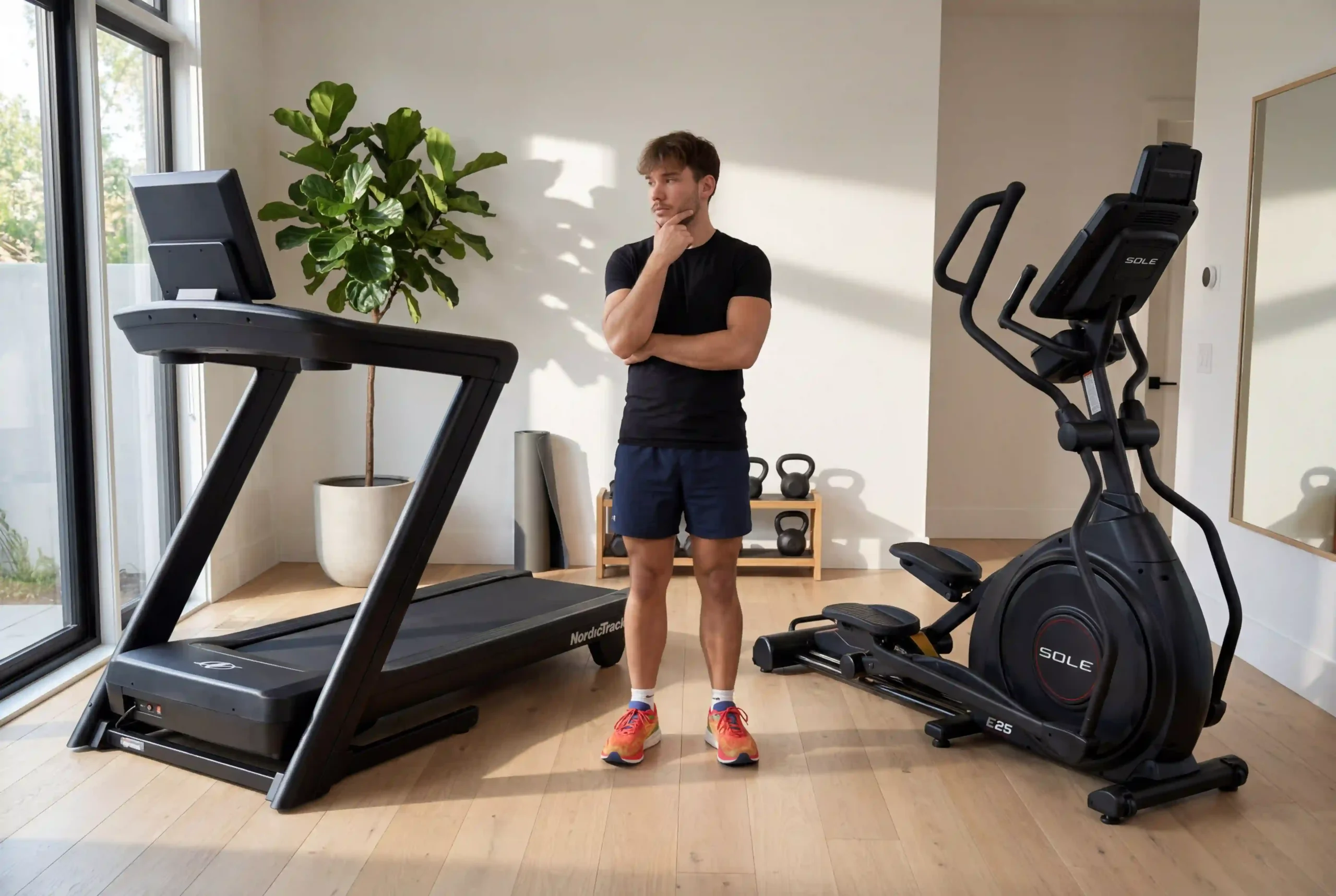
The treadmill or elliptical for weight loss debate is one of the most common in fitness, and the science cuts through it clearly. People searching for elliptical or treadmill for weight loss guidance deserve a direct answer, not a hedge.
A randomized study in the Journal of Strength and Conditioning Research measured actual energy expenditure when participants exercised on both machines at a self-selected effort level. The result: no statistically significant difference. Treadmill averaged 569 +/- 110 kJ; elliptical averaged 636 +/- 120 kJ per session (5). Matched for perceived exertion, the calorie burn is virtually identical. For anyone still weighing treadmill or elliptical for weight loss as a decision, this data is the most relevant starting point.
The treadmill does hold one measurable physiological edge: treadmill running can produce higher fat oxidation rates under certain conditions. However, this advantage is offset by injury risk. Running generates ground-contact forces that can reach 2-3 times body weight per stride, loading the knees, ankles, and hips with each step. Many people who begin a treadmill-based weight loss plan reduce sessions or stop entirely due to discomfort, while elliptical users tend to maintain consistency over 12-plus week periods.
The research consistently shows that the best machine for treadmill vs elliptical for weight loss is the one you sustain consistently across months - not the one with the slightly superior fat oxidation rate in a lab setting. For most people outside competitive athletics, the elliptical wins on adherence. In a running vs elliptical for weight loss context, high-volume runners may keep a slight fat oxidation edge on the treadmill, but for everyone else, the elliptical wins long-term.
For a full breakdown of the cardiovascular evidence, my guide on is the elliptical good cardio covers VO2max data, calorie burn comparisons, and session structure recommendations.
Research on elliptical vs treadmill for weight loss consistently finds that adherence over time is the dominant variable - and the elliptical wins that category for most people.
For a full head-to-head breakdown of both machines - including calorie data, muscle activation, and use-case scenarios - read our in-depth elliptical vs treadmill comparison.
Stairmaster, Bike, or Elliptical for Weight Loss - A Full Comparison
Beyond the treadmill question, people regularly compare the stairmaster or elliptical for weight loss, and the exercise bike vs elliptical for weight loss. Here is how each plays out.
Stairmaster or elliptical for weight loss: For the elliptical or stairmaster for weight loss decision, or the stairmaster vs elliptical for weight loss comparison, the stairmaster burns slightly more calories per minute due to its vertical movement pattern and intense lower-body demand. However, most people cannot sustain stairmaster sessions for 45-60 minutes consistently. The elliptical's more accessible intensity ceiling allows for longer sessions and more total calorie expenditure per week. For fat loss driven by elliptical for weight loss training, total weekly calorie burn matters more than per-minute peak intensity.
For anyone weighing the stairmaster as the higher-intensity alternative, my stairmaster vs treadmill for weight loss comparison covers how each machine performs on fat loss across different session lengths and intensity levels.
Exercise bike vs elliptical for weight loss: For the bike or elliptical for weight loss question, and the elliptical vs bike for weight loss debate, the answer is clear. The stationary bike keeps the upper body passive, limiting total muscle recruitment. The elliptical's full-body motion burns roughly 10-15% more calories per session at equivalent perceived effort. The elliptical also engages the glutes and core more actively than cycling, contributing to the lean muscle development that supports long-term fat loss. For the elliptical or bike for weight loss question, the elliptical is the stronger choice for total caloric output.
Elliptical vs rowing machine for weight loss: For the rowing machine or elliptical for weight loss choice, the rowing machine delivers exceptional full-body caloric output, often matching or exceeding the elliptical. However, rowing requires significant technique to use safely and effectively, and the learning curve discourages most beginners from consistent use. The elliptical requires minimal technique - nearly anyone is productive on it within their first session. Readers who want the full documented case for rowing, including cardiovascular advantages, calorie ranges, and weight loss timeline research, will find it in my rowing machine benefits guide.
Elliptical or walking for weight loss: Walking burns significantly fewer calories per minute. A 30-minute brisk walk produces roughly 120-180 calories for a 160-pound person, compared to 280-370 calories on the elliptical at the same time investment.
For a related machine-versus-machine breakdown, see our guide on arc trainer vs elliptical to understand how these two machines differ in mechanics and caloric output.
Elliptical Workouts for Weight Loss - HIIT vs. Steady-State
The structure of your elliptical workouts for weight loss determines how effectively you burn fat, and the research strongly favors one approach for time efficiency.
A systematic review of 41 studies in the British Journal of Sports Medicine found that high-intensity interval training (HIIT) produces 28.5% greater absolute fat mass loss compared to moderate-intensity continuous training at the same training duration (6). A separate meta-analysis in Obesity Reviews, which focused specifically on overweight and obese adults, found that HIIT achieves equivalent fat loss and waist circumference reductions in approximately 40% less training time than steady-state cardio (7).
What this means practically: A HIIT elliptical workout for weight loss delivers the metabolic afterburn effect that steady-state training cannot match. An elliptical workout for weight loss built on combined intensities gives you the metabolic benefit of HIIT and the volume benefit of steady-state in the same week. Neither cancels out the other - they target different physiological adaptations that together support consistent fat loss.
The most effective elliptical workouts for weight loss combine both intensities across the week:
- 2-3 days per week: HIIT elliptical sessions (20-30 minutes total)
- 2-3 days per week: Moderate steady-state sessions (40-60 minutes)
- Weekly total target: 150-300 minutes of aerobic exercise, matching the effective range established by the JAMA meta-analysis (1)
For structured workout timing, intensity zones, and common session errors, our full elliptical workout guide walks through every detail.
One advanced but underused approach is “progressive interval stacking” - gradually increasing the intensity of your hard intervals every 1–2 weeks instead of keeping them constant. This prevents adaptation and keeps your body from becoming efficient at the workout, which is one of the main reasons fat loss slows over time.
Best Elliptical Workout for Weight Loss - Three Protocols That Deliver Results
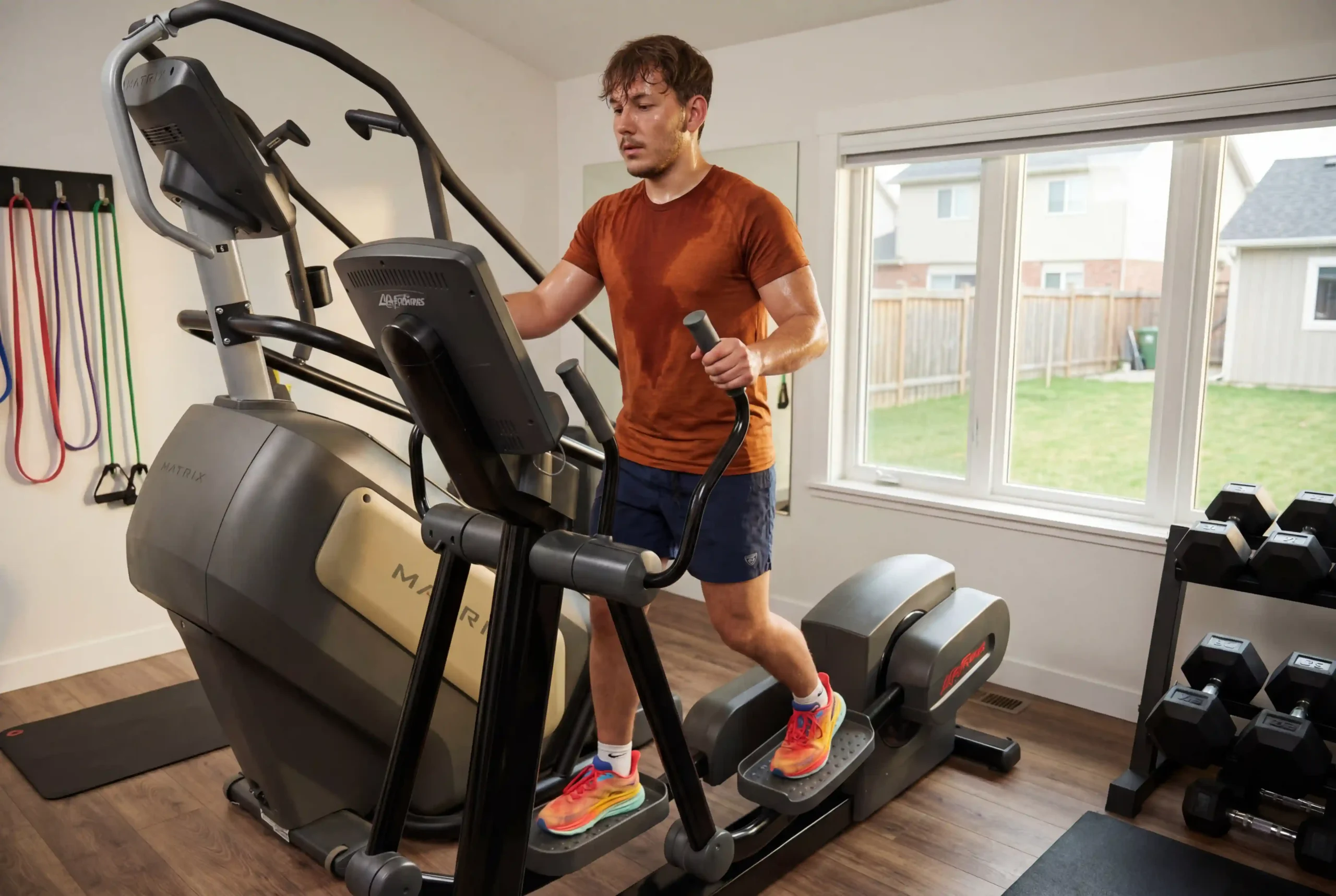
The best elliptical workout for weight loss depends on your current fitness level and available time. Below are three evidence-supported protocols to fit different starting points.
Protocol 1 - Beginner Steady-State (30 minutes)
Designed for newcomers and those returning after a break.
- Minutes 0-5: Warm-up at resistance 4, easy pace
- Minutes 5-25: Resistance 6-7 at a pace that makes conversation difficult but not impossible
- Minutes 25-30: Cool-down at resistance 3-4
Target heart rate: 60-70% of maximum (estimated MHR = 220 minus your age). Active handlebar engagement throughout.
Protocol 2 - Moderate HIIT (25 minutes)
For people with 3-6 weeks of consistent elliptical training.
- Minutes 0-5: Warm-up at resistance 5
- Minutes 5-22: Alternate 1 minute at resistance 9-10 (near-maximum effort) with 90 seconds at resistance 5 (active recovery) - repeat 6 cycles
- Minutes 22-25: Cool-down at resistance 4
The best elliptical workout for weight loss at this level targets the high-intensity stimulus that drives afterburn - calories burned in the 24-48 hours following the session.
Protocol 3 - Advanced HIIT Pyramid (35 minutes)
For experienced users targeting aggressive fat loss.
- Minutes 0-5: Warm-up at resistance 5-6
- Minutes 5-35: Pyramid structure: increase resistance by 1 level every 3 minutes, climbing from level 7 to level 12, then descending back to level 7 in the same intervals
- No separate cool-down needed; the descending pyramid functions as the cool-down phase
For all three protocols, engage the handlebars actively rather than resting on them. Passive hand-resting reduces calorie burn by 18-25% and removes the full-body advantage of the elliptical entirely.
Another subtle but powerful adjustment is minimizing machine “support”. Avoid leaning your body weight onto the handlebars or letting your arms carry your balance. The more your legs and core stabilize your body independently, the higher the overall metabolic demand of the session.
For cross-training ideas that pair well with elliptical HIIT, see our guide to the best incline treadmill, which covers high-incline walking as a complementary low-impact calorie burner.
Elliptical Resistance Level for Weight Loss - The Setting That Changes Everything
The elliptical resistance level for weight loss is the most under-discussed variable in elliptical training. The best elliptical machine for weight loss will have a wide resistance range - typically 20 or more levels - because higher resistance settings are where real metabolic work happens. Most people default to resistance 3-5 and wonder why they stop losing weight after the first few weeks.
The THERUN electric elliptical lists 32 resistance levels, well above that 20-level mark.
Research in Research Quarterly for Exercise and Sport confirmed that increasing stride rate and resistance level on the elliptical significantly elevates oxygen uptake and metabolic cost (2). In practice, higher resistance forces your muscles to work harder, burning more calories both during and after the session through excess post-exercise oxygen consumption.
One overlooked factor: how you apply force to the pedals. Most users “float” through the motion, letting the machine carry their legs. Actively pressing down into the pedals on every stride , similar to a leg press, significantly increases lower-body muscle activation and raises caloric demand without changing resistance.
The right elliptical settings for weight loss go beyond just resistance - stride rate and direction also matter. Here is a practical framework for elliptical resistance level for weight loss, which represents the best elliptical settings for weight loss across different fitness levels:
- Levels 1-4 (Active Recovery): Too low for meaningful fat loss during the session. Use exclusively for warm-up and cool-down.
- Levels 5-7 (Base Training Zone): Effective for steady-state sessions. You should feel challenged but able to maintain form for 30-45 continuous minutes.
- Levels 8-10 (Fat-Burning Zone): Challenging enough to stimulate meaningful caloric afterburn. Use for the high-effort intervals in HIIT protocols.
- Levels 11 and above (Peak Effort): Appropriate only for very short bursts of 30-60 seconds during advanced HIIT. Unsustainable as a baseline setting.
One of the most common elliptical resistance level for weight loss mistakes: cranking the resistance to 14 and then holding the handlebars tightly for support. This offloads body weight onto the machine and sharply reduces caloric demand. Set the resistance to a level where you maintain upright posture and active handlebar engagement without leaning or gripping for balance.
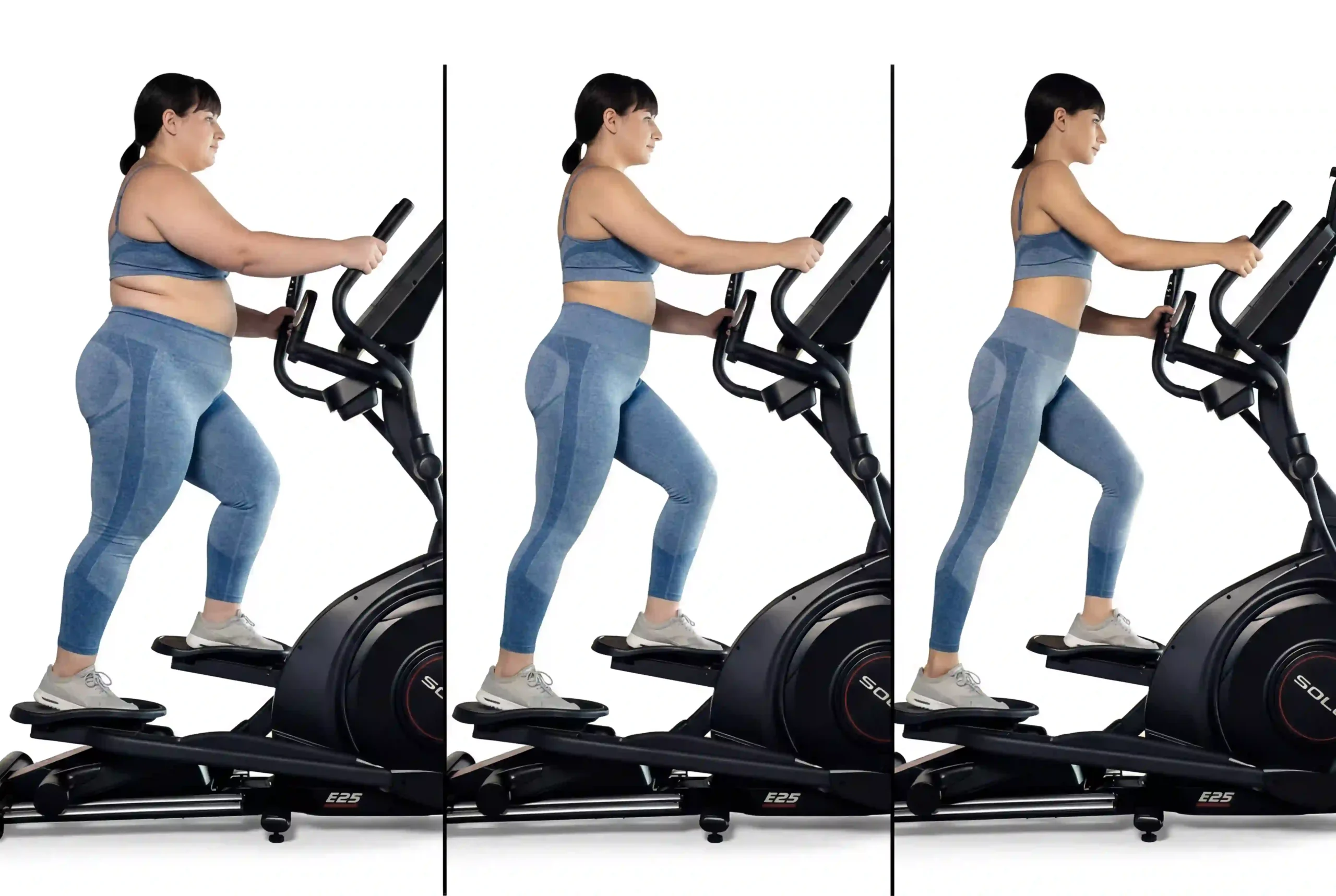
The best elliptical machine for weight loss for older adults or those with joint concerns will prioritize wider resistance ranges at lower mechanical intensity. Our guide to the best elliptical for seniors covers the specific resistance ranges and machine features most suited to that population.
How to Use an Elliptical Machine for Weight Loss Correctly
Knowing how to use an elliptical machine for weight loss correctly is the single most impactful thing you can do to accelerate results. Understanding how to use elliptical machine for weight loss with proper form - not just showing up and pedaling - is what separates people who hit consistent results from people who plateau early. The motion looks simple, but technique errors compound into significant calorie losses over time.
Stand tall. Keep your spine neutral and your shoulders stacked over your hips. Avoid leaning forward onto the handlebars. Leaning transfers load off your legs and core, reducing calorie burn and increasing lower back stress.
For those managing lower back issues who are considering rowing as an alternative or complement to the elliptical, my guide on is a rowing machine bad for your back covers which spinal conditions respond well to rowing and which require a lower-load approach.
Push and pull the handles equally. Active handlebar use recruits the chest, shoulders, and arms. Think of the motion as a pushing movement when the handle moves away from you and a pulling movement when it comes back. Passive resting negates this entirely.
Pro tip: Treat the handles as an upper-body exercise, not a support system. Driving the handles forward and pulling them back with intent recruits the chest, shoulders, and upper back, increasing total energy expenditure. Passive hand placement removes a large portion of the machine’s metabolic benefit.
Drive through your heels. The elliptical's motion naturally shifts weight toward the toes, which reduces glute activation. Consciously pressing through the heel with each stride engages the hamstrings and glutes more fully - muscles that contribute significantly to calorie burn per stride.
Vary stride speed alongside resistance. Fast striding at moderate resistance burns calories differently than slow striding at high resistance. Alternating between these two modes within a session targets different muscle fibers and keeps the metabolic stimulus varied.
Most users adjust resistance but maintain the same stride rhythm throughout the session. A more effective approach alternates between slower strides at higher resistance (to increase muscular demand) and faster strides at moderate resistance (to elevate cardiovascular output). This combination recruits more muscle fibers and delays adaptation.
Reverse direction for 5 minutes per session. Striding backward on the elliptical shifts emphasis from the quadriceps to the hamstrings and changes hip flexor loading. Including reverse intervals adds variety, recruits the posterior chain more actively, and compounds total calorie expenditure.
Do not hold your breath. Coordinating breathing with stride can feel awkward in the first few sessions. Find a natural rhythm: inhale for two strides, exhale for two strides. Controlled breathing maintains oxygen delivery to working muscles and sustains workout quality.
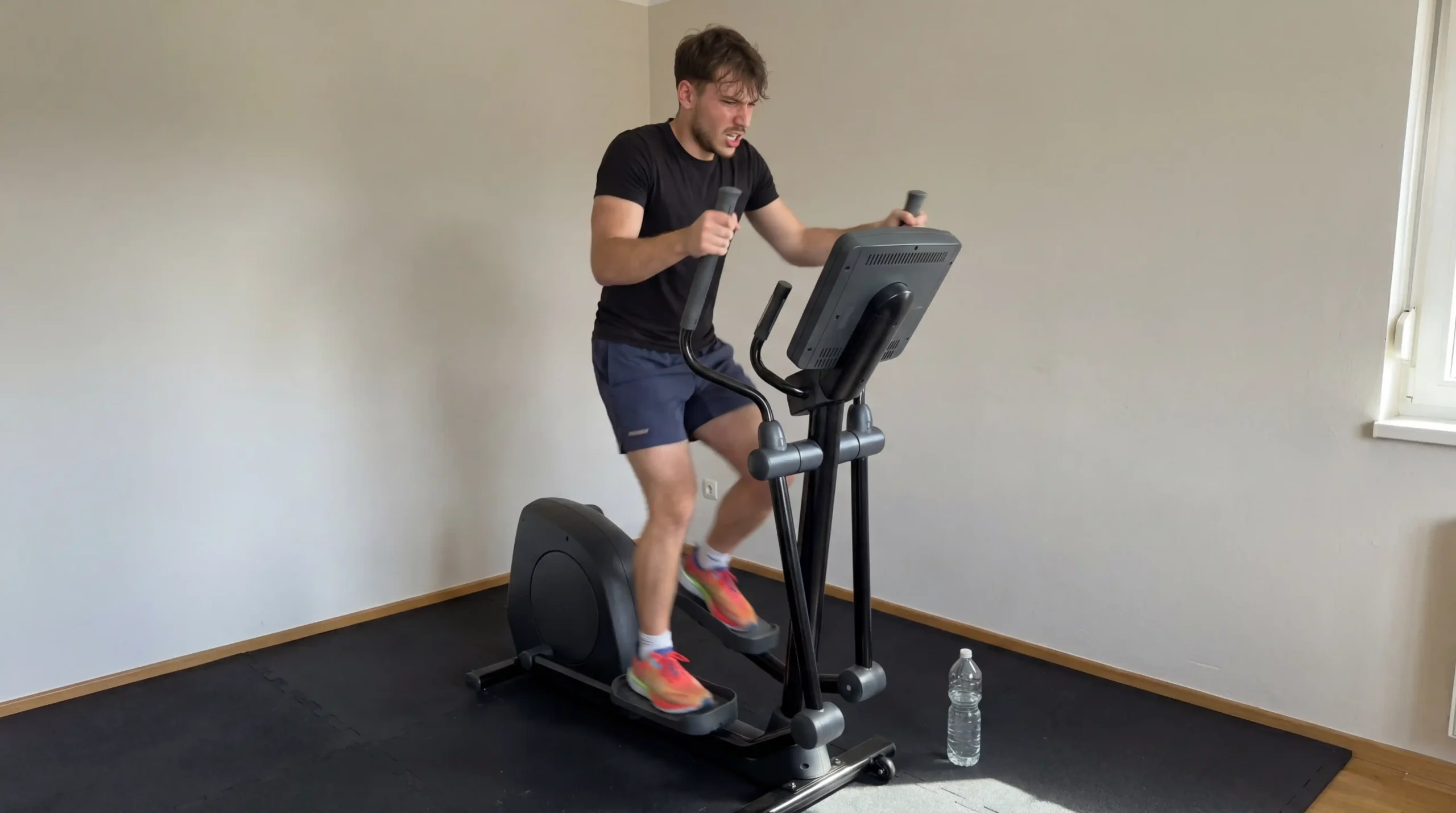
For a deeper look at all the ways an elliptical machine supports your fitness beyond just calories burned, read our full guide to elliptical machine benefits.
Elliptical Workouts for Weight Loss for Beginners - Where to Start
Getting started with elliptical workouts for weight loss for beginners does not require any special background or conditioning. The machine's natural motion is intuitive, and resistance is fully adjustable, allowing you to scale effort precisely to your current level.
A budget option like the Sunny Smart Upright Elliptical offers 16 resistance levels to scale through as you progress.
For a full overview of the elliptical machine including how it works and what to look for when buying one, I cover everything you need before starting.
Three mistakes beginners make most often:
1. Starting at too high an intensity. Beginning at resistance 10 for 45 minutes causes excessive muscle soreness, discourages return sessions, and creates a negative association with training. The goal in the first two weeks is showing up consistently - not maximum output.
2. Stopping when discomfort begins. Moderate breathlessness and leg fatigue during cardio exercise are expected and healthy signs of work being done. They are not signals to stop. Reduce resistance slightly if needed, but keep moving. This is how fitness is built.
3. Failing to track progress. Without a log, you cannot tell whether you are progressing. Record each session: date, duration, average resistance, and perceived effort on a scale of 1-10. These metrics tell the story of adaptation.
A 4-week elliptical routine for weight loss for beginners:
- Weeks 1-2: 20-25 minutes per session, 3 days per week, resistance 5-6
- Weeks 3-4: 30-35 minutes per session, 4 days per week, resistance 6-7
- Month 2: Begin adding 1-minute high-resistance intervals (resistance 8-9) alternating with 2-minute recovery intervals (resistance 5-6)
This elliptical for weight loss progression follows the dose-response evidence from the JAMA 2024 meta-analysis, which found weight loss effects scale directly with increasing exercise volume over weeks (1). Results improve as you gradually add minutes and intensity.
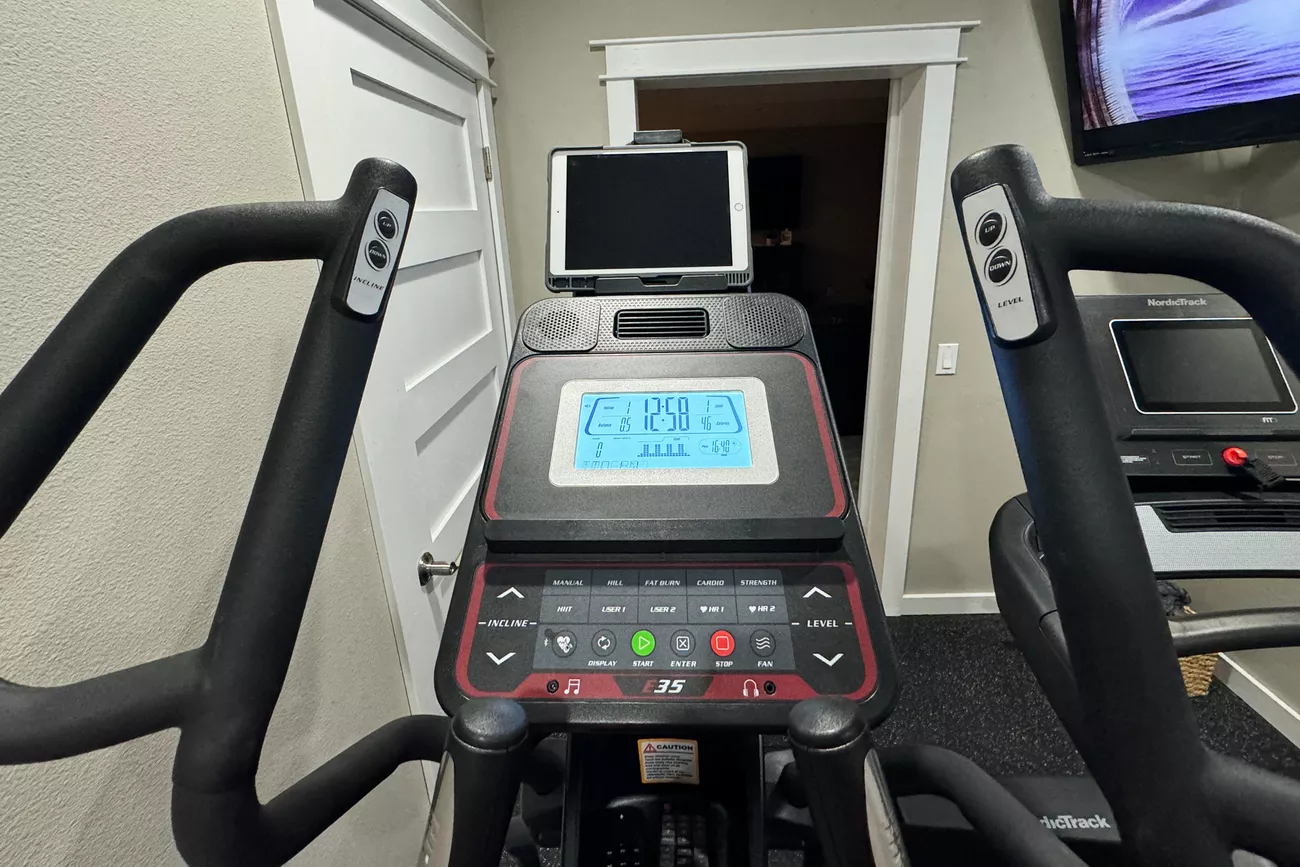
Technique matters, but real-world execution is where most people go wrong. Beginners often underestimate the importance of recovery between sessions. Fat loss doesn’t happen during the workout. It actually happens during recovery. Prioritizing sleep and allowing at least one full rest day ensures your body can adapt, recover, and continue improving.
If you want to add treadmill-based sessions alongside your elliptical training, our treadmill workout guide covers beginner-friendly cardio programs that complement elliptical work well.
Elliptical Routine for Weight Loss - Building a Sustainable Weekly Plan
An effective elliptical routine for weight loss rests on three principles: consistency, progressive overload, and adequate recovery. Here is a sample weekly structure that integrates both HIIT and steady-state training.
Day | Session Type | Duration | Focus |
Monday | HIIT Elliptical | 25 min | High resistance intervals |
Tuesday | Rest or walking | - | Active recovery |
Wednesday | Steady-State Elliptical | 45 min | Resistance 6-7, aerobic base |
Thursday | HIIT Elliptical | 25 min | Resistance one level higher than Monday |
Friday | Rest or yoga | - | Complete recovery |
Saturday | Long Steady-State | 55 min | Resistance 5-6, watch a show |
Sunday | Full Rest | - | Recovery and repair |
This elliptical workout plan for weight loss delivers approximately 150 minutes of aerobic exercise per week and doubles as a sustainable elliptical routine for weight loss - landing precisely in the range the JAMA meta-analysis identified as the minimum threshold for meaningful fat loss (1). More experienced users can push toward 250-300 minutes to accelerate results.
Applying progressive overload to your elliptical routine for weight loss:
Every two weeks, apply exactly one of the following changes:
- Add 5 minutes to each steady-state session
- Extend HIIT high-effort intervals from 1 minute to 90 seconds
- Increase the HIIT resistance by one level
- Add one additional workout day
Avoid changing more than one variable at a time. Changing multiple factors simultaneously makes it impossible to know which change is driving improvement.
Three metrics worth tracking weekly:
- Body weight (measured same time each morning, after waking)
- Resting heart rate (a declining resting heart rate is a reliable early indicator of improving cardiovascular fitness, often preceding visible scale changes)
- Workout duration at target intensity (getting longer means getting fitter)
In my experience time alone is not a reliable indicator of progress. Gradually increasing at least one of these variables each week ensures progressive overload — the key driver behind continued fat loss.
The treadmill or elliptical for weight loss debate ultimately resolves to: the machine you sustain long-term produces your results. For a broader perspective on how aerobic training affects cardiovascular health and metabolic rate, see our article on treadmill benefits, which covers the physiology shared between all cardio-based training modalities.
Elliptical or Walking for Weight Loss - Which Wins?
The elliptical or walking for weight loss question comes up regularly among beginners and people returning from injury. Both are low-impact options, but the calorie math is not close.
A 160-pound person walking briskly for 30 minutes burns approximately 140-180 calories. The same person on the elliptical at moderate intensity for 30 minutes burns approximately 280-370 calories - roughly double. For elliptical vs walking for weight loss outcomes, the elliptical is the more time-efficient choice by a clear margin at equivalent session length.
For those also evaluating the rowing machine on this same time-efficiency basis, my guide on is a rowing machine good for weight loss covers where rowing falls in this calorie-output comparison and how to structure rowing sessions for fat loss.
People who ask if walking or elliptical are better for weight loss will find that the elliptical wins clearly on caloric efficiency. That said, if you have access to an elliptical, substituting elliptical sessions for walking sessions can meaningfully accelerate fat loss results without increasing the total time commitment.
The best exercise for weight loss is the one you actually perform consistently. A 30-minute daily walk is far better than an elliptical session that never happens. But for those with elliptical access, the calorie-burn advantage is substantial.
Our guide to the best under desk treadmill reviews the compact treadmill options for people looking to add low-impact walking minutes to their workday alongside dedicated elliptical sessions.
Why the Elliptical Is Good for Weight Loss Even When Progress Feels Slow
Plateaus are among the most common reasons people abandon their elliptical for weight loss plan. But a plateau does not mean the elliptical is no longer good for weight loss. It means the body has adapted and needs a new stimulus. After three to four weeks of consistent training, the scale stalls, motivation drops, and people assume the machine stopped working. The machine did not stop working. The body adapted. For anyone questioning whether the elliptical for weight loss is the right long-term tool - or asking is treadmill or elliptical better for weight loss, or is elliptical or treadmill better for weight loss after hitting a plateau - the answer is the same: adaptation requires progressive overload, not a machine change.
For a fuller picture of what the elliptical actually delivers across health outcomes beyond weight loss, my post on what the elliptical is good for covers the cardiovascular, musculoskeletal, and metabolic benefits the research consistently supports.
Adaptation is a sign of progress, not failure. Your cardiovascular system became more efficient, meaning the same session now costs fewer calories than it did initially. The appropriate response is not to quit - it is to apply progressive overload.
Are elliptical machines good for weight loss even for people with metabolic challenges? A pilot randomized controlled trial found that 12 weeks of elliptical HIIT performed three times per week produced significant reductions in waist circumference, fat mass, and cardiovascular risk markers in participants with pre-diabetes and type 2 diabetes - a group that typically experiences slower weight loss response than healthy adults (8). The elliptical is good for weight loss even in populations where fat loss is physiologically harder. For people in generally good health who have simply plateaued, the fix is almost always a training adjustment rather than a machine change.
When progress stalls on the elliptical for weight loss, check these variables first:
- Are you progressively increasing resistance or duration every two weeks?
- Has your diet quality declined? Nutrition is responsible for roughly 70-80% of fat loss outcomes - the elliptical cannot outwork a sustained caloric surplus.
- Are you sleeping 7-9 hours per night? Sleep deprivation directly impairs fat metabolism and elevates appetite-stimulating hormones.
- Is your stress load high? Elevated cortisol promotes fat retention, particularly in the abdominal area, and can stall progress despite consistent training.
The elliptical machine for weight loss is a long-game tool. Consistent, progressive training over 12-16 weeks produces results that accumulate significantly. For a home cardio setup that complements your elliptical, our roundup of the best treadmill for home covers the top space-efficient options worth pairing with elliptical training.
Another overlooked factor is non-exercise movement (NEAT). People often reduce daily activity without realizing it once they start structured workouts. Keeping your daily step count and general movement high can significantly amplify the fat-loss effect of your elliptical sessions.
Making Elliptical Training Work for Your Weight Loss Goals
The research on elliptical for weight loss is consistent and encouraging across dozens of high-quality studies. For anyone still asking is elliptical machine good for weight loss, the evidence from 116 randomized controlled trials leaves little doubt. Aerobic exercise at 150-300 minutes per week produces meaningful fat loss, and the elliptical delivers that volume in a low-impact, full-body format that the vast majority of people can sustain long-term.
For tracking that long-term progress without a high upfront cost, my budget tracker picks covers sub-$100 wearables that log heart rate and calorie burn accurately enough to support a weight loss program.
Start with a beginner steady-state protocol if cardio training is new to you. Add HIIT intervals after the first three to four weeks. Monitor your resistance level weekly and increase it progressively. Small technique adjustments - upright posture, active handlebar use, heel-driven stride - compound into significantly higher caloric output per session over weeks of training.
For readers who are still in the process of selecting a machine, my elliptical buying guide covers the specifications that most directly affect your ability to apply those technique adjustments and resistance progressions over time.
Consistency and progressive overload, applied to a sustainable protocol, are what produce lasting elliptical for weight loss results. If you're looking to diversify your home cardio setup alongside the elliptical, our guide to the best folding treadmill covers the most space-efficient treadmill options that complement elliptical training well.
FAQs
How long on an elliptical is equal to 10,000 steps?
The length of time on an elliptical equal to 10,000 steps depends on stride length and pace, but for most adults approximately 30-40 minutes of moderate elliptical training matches 10,000 steps in total cardiovascular effort and calorie expenditure. Using the arm handles throughout the session increases total energy output and makes the time-to-steps equivalence more favorable than a walking comparison.
What are the disadvantages of using an elliptical?
The main disadvantage of using an elliptical is that it does not fully replicate the bone-density benefits of impact-based exercise like running, which matters for long-term skeletal health, particularly in older adults. The elliptical also tends to have a lower caloric ceiling than high-impact cardio at maximum effort, meaning very fit individuals may find steady-state elliptical training insufficient for advanced conditioning goals without HIIT protocols.
Do I need to stretch before an elliptical?
A dynamic warm-up before elliptical training is recommended rather than static stretching, since static stretching before cardio can temporarily reduce muscle force production. Start at a low resistance level for five minutes and gradually increase your pace and intensity before moving into the main session.
Which is healthier, a treadmill or an elliptical?
The reason one machine is healthier than the other depends entirely on your individual health profile and history. For people with joint problems, arthritis, or injury history, the elliptical is the healthier choice because it eliminates ground-impact forces on the knees and hips; for people with healthy joints who want the bone-density benefits of impact-based loading, the treadmill has a slight physiological edge.
Is it better to go fast or slow on an elliptical?
The best approach on an elliptical combines fast and slow efforts strategically rather than committing to one speed exclusively. Fast strides at lower resistance maximize cardiovascular output, while slow strides at higher resistance maximize muscle engagement and caloric afterburn - alternating between these modes during HIIT intervals produces superior fat loss results compared to holding either extreme throughout an entire session.
References
- Jayedi A, Soltani S, Emadi A, Zargar MS, Najafi A. Aerobic Exercise and Weight Loss in Adults: A Systematic Review and Dose-Response Meta-Analysis. JAMA Netw Open. 2024;7(12):e2452185. Published 2024 Dec 2. doi:10.1001/jamanetworkopen.2024.52185
- Mier CM, Feito Y. Metabolic cost of stride rate, resistance, and combined use of arms and legs on the elliptical trainer. Res Q Exerc Sport. 2006;77(4):507-513. doi:10.1080/02701367.2006.10599385
- Prieto-González P, Yagin FH. Energy expenditure, oxygen consumption, and heart rate while exercising on seven different indoor cardio machines at maximum and self-selected submaximal intensity. Front Sports Act Living. 2024;6:1313886. Published 2024 Feb 8. doi:10.3389/fspor.2024.1313886
- Rovniak LS, Denlinger L, Duveneck E, et al. Feasibility of using a compact elliptical device to increase energy expenditure during sedentary activities. J Sci Med Sport. 2014;17(4):376-380. doi:10.1016/j.jsams.2013.07.014
- Brown GA, Cook CM, Krueger RD, Heelan KA. Comparison of energy expenditure on a treadmill vs. an elliptical device at a self-selected exercise intensity. J Strength Cond Res. 2010;24(6):1643-1649. doi:10.1519/JSC.0b013e3181cb2854
- Viana RB, Naves JPA, Coswig VS, et al. Is interval training the magic bullet for fat loss? A systematic review and meta-analysis comparing moderate-intensity continuous training with high-intensity interval training (HIIT). Br J Sports Med. 2019;53(10):655-664. doi:10.1136/bjsports-2018-099928
- Wewege M, van den Berg R, Ward RE, Keech A. The effects of high-intensity interval training vs. moderate-intensity continuous training on body composition in overweight and obese adults: a systematic review and meta-analysis. Obes Rev. 2017;18(6):635-646. doi:10.1111/obr.12532
- Fex A, Leduc-Gaudet JP, Filion ME, Karelis AD, Aubertin-Leheudre M. Effect of Elliptical High Intensity Interval Training on Metabolic Risk Factor in Pre- and Type 2 Diabetes Patients: A Pilot Study. J Phys Act Health. 2015;12(7):942-946. doi:10.1123/jpah.2014-0123