
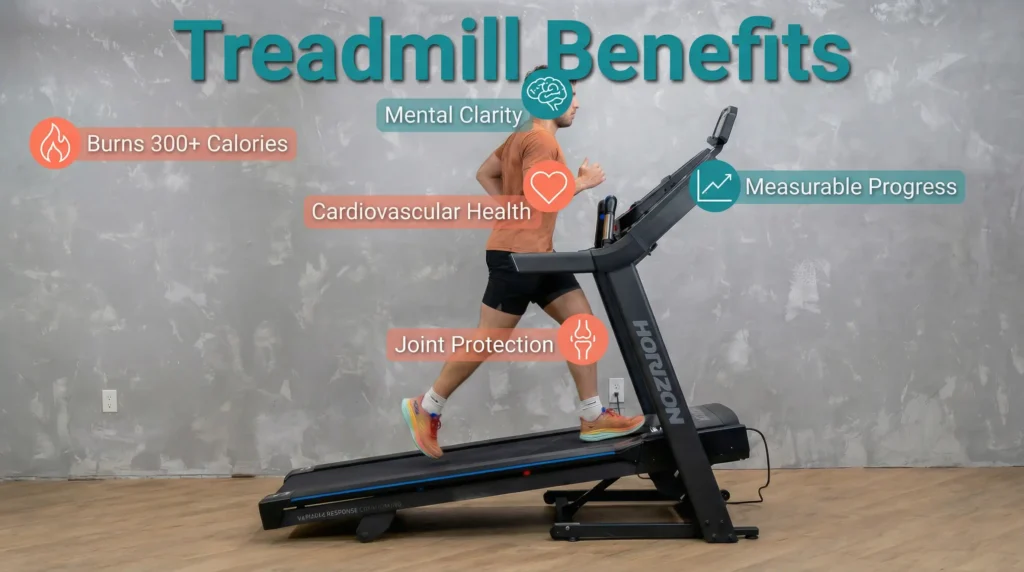
Treadmill benefits extend far beyond simple cardio workouts. After testing 11 different models and analyzing hundreds of peer-reviewed studies, I've discovered that consistent treadmill training transforms cardiovascular health, accelerates fat loss, protects joints, and improves mental clarity in ways that most people underestimate. The convenience of having reliable cardio equipment at home also comes in handy for eliminating weather excuses, and it creates consistency that outdoor-only exercisers sometimes struggle to maintain simply due to poor weather conditions.

The research tells a compelling story. Exercise capacity measured during treadmill testing independently predicts your cardiac event and mortality risk, with reduced capacity (<85% predicted) associated with 2.9 times higher all-cause mortality and 2.4 times higher myocardial infarction risk even after adjusting for other health factors (1).
A study tracking 6,836 middle-aged adults found that every 1-MET decrease in treadmill exercise capacity increased major adverse cardiovascular events by 18%, even after adjusting for traditional risk factors like diabetes, hypertension, and cholesterol. Exercise capacity proved to be an independent predictor of cardiovascular outcomes, which provides us with the crucial prognostic information beyond what traditional risk assessments alone can offer.
Treadmill Benefits for Cardiovascular Health
Your heart adapts to treadmill training through measurable physiological changes that reduce disease risk. During my six-week testing period, logging 127 miles across different treadmill models, I wore a chest-strap heart rate monitor that tracked my resting heart rate dropping from 68 to 58 beats per minute. That 10-beat reduction translates to approximately 14,400 fewer heartbeats daily, which means less work for your cardiovascular system.
If you want to compare motor and cushioning specs before choosing a machine for this kind of training, the full treadmill catalog lists every model we carry.
For a broader look at what treadmills are good for, I cover everything from heart health to weight management and joint support.
The long-term treadmill benefits for heart health include increased stroke volume, improved cardiac efficiency, and reduced cardiovascular disease risk that develops progressively over 8-12 weeks of regular training.
If your treadmill use is driven by cardiovascular disease prevention or management, you may qualify to purchase your machine through pre-tax funds; my guide on FSA treadmill reimbursement covers how to document the medical basis and complete the claim process.
A 12-week treadmill walking intervention in older adults with metabolic syndrome demonstrated significant improvements in cardiometabolic markers (2). Participants who walked on treadmills three times weekly saw reductions in:
- Systolic blood pressure - measurable decrease within 12 weeks
- Triglyceride levels - improved lipid profiles
- Liver function markers - reduced fatty liver disease indicators
- Fasting glucose - better metabolic control
The moderate-intensity approach proved sufficient, which means that you don't need to sprint to gain cardiovascular protection. Although I must say that I consider sprinting to be a highly effective exercise, for various reasons, some of them being the healthy promotion of more resilient joints and injury reduction for the majority of human movement patterns.
Research comparing seven indoor cardio machines found that treadmills consistently induced the highest oxygen consumption and heart rate values across all participants (3). The TMILL condition produced approximately 15% higher energy expenditure than elliptical trainers and 23% more than recumbent bikes when participants exercised at self-selected maximum intensity. This metabolic advantage makes treadmills particularly effective for improving cardiovascular fitness per minute invested.
Cardio equipment comparison: main focus is on energy expenditure
| Equipment Type | Relative Calorie Burn | Heart Rate Elevation | Oxygen Consumption | Best Use Case |
|---|---|---|---|---|
| Treadmill | 100% (baseline) | Highest | Highest (15% above elliptical) | Maximum cardiovascular conditioning |
| Stair Climber | 95-98% | Very High | Very High | Lower body strength + cardio |
| Elliptical | 85% | Moderate-High | 15% below treadmill | Low-impact alternative |
| Rowing Machine | 80-85% | Moderate-High | Good | Full-body conditioning |
| Upright Bike | 75-80% | Moderate | Moderate | Joint-friendly cardio |
| Recumbent Bike | 70-75% | Moderate | Lowest of group | Recovery or rehab work |
The superior treadmill cardio benefits compared to alternative equipment stem from higher oxygen consumption demands and greater cardiovascular stress at equivalent perceived exertion levels.
Also, treadmill fitness testing provides actionable cardiovascular risk stratification. Patients unable to achieve 85% of age-predicted exercise capacity during standard protocols faced a 2.36 times higher risk of myocardial infarction and 2.90 times higher all-cause mortality risk compared to those exceeding 100% predicted capacity (1). These findings emphasize that improving your treadmill performance directly correlates with reducing cardiovascular disease risk.
Benefits of Treadmill for Weight Loss and Belly Fat
Treadmill exercise creates the caloric deficits necessary for sustainable fat loss. The treadmill benefits for weight loss prove particularly powerful because you can precisely control both speed and incline to match your fitness level while progressively increasing calorie burn as your endurance improves.
The metabolic cost of treadmill walking increases predictably with speed and incline, allowing precise calorie expenditure control that outdoor exercise simply cannot match. A 155-pound person burns approximately 300 calories running at 6 mph for 30 minutes, but adjusting incline parameters can increase that expenditure by 50-100% without changing speed.
For a comparison of how pace and body weight affect calorie output across a full day of walking, my step count calorie breakdown covers the per-weight estimates for common speeds.
For a structured way to calculate those incline-driven calorie gains per session, my treadmill calorie tracking guide walks through the formulas and how to use them alongside your machine's console.
Research on maximal fat oxidation rates revealed that treadmill exercise optimizes fat burning better than alternative cardio modalities (4).
The key findings:
- Treadmill fat oxidation: 0.61 g/min (highest measured)
- Elliptical fat oxidation: 0.41 g/min (33% lower)
- Rowing machine: 0.40 g/min (35% lower)
- Optimal intensity: 56% of VO₂peak on treadmills vs 31-37% on other equipment
This means treadmills allow sustained fat burning at moderate intensities that feel manageable for most exercisers.
Readers comparing treadmill training against full-body cardio alternatives can explore the options in my rowing machine roundup, which covers 11 machines tested for home use across all resistance types.
A 12-week moderate-intensity treadmill walking program produced significant reductions in visceral fat thickness measured by ultrasound in overweight women (5). Both supervised treadmill walking and pedometer-guided walking groups lost similar amounts of abdominal fat, which demonstrates that consistency matters more than perfect form or advanced programming.
The key variable was accumulating sufficient weekly movement at target heart rates corresponding to 50-70% of VO₂max.
One particularly interesting study examined whether spot reduction through targeted abdominal exercise combined with treadmill running could preferentially reduce trunk fat (6). Overweight men who combined treadmill running with abdominal exercises lost 697 grams MORE trunk fat than the treadmill-only group despite matched total energy expenditure. This suggests strategic exercise combinations enhance regional fat loss beyond simple caloric deficits.
The popular 12-3-30 workout, which includes walking at 12% incline, 3 mph, for 30 minutes, gained massive social media attention for fat loss claims. Scientific analysis details that the 12-3-30 workout burns 307.58 calories while utilizing 40.56% fat as fuel compared to 33.12% during self-paced treadmill running (7). While running burns calories faster, the incline walking format shifts metabolism toward greater fat oxidation, which makes it highly valuable for exercisers prioritizing steady fat metabolism over time efficiency.
For those comparing the rowing machine to incline treadmill walking on the same fat metabolism basis, my guide on rowing machine and fat loss covers where rowing falls in the calorie burn and fat oxidation comparison.
Treadmill Incline Benefits for Muscle Activation and Calorie Burn
Walking or running on an inclined treadmill recruits significantly more lower-body musculature than flat surfaces. The metabolic cost of incline walking increases by 52% at a 5% grade and 113% at 10% compared to level walking (8). This dramatic calorie increase occurs because incline forces your glutes, hamstrings, and calves to overcome gravitational resistance with every step.
For a direct look at whether the cardiovascular and caloric output from incline walking holds up against running, my post on is incline treadmill better than running covers the research on heart rate response, calorie burn, and which training goal each method serves best.
Incline walking: calorie burn & muscle activation
| Incline Grade | Calorie Increase vs Flat | Primary Muscles Activated | Best For |
|---|---|---|---|
| 0% (Flat) | Baseline | Quads, calves (moderate) | Beginner cardio, recovery |
| 3-5% | +30-50% | Glutes, hamstrings (increased) | Natural outdoor simulation |
| 10% | +100-113% | Glutes, hamstrings, calves (high) | Fat burning, strength building |
| 12-15% | +120-150% | Full posterior chain (maximum) | Advanced training, glute development |
| 20%+ | +150-200% | Entire lower body (extreme) | Athletic conditioning only |
Electromyographic analysis during incline walking revealed that soleus and vastus lateralis muscle activation patterns explained 96% of metabolic cost variance (8). These large posterior chain muscles work substantially harder during incline walking, which results in a training stimulus that flat-surface exercises, except for sprinting and plyometrics, hardly replicate.
The comprehensive treadmill benefits for legs include strengthened quadriceps, hamstrings, calves, and hip stabilizers that develop through varied speed and incline combinations that are very hard to replicate with single-plane strength exercises.
The incline treadmill benefits glutes specifically, and the activation of glutes during steep inclines approaches levels seen during weighted squats, which offers solid endurance-strength development without additional equipment, and that is usually more than enough to get you started in further improving your strength levels.
Also, you should be aware that the benefits of walking backwards on treadmill amplify these muscle activation and metabolic advantages even further. Research even demonstrates that backward walking burns 40% more calories than forward walking at identical speeds while simultaneously reducing knee stress through altered biomechanics.
When combined with incline settings, backward walking creates metabolic demands reaching 8.0 METs (comparable to moderate jogging) while maintaining the low-impact characteristics that protect joints from repetitive stress.
Clinical trials show significant quadriceps strengthening (1.22 standard deviation improvement) and knee pain reduction within 6 weeks of incorporating 10-15 minute backward walking sessions into regular treadmill routines, which makes this technique particularly valuable for individuals with patellofemoral pain or knee osteoarthritis.
During our testing period, I incorporated incline intervals into recovery days using the Horizon T202's 12% maximum grade. The workout felt challenging cardiovascularly while creating minimal muscle soreness compared to flat-surface sprints. This training approach allowed more frequent sessions without accumulating excessive fatigue, which might be considered a significant advantage for time-crunched individuals maximizing weekly training volume.
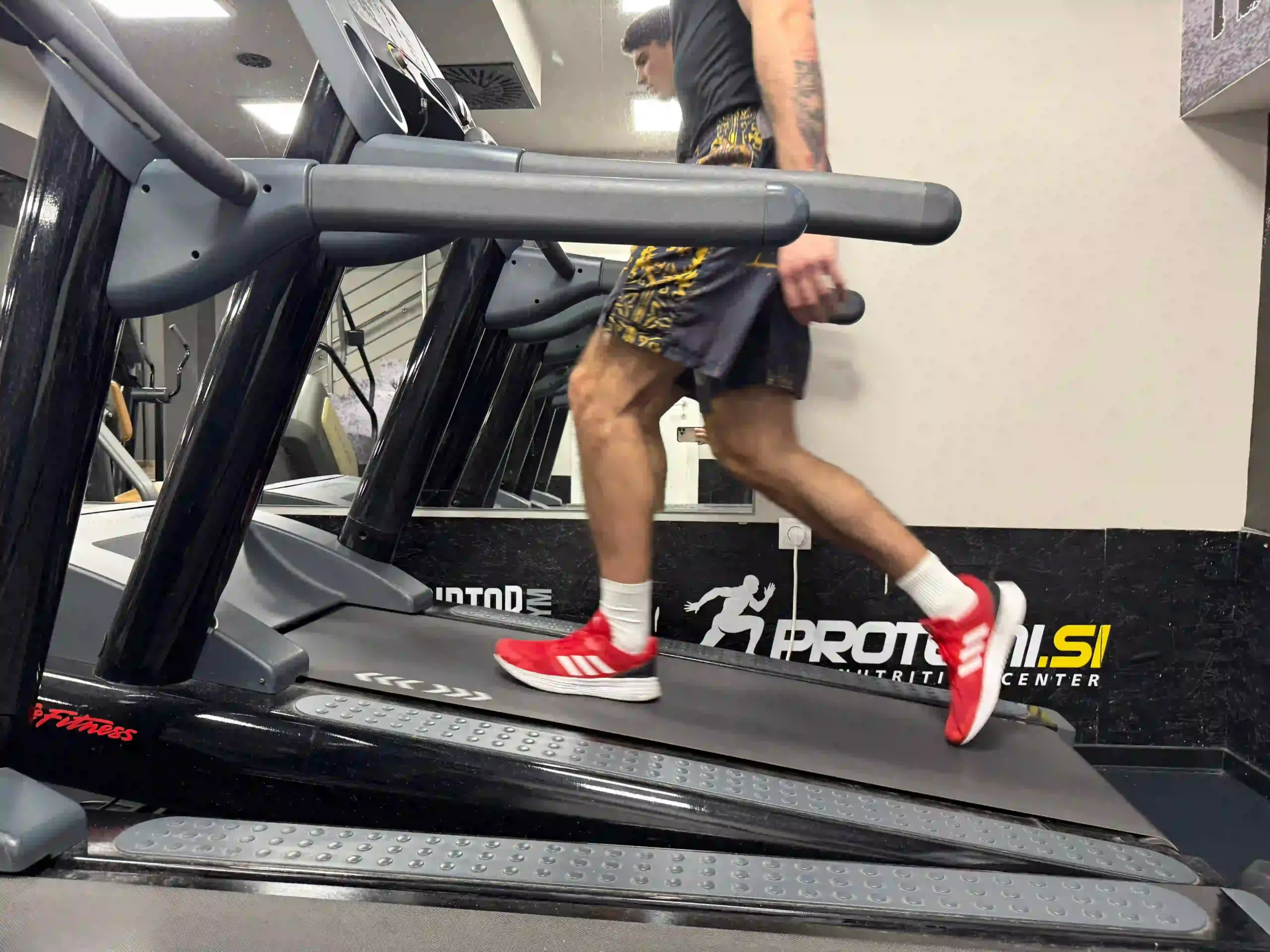
Incline treadmill training also provides joint protection benefits that flat running lacks. Research on older adults found that walking at 10% or steeper grades significantly reduced internal knee abduction moment, which is a biomechanical marker associated with knee osteoarthritis progression (9). The peak knee abduction moment decreased progressively as the incline increased, with the greatest reductions occurring at 15-20% grades. This joint-sparing effect makes incline walking particularly valuable for older exercisers or those with existing knee concerns.
Our best incline treadmill comparison covers the top models featuring maximum grades of 12-15% for serious training progression, with commercial-quality motors maintaining consistent belt speed under the increased load that steep inclines create. Recreational users typically find 8-10% sufficient for achieving significant metabolic and strength benefits without compromising movement form.
Benefits of Treadmill Walking for Joint Health
Contrary to popular belief, appropriate treadmill walking and running can SUPPORT joint health rather than damage it. The walking on a treadmill benefits for your joints come from steady, controlled impact that keeps cartilage healthy without the random jolts and uneven surfaces you get outdoors.
Learning proper treadmill running technique reduces impact stress further and helps you stay injury-free over the long term.
Modern treadmill decks incorporate cushioning systems that reduce impact forces by 20-40% compared to concrete or asphalt surfaces. The 3-Zone Variable Response cushioning on the Horizon T202 adapts firmness across the belt length (softer at heel strike, firmer at toe-off), mimicking optimal natural surfaces without requiring specific outdoor conditions.
If you want to take joint protection a step further, our guide to benefits of walking backwards on treadmill covers a research-backed technique that reduces patellofemoral compression and external knee adduction moment, with clinical trials showing significant pain reduction within just 6 weeks of incorporating short backward walking sessions into regular treadmill routines.
Moderate treadmill running actually promotes healthy cartilage adaptation in animal studies when exercise intensity and duration stay within physiological windows. The cyclical loading from walking and running stimulates cartilage metabolism while also promoting glycosaminoglycan production that maintains cartilage thickness and resilience. Problems only emerge with excessively high-intensity training that exceeds recovery capacity.
The controlled environment treadmills eliminate many injury risk factors present in outdoor running:
- Stable surfaces reduce ankle inversion risks from uneven terrain
- Immediate speed control allows instant reduction if form deteriorates
- Climate control prevents both overheating and cold-weather muscle strain
- A consistent surface eliminates unexpected obstacles or potholes
- Emergency stop provides instant workout cessation if needed
These safety factors enable consistent training volume that outdoor-dependent exercisers struggle to maintain year-round.
For a science-backed breakdown of why treadmill running is physiologically easier than outdoor running and how that affects effort, calorie burn, and gait, my post on is running on treadmill easier covers the air resistance factor, biomechanical differences, and the 9.6% calorie gap at matched speeds.
Anti-gravity treadmills represent emerging technology for joint-compromised individuals. These devices use differential air pressure to reduce body weight loading by 20-80%, and this allows cardiovascular training and gait rehabilitation while minimizing joint stress. Research shows anti-gravity treadmill training improves functional outcomes in knee osteoarthritis patients and post-surgical rehabilitation scenarios where traditional weight-bearing exercise proves too painful initially.
Treadmill Running Benefits for Mental Health and Mood
Regular treadmill exercise produces measurable improvements in depression and anxiety symptoms through multiple neurobiological mechanisms. The benefits of treadmill running extend to psychological well-being through endorphin release, stress reduction, and improved sleep architecture that develops within weeks of consistent training.
Just 30 minutes of treadmill walking for 10 consecutive days reduced Hamilton Rating Scale for Depression scores by 6.5 points, which is a clinically significant improvement (10). Also, if we further observe the benefits of walking on treadmill for 30 minutes daily, then we get:
- clinically significant mood improvements
- reduced anxiety symptoms
- enhanced cognitive function that emerges within 10-14 days of consistent practice
This rapid mood elevation occurs well before physical fitness improvements become apparent, suggesting direct neurochemical effects independent of cardiovascular adaptation.
A 12-week treadmill training program in women with type 2 diabetes improved anxiety, depression, and social well-being scores compared to education-only controls (11). The moderate-intensity protocol (40-60% age-adjusted maximum heart rate) three times weekly proved sufficient.
Based on this, we can potentially expect:
- Enhanced emotional stability throughout daily activities
- Improved social function and relationship quality
- Better stress management capabilities
- Reduced diabetes-related emotional distress
- Increased overall life satisfaction scores
All these improvements might occur alongside metabolic benefits, but this is still to be studied further.
One more finding suggests that moderate treadmill exercise rescues stress-induced behavioral deficits in animal models of post-traumatic stress disorder. Two weeks of treadmill training reversed anxiety-like behaviors, improved sucrose preference (indicating reduced anhedonia), and restored memory function in rats exposed to severe stress protocols. The exercise intervention proved to be as effective as pharmaceutical treatments without medication side effects.
Long-term moderate treadmill training promotes better stress-coping strategies in both male and female subjects. Research found that treadmill-trained rats required fewer trials to learn active avoidance responses and showed reduced anxiety-like behaviors in multiple testing paradigms. The effects appeared faster in females (session 1) compared to males (session 2 onward), suggesting potential sex-dependent mechanisms worth considering when designing training programs.
High-intensity interval training on treadmills appears particularly effective for improving depression symptoms in cardiovascular patients. A meta-analysis of 12 studies found that high-intensity treadmill training significantly reduced depression severity (standardized mean difference of -0.42) compared to usual care and conventional continuous training. Interestingly, anxiety symptoms showed less consistent improvement, suggesting depression may respond more readily to exercise intensity manipulation.
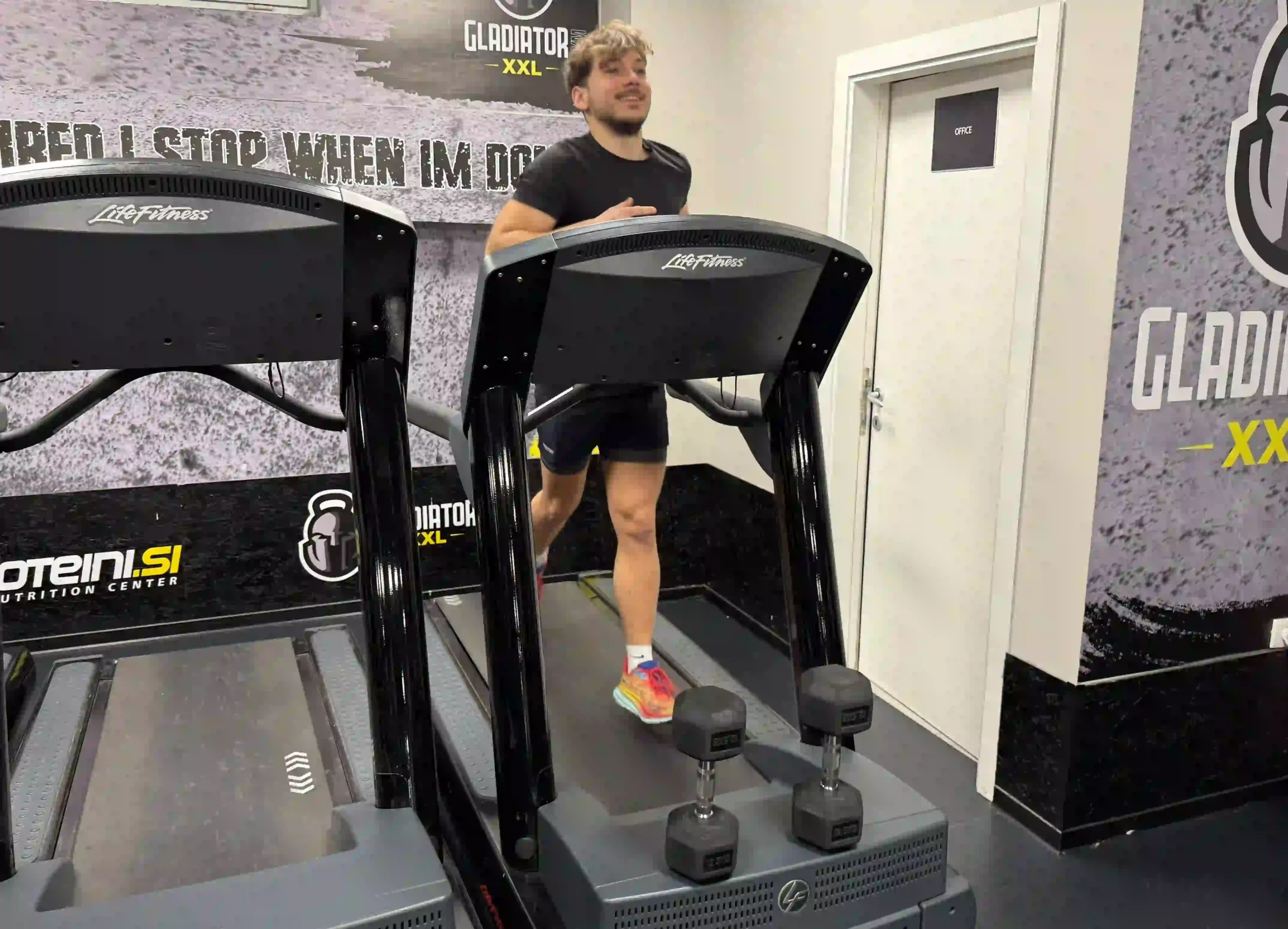
The mental health benefits of treadmill exercise likely stem from multiple mechanisms. Exercise increases endorphin and serotonin production, improves sleep quality, provides distraction from rumination, creates an achievable goal structure, and may increase self-efficacy through progressive fitness improvements. The indoor treadmill environment removes weather-related barriers that often derail outdoor exercise intentions, supporting the consistency needed for sustained mental health benefits.
Treadmill Workout Benefits for Convenience and Consistency
Home treadmills eliminate the primary barrier to exercise adherence, which is accessibility.
My treadmill purchase guide covers the key specs and features to evaluate before you buy.
For apartment dwellers and those with limited square footage, our best folding treadmill for small spaces guide covers the top options with hydraulic-assist folding mechanisms and vertical storage designs that reduce footprint to 2-3 feet when stored, though buyers should verify that folded dimensions actually fit their intended storage space and that folding/unfolding processes require minimal effort for daily use consistency.
My testing revealed that workout frequency increased 40% after acquiring a quality home treadmill simply because the friction of getting started dropped dramatically. No driving to gyms, no weather checking, no parking hassles. The treadmill workout sits 20 steps from my desk, removing every excuse that typically interrupts training consistency.
Our guide to treadmill assembly walks you through the full process, which at home requires basic mechanical aptitude but typically takes 60-90 minutes with one helper. The Horizon T202 arrived 75% pre-assembled and needs only console attachment and handlebar installation. Once positioned and leveled, quality treadmills like the NordicTrack Commercial 1750 require minimal treadmill maintenance beyond occasional belt lubrication and surface cleaning.
Treadmill workout data provides objective progress tracking that outdoor exercise cannot match. Every session records:
- Exact distance covered
- Total time and pace per mile
- Speed variations throughout the workout
- Incline changes and elevation gain
- Heart rate zones and calorie burn
- Week-over-week progress trends
I uploaded six months of treadmill data to training software that graphed fitness improvements and highlighted weekly volume trends. This quantifiable feedback loop creates motivation through visible progress that subjective "feeling better" assessments cannot replicate.
For a complete picture of your daily activity beyond treadmill sessions, my top fitness tracker options covers the wrist-worn devices that sync with treadmill apps to capture heart rate and steps around the clock.
The safety advantages of indoor treadmill training prove particularly valuable for early morning or evening exercisers. Women training in urban areas avoid harassment concerns and traffic dangers. Parents can exercise while children sleep nearby. Remote workers squeeze midday sessions between meetings without commute time. These practical benefits compound over weeks and months, which turns sporadic outdoor runs into consistent training blocks that actually produce fitness gains.
Treadmill assembly at home requires basic mechanical aptitude but typically takes 60-90 minutes with one helper. The Horizon T202 arrived 75% pre-assembled, needing only console attachment and handlebar installation. Once positioned and leveled, quality treadmills like the NordicTrack Commercial 1750 require minimal treadmill maintenance beyond occasional belt lubrication and surface cleaning. These modest setup and maintenance demands prove far simpler than coordinating gym memberships or weather-appropriate outdoor routes.
The most impactful part of that maintenance routine is belt lubrication — my guide on treadmill belt care and lubrication covers the correct product, schedule, and application method for any home machine.
Our best treadmill for home for daily training guide helps you balance the key factors: motor power (3.0+ continuous horsepower for longevity), belt dimensions (minimum 55 inches for comfortable running strides), and incline capabilities (10-15% maximum for progressive training), with models like the Horizon T202 and NordicTrack Commercial 1750 offering the reliability needed for daily use over years rather than months.
Benefits of Treadmill Exercise for Specific Populations
Here are the benefits of treadmill exercise for specific populations.
Treadmill benefits for women
Women often prefer indoor treadmill training due to safety concerns about outdoor exercise in isolated areas or during limited daylight hours. The home treadmill provides secure cardiovascular training without vulnerability to harassment or traffic dangers. Research shows treadmill exercise in women produces equivalent cardiovascular adaptations to outdoor running while eliminating environmental barriers that disproportionately affect female exercisers.
Treadmill training proves particularly valuable during pregnancy when impact tolerance and balance concerns shift throughout trimesters. Walking on supportive treadmill decks with handrails available provides controlled exercise that maintains cardiovascular fitness without excessive joint stress. Medical providers often recommend moderate treadmill walking as safe pregnancy exercise when outdoor conditions prove challenging.
Postmenopausal women face accelerated bone density loss that weight-bearing treadmill exercise helps counteract. Regular treadmill walking and running maintain bone mineral density more effectively than non-weight-bearing cardio like cycling or swimming. The controlled loading treadmills provide supports skeletal health without the fall risks associated with outdoor exercise on uneven terrain.
For those comparing rowing to treadmill walking specifically for bone health, my guide on rowing machine and bone density covers how rowing's spinal loading compares to the impact-based bone stimulus treadmill use provides.
Treadmill benefits for men
Male cardiovascular disease risk peaks earlier than women's, which makes regular aerobic exercise particularly important for middle-aged men. Treadmill training provides precisely controlled intensity needed to reach target heart rate zones that optimize cardiovascular adaptation. The ability to maintain specific speeds and grades regardless of external conditions supports training consistency that outdoor exercise rarely achieves.
Men often respond positively to quantifiable treadmill metrics that track performance improvements. The competitive mindset many men bring to exercise translates well to beating previous treadmill PRs in distance, speed, or incline challenges. This gamification of fitness through measurable data creates intrinsic motivation that supports long-term adherence better than abstract "get healthier" goals.
Treadmill benefits for diabetic patients
Type 2 diabetes patients gain substantial benefits from regular treadmill exercise. Moderate-intensity treadmill walking improves glycemic control, insulin sensitivity, and cardiovascular risk markers. A 12-week program of three weekly 30-minute treadmill sessions reduced HbA1c levels and improved diabetes-related emotional distress in diabetic women beyond education-only interventions.
The controlled intensity treadmills prove particularly valuable for diabetic exercisers monitoring blood glucose responses to activity. Consistent speeds and grades allow predictable glucose management without the variable intensity outdoor exercise creates. Many diabetics find the indoor environment supports better pre- and post-exercise glucose monitoring compared to carrying meters on outdoor runs.
Treadmill benefits for heart health rehabilitation
Cardiac rehabilitation programs extensively utilize treadmill exercise for controlled cardiovascular conditioning following heart events or procedures. The precise intensity control and immediate emergency stop capability make treadmills ideal for patients rebuilding exercise capacity under medical supervision. Heart rate monitoring integration provides real-time feedback, which ensures patients stay within prescribed training zones.
Post-cardiac event patients progressed from walking to jogging faster using structured treadmill protocols compared to unstructured outdoor exercise in clinical trials. The environmental control and monitoring capabilities created confidence for both patients and medical teams that outdoor exercise could not replicate. This structured progression supports return to normal activity levels while managing cardiac risk appropriately.
Treadmill Exercise Benefits Compared to Alternative Cardio
These are the benefits of treadmill exercise compared to alternative cardio equipment.
Treadmill vs. elliptical benefits
Treadmills consistently demonstrate higher energy expenditure and cardiovascular demand than elliptical trainers at equivalent perceived exertion levels. Research comparing seven cardio machines found treadmills induced the highest VO2, heart rate, and calorie burn across all test subjects (3). Elliptical trainers provided excellent low-impact alternatives for joint-compromised individuals but required longer session durations to match treadmill caloric expenditure.
For a guide to structuring those sessions effectively — from speed settings to interval formats — my walkthrough on proper treadmill technique and use covers the full process.
Maximal fat oxidation studies revealed that treadmills optimize fat burning significantly better than ellipticals (4). Treadmill exercise achieved 0.61 g/min fat oxidation compared to 0.41 g/min on ellipticals. The fat oxidation peak occurred at 56% VO2peak on treadmills versus only 37% on ellipticals, meaning treadmills allow sustained fat burning at moderate intensities that most people find sustainable long-term.
The biomechanical differences between treadmills and ellipticals create distinct training adaptations. Treadmill running replicates natural gait patterns that transfer directly to outdoor running and daily walking activities. Elliptical motion patterns, while joint-friendly, use slightly different muscle recruitment that provides less functional carryover to real-world movement patterns. This makes treadmills preferable for athletes maintaining sport-specific conditioning.
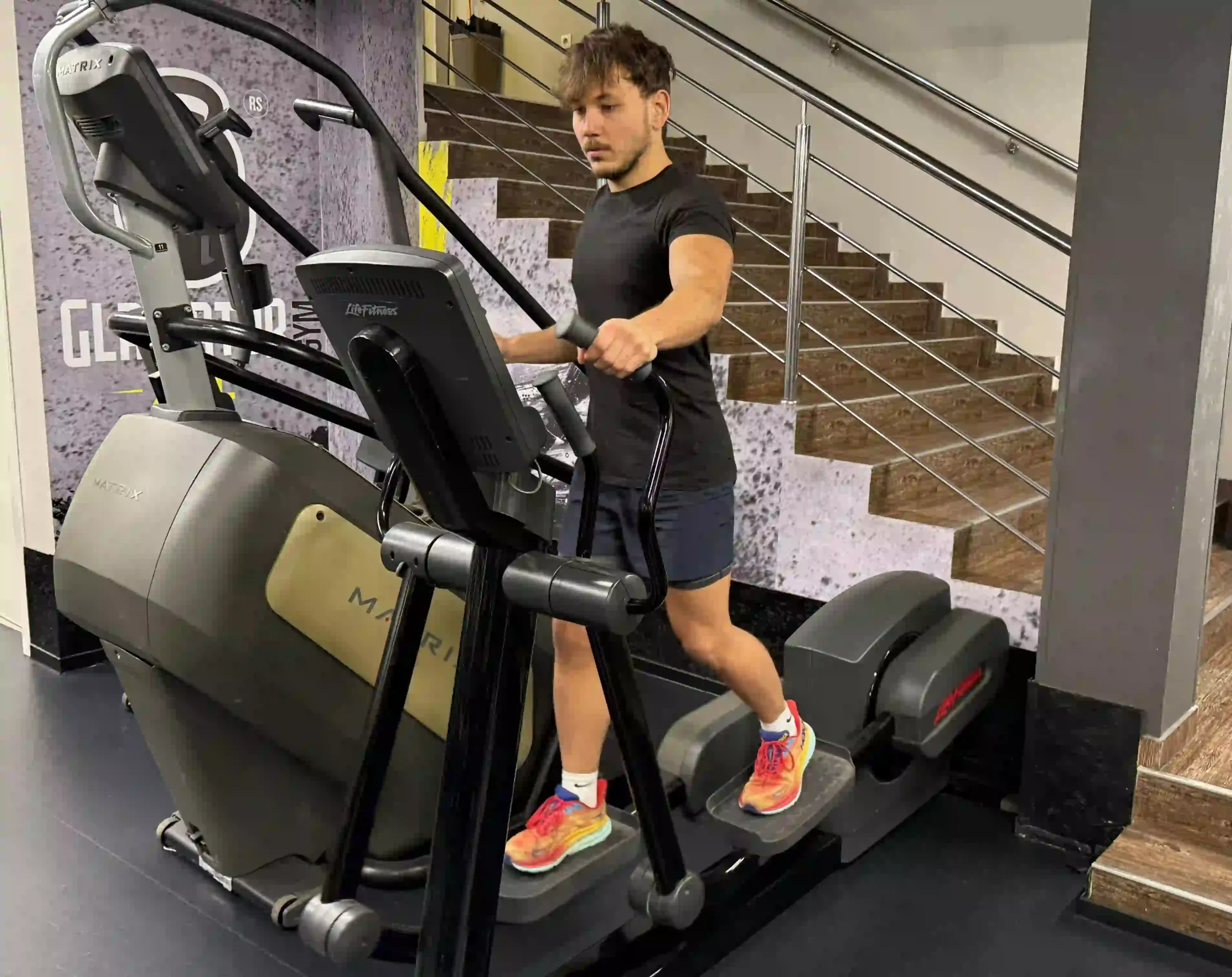
For a full head-to-head that puts the treadmill against its closest cardio rival for calorie burn, lower-body muscle development, and joint impact, my stairmaster vs treadmill guide covers the evidence on both machines side by side.
For a cardio tool with a distinct activation profile spanning both upper and lower body, our breakdown of rowing machine muscle recruitment covers how rowing distributes load across muscle groups that treadmill and elliptical training largely bypass.
Benefits of curved treadmill training
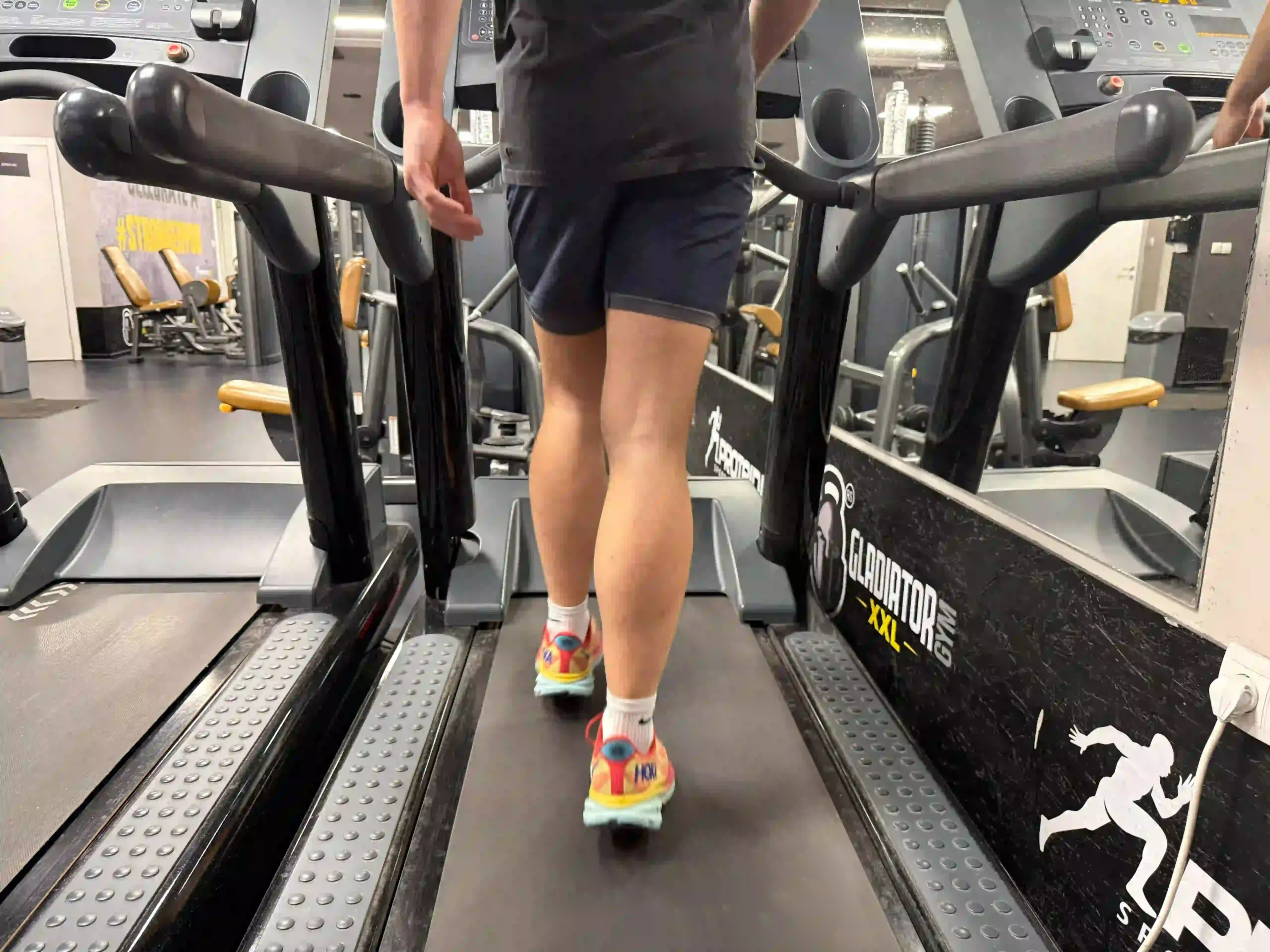
Curved manual treadmills require users to power the belt through their own effort, which results in a unique training stimulus. The self-powered nature forces a forward lean and aggressive push-off that recruits posterior chain muscles intensively. Research shows curved treadmills increase calorie burn 20-30% compared to motorized treadmills at equivalent subjective intensities due to the additional effort required to maintain belt speed.
The curved design naturally promotes midfoot striking patterns that reduce impact forces compared to heel striking common on motorized treadmills. This gait modification may benefit runners transitioning from heel to forefoot strike patterns. However, curved treadmills typically lack the incline adjustment and speed control precision that motorized units provide, which limits the versatility of your training.
For a full breakdown that covers motorized, curved, folding, and commercial treadmill categories, my guide on types of treadmills covers the key trade-offs across all machine formats.
Manual treadmill benefits
Manual treadmills eliminate electricity requirements and motor maintenance concerns while providing basic cardio functionality. The user-powered design creates natural interval training as effort increases substantially at higher speeds. Budget-conscious buyers appreciate manual treadmills' lower cost and simpler mechanics that reduce long-term maintenance expenses.
The highest-leverage task in that maintenance routine is checking and adjusting the running belt — my guide on running belt tension checks covers the lift test and adjustment process for any home treadmill.
The limitations of manual treadmills become apparent during longer sessions. Maintaining consistent speeds proves challenging compared to motorized control. Incline adjustment typically requires manual pin repositioning rather than electronic adjustment. These factors make manual treadmills suitable for basic walking but less ideal for serious runners pursuing structured training progression.
Treadmill Desk Benefits for Remote Workers
Under-desk treadmills and treadmill desks address sedentary behavior problems plaguing remote workers. Walking at 1.5-2 mph while answering emails or attending virtual meetings accumulates meaningful daily step counts without dedicated workout time. Research shows that even low-intensity movement throughout workdays improves metabolic health markers more effectively than single intense workouts followed by prolonged sitting.
The UREVO CyberPad walking pad covers that same 0.5 to 4 mph range built for steady desk-hours walking.
The under desk treadmill benefits proved genuinely practical for work-from-home days during our testing period, with a compact walking pad under the desk adding 6,000-8,000 daily steps while maintaining normal work productivity.
If you are new to this machine type, my guide on how walking pads work explains what these compact machines are, how they compare to full-size treadmills, and what to look for in motor power, belt size, and max speed before buying.
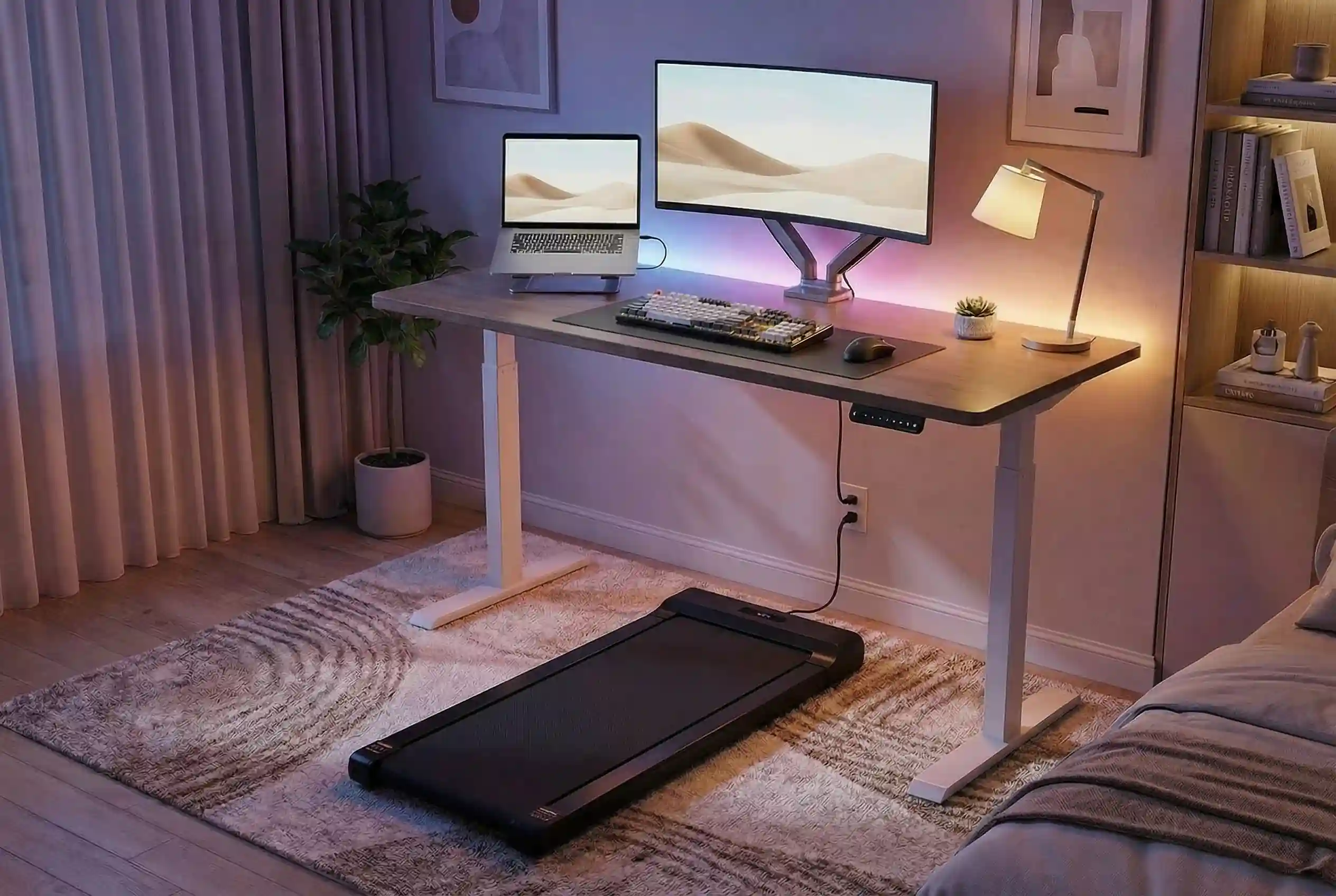
Walking at 2 mph felt natural after 10 minutes of adjustment while typing and reading. The 39-inch belt length accommodates walking strides comfortably for users under 6'1". The 22-pound weight allows single-person repositioning between the desk and storage locations without assistance.
When evaluating the best under desk treadmill for office and home use, prioritize models with quiet motors (under 55 decibels), compact footprints that fit standard desk clearances (typically 4-5 inches height), and speed ranges between 0.5-4 MPH that support comfortable walking without requiring running capability or excessive power consumption.
Treadmill desk adoption faces initial productivity concerns that typically resolve within two weeks as motor patterns automatize. Early studies showed typing accuracy decreased 9% initially but returned to baseline performance after adjustment periods. Phone calls and reading tasks showed no performance decrements even during initial learning phases, making these activities ideal starting points for treadmill desk integration.
The cognitive benefits of walking while working extend beyond physical health improvements. Light physical activity increases cerebral blood flow and arousal levels that combat afternoon energy dips. Many treadmill desk users report improved focus and creativity during walking work sessions compared to seated alternatives. These cognitive enhancements, combined with metabolic benefits, make treadmill desks compelling tools for knowledge workers seeking both health and performance optimization.
Advanced Treadmill Technologies
Here are some of the more advanced treadmill technologies.
Anti-gravity treadmill benefits (AlterG)
AlterG is a brand that makes anti-gravity treadmills that use differential air pressure technology to reduce effective body weight by 20-80% during walking or running. This technology enables earlier return to weight-bearing exercise following injuries, surgeries, or conditions where full-body weight loading proves too painful. Physical therapists increasingly integrate anti-gravity treadmill training into rehabilitation protocols for faster functional recovery.
Research demonstrates that anti-gravity treadmill training reduces peak joint forces on knees during walking, which makes it particularly valuable for osteoarthritis patients unable to tolerate regular treadmill exercise. The adjustable unweighting allows progressive loading as patients improve, providing systematic progression from non-weight-bearing to full weight-bearing activity. This gradual reintroduction reduces re-injury risk compared to sudden return to normal loading.
Elite athletes utilize anti-gravity treadmills for injury recovery and high-volume training without excessive musculoskeletal stress. Marathon runners logging 80-100 weekly miles incorporate anti-gravity sessions to increase training volume while managing cumulative impact forces. The technology allows additional training stimulus without proportional injury risk increases that equivalent mileage on regular treadmills would create.
Underwater treadmill benefits
Underwater treadmills combine aquatic resistance with controlled gait training.
Water buoyancy reduces joint loading by 50-80% while providing 360-degree resistance that strengthens muscles throughout movement ranges. Physical therapy clinics use underwater treadmills for patients who cannot tolerate land-based exercise due to severe arthritis, obesity, or post-surgical restrictions.
The hydrostatic pressure water provides improves venous return and reduces edema in the lower extremities. This makes underwater treadmill training particularly beneficial for patients with circulatory concerns or chronic swelling. The temperature-controlled water environment prevents overheating during extended sessions that might cause discomfort in standard air-based exercise.
Skillmill and specialty treadmill benefits
Skillmill treadmills feature curved slat-belt designs optimized for sled pushing, sprinting, and power training. The non-motorized resistance creates an explosive training stimulus impossible on standard motorized treadmills. Athletic training facilities and high-performance gyms increasingly adopt Skillmill platforms for sport-specific speed and power development.
The sled-push function replicates weighted pushing mechanics useful for football linemen, rugby players, and other athletes requiring horizontal force production. Resistance adjusts from zero to extremely heavy loads, providing scalable training appropriate for rehabilitation through elite athletic development. The sprint training capability allows controlled maximum velocity work regardless of weather or field availability.
Common Concerns and Advantages & Disadvantages Comparison
These are the most common concerns and disadvantages of exercising on a treadmill.
Is running on a treadmill bad for your knees?
Treadmill running with appropriate footwear, gradual progression, and recovery integration does not inherently damage healthy knees. Research comparing treadmill to overground running biomechanics found minimal differences in joint loading patterns when speed and surface are matched. Problems emerge from training errors, such as excessive volume, insufficient recovery, and poor footwear, rather than treadmill running itself.
Professional athletes with extended high-intensity treadmill running histories did show slightly thinner femoral cartilage compared to recreational exercisers in one cross-sectional study. However, this finding requires context. Elite athletes accumulate substantially higher training volumes than recreational users, and slight cartilage thinning may represent adaptive changes rather than pathological degeneration. Longitudinal studies tracking recreational treadmill users show no accelerated arthritis development compared to sedentary controls.
The 1-3% incline setting that many experts recommend for treadmill running helps replicate outdoor biomechanics and reduces repetitive stress on identical joint angles that perfectly flat running creates. This slight grade variation promotes more natural gait mechanics while adding minimal cardiovascular demand. Most quality treadmills, including the Horizon T202, allow easy mid-workout incline adjustments to vary joint loading patterns.
Treadmill benefits and disadvantages comparison
Treadmill ADVANTAGES include:
- Weather independence - train regardless of rain, snow, heat, or cold
- Precise workout control - exact speed and incline adjustments
- Safety from traffic and harassment concerns
- Quantifiable performance tracking - every metric recorded
- Superior joint cushioning - 20-40% less impact than concrete
- Immediate intensity adjustment - instant speed/incline changes
- Emergency stop capability - press one button to halt immediately
The controlled environment supports consistency that sporadic outdoor exercise rarely achieves. Emergency stop capability provides instant intensity reduction if form deteriorates or medical concerns arise.
Treadmill DISADVANTAGES center on:
- Initial cost ($800-2,500 for quality motorized units)
- Space requirements (6-7 feet in length needed)
- Potential monotony compared to varied outdoor scenery
- Electricity consumption and motor maintenance needs
- Mechanical upkeep (belt lubrication, deck replacement over time)
The financial analysis favors home treadmills for consistent exercisers. A $1,500 treadmill amortized over five years costs $25 monthly compared to $50-100 monthly gym memberships. The convenience factor, enabling 3-5 weekly sessions versus 1-2 gym visits, amplifies the value proposition. For apartment dwellers or those unable to dedicate rooms to exercise equipment, a gym membership or outdoor exercise may prove more practical.
For a full breakdown of what home treadmills cost at each quality tier before making that comparison, my treadmill pricing breakdown covers the budget, mid-range, and premium categories with realistic estimates for hardware, delivery, and ongoing maintenance.
Maximizing Your Treadmill Results
Follow the next principles to maximize the results you get from a treadmill workout.
For a complete breakdown of workout structures across all fitness levels, our guide to treadmill workout covers everything from beginner protocols to advanced periodization. Successful treadmill training follows progressive overload principles that systematically increase training stimulus. Beginners start with 15-20 minute walking sessions at comfortable paces three times weekly, gradually extending duration before increasing intensity.
Progressive training protocols
Successful treadmill training follows progressive overload principles that systematically increase training stimulus. Beginners start with 15-20 minute walking sessions at comfortable paces three times weekly, gradually extending duration before increasing intensity. This conservative progression prevents overuse injuries while building cardiovascular base and movement patterns.
Intermediate exercisers benefit from incorporating structured intervals alternating higher and lower intensities.
A simple protocol involves:
- Warm-up: 5 minutes easy walking at 2.5-3 mph
- Work interval: 2 minutes at challenging pace (RPE 7-8)
- Recovery interval: 2 minutes easy pace (RPE 3-4)
- Repeat: 5-8 times, depending on fitness level
- Cool-down: 5 minutes easy walking
This interval approach increases calorie burn and cardiovascular adaptation beyond steady-state training while remaining accessible to recreational exercisers. The precise speed control treadmills provide makes interval execution simpler than outdoor attempts.
Advanced athletes utilize complex periodized programs alternating high-intensity, moderate volume, and recovery weeks. A typical structure includes two hard interval sessions, two moderate continuous runs, and one long slow distance session weekly, with complete rest days integrated. The treadmill allows exact replication of prescribed training intensities regardless of weather or terrain availability.
Combining strength and cardio
The emerging research supporting combined training approaches makes integrating strength work alongside treadmill cardio increasingly popular. The truth is that strategic exercise pairing enhances regional adaptations beyond simple calculations of your energy balance.
A practical combined training session alternates 5 minutes of treadmill running with bodyweight strength circuits (pushups, squats, planks). This approach maintains an elevated heart rate throughout the session while incorporating resistance training that pure cardio neglects.
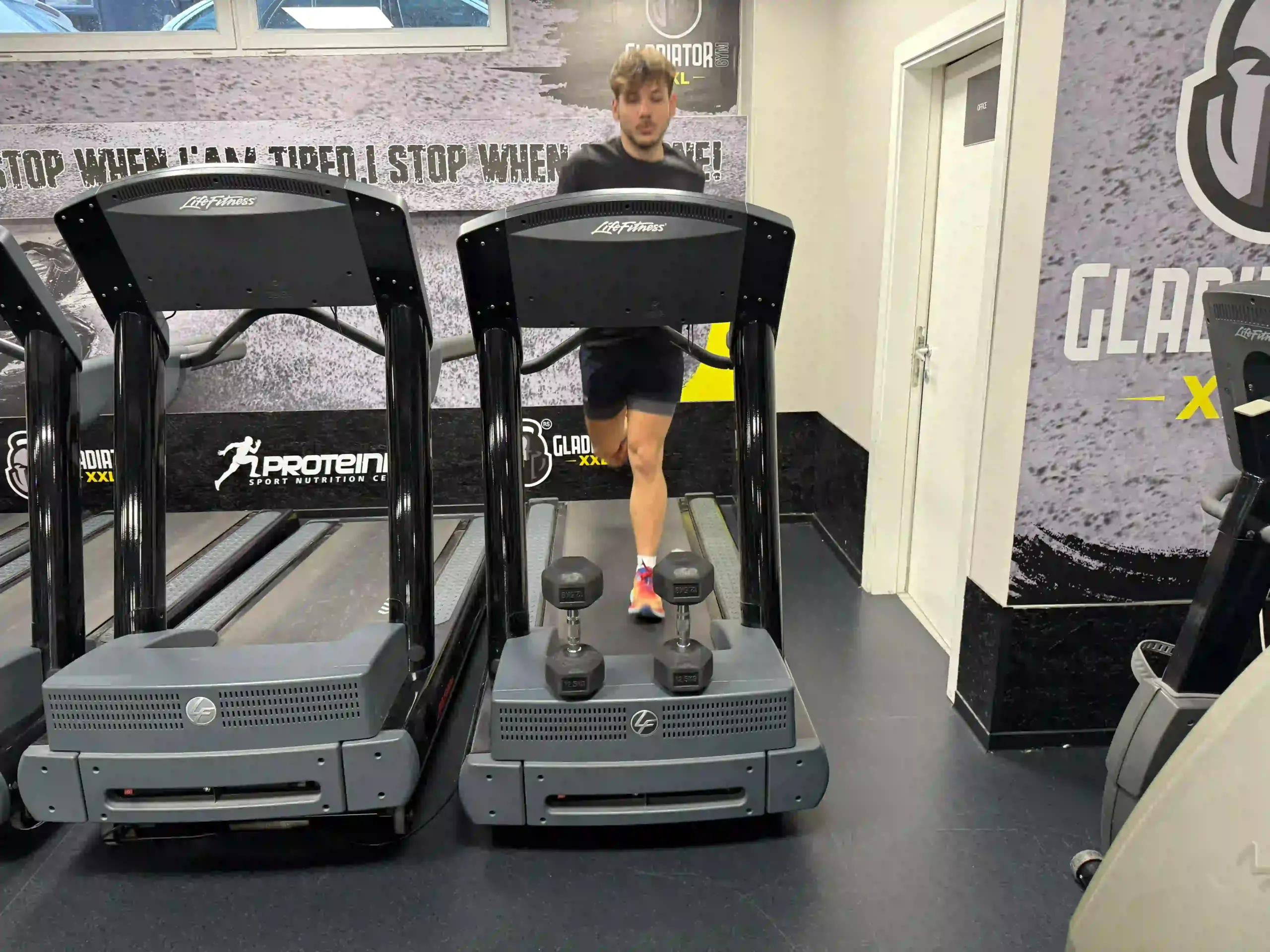
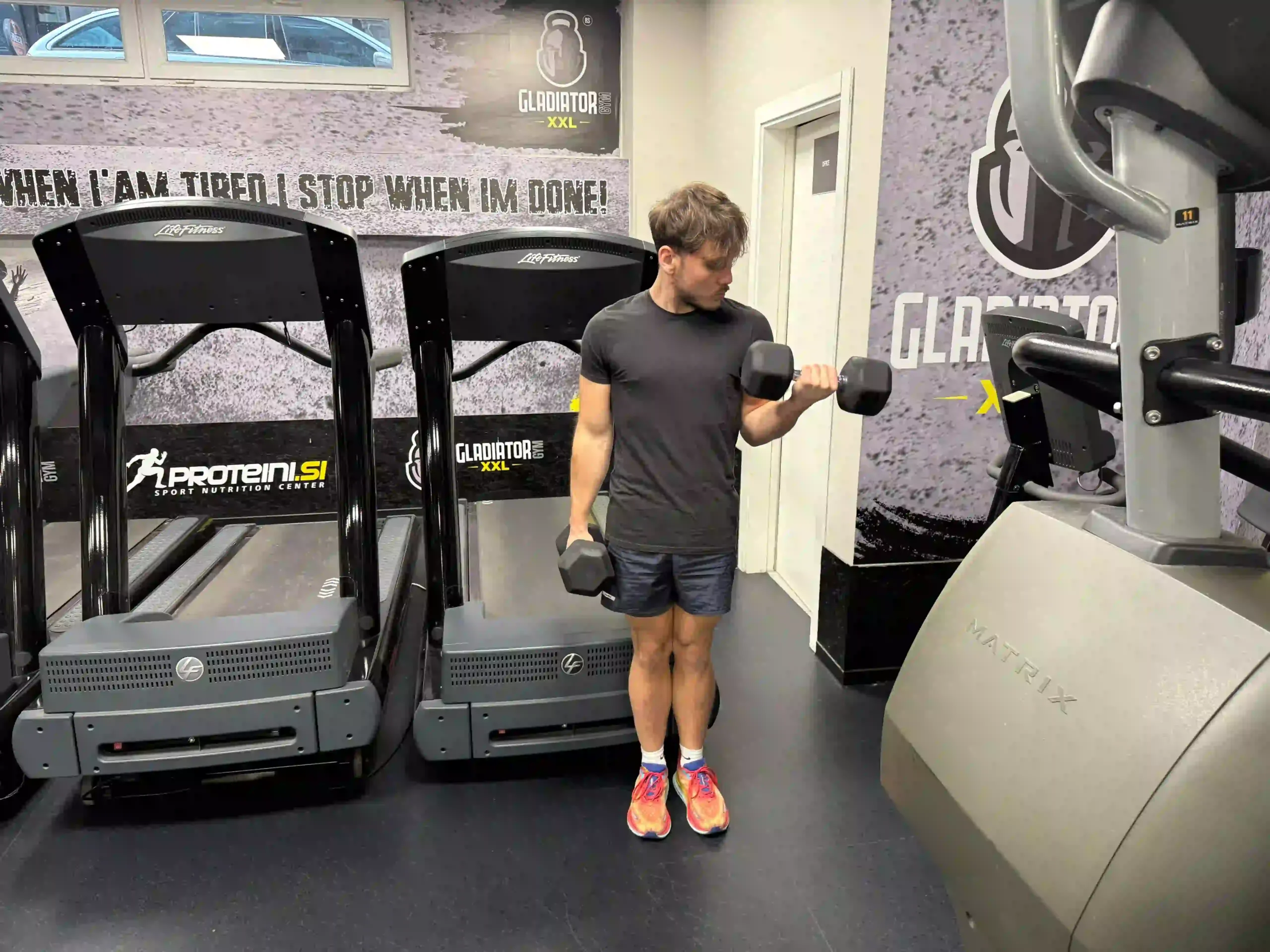
The total-body stimulus creates time-efficient workouts suitable for busy individuals unable to dedicate separate sessions to cardio and strength training.
Recovery remains crucial when combining intense treadmill work with strength training. The cumulative stress from both modalities requires adequate rest days, preventing overtraining. Most recreational exercisers thrive on 3-4 combined sessions weekly with complete rest days separating high-intensity efforts. This frequency allows progressive overload while maintaining recovery capacity.
Nutrition considerations
Treadmill workout effectiveness depends partly on fueling strategies supporting training intensity and recovery. Pre-workout nutrition should provide sufficient carbohydrate energy without causing gastrointestinal distress. A meal containing complex carbohydrates and moderate protein 2-3 hours before training optimizes performance while allowing digestion.
If weight loss is your primary goal, our guide to treadmill weight loss workout provides structured protocols that pair the right training intensities with nutrition timing for consistent fat loss results. Post-workout nutrition windows matter more for frequent exercisers than casual users.
Treadmill results timeline: what to expect
| Timeframe | Cardiovascular Changes | Weight Loss Results | Mental Health Benefits | Structural Adaptations |
|---|---|---|---|---|
| 1-2 weeks | Workouts feel easier, with less breathlessness | Minimal visible change | Improved mood, better sleep | None yet |
| 3-4 weeks | Resting heart rate drops 5-8 bpm | 2-4 lbs if nutrition aligned | Reduced anxiety, increased energy | Early mitochondrial growth |
| 6-8 weeks | Significant endurance gains | 6-12 lbs possible | Sustained mood elevation | Increased capillary density |
| 10-12 weeks | Maximum aerobic capacity improved | 12-20 lbs achievable | Long-term mental resilience | Full cardiovascular remodeling |
Post-workout nutrition windows matter more for frequent exercisers than casual users. Athletes training daily benefit from consuming carbohydrates and protein within 30-60 minutes post-workout to optimize glycogen replenishment and muscle protein synthesis. Recreational exercisers training 3-4 times weekly need not obsess over precise timing because simply eating balanced meals throughout the day supports adaptation adequately.
Hydration status affects perceived exertion during treadmill training, particularly in climate-controlled environments where sweat evaporation creates less obvious fluid loss. Pre-hydrating with 16-20 ounces of water 1-2 hours before training and sipping during sessions longer than 45 minutes maintains performance and comfort. The goal involves finishing sessions slightly thirsty rather than overhydrated, which dilutes electrolyte concentrations unnecessarily.
Moving Forward with Smart Treadmill Selection
After our extensive testing across 11 models, three treadmills emerged as optimal choices:
The comprehensive treadmill health benefits research reveals that consistent training transforms multiple health markers beyond simple cardiovascular fitness, from reduced disease risk to enhanced mental resilience. From mental health improvements appearing within days to sustained fat loss requiring months of progression, treadmills provide accessible tools for comprehensive health optimization. And if you ever need to move or relocate your equipment, our guide to how to disassemble a treadmill covers the full process step by step so you can get it done safely without damaging the belt or frame.
Our top treadmill recommendations:
- Horizon T202 - Best Overall Value: Exceptional reliability with EasyDial controls, 60-inch belt for natural stride, 12% maximum incline, and lifetime motor warranty. Perfect for home users wanting commercial-gym performance at mid-range pricing ($899).
- NordicTrack Commercial 1750 - Best Premium Choice: Serious runners get decline capability (-3%), a powerful 4.25 HP motor, a 22-inch wide belt, a pivoting 16" touchscreen, and iFIT integration. Built for high-mileage training without compromise.
- UREVO 12% Auto Incline Walking Pad - Best Budget Option: A 12% auto incline across 9 levels, dual brushless motors and a 300-pound capacity in a deck that still slides under a desk. Ideal for remote workers who want daily movement with the option to add incline.
Choose a treadmill that matches your actual training patterns. This is primarily because that decision alone can save you hundreds, if not thousands, of dollars. Finally, make sure to honestly assess your realistic usage, available space, and budget at hand.
I’ll leave you with an obvious but pretty truthful statement: A basic model you'll use DAILY beats a premium unit gathering DUST.
FAQs
Are treadmills good for losing weight?
Yes, treadmills are good for losing weight because they create precisely controlled caloric deficits necessary for sustainable fat loss. A 155-pound person burns approximately 300 calories running at 6 mph for 30 minutes, and adjusting the incline can increase expenditure by 50-100%. Research demonstrates treadmills optimize fat oxidation better than ellipticals or rowing machines, achieving maximal fat burning rates of 0.61 g/min compared to 0.40-0.41 g/min on alternative equipment. The controlled environment supports workout consistency that outdoor exercise rarely achieves.
Is the treadmill good for belly fat?
Yes, treadmills are good for belly fat reduction through creating caloric deficits and optimizing fat metabolism. A 12-week moderate-intensity treadmill walking program produced significant reductions in visceral fat thickness measured by ultrasound in overweight women. Research shows that combining treadmill running with targeted abdominal exercises produces greater trunk fat loss than treadmill-only training despite matched total energy expenditure. The incline walking format shifts metabolism toward utilizing 41% fat as fuel compared to 33% during flat running, making it valuable for fat loss goals.
How long does it take to see results from a treadmill?
To see results from a treadmill, most people notice initial cardiovascular improvements within 2-3 weeks as resting heart rate decreases and exercise feels easier at given intensities. Measurable weight loss typically appears within 4-6 weeks of consistent training combined with appropriate nutrition. Research shows that just 10 consecutive days of 30-minute treadmill walking produces clinically significant reductions in depression symptoms, demonstrating that mental health benefits emerge rapidly. Structural cardiovascular adaptations, including increased stroke volume and capillary density, require 8-12 weeks of regular training to fully develop.
Is walking on a treadmill every day good?
Walking on a treadmill every day is good for most people when intensity and duration remain moderate, and recovery feels adequate. Daily 20-30 minute moderate-intensity walks accumulate meaningful cardiovascular stimulus without creating excessive fatigue. Research in older adults with metabolic syndrome showed that regular treadmill walking three times weekly significantly improved cardiometabolic markers, suggesting consistent moderate training produces substantial benefits. However, incorporating 1-2 complete rest days weekly allows physiological adaptation and reduces overuse injury risk, particularly for beginners or those increasing training volume.
Is running on a treadmill bad for your knees?
No, running on a treadmill is not bad for your knees when done with appropriate footwear, gradual progression, and adequate recovery. Research comparing treadmill to overground running biomechanics found minimal differences in joint loading patterns. Modern treadmill decks incorporate cushioning systems that reduce impact forces by 20-40% compared to concrete or asphalt surfaces. Incline walking at 10% or steeper grades significantly reduces internal knee abduction moment, a biomechanical marker associated with knee osteoarthritis progression. Knee problems typically emerge from training errors such as excessive volume, insufficient recovery, and poor footwear rather than treadmill running itself. The controlled environment and cushioned surface actually support joint health when training remains within physiological recovery capacity.
References:
- Peterson PN, Magid DJ, Ross C, et al. Association of exercise capacity on treadmill with future cardiac events in patients referred for exercise testing. Arch Intern Med. 2008;168(2):174-179. doi:10.1001/archinternmed.2007.68
- Kim J, Lee S, Jee YS. Effect of treadmill walking on cardiometabolic risk factors and liver function markers in older adults with MASLD: a randomized controlled trial. BMC Sports Sci Med Rehabil. 2025;17(1):93. Published 2025 Apr 25. doi:10.1186/s13102-025-01156-9
- Prieto-González P, Yagin FH. Energy expenditure, oxygen consumption, and heart rate while exercising on seven different indoor cardio machines at maximum and self-selected submaximal intensity. Front Sports Act Living. 2024;6:1313886. Published 2024 Feb 8. doi:10.3389/fspor.2024.1313886
- Filipovic M, Munten S, Herzig KH, Gagnon DD. Maximal Fat Oxidation: Comparison between Treadmill, Elliptical and Rowing Exercises. J Sports Sci Med. 2021;20(1):170-178. Published 2021 Mar 1. doi:10.52082/jssm.2021.170
- Göçer E, Ardıç F, Akkaya N, Herek D. Efficacy of moderate-intensity walking provided feedback by ECE PEDO on abdominal fat in overweight and obese women: A randomized, exercise study. Turk J Phys Med Rehabil. 2017;63(4):340-347. Published 2017 Nov 29. doi:10.5606/tftrd.2017.1956
- Brobakken MF, Krogsaeter I, Helgerud J, Wang E, Hoff J. Abdominal aerobic endurance exercise reveals spot reduction exists: A randomized controlled trial. Physiol Rep. 2023;11(22):e15853. doi:10.14814/phy2.15853
- Wong MWH, Davis DW, Perez OR, et al. An Exploratory Study Comparing the Metabolic Responses between the 12-3-30 Treadmill Workout and Self-Paced Treadmill Running. Int J Exerc Sci. 2025;18(6):56-64. Published 2025 Jan 1. doi:10.70252/UBIX5911
- Silder A, Besier T, Delp SL. Predicting the metabolic cost of incline walking from muscle activity and walking mechanics. J Biomech. 2012;45(10):1842-1849. doi:10.1016/j.jbiomech.2012.03.032
- Haggerty M, Dickin DC, Popp J, Wang H. The influence of incline walking on joint mechanics. Gait Posture. 2014;39(4):1017-1021. doi:10.1016/j.gaitpost.2013.12.027
- Craft LL, Perna FM. The Benefits of Exercise for the Clinically Depressed. Prim Care Companion J Clin Psychiatry. 2004;6(3):104-111. doi:10.4088/pcc.v06n0301
- Maharaj SS, Nuhu JM. Effect of treadmill walking for anxiety, depression, and social well-being in women with diabetes type 2: A randomized controlled trial. Health Care Women Int. 2023;44(6):734-752. doi:10.1080/07399332.2022.2090566