
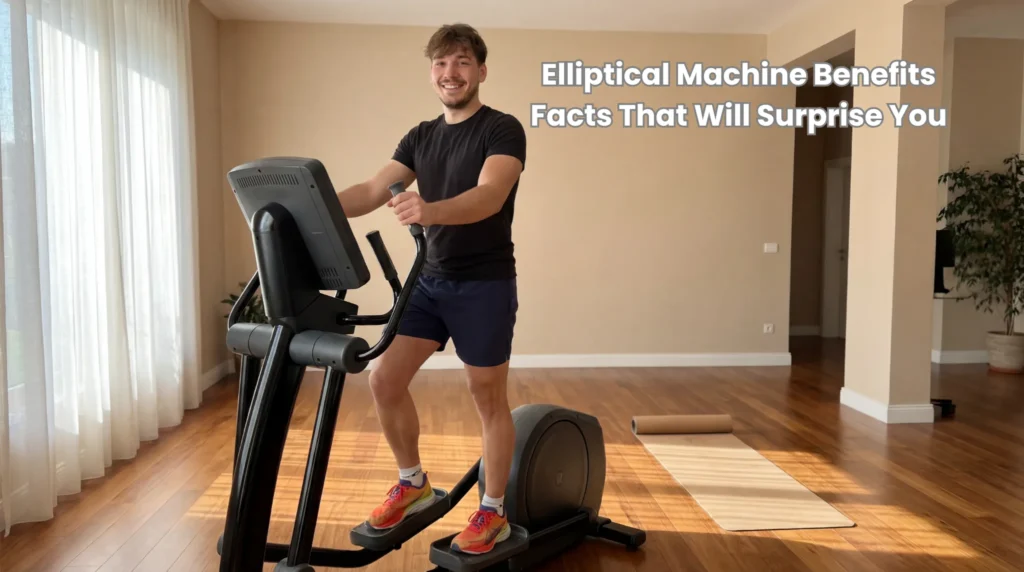
Elliptical machine benefits go well beyond what most people expect from a cardio machine. Unlike running or cycling, the elliptical engages your upper body, lower body, and core simultaneously while eliminating the impact forces that accumulate during high-impact exercise. The result is a machine that can match treadmill-level cardiovascular output while placing significantly less stress on your joints.

Over more than 15 years of hands-on fitness testing, I have tracked what actually happens when people commit to regular elliptical training: measurable cardiovascular improvements within four to six weeks, consistent lower-body strength gains, and a workout format most people can sustain four to five days a week without accumulated soreness. This guide covers the full research picture, from cardiovascular and caloric benefits to muscle activation, stomach toning, under desk variants, and who benefits most from this machine.
Elliptical Machine Benefits - The Science-Backed Overview
The science on elliptical machine benefits is more robust than the machine's gym reputation suggests. Many people view the elliptical as the "easy" cardio option - something for injury recovery or light days.
Our elliptical lineup includes models with different stride lengths and resistance levels.
My full guide to what is an elliptical machine covers how the drive system works, what muscles it targets, and how to choose the right model for home use.
The research tells a different story.
A 2021 study published in the International Journal of Sport Nutrition and Exercise Metabolism confirmed that heart rate, oxygen consumption, and metabolic responses on the elliptical were statistically equivalent to the treadmill and stepper across exercise intensities from 60% to 80% of peak workload (1).
A controlled 12-week trial found that elliptical training produced VO2max improvements from 36.9 to 39.6 ml/kg/min in female participants - statistically equivalent gains to treadmill training when volume and intensity were matched (2).
What makes the elliptical uniquely valuable is not that it is easy.
It is actually the fact that it delivers equivalent cardiovascular stimulus at a fraction of the joint loading. That combination creates a machine most people can train on consistently, multiple times per week, for months or years without the cumulative wear that limits running frequency for many people.
Core elliptical machine benefits supported by research:
- Cardiovascular improvement equivalent to treadmill running (VO2max, cardiac output, aerobic efficiency)
- Full-body muscle engagement across the upper body, lower body, and core in a single session
- Significantly reduced joint impact versus running and other high-impact cardio
- Effective calorie burn for weight management and metabolic conditioning
- Broad accessibility - suitable for beginners, rehabilitation patients, older adults, and experienced athletes
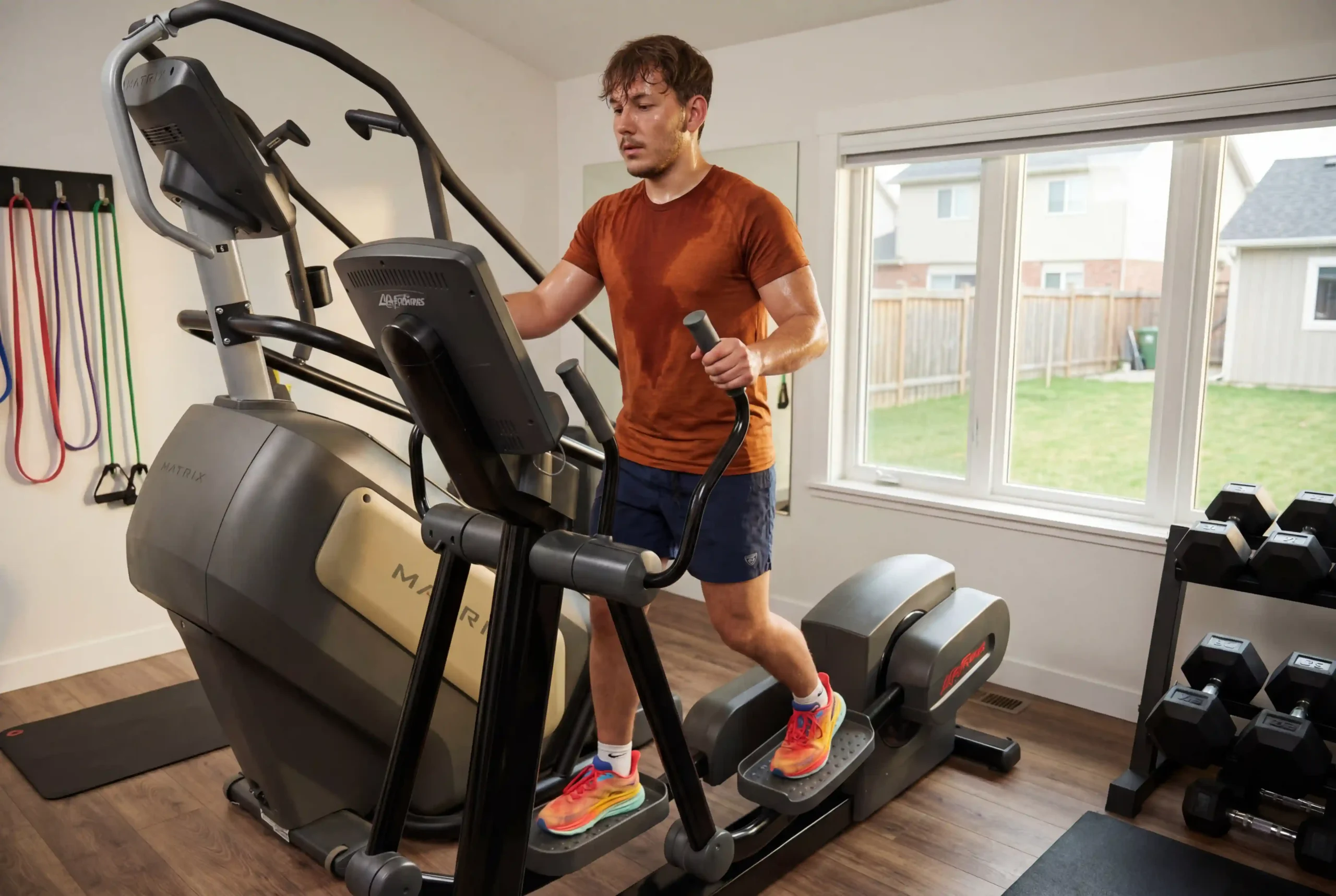
For those ready to act on these benefits, our guide to the best elliptical machines covers the top-rated models across every price range.
Cardiovascular Benefits of Elliptical Machine Training
The cardiovascular benefits of elliptical machine training are its most clinically significant advantage. The elliptical elevates heart rate, increases stroke volume, and stimulates the same aerobic adaptations as running - without the mechanical stress on joints and connective tissue that limits how often many people can train at high intensity.
For a detailed breakdown of the clinical evidence, my guide on whether the elliptical is good for cardio covers the research behind these cardiovascular claims.
Bosch et al. (2021) confirmed that across all tested workloads, the elliptical produced physiological responses indistinguishable from the treadmill. Your cardiovascular system cannot distinguish between treadmill running and elliptical training at matched intensities - what changes is how much mechanical load your joints absorb.
The elliptical machine cardio benefits also extend to specific metabolic conditions. A 12-week elliptical HIIT protocol in prediabetic and type 2 diabetic participants significantly improved VO2max, reduced fasting blood glucose, reduced appendicular fat mass, and decreased waist and hip circumference - all from 30-minute sessions conducted three times per week (3).
How elliptical cardio compares to running
The cardiovascular comparison between the elliptical and running comes down to one principle: equivalent aerobic stimulus, lower mechanical cost. For people who can run without issue, running provides a slightly superior bone-loading stimulus and more direct transfer to running performance. For everyone else - and for anyone who wants to train more frequently without joint accumulation - the elliptical machine cardio benefits are clinically equivalent.
Practical cardiovascular intensity targets on the elliptical:
- Moderate intensity: 60-70% maximum heart rate, steady-state sessions of 30-45 minutes
- Vigorous intensity: 70-85% maximum heart rate, interval-based sessions of 20-30 minutes
- HIIT: 85-95% maximum heart rate during work intervals, 8-12 rounds of 30-45 seconds
For a deep dive into how aerobic training drives cardiovascular adaptation, our treadmill benefits guide covers the overlapping evidence base for cardio training on both machines.
Elliptical Machine Benefits for Muscles
The muscle activation profile of the elliptical is one of its most underestimated advantages. Most people treat it as a leg machine. EMG research reveals a substantially broader engagement profile.
Elliptical machine benefits for legs and lower body
The primary muscles activated during standard elliptical use are the quadriceps, hamstrings, glutes, and calves. EMG research confirmed that elliptical training produced significantly greater quadriceps activation than treadmill walking, stationary cycling, and overground walking - making it one of the most effective non-impact options for lower-body conditioning (4).
A separate biomechanical study confirmed higher gluteal activation on the elliptical versus walking across multiple speeds and hand positions (5).
One important clarification on elliptical machine benefits for muscles: lower-extremity muscle load is measurably reduced compared to running. Research found up to 60% lower activation in specific lower-extremity muscle groups on the elliptical versus treadmill running (6).
This is not a weakness. In fact, it is the same mechanism that makes the elliptical joint-friendly and sustainable at high weekly training frequencies.
Reverse pedaling meaningfully changes the lower-body stimulus. Backward striding shifts primary load to the hamstrings and hip extensors rather than the quad-dominant pattern of forward pedaling. The table below shows how pedaling direction affects which muscles do the most work:
Pedaling Direction | Primary Muscles | Secondary Muscles |
Forward | Quadriceps, calves | Glutes, hamstrings, core stabilizers |
Reverse | Hamstrings, glutes, hip extensors | Quadriceps, calves, core stabilizers |
Active handlebars (forward) | + Chest, anterior shoulders | + Upper back, biceps, triceps |
Active handlebars (reverse) | + Upper back, rear deltoids | + Chest, biceps, triceps |
Including both forward and reverse pedaling in a session produces more complete lower-body development than forward-only training.
Upper body and core elliptical machine benefits
When you actively drive the movable handlebars rather than resting on them, the elliptical machine benefits extend to the upper body:
- Chest and anterior shoulders through the pushing phase of each stroke
- Upper back - rhomboids, rear deltoids, and lats - through the pulling phase
- Biceps and triceps as secondary movers throughout the stride cycle
- Core stabilizers engaged continuously to control lateral movement and maintain upright posture
The critical point: passive handlebar use eliminates upper body engagement entirely. Gripping the stationary rails for balance while your legs drive the motion turns the elliptical into a purely lower-body machine. To access the full elliptical machine benefits for muscles, actively drive the push-pull rhythm with your arms from the beginning of each session.
For those who want upper-body engagement in a compact seated format, our guide to the best under desk elliptical covers options designed for active workstation use.
Elliptical Machine Benefits for the Stomach
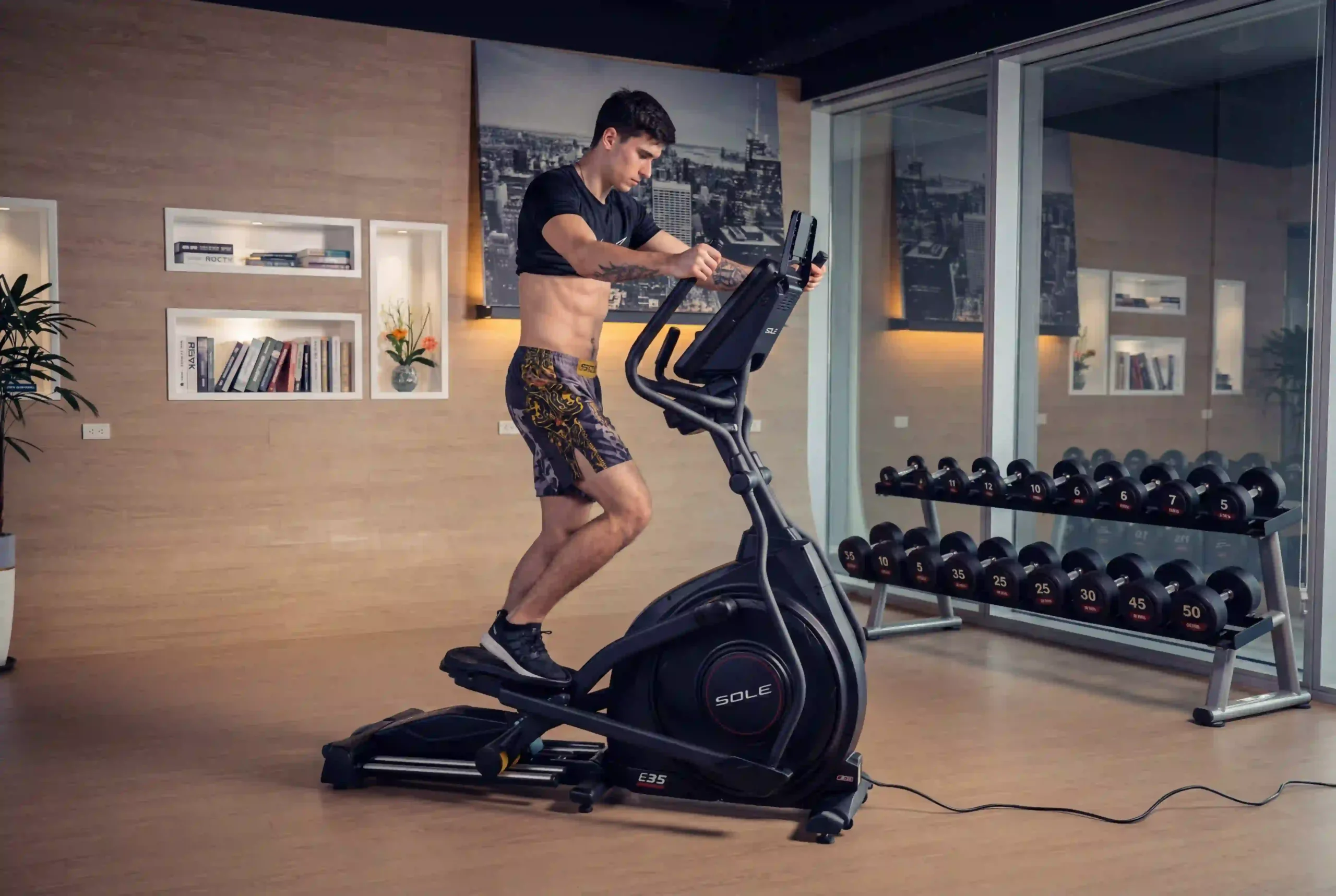
The elliptical machine benefits for the stomach are indirect but real and consistent. The elliptical does not isolate abdominal muscles the way planks or crunches do. What it does is engage the deep core stabilizers continuously throughout every stride cycle - the transverse abdominis, internal obliques, and lumbar stabilizers that maintain upright posture and control lateral movement during the pedaling motion.
For users evaluating rowing as a higher-demand alternative to the elliptical for core and lumbar engagement, my guide on rowing machine back issues covers which conditions benefit from rowing's posterior chain loading and which require a more supported option.
The practical effect accumulates over time. Consistent elliptical training over eight to twelve weeks produces improved core stability, better functional posture during other activities, and visible abdominal changes driven by the combination of ongoing core activation and the caloric deficit that regular cardio sessions create.
To maximize the elliptical machine benefits for the stomach:
- Avoid leaning on the handlebars. Every time you transfer weight to your arms, you reduce core demand and shift effort away from your midsection.
- Actively brace your core at the start of each session rather than allowing the machine's rhythm to carry you passively through the motion.
- Use incline settings. Higher incline demands more anterior core activation to maintain an upright posture through the full stride arc.
Combined with progressive resistance and consistent frequency, elliptical training meaningfully supports core conditioning over time. For structured session formats that maximize these benefits, our elliptical workout guide covers complete plans and progressive protocols in detail.
Elliptical Machine Benefits for Weight Loss
The elliptical machine benefits for weight loss are most effective when the machine is part of a structured, progressive plan rather than a passive daily routine at fixed settings.
Calorie expenditure on a standard elliptical machine ranges from 270 to 400 calories per 30 minutes at moderate intensity, depending on body weight, resistance level, and whether you actively engage the handlebars. A 45-minute vigorous session can reach 450-600 calories. These per-session numbers matter less than cumulative weekly output, which is what drives body composition change over time.
My fitness tracker roundup covers the devices best suited to capturing that cumulative weekly output across elliptical sessions and incidental movement throughout the day.
The elliptical machine weight loss benefits rest on one practical advantage over running: most people can sustain four to five elliptical sessions per week without accumulated joint soreness. Running five times per week at equivalent caloric output becomes unsustainable for many people within a few months. The elliptical sustains high weekly training frequency, and it is that consistency - not any single session - that produces measurable fat loss over eight to twelve weeks.
For those considering the rowing machine alongside the elliptical for this same consistency-based fat loss approach, my guide on rowing for weight loss covers what four to five rowing sessions per week produces across an 8-12 week program.
What makes the elliptical effective for fat loss
- Resistance drives calorie burn, not speed. A high-resistance, moderate-pace session burns significantly more calories per minute than a fast, low-resistance stride.
- HIIT sessions amplify the EPOC effect - elevated post-exercise calorie burn that continues for several hours after the session ends, extending the caloric impact well beyond the workout window.
- Weekly training volume matters more than any single session. Four 30-minute sessions at moderate-to-high resistance consistently outperform one high-effort session per week for both cardiovascular adaptation and cumulative fat loss.
For a dedicated breakdown of programming strategies and calorie targets, our guide on elliptical for weight loss covers weekly structure and progressive load management in detail.
Under Desk Elliptical Machine Benefits
Under desk elliptical machine benefits represent a distinct and practically important category. These compact, low-profile pedal devices operate at low resistance and short stride lengths, designed for use during seated work rather than dedicated workout sessions.
The primary value of under desk elliptical machine benefits is accumulating daily movement volume for people who spend most of their working hours seated. Research on sedentary behavior consistently links prolonged sitting with elevated cardiovascular risk, impaired metabolic function, and reduced hip and glute activation. And quite frankly, the most important seated elliptical machine benefit is straightforward: it interrupts prolonged sedentary time without requiring a separate workout window.
Practical benefits of under desk and seated elliptical machine use:
- Increases total daily active calorie expenditure without dedicated gym time or workout sessions
- Maintains light lower-leg circulation during extended desk work, reducing discomfort from prolonged sitting
- Provides a genuinely low-impact movement option for individuals with joint pain who cannot tolerate upright cardio training
- Accumulates meaningful weekly caloric output through daily consistency rather than single-session intensity
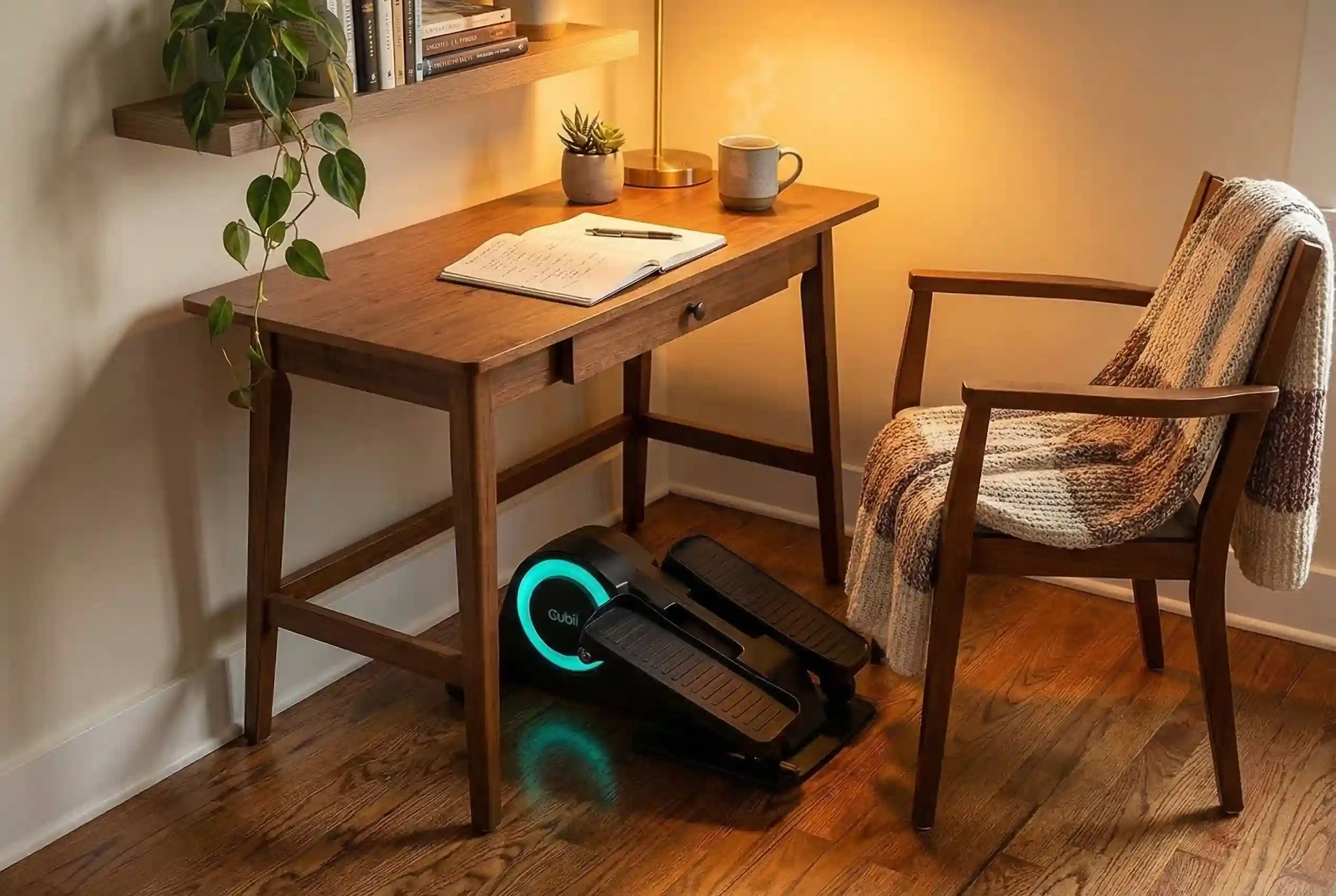
Under desk elliptical machine benefits for weight loss are real but modest - expect 100-200 additional calories per hour of active pedaling rather than the 300-400 achievable on a full upright machine. The value is in daily movement consistency, not single-session output. For specific product guidance, our guide about the best under desk ellipticals covers the top-rated compact models by price range, pedal resistance, and noise level.
Benefits of Elliptical Machine vs Treadmill and Rowing Machine
Understanding elliptical machine benefits and disadvantages relative to other equipment helps you make an informed training decision rather than a default one. The table below compares the three most common cardio machines across the factors that matter most for training outcomes:
Feature | Elliptical | Treadmill | Rowing Machine |
Joint impact | None (no impact phase) | High (running) / Low (walking) | Low |
Cardiovascular stimulus | Equivalent to treadmill | High | High |
Calorie burn (30 min moderate) | 270-400 cal | 280-400 cal | 250-380 cal |
Lower body activation | High (quads, glutes, hamstrings) | High | High (quads, hamstrings) |
Upper body activation | Moderate (active handles required) | Minimal | High (full posterior chain) |
Bone loading stimulus | Minimal | High (running) | Moderate |
Skill barrier | Low | Low | Medium to high |
Benefits of elliptical machine vs treadmill
Eken et al. (2022) found up to 60% lower activation in specific lower-extremity muscle groups on the elliptical versus running, which translates directly into how often most people can train without accumulated soreness. Cardiovascular stimulus is equivalent at matched intensities - making the elliptical the higher-frequency, lower-joint-cost option for most non-competitive athletes. For comparison with a machine that demands full posterior chain activation, our guide on muscles worked on a rowing machine covers how rowing distributes training load the elliptical leaves largely untouched.
The treadmill has one clear advantage the elliptical cannot replicate: bone-loading stimulus. Running creates mechanical stress on bones with every foot strike, driving bone density adaptation over time. The elliptical, because it eliminates impact, does not deliver this stimulus. For individuals prioritizing bone health or managing osteoporosis risk, this is a meaningful difference.
Rowing occupies a different position on this spectrum: it is non-impact but provides substantial spinal loading through the pulling mechanics of each stroke, and my guide on whether a rowing machine is good for osteoporosis covers what that means for bone mineral density outcomes.
For a full side-by-side breakdown, our article on elliptical vs treadmill covers the complete evidence on calorie burn, muscle activation, bone loading, and long-term training sustainability.
Rowing machine vs elliptical benefits
The rowing machine vs elliptical comparison centers on upper-body integration and skill demand. A rowing machine requires full posterior chain activation, including lats, rhomboids, spinal erectors, and rear deltoids, as a primary driver of every stroke, which makes it a better full-body machine than the elliptical. Rowing also demands a higher skill threshold to execute safely and without low-back strain. For the full documented scope of what that higher skill threshold delivers, my complete guide to rowing machine benefits covers the cardiovascular gains, muscle recruitment data, and joint health outcomes across all fitness levels.
The elliptical machine benefits over rowing also include a lower skill barrier, better accessibility for deconditioned users, and easier joint tolerance for people managing hip or knee limitations. For users with lower-back sensitivity, the upright elliptical posture is often significantly more tolerable than the rowing hip-hinge pattern.
Elliptical Machine Benefits and Disadvantages
A complete picture of elliptical machine benefits and disadvantages requires acknowledging where the machine has real limitations.
Limited bone density stimulus
Because the foot maintains contact with the pedal throughout the entire stride, there is no impact phase. The mechanical stress on bones that running creates with every foot strike - the stress that drives bone density adaptation over time - simply does not occur on the elliptical. This is a genuine limitation for anyone managing declining bone density or prioritizing long-term skeletal health.
Reduced lower-extremity muscle activation
The same mechanism that makes the elliptical joint-friendly also means it produces lower activation in specific lower-extremity muscle groups compared to running at equivalent cardiovascular intensity. For athletes prioritizing leg strength development, elliptical training alone is insufficient and must be paired with complementary resistance training.
Limited running skill transfer
The elliptical does not replicate the hip extension mechanics, foot strike pattern, or ground reaction forces of running. Runners who cross-train exclusively on the elliptical maintain cardiovascular fitness but may lose gait-specific neuromuscular conditioning over extended periods without running.
The passive use problem is real
Most elliptical users hold the stationary rails and pedal at minimal resistance, which converts a potentially high-output workout into a low-stimulus movement session. The elliptical delivers its documented benefits only when used with sufficient resistance and active handlebar engagement. Comfortable settings are not productive settings.
For a different cardio machine with a distinct movement pattern and mechanical profile, our comparison of the arc trainer vs elliptical explains the key structural differences and which training goals each machine serves better.
Who Benefits Most from Elliptical Machine Training
Here is who benefits most from elliptical machine training.
Elliptical machine benefits for seniors
The elliptical machine benefits for seniors are among the most clinically significant in the published research. A randomized controlled trial found that incorporating elliptical training into post-operative rehabilitation after total hip replacement significantly improved knee extensor strength, walking speed, and stride length compared to walking-only rehabilitation (7).
Topp et al. (2023) found that a single 30-minute session on a seated elliptical trainer produced measurable cardiovascular improvements and flexibility gains in older adults - a relevant finding given that seated variants are commonly used in this population and in post-operative rehabilitation settings (8).
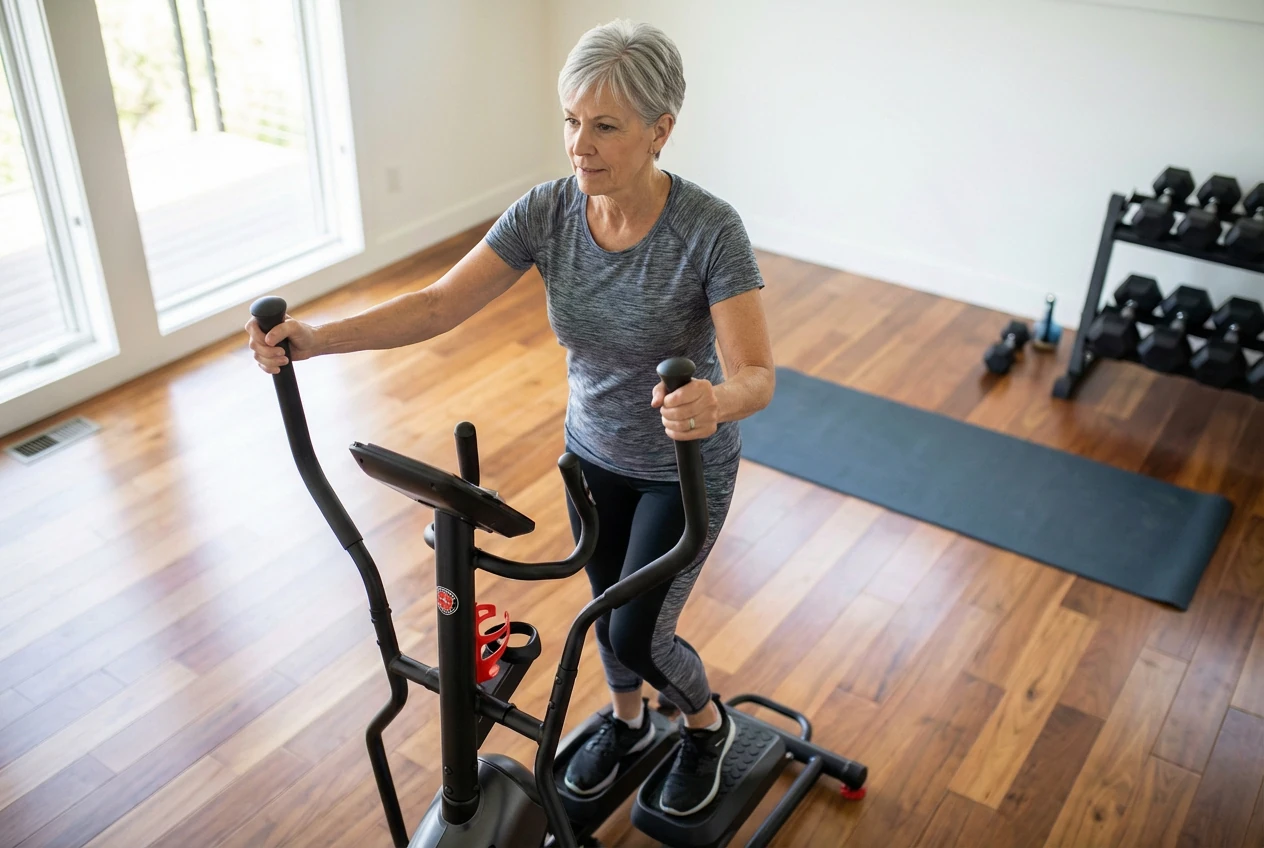
The no-impact mechanism makes the elliptical uniquely appropriate for older adults managing knee osteoarthritis, hip pain, or general joint sensitivity. Three sessions per week at moderate resistance consistently outperforms one hard session per week for cardiovascular adaptation in older adults - the key is frequency and consistency, not intensity. For product guidance tailored to this population, our guide to the best ellipticals for seniors covers accessible machines with enhanced stability features and lower step-through heights.
Elliptical machine benefits for women
Elliptical machine benefits for women align closely with the general research findings, with one important note: the Egaña and Donne (2004) trial confirming equivalence to treadmill training used an exclusively female participant group.
The VO2max gains, caloric expenditure equivalence, and cardiovascular adaptations documented in the research apply directly to female trainees.
The glute and hamstring activation that elliptical training produces is particularly relevant to lower-body development goals. Combining forward pedaling, reverse pedaling, and active handlebar engagement creates a calorie-burning, multi-muscle session that most women can sustain five or more days per week without the recovery limitations that high-impact training imposes.
Rehabilitation and injury management
The elliptical machine health benefits for people managing injury or post-operative recovery are well-documented across orthopedic, cardiac, and musculoskeletal rehabilitation protocols. The elimination of impact forces makes it possible to maintain meaningful cardiovascular conditioning through injury recovery in a way that running and most high-impact alternatives simply do not permit. For anyone rebuilding fitness after a lower-body injury, the elliptical is typically one of the first cardio modalities cleared for use by physical therapists and sports medicine physicians.
For a broader breakdown of what the elliptical delivers outside of rehabilitation contexts, including cardiovascular conditioning, weight management, and muscle engagement, my post on what an elliptical is good for covers each benefit with the research behind it.
Making the Most of Elliptical Machine Benefits in 2026
The benefits of using an elliptical machine are most fully realized through progressive, structured training rather than passive daily use at identical settings.
Start with three sessions per week at moderate resistance, building from 15-20 minutes in the first two weeks to 30 minutes by week four. Add reverse pedaling from week two to complete the lower-body muscle stimulus. Once you can complete consistent 30-minute sessions at moderate resistance, introduce interval work - two to three minutes at elevated resistance followed by one to two minutes of easy recovery pedaling.
Bosch et al. (2021) are consistent on one fundamental point: the elliptical produces cardiovascular adaptations equivalent to higher-impact modalities when intensity and volume are applied progressively.
Staying comfortable at a fixed resistance setting is not evidence of fitness - it is evidence of adaptation. Progressive resistance, incline, and structured interval protocols are what drive ongoing improvement month after month.
If you are selecting a machine to support that kind of structured progression, my guide on choosing an elliptical covers the key factors, including resistance range, drive type, and stride length, that determine whether a specific model holds up to long-term use.
For a home cardio setup that complements elliptical training, our guide to the best treadmill for home covers the top models for varied cardiovascular programming alongside the elliptical.
FAQs
Do ellipticals help lose belly fat?
Ellipticals help reduce belly fat by burning 270-400 calories per 30-minute moderate session while engaging the deep core stabilizers throughout each stride, contributing to both caloric deficit and midsection conditioning (but not by spot reduction, as most people think). The low-impact design makes four to five sessions per week sustainable for most people, and it is that consistent weekly caloric output - not any single session - that drives visible fat loss over eight to twelve weeks.
Which is better a treadmill or elliptical?
The treadmill is better for bone density stimulus and running-specific fitness, while the elliptical is better for training frequency, joint tolerance, and accessibility for people managing joint pain or recovering from injury. Cardiovascular stimulus is equivalent at matched intensities, so the better choice depends on your training goals and physical limitations rather than one machine being objectively superior.
For users also weighing a third option, my stairmaster vs treadmill guide covers how the stairmaster compares to both machines on calorie burn, lower-body muscle development, and joint impact.
Are ellipticals good for your body?
Ellipticals are good for your body because they deliver cardiovascular improvement equivalent to running, engage muscles across the upper body, lower body, and core simultaneously, and do so without the impact forces that accumulate during high-impact training. Research confirms VO2max gains, metabolic improvements, and meaningful muscle activation - all from a machine that most people can use consistently without the injury risk associated with running at equivalent intensity.
What are the disadvantages of an elliptical machine?
The main disadvantages of an elliptical machine include limited bone-loading stimulus compared to running, up to 60% lower activation in specific lower-extremity muscle groups versus treadmill running, and limited transfer to running-specific mechanics. The most common practical disadvantage is passive use - pedaling at low resistance without engaging the handlebars significantly reduces the workout's effectiveness and underdelivers on the machine's documented benefits.
Is the elliptical machine good for your stomach?
The elliptical machine engages deep core stabilizers - including the transverse abdominis, obliques, and lumbar stabilizers - continuously throughout each stride cycle to maintain upright posture and control lateral movement. While it does not isolate abdominal muscles directly, consistent elliptical training with proper upright posture and sufficient resistance contributes to core stability and, through regular caloric expenditure, supports visible abdominal changes over time.
This content is for informational and educational purposes only. It is not a substitute for professional medical advice, diagnosis, or treatment. Always consult with your healthcare provider before starting any new fitness program.
References:
- Bosch AN, Flanagan KC, Eken MM, Withers A, Burger J, Lamberts RP. Physiological and Metabolic Responses to Exercise on Treadmill, Elliptical Trainer, and Stepper: Practical Implications for Training. Int J Sport Nutr Exerc Metab. 2021;31(2):135-142. doi:10.1123/ijsnem.2020-0155
- Egaña M, Donne B. Physiological changes following a 12 week gym based stair-climbing, elliptical trainer and treadmill running program in females. J Sports Med Phys Fitness. 2004;44(2):141-146.
- Fex A, Leduc-Gaudet JP, Filion ME, Karelis AD, Aubertin-Leheudre M. Effect of Elliptical High Intensity Interval Training on Metabolic Risk Factor in Pre- and Type 2 Diabetes Patients: A Pilot Study. J Phys Act Health. 2015;12(7):942-946. doi:10.1123/jpah.2014-0123
- Prosser LA, Stanley CJ, Norman TL, Park HS, Damiano DL. Comparison of elliptical training, stationary cycling, treadmill walking and overground walking. Electromyographic patterns. Gait Posture. 2011;33(2):244-250. doi:10.1016/j.gaitpost.2010.11.013
- Moreside JM, McGill SM. How do elliptical machines differ from walking: a study of torso motion and muscle activity. Clin Biomech (Bristol). 2012;27(7):738-743. doi:10.1016/j.clinbiomech.2012.03.009
- Eken MM, Withers A, Flanagan K, Burger J, Bosch A, Lamberts RP. Muscular Activation Patterns During Exercise on the Treadmill, Stepper, and Elliptical Trainer. J Strength Cond Res. 2022;36(7):1847-1852. doi:10.1519/JSC.0000000000003743
- Hasebe Y, Akasaka K, Otsudo T, Hall T, Yamamoto M. Effects of incorporating elliptical trainer exercise during rehabilitation on physical function and self-reported outcomes after total hip arthroplasty: a randomized controlled trial. J Phys Ther Sci. 2022;34(3):230-235. doi:10.1589/jpts.34.230
- Topp R, Etnoyer-Slaski J, Greenstein J. Heart Rate Response and Flexibility Following Single Bout of Training Using a Seated Elliptical Trainer Among Younger and Older Adults. Clin Nurs Res. 2023;32(4):723-732. doi:10.1177/10547738221141390