
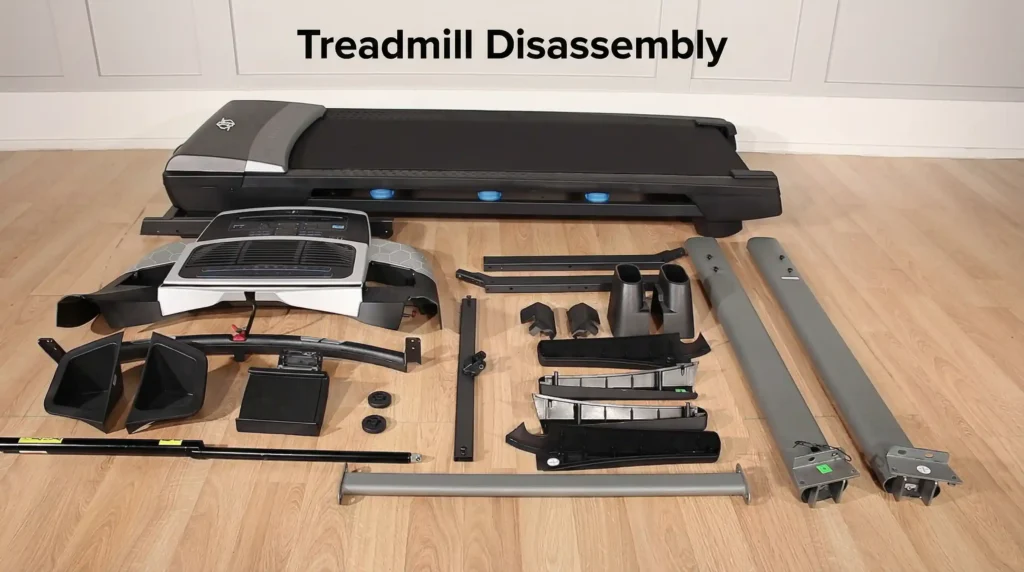
How to disassemble a treadmill might seem like a daunting task when you're staring at your 300-pound fitness machine, but I'm here to walk you through it. Last year, I helped three friends relocate their home gyms, and every single one of them had the same concern: how to dismantle a treadmill. After years of testing fitness equipment and helping clients solve these exact challenges, I've learned that proper disassembly is mostly about understanding your specific machine and taking the right precautions to avoid damage or injury.

Moving a treadmill without professional help can save you anywhere from $70 to $500, but only if you do it correctly. Throughout this guide, I'll share the exact steps on how to dismantle different treadmill brands, the essential tools you'll need, and safety considerations that most people overlook. If you're relocating to a new home, creating more space in your current one, or preparing for treadmill maintenance or treadmill repair, you'll find everything you need to successfully take apart a treadmill without damaging your machine or hurting yourself.
How to Disassemble a Treadmill: Essential Tools and Preparation
Before you even touch a single bolt, gathering the right tools makes the entire disassembly process smoother and safer. I learned this the hard way when I attempted to take apart my first NordicTrack using only a basic screwdriver - since it took twice as long and I nearly stripped several screws in the process.
Essential tools you'll need:
- Phillips head screwdriver (multiple sizes)
- Hex wrench set (especially 5mm, 6mm, and 8mm)
- Adjustable wrench
- Socket wrench with various socket sizes
- Zip ties or tape for securing cables
- Small plastic bags for organizing screws and bolts
- Marker for labeling components
- Moving blankets or bubble wrap
- Hand truck or dolly (for transport)
The specific tools required vary by brand and model. For instance, when disassembling a NordicTrack treadmill, you'll primarily need hex wrenches and Phillips head screwdrivers. ProForm treadmills often require an 8mm hex wrench for motor bolts, while the Sole F80 uses a combination of M5 Allen wrench and Phillips head tools.
Knowing your brand inside and out matters here. If this move has you reconsidering whether to keep your current machine or upgrade to something better suited for your space, our complete home treadmill buying guide and roundup breaks down which models hold up best over years of use and what separates genuinely durable machines from ones that just look the part on a spec sheet.
One critical step that many people skip is downloading your treadmill's owner's manual. Even if you're confident about the disassembly process, having those diagrams available helps you identify exactly which bolts secure which components. Most manufacturers offer free PDF downloads on their websites, and this documentation proves invaluable during reassembly.
Create a dedicated workspace with adequate lighting and enough room to lay out components. I recommend at least a 10-foot by 10-foot area around the treadmill. Clear pathways to doorways and consider measuring your doorframes ahead of time. Many people discover mid-move that their disassembled console won't fit through a narrow hallway.
Safety First: Critical Precautions Before Dismantling Treadmill
Proper safety measures prevent both personal injury and equipment damage. Research shows that manual material handling tasks involving objects over 200 pounds significantly increase the risk of musculoskeletal injuries (1). Given that most treadmills weigh between 150 and 350 pounds, taking the right precautions isn't optional.
Pre-disassembly safety checklist:
- Unplug the treadmill from the power outlet completely
- Remove and secure the safety key in a labeled bag
- Let the machine sit unplugged for 5-10 minutes to discharge any residual electricity
- Wear closed-toe shoes with a good grip
- Use work gloves to protect your hands from sharp edges
- Recruit at least one helper for lifting heavy components
- Clear the surrounding area of tripping hazards
- Have a first aid kit nearby
The unplugging step deserves special attention. Simply turning off the treadmill isn't enough. You must also disconnect it from the wall outlet entirely. I once worked with someone who forgot this step and got a nasty shock when he touched an exposed wire while removing the console. After unplugging, secure the power cord with zip ties or tape to the frame so it doesn't dangle and create a tripping hazard during the move.
Studies on ergonomic interventions in material handling show that using proper equipment and techniques significantly reduces injury rates among workers handling heavy objects (2). Apply these same principles to treadmill disassembly: never attempt to lift components that exceed your comfortable lifting capacity, and always use proper lifting form with bent knees and a straight back.
Step-by-Step: How to Take Apart a Treadmill Console
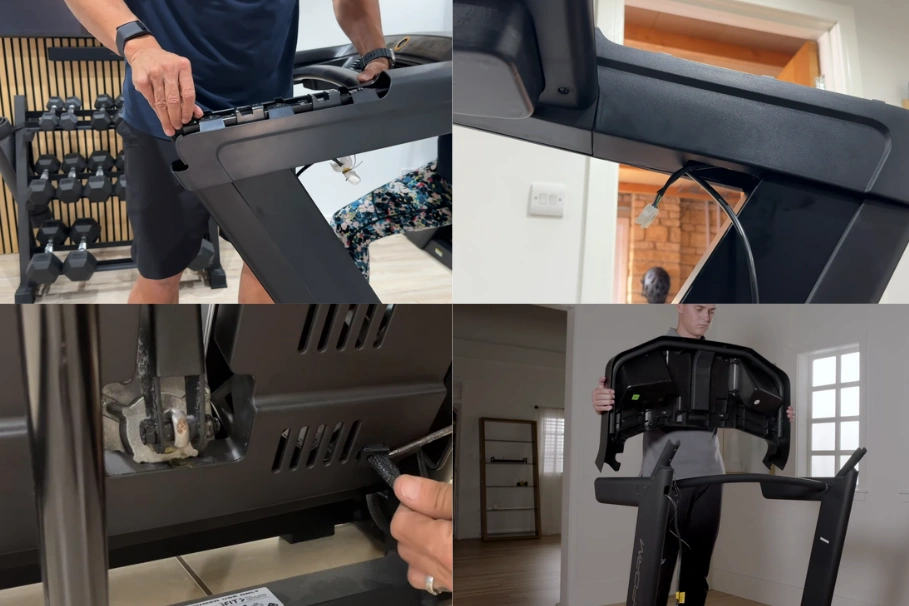
The console represents the electronic brain of your treadmill and requires careful handling. Damage to this component can cost hundreds of dollars to replace, so proceed methodically.
Start by locating the screws that connect the console to the upright frame. On most models, you'll find 2-4 screws on each side of the console mount. These are typically Phillips head screws, though some manufacturers use hex bolts. Remove these screws carefully and place them in a labeled bag.
Before lifting the console away, you need to disconnect the wiring. This is where many people make mistakes. The wiring harnesses connecting the console to the treadmill's motor and controls aren't designed for force. Look for small release tabs or buttons on the connectors, as pressing these allows the connectors to separate smoothly without damage.
On ProForm treadmills, the console connector typically features a small notch button that must be pressed to release the connection. NordicTrack models often use similar snap connectors with release mechanisms. Never pull on the wires themselves; always grip the plastic connector housing when disconnecting.
Once the wiring is disconnected, carefully route the cables out from inside the upright posts. Some models require you to gently pull the wiring through channels in the frame. Take photos with your phone at each step. These visual references make reassembly infinitely easier.
Wrap the console in a moving blanket or bubble wrap, paying extra attention to touchscreen displays. The larger the screen, the higher the replacement cost if something goes wrong in transit. Premium incline models tend to carry the most console value, so if an upgrade is on your radar after the move and incline capability is a priority, our top incline treadmill review is the right place to start comparing options.
Removing Handrails and Side Rails From the Frame
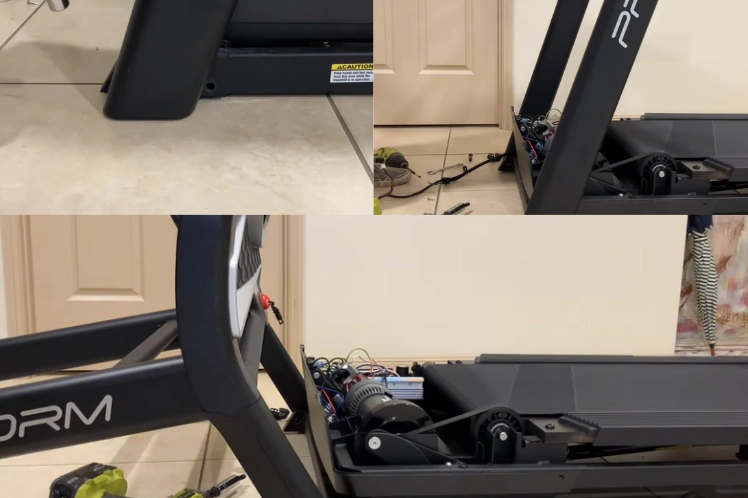
The handrails provide structural support and house much of the treadmill's wiring, which makes their removal a delicate process. On most treadmills, the handrails connect to the base through 4-8 bolts at the bottom of each upright post.
For standard treadmill models, you'll find these connection bolts at the base where the uprights meet the deck. They're typically 7/16" or similar-sized bolts that require a socket wrench. Before removing these bolts, check for any additional wiring connections that need to be disconnected.
When you disassemble a NordicTrack treadmill, the process involves removing the upright covers first. These covers typically pop off with a firm pull toward you from the top. Once removed, you'll see the internal wiring that needs to be disconnected before you can slide the entire upright assembly off the frame.
When it comes to the question of how to disassemble a Sole F80 treadmill, the first thing you require is to remove the console mast covers first using an M5 Allen wrench and Phillips head screwdriver combination. You'll need to remove six screws total, three from each side, before you can access the bolts securing the uprights to the base.
Key steps for removing uprights:
- Remove any decorative covers or shrouds covering the base connection points
- Disconnect all wiring running through the uprights (take photos first)
- Loosen the mounting bolts one turn at a time, alternating between bolts
- Support the upright with one hand while removing the final bolts
- Carefully slide or lift the upright assembly away from the base
- Wrap the removed uprights in protective material immediately
One technique I've found helpful: before fully removing the uprights, tip the treadmill slightly onto its side (with help from another person). This positioning makes it much easier to access the bottom mounting bolts without straining your back.
Pro Tip: Before removing uprights or handrails, place a small piece of tape marked “L” (left) and “R” (right) near the base connection.
Many treadmills look symmetrical but aren’t perfectly mirrored internally: wire routing holes, grounding points, or internal brackets may differ slightly. Reversing uprights during reassembly can cause pinched cables or alignment problems that are frustrating to diagnose later.
This 30-second step can save 30 minutes during reassembly.
Disassembling a ProForm Treadmill Motor and Deck
The motor and deck assembly represents the heaviest component of any treadmill. When you disassemble a ProForm treadmill, this section requires extra caution due to the weight distribution and electrical connections.
Begin by removing the motor cover. On most ProForm models, the motor cover attaches with 4-6 hex bolts located on either side of the cover. Use an 8mm hex wrench to remove these bolts, working slowly to ensure you don't strip the bolt heads.
With the motor cover removed, you'll see the motor itself secured to the frame with additional screws. ProForm treadmills typically use Phillips head screws to mount the motor. Remove these screws carefully, and have your helper support the motor's weight as you remove the final fasteners.
The walking deck connects to the frame through bolts at multiple points. Before attempting to separate the deck, make sure you've disconnected any remaining wiring or cables. The deck itself contains the belt, rollers, and much of the treadmill's weight. Expect this component to weigh 200-400 pounds, depending on your model.
If you ask how to disassemble the ProForm 2000 treadmill or the ProForm 5000 treadmill, the deck can be folded up and secured with the locking mechanism before final disassembly. This folded position makes it easier to access certain mounting bolts and reduces the footprint during transport.
Motor and deck removal safety tips:
- Never attempt to lift the deck assembly alone
- Use a furniture dolly or hand truck rated for at least 400 pounds
- Disconnect all wiring before attempting to move components
- Keep the belt attached to the deck during transport when possible
- Secure the deck with ratchet straps if transporting in a vehicle
When my neighbor had a problem with how to disassemble his ProForm 5000 treadmill last fall, we found that keeping the belt on the deck actually provided additional structural integrity during the move. Removing the belt isn't necessary unless you're planning on servicing specific components.
How to Disassemble NordicTrack Treadmill Models
NordicTrack treadmills share many common design elements across their model range, but specific models like the C900, 1750, and Commercial series have unique considerations.
Start with the console removal as described earlier. For NordicTrack Commercial models, you'll need to remove the beverage holder and emergency stop clip before accessing the console mounting screws. The console typically attaches with four bolts that you can access once you've removed the plastic covers.
The upright assembly on NordicTrack models requires removing four bolts on each side using a 7/16" socket wrench. These bolts are located at the base where the uprights connect to the walking platform. Before removing these bolts, make absolutely certain you've disconnected all wiring harnesses running through the upright posts.
NordicTrack treadmills feature a wire harness management system inside the uprights. You'll need to carefully pull this wiring out as you remove the upright assembly. I recommend having one person hold the upright while another gently guides the wiring through the channels.
If you have wondered how to take apart a NordicTrack 1750 treadmill to move, which is a particularly popular model for home use, the disassembly process includes removing the side rails separately from the main uprights. This two-stage approach makes handling easier but requires keeping track of more individual components.
How to disassemble a NordicTrack C900 treadmill?
The NordicTrack C900 uses a similar but slightly simplified system. After removing the console and disconnecting the wiring, you can loosen the four main bolts at each upright base and slide the entire upright assembly off in one piece.
A unique consideration for NordicTrack models: many include hydraulic folding mechanisms. Before disassembling, release these hydraulic shocks according to your specific model's instructions. Failing to properly release them can result in the deck springing open unexpectedly during reassembly.
Disassemble Treadmill for Moving: Special Brand Considerations
Different manufacturers use varying assembly methods, and understanding these differences helps you avoid common pitfalls.
How to disassemble a Bowflex treadmill
Bowflex treadmills often feature more integrated designs with proprietary connection systems. The console on Bowflex models typically uses unique mounting brackets that require removing several layers of plastic shrouds before you can access the mounting hardware.
When working with a Bowflex, pay special attention to the belt tension system. Many Bowflex models use a rear roller adjustment mechanism that needs to be set to its loosest position before disassembly. This reduces stress on the belt during transport.
How to disassemble a Sole F80 treadmill
The Sole F80 has earned a reputation for durability, which translates to robust mounting systems. You'll need an M5 Allen wrench/Phillips head combination tool for the console mast covers. The center support tube requires removing four bolts using this same tool.
The left and right side caps on the F80 must be removed before you can access the main upright mounting bolts. This adds an extra step but actually makes the final disassembly cleaner since you can see all connection points clearly.
How to disassemble a Peloton treadmill
Peloton treadmills, with their premium construction and large touchscreens, demand extra care during disassembly. The console represents a significant investment and requires special padding during transport.
The Peloton Tread features a unique base-to-upright connection system that uses security screws in addition to standard hex bolts. You'll need a security bit set to remove these specialized fasteners. The manufacturer designed this system to discourage unauthorized service, but it's accessible with the right tools.
| Brand | Primary Tools Needed | Unique Considerations | Estimated Disassembly Time |
|---|---|---|---|
| NordicTrack | 7/16" socket wrench, hex wrenches, Phillips screwdriver | Hydraulic folding mechanism, extensive internal wiring | 45-90 minutes |
| ProForm | 8mm hex wrench, Phillips screwdriver, adjustable wrench | Motor mounting system, deck weight distribution | 60-90 minutes |
| Sole F80 | M5/M6 Allen wrenches, Phillips screwdriver | Multiple cover layers, center support tube | 60-120 minutes |
| Bowflex | Hex wrench set, Phillips screwdriver, socket wrench | Proprietary mounting brackets, belt tension system | 45-75 minutes |
| Peloton | Security bit set, hex wrenches, Phillips screwdriver | Premium touchscreen protection, security fasteners | 60-90 minutes |
Understanding Your Treadmill Without Motor Considerations
Some budget treadmills operate without electricity, using manual resistance instead of motorized belts. These treadmills without motor models actually simplify the disassembly process significantly.
Manual treadmills typically weigh less, between 60 and 100 pounds total, which makes them much more manageable for a single person to dismantle. Without electrical components, you don't need to worry about disconnecting wiring harnesses or protecting sensitive electronics.
The trade-off is that manual treadmills often have simpler, sometimes less robust mounting systems. The bolts may be smaller in diameter, and the frames use lighter materials. Handle these components gently to avoid bending or damaging the frame during disassembly.
Even if you have a treadmill without a motor, you should still follow proper safety protocols. Unfolding a manual treadmill's deck can create sudden movement if not controlled properly. Always have a helper assist with larger manual models, especially those with steel frames.
For those who want to avoid this complexity entirely on their next machine, walking pads built for under-desk use sit at the opposite end of the spectrum. Most weigh under 25 pounds, fold flat in seconds, and require no wiring or console disassembly whatsoever. Our complete under desk treadmill review covers the top-rated models if that kind of portability matters to you going forward.
Treadmill Repair and Service: When to Disassemble Versus When to Call Professionals
Sometimes disassembly serves purposes beyond moving. Treadmill repair often requires partial disassembly to access internal components like the motor, belt, or control board.
If you're planning to service a treadmill rather than move it, you might not need full disassembly. Many common repairs, including belt replacement, lubrication, and roller adjustments, only require removing the motor cover and possibly the side rails.
However, major repairs like motor replacement, control board fixes, or frame issues do require more extensive disassembly. Studies show that proper training in manual material handling techniques significantly reduces injury risk during these tasks (3). If you lack experience with treadmill repair, consider hiring a professional technician for complex issues.
Professional treadmill movers typically charge between $70 and $500, depending on the complexity of the move, distance, and whether assembly/disassembly services are included. When you factor in the risk of personal injury or equipment damage from improper handling, professional services often represent good value for complicated situations.
Research on manual material handling shows that equipment weighing over 50 pounds, handled more than 33% of the time, significantly increases injury risk without proper technique (2). Treadmills fall well above this weight threshold, which is why proper form and assistance are non-negotiable.
Can You Take Apart a Treadmill to Move It? Folding Versus Full Disassembly
Not every treadmill move requires complete disassembly. Many modern treadmills feature folding mechanisms that allow you to reduce the footprint without breaking the machine down into individual components.
Folding treadmills work well for moves within the same building or to a ground-floor location. The folded position typically reduces length by 2-3 feet, which can make the difference between fitting through a doorway or needing to disassemble further.
However, can you take apart a treadmill to move it up stairs? In most cases, yes, but you'll need to disassemble beyond just folding. Stairs present unique challenges because the weight distribution of even a folded treadmill becomes difficult to control on an incline.
For stair navigation, I recommend at a minimum removing the console and uprights. This reduces the total weight of the base unit by 30-50 pounds and significantly improves your ability to maneuver around tight corners and landings.
Situations requiring full disassembly:
- Moving up or down stairs
- Navigating through narrow doorways (less than 32 inches wide)
- Transporting in a standard vehicle rather than a moving truck
- Long-distance moves where you need maximum space efficiency
- Storage in a confined space
Situations where folding may suffice:
- Same-floor relocation
- Moving through standard doorways (36 inches or wider)
- Short-distance moves in a moving truck
- Temporary storage in a garage or basement with adequate space
When deciding between folding and full disassembly for moving, measure your pathways first. Subtract 2-3 inches from the doorway width to account for safe clearance. Compare this to your folded treadmill dimensions to determine if full disassembly is necessary.
Worth noting: not all folding treadmills are created equal when it comes to real-world relocation. Some feature hydraulic-assist hinges and lighter frames that make the fold-and-move process genuinely practical, while budget folding models can feel just as unwieldy as non-folding ones. If you are in the market for a replacement after this move, our complete folding treadmill review covers the models that actually deliver on the portability promise.
Treadmill Motor Disassembly: Advanced Techniques
For those tackling treadmill repair or deep cleaning, understanding motor disassembly proves valuable. The motor itself typically connects to the treadmill frame with 4-6 mounting bolts and features multiple electrical connections.
Before attempting any motor work, verify the treadmill has been unplugged for at least 15 minutes. Treadmill motors store electrical charges in their capacitors, and touching exposed terminals can result in serious shock.
Motor removal generally requires:
- Removing the motor cover
- Disconnecting the power supply wires (note their positions first)
- Disconnecting the ground wire
- Removing the drive belt from the motor pulley
- Unscrewing the motor mounting bolts
- Carefully lifting the motor free from the frame
The drive belt removal deserves special attention. Most treadmill motors use a tension pulley system that needs to be released before the belt will come free. Don't force the belt off. Instead, locate the tension adjustment bolt and loosen it first.
ProForm and NordicTrack models often use an 8mm hex bolt for motor mounting. Sole treadmills typically use Phillips head screws for motor attachment. Always consult your specific model's documentation before proceeding with motor removal.
One common mistake: people forget to support the motor's weight before removing the final mounting bolt. Treadmill motors weigh 15-30 pounds, and letting one drop can damage both the motor and the frame it falls against.
Organizing Components During Disassemble Treadmill for Moving
Proper organization during disassembly makes reassembly dramatically easier. I learned this lesson after spending three hours trying to figure out which screws belonged where during my first treadmill reassembly.
Effective organization system:
- Use gallon-size plastic bags for each major component
- Label each bag with a permanent marker (example: "Console Mounting Screws")
- Group related parts together (all uprights components in one area)
- Take photos at each disassembly stage
- Number your bags to match your disassembly sequence
- Keep all bags together in a larger container or box
Color-coding can add another layer of organization. I use red bags for electrical components, blue bags for frame hardware, and clear bags for miscellaneous parts. This system lets me quickly locate specific components during reassembly without reading every label.
Your smartphone camera is one of the most valuable tools during disassembly. Before removing any component, take a photo showing how it connects, which wires attach where, and the relative position of parts. These reference photos prove invaluable weeks or months later when you're trying to remember how everything fits back together.
Create a simple diagram showing your disassembly order. Number each major step and note which bag contains the hardware for that step. This roadmap helps you reverse the process during reassembly by simply working backward through your numbered steps.
How to Open a ProForm Treadmill and Access Internal Components
Opening a ProForm treadmill for maintenance or deeper disassembly starts with the motor cover. Unlike complete disassembly for moving, accessing internal components requires a more surgical approach.
The motor cover on ProForm models typically secures with 4-6 hex bolts around its perimeter. An 8mm hex wrench fits most of these bolts. Remove them in a crossing pattern. Loosen one bolt a few turns, then move to the opposite side and loosen that bolt. This prevents warping the cover or frame.
With the cover removed, you'll see the motor, belt system, and control board. The control board usually mounts on one side of the motor housing with 2-4 small screws. These electronic components are sensitive to static discharge, so ground yourself by touching a metal part of the frame before handling the board.
Belt access on ProForm treadmills doesn't always require full disassembly. You can often adjust or replace the belt by removing just the motor cover and loosening the rear roller bolts. This partial disassembly takes 15-20 minutes versus the 60-90 minutes needed for a complete breakdown.
For deeper access, such as replacing the deck itself or servicing the front roller, you'll need to proceed with full disassembly as outlined in earlier sections. The key difference is whether you need to move the entire machine or simply access specific internal components.
Specialized Situations: How to Open Treadmill Lubricant Bottle and Apply During Disassembly
If you're disassembling a treadmill for storage or servicing, it's an ideal time to apply lubricant to the deck and belt. However, the mode of how to open treadmill lubricant bottle can be trickier than expected with some brands.
Most treadmill lubricant comes in squeeze bottles with twist-off caps.
Some manufacturers use tamper-proof seals that require puncturing with a pin or removing with the cap's built-in spike.
Read the bottle's instructions carefully before forcing anything.
Application during disassembly is straightforward: with the belt accessible and the deck visible, apply lubricant along the length of the deck under the belt. Use the recommended amount from your owner's manual, typically 1-2 ounces for a standard residential treadmill.
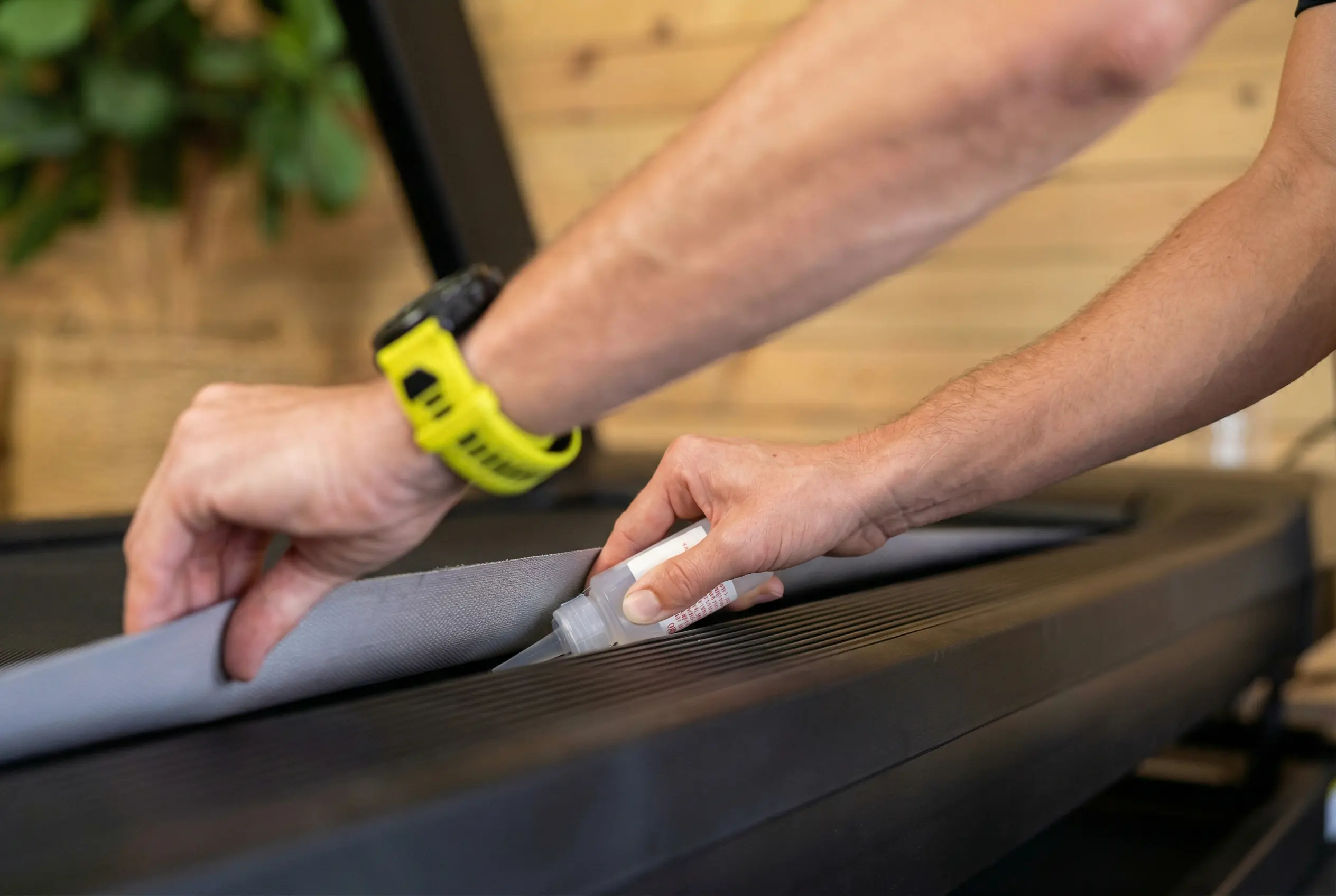
The advantage of lubricating during disassembly is that you can manually move the belt to ensure even distribution without the motor running. Simply pull the belt forward by hand, applying lubricant as you go. This manual method often results in more even coverage than trying to apply lubricant while the belt runs.
Timeline and Physical Requirements for Treadmill Assembly and Disassembly
Understanding the time commitment helps you plan appropriately. Based on my experience helping multiple people with various treadmill models, here's what to expect:
| Task | Experience Level | Time Required | People Needed |
|---|---|---|---|
| Basic disassembly (folding model) | Beginner | 30-45 minutes | 1-2 people |
| Full disassembly (standard residential) | Intermediate | 60-90 minutes | 2 people |
| Full disassembly (commercial/heavy-duty) | Advanced | 90-150 minutes | 2-3 people |
| Reassembly (any model) | Same as disassembly | Add 30-50% more time | Same as disassembly |
The physical requirements are substantial. Research on ergonomic workplace assessments shows that handling equipment and heavy objects leads to a high incidence of musculoskeletal injuries (4). Taking regular breaks during the disassembly process is important, and attempting to rush through the entire process increases injury risk dramatically.
I recommend working in 20-30 minute sessions with 5-10 minute breaks between. This pacing helps you maintain focus and reduces physical fatigue. During breaks, hydrate and stretch your back, shoulders, and legs.
If you feel any sharp pain, stop immediately. Dull muscle fatigue is normal when handling heavy equipment, but sharp or sudden pain indicates you're either using improper technique or exceeding your safe lifting capacity.
Protecting Your Investment: Packing and Storing Disassembled Components
Once disassembled, proper packing prevents damage during transport or storage. The console deserves the most protection, followed by any electronic components and the uprights.
Console protection steps:
- Wrap in bubble wrap with at least 2 inches of padding on all sides
- Place the wrapped console in a sturdy box
- Fill empty space with packing peanuts or crumpled paper
- Mark the box "FRAGILE - ELECTRONICS - THIS SIDE UP"
- Keep the box in a climate-controlled vehicle or storage area
The deck and frame components need protection from scratches and dings. Moving blankets work well for the base unit, while bubble wrap or foam padding protects the uprights. Secure all padding with packing tape to prevent it from shifting during transport.
Store disassembled components in a dry location.
Humidity can damage electronic components and cause rust on metal parts. If storing for more than a few weeks, consider placing moisture-absorbing packets in boxes containing electronics.
Stack components carefully. Never place heavy items on top of the console or any wrapped electronic components. The base/deck assembly should go on the bottom, with lighter components like uprights and hardware bags on top.
For long-term storage (more than 6 months), I recommend:
Removing the belt from the deck to prevent it from taking a "set"
Applying a thin coat of machine oil to exposed metal parts
Checking on components monthly to ensure no moisture accumulation
Keeping all documentation and hardware bags together in one clearly labeled container
Treadmill Maintenance Tips During Disassembly
Disassembly provides an excellent opportunity to perform treadmill maintenance tasks that are difficult to complete when the machine is fully assembled. With the motor cover removed and components separated, you can thoroughly clean and inspect parts that are normally hidden.
One thing worth bookmarking before you start putting everything back together: our treadmill assembly for first-time setup guide walks through the full rebuild sequence step by step, including belt tension calibration and console wiring. It pairs directly with the brand-specific disassembly steps covered above and is particularly useful if you are reassembling in a new space where conditions differ from the original setup.
- Start with the belt and deck. Wipe down the underside of the belt with a clean, dry cloth to remove any built-up dust or debris. Check the belt for signs of wear, such as excessive fraying, thin spots, or uneven wear patterns, which indicate it may need replacement.
- Inspect the rollers at both ends of the deck. These should spin freely without wobbling or grinding noises. Apply a drop of machine oil to the roller bearings if they seem sticky, but avoid over-lubricating as excess oil attracts dust.
- The motor deserves careful inspection. Look for any signs of burning on the motor or smell for burnt electronics. Check that the motor's cooling fan spins freely and clean any dust from the fan blades with compressed air or a soft brush.
- Electrical connections should be inspected for corrosion or looseness. Tighten any connections that seem loose, and use electrical contact cleaner on any contacts that show signs of corrosion or oxidation.
- Finally, examine all the bolts and screws you removed. Replace any that show signs of stripping or damage. Using damaged hardware during reassembly creates weak points that can fail during future use. Hardware stores carry standard metric and imperial bolts if you need replacements.
Common Mistakes to Avoid When You Disassemble a Treadmill
After helping numerous people with treadmill disassembly, I've seen the same mistakes repeated. Learning from these errors saves you time, money, and potential injury.
Critical mistakes to avoid:
- Forcing stuck bolts instead of applying penetrating oil and letting it sit
- Disconnecting wires without photographing the connections first
- Removing all bolts from one side before the other (creates uneven stress)
- Attempting to lift the deck assembly without adequate help
- Losing track of which screws belong to which components
- Forgetting to secure the safety key before starting
- Trying to remove the console without first disconnecting all wiring
- Rushing through the process instead of working methodically
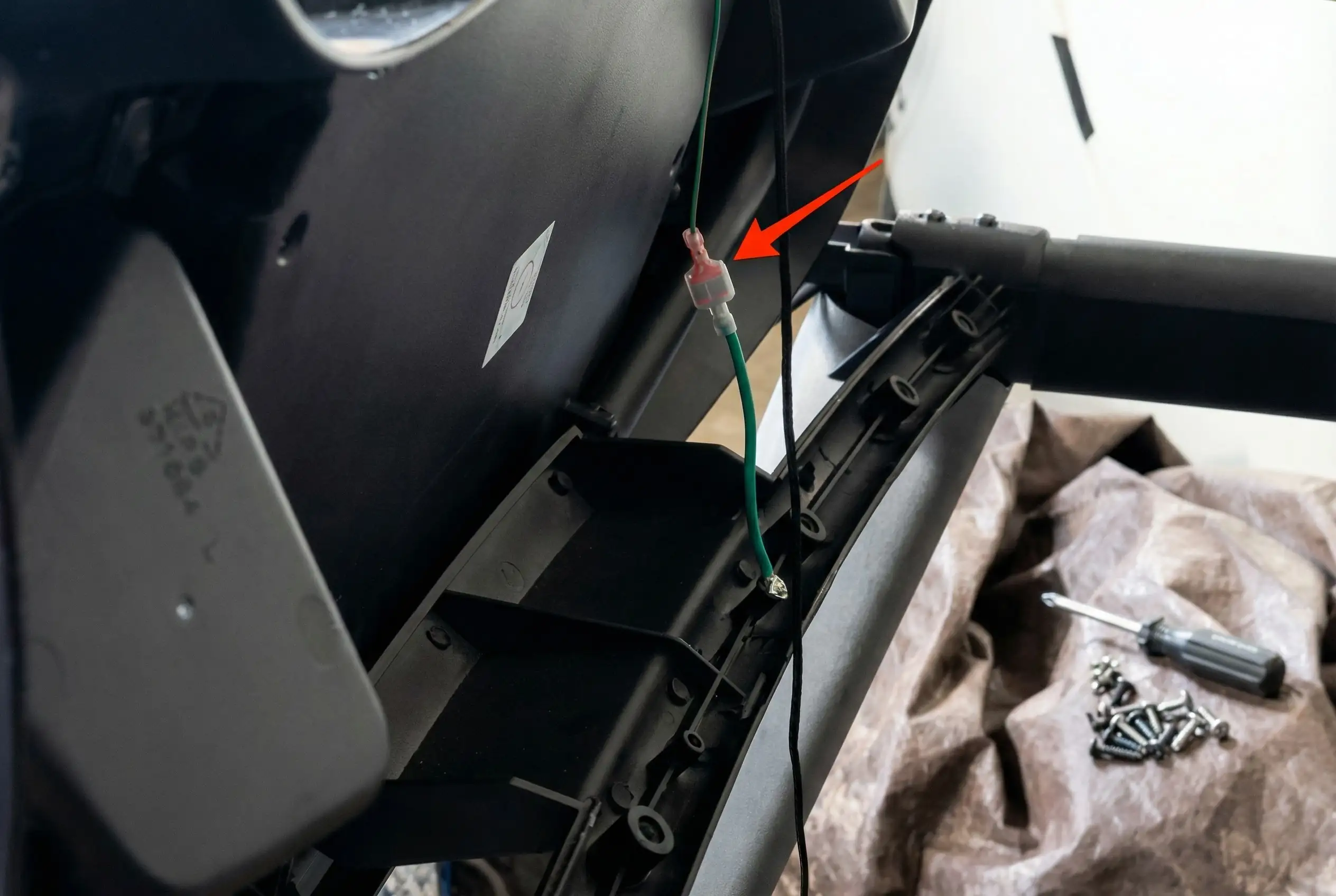
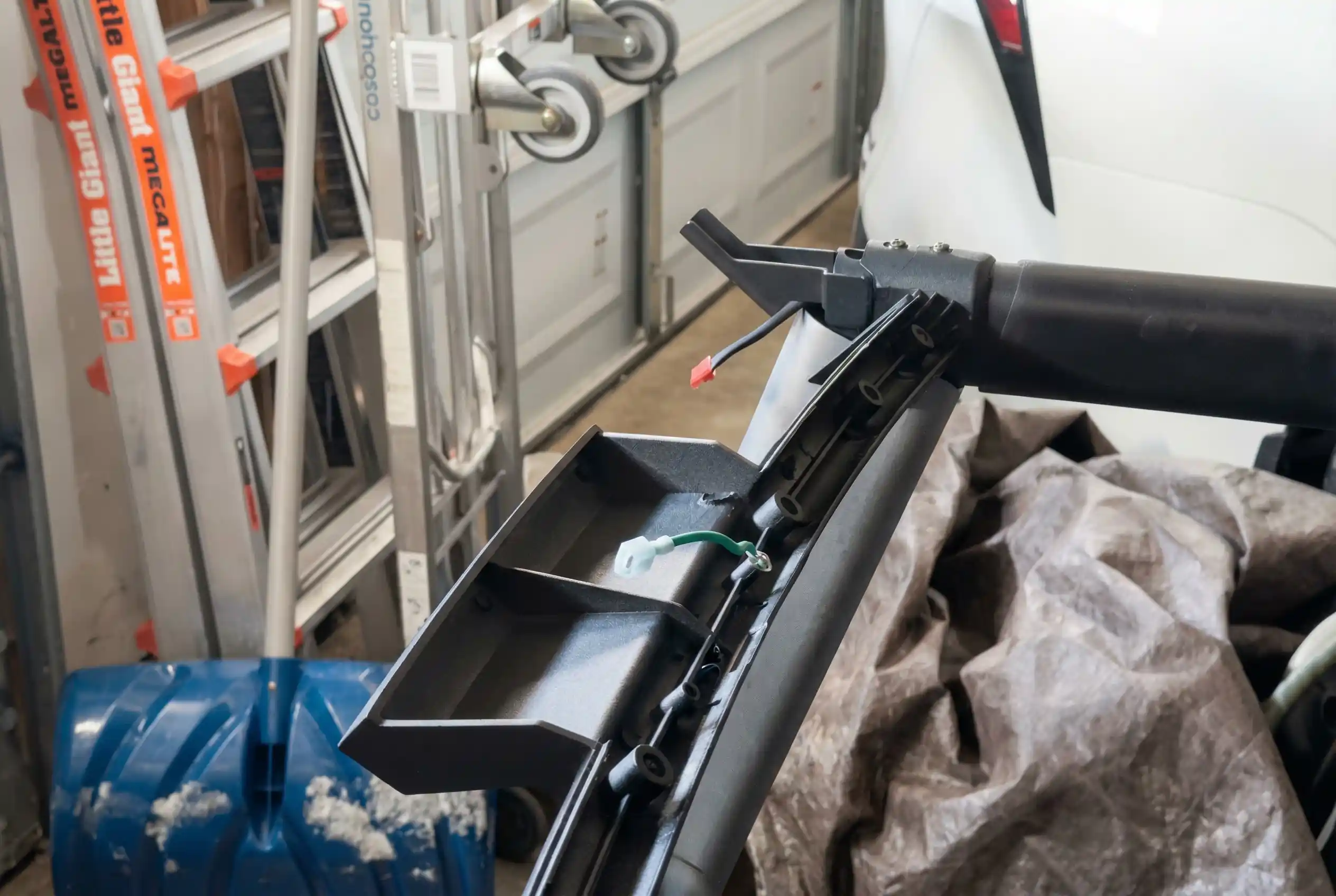
One particularly costly mistake involves stripping bolt heads by using the wrong size wrench or applying force at the wrong angle. If a bolt seems stuck, stop and apply penetrating oil. Let it sit for 10-15 minutes before trying again. Forcing a stuck bolt almost always results in stripping the head, which then requires drilling out or other difficult extraction methods.
Another common error is inadequate protection during transport. I've seen people load unwrapped uprights into trucks, only to have them bang against other items and crack their plastic coverings. Even when moving within the same building, wrap components to prevent scratches and dents.
Reassembly Considerations: Planning for Treadmill Assembly After Moving
Thinking about reassembly during disassembly makes the process much smoother. Your organization system, photos, and labeled bags all contribute to efficient reassembly, but there are additional considerations.
Choose your reassembly location carefully before disassembling. Measure the space to ensure your treadmill will fit with adequate clearance on all sides. Most manufacturers recommend at least 3 feet behind the treadmill and 1-2 feet on each side for safe operation.
The floor surface matters significantly. Placing a treadmill on carpet can affect its stability and operation. If your new location has carpet, purchase a treadmill mat to provide a stable, level surface. These mats also protect your flooring from the treadmill's weight and vibration.
Electrical requirements should be confirmed before reassembly. Most treadmills require a dedicated 15 or 20-amp circuit. Using an extension cord with a treadmill is generally not recommended as it can cause voltage drops that damage the motor or electronics.
Plan your reassembly for a time when you're well-rested and have adequate help. Attempting reassembly when tired leads to mistakes and potential injury. The process typically takes 30-50% longer than disassembly, so budget your time accordingly.
Before fully reassembling, test the electronics if possible. After connecting the console and power, verify that it powers on and responds to input. This early check ensures you don't complete the entire reassembly only to discover a connection problem.
Once everything checks out and the belt is tracking properly, the machine is ready to use. If you have been off the treadmill for a few weeks during the move and want a structured way back in, our treadmill workout guide with tips covers beginner through advanced protocols, including HIIT, incline intervals, and steady-state sessions, so you can resume training with a clear plan rather than just jumping back on and winging it.
Pro Tip: Many treadmill issues after a move aren’t caused by wiring or electronics. They come from over-tightened or unevenly tightened bolts during reassembly.
When reinstalling bolts, tighten them snug, not maximally. Then do a second pass to ensure even tension across both sides of the frame. Over-tightening can strip threads, stress the frame, or create alignment issues that lead to belt drift or unusual noise during use.
When Professional Help Makes Sense: Evaluating Your Options
While this guide empowers you to disassemble your treadmill independently, certain situations warrant professional assistance. Recognizing these scenarios protects both you and your equipment.
Professional help makes sense when:
- You're dealing with stairs: Moving a treadmill up or down stairs exponentially increases injury risk and the potential for equipment damage. Professional movers have specialized equipment like stair dollies and the training to navigate these situations safely.
- The treadmill weighs over 400 pounds: Commercial-grade treadmills and high-end residential models often exceed weights that can be safely managed by even two strong people. Professional movers use teams of 3-4 people plus mechanical assistance for these machines.
- You have physical limitations: Be honest about your capabilities. If you have a history of back problems, recent injuries, or conditions that limit your strength, hiring professionals is a wise investment in your health.
- The equipment is under warranty: Some manufacturers require professional moving to maintain warranty coverage. Check your warranty documentation before proceeding with DIY disassembly.
- You lack the necessary tools: Purchasing all required tools for a one-time disassembly might cost as much as hiring professionals. Factor in tool costs when making your decision.
- Time constraints are severe: Professional movers typically complete a treadmill move in 2-5 hours total, including disassembly, transport, and reassembly. If you're on a tight schedule, the time savings justify the cost.
Professional treadmill moving services range from $70 for basic local moves to $500+ for complex jobs involving stairs, long distances, or heavy commercial equipment. Many movers offer free estimates, so you can compare the cost against the value of your time and the risk to your equipment.
Environmental Considerations: Disposing of Treadmill Components Responsibly
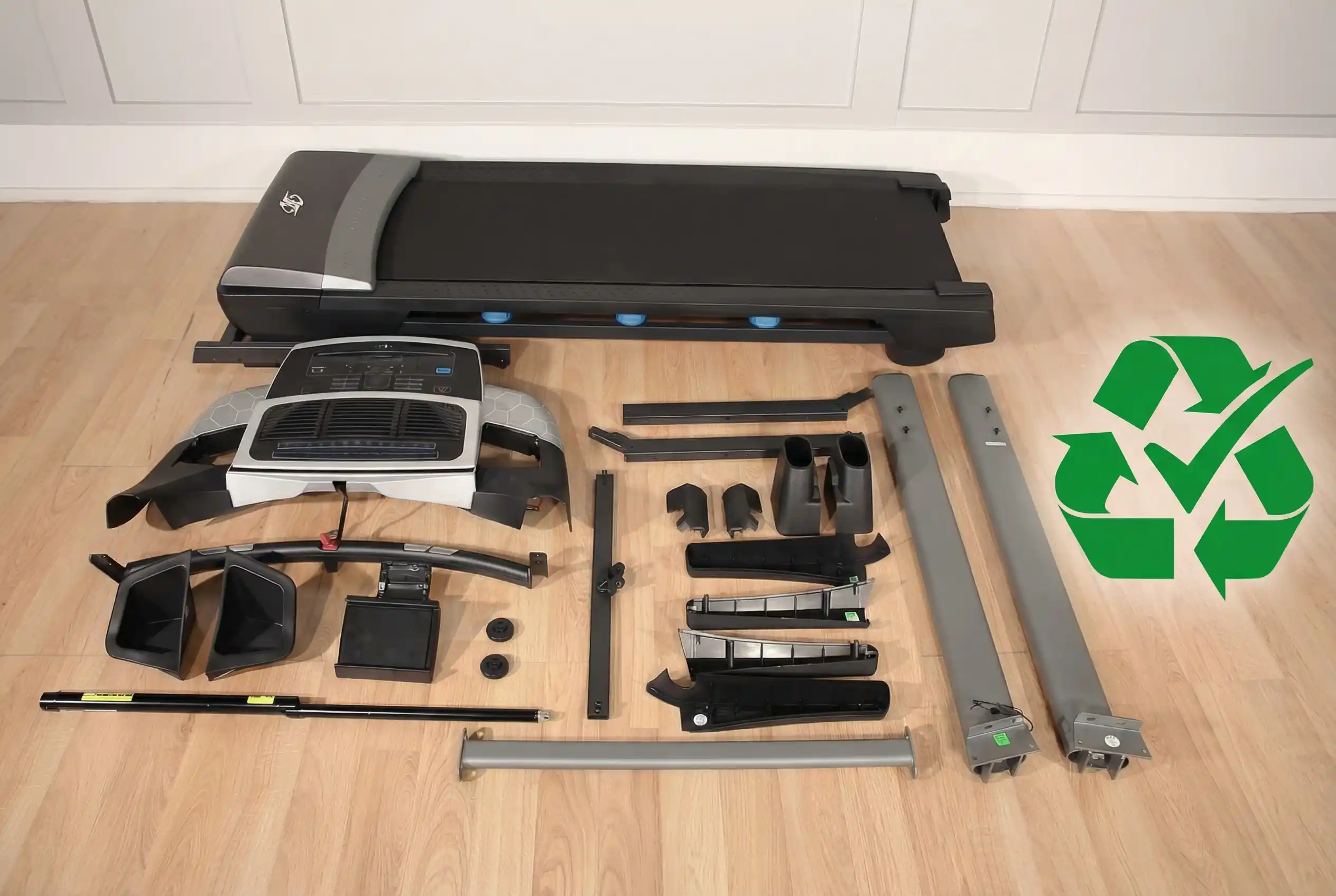
If disassembly is part of permanent treadmill disposal rather than moving, environmental responsibility matters. Treadmills contain recyclable materials and components that shouldn't go to landfills.
- The motor contains copper wiring and steel components that recycling centers gladly accept. Many metal recyclers will pay for treadmill motors due to their copper content. Contact local scrap yards to inquire about drop-off or pickup services.
- Electronic components, including the console and control boards, contain hazardous materials that require special handling. E-waste recycling programs accept these items at no charge in most areas. Never dispose of electronics in regular trash.
- The belt and deck typically contain rubber, wood composite materials, and adhesives. While these aren't easily recyclable through standard programs, some specialty recyclers accept them. Check with your local waste management authority for appropriate disposal methods.
- The metal frame, handrails, and structural components have significant scrap value. Breaking down these parts and taking them to a metal recycling center often results in a small payment rather than disposal fees.
Moving Beyond Basics: The Treadmill Benefits of Regular Maintenance
Understanding how to properly disassemble and maintain your treadmill directly connects to maximizing its performance and longevity. Throughout my years testing fitness equipment, I've seen properly maintained treadmills last 15-20 years while neglected ones fail within 5.
Regular treadmill maintenance includes periodic partial disassembly for deep cleaning and component inspection. The skills you've learned for full disassembly apply directly to these maintenance tasks. Removing the motor cover quarterly lets you clean dust accumulation, check belt alignment, and apply lubricant as needed.
The treadmill benefits you experience, including improved cardiovascular health, convenient home workouts, and consistent training despite weather, depend on having a functioning machine. Proper disassembly techniques prevent damage that would interrupt these benefits.
When you understand your treadmill's internal components through the disassembly process, you're better equipped to diagnose problems early. That unusual noise you notice might be a loose belt rather than a failing motor, saving hundreds in repair costs through early intervention. And once the machine is back in action, it is worth adding some variety to your routine beyond standard forward walking. Research shows that walking backwards burns 40% more calories at identical speeds while reducing patellofemoral compression, which is a meaningful benefit for everyday users. Our guide to the benefits of walking backwards on treadmill in daily training has the full breakdown.
Preparing for the Future: Simplified Treadmill Assembly Next Time
The effort you invest in careful disassembly pays dividends when it's time for reassembly or when you need to repeat the process.
Your labeled components, detailed photos, and organized hardware system create a roadmap for future treadmill assembly tasks.
Consider creating a simple document or checklist based on your specific treadmill model, listing the tools required and any quirks you discovered along the way. This personalized guide becomes invaluable if you move again or need to partially disassemble for repair. With the machine running in its new home, if fat loss is the goal driving your training, our treadmill weight loss for daily training guide lays out 12-week protocols, optimal speed and incline combinations, and the science behind why treadmill training outperforms most other cardio modalities for sustained fat oxidation.
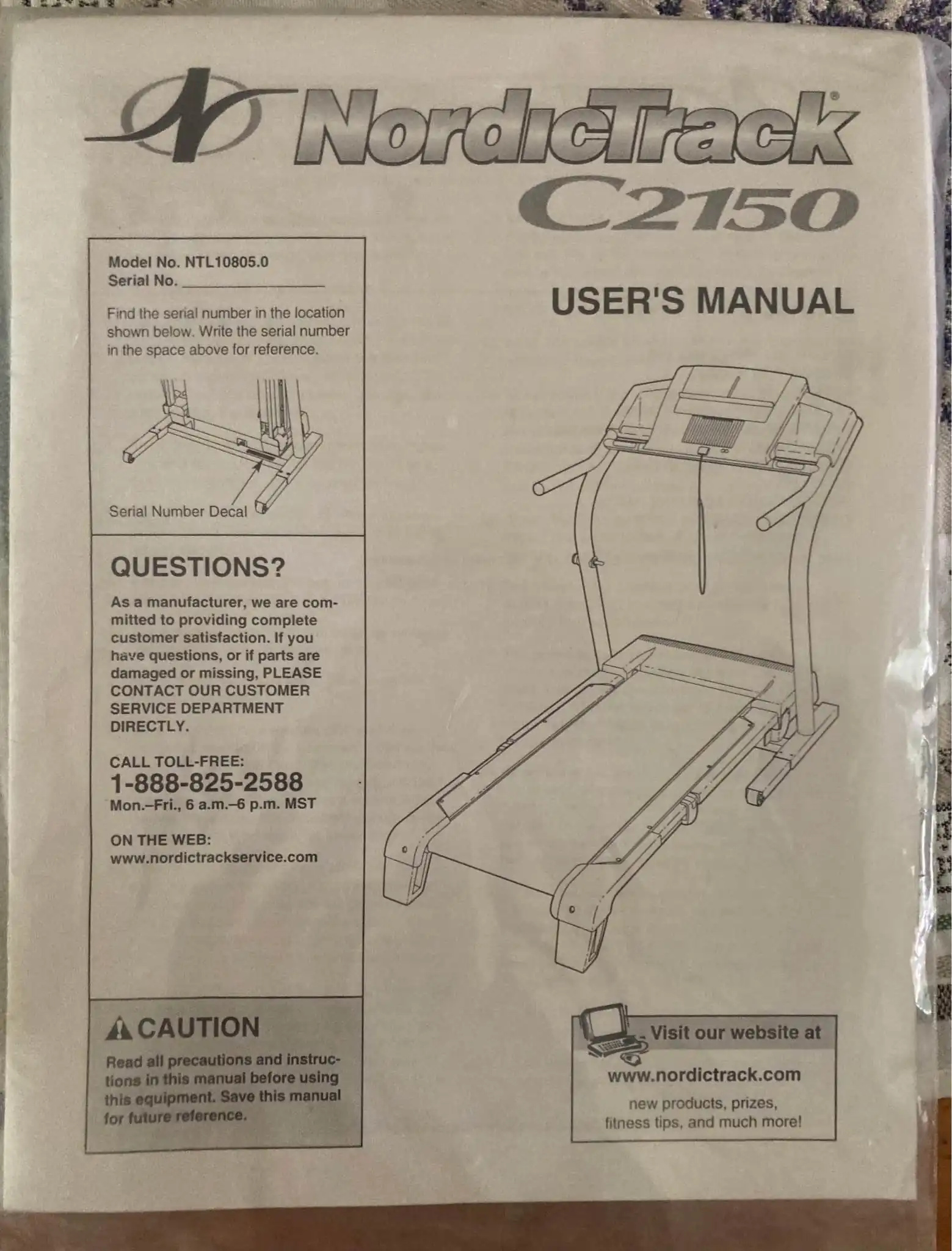
Keep your owner's manual with your treadmill documentation. Even if you downloaded a digital copy, having the physical manual readily available simplifies future maintenance and assembly tasks. Store it with your labeled hardware bags if keeping the treadmill in storage.
The time investment in proper treadmill assembly and disassembly, typically 1.5 to 3 hours total, is minimal compared to the value of your equipment. A quality treadmill represents a $1,000 to $4,000 investment, and protecting that investment through careful handling makes financial sense.
Getting Your Treadmill Ready for Its Next Chapter
It doesn’t matter if you're relocating to a new home, reorganizing your existing space, or simply performing deep maintenance because knowing how to disassemble a treadmill properly ensures your equipment arrives at its destination ready for years of continued service.
The techniques we've covered apply across treadmill brands and models, though specific details vary. Your NordicTrack, ProForm, Sole, Bowflex, or Peloton may have unique quirks, but the fundamental principles remain consistent: work methodically, document everything, organize components carefully, and prioritize safety above speed.
Take pride in tackling this challenging project independently. The money you save by avoiding professional movers, potentially $70 to $500, represents just one benefit. You've also gained a deeper understanding of your equipment, developed practical mechanical skills, and proven your capability to handle complex physical tasks safely.
As you continue your fitness journey, whether with this same treadmill reassembled in a new location or with upgraded equipment down the road, these skills remain valuable. The attention to detail, organizational habits, and safety-conscious approach transfer to any equipment handling situation. And if you ever want a science-backed reminder of what all this effort is actually in service of, our treadmill benefits for daily fitness covers 17 peer-reviewed benefits spanning cardiovascular health, fat loss, mental wellbeing, and joint protection, which makes a compelling case for why keeping this machine running is worth the effort.
For those seeking to optimize their home gym setup further, exploring our collection of smart treadmills can help you understand the latest features available in modern cardio equipment. These advanced machines offer connectivity, tracking, and training capabilities that take your workouts to the next level, and when the time comes, you'll know exactly how to move them safely.
FAQs
Can you take apart a treadmill to move it?
Yes, you can take apart a treadmill to move it, and disassembly is actually recommended for safe transport. Most residential treadmills break down into 3-5 major components, including console, uprights, motor assembly, and base, which reduces the weight per piece and makes navigating doorways and stairs much more manageable.
Is it easy to disassemble a treadmill?
Disassembling a treadmill is moderately easy if you have basic DIY skills and the right tools, like hex wrenches and screwdrivers. For someone with moderate experience, basic disassembly typically takes 60-90 minutes and requires careful attention to documenting wire connections and organizing hardware.
Can a NordicTrack treadmill be disassembled?
Yes, a NordicTrack treadmill can be disassembled by removing the console, disconnecting wiring harnesses, and unbolting the uprights from the base using 7/16" bolts. The main consideration is properly releasing the hydraulic folding mechanism before attempting to separate the deck from the uprights.
How do you move a heavy treadmill?
To move a heavy treadmill safely, you need to recruit at least one helper and use a furniture dolly rated for 400+ pounds. Disassemble the treadmill into lighter components, lift with your legs rather than your back, and consider hiring professionals for stairs since injury risk increases significantly.
How much does it cost to move a treadmill?
The cost to move a treadmill ranges from $70 to $500, depending on distance, stairs, and equipment weight. Basic local moves cost $70-$150, while moves involving stairs or long distances run $200-$500, though DIY moves only cost $25-$50 in supplies if you're willing to handle it yourself.
References:
- Wurzelbacher SJ, Lampl MP, Bertke SJ, Tseng CY. The effectiveness of ergonomic interventions in material handling operations. Appl Ergon. 2020;88:103161. Published 2020 May 11. doi:10.1016/j.apergo.2020.103139
- Jari A, Niazmand-Aghdam N, Mazhin SA, Poursadeghiyan P, Sahlabadi AS. Effectiveness of training program in manual material handling: A health promotion approach. J Educ Health Promot 2022 Mar 23:11:81. doi: 10.4103/jehp.jehp_492_21.
- Pizatella TJ, Putz-Anderson V, Bobick TG, McGlothlin JD, Waters TR. Understanding and evaluating manual handling injuries: NIOSH research studies. Ergonomics. 1992;35(9):945-953. doi:10.1080/00140139208967374
- McAtamney L, Corlett EN. Ergonomic workplace assessment in a health care context. Ergonomics. 1992;35(9):965-978. doi:10.1080/00140139208967376
Enter your text here...